🏛️ Visitor’s Guide — Wignacourt Museum, Rabat
📍 Location
Address: College Street, Rabat RBT 1241, Malta
Situated next to St Paul’s Church and Grotto in Rabat, on the edge of Mdina.
Easy to combine with visits to Mdina, St Paul’s Catacombs, and other Rabat heritage sites.
🕰️ Opening Hours
Monday – Sunday: 9:30 – 17:00
Closed: Public Holidays
(Times may vary, so check locally before your visit.)

🎟️ Admission
Standard adult ticket: €6
Concessions: Available for Senior Citizens 61+ €4.50 Students 12+ €4.50, Children 7-11 €3.50, and Children under 7 Free.
Entry includes access to the museum collections, the Grotto of St Paul, Catacombs and the World War II shelters.

🚗 Getting There
By Car:
Rabat is 20 minutes by car from Valletta.
Public parking is available outside Mdina and in Rabat’s town centre.
By Bus:
From Valletta, take bus routes 51, 52, or 53 to Rabat.
The bus stop is just a 5-minute walk from the museum.
On Foot:
If you’re visiting Mdina, the museum is a short walk (5–10 minutes) from the Mdina Gate.
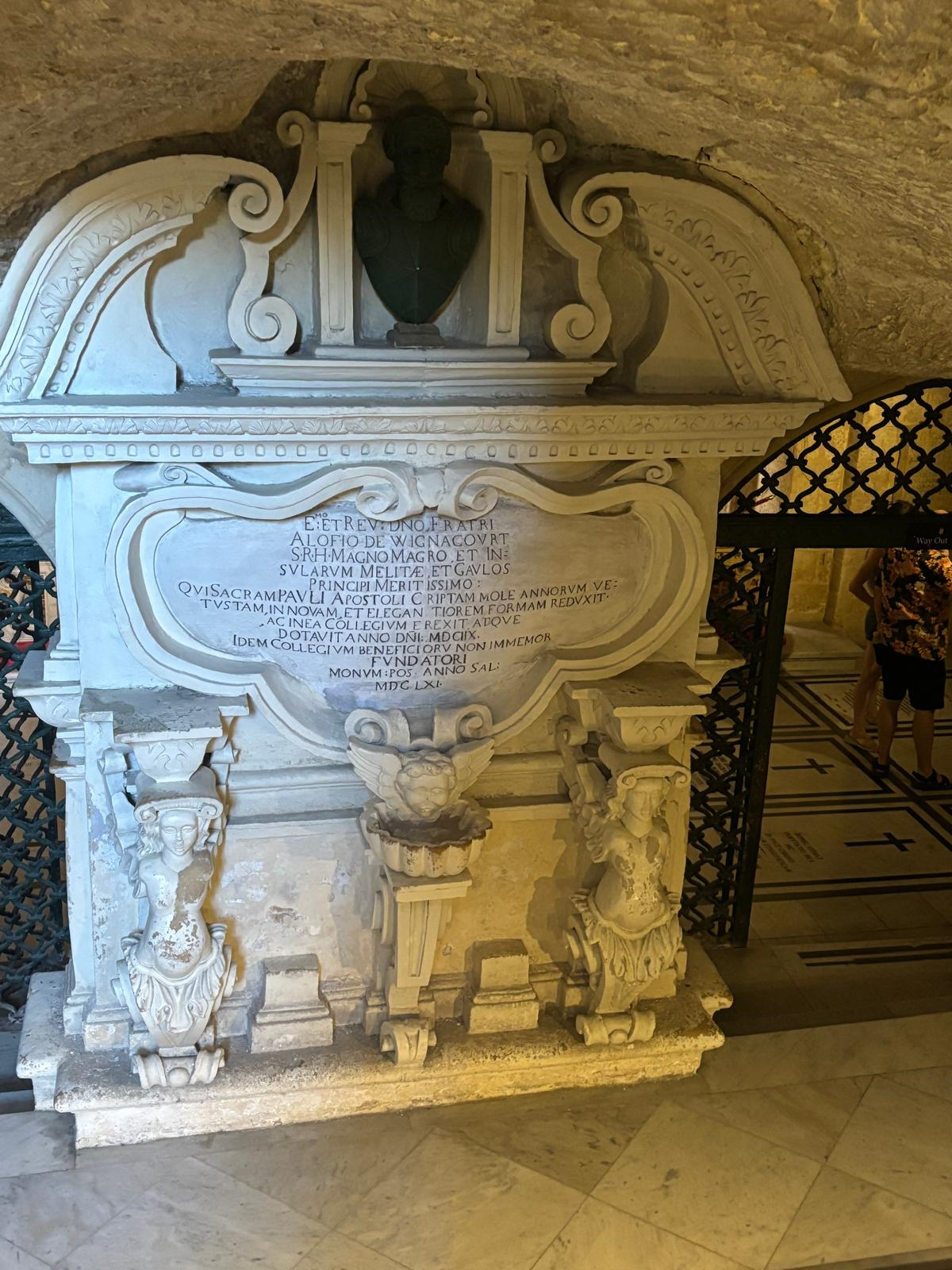
🏺 What to See Inside
Baroque Paintings & Religious Art** — Works connected to the Order of St John and local devotion to St Paul.
Roman Antiquities** — Pottery, inscriptions, coins, and artefacts from Rabat and Mdina.
Ecclesiastical Treasures** — Vestments, chalices, reliquaries, and liturgical silver.
St Paul’s Grotto** — The sacred cave linked with the Apostle Paul’s stay in Malta in AD 60.
World War II Shelters** — Underground passages carved out during the 1940s bombings.
Historic Building** — A beautiful 18th-century Baroque residence built for clergy.

Nearby Attractions
🏰 Mdina, the Silent City — Malta’s medieval capital, with palaces, museums, and the Cathedral of St Paul.
⚰️ St Paul’s Catacombs — An underground complex of Roman and early Christian tombs.
⛪ St Paul’s Church, Rabat — Baroque church built above the grotto.
🍷 Rabat cafés & bakeries — Try traditional pastizzi or local sweets in the village square.

✅ Visitor Tips
Allow at least 1–1.5 hours for a full visit.
Wear comfortable shoes for exploring the underground grotto and shelters.
Photography may be restricted in some galleries.
Combine your trip with a walk through Mdina or lunch in Rabat’s village core.

✨ Summary:
The Wignacourt Museum in Rabat is a fascinating mix of art, history, archaeology, and faith. With its Baroque paintings, Roman artefacts, and sacred connection to St Paul’s Grotto, it offers a rich cultural experience. Its underground WWII shelters add yet another historical layer, making it a must-visit site for anyone exploring Malta’s heritage.

🏛️ The Building of the Wignacourt Museum
📜 Origins & Construction
The building was constructed in 1749 by the Collegiate Chapter of St Paul’s.
It was originally intended as a residence for the chaplains serving the Sanctuary of St Paul’s Grotto and the adjoining church in Rabat.
The design reflects the late Baroque style prevalent in Malta in the mid-18th century, with influences from Italian ecclesiastical architecture.

🏗️ Architectural Features
Baroque façade with a balanced and dignified style, typical of clerical residences.
Three floors arranged around a central staircase.
Large stone-vaulted halls and corridors on the ground floor.
Arched ceilings, limestone masonry, and carved stone details.
A private chapel used by the clergy.
Direct connection to the underground grotto of St Paul via passages from within the building.
During the Second World War, additional air-raid shelters were cut into the rock beneath the property, which now form part of the museum visit.

🏰 Use Over Time
1749–20th century: Functioned as a clergy house for priests attached to the sanctuary.
Late 20th century: The building was restored and repurposed as the Wignacourt Museum (opened in 1981).
Today: Houses a diverse collection of art, antiquities, and religious heritage objects while preserving its own historic architectural features.

🌍 Significance
The building is not only a museum container but itself a heritage monument, representing 18th-century Baroque domestic and ecclesiastical architecture.
Its close link to St Paul’s Grotto adds major cultural and spiritual importance.
It is part of the Rabat/Mdina heritage cluster, alongside the Catacombs, Mdina Cathedral, and other Baroque institutions.

✅ Summary:
The Wignacourt Museum is housed in an 18th-century Baroque clergy residence, built in 1749 to serve priests attached to St Paul’s Grotto. With its elegant stone halls, central staircase, and underground connections to the grotto and WWII shelters, the building itself is a major part of the museum’s story — a structure that reflects centuries of faith, history, and resilience.
