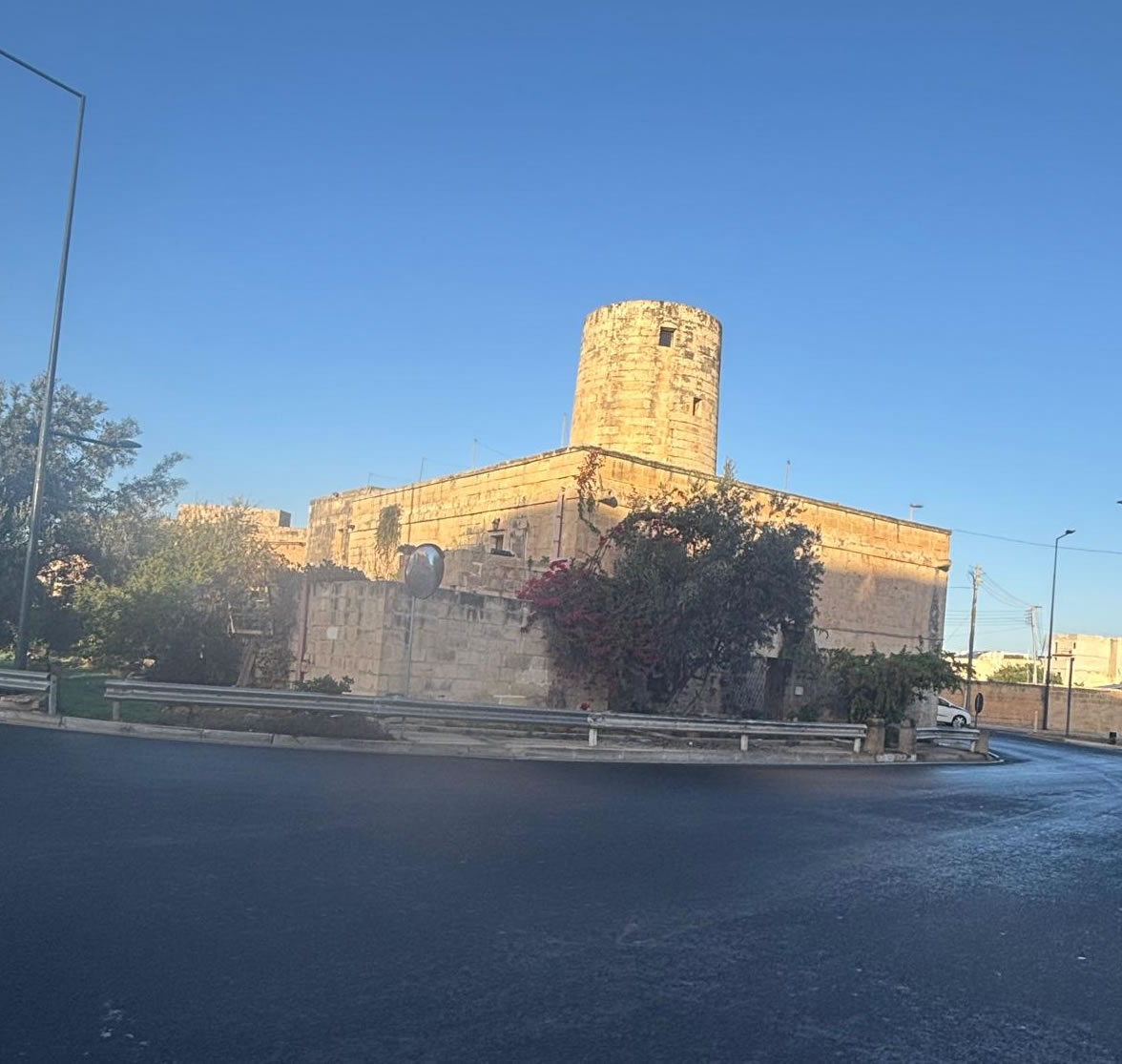
📍 Location
The coordinates of Bir Gheliem Windmill are:
- 35.869527, 14.527274
Bir Għeliem (Ta’ Buleben) Windmill, Żabbar — history, architecture, wartime role, later life and present condition.
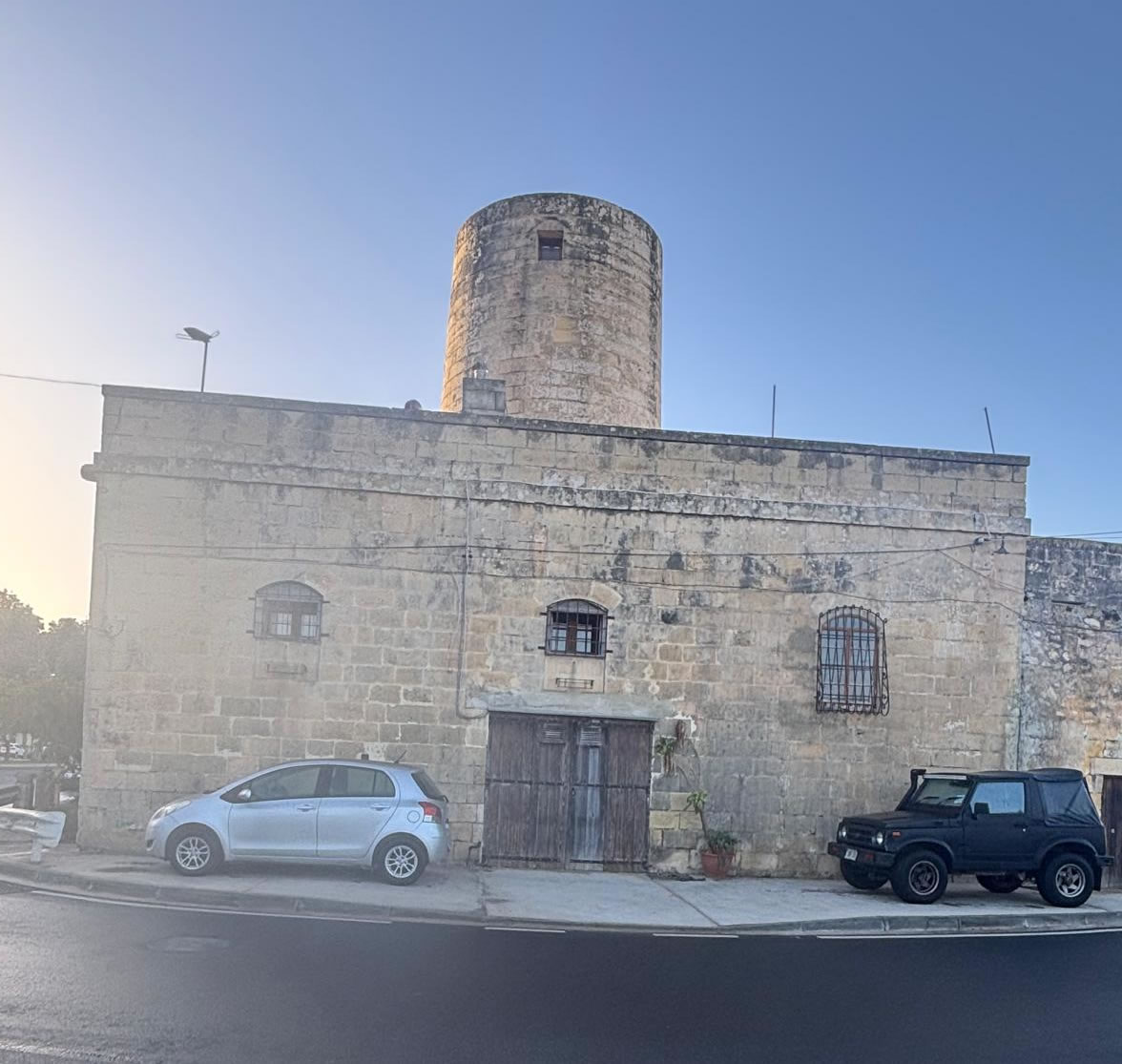
Bir Għeliem / Ta’ Buleben Windmill
Names: Bir Għeliem, Ta’ Buleben (Il-Mitħna ta’ Bulebel).
Location / address: Triq l-10 ta’ Settembru 1797 (Żabbar) where it meets Triq Bormla and Triq id-Dejma— sits on the roundabout. 35.869527, 14.527274 .
Date built: c. 1710 (often attributed to Grand Master Ramón Perellós y Roccaful).
Type: Round (tower) windmill — a mound / tower mill typical of Knights’ period mills in Malta.
Working life: Stopped milling c. 1887 (sails subsequently removed).
Current status: Survives as a truncated/converted mill structure in the centre of a modern roundabout; portions restored/maintained by private/family effort.
1. Origins & construction
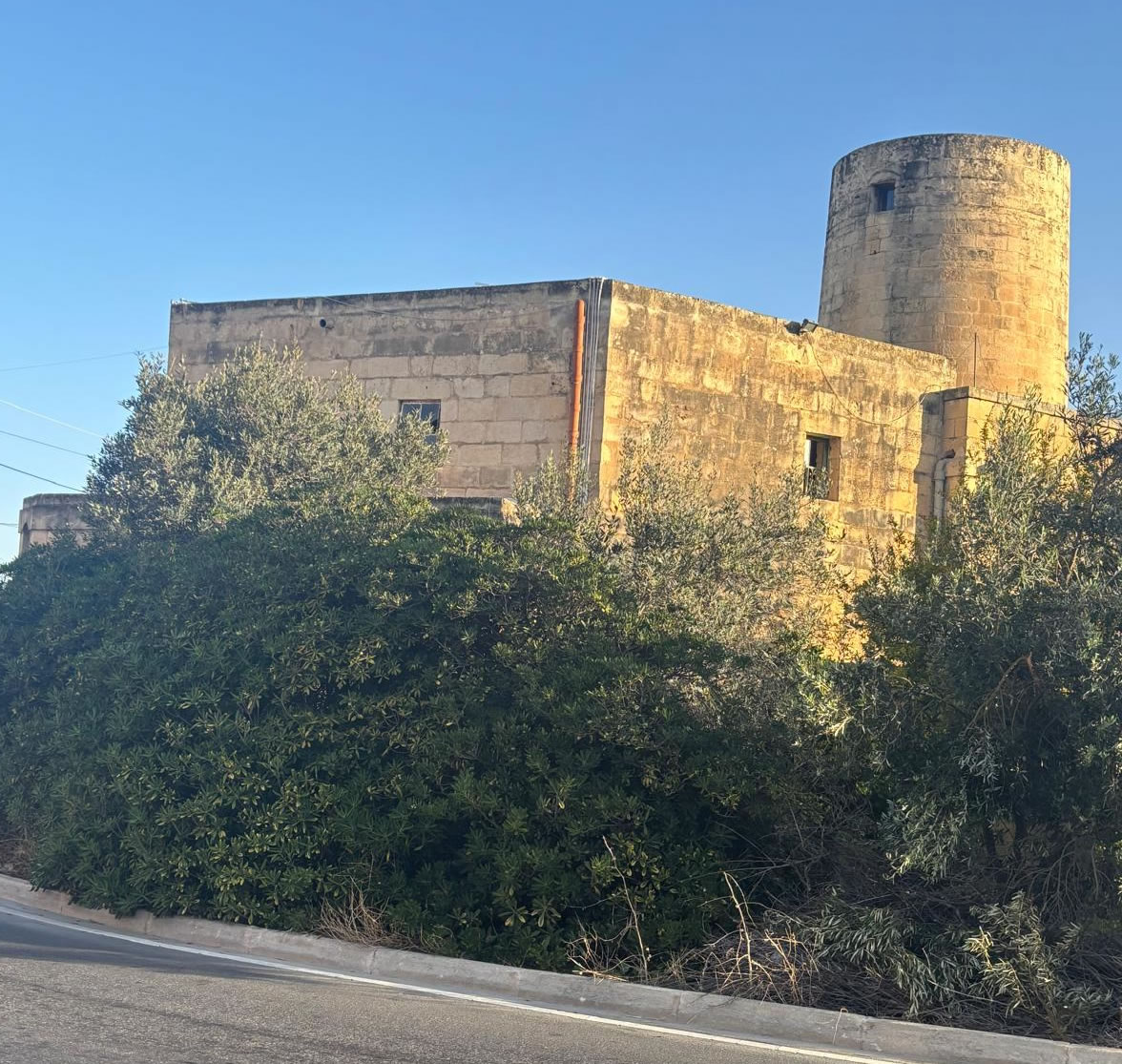
The mill was constructed in the early 18th century (commonly c.1710). Multiple local sources and windmill registries attribute it to the early-Knights’ building programme, often crediting Grand Master Ramón Perellós y Roccaful for commissioning mills in that era. The form — a circular limestone tower set on a mound platform — is typical of Maltese tower mills of the period.
2. Architecture & machinery (what it looked like / how it worked)
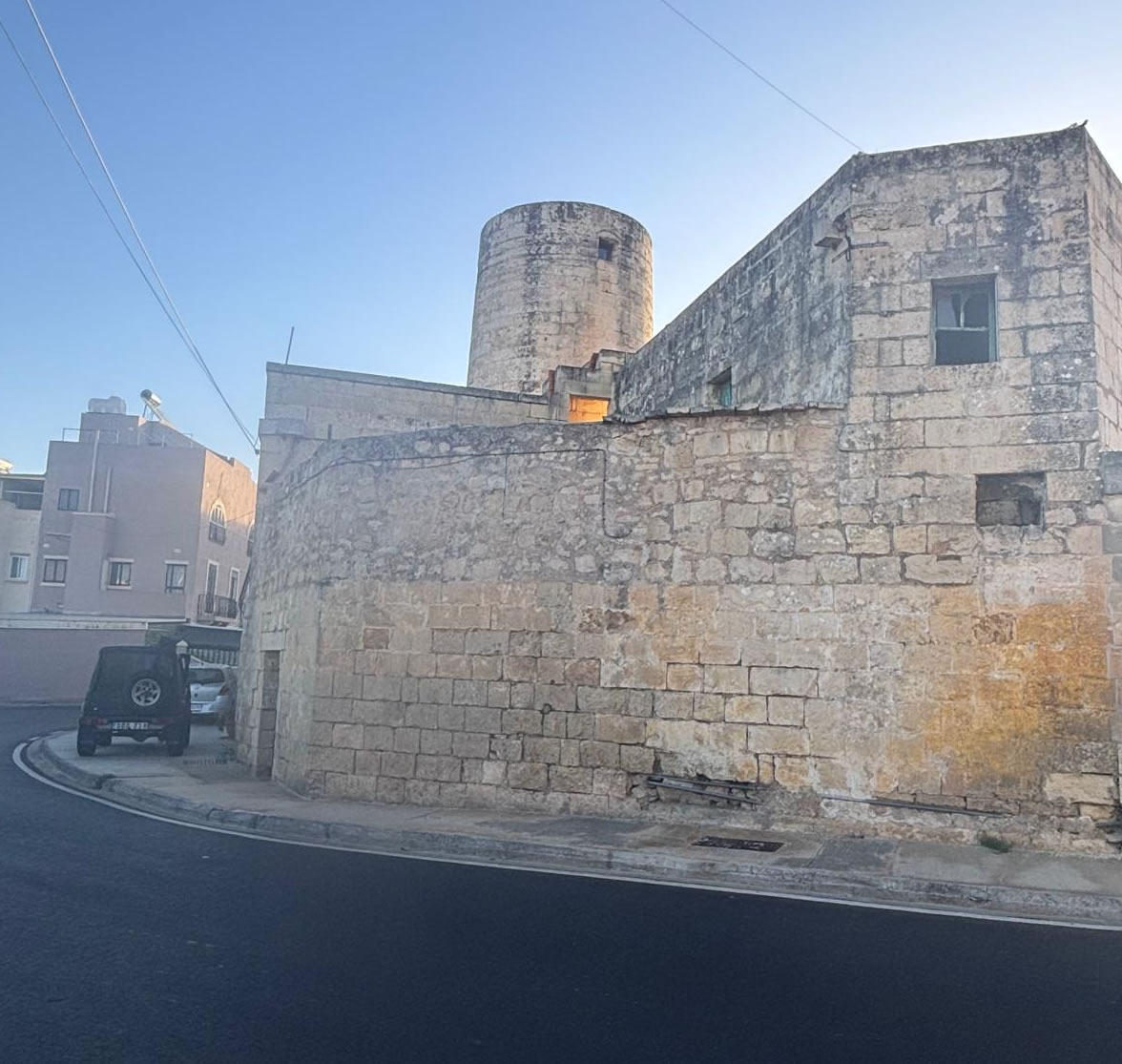
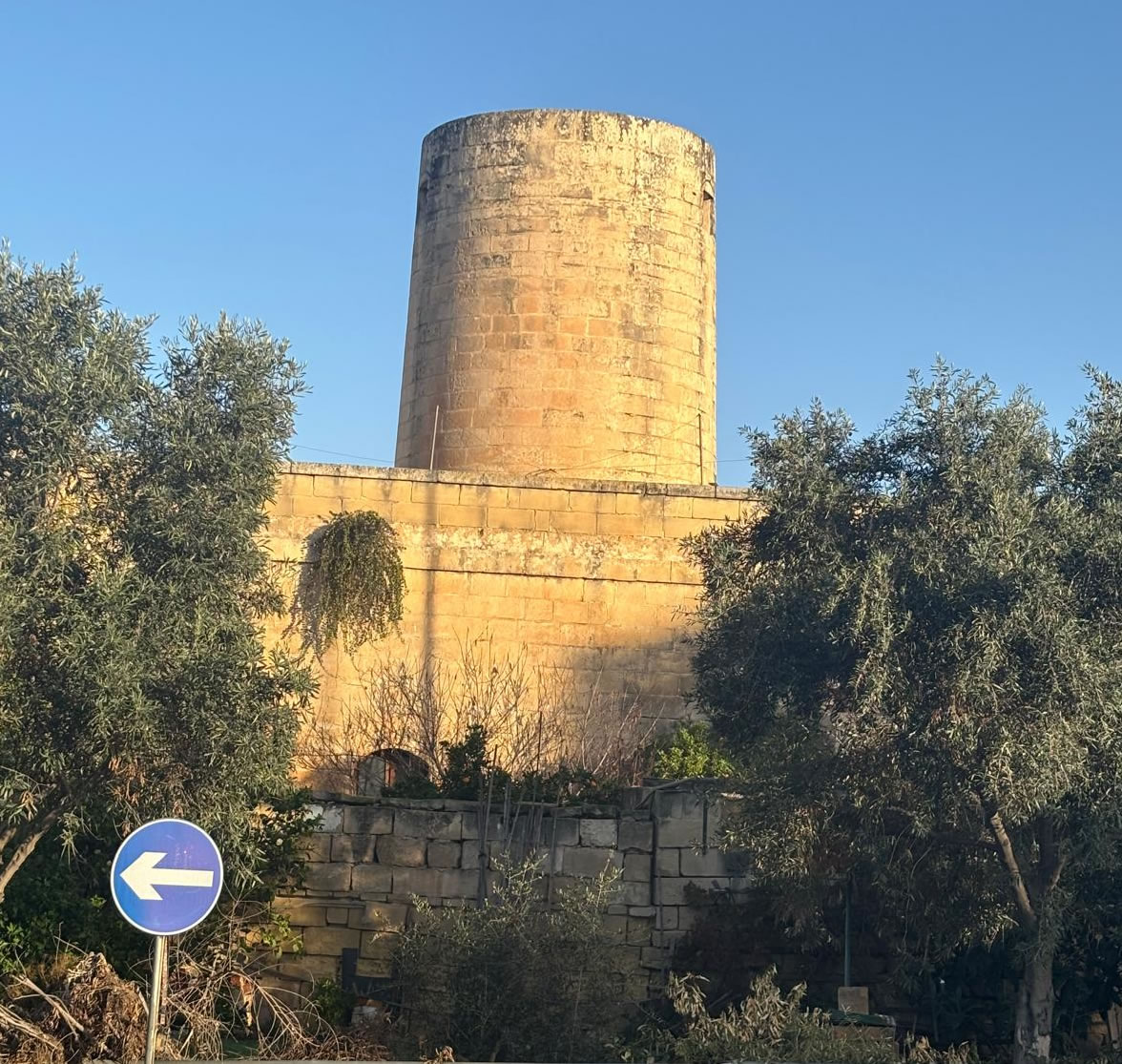
External: a cylindrical stone tower (globigerina limestone), with a broader base (mound) that supported the rotating cap and sails. Original roofing, cap and sails have been removed long ago. The tower originally contained the grinding machinery (millstones, gearing) with a rotating cap set on rollers or a bearing so the sails could be turned into the wind.
Interior: typical arrangement: two or three floors (grain store, mill machinery, working floor) with internal stair and access to the cap. Specific surviving internals vary because many mills were altered/converted. Contemporary descriptions note that much of the original machinery is gone but structural traces remain.
3. Military role — the Windmill Redoubt (1798–1800)
During the French blockade (1798–1800) the Maltese insurgents turned the mill and its immediate environs into a defensive position called the Windmill Redoubt (Ridott tal-Mitħna). A triangular rubble-wall redoubt was erected around the windmill to block the roads between Żabbar, Tarxien and Żejtun. The mill’s tower served as a lookout / blockhouse during the siege. The redoubt was probably demolished after the blockade ended because it obstructed the main roads.
4. Post-mill life (19th–20th centuries)
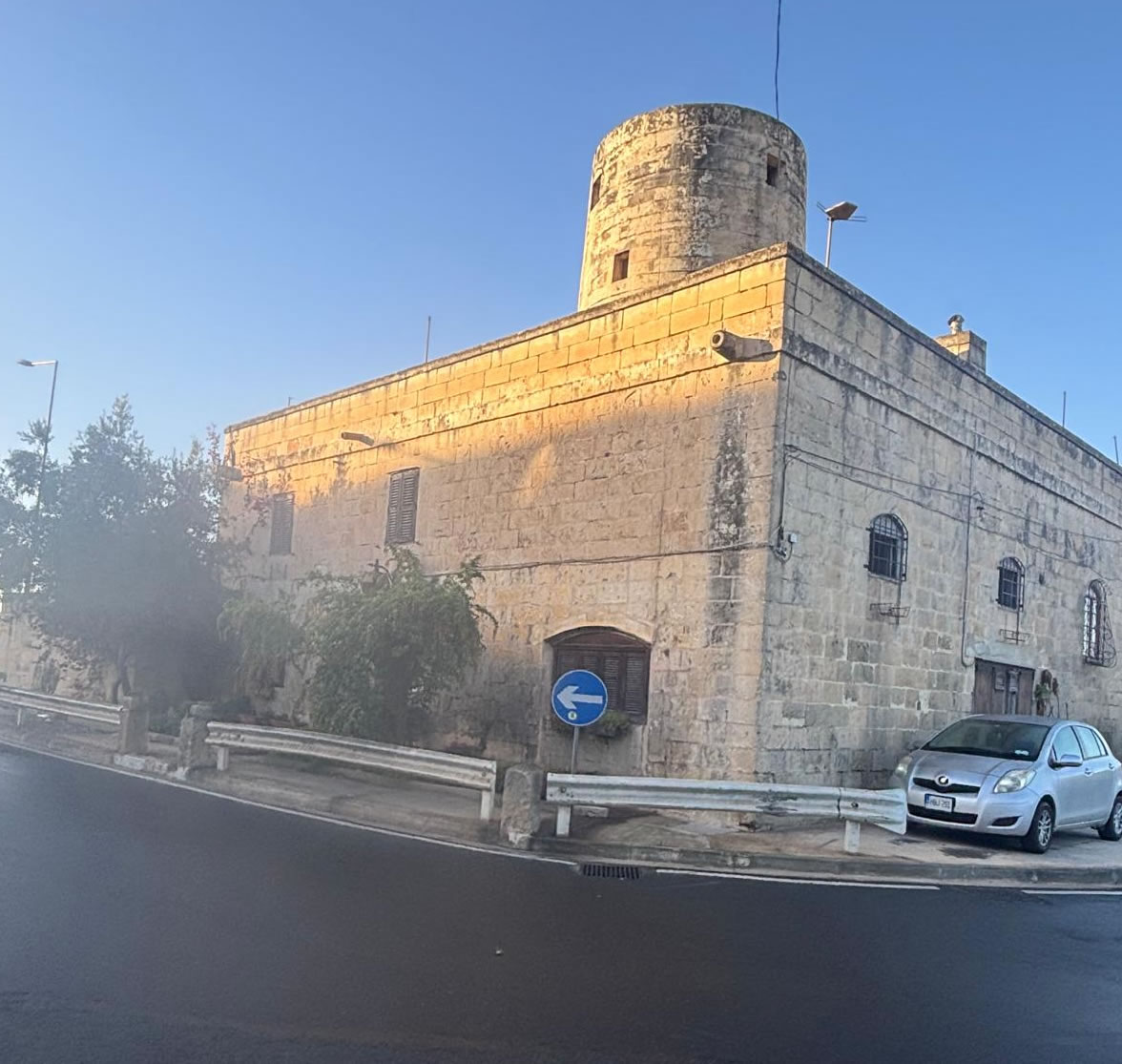
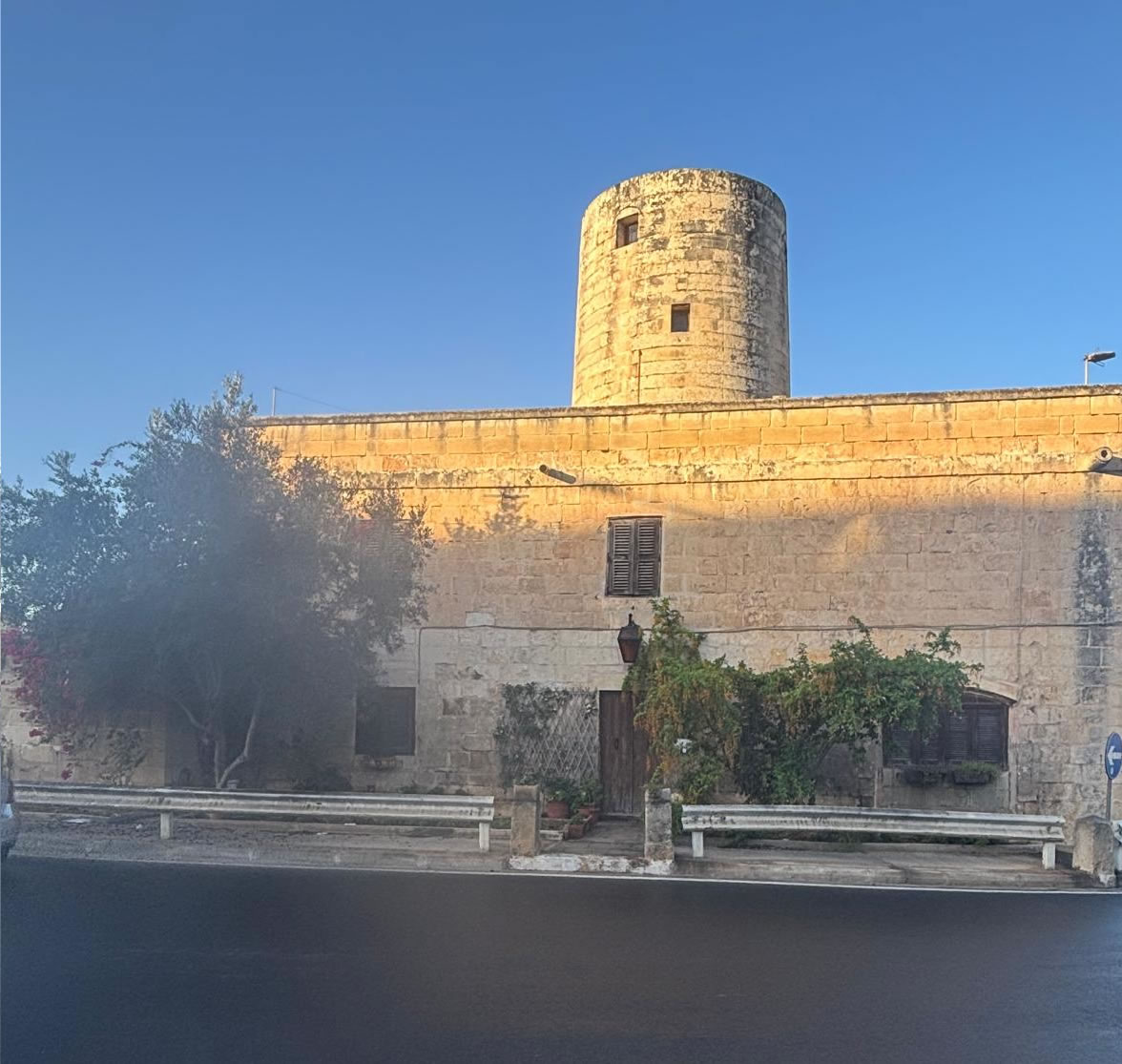
The mill remained a local landmark after it ceased commercial milling. Sources record that active milling stopped around 1887; sails and working gear were removed and the tower gradually fell out of use. Over the 19th and 20th centuries the structure was adapted/partly converted for domestic or storage use in places; it eventually became isolated by modern roads and later a roundabout was built around it.
5. 20th/21st century: preservation & recent condition
The tower survives in situ, now surrounded by traffic. Local families (the Apap family is mentioned in reporting) and heritage-minded residents carried out conservation/maintenance work in recent decades to stabilise and partially restore the mill’s fabric. The mill is publicly visible but not a formal museum site like Ta’ Kola or Xarolla — it’s an historic ruin/monument within live traffic infrastructure.
6. Significance
Bir Għeliem is a good example of Malta’s high density of post-Knights windmills and of the way vernacular industrial architecture was re-used for military and domestic needs. Its direct link to the French blockade adds a clear historical narrative (from economic use → wartime defensive use → peacetime obsolescence).