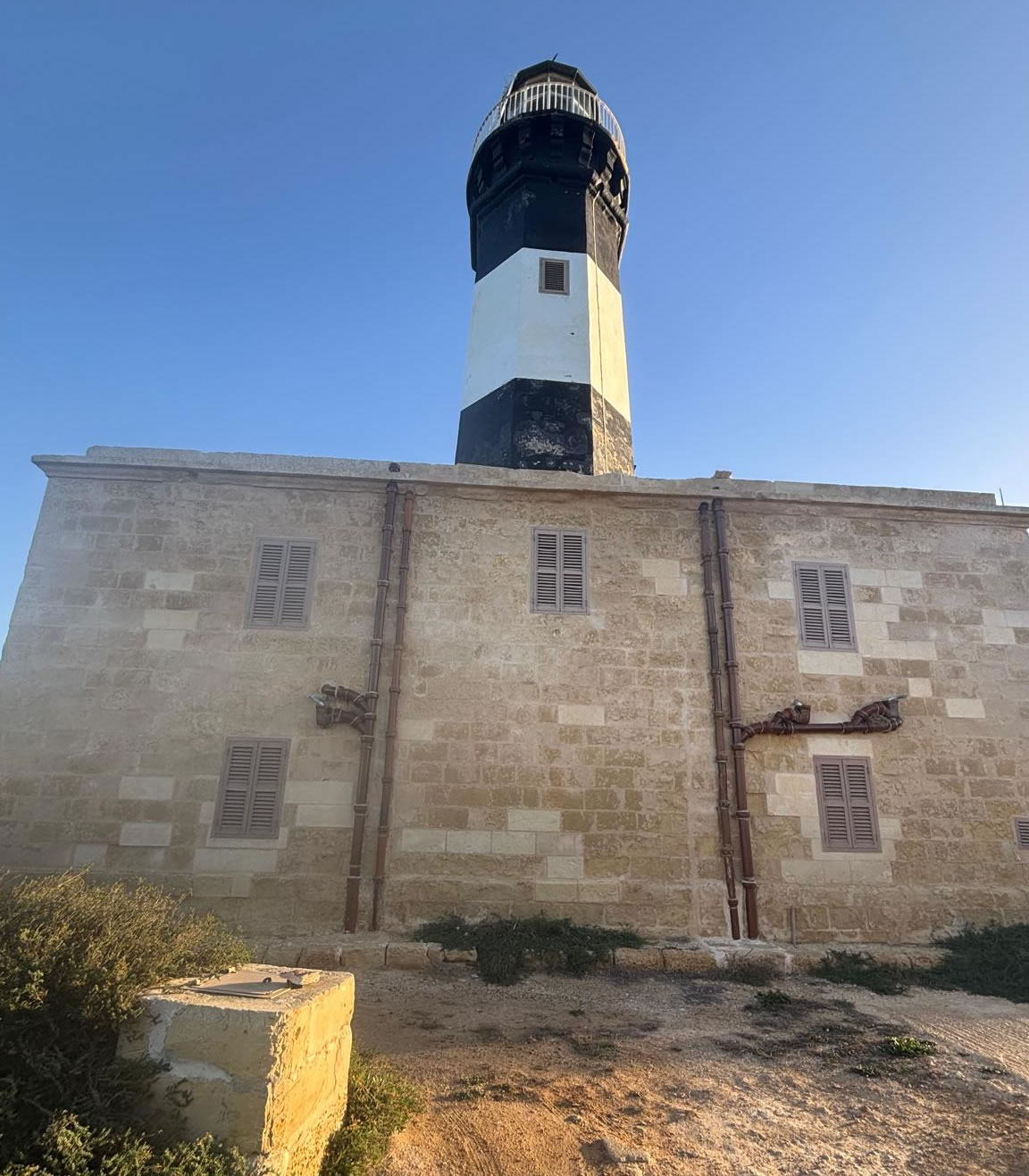
Here is a complete, historically accurate profile of Delimara Lighthouse, one of Malta’s most important navigational lights.
📍 Delimara Lighthouse – Full Historical & Technical Details
Location: Delimara Point, Marsaxlokk Bay, Malta
Coordinates: 35.822036, 14.558922
Year built: 1854 (operational by 1855)
Builder: British Admiralty / Board of Trade
Construction: Limestone tower with attached keeper’s dwelling
Status: Historic lighthouse, inactive since 1990
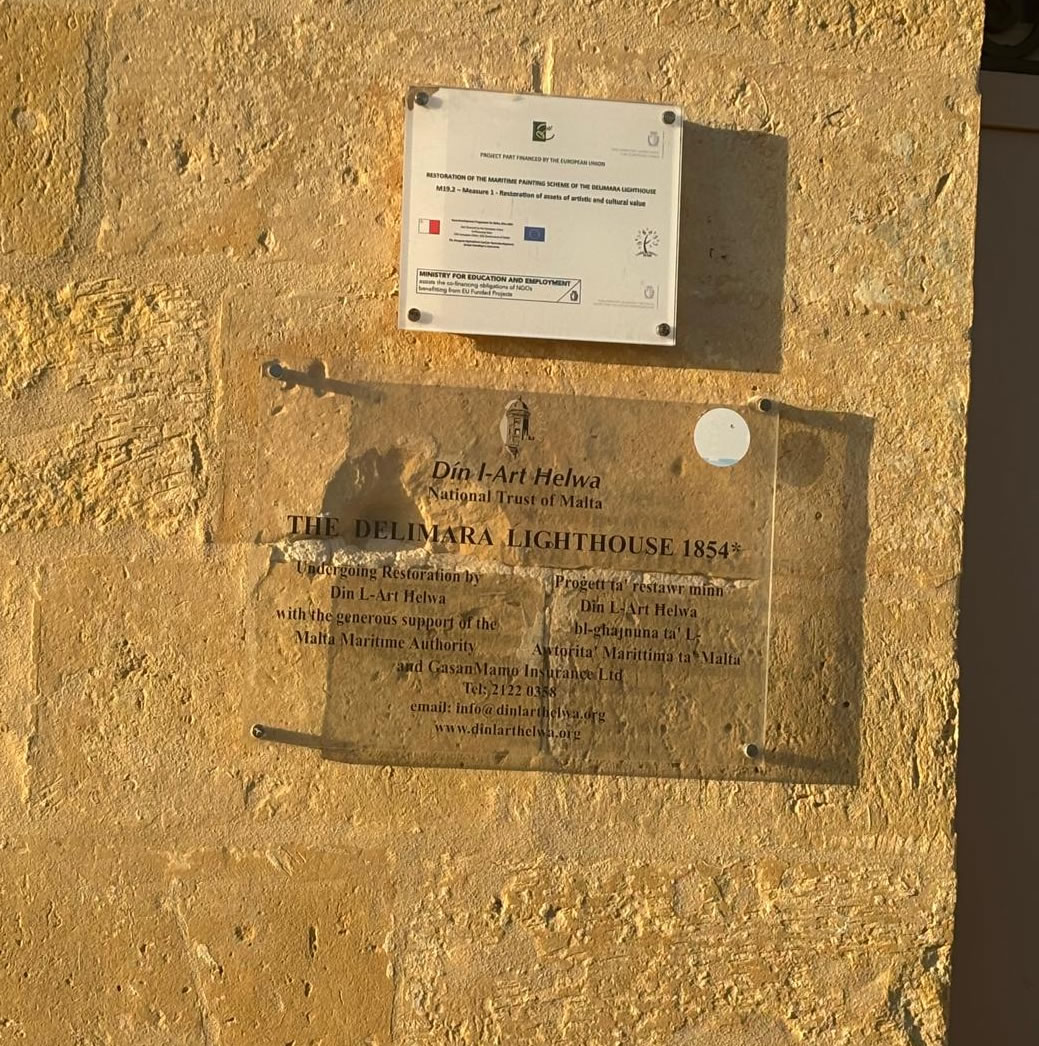
Current use: Restored and used as rentable heritage accommodation (Din l-Art Ħelwa)
1. ORIGINS AND CONSTRUCTION (1850–1854)
After Malta became a major British naval base following 1814, safe navigation into Marsaxlokk Bay and along Malta’s southeast coast became crucial—especially for ships approaching Malta from Egypt and the Suez route.
In 1850, the British Admiralty commissioned a new lighthouse at Delimara Point. Construction:
Local Maltese limestone used for the entire structure
Built by Maltese stonemasons under British engineers
Total cost: approx. £4,000 (significant for the period)
Completed: 1854
First exhibited light: 1855
2. ARCHITECTURE
Tower
Height: 22 meters (approx. 72 ft)
Form: Cylindrical tower with balcony and lantern
Marking:
White tower
Black horizontal band** (added later in 20th century)
Material: Limestone (globigerina), with cast-iron lantern room
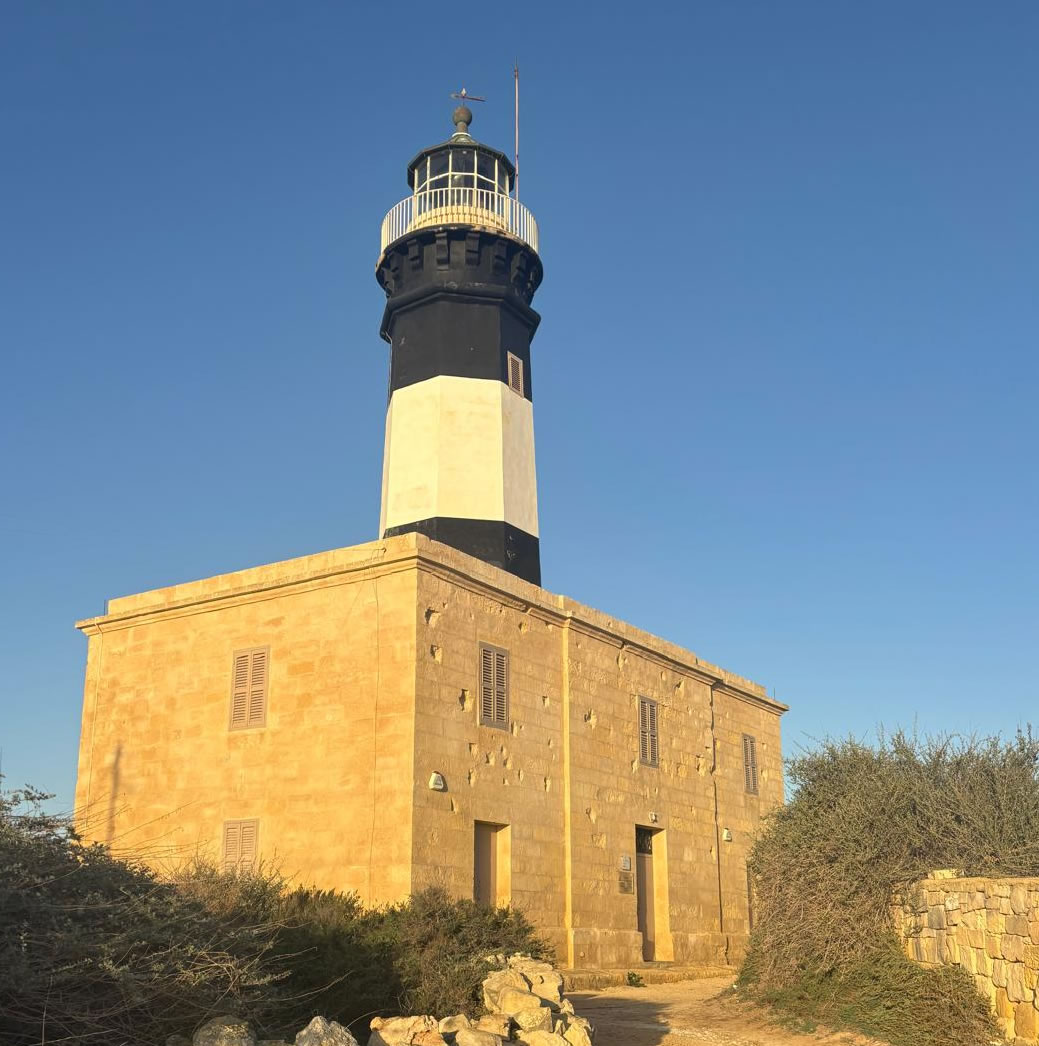
Keeper’s Houses
Two adjoining residences
Symmetrical, typical British colonial masonry style
Rainwater collection system with stone gutters and cistern
3. ORIGINAL OPTICAL APPARATUS (1855)
The first light used:
3rd-order Fresnel lens (French manufacture)
Illumination: Oil lamps with reflectors
Character: Fixed white light, visible along Malta’s southeast arc
Range: ~15 nautical miles
A Fresnel lens of this type was considered cutting-edge in the 1850s and drastically improved safety for steamers and merchant vessels.
4. UPGRADES (1870–1930)
The lighthouse underwent several major technical modernizations:
1870s – Mineral oil burners
Improved brightness and reliability.
1900s – Clockwork rotating mechanism added
The light changed from fixed to flashing, making it easier to identify.
1930s – Electrification
Electric bulbs replaced oil lamps
More powerful rotating lens apparatus
Visibility increased to ~20 nautical miles
New generators installed in a small power room attached to the keeper’s quarters
5. WORLD WAR II (1939–1945)
Delimara Lighthouse played a strategic role during WWII:
The light was extinguished or heavily restricted during air raids for blackout requirements.
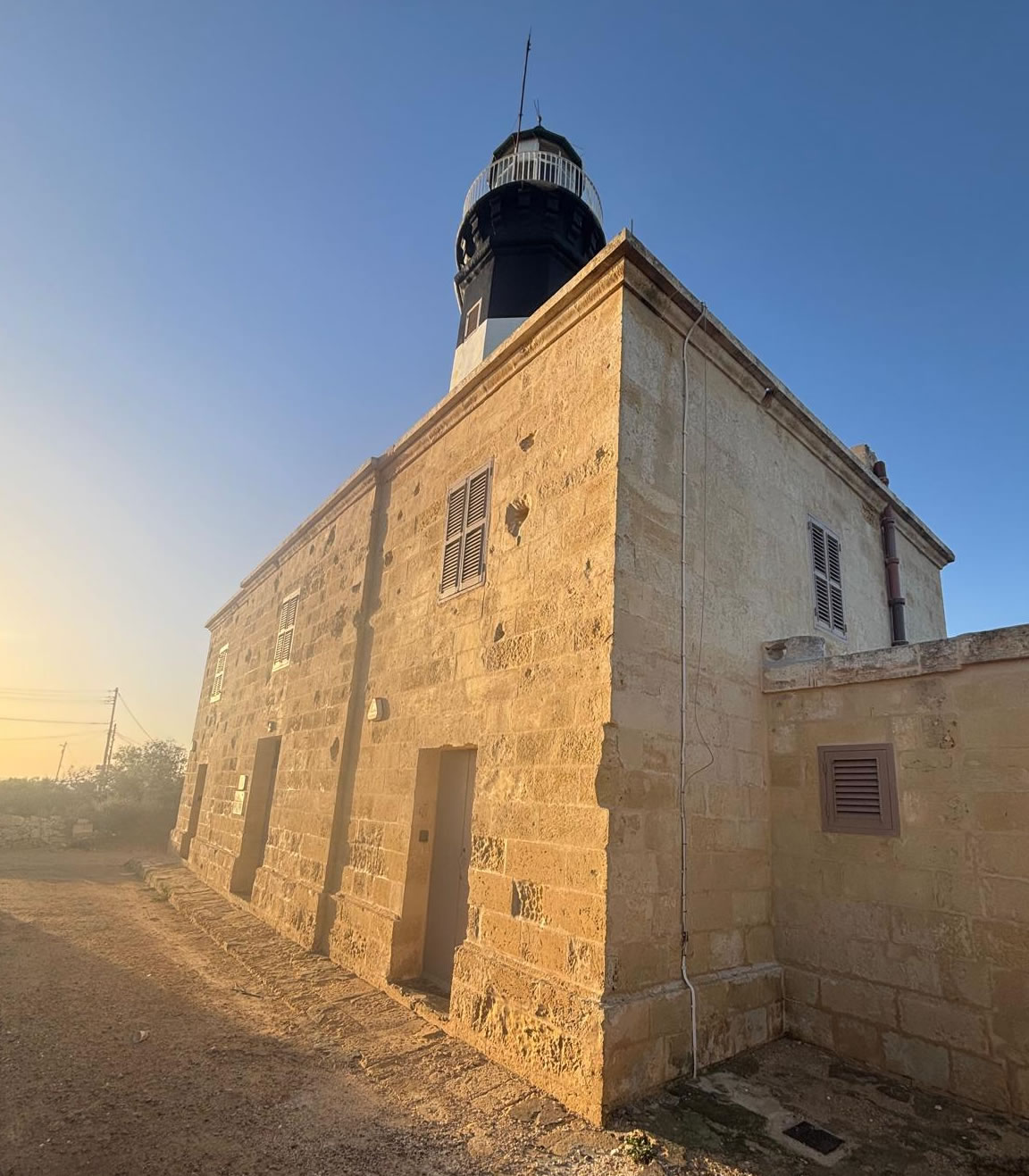
The site was used as an observation position to monitor German and Italian naval and air activity around Marsaxlokk Bay.
The area around Delimara was fortified with machine-gun posts and watch positions.
The lighthouse survived despite heavy bombing in the region.
6. LATE 20th CENTURY MODERNIZATION
1970s
A new Automatic Beacon was installed nearby on the Delimara peninsula.
The original lighthouse continued operation, but its role was reduced.
1990 – Deactivation
The original 1854 tower was permanently retired, replaced by a modern automated navigation light operated by Transport Malta.
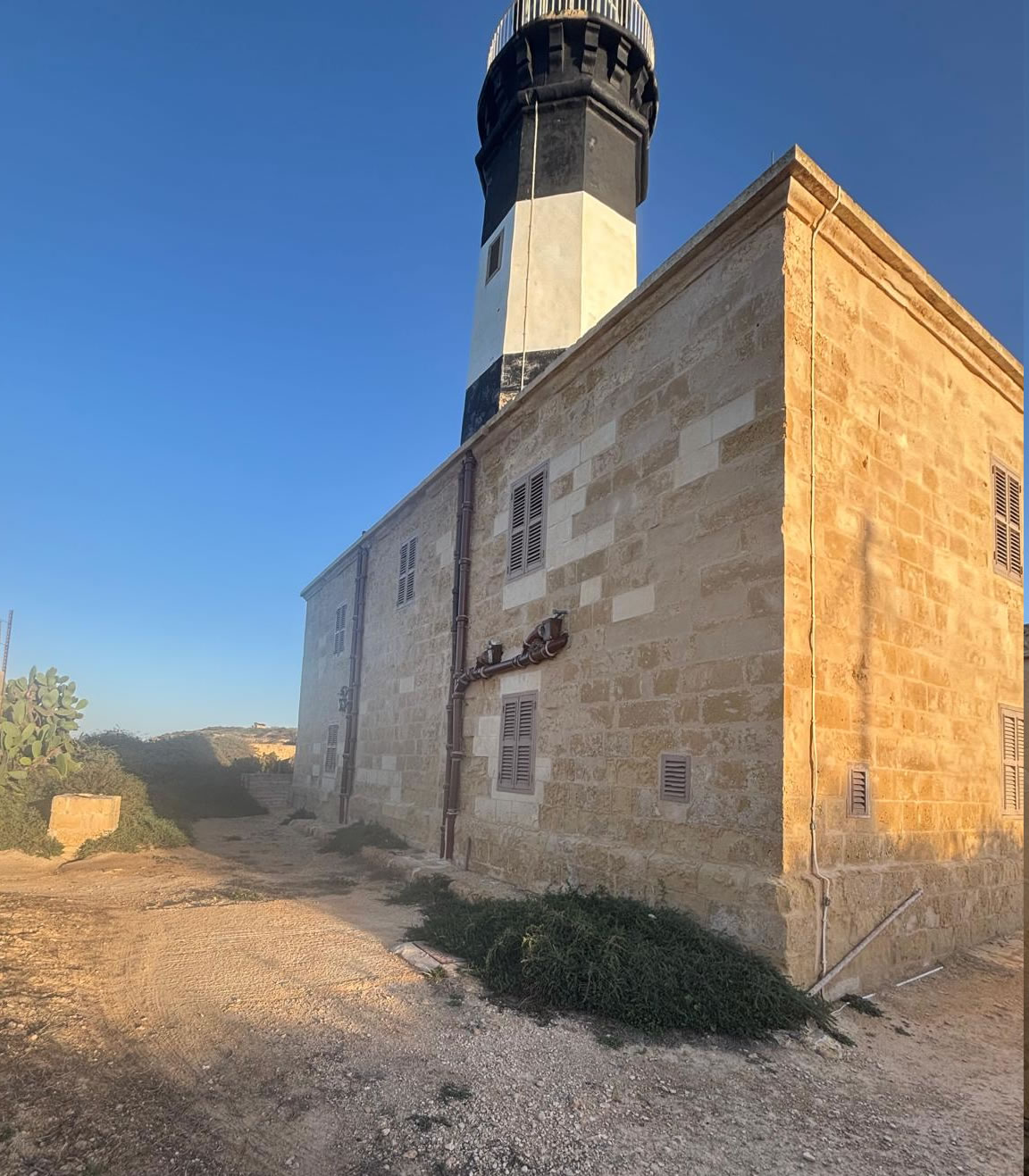
7. RESTORATION AND CURRENT USE
After deactivation, the lighthouse deteriorated until entrusted to the heritage NGO Din l-Art Ħelwa.
Restoration (2006–2011)
Work included:Structural consolidation of stonework
Full restoration of keeper’s quarters
Reconstruction of lantern area
Installation of amenities for visitors
Removal of 20th-century accretions (rusted metal frames, cables)
Current function
The lighthouse is now one of Malta’s most scenic heritage accommodations:
Two self-catering apartments
Stunning views of Marsaxlokk Bay
Retains much of its historic character
It is also occasionally open for heritage tours.
8. TECHNICAL SPECIFICATIONS SUMMARY
| Feature | Details |
| Year built | 1854 |
| Height | 22 m |
| Structure | Limestone cylindrical tower |
| Lantern | Cast iron, restored |
| Optics | 3rd-order Fresnel lens (historical) |
| Light range | ~15–20 nm depending on era |
| Original characteristic | Fixed white |
| Later characteristic | Flashing (electric) |
| Deactivated | 1990 |
| Current status | Restored heritage site and accommodation |