📍 Location
The coordinates of Delimara Fort are:
- 35.824535, 14.556545
history of Fort Delimara (Il-Fortizza ta’ Delimara) — built context, design and armament, major events, post-military uses, decline and recent conservation
Why and when it was built
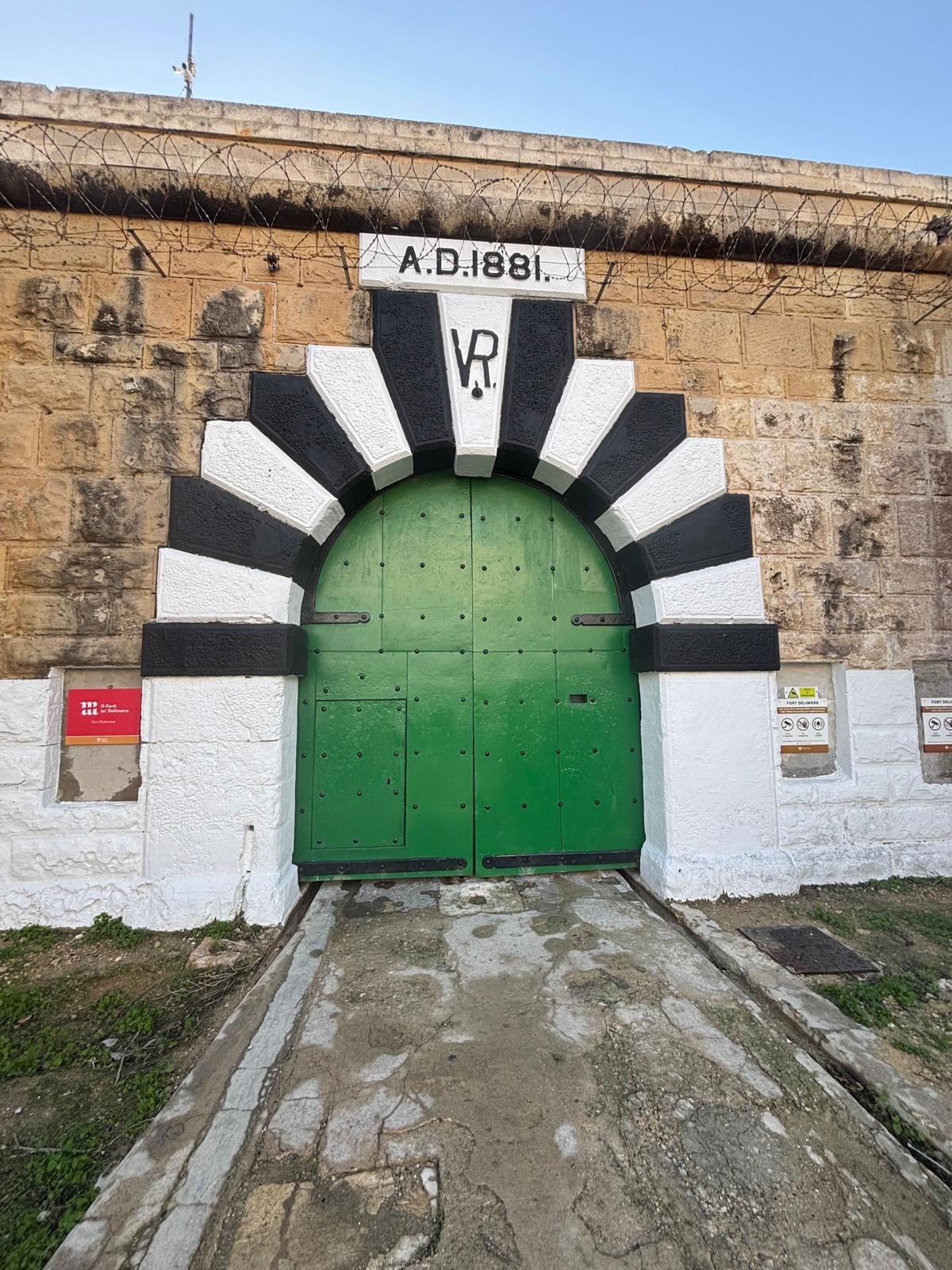
Date & builder: Fort Delimara was constructed by the British in the late-Victorian period to guard Marsaxlokk Harbour and the eastern approaches to Malta. Construction took place c. 1876–1881 (completed range often quoted as 1876–1888, with the gatehouse dated 1881).
Strategic role: It formed part of a ring of coastal defences for Marsaxlokk Bay (together with Fort Tas-Silġ, Fort San Lucian, Fort Benghisa and several batteries), designed to prevent enemy warships from entering or bombarding the anchorage.

Design and armament
Type & plan: Fort Delimara is a polygonal (flankless) fortification built in Maltese limestone with concrete elements. It has a deep dry ditch, counter-scarp galleries and a large internal parade ground with barrack blocks — a typical Victorian coastal fort adapted to the rifled artillery age. The main gate carries the date 1881.
Guns: In the 19th century it was armed with heavy rifled muzzle-loading (RML) guns in casemated positions. The fort’s layout emphasised protection of the guns and stores, with magazines and communication passages built into the structure.

Notable incidents & active service
1903 accidental explosion: On 29 March 1903 an accident occurred when defective bombs stored at the fort detonated after children tampered with one; four people were killed. This is recorded in period sources and summaries.
World War I & II: The fort remained part of Malta’s coastal defences into the 20th century. It was rearmed before WWII and saw service during the war — records mention anti-aircraft/Bofors guns and the fort suffering multiple direct hits from enemy action in 1940–43.
Post-war decline and alternative uses
Demilitarisation: The fort was gradually stripped of its main artillery (notably during the 1950s; a date commonly cited is 1956 for major removals) and fell into redundancy as coastal artillery became obsolete.
Civilian uses / degradation: After military use ended, the fort was abandoned for long periods. From the 1970s–2000s parts of its terrain and buildings were leased for agricultural purposes — including a period (reported 1982–2005) when it was used as a pig farm — and modern, non-historic accretions were added then later removed during conservation.

Damage, threats & condition
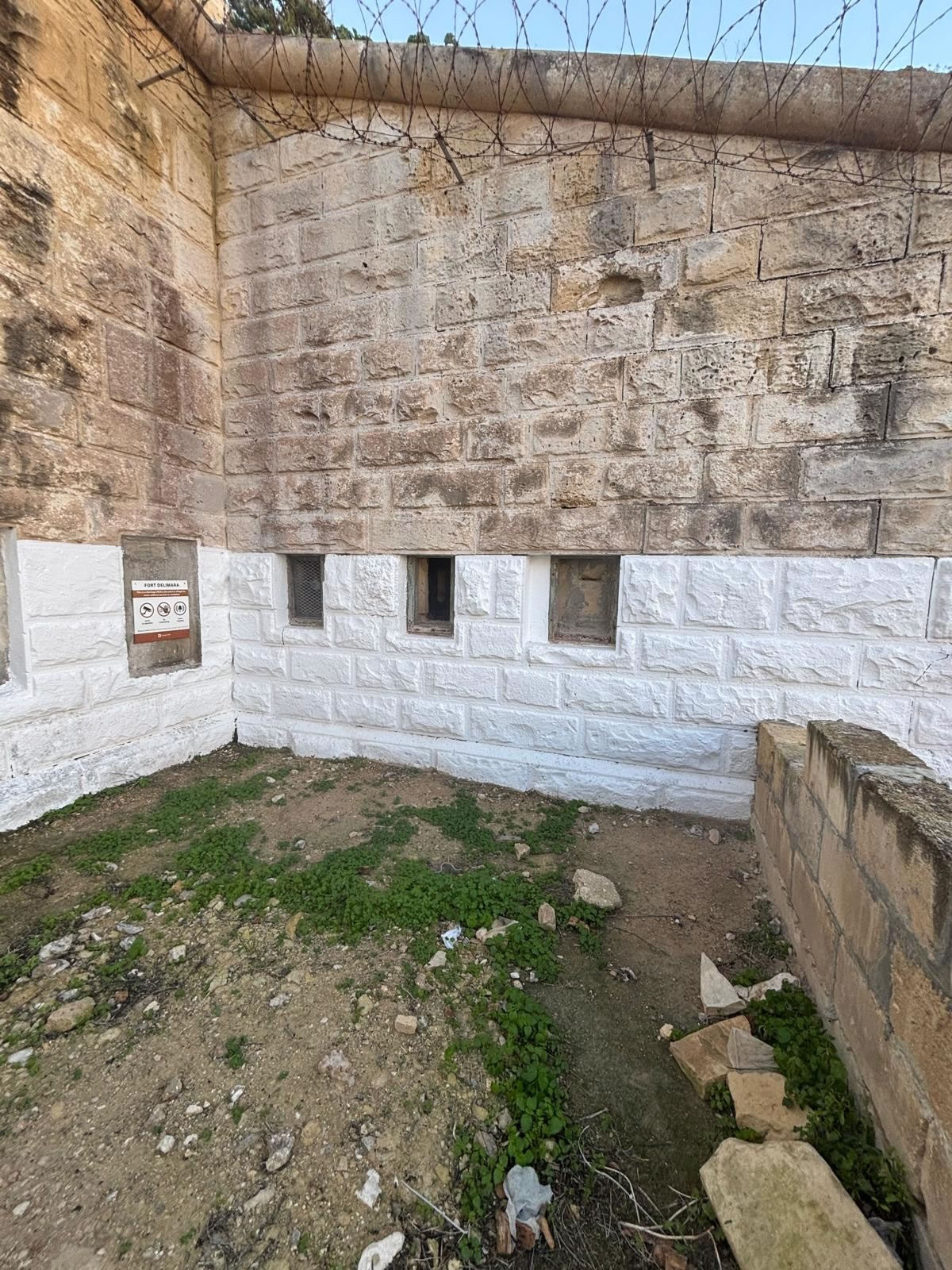
The fort has been described as intact but in danger in some reports — coastal erosion of the Delimara cliffs, weathering and the effects of long neglect left sections vulnerable and in need of consolidation. For many years the complex was derelict in places and accessible only with caution.
Conservation, restoration and recent public access
Heritage Malta stewardship:The site is under the care of Heritage Malta, which has carried out cleansing, consolidation and restoration works in recent years to stabilise structures, remove inappropriate modern additions and reopen parts of the fort to the public. Press releases and annual reports document cleaning, structural consolidation and the re-opening of areas.
Public reopening / events: Heritage Malta and local reports record cleaning and consolidation works (publicised in 2022 and continuing) and special opening days where the public could visit the restored areas; coverage in 2024 highlighted consolidation works and local open days.

Cultural uses & popular references
* The fort has been used as a film set (for example, in connection with Assassin’s Creed filming) and is a distinctive local landmark visited by walkers and photographers. It features in local guided walks around Delimara Point and Marsaxlokk.
What survives today (summary)
Architecture: The main fort fabric (ramparts, casemates, dry ditch, gatehouse and parade ground) survives and is legible; modern intrusions added during its agricultural reuse have been removed during conservation.
Access & management: Heritage Malta manages the site: some areas are now consolidated and occasionally opened to the public, but the fort is not a fully developed tourist site — visitor access is often limited to special open days or guided visits.