📍 Location
The coordinates of Fort Pembroke are:
- 35.926521, 14.480889
Here is a detailed history of Fort Pembroke in Malta: its construction, use, and evolution over time.
Origins & Strategic Context
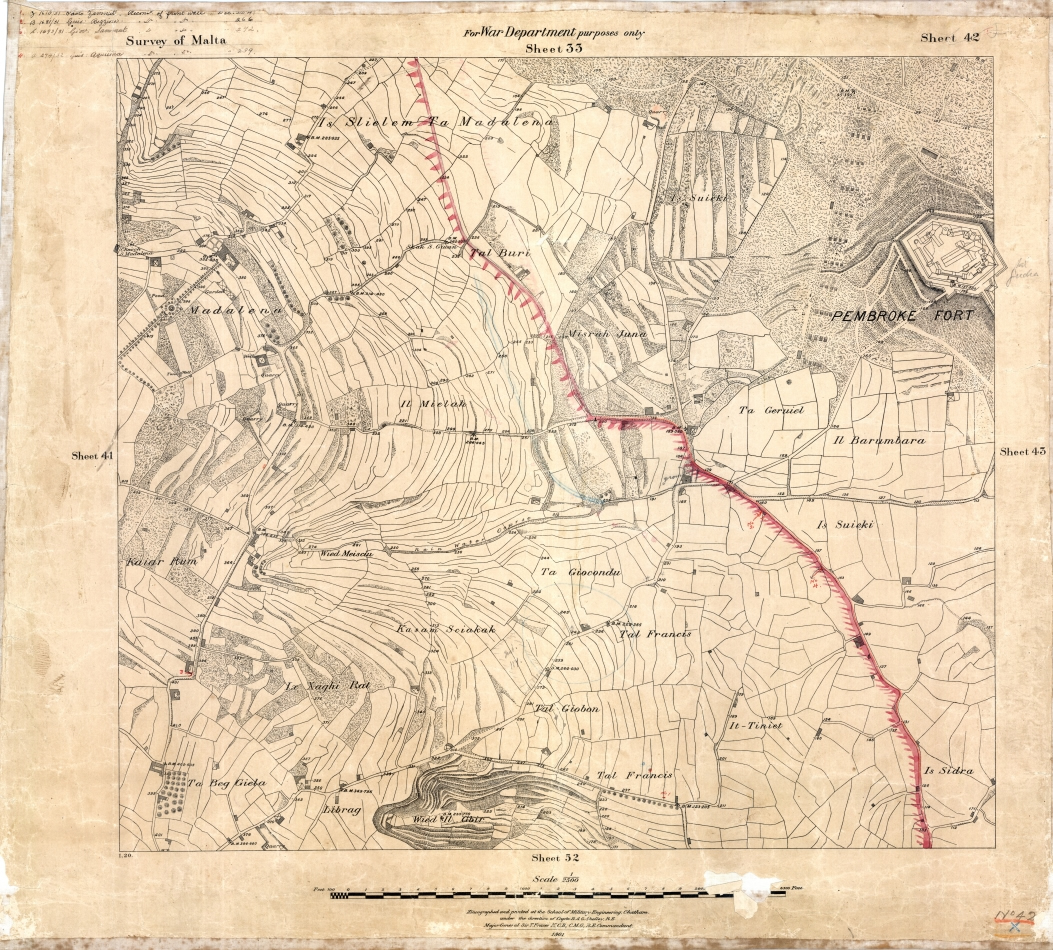
Fort Pembroke was part of a larger British defensive scheme in Malta, linked to the Victoria Lines.
The Victoria Lines were a line of forts and entrenchments constructed by the British to defend the “Great Fault” escarpment across northern Malta.
Specifically, Fort Pembroke was built to guard the seaward approach to the Grand Harbour, but also to defend the “right flank” of the Victoria Lines, preventing an enemy from outflanking that defensive line.
The fort’s planning stemmed from a defense committee recommendation in 1873.
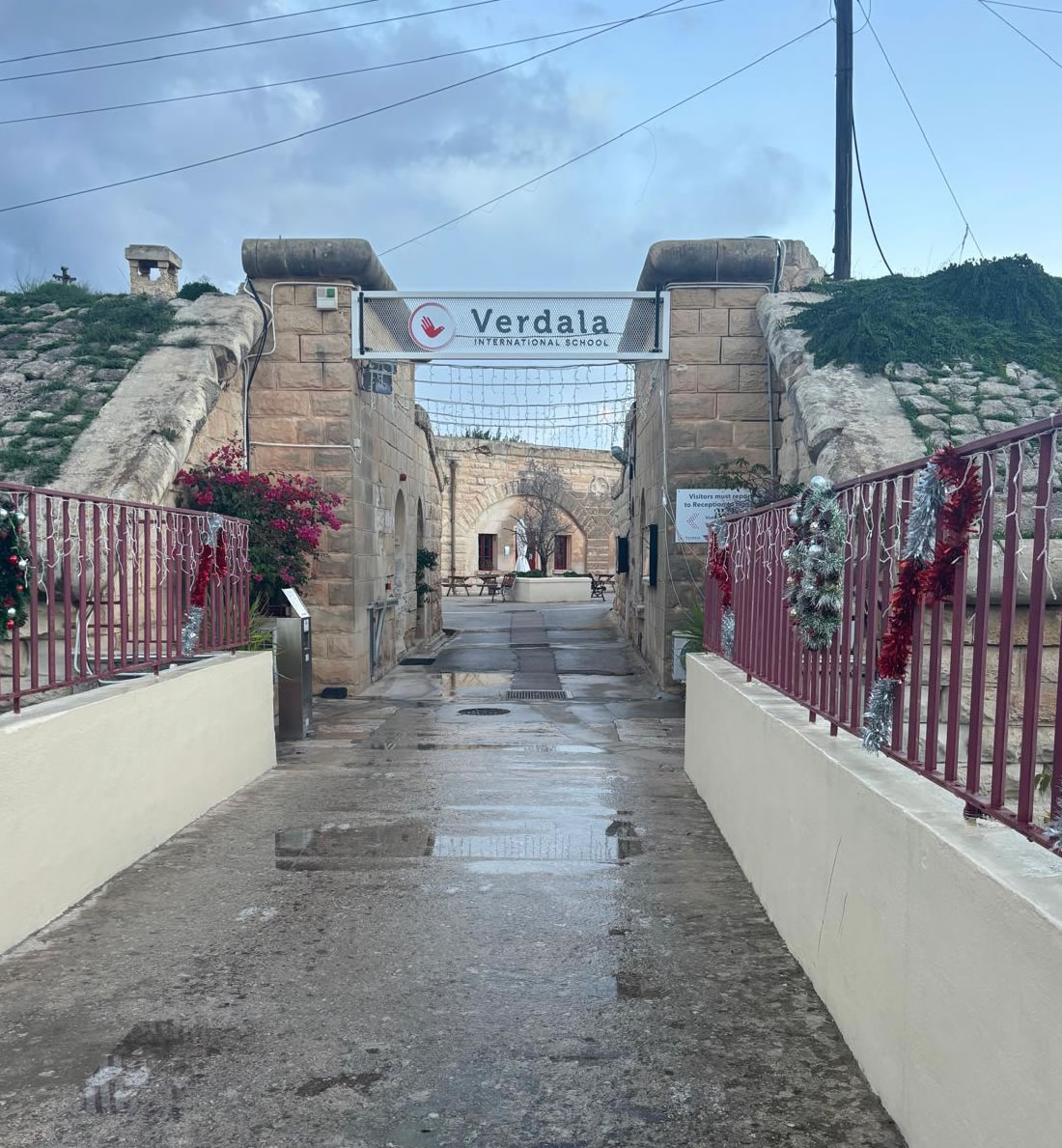
Construction
Construction began on 24 January 1875 and was completed in December 1878 (some sources say 1879) under British rule.
It is built of limestone and concrete.
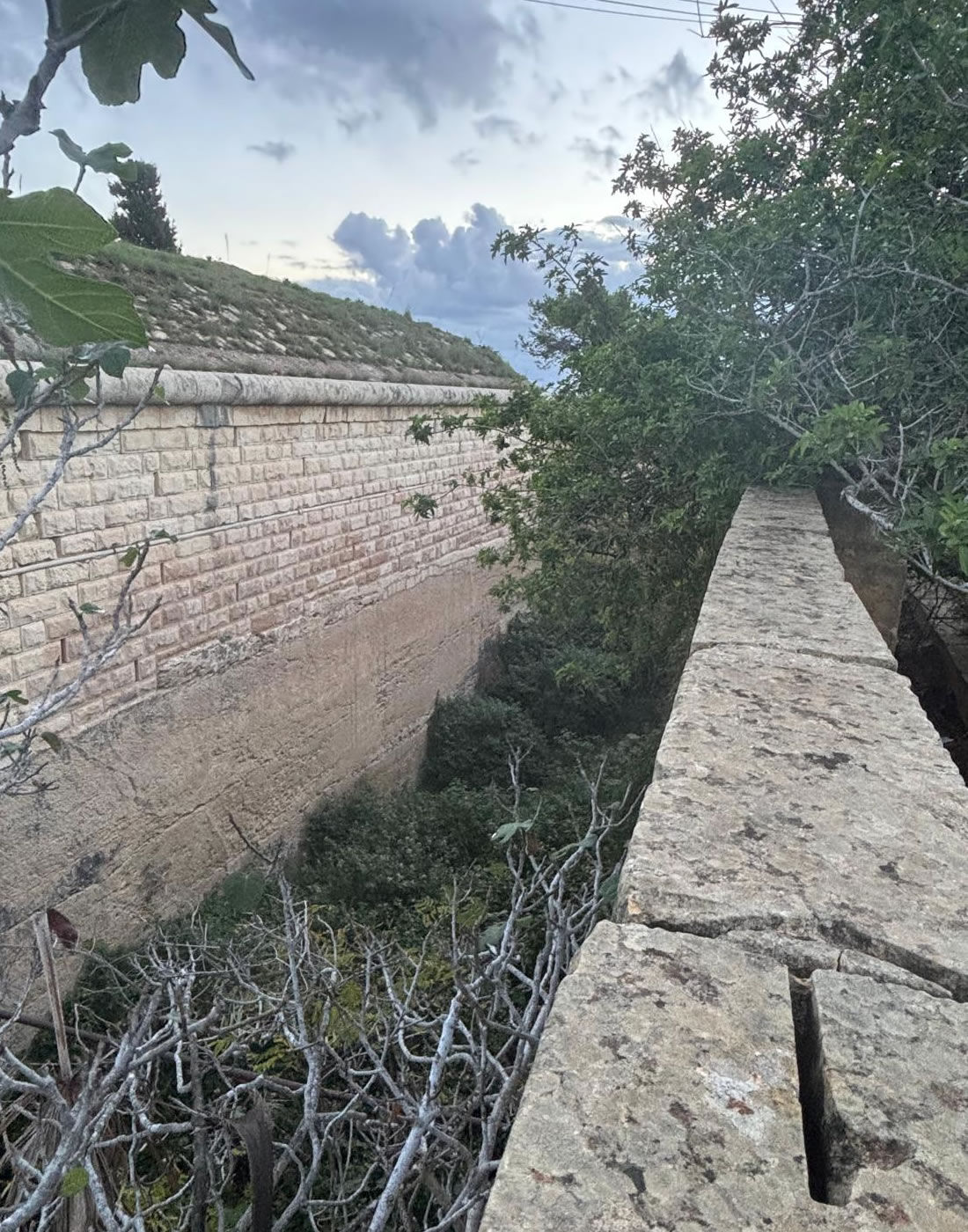
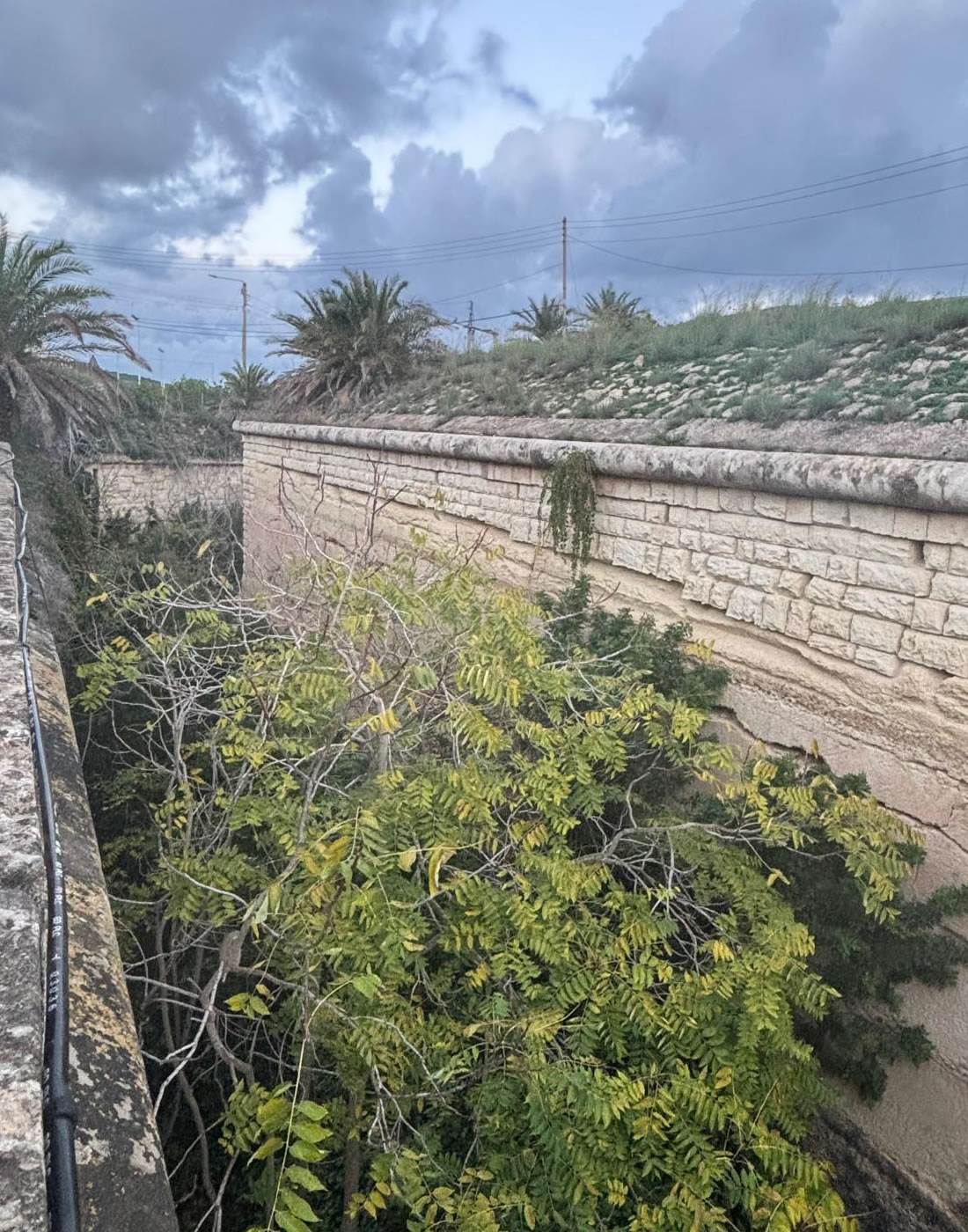
The fort has a polygonal (elongated hexagonal) design, surrounded by a ditch (a defensive trench) and a glacis (a sloped embankment).
Internally, it included underground magazines (for storing ammunition) and casemated garrison quarters (protected living and working space for the troops).
According to military architectural analysis, the fort featured elaborate defensive features: a covert way (a protected path for defenders), landward approaches, and outworks including a triangular fleche.
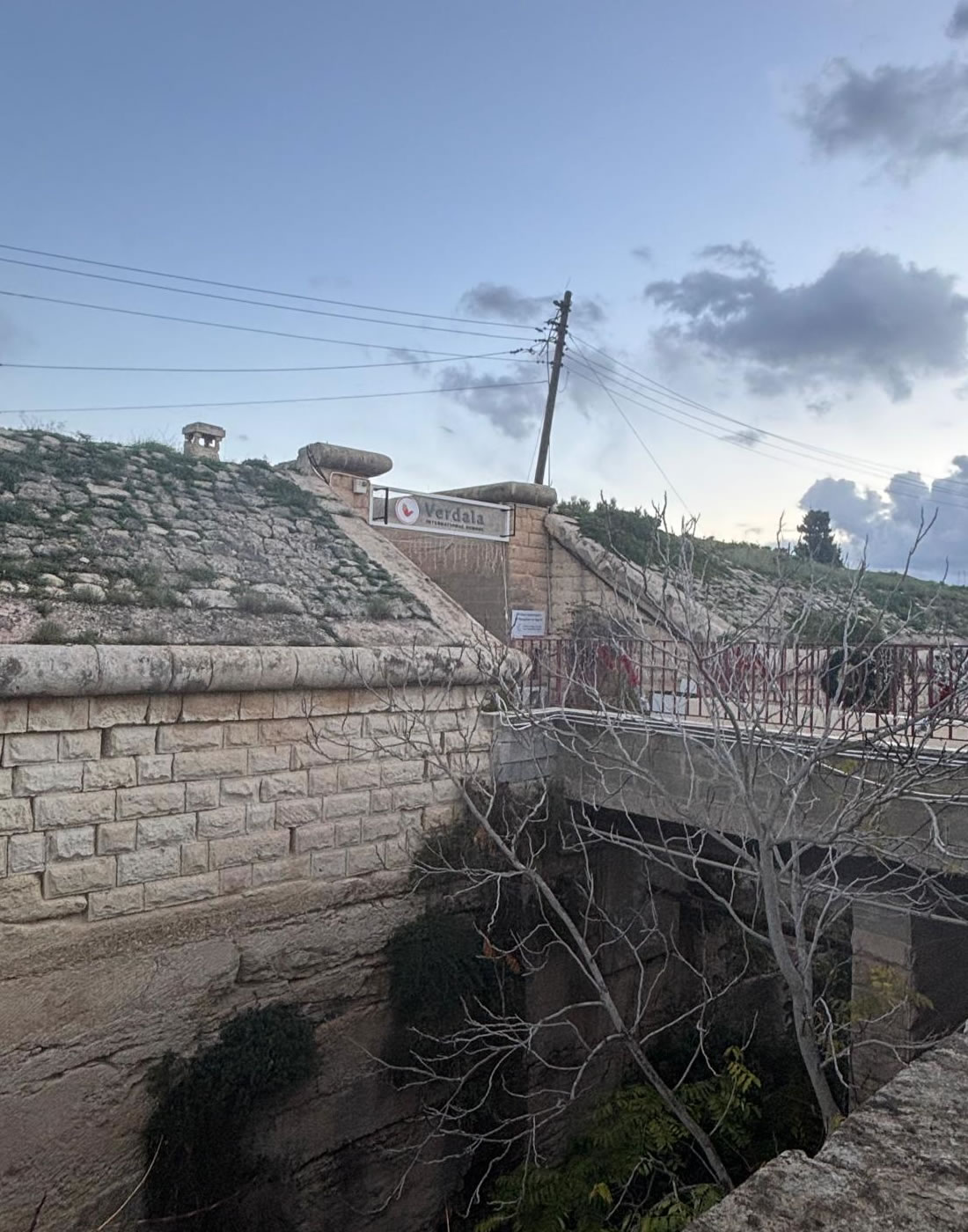
The entrance was originally protected by a rolling bridge (a type of drawbridge), though this was later replaced.
Armament and Military Role
When first armed, Fort Pembroke had:
Three RML (rifled muzzle-loading) 11-inch 25-ton guns, mounted en barbette (i.e., firing over the parapet).
One 64-pounder gun.
The fort was garrisoned by the Royal Garrison Artillery (Western District) in its early years.
By the mid-1890s, these guns were becoming obsolete. Rather than upgrading the fort’s armament, the British decided to build a new battery nearby (Pembroke Battery) to mount more modern artillery.
As a result, Fort Pembroke’s role shifted: it became an ammunition depot, especially for small-arms ammunition.
Modifications were made: the original rolling bridge was replaced by a fixed metal bridge, and the gate was widened.
Later History & Use
During World War II, Fort Pembroke was repurposed: it served as a prisoner-of-war (POW) camp, housing German prisoners.
The broader Pembroke Army Garrison (of which the fort was part) included barracks, training grounds, hospitals, and other military infrastructure.
The British military finally left Pembroke in 1978 (or 1979, depending on the source), ending Fort Pembroke’s role as a British military installation.
Post-Military and Current Use
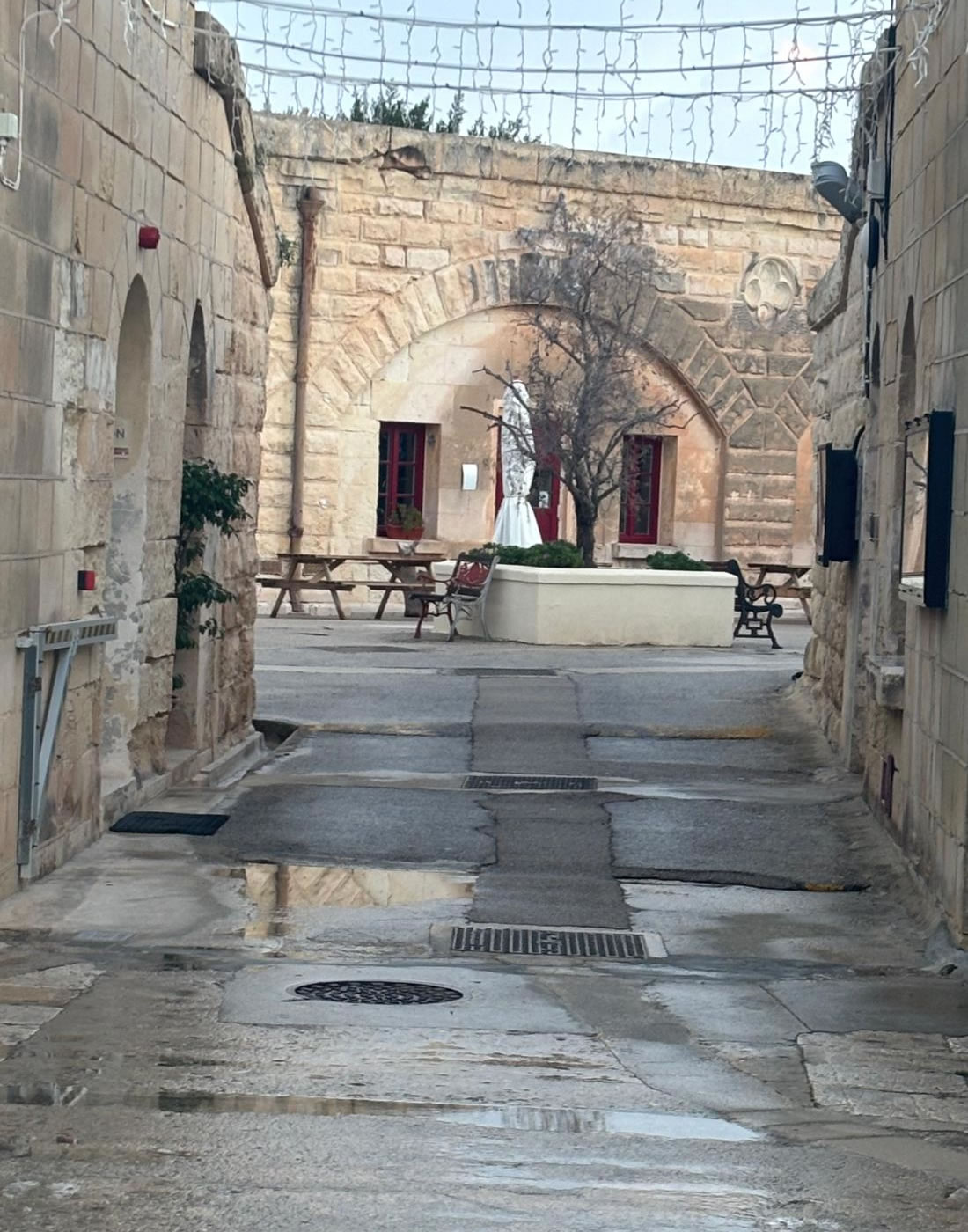
After being unused for a while, Verdala International School moved into Fort Pembroke in 1987.
The school has since grown, expanding into nearby former barrack blocks.
The fort is protected as a historic monument: it was designated a Grade 1 national monument by the Malta Environment and Planning Authority (MEPA) in 1996, with further protections extended to its glacis in 2009.
Relationship to Pembroke Battery
Because Fort Pembroke’s guns became obsolete, the Pembroke Battery was constructed nearby (1897–1899) to mount newer breech-loading guns.
The battery was armed with two 9.2-inch BL Mk X guns, each on open (en barbette) concrete emplacements.
The battery was struck off the armaments list in 1919, and its guns were removed.
In the 1980s, parts of the battery (such as one gun emplacement and underground structures) were demolished for housing development.
Restoration efforts are underway (led by the Pembroke Local Council and other heritage bodies) to transform the remains of Pembroke Battery into a museum.
National Archives of Malta PDM-02-50091
Significance
Defensive Architecture: Fort Pembroke is a good example of late-19th-century British polygonal fort design, showing how forts evolved with advances in artillery and military engineering.
Strategic Role: It played a dual role: protecting the coast (Grand Harbour) and reinforcing the interior defensive line (Victoria Lines).
Historical Continuity: Its life mirrors broader trends in Maltese military history — from Victorian-era coastal defences, to 20th-century military reorganization, to repurposing in peacetime.
Heritage Value: Today, as an intact structure and reused as a school, it demonstrates how military heritage can be adapted for peaceful, civilian use while being preserved.