What Is Known About the Fort St. Elmo (1976) Skeleton Light Tower
According to the List of lighthouses in Malta, the Fort St. Elmo Light was built in 1976.
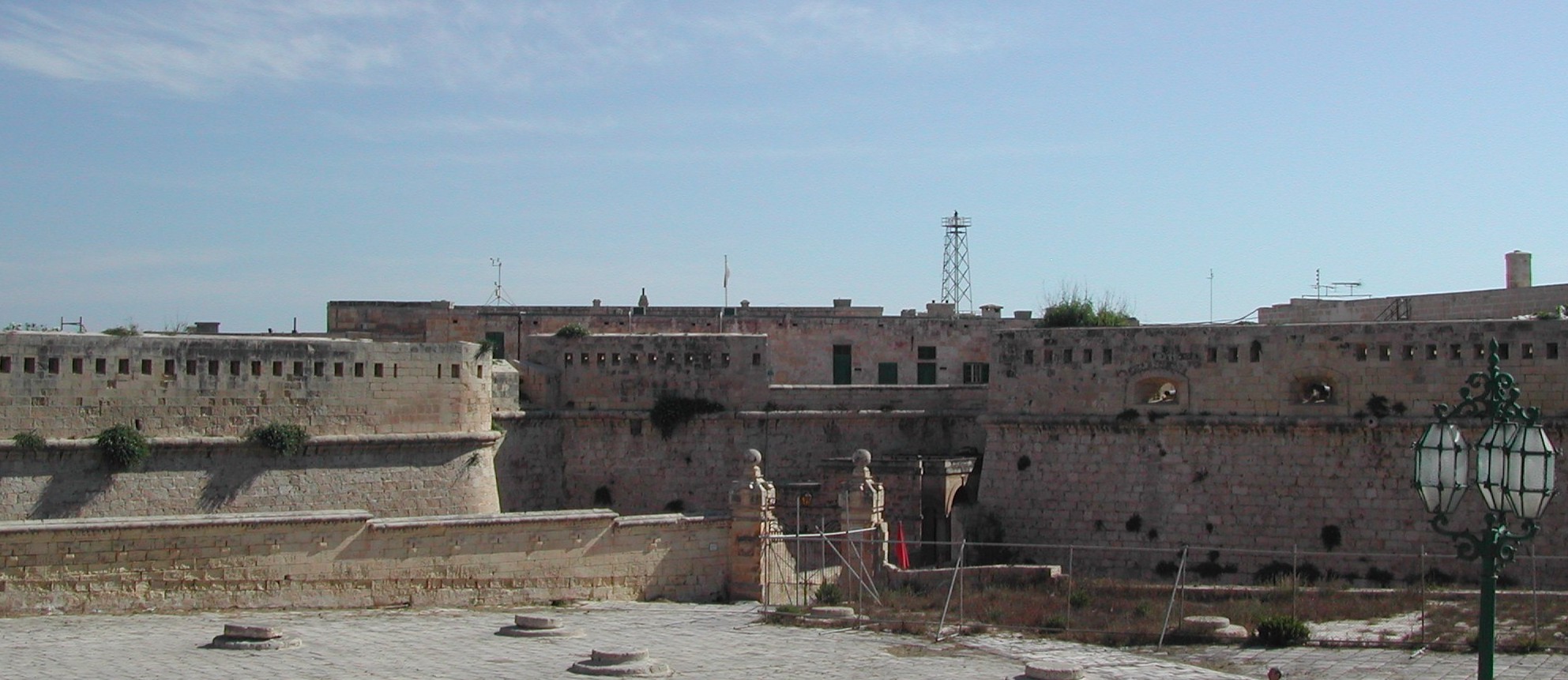
The same source describes it as a skeleton tower, about 10 m high.
The focal height (height of the light above water) is listed as 49 m (161 ft).
It carries the Admiralty number E2061.5 and NGA (US) number 10544.
The tower is mounted on the highest point of Fort St. Elmo, giving it a commanding position over both Grand Harbour and Marsamxett Harbour.
It functions as a navigational aid, guiding ships in Valletta’s harbour.
The previous lighthouse, a traditional masonry/light tower, was demolished in 1940 (during WWII) for security reasons, because it could serve as a target or landmark for enemy aircraft.
The skeleton tower was thus not a restoration of the old lighthouse, but a later addition (decades after the war).
According to restoration and heritage-management documents, parts of Fort St. Elmo were vacated in the 1970s.
The fort underwent a major restoration more recently (2011–2015) before being reopened, but these sources focus more on the fortifications, the war museum, and historic architecture rather than the lighthouse tower itself.
“Skeleton tower” means it’s a metal framework, rather than a solid masonry tower. This is consistent with other navigational light towers built in the mid-to-late 20th century.
According to Vassallo History’s lighthouse listing: “Approx. 10 m (33 ft) square steel skeletal tower with gallery”.
It has a gallery (i.e., a small balcony/platform) around the light, which is typical of skeletal towers.
As of the most recent data, the light is active, and its characteristic is three white flashes every 15 seconds, according to Vassallo History.
The site (Fort St. Elmo) is publicly accessible (as part of the National War Museum).
However, the tower itself is not likely open for visitors (no evidence suggests internal access).
Uncertainties & Missing Information
I found **no detailed archival documentation** (in publicly accessible sources) about who designed the 1976 tower, what exact construction materials were used (steel grade, foundation, etc.), or who commissioned it (e.g., Transport Malta, British legacy, etc.).
There is no mention of the range (how far the light is visible) in the basic lighthouse listings.
There is limited photographic or engineering drawing evidence in common historic-architecture or maritime-heritage publications.
Restoration documentation for the fort focuses more on the fort’s masonry, barracks, museum, and WW2 artifacts; the light tower is mentioned mostly in lighthouse-lists, not detailed heritage reports.
Interpretation / Significance
The 1976 skeleton tower represents a modern, utilitarian re-establishment of a navigational aid on a historic fort, rather than a reconstruction of the original 19th-century lighthouse.
Its high focal height (49 m) makes it very effective for harbour navigation, taking advantage of the elevation provided by Fort St. Elmo’s walls.
The switch to a skeleton tower reflects mid-20th-century lighthouse design trends — cheaper, easier to maintain, and less massive than traditional masonry towers.