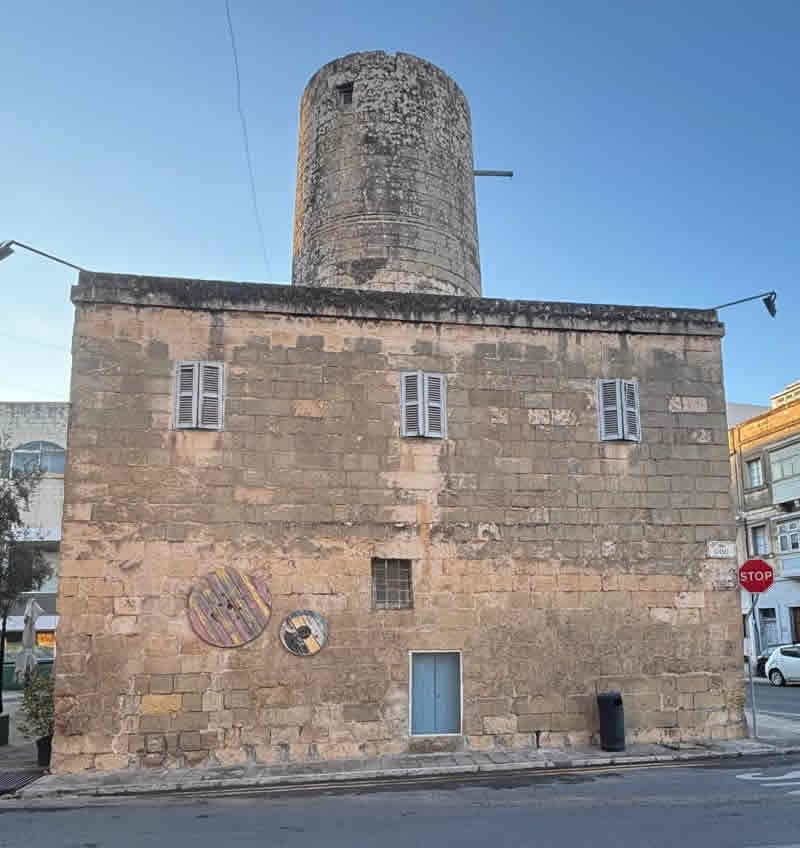
Here’s a summary of the construction and history of Ta’ Ganu Windmill (also known as Il-Mitħna tal-Maħlut) in Birkirkara, Malta:
📍 Location
35.899889, 14.455899Basic Facts & Names
The windmill is known by a couple of names: Ta’ Ganu Windmill and Tal-Maħlut Windmill.
“Maħlut” refers to a mixture (traditionally of wheat and hops, though in context here wheat & barley etc.) used for bread making. The name implies its use in producing mixed flours.
Construction
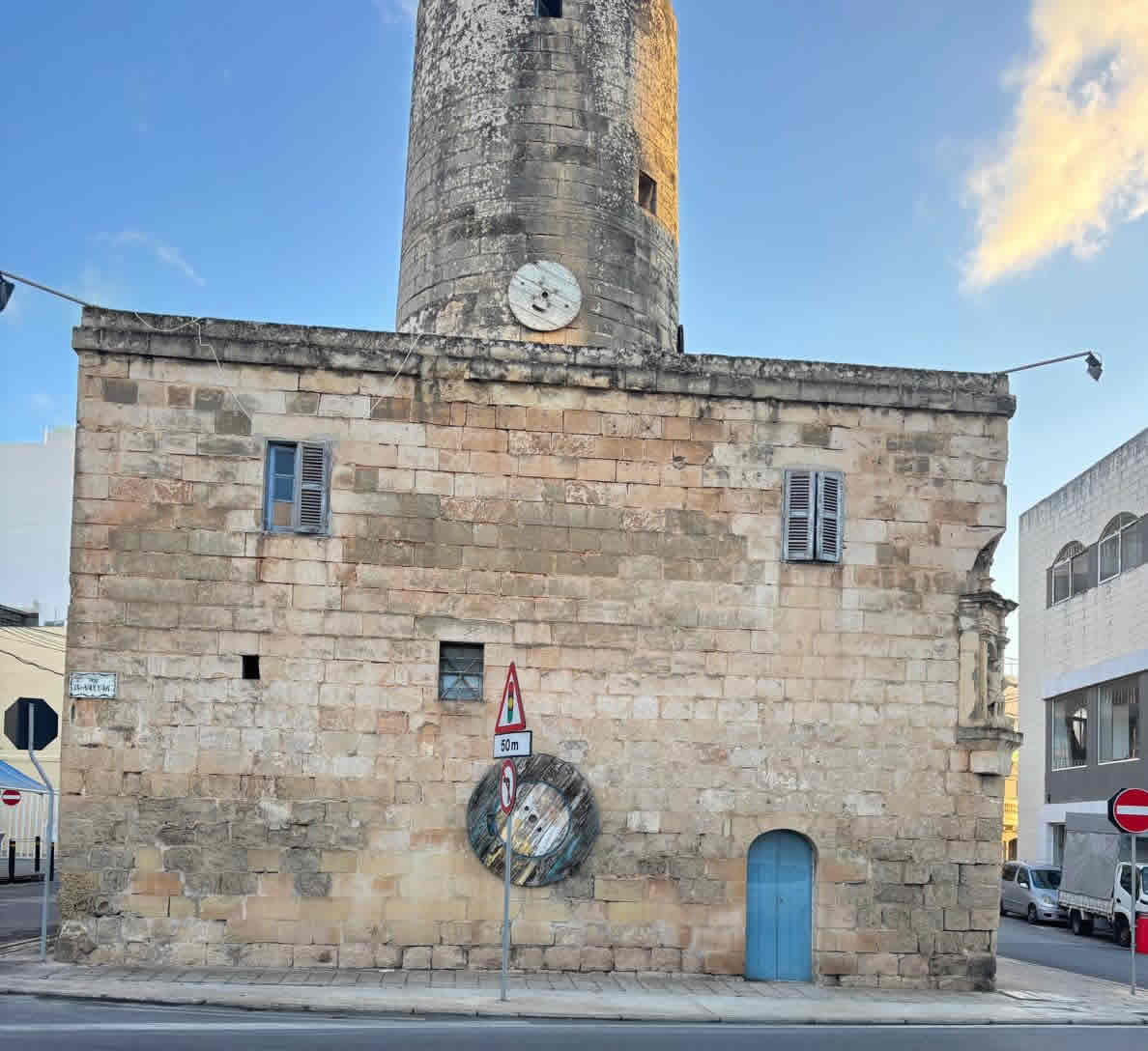
Date Built: The windmill was constructed in 1724 under the authority of the António Manoel de Vilhena Foundation (Fondazione Vilhena), during the period of Grand Master Manoel de Vilhena.
Purpose: It was built to help meet the demand for flour (or mixed grain/flour) in the growing population.
Architectural Features
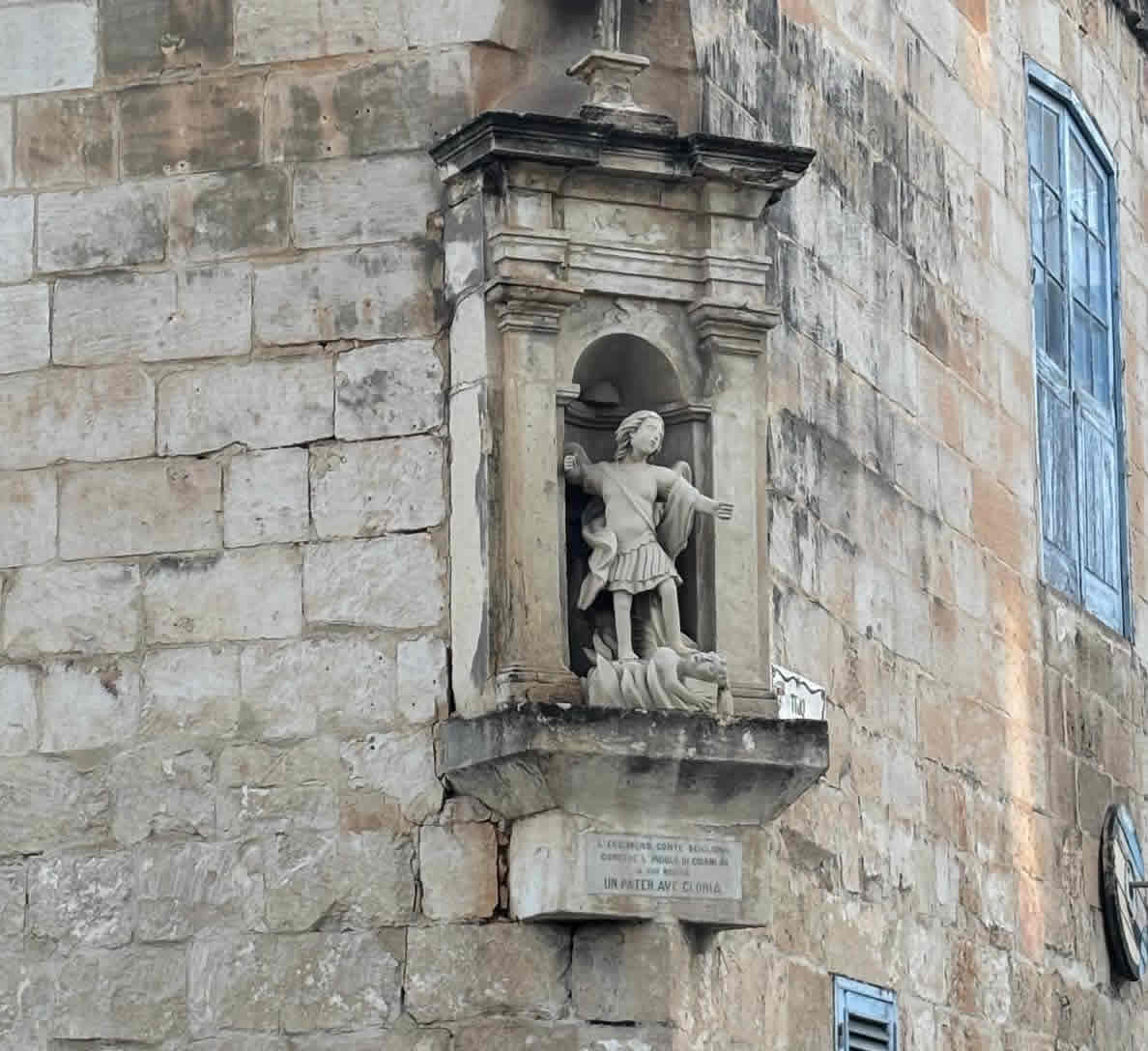
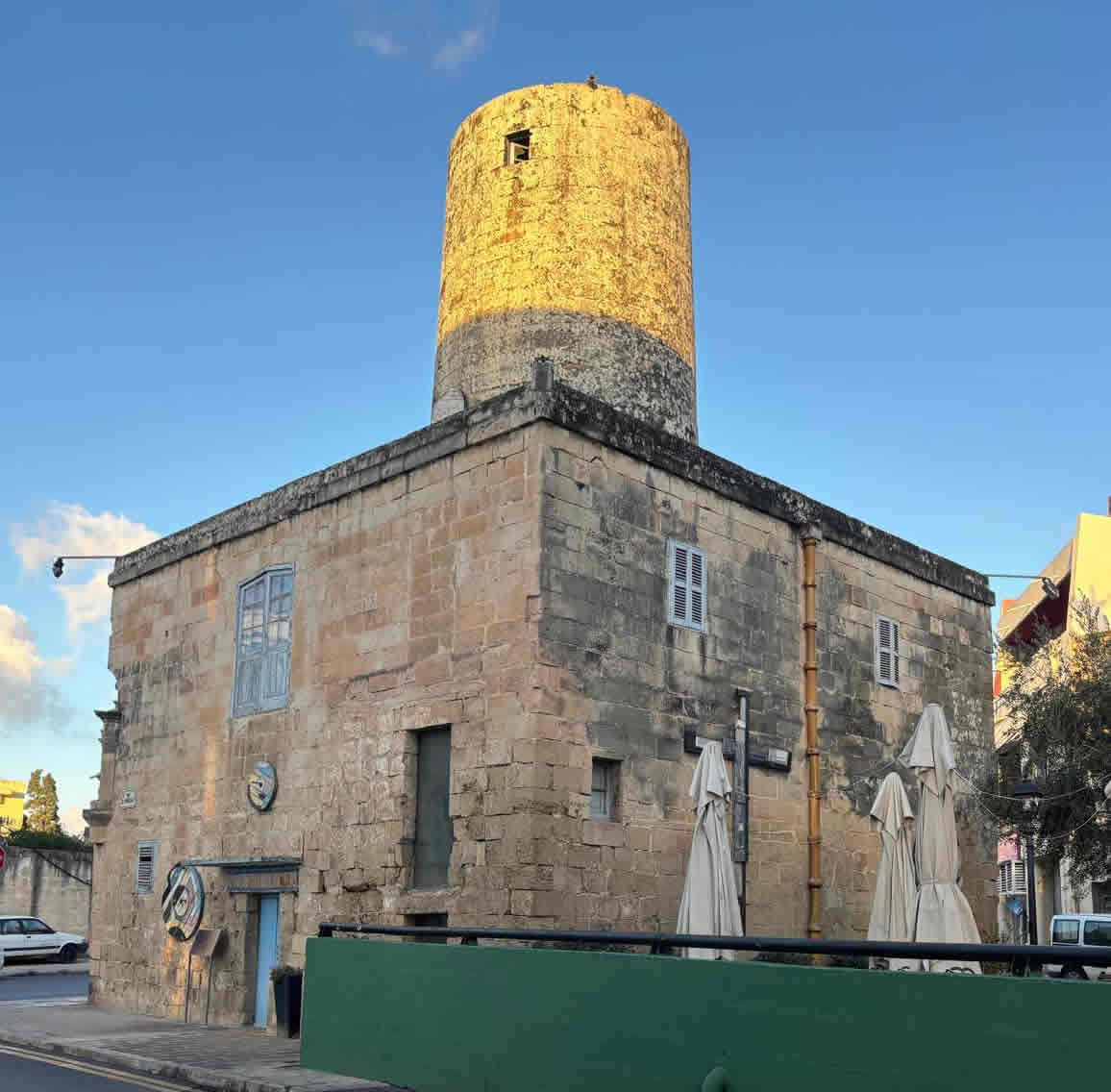
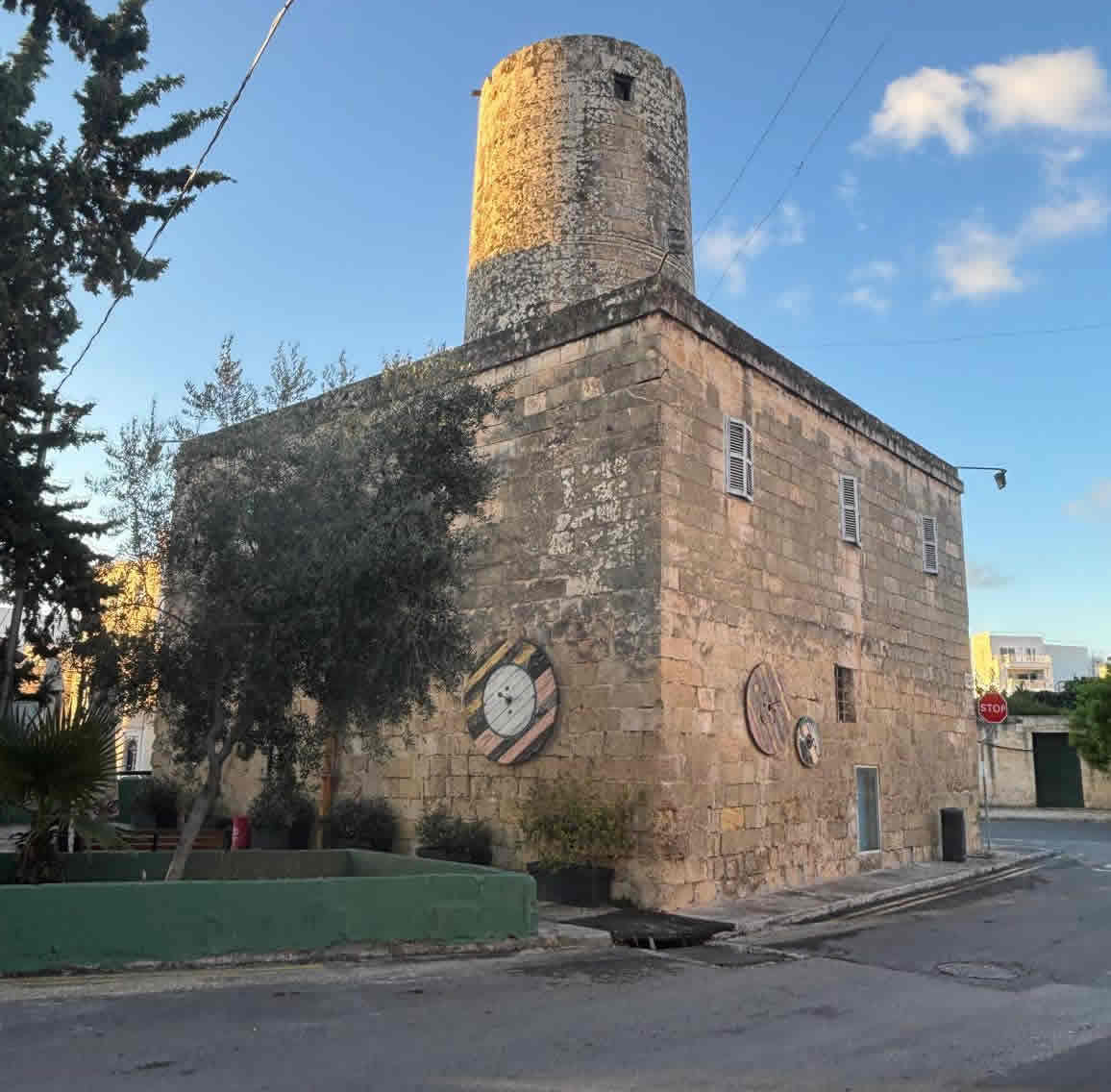
The building has a tower component (cylindrical tower) in which the milling mechanism was housed. Around this are supporting rooms.
A first floor was added later (~1860). This addition reflects different building methods:
• The ground floor has high ceilings, with roofs composed of arches supporting stone slabs.
• The upper floor uses lower ceilings, timber beams supporting stone slabs.
It is constructed in traditional limestone masonry, typical of windmills of the Knights period in Malta.
Usage Over Time
Until 1929: The windmill was in active use milling grain mixtures (wheat/barley etc.) under the name Maħlut. Decline started as newer milling technologies (steam, etc.) became more widespread.
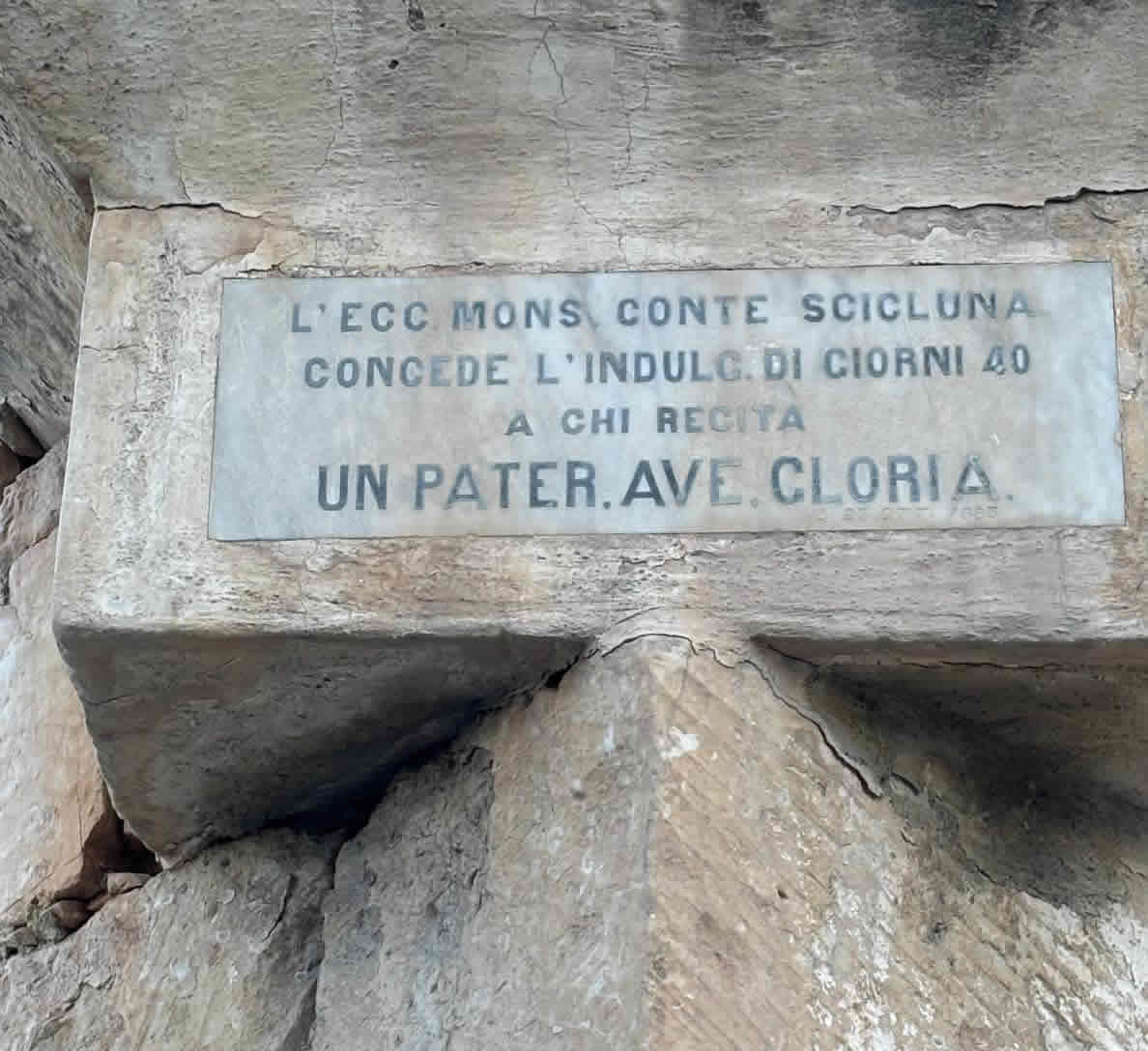
Post-active use: After it stopped the milling function, the building was used as a residence. During World War II it served as an air-raid shelter. Later, in the 1970s, it was used as a blacksmith’s workshop.
Restoration & Current Use
It fell into dereliction but restoration efforts began in the 1980s under the Government’s Works Department.
Around 1990, the artist Gabriel Caruana (and his wife Mary Rose Caruana) converted it into an arts, culture and crafts centre (Gabriel Caruana Foundation).
In 2012, the building was given Grade 1 scheduling status, the highest heritage protection under Maltese law.
Significance
As of 2024, it celebrated its 300th anniversary since construction.
It functions not just as a historic building but as a community arts space, bridging heritage and contemporary culture.
There have been concerns or debates over nearby development (e.g. proposals for an old people’s home) and how these might affect its setting and visibility.