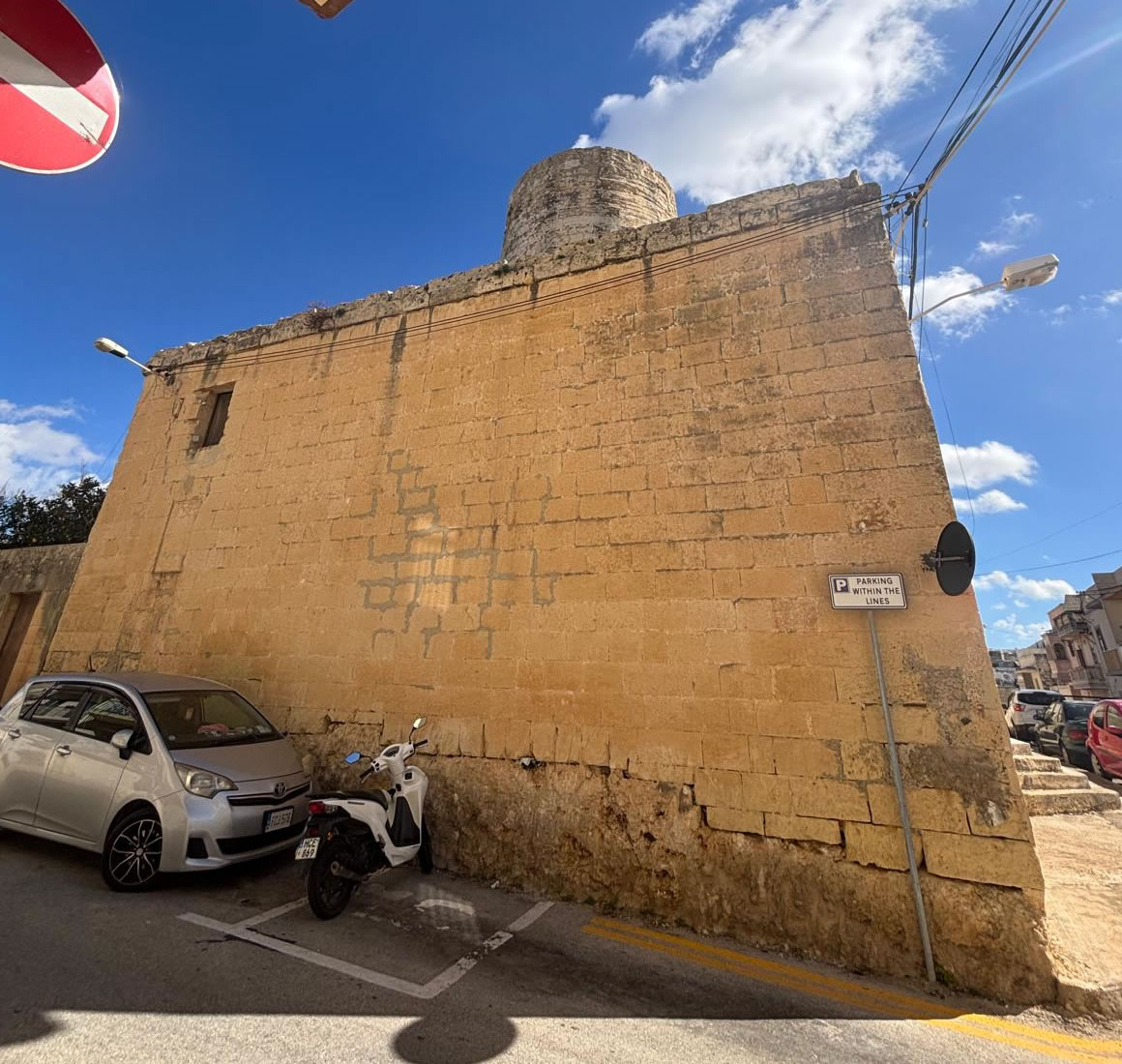
Here’s a summary of the construction and history of Ħal Bajjada Windmill in Rabat, Malta:
📍 Location
35.879685, 14.395014Ħal Bajjada Windmill (Rabat) — full history & construction details
Short summary
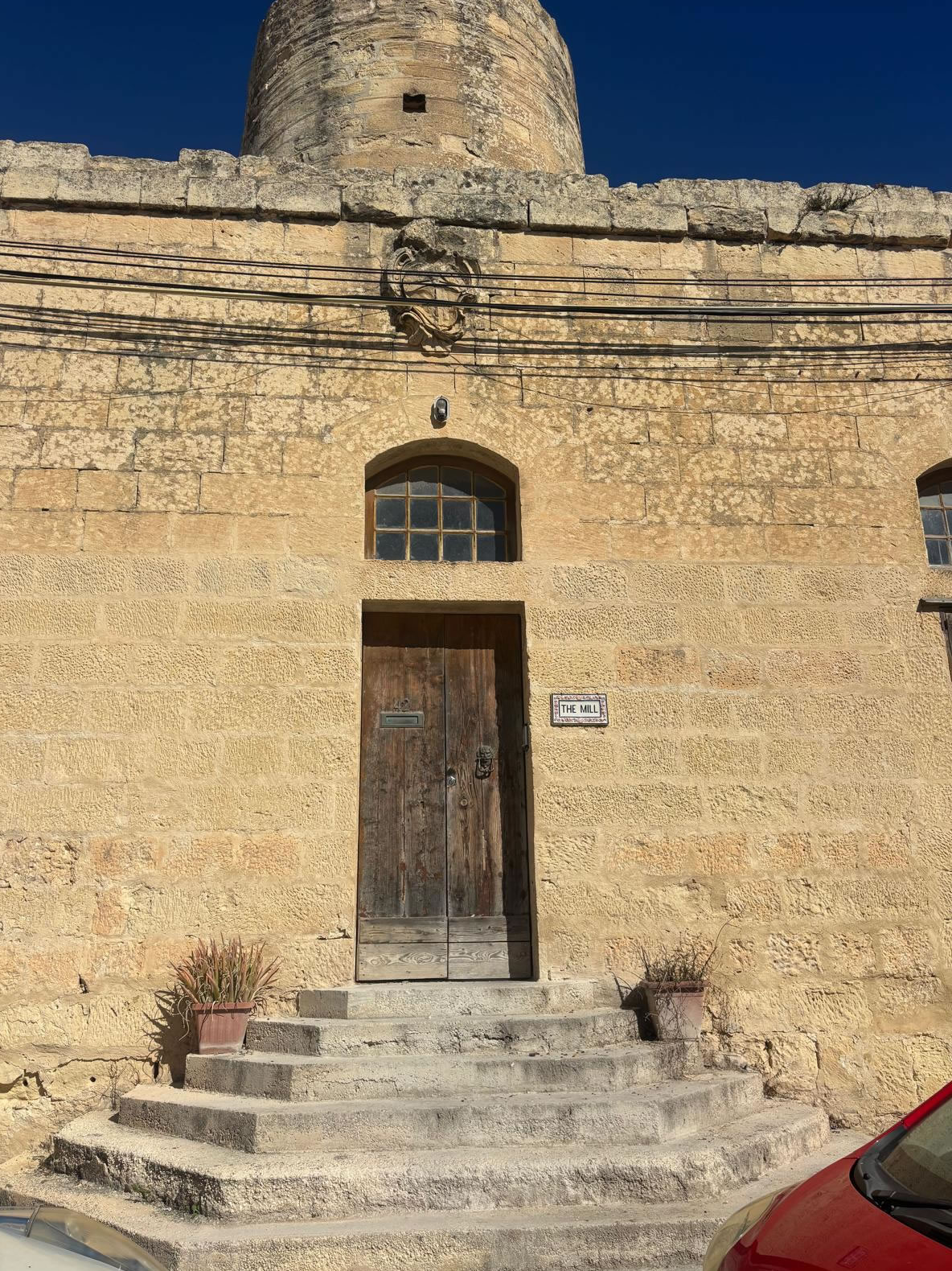
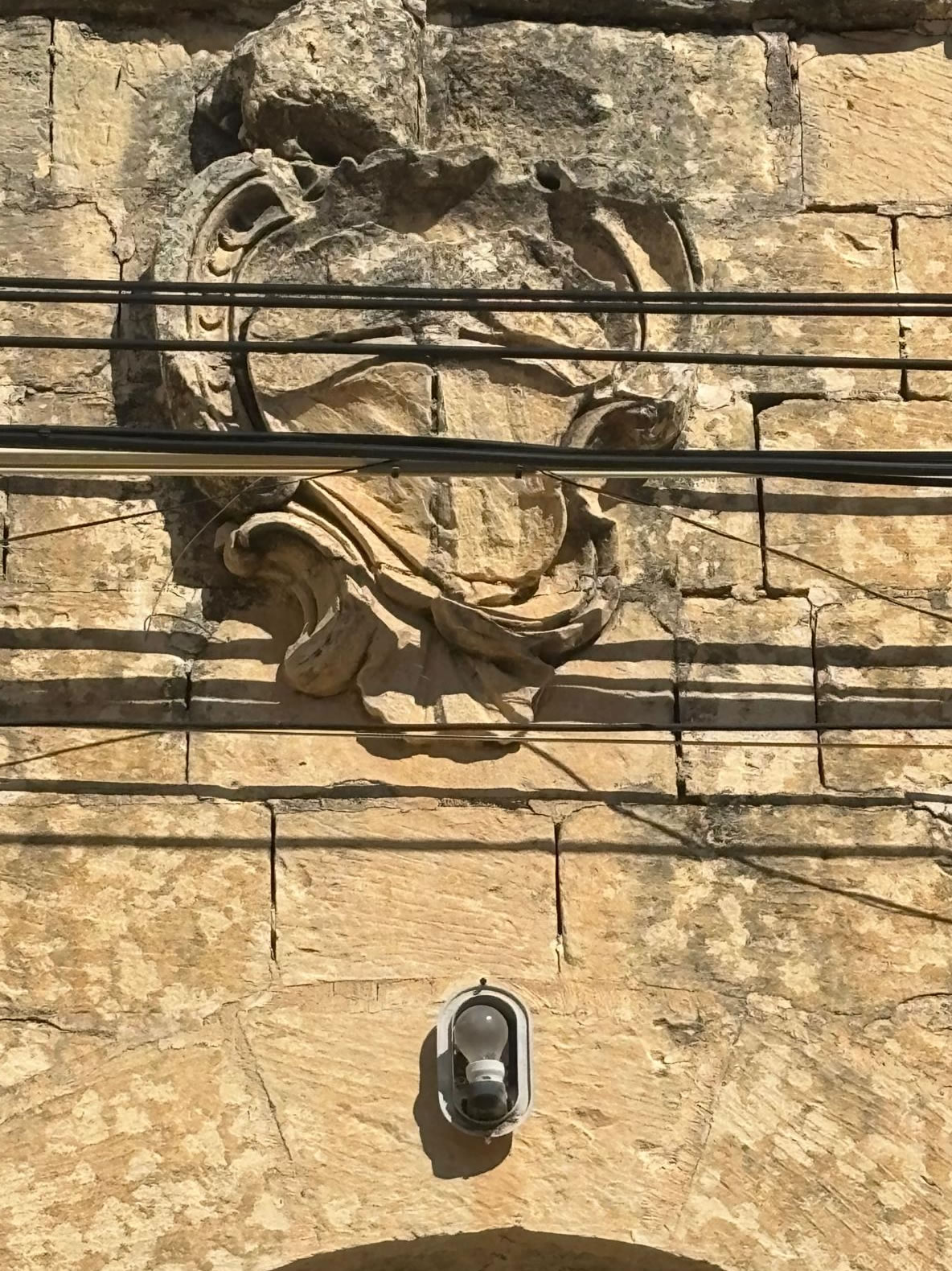
Ħal Bajjada is a late-17th century Maltese tower windmill in Rabat, usually dated to the Cottoner/Carafa period (c.1680s–1690s). Sources attribute the building to the Carafa era (Grand Master Gregorio Carafa, r.1680–1690) and note an eroded coat of arms above the main entrance. The mill’s sails were removed in the 19th/early-20th century and the building was converted to domestic use; it survives as a private residence (and has recently been offered as holiday accommodation).
Full history & timeline
Origins (late 17th century)
The windmill is listed in specialised Maltese windmill catalogues as a late-17th-century tower mill built during the Carafa/Cottoner wave of construction (entries record *built by Carafa, 1680–1690*). The presence of a worn coat of arms over the main door corroborates a late-17th-century patronage link with the Grand Master’s era.
Operational life (18th–19th centuries)
Like most rural Maltese tower mills, Ħal Bajjada would have served local farmers — grinding wheat/barley for village consumption and sale. Maltese windmills generally remained economically useful through the 18th and much of the 19th century; many ceased regular commercial use around the late 19th / early 20th century as steam and industrial mills took over. Public inventories record that Ħal Bajjada’s sails were removed and the mill was adapted for non-industrial use (residential/agricultural).
Later history & present day
The building survives and has been converted to domestic use. Recent property/holiday listings show the mill presented as a restored, habitable dwelling (Airbnb/holiday-rental listings describe an “18th/17th-century windmill” conversion and terraces). It is privately owned today and is not an operating mill.
Construction & technical details (what the original mill was and what survives)
Typology & plan
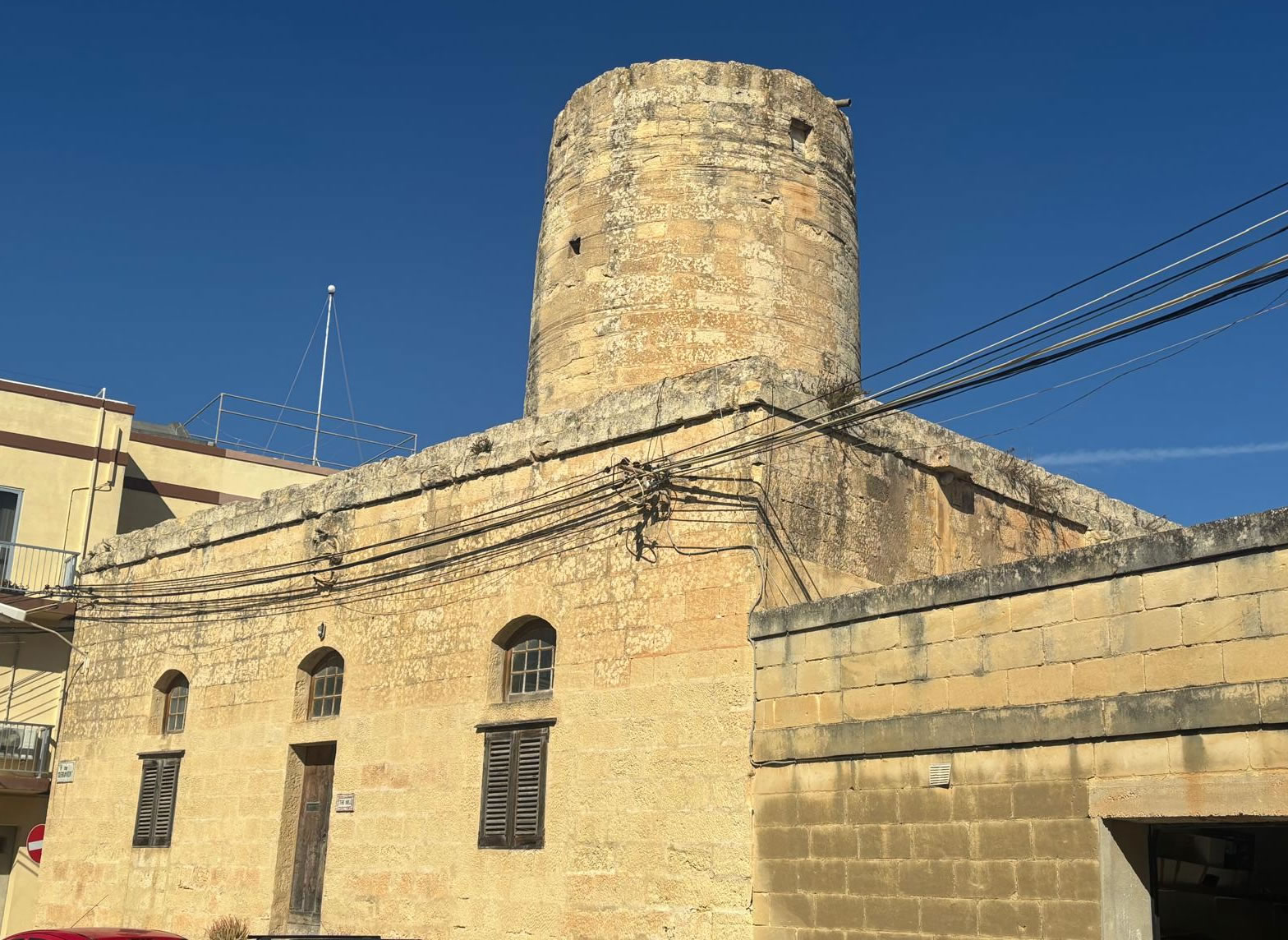
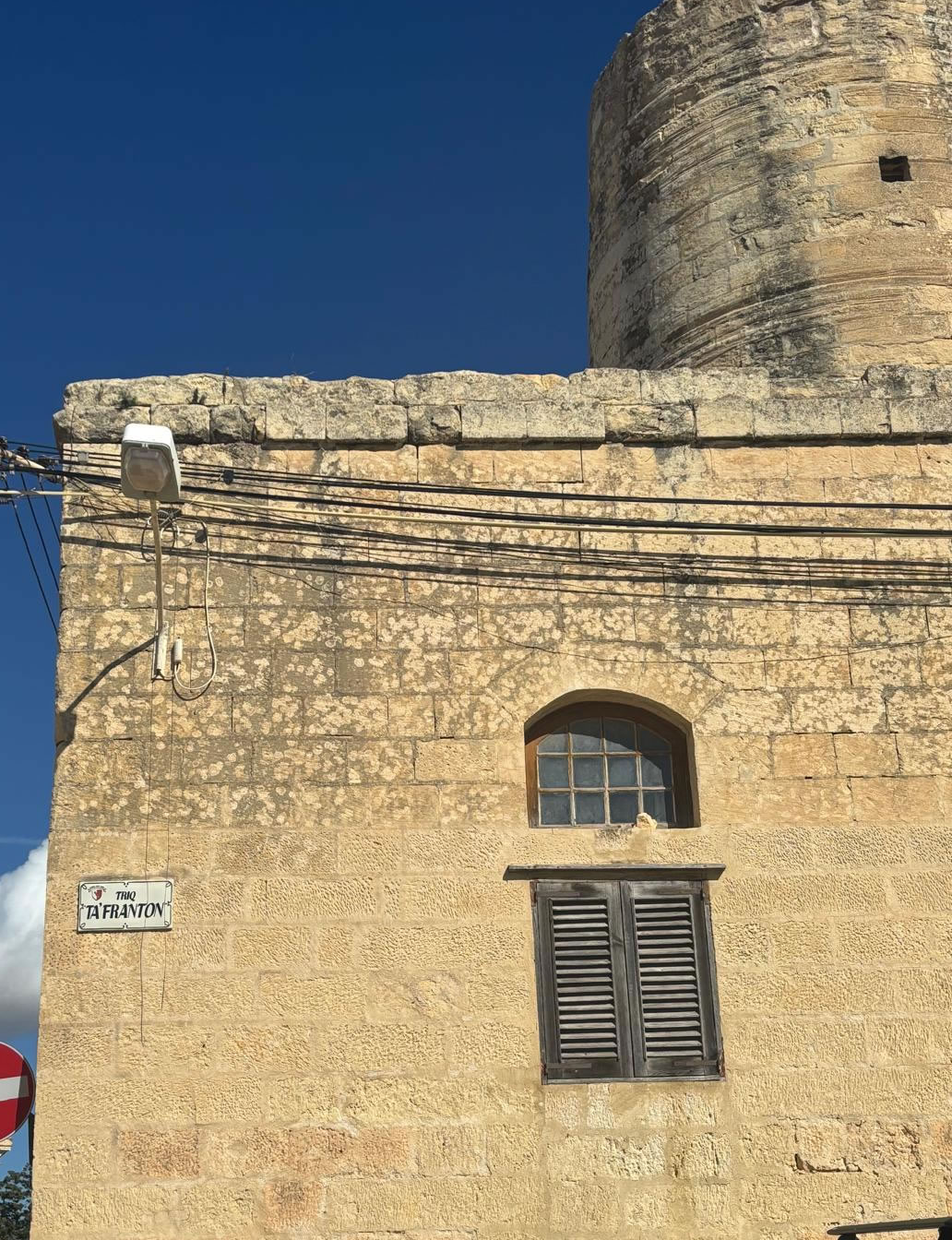
Ħal Bajjada is a tower mill — the common Maltese form: a cylindrical stone tower rising from a low rectangular base. The base usually provided storage, a stable or ancillary rooms; the tower contained the floors and shafting for the milling machinery. Surviving external photos and catalog descriptions confirm the classic tower-on-base silhouette for this building.
Materials & masonry
Built in local globigerina limestone with lime mortar — the standard building materials for Maltese rural masonry of the 17th–18th centuries. The tower walls were deliberately thick to take the load of the cap and to resist wind. The façade historically bore (and still shows traces of) a carved coat of arms above the main door (now weathered/eroded).
Cap, sails & original machinery
Original configuration (standard for Maltese tower mills): a wooden rotating cap (set on a curb or rollers) carrying a horizontal windshaft and 4–8 timber-framed sails (canvas or slatted). Inside, the windshaft drove gearing (wooden cogs, crown/cog wheels) that turned one or more pairs of millstones (runner + bedstone), with hoppers, grain chutes and timber intermediate floors. No public source records the machinery surviving in working order at Ħal Bajjada; most converted mills lost their original mechanical equipment during adaptation. The sails were removed when the mill ceased operation.
Decorative / identifying features
The main door façade carries an eroded coat of arms (attributed to Grand Master Gregorio Carafa’s time) and an inscribed stone in the base described in catalogue notes — both features support the late-17th-century attribution.
Archaeology, planning & heritage notes
The mill is listed in windmill inventories and appears on local heritage/site lists. Nearby development works in Rabat occasionally reveal archaeological features (the Superintendence of Cultural Heritage reports include investigations in the Triq Ħal Bajjada / Rabat area), so the mill stands in an archaeologically sensitive townscape. If restoration or intrusive works are proposed, the Planning Authority / Superintendence would require survey and recording.