Windmills of Malta
🏛 Ħaż-Żabbar Windmill in Zabbar
📍 Location & Names
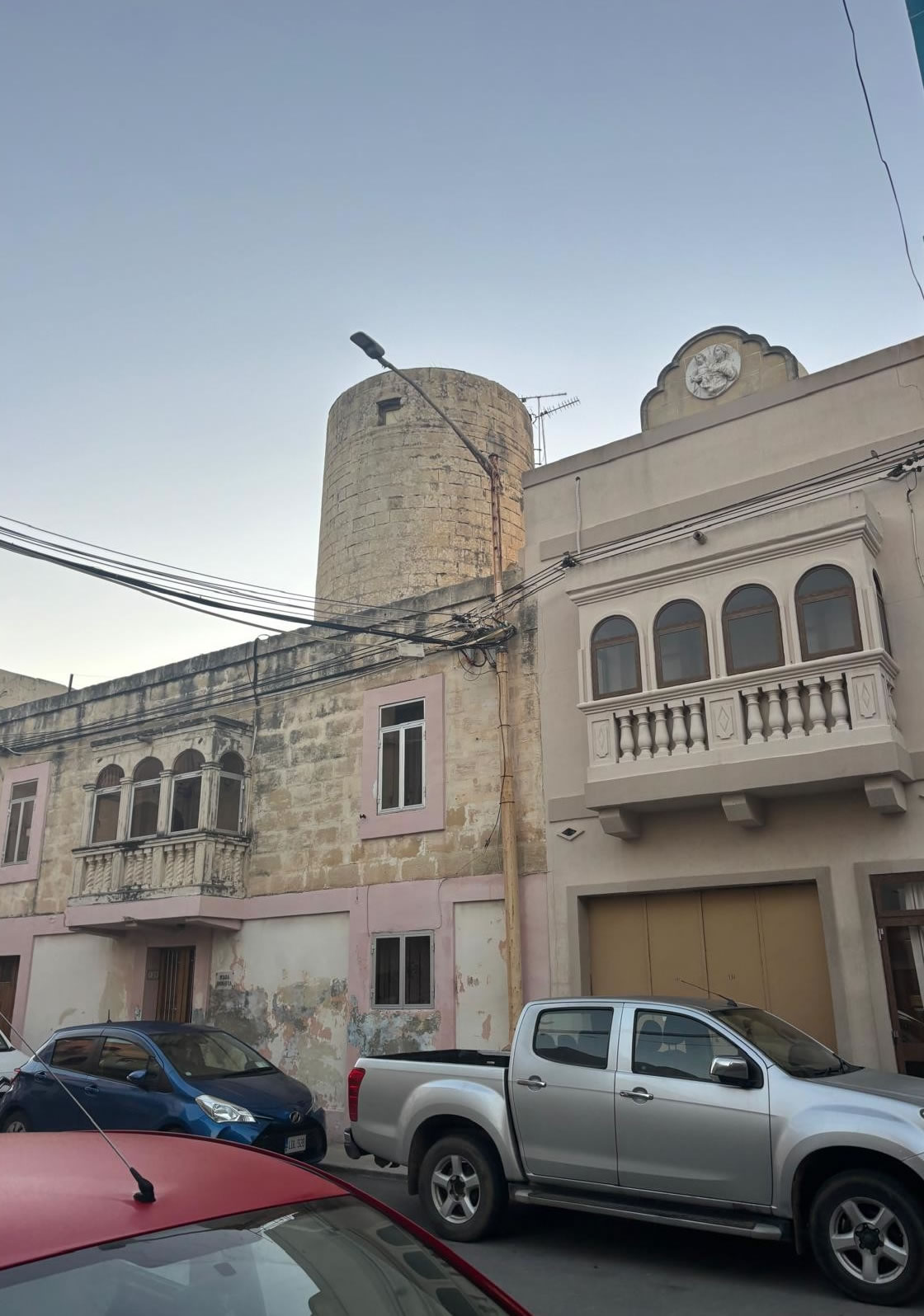
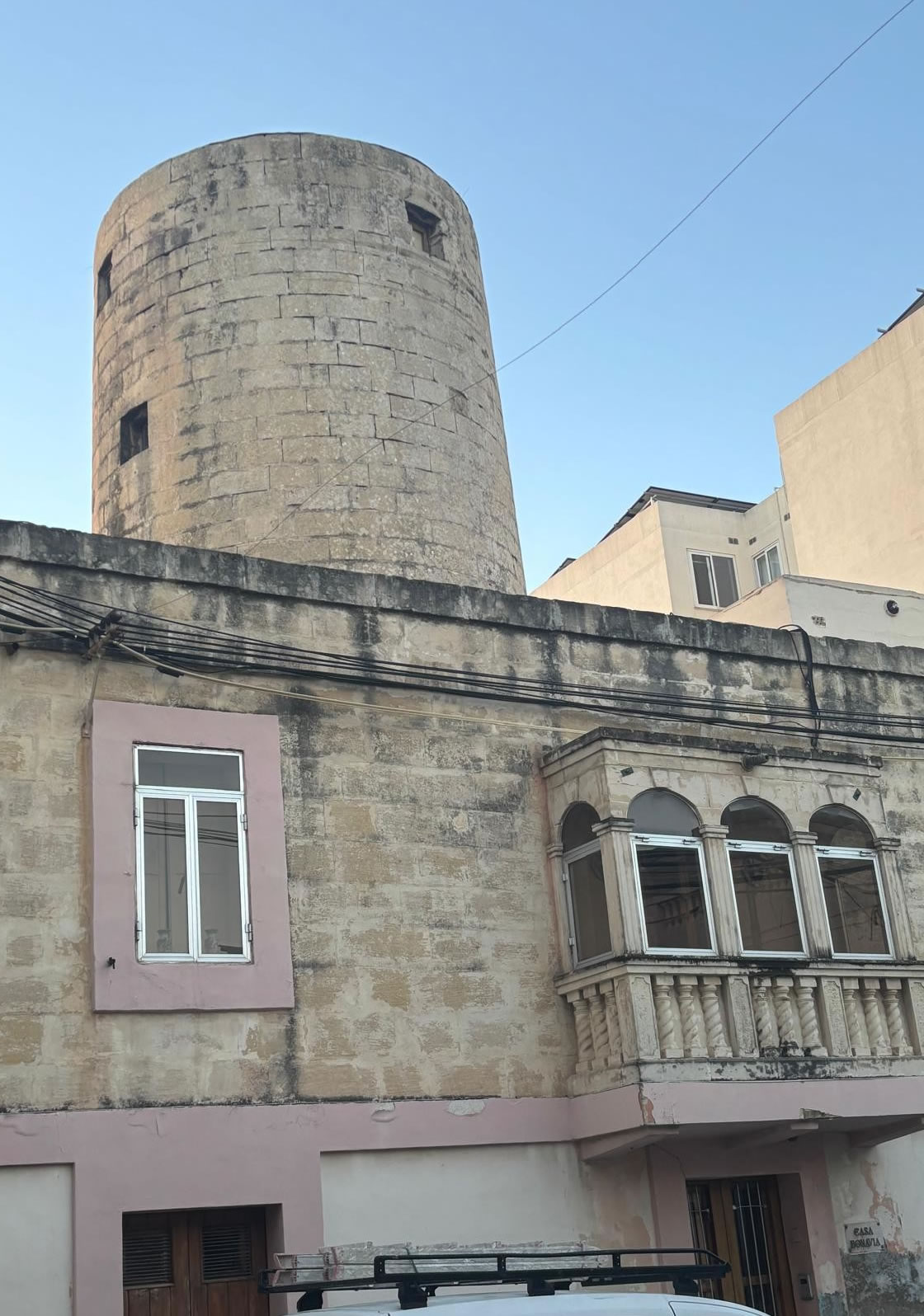
The windmill on Triq il-Bajjada (Bajada Street), Żabbar.
Ħaż-Żabbar (Triq il-Bajjada) windmill — history, construction & use
Short summary
The Bajada Street windmill in Żabbar is recorded as a 19th-century round (tower / “mound”) windmill located on Triq il-Bajjada. Only part of the original fabric is publicly visible today from the street; historically it served as a grain (corn) mill for the local community and later fell out of industrial use.
Construction & architecture
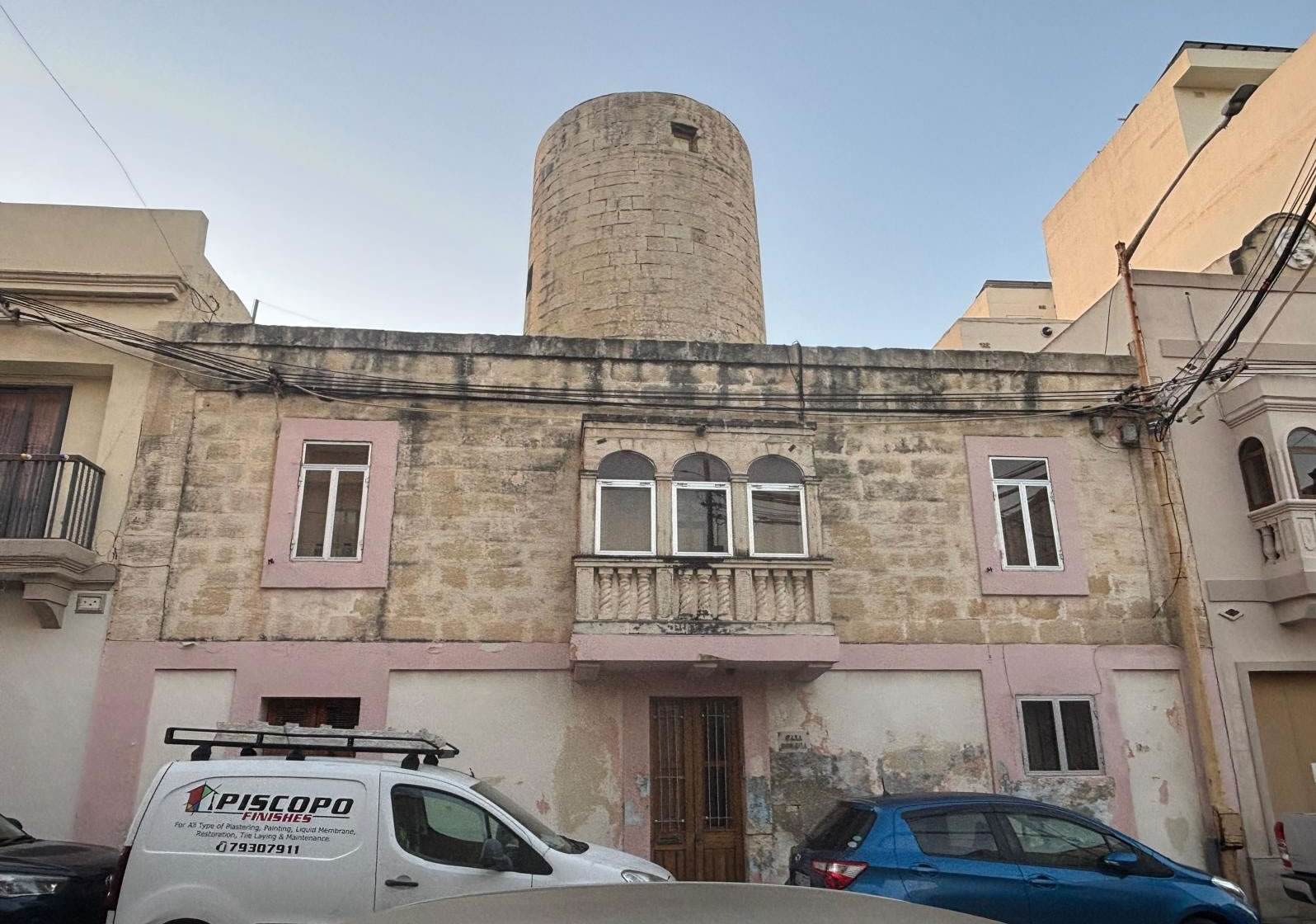
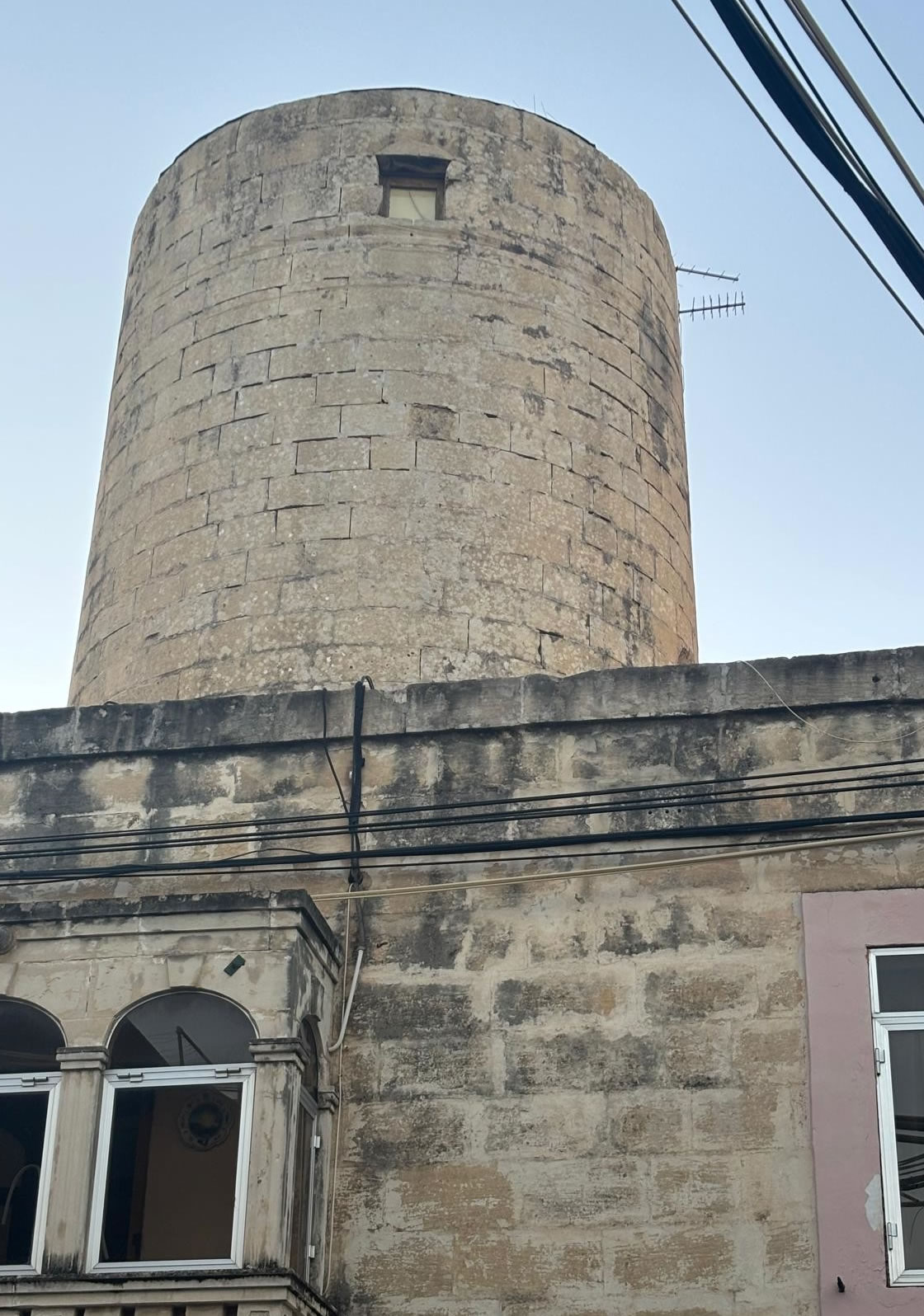
Type & layout: It is listed as a round / tower (mound) mill — a cylindrical, masonry tower set on a rectangular base that typically contained storage and miller’s rooms. A rotating cap supported the horizontal windshaft and sails. This is the standard Maltese 18th–19th century form.
Materials & method: Built in local globigerina limestone with thick load-bearing walls, timber cap and stocks for the sails, internal gearing and one or more pairs of millstones. (This description follows normal Maltese windmill construction of the period; specific archival drawings for the Bajada mill aren’t published online.)
Use & role in the local economy
Primary function: Grinding cereal (wheat, barley, corn) for the Żabbar parish and surrounding fields — the windmill reduced transportation needs and was an essential local food-processing facility in the 19th century.
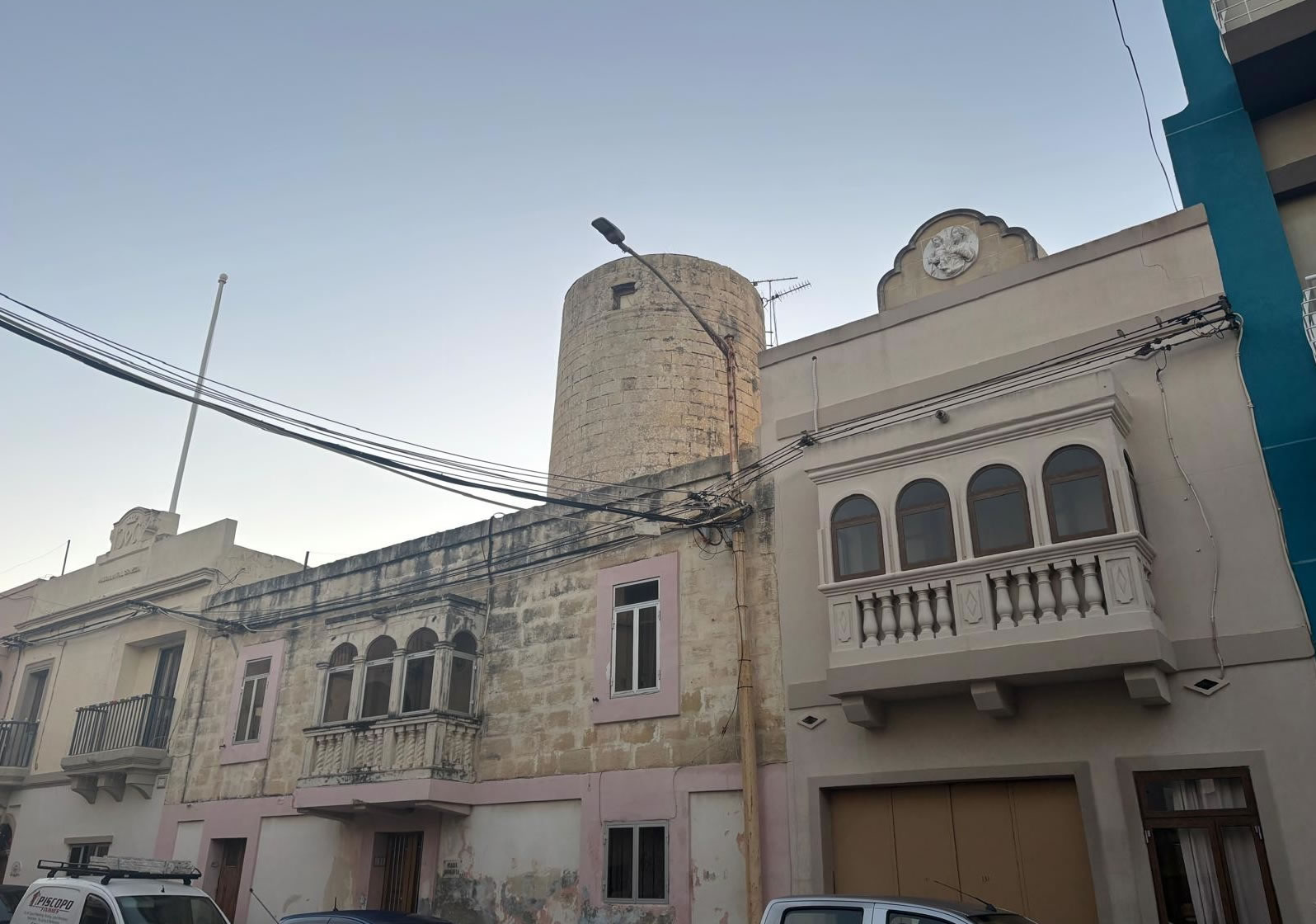
Later history: Like many Maltese windmills, it declined in commercial importance during the late 19th / early 20th centuries as steam and imported flour became dominant. Sources and local photographs indicate the mill lost its sails, was adapted for other uses at times (reports say parts were used as a private residence during WWII) and now survives only partially in situ, visible from Triq il-Bajjada.
Military / historical context (why sources sometimes confuse mills)
Żabbar area also hosted earlier windmills (e.g., Bir Għeliem / Ta’ Buleben) that were used or involved in the 1798–1800 French blockade (one served as the Windmill Redoubt). The Bajada Street mill is a later, 19th-century structure and should not be conflated with the 18th-century redoubt windmill. When consulting older maps/documents double-check which named mill they refer to.
Current state & how to see it
What remains: Photographs and local heritage notes indicate only a minor portion of the Bajada mill is visible from Triq il-Bajjada today — much of the original mill has been altered, incorporated into later buildings or lost. Some social-media / archival photos show the surviving tower fragment and the former rectangular base.
Visiting: Walk along Triq il-Bajjada in Żabbar and you should be able to view the remnant from the street. There is no widely advertised visitor centre for this mill (unlike a few fully restored windmills on the islands).