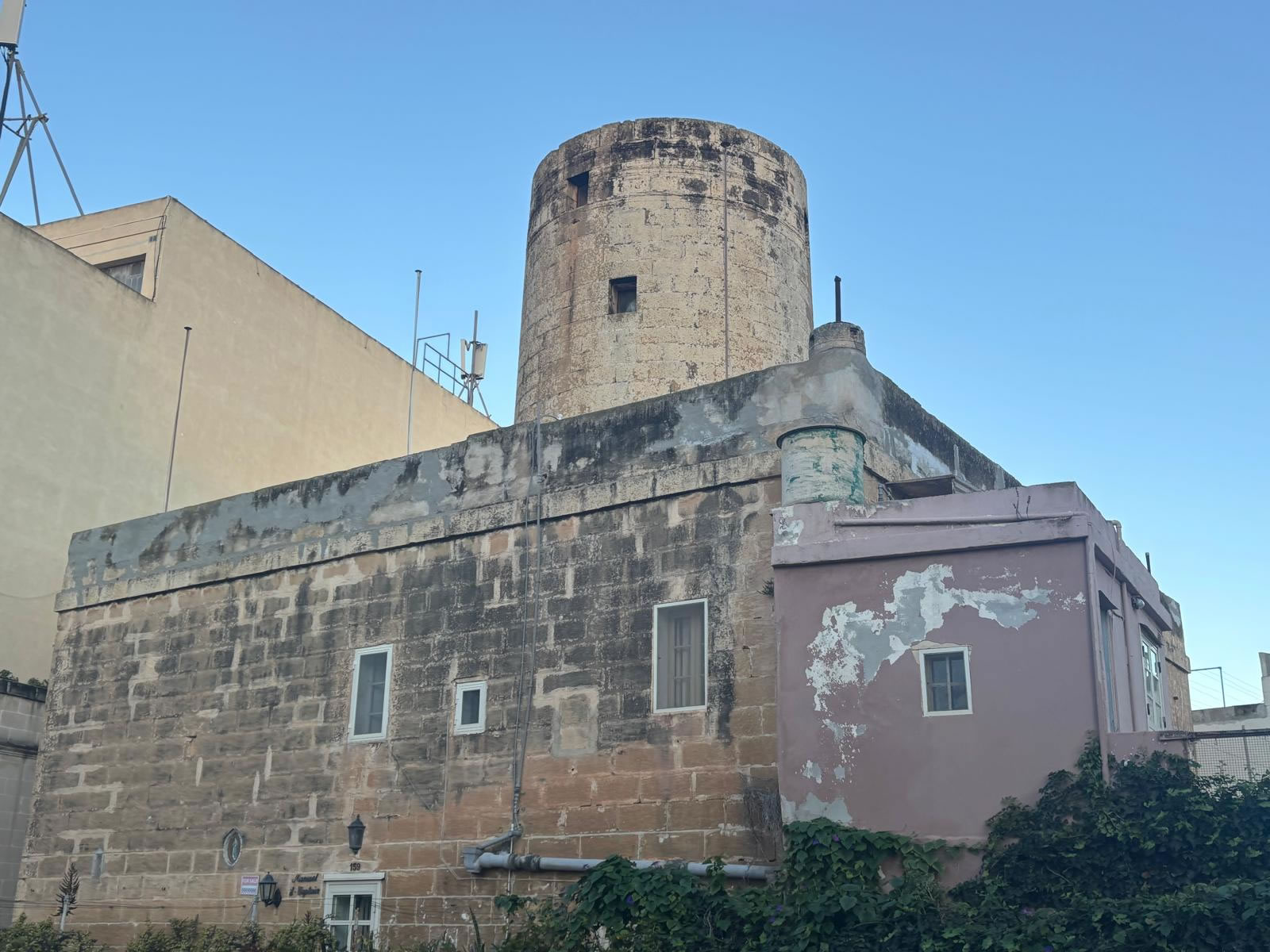
Here’s a summary of the construction and history of Mithna tas-Salib in Zurrieq, Malta:
📍 Location
35.829245, 14.474361Mithna tas-Salib (St James / Ta’ Salib) — full history, construction, use and present condition
Short summary
Built: 1857, by the Gafà family.
Type: Maltese tower windmill (stone cylindrical tower on a base) — typical local tower-mill form.
Working life: worked as a windmill into the 20th century; motorised in c.1930 and reported in use until 1938.
Demise / dismantling: the sails/millwork were dismantled around 1945 (and the mill ceased to function as a commercial mill).
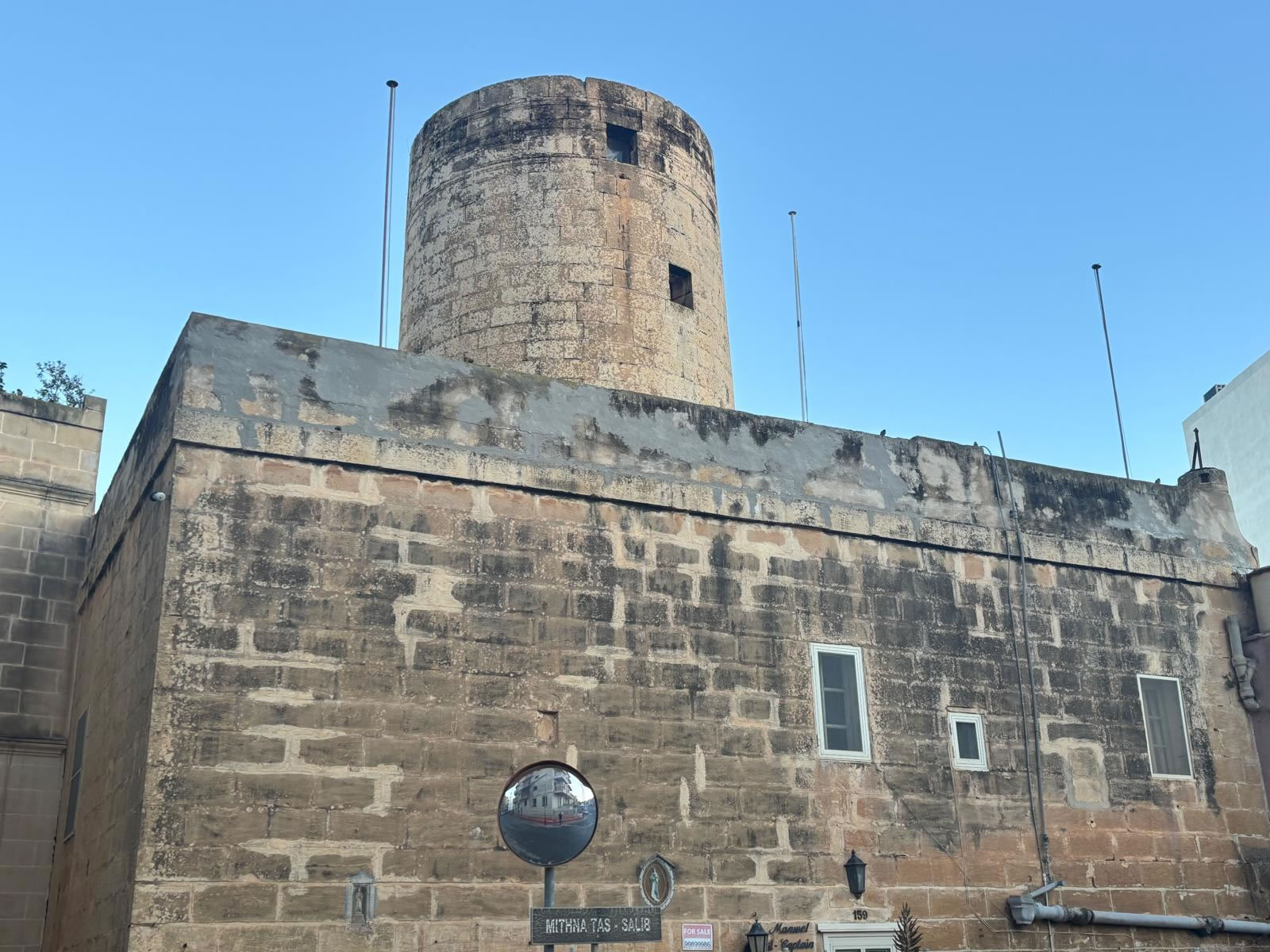
Survivals today: the round tower survives (reportedly with 60 wooden steps internally) and there are still parts/vestiges of the mill machinery; building appears in local heritage/walk guides and is privately owned.
1. Origins — who built it and why
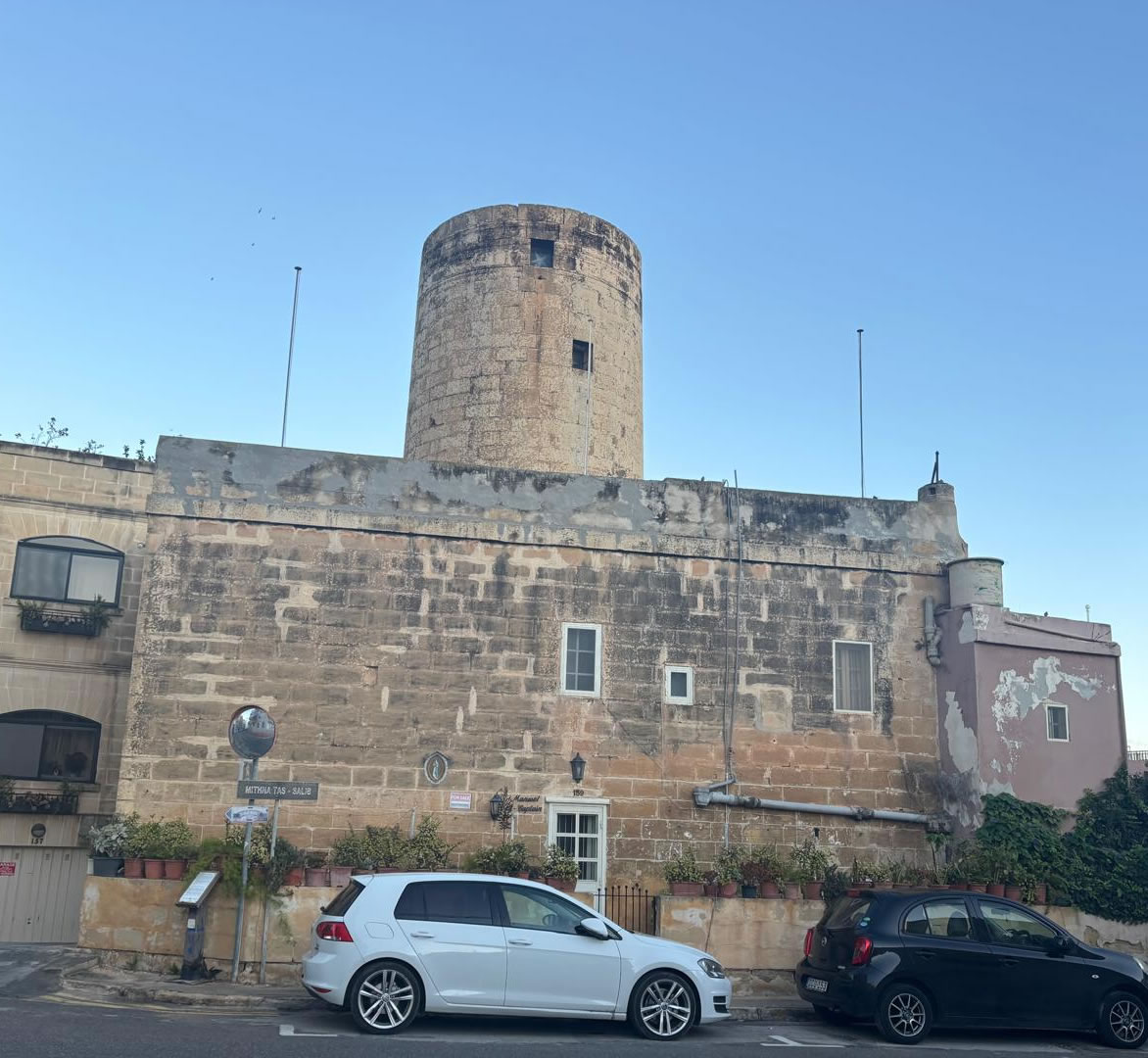
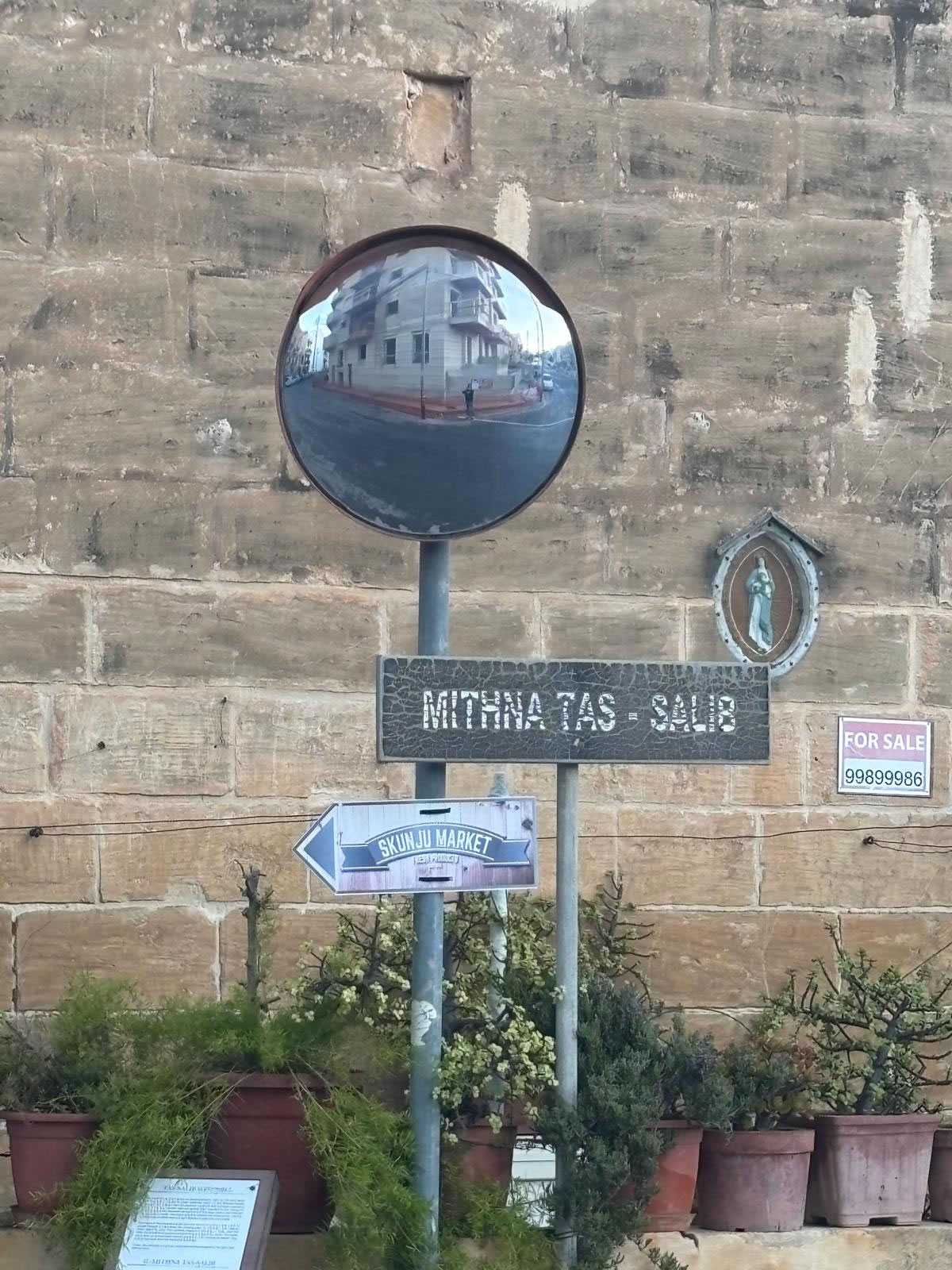
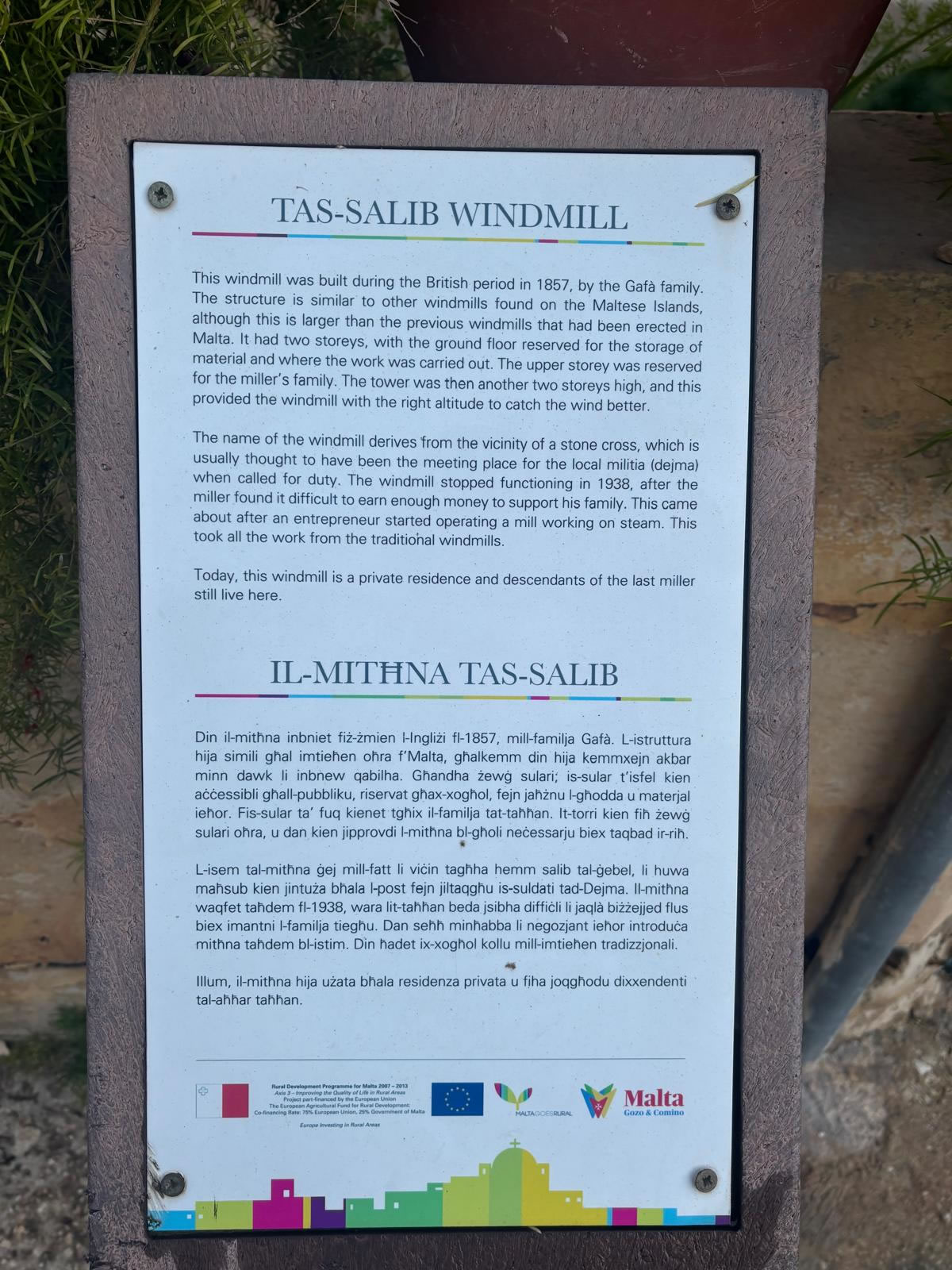
Mithna tas-Salib was erected in 1857 by the Gafà family (a prominent local family name found in historical records and local memory). The mill takes its popular name “tas-Salib” from a nearby village cross (the cross is located to the south-west of the mill). It formed one of Żurrieq’s cluster of rural mills (alongside Tal-Qaret, Xarolla and Ta’ Marmara) that served the cereal-growing hinterland.
2. Construction — plan, materials and original equipment
Form & materials
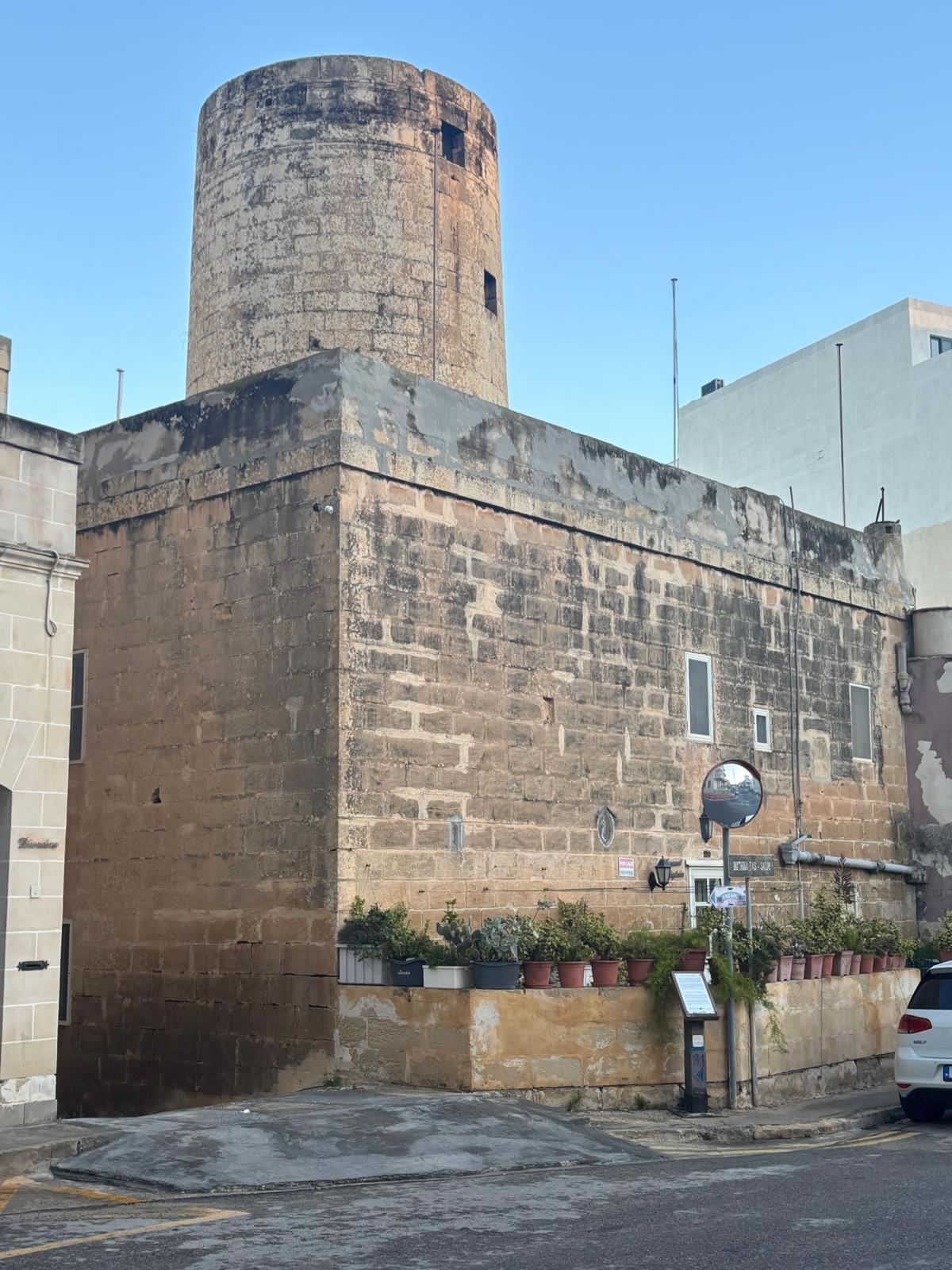
Tower type: Mithna tas-Salib is a tower (cylinder) windmill — the standard Maltese type: a stone cylindrical tower rising from a single-storey base used for storage/working rooms. This form was chosen across Malta for strength and to support a rotating cap and sails.
Stone & mortar: built in local globigerina limestone with lime mortar — the ubiquitous building fabric of Maltese rural masonry in the 18th–19th centuries.
Cap, sails & gearing (original equipment)
Cap & sails: like other Maltese tower mills, it would originally have had a wooden rotating cap carrying a horizontal windshaft with timber-framed sails (typically 4–8 vanes that the miller reefed with canvas/slats). The cap was turned into the wind by tailpole or gearing. While no original cap/sails survive today, contemporaneous descriptions and inventories make this the expected arrangement.
Internal machinery: inside were the usual elements — one or more pairs of millstones (runner + bedstone), vertical spindle, wooden cog gearing, hoppers and sack-handling spaces. Several local notes record that parts of the machinery remained visible for many decades after the mill stopped working.
Notable physical detail
Local accounts record the tower as having 60 wooden steps.
3. Operational life — how the mill was used and when it stopped
Commercial milling: the mill was used for grinding cereals for the Żurrieq hinterland. Sources indicate it remained in wind-milling use into the early 20th century.
Motorisation: around 1930 the mill was motorised (an increasingly common adaptation) so the millstones could be driven by an engine in low-wind conditions. This extended operational viability.
Last years of working: some local accounts record the mill being used until 1938; thereafter it fell out of regular commercial use and was dismantled (sails/gear) by about 1945. These dates come from local-history writeups and community posts summarising oral history / parish memory.
4. Alterations, decline and present condition
Removal of sails / dismantling: the wind-driven sail assembly and much of the external mill apparatus were removed around the mid-1940s. The internal motorisation equipment also ceased to be used as milling declined.
Physical survivals: the stone tower survives; local sources note remaining fragments/parts of the original machinery and the internal wooden stair (60 steps). Photographs in community posts and travel blogs show an intact tower profile (without sails) that continues to punctuate the rural streetscape.
Ownership / use: the mill is privately owned (various local posts name families associated with ownership at different times — e.g., Camilleri / Sammut lines are mentioned in local histories). It appears in Żurrieq’s heritage/windmills walk and local council materials as a point of interest.
5. Cultural & heritage status
Mithna tas-Salib is included in local heritage narratives and in windmill catalogues; it features on the Żurrieq windmills walk promoted for visitors. That local prominence helps protect the mill’s setting and keeps community interest alive.