Punic Tomb - Malta
A detailed, visitor-friendly guide .
Here’s a compact, well-sourced brief on the rock-cut Punic tomb at Xemxija (on Bajda Ridge, along the Xemxija Heritage Trail), plus how to find it.
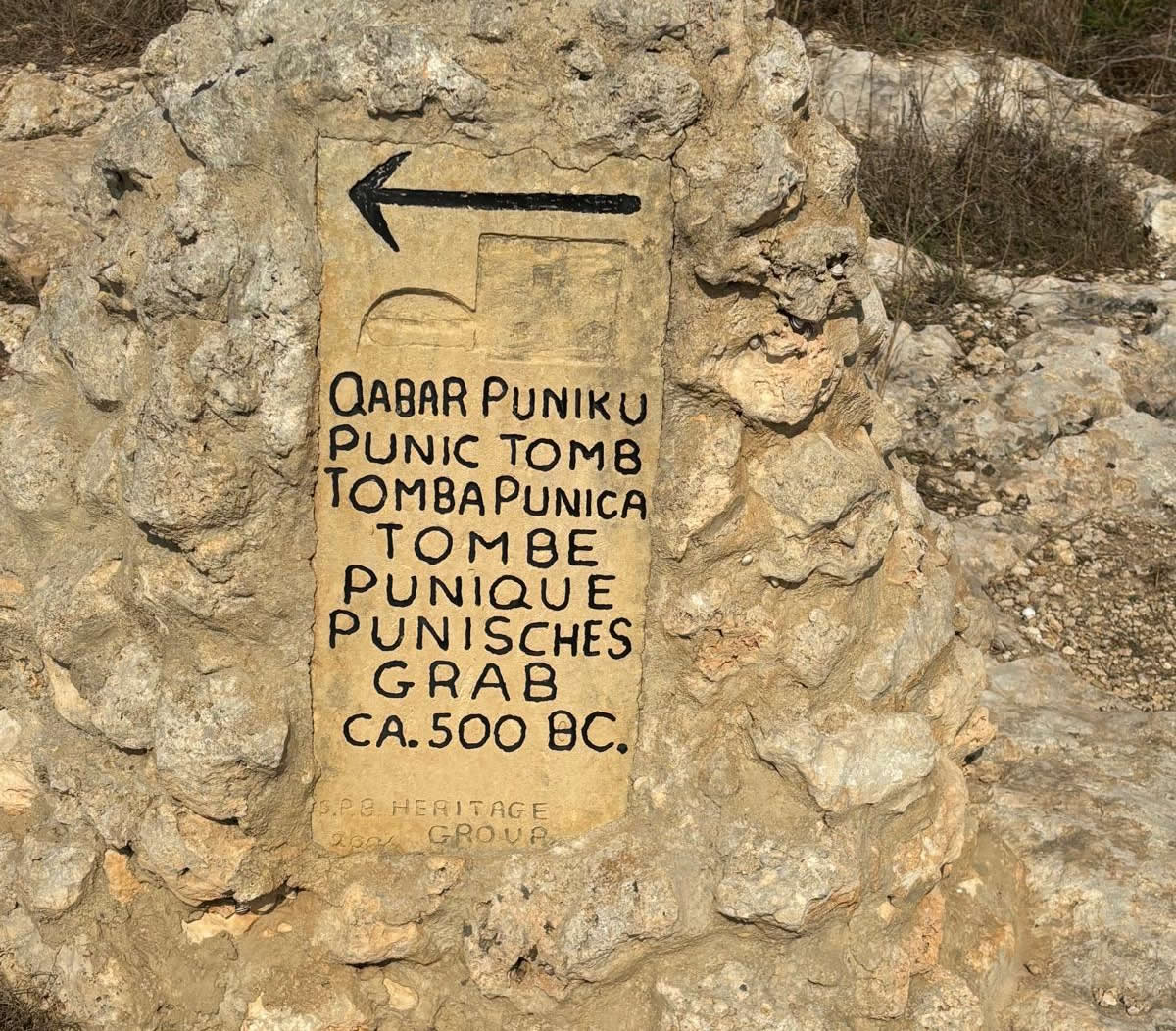
What it is
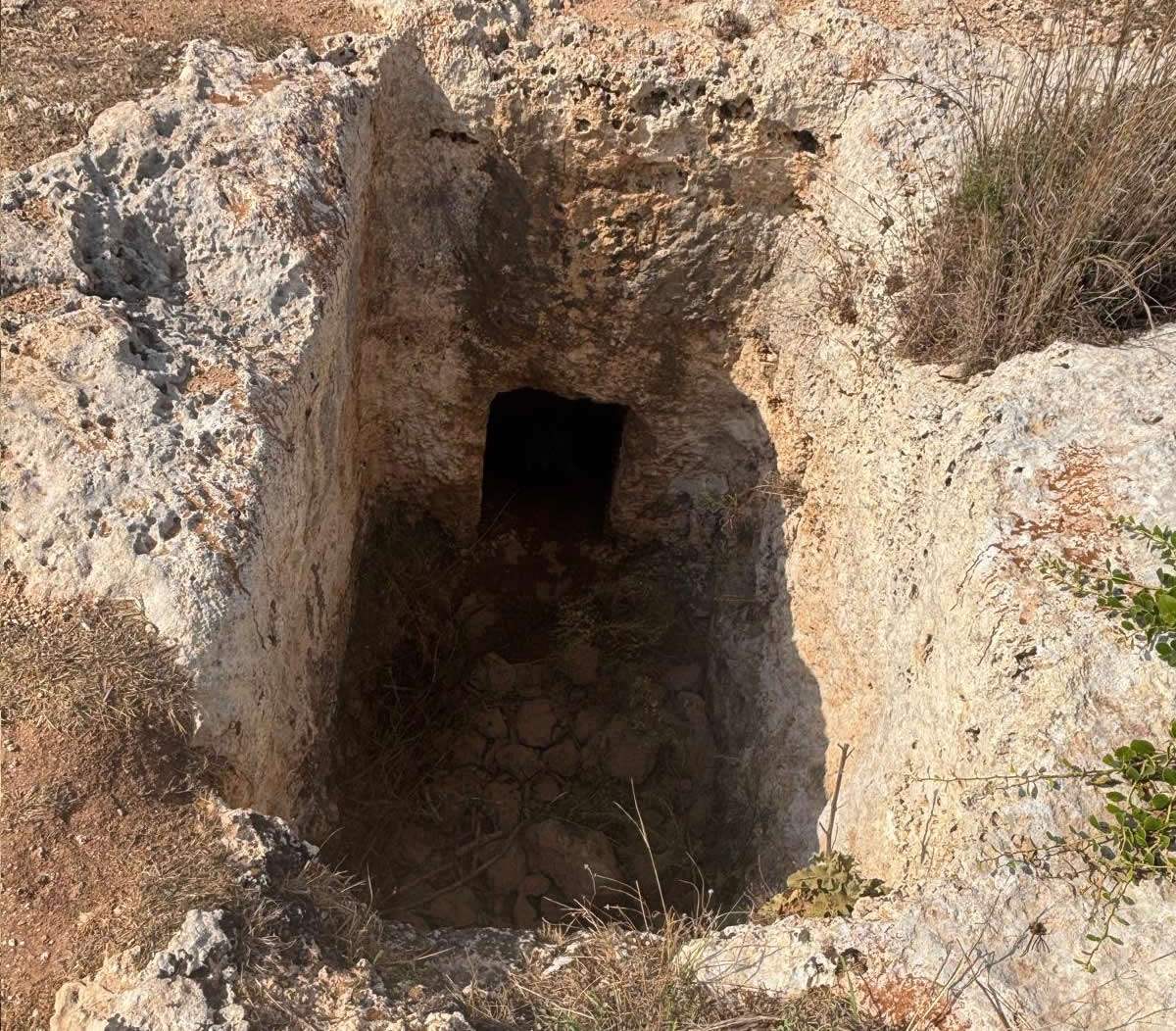
Type: Shaft-and-chamber Punic tomb cut into Upper Coralline limestone. A rectangular shaft drops to a low entrance leading into a sub-rectangular burial chamber, aligned roughly N–S.
Date/use: Built in an early Punic phase (possibly as early as the 6th c. BC) and reused in the later 4th c. BC.
Excavation: In 2001 a University of Malta team excavated the chamber after a small bowl was found at the threshold. Finds included a trefoil-mouth jug, a complete urn, a broken amphora, a metal earring, small worked bone rings, human bone from at least two adults (and a juvenile tooth), and some animal/mollusc remains brought in naturally.
Context: The form fits Malta’s Punic shaft-and-chamber tradition (Phoenician–Punic funerary practice), where a vertical shaft gives access to one or more rock-cut chambers.
Where it is (precise location & how to reach)
Coordinates (Punic tomb): 35.949595, 14.380595 (Bajda Ridge; published with a site photo).
On the ground: It sits just off the rocky path east of the Roman Road/Heritage Trail, on the ridge between Pwales and Mistra valleys. The University of Malta report locates it “on the ridge, near a path that diverges eastwards from the track that links Pwales valley to the Mistra valley.”
Nearby landmarks: The Neolithic rock-cut tomb field (multiple circular-shaft tombs) is about 120 m WSW of the Punic tomb; those prehistoric tombs line Triq il-Preistorja and are inventoried as “Xemxija prehistoric tombs.”

How it differs from the Neolithic tombs next to it
The Neolithic tombs nearby (Temple period) are typically circular shafts with lobed “kidney-shaped” chambers, sometimes seen as precursors to later temple plans. The Punic tomb is later, with a rectangular shaft and sub-rectangular chamber typical of Phoenician-Punic practice.

Visiting tips
The trail is waymarked (“Roman Road / Pilgrims’ Way”). Most guides and plaques on the Xemxija Heritage Trail mark the “Punic Shaft Tomb.”
It’s an open archaeological feature; be cautious around the open shaft and avoid entering the chamber.