Here is a detailed account of Operation Pedestal — its background, execution, outcome and significance — focusing especially on the Maltese viewpoint of the “Santa Marija Convoy.”
Background & strategic context
By mid-1942, the island of Malta was under a prolonged siege. The Axis powers (Germany + Italy) had isolated Malta, severely reduced its supplies of food, fuel and ammunition, and bombarded it relentlessly.
Malta’s strategic importance: It threatened Axis supply lines to North Africa and served as a base for Allied air/submarine operations. If Malta fell or was neutralised, the Axis would gain freer movement in the central Mediterranean.
Two previous convoy operations earlier in 1942 — Operation Harpoon (June) and Operation Vigorous (June) — had failed to relieve Malta adequately. For example, Harpoon delivered only two merchant ships.
Malta’s fuel stocks were critically low; its ability to keep aircraft and air-defence operational was at risk. Without a major delivery, the island might have had to capitulate.
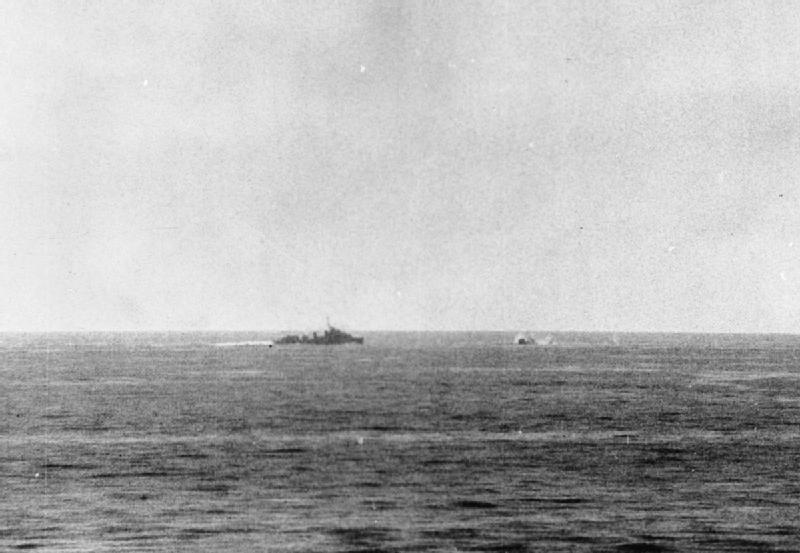
HMS ITHURIEL coming in to ram the COBALTO.
Planning & composition of the convoy
The operation was codenamed “Pedestal.” In Malta it became known as the “Santa Marija Convoy” because the final arrival (especially of the tanker SS Ohio) took place on 15 August 1942 — the Feast of the Assumption of the Virgin Mary (Santa Marija in Maltese).
Departure and route: The convoy sailed from the UK (via Gibraltar) into the Mediterranean in early August 1942.
Composition: The merchant component comprised 14 merchant ships including the vital tanker SS Ohio, carrying aviation fuel, kerosene and other supplies.
Escort & covering forces: A massive naval force was assembled — including battleships (e.g., HMS Nelson and HMS Rodney), aircraft carriers (HMS Eagle, HMS Victorious, HMS Indomitable), cruisers, destroyers, submarines. The scale was one of the largest supply-convoy forces of the war.
The Axis opposition was also formidable: dozens of submarines, hundreds of aircraft, motor torpedo boats, mines and surface units were deployed to intercept the convoy.
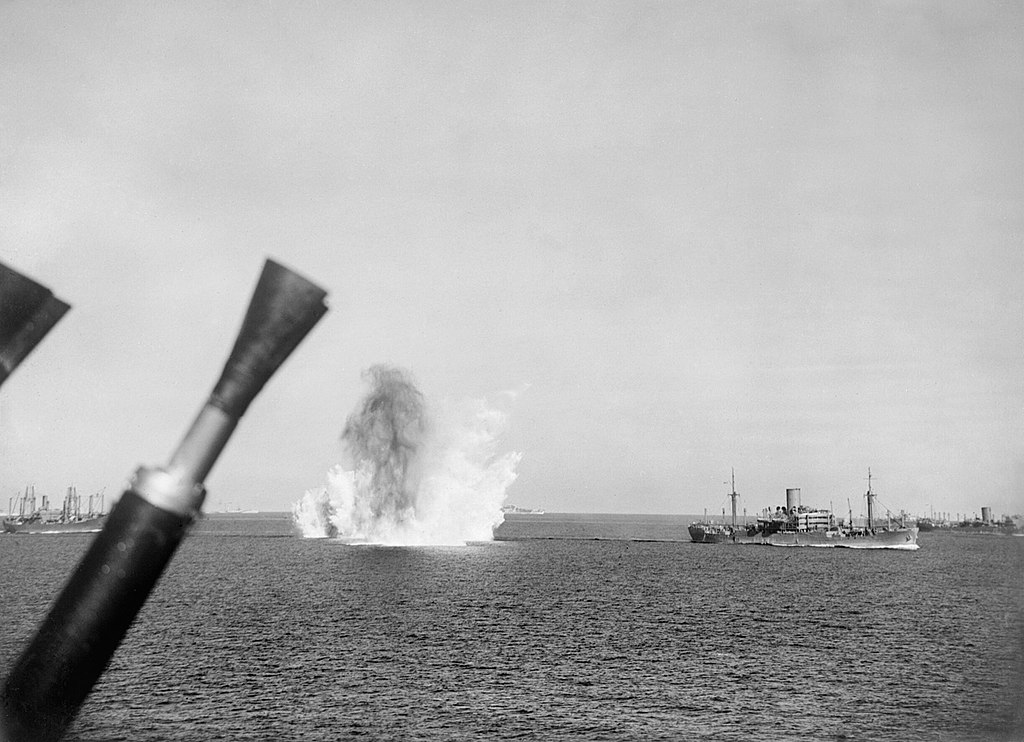
A bomb falling astern of MS GLENORCHY, which was later sunk by air attack.
The battle: key phases & losses
11 August: The convoy was attacked as it progressed through the Mediterranean. For example, the German submarine U-73 successfully torpedoed HMS Eagle, which sank in minutes.
On successive days the convoy was subjected to continual heavy air attack (dive-bombers, torpedo-bombers, fighters), submarine attacks, motor torpedo boats, mines — in short a full spectrum assault.
Many merchant ships were lost or damaged. In total, of the 14 merchant ships, only four merchant ships plus the tanker SS Ohio made it to Malta.
On 13-14 August some of the surviving freighters arrived at Malta (Port Chalmers, Rochester Castle, Melbourne Star and later Brisbane Star).
The tanker SS Ohio, after being badly damaged by torpedoes, bombs and near-misses, was lashed to two destroyers (HMS Ledbury and HMS Penn) and towed into Grand Harbour on the morning of 15 August 1942.
The arrival of Ohio is often described as miraculous by the Maltese because without its fuel cargo Malta’s survival would arguably have been in greater doubt.
Losses: The Allies lost significant units: an aircraft carrier (Eagle), two cruisers (Manchester, Cairo), a destroyer (Foresight) among escort warships; many merchant ships; many casualties.
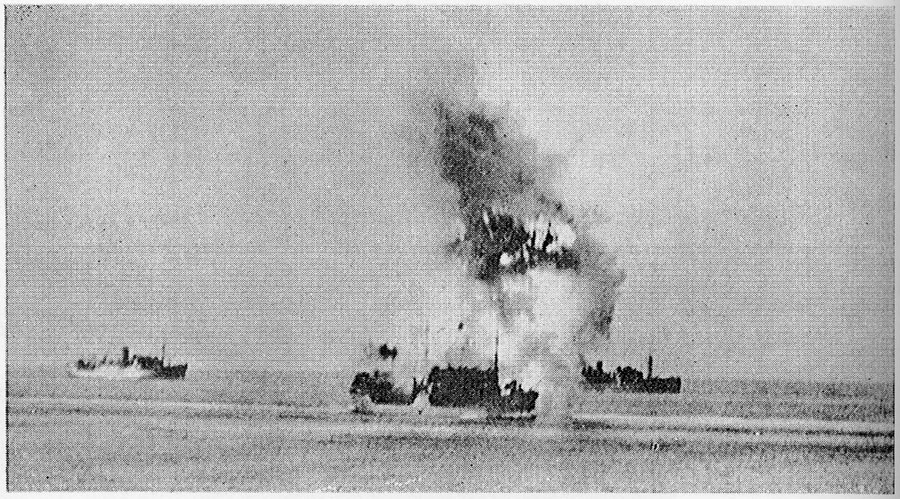
She finally reached Malta safely.
Arrival & immediate aftermath
On 15 August 1942, crowds in Valletta and the bastions of Grand Harbour witnessed the battered Ohio and the other surviving ships limping into harbour. For the Maltese population, already under severe hardship, this was a moment of relief.
The cargo was rapidly unloaded under Operation Ceres (the securing and handling of the supplies). However, due to the desperate situation, pilfering and looting occurred even immediately after arrival — both by civilians and by some officials.
Although the convoy did not deliver everything the island needed, it delivered enough to stave off an immediate collapse. The fuel delivered by Ohio, combined with the other supplies, gave Malta some breathing space.
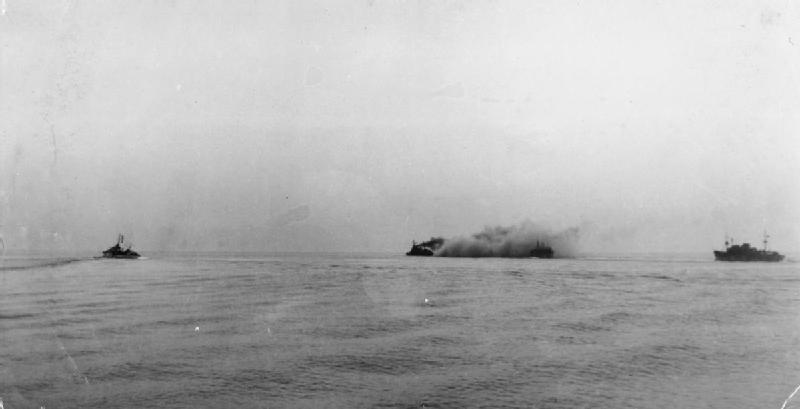
Admiral Burrough transferred to HMS ASHANTI leaving NIGERIA to return to Gibraltar.
Significance & long-term impact
The operation is seen as a turning point: by enabling Malta to continue as an operational base, it allowed Allied air and submarine forces to continue harassing Axis supply lines to North Africa.
It preserved Malta’s resistance at a critical moment, which in turn contributed to the eventual Allied successes in North Africa (e.g., Second Battle of El Alamein).
For Malta itself, the convoy (and its arrival on 15 August) became entwined with national memory and identity. The feast of Santa Marija is celebrated in Malta partly in honour of the event.
Historic memorials, stamps, coins and museum exhibitions in Malta commemorate the operation and its contribution to Maltese survival.
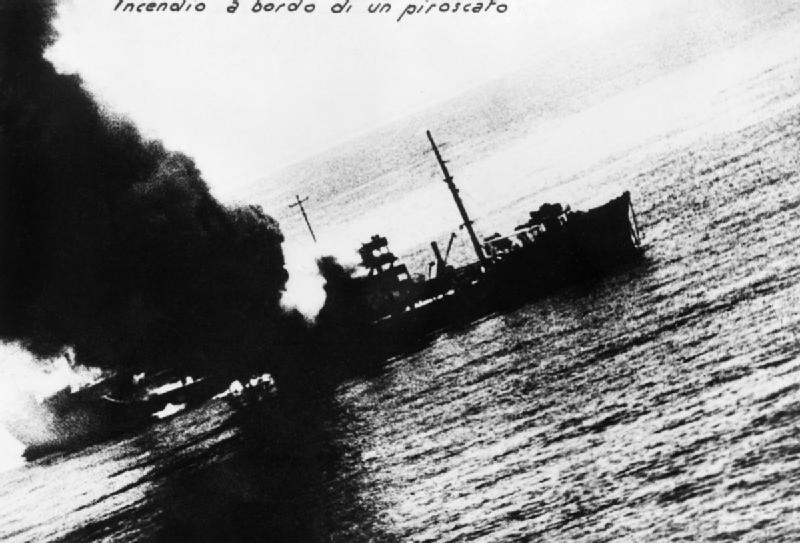
A merchant ship abandoned and on fire after the MAS boat attacks.
Why it was critical for Malta
Operation_Pedestal,_August_1942_HU43464Prior to Pedestal, the island’s supplies of fuel, food and ammunition were perilously low; airfields could have shut down, and Malta’s capability to hold out or strike was threatened.
Malta’s survival maintained the Allied central-Mediterranean front and kept pressure on Axis supply routes. Allowing Malta to fall would have eased Axis logistics to North Africa.
The morale effect: For the Maltese people, the arrival of the convoy was a huge psychological boost — a demonstration that the island was not abandoned and that external aid could still break through.
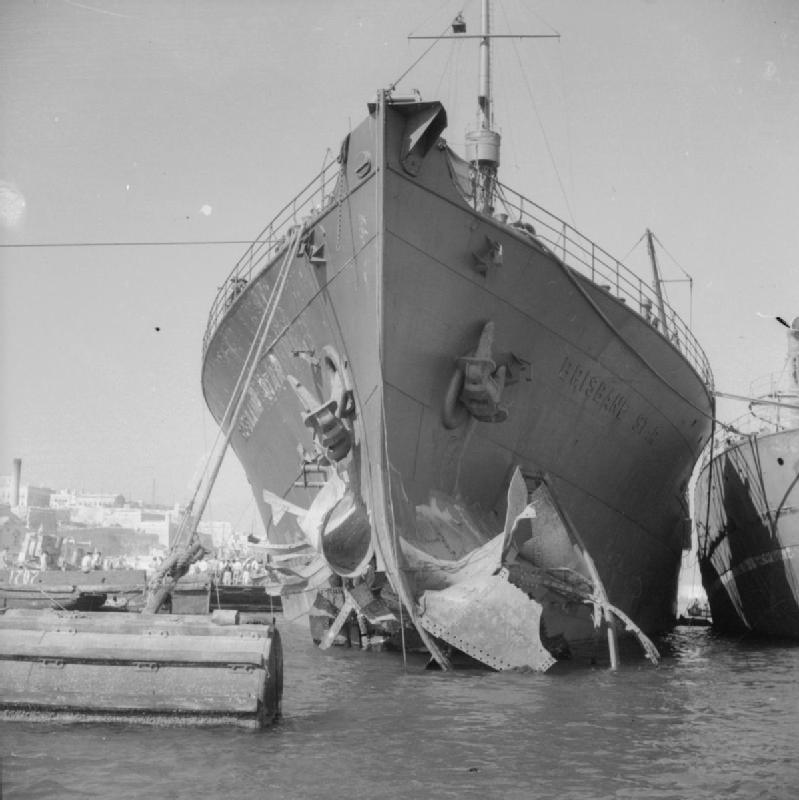
Head on view of the ship's damaged bow.
Key numbers & facts
Merchant ships: 14 in the convoy.
Only four merchant ships plus the tanker Ohio reached Malta.
Escort warships: The convoy was supported by a large force including carriers, battleships, cruisers, destroyers (various sources give numbers like 44 warships or more in covering/escort).
Heavy losses: One aircraft carrier sank; multiple ships were lost or damaged; Allied casualties included hundreds of sailors and airmen.
Arrival date: 15 August 1942 (important Maltese date).
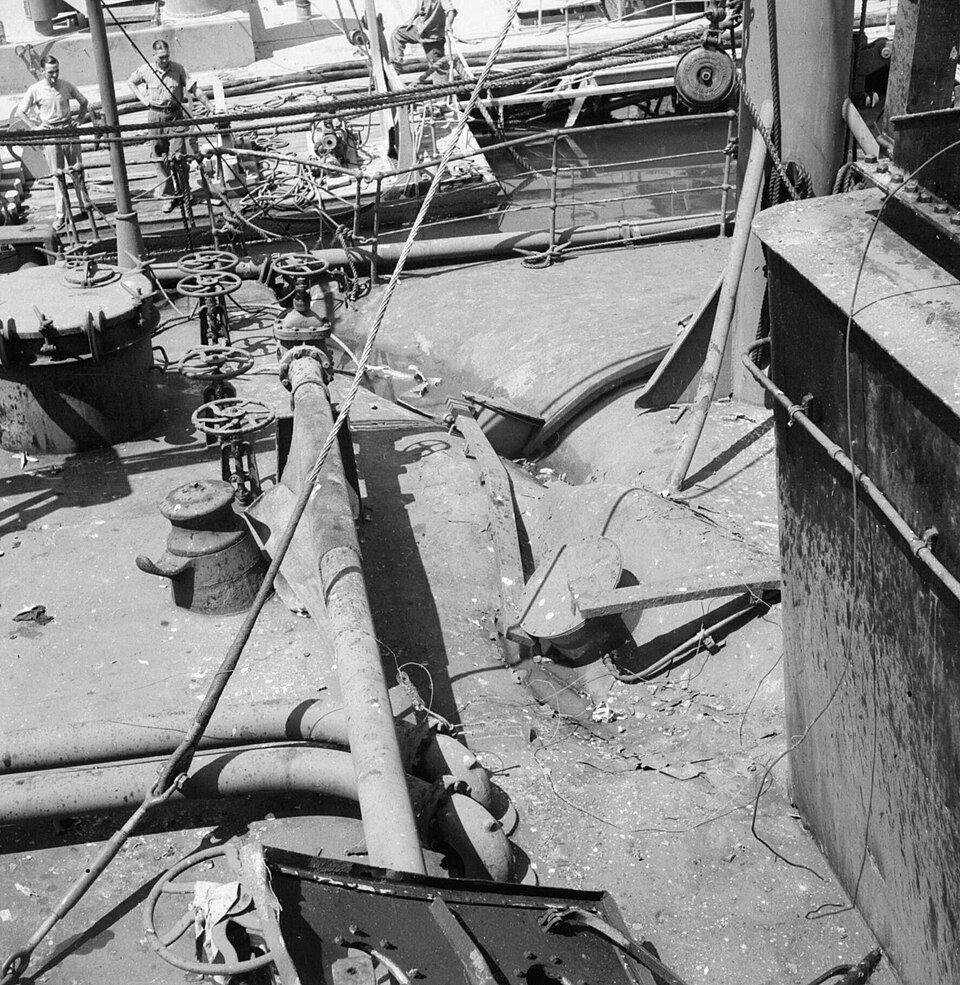
sustained when an enemy aircraft crashed on her upper deck.
Reflections & further notes
Although the convoy was far from perfect (many ships were lost, it delivered only limited tonnage compared to what was needed), the symbolic and practical effect was major. As one Maltese commentary puts it: “Pulling Malta back from the brink” was achieved.
The fact that the arrival coincided with a religious feast (Assumption of Mary) contributed to its place in Maltese national memory under the name “Santa Marija Convoy.”
The operation is often studied in military-history as an example of how logistically challenging supply to isolated garrisons under heavy enemy pressure can be.
A caution: some discussions (e.g., in Maltese news) note that internal issues (such as the looting of supplies) exposed how dire the situation was and how thin the margin of survival.
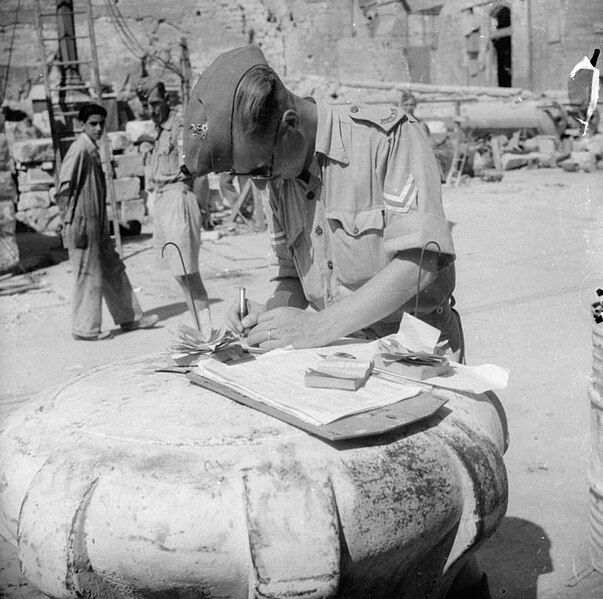
A corporal checks supplies on the quayside..