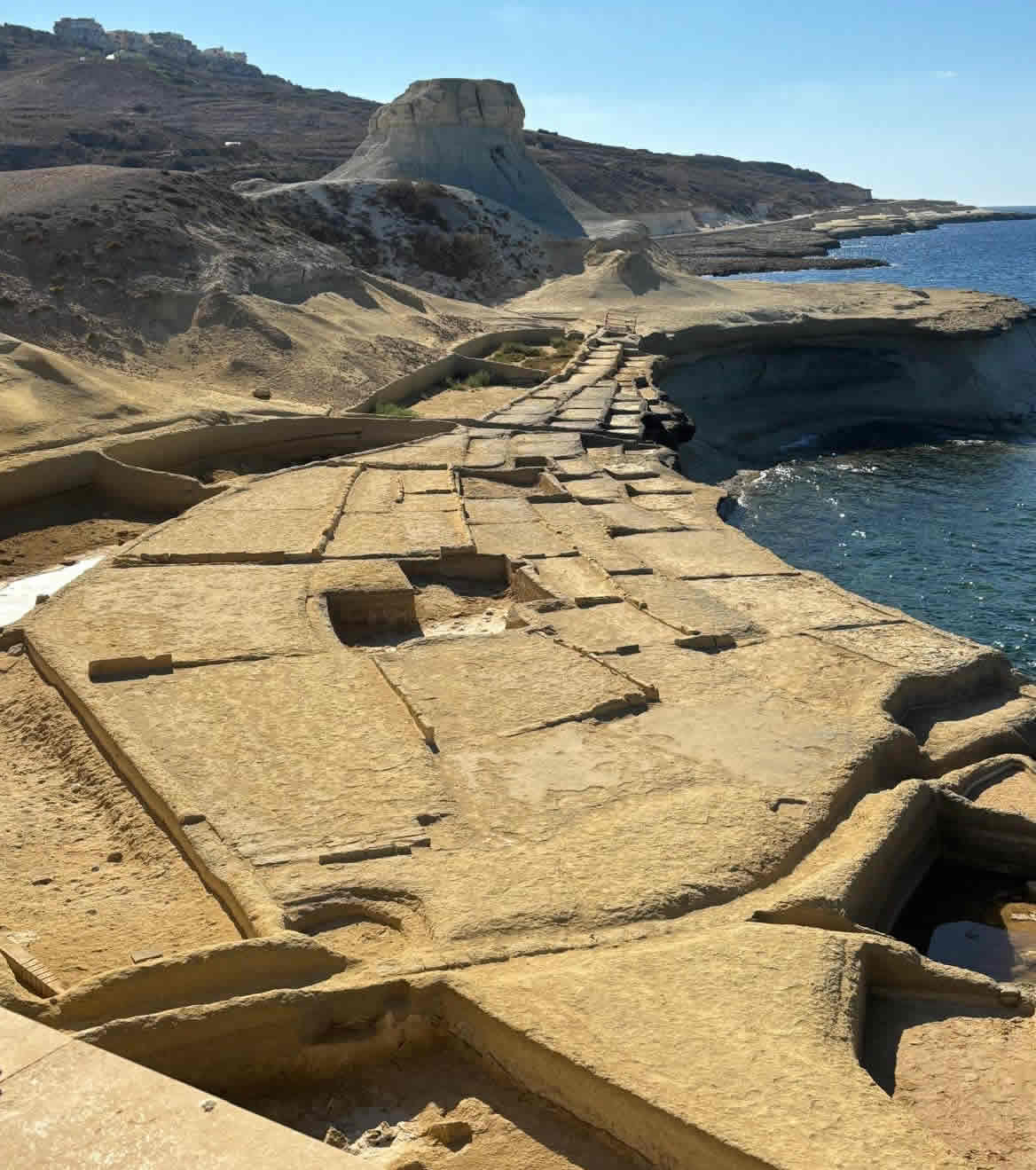
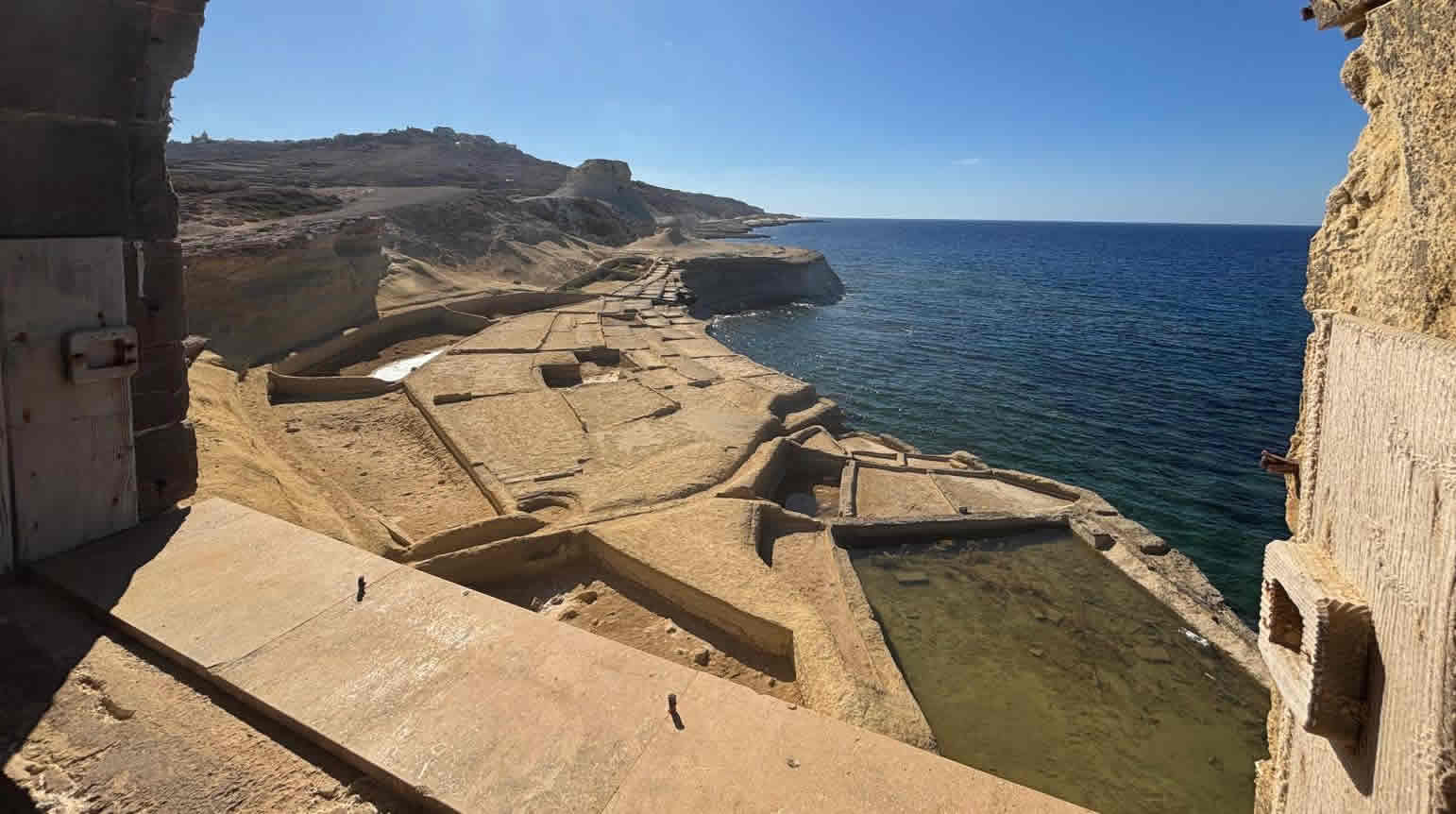
Il-Qolla l-Bajda salt pans located directly beneath the Qolla l-Bajda Battery
Location
📍 Location
📜 Historical Background
The salt pans immediately below the Qolla l-Bajda Battery (built by the Knights in 1715–1716 as part of Malta’s coastal defence system) are part of the wider Marsalforn/Qbajjar network, but they hold a special status because of their direct association with the Battery site.
These pans were likely laid out around the late 17th–early 18th century, in the same period the Battery was constructed. The Knights invested in both fortifications and salt production, recognising salt as both an economic asset and a resource worth defending.
Archival references indicate that the Marsalforn/Qbajjar salt pans were “guarded” at times, due to salt’s high value and risk of smuggling or theft.
🏗️ Layout & Construction
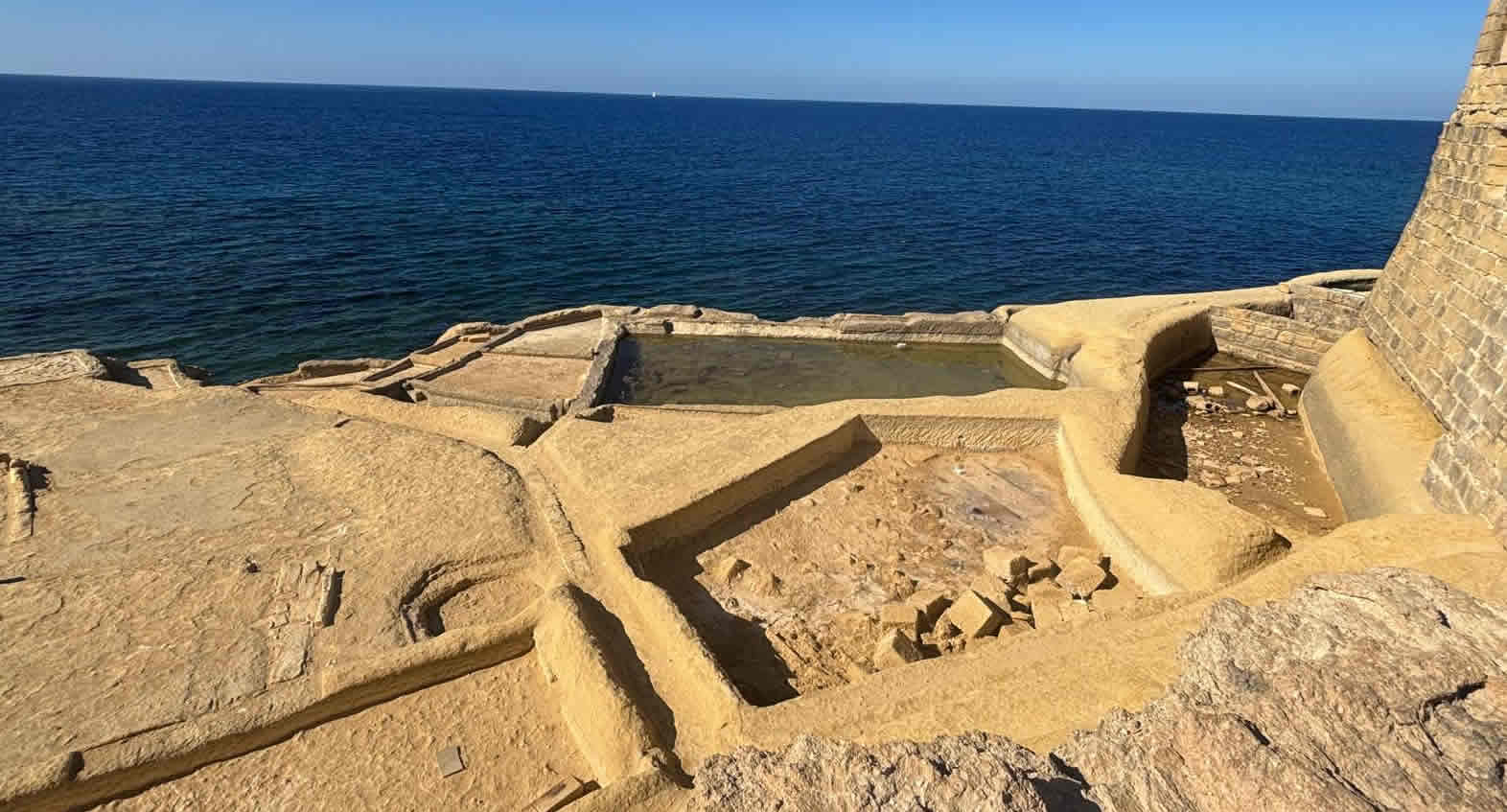
The pans by the Battery are smaller and more irregular than the vast rectangular grids further west at Xwejni.
They are cut directly into the rock platform in front of the Battery, forming shallow basins that fill with seawater via natural wave action.
Some larger basins nearby served as collection or storage vats, while smaller ones were for final crystallisation.
Their proximity to the Battery suggests a dual role: practical salt harvesting plus symbolic visibility — the chequered pans beneath a coastal bastion represented both economic and military strength.
⚒️ Use & Decline
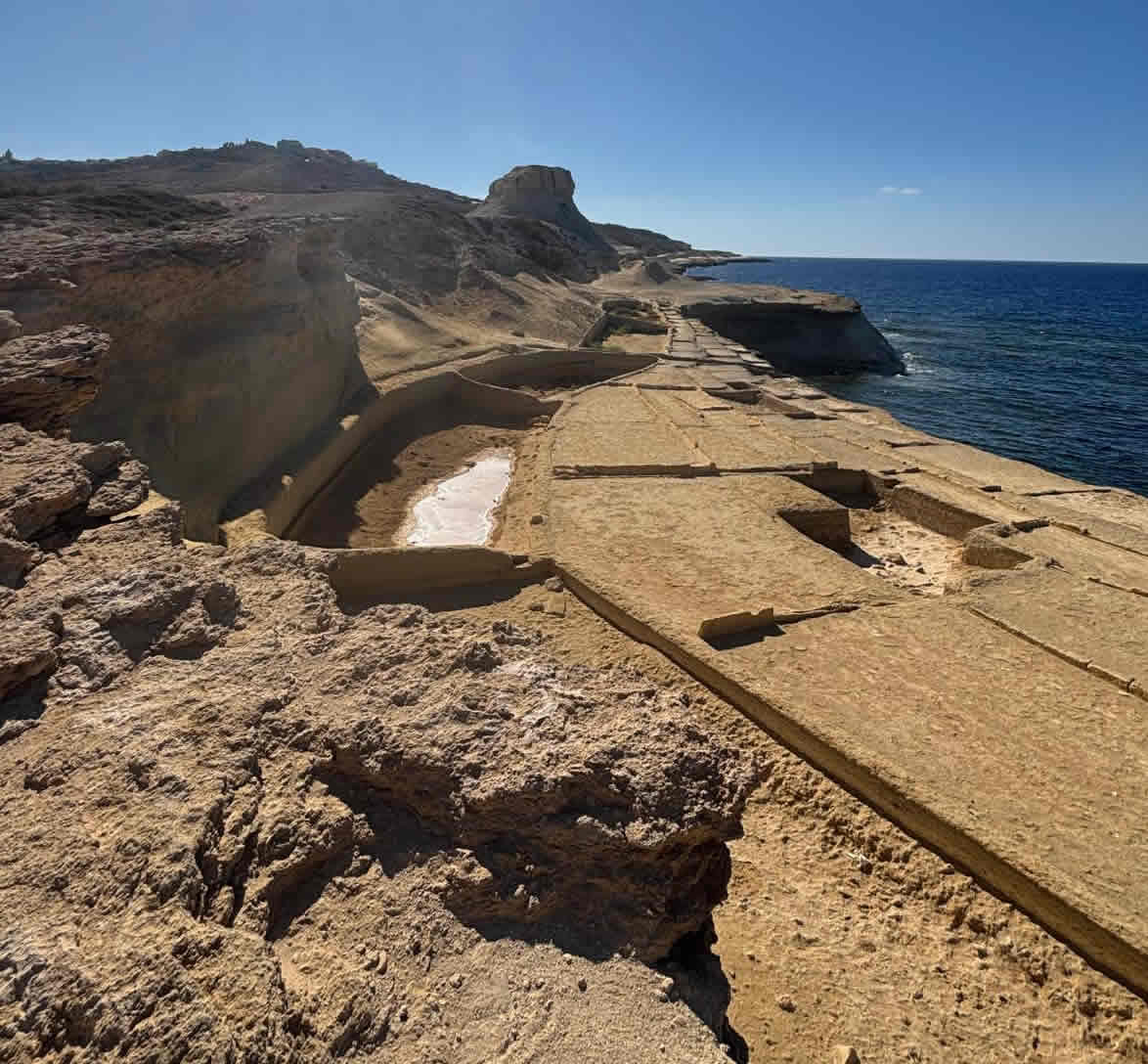
During the 18th and 19th centuries, these pans were actively harvested by local families, especially from Żebbuġ and Marsalforn, alongside the larger Xwejni system.
By the early 20th century, many of the pans near the Battery began to fall out of intensive use, partly because:
They are more exposed to rough seas, which damaged or eroded them.
Larger, more efficient grids further along the coast were easier to manage.
Nevertheless, some of these pans were still maintained into the mid-20th century.
🌊 Present Day
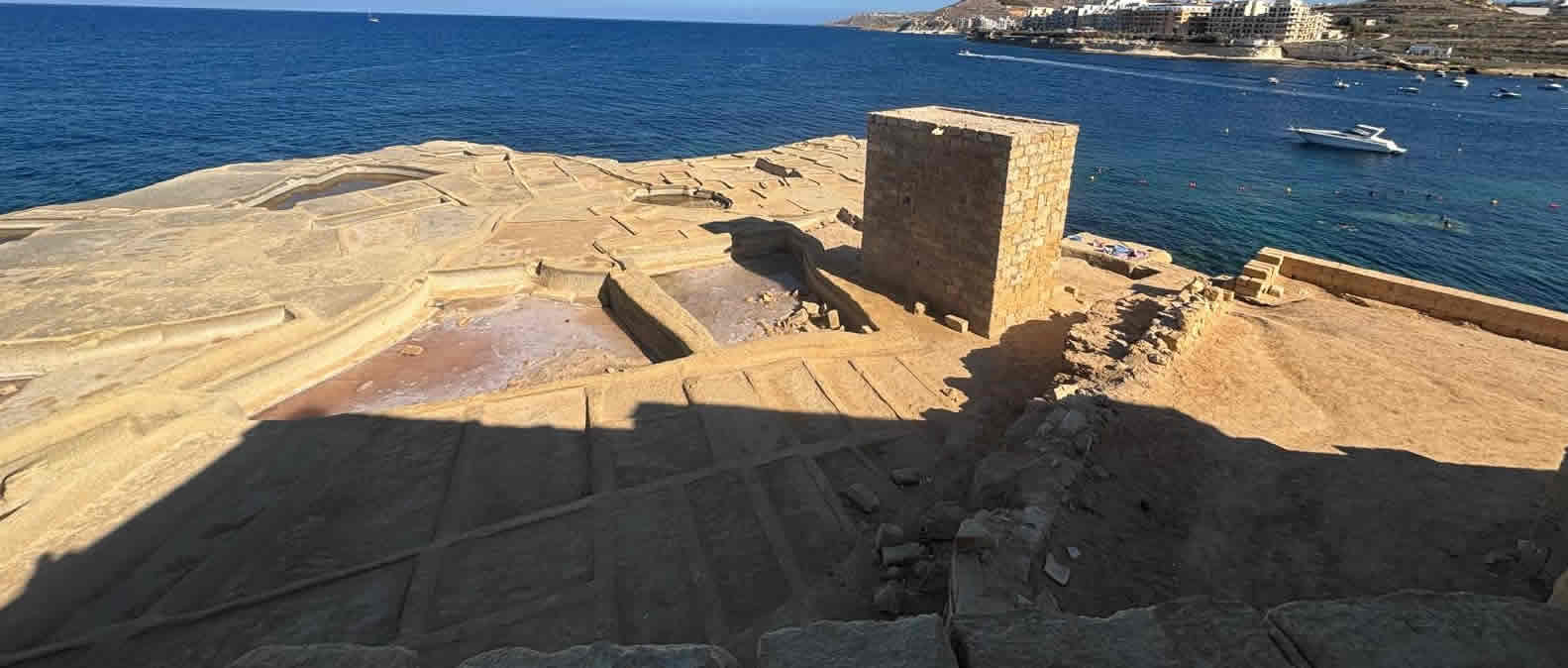
Today, the salt pans directly beneath Qolla l-Bajda Battery are regarded as historic remnants** rather than active production sites.
They remain visible, especially at low tide, but are much less systematically maintained than the active artisanal pans further west at Xwejni.
Together with the Battery, they form a cultural landscape, illustrating how Gozo’s coast blended defence and resource extraction in the same site.
Conservationists stress that both the Battery and its associated salt pans are vulnerable to erosion and modern development pressure.
✅ In short:
The salt pans next to Qolla l-Bajda Battery were carved in the late 17th–early 18th century, worked actively for centuries, but gradually abandoned in the 20th century. Unlike the expansive grids at Xwejni, these are smaller, irregular, and now function as historic traces that complement the military heritage of the Battery above them.