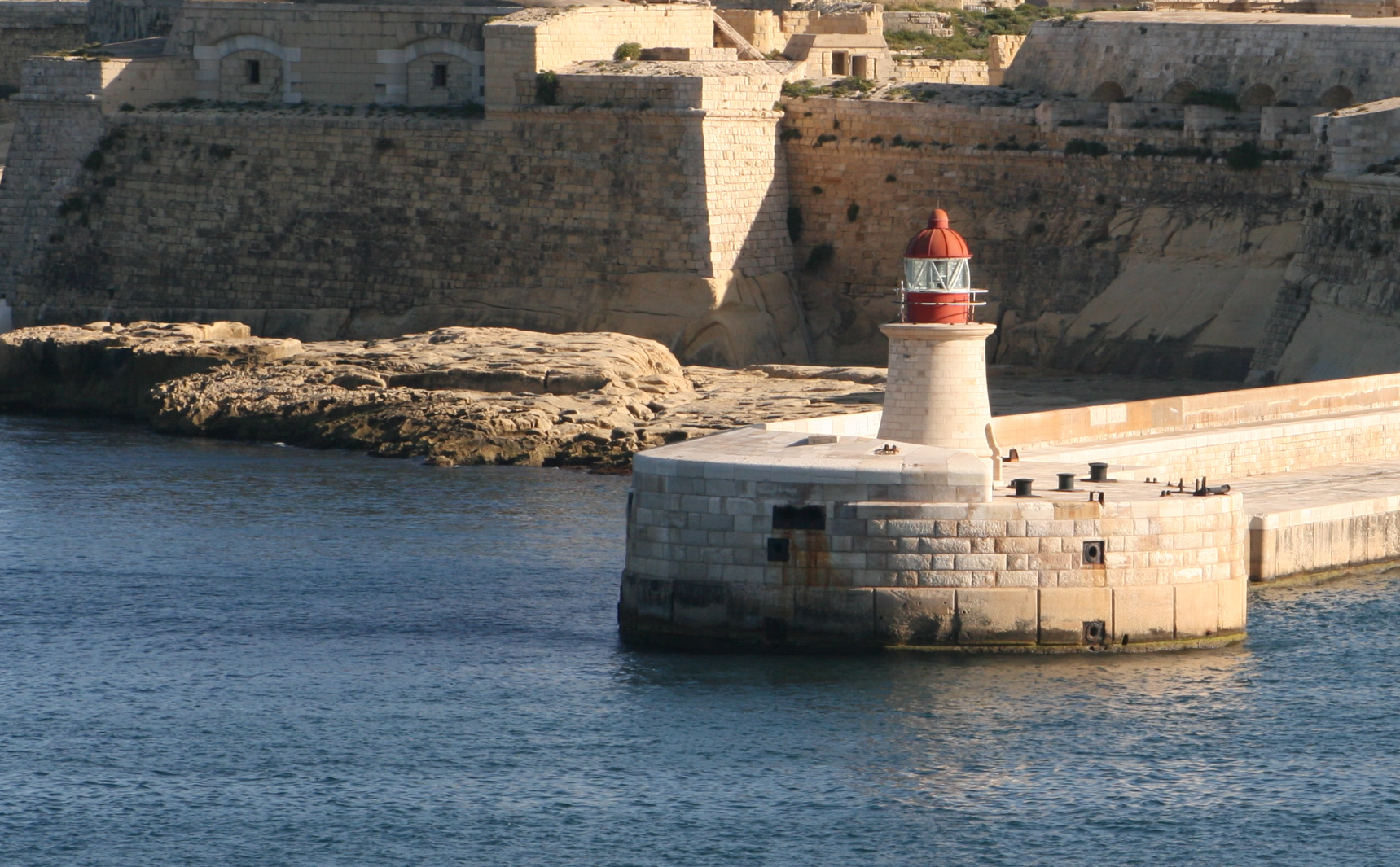
Here are the details on the Ricasoli Breakwater Lighthouse (Grand Harbour, Malta), built around the 1908:
Ricasoli Breakwater Lighthouse — full history & construction details
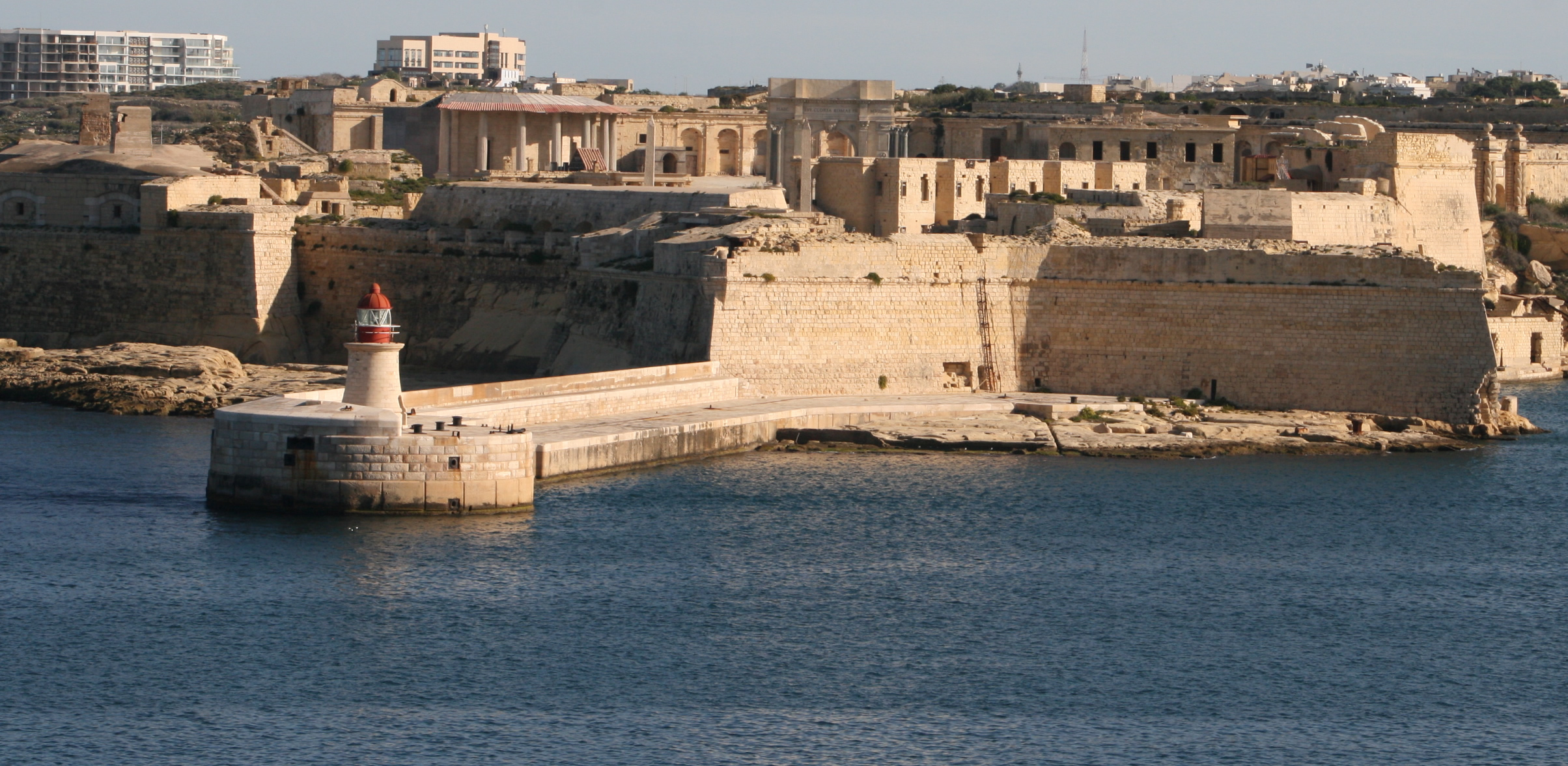
Ricasoli (Ricasoli Breakwater) Lighthouse, the small harbour-entrance light on the east breakwater at the entrance to Valletta’s Grand Harbour (adjacent to Fort Ricasoli / Kalkara).
Quick facts
Location: tip of the Ricasoli (east) breakwater, Grand Harbour (Valletta / Kalkara).
Built: constructed as part of the Grand Harbour breakwater works c.1903–1908 (breakwater contract/tenders 1902; work 1903–1908). The lighthouse is therefore commonly dated 1908 (completed with the breakwater).
Form & materials: short tapered masonry (stone) tower on the circular breakwater head, with a lantern and gallery; tower height approx 9–14 m (sources quote c.9 m tower / 11 m focal height). Lantern traditionally painted red.
Optic & light: historic listings record it using a 4th-order lens / fixed (or quick-flashing) red light for marking the breakwater; nominal modern range ~5–6 nmi (small harbour entrance light).
Historical context — why and when it was built
At the turn of the 20th century the British administration enlarged and modernised the Grand Harbour’s breakwaters to improve shelter and harbour capacity. Tenders for building the breakwater were issued in 1902; the contract for the works was awarded in 1903 and the foundation-stone ceremony for the works was marked in April 1903. The breakwaters — east (Ricasoli) and west — were completed in the following years and the harbour-entrance lights were erected at their tips as part of that project.
The lighthouse therefore dates from the breakwater construction program and is usually recorded as built/commissioned in 1908, the date often given for the completion of the breakwater works and associated harbour lights.
Construction & design details
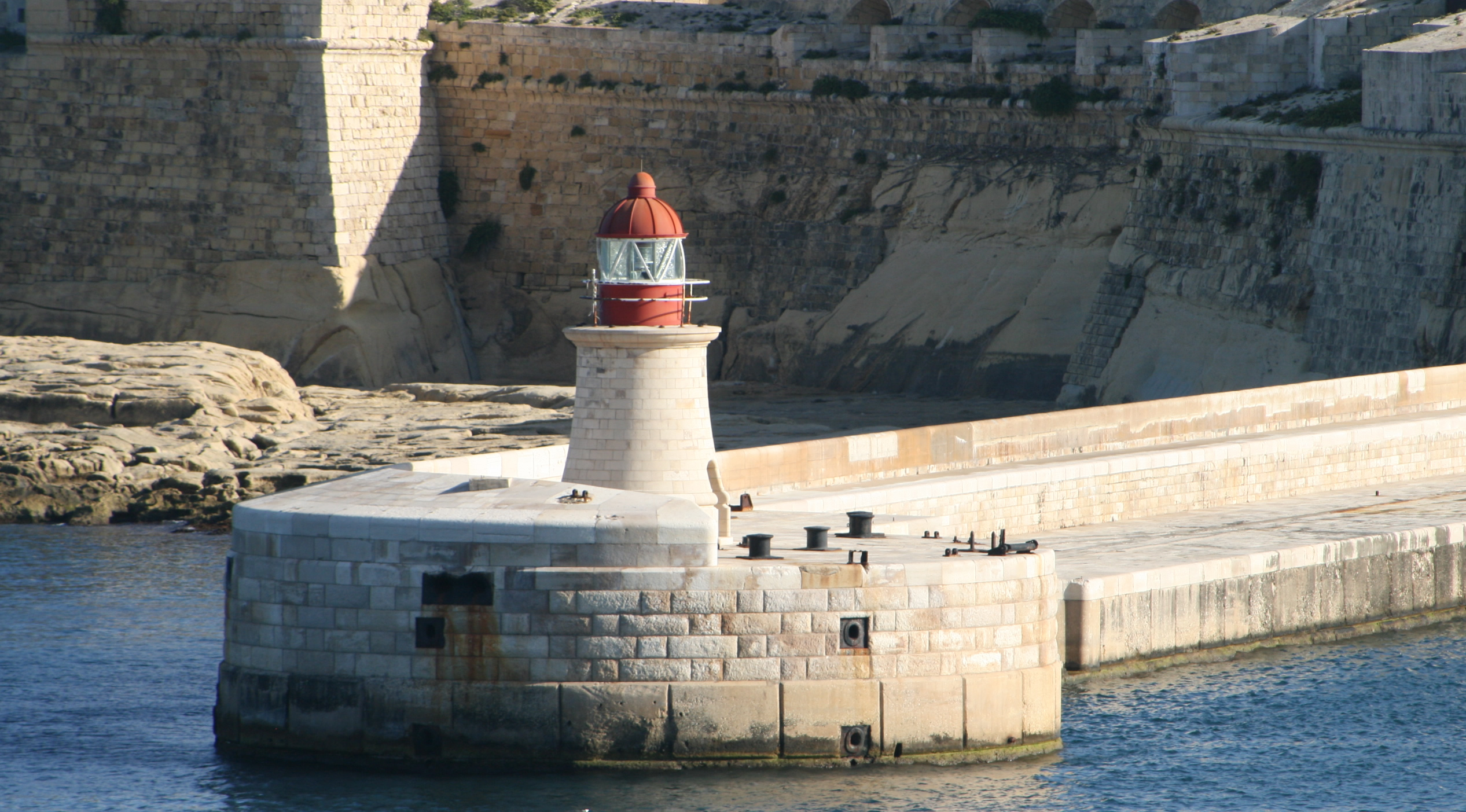
Breakwater head & foundation: the lighthouse stands on the circular stone head of the Ricasoli east breakwater. The breakwater itself is massive masonry (huge natural-stone blocks) laid during the 1903–1908 works; the light tower was built on top of that prepared head. Archival plans and drawings for the breakwater and associated buildings (keepers’ quarters, sketches of glazed stallboard lights, etc.) survive in the national / public archives (catalogue listings).
Tower form & materials: the structure is a short tapered stone tower (sometimes described as conical or tapered cylindrical), unpainted stone with a coloured lantern (red). Several sources and photographic evidence show a plain stone tower about 9–14 m tall with a small gallery and a domed / red-painted lantern house. The masonry and local limestone character match other harbour breakwater lights in Malta.
Keeper’s arrangements / associated buildings: archival entries include proposed quarters and drawings for the lighthouse keepers and service arrangements at the breakwater — the breakwater project included practical provisions for operation and maintenance. (Those plans are indexed in the national Arkivji catalogue.)
Lighting apparatus & navigational role
Optical equipment: specialist lighthouse listings and lighthouse directories list a 4th-order lens for the Ricasoli breakwater light (appropriate for a harbour entrance light), with a red characteristic used to mark the breakwater arm. The light is a harbour/entrance mark rather than a long-range coastal beacon.
Light characteristic & range: sources give quick-flashing or single-flash characteristics in various listings; the small focal height and optic mean the effective visible range is modest (commonly recorded as ~5–6 nautical miles), suitable for channel guidance into Grand Harbour rather than long coastal visibility.
Later history, changes and conservation
Lantern loss & restoration: the two breakwater lighthouses (east/Ricasoli and west/Valletta/St Elmo side) were for a long period without their original lantern enclosures; in recent years replicas of the original lanterns were reinstated (a restoration/conservation action reported in local heritage write-ups and photographic records). Photographs show the restored lanterns and the tower as a prominent visual cue at the harbour entrance.
Operational status: the light continues to serve as a harbour entrance aid; details (characteristics and management) are listed in maritime directories and national lighthouse registers. The tower itself remains closed to the public but is visually prominent from ferries and the harbour.