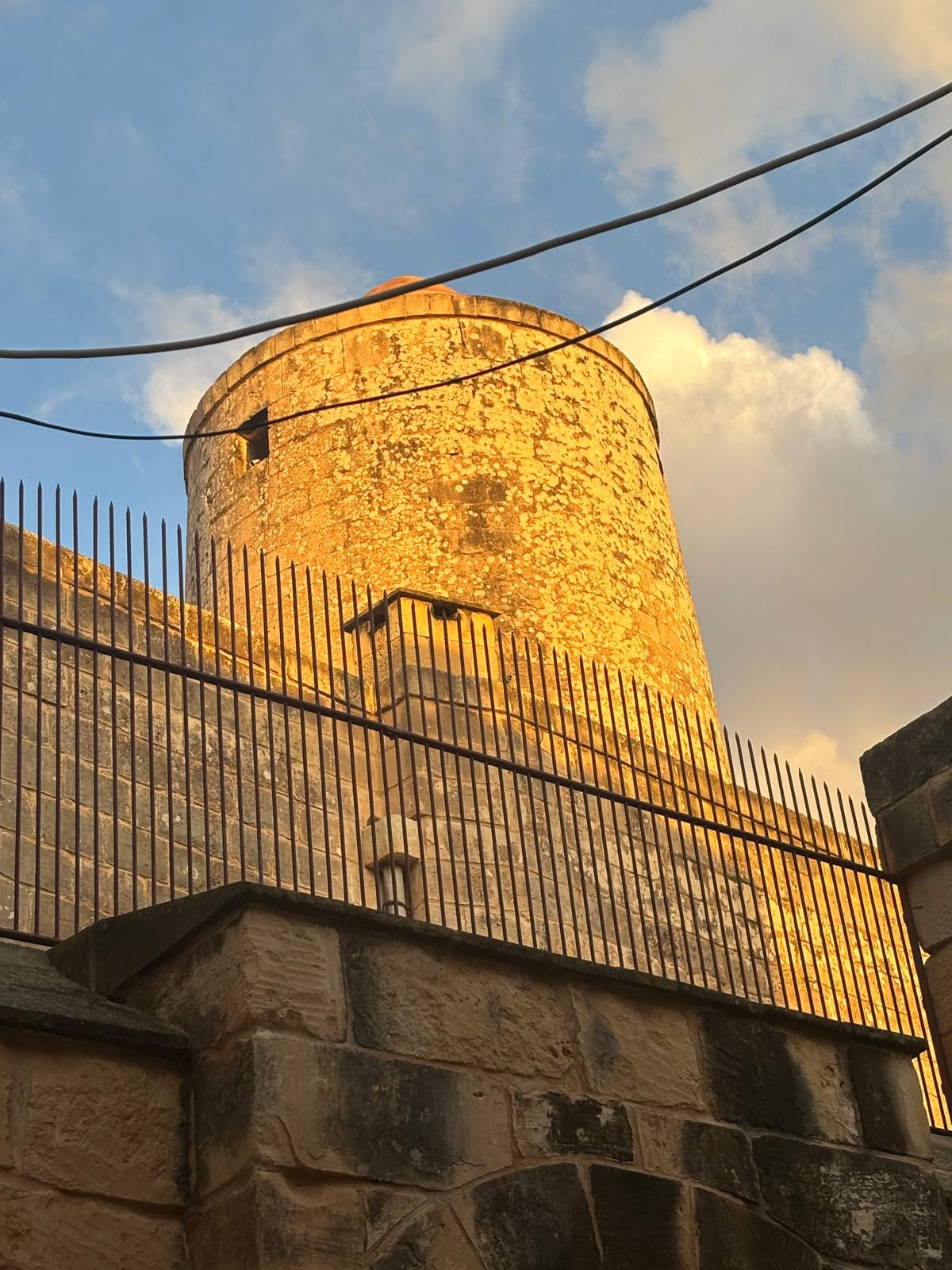
It is one of several historic windmills in Naxxar, Malta:
📍 Location
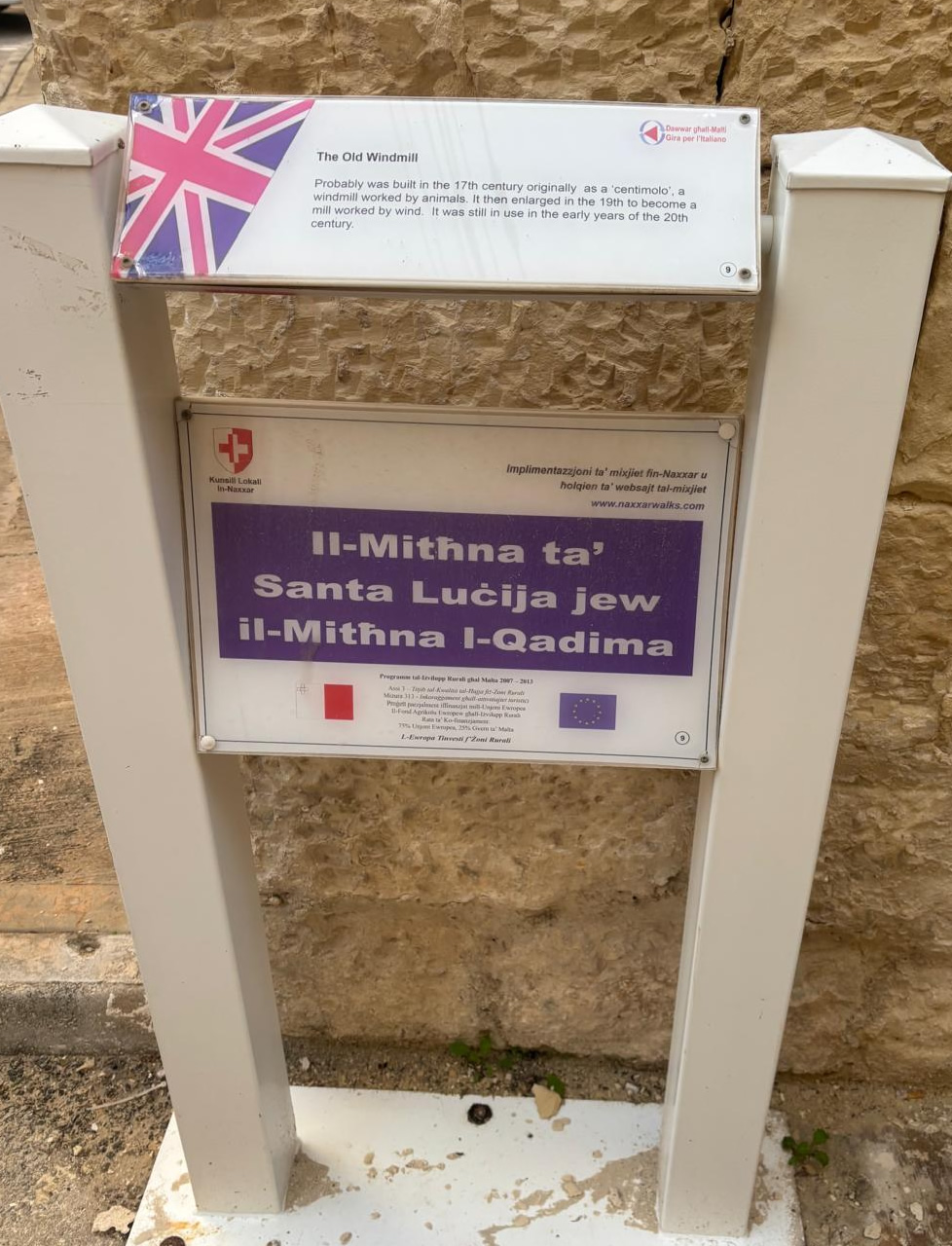
35.915306, 14.442250 Google Map LinkSanta Lucija Windmill – Naxxar, Malta (Built c. 1700s)
1. Historical Context & Date of Construction
Santa Luċija Windmill was constructed during the 1700s, when Malta was under the rule of the Order of St John (Knights Hospitaller). This period saw a major expansion of rural windmills across the island as the population grew and flour became an economic and strategic resource.
The Knights actively encouraged both:
State-owned windmills
Privately funded rural mills, like Santa Luċija
These ensured that villages such as Naxxar, Għargħur, and surrounding agricultural districts had secure flour supplies.
2. Origin of the Name “Santa Luċija”
The windmill takes its name from Saint Lucy (Santa Luċija), a Christian martyr associated with:
Light
Protection
Rural devotion
The name likely derives from:
A nearby chapel or devotional niche
Or the personal devotion of the landowner or miller
It was common in rural Malta to dedicate windmills to saints for spiritual protection of the structure and livelihood.
3. Architectural Design & Construction
External Structure
Santa Luċija Windmill followed the classic Maltese tower-mill format of the late 17th–18th century:
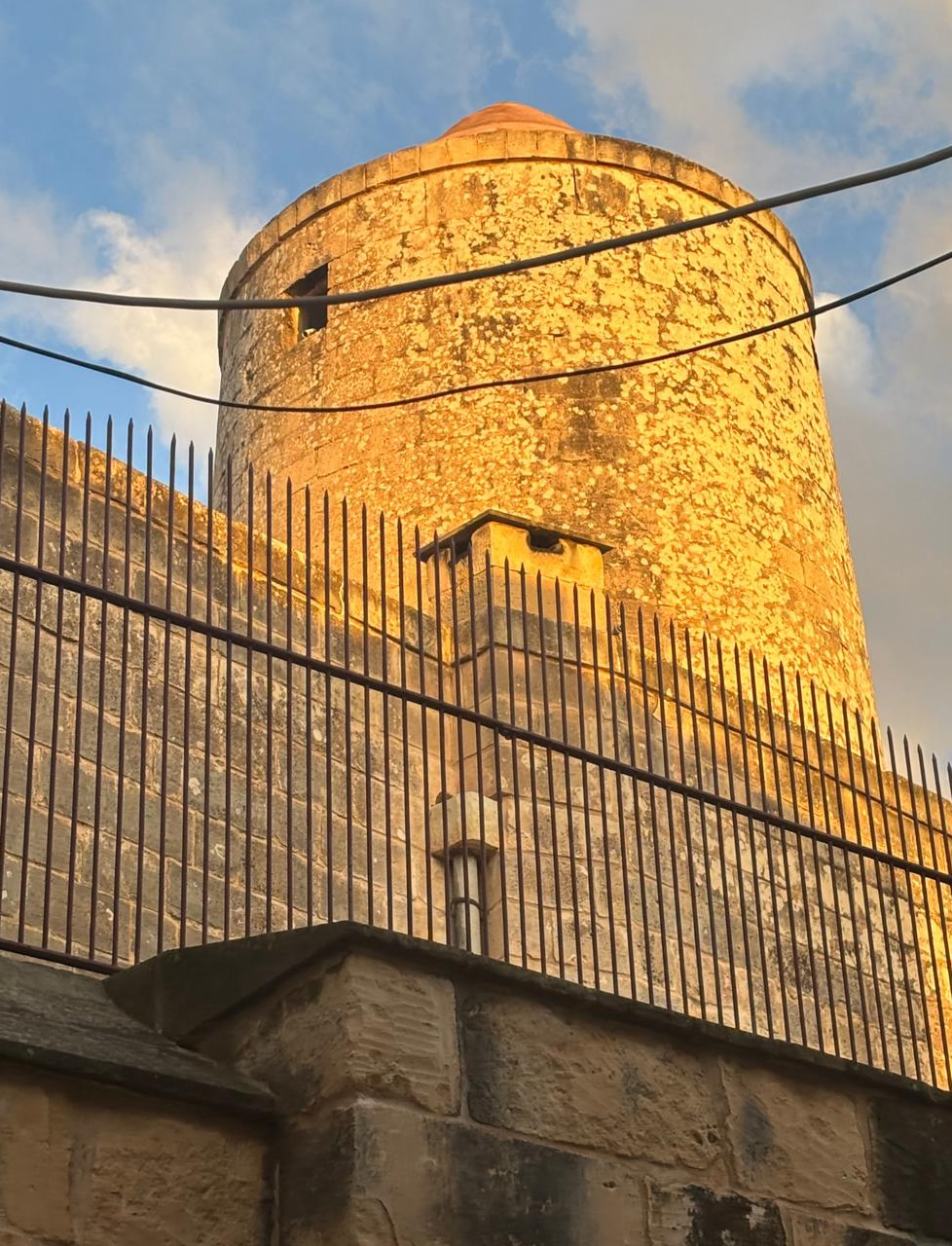
Cylindrical stone tower
Constructed from globigerina limestone
Walls approximately 1.2–1.5 m thick
Originally topped by a:
Rotating timber cap
Carrying four long wooden sails
The windmill was positioned on open rural land, carefully placed to capture:
Majjistral (north-west) winds
Grigal (north-east) winds
Internal Milling Mechanism (Original)
Inside the tower was a complete wind-powered milling system:
Vertical main timber shaft
Brake wheel and iron-toothed gearing
Large circular millstones:
Bedstone (fixed)
Runner stone (spinning)
Wooden hopper for grain feed
Ground-level flour collection bays
All operation was powered exclusively by wind energy, with the sails manually rotated to face changing wind direction.
4. Use & Community Role
Agricultural Function
The mill was used for grinding:
Wheat – for bread production
Barley – for food and animal feed
Who Used It
It served farming families from:
Naxxar
Għargħur
Parts of Mosta hinterland
Farmers transported grain by:
Donkey
Two-wheeled cart
Payment
Milling was paid by:
A percentage of the flour
Or part of the grain (known as the miller’s toll)
5. Social & Economic Importance
Santa Luċija Windmill played a vital role in:
✅ Supporting local food independence
✅ Stabilizing bread supply during shortages
✅ Providing employment for miller families
✅ Strengthening village-level economy
✅ Reducing pressure on state-controlled mills
For local people, the windmill was:
A constant landmark
A daily agricultural hub
A site of social interaction
6. Decline & End of Milling Activity (19th Century)
By the mid-to-late 1800s, Santa Luċija Windmill began to decline due to:
Introduction of steam-powered mills
Later diesel and roller milling
Cheaper imported flour
Expansion of road transport
By the end of the 19th century, the windmill had ceased commercial operation.
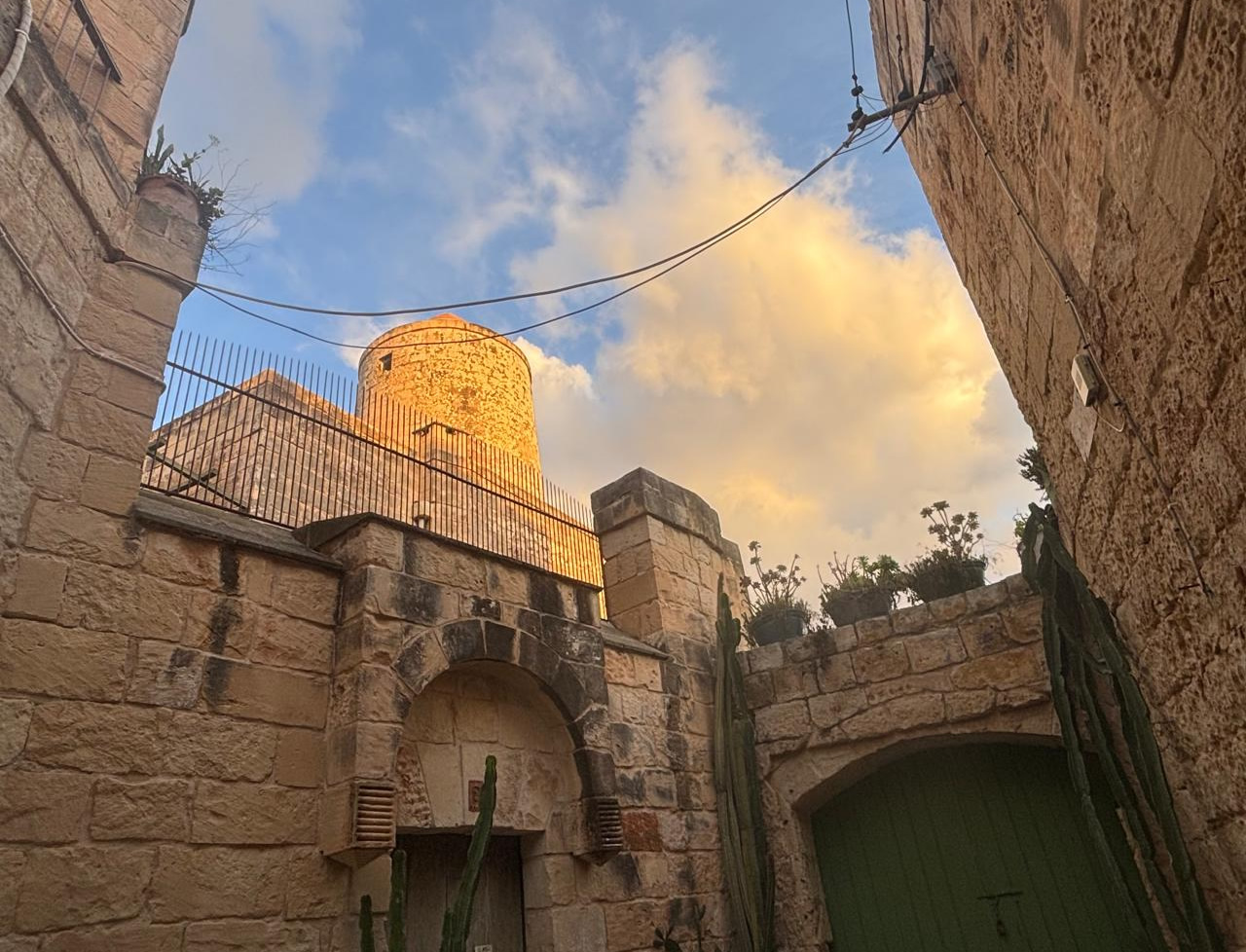
7. Conversion into a Private Residence
During the 20th century:
The wooden sails were removed
The rotating cap was dismantled
Internal milling machinery was removed or scrapped
Floors and living spaces were added
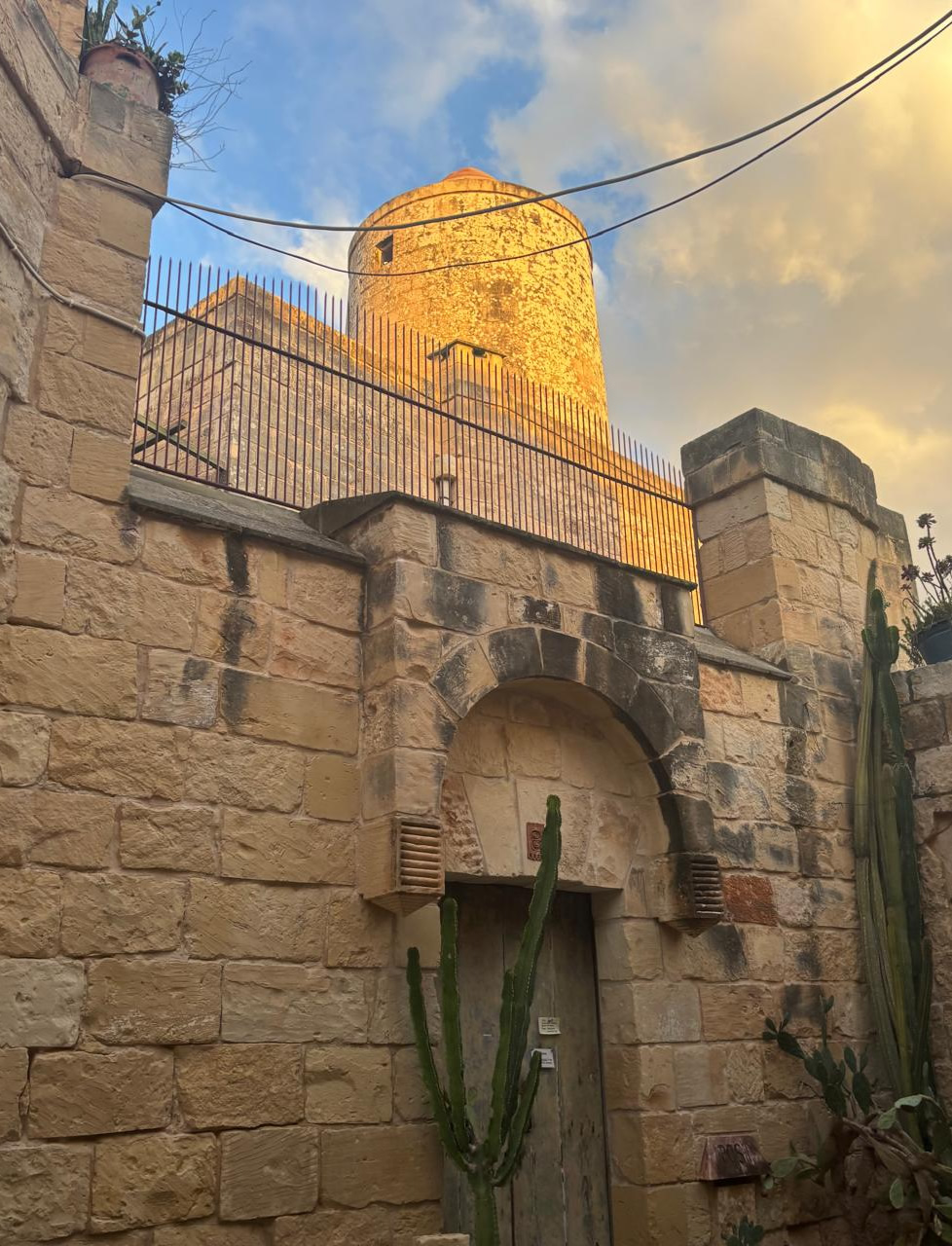
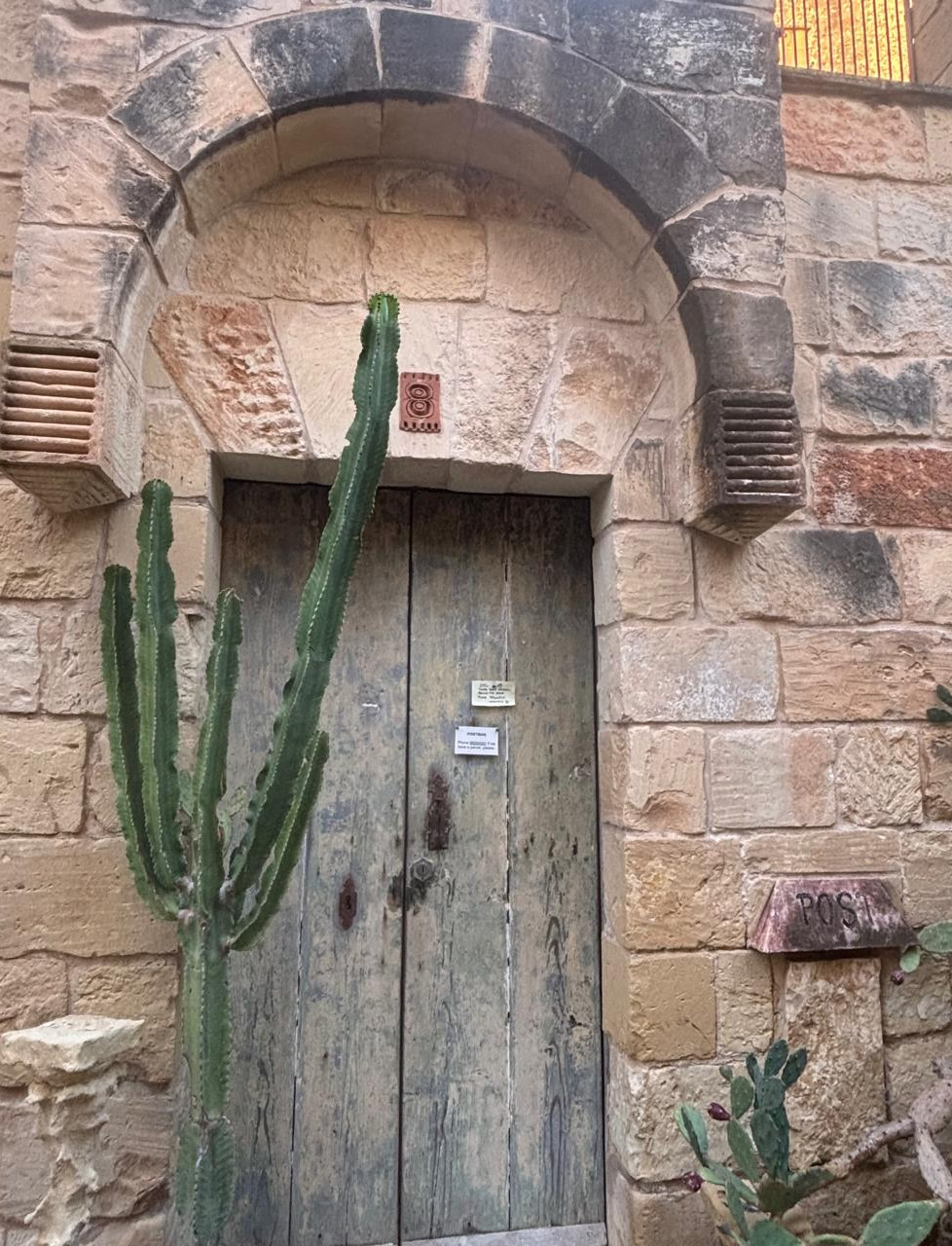
Openings were modified for doors and windows
Despite conversion, the core stone tower survived, preserving its:
✅ Original cylindrical mass
✅ Limestone masonry
✅ Rural industrial silhouette
8. Present-Day Condition
Today, Santa Luċija Windmill:
✅ Survives as a private residence
✅ Retains its original windmill tower
✅ Has no sails, cap or machinery
✅ Is structurally sound
✅ Is an important unlisted but historically significant rural monument
9. Heritage Significance Today
Santa Luċija Windmill represents:
✅ Malta’s private 18th-century rural industry
✅ The transition from wind to industrial milling
✅ The integration of industry into domestic architecture
✅ The gradual disappearance of traditional milling technology