St Michael’s Bastion Windmill — history & construction (Valletta, built 1674)
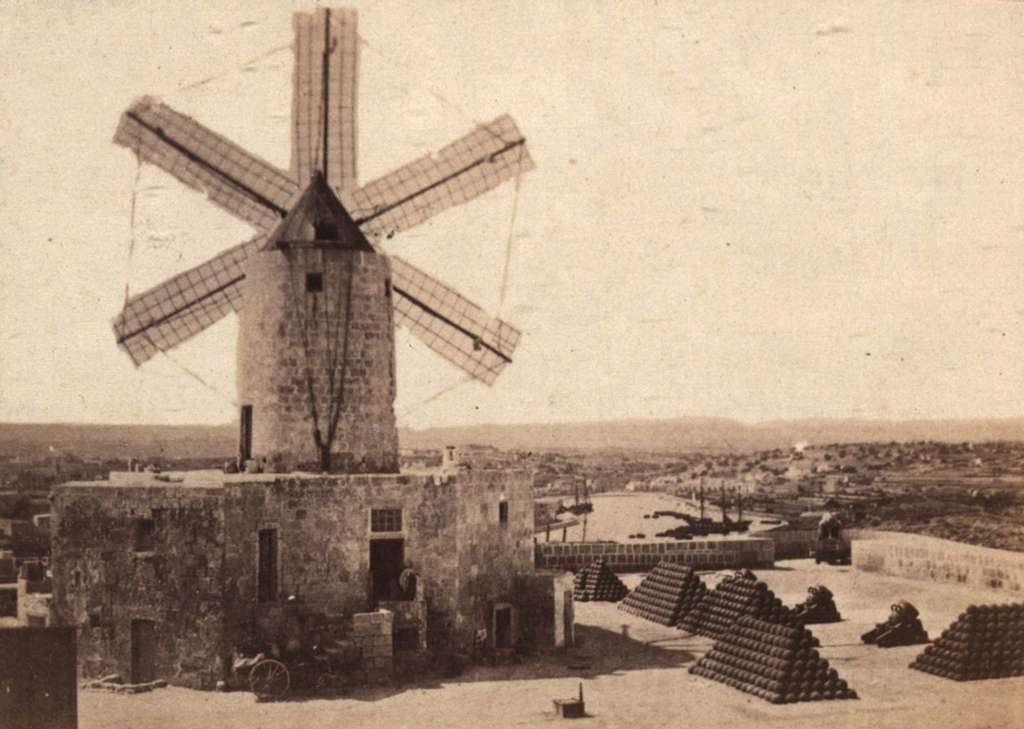
Quick facts
Built: 1674 (commissioned by the Cottoner Foundation).
Type: Stone tower mill (typical Maltese tower/round-plan mill with adjacent rooms).
Number: Two adjacent mills were recorded on St Michael’s Bastion.
Demolished: Removed/demolished in the 19th century (sources record them as gone before 1900).
Site today: The bastion forms part of Hastings Gardens (Valletta’s land-front promenades).
Why they were built
The two mills on St Michael’s Bastion were part of a mid–late-17th-century programme of construction funded by knightly foundations (the Cottoner Foundation in this case) to increase local milling capacity for Valletta and its harbours. Placing mills on bastions and headlands served two practical aims: (1) capture steady coastal winds for reliable milling close to the city, and (2) keep food-processing (flour production) within easy reach of the fortified garrison and civilian population.
Construction & form
Structure: Like other contemporary Maltese mills, the St Michael’s Bastion mills were stone tower mills — cylindrical masonry towers built of local limestone, with internal floors, storage rooms around the base and a timber cap carrying sails (vanes). The towers were typically surrounded by single-storey ancillary rooms used for storage, sack-handling and the miller’s workspace.
Location details: They were sited on the outer salient of the Land Front (the bastion’s seaward face) to exploit uninterrupted coastal winds and to occupy a clear vantage point above Marsamxett harbour. Contemporary prints and later 19th-century postcards illustrate the mills standing prominently above the bastion.
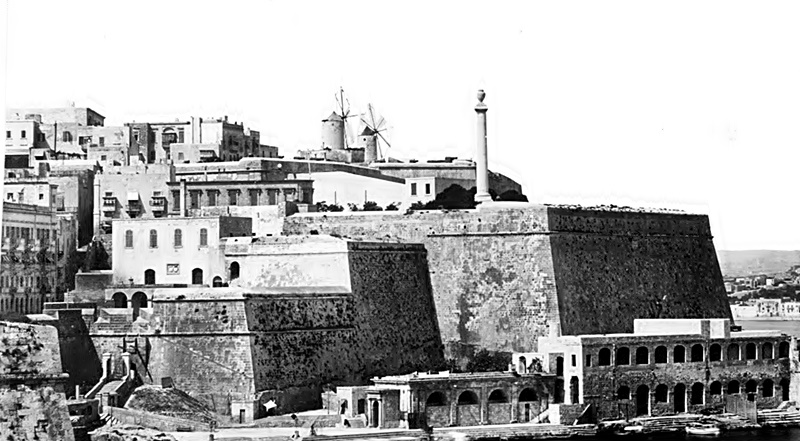
Operation & role
Economic role: The mills ground cereals (wheat, barley) into flour for Valletta’s residents and garrison. Their proximity to the harbour also made them accessible to small coastal traders.
Strategic dimension: Mills positioned on fortifications had dual significance: beyond producing flour they were part of the footprint of provisioning a fortified city. Some urban mills elsewhere in the islands also supported military supplies (including ancillary tasks like producing materials for gunpowder storage/works), although the primary role at St Michael’s was milling for food.
Decline and demolition
The mills remained visible into the 19th century (19th-century postcards and descriptions show them). Over the course of the 1800s they fell into disuse as industrial milling and changing urban needs made small bastion-mills obsolete. Sources record that both St Michael’s Bastion mills were demolished before 1900, and by the late 19th / early 20th century the bastion area was transformed into promenades and gardens (today’s Hastings Gardens).
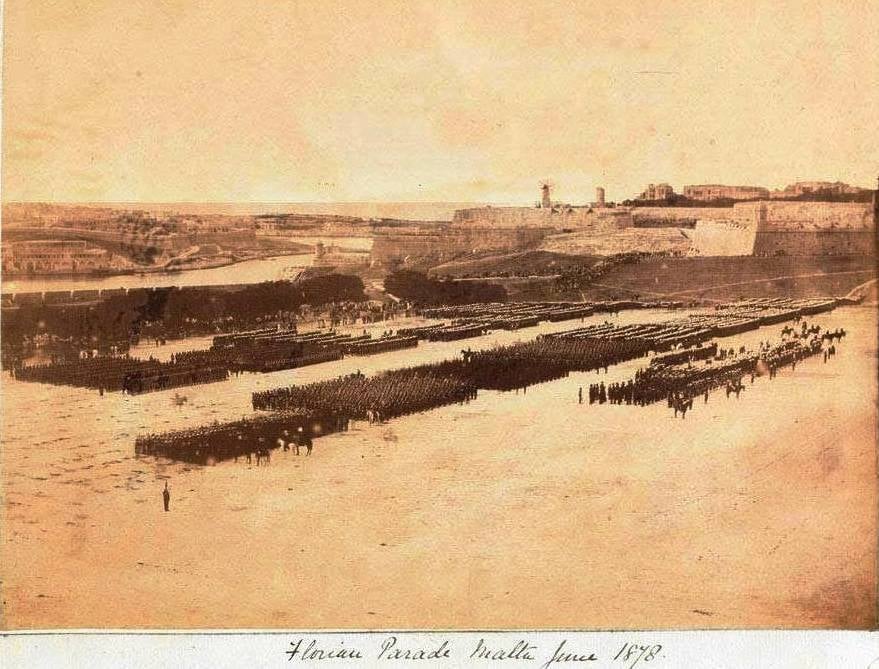
Evidence & key sources
Windmills of Malta database: entry noting built 1674 by the Cottoner Foundation.
“Fortifications of Valletta” summary: records two windmills on St Michael’s Bastion, demolished in the 19th century; site is now Hastings Gardens.
Local historic inventories and blog compilations (Vassallo History) and vintage postcard collections that show the mills in 19th-century imagery and note their demolition c. late-1800s.