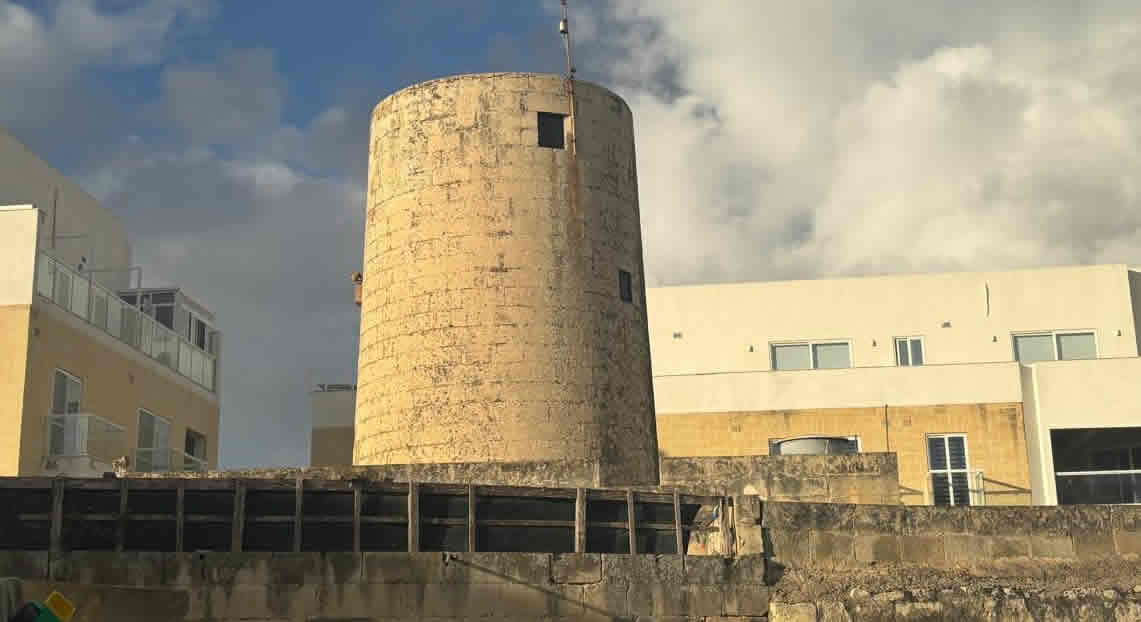
Ta' Barba Zepp Windmill- Malta
History and construction description of the Ta ' Barba Zepp Windmill, Triq il Fawwara 20 ( Nru 7), Siggiewi, Malta.
📍 Location
The coordinates of Ta' Barba Zepp Windmill are:
- 35.854671, 14.434347
Ta’ Barba Zepp Windmill (Triq il-Fawwara 20,Nru 7 Siġġiewi)
Overview
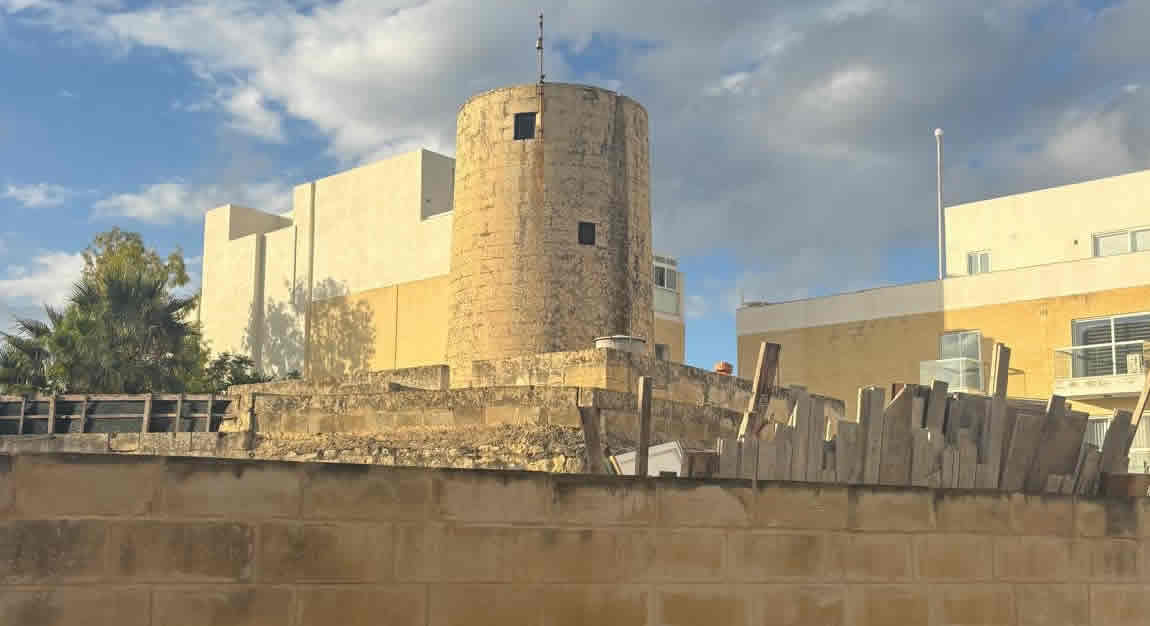
The windmill known locally as Ta’ Barba Zepp is located in Siġġiewi, Malta, on Triq il-Fawwara (address often given as No. 20 or No. 7 depending on historic records). According to listings of Maltese windmills, it is recorded as being built in 1879 by a certain Joseph Sammut.
It remained in use until the 1930s and the sails were reportedly removed around 1940.
Though not as famous as some of the earlier mills built in the Knights’ period, Ta’ Barba Zepp is an example of a late-19th-century tower-type windmill in Malta.
Historical context
The 1879 date places its construction well into the British colonial period of Malta (which began in 1814). By that time, many earlier windmills (built under the Order of St John) were already decades or centuries old. The fact of a new windmill being built in 1879 suggests continued local demand for wind-powered milling even as steam and mechanised milling were emerging. (The general list of Maltese windmills specifies the date for this one as 1879. )
The miller or founder, Joseph Sammut, is noted in the windmill listings as the builder.
After it ceased operations (in the 1930s), the structure was converted into a house / private residence (as per “Remained in use until the 1930s … converted into a house”).
The structure is listed in the official Government Gazette as scheduled built heritage, under the “British Period Windmills” section with the entry: “Ta’ Barba Żepp Windmill, No 7, Triq Fawwara, Siġġiewi.”
The local name “Barba Zepp” likely refers to a colloquial naming after a local miller (“Zepp” being a Maltese nickname for Ġużepp / Joseph). The listing “Ta’ Barba Żepp” literally means “(the windmill) of Uncle Zepp/Joseph”.
Construction & architectural features
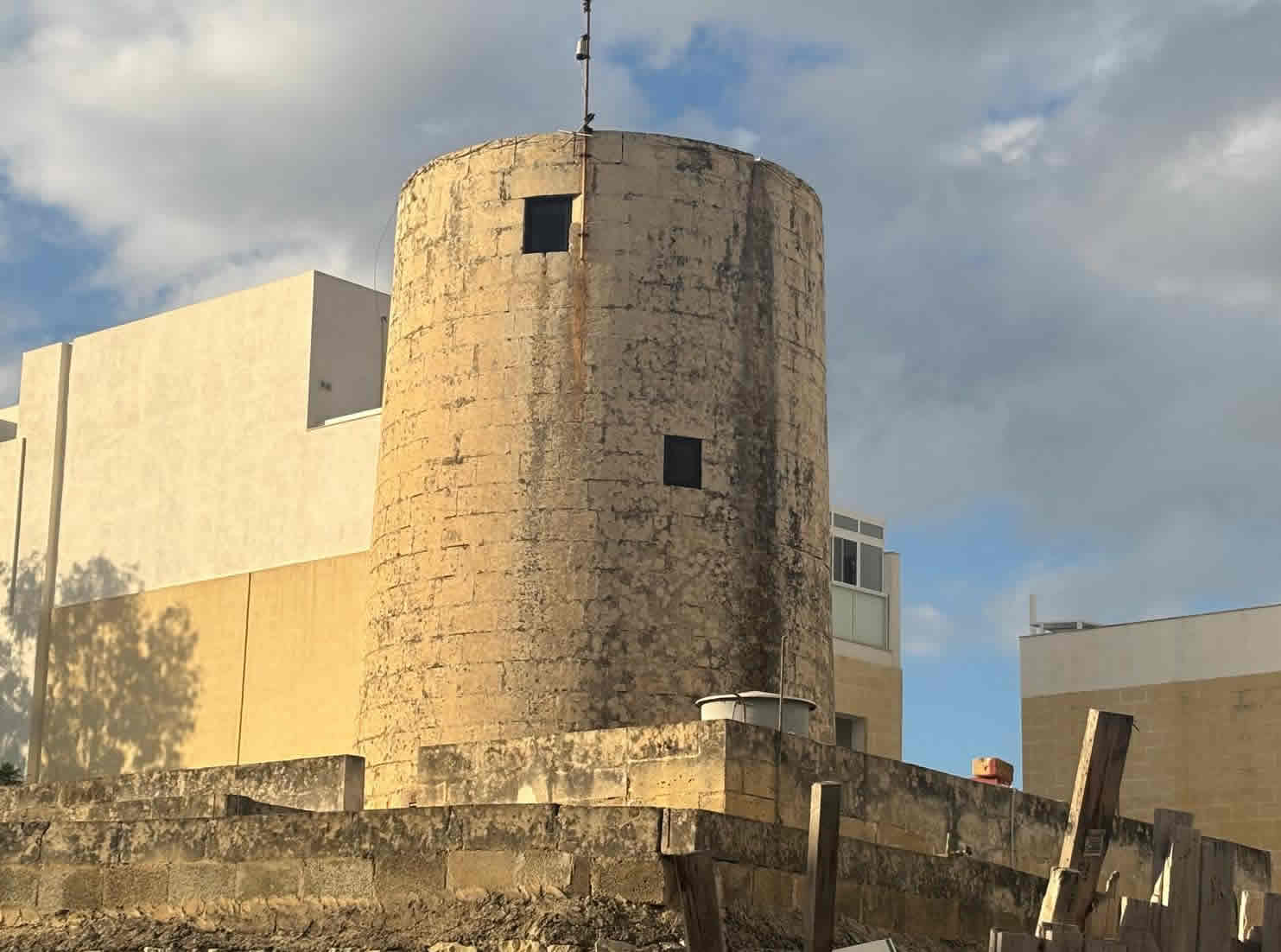
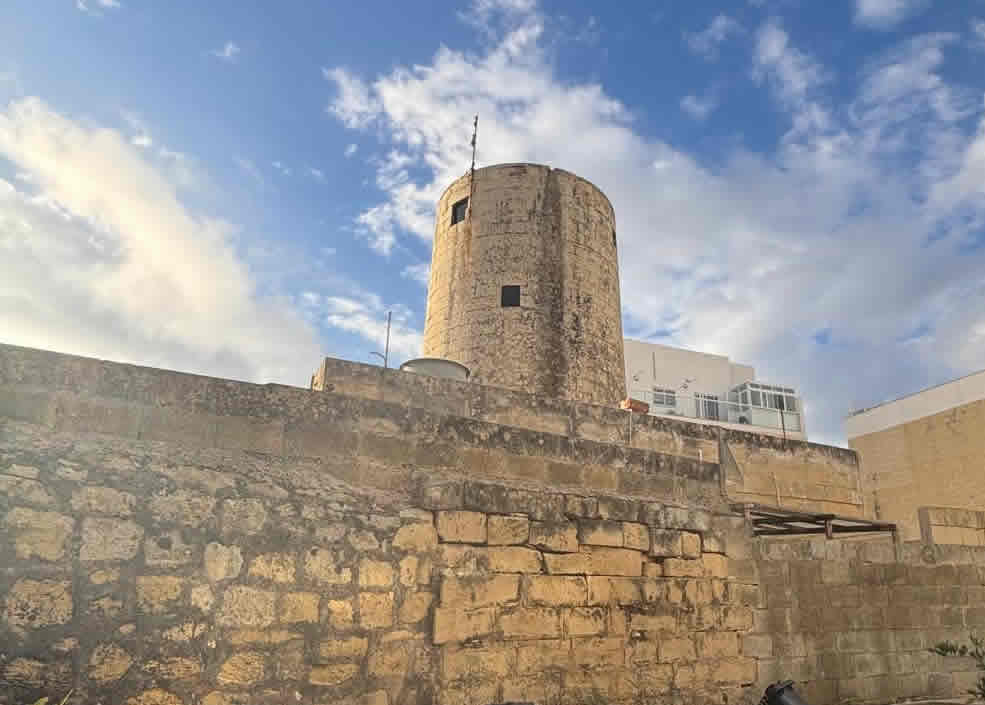
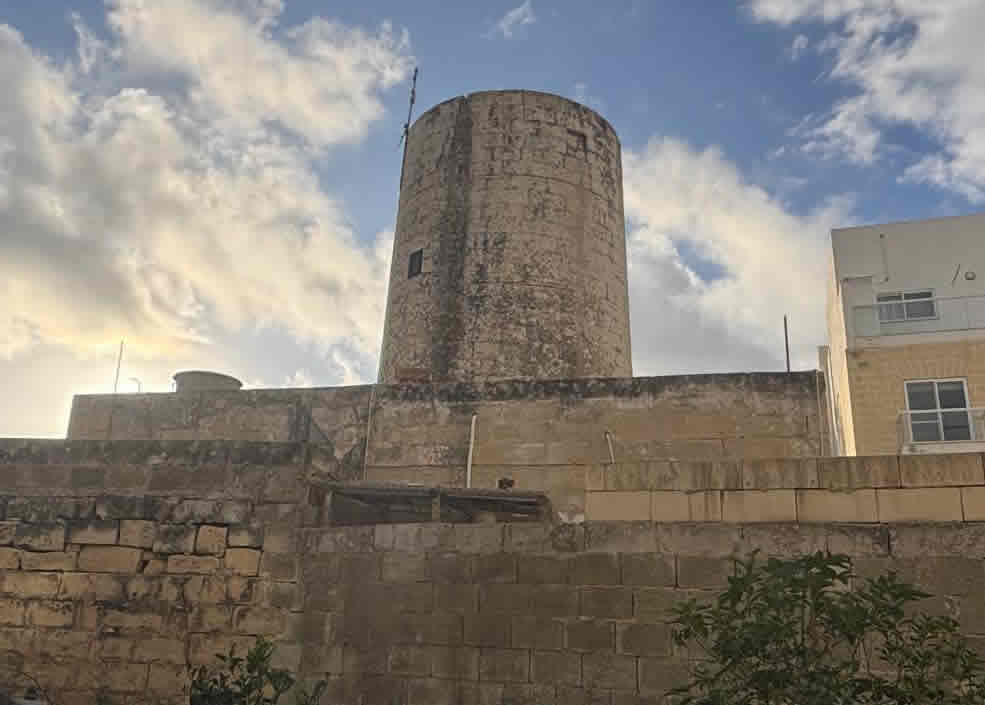
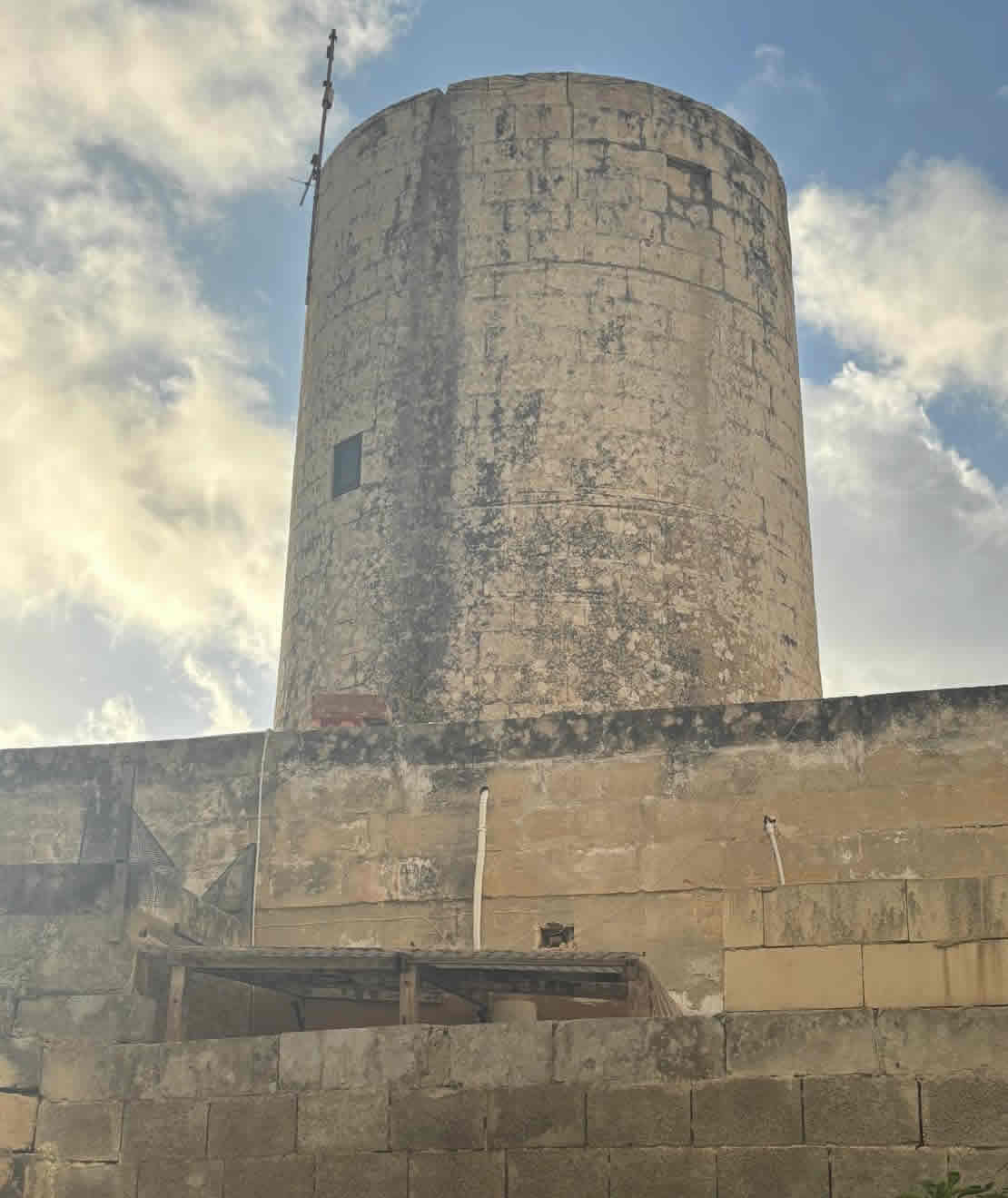
The windmill is of the tower type: a cylindrical (or near-cylindrical) masonry tower, typical of Maltese windmills. This design replaced earlier post-mills and was better suited to local conditions (more stability in wind, more storage space).
Internally the tower would have had multiple floors: a ground floor for storage/workshop, an intermediate floor for milling mechanism, and an attic or cap for the windshaft / sails. Although I did *not* find specific surviving documentation of all the interior arrangement for this particular mill, the general layout for Maltese tower-windmills applies. (e.g., the description for other windmills: spiral staircase, runner stone and bed stone, cap turned to face wind).
A spiral (or steep) internal staircase is mentioned in windmill commentary: “The tower has 44 steps, now 39” for this mill.
The number of steps suggests a fairly tall tower— tall enough to catch prevailing breezes and accommodate internal floors.
The sails have been removed (the listing notes “sails removed in 1940”).
The façade and setting: windmills in Malta often had rooms surrounding the tower for the miller’s living quarters, storage and perhaps animal stabling. Given its conversion into a residence, some of these features may survive.
The building materials would have been local globigerina limestone, typical of Maltese vernacular architecture.
Function & operations
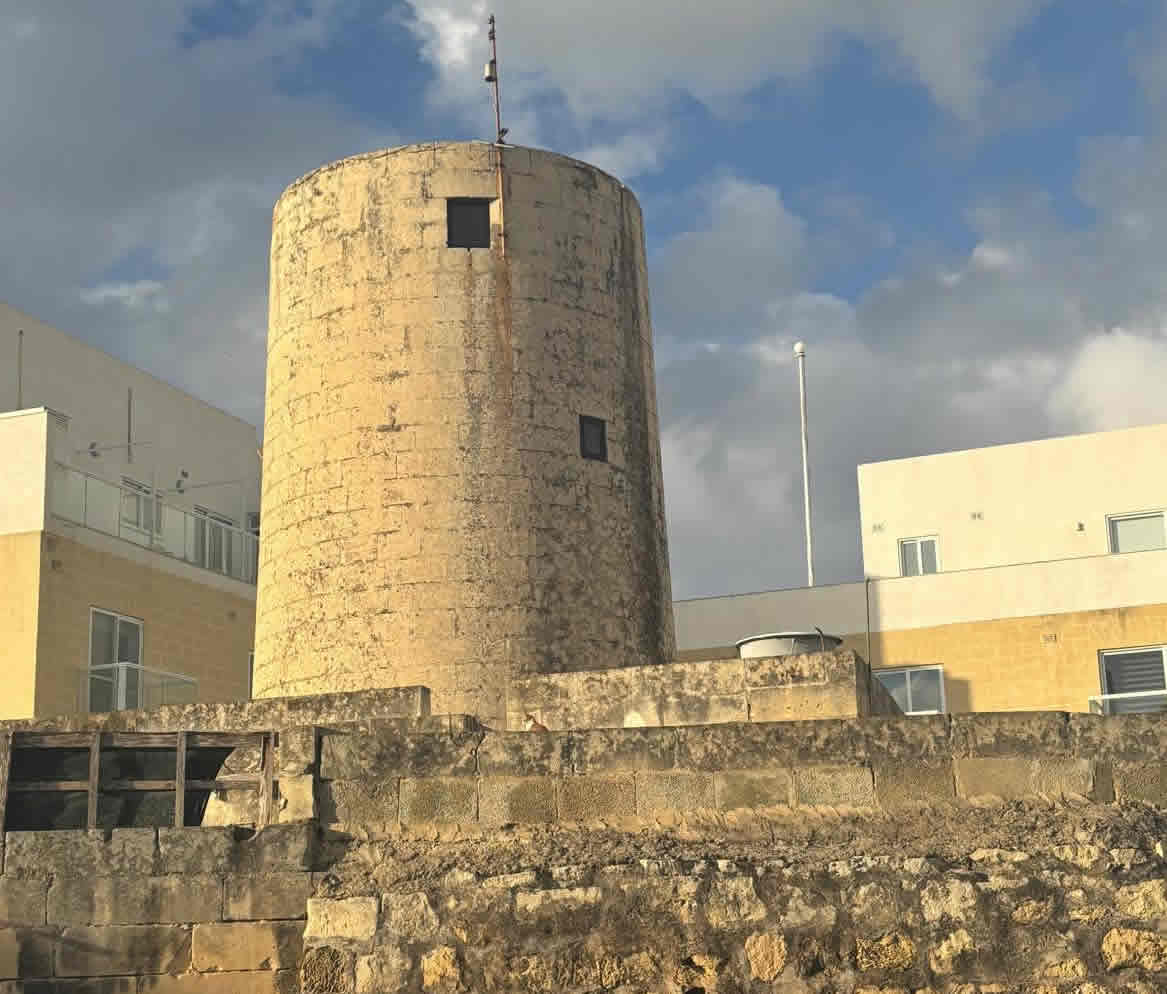
The windmill’s primary function was likely to grind grain (wheat, barley) into flour, serving the local agricultural economy of Siġġiewi and surroundings. Windmills in Malta were central to rural economies before full mechanisation.
The miller would have oriented the cap and sails to face the wind; there would have been millstones (runner and bed) inside. The mechanism would drive the upper stone to grind grain. (While not specifically documented for this mill, this is standard for Maltese windmills.)
The fact that it remained active until the 1930s suggests it was viable for quite a time, even as industrial milling advanced.
After operation ceased, the removing of sails in 1940 indicates the wind-milling function ended and the tower's adaptation into a residential or alternate use followed.
Condition & current status
While specific recent condition reports of Ta’ Barba Zepp are scarce, the Government Gazette listing shows it is legally recognized as built heritage.
The “Windmills – Vassallo History” page states that after being sold in 1969 to a Mr Alan Bartram from Canada, the mill was restored. Then ownership changed several times; present owner (as per that source) is named John Beckson.
Because of the conversion into a house and private ownership, public access may be limited or non-existent.
If you visit, you may observe the tower exterior, and perhaps the surrounding residential adaptation.
Significance
Ta’ Barba Zepp is one of the later examples of Maltese windmills, built in the late 19th century, which itself is interesting as many of the earlier mills were built under Knights of St John (17th-18th centuries).
It illustrates the transition period in Maltese rural/agrarian economy—from traditional wind-driven milling towards mechanisation.
It adds to the built heritage of Siġġiewi and helps tell the story of local infrastructure supporting agriculture in Malta’s past.
Preservation of such structures helps maintain the visual and cultural landscape of Maltese villages, where towers such as these serve as landmarks.
Useful tip if you plan a visit
The windmill is located in a residential area: Triq il-Fawwara, Siġġiewi. It’s best viewed from the exterior unless you have permission to enter.
Given the tower steps (39-44), the internal access is steep — so if you have a chance to visit the upper part, ensure suitable footwear.
Visit around sunset if you like photographing the limestone in warm light; the tower stands out in silhouette.
While the sails are long removed, check whether any restoration signage is present outside; sometimes the owners or local council place a plaque or note.
Be respectful of private property if the building has been converted into residence; a vantage point from across the street or nearby sidewalk may suffice.