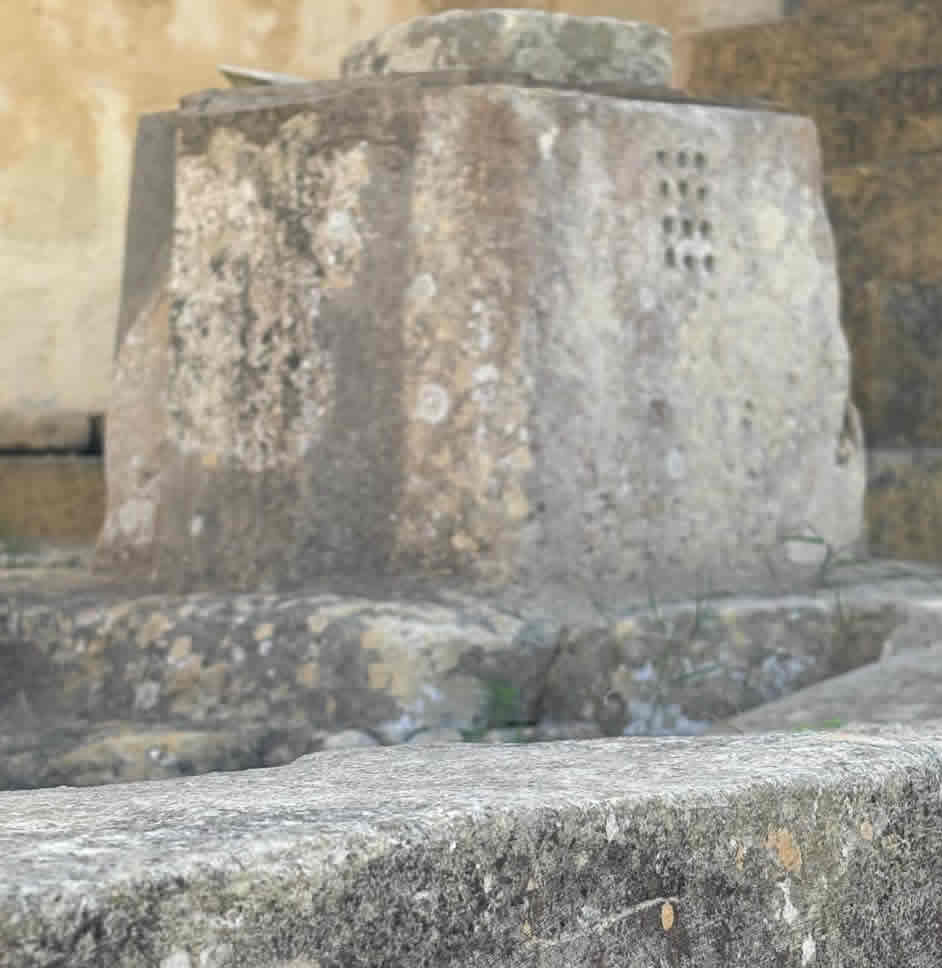
Here’s a summary of the construction and history of Ta 'Borom Windmill in Gharb, Gozo:
📍 Location
36.057487, 14.211348Quick ID
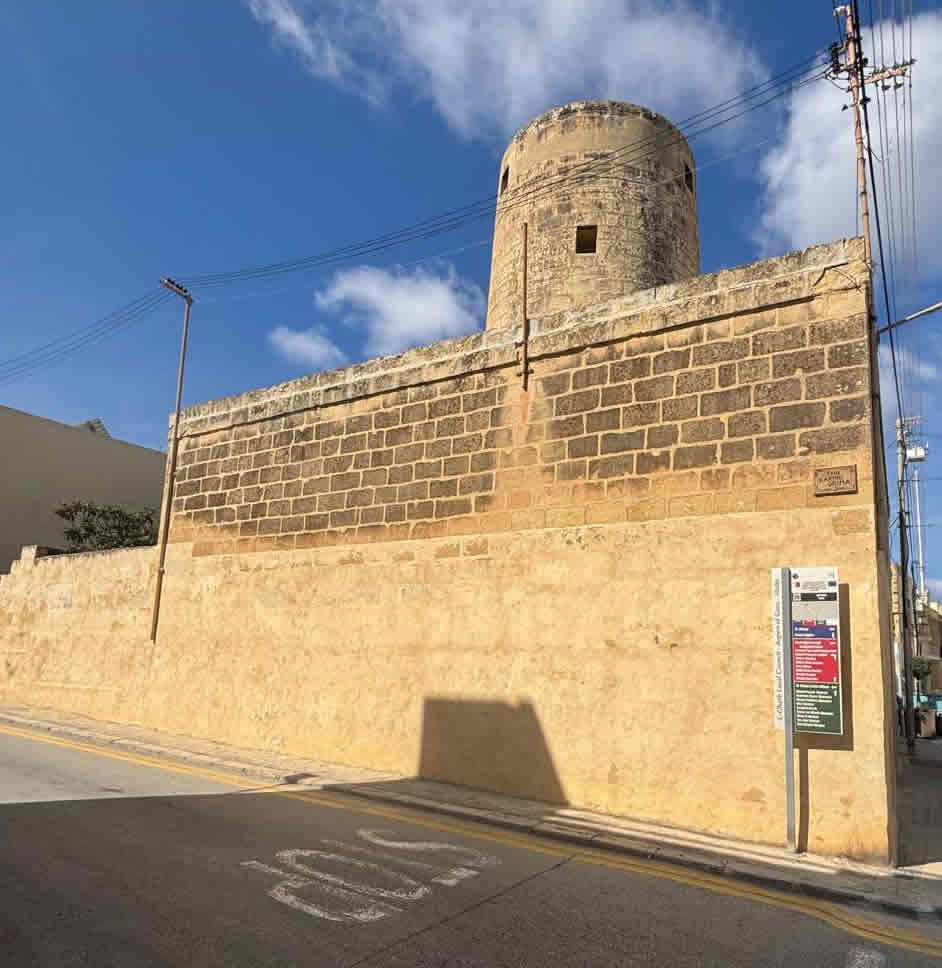
Common name: Ta’ Borom / Il-Mitħna ta’ Borom (the Għarb windmill).
Location / address (recorded in inventories): corner Triq il-Knisja / Triq Karmni Grima, Għarb, Gozo.
Short summary
Ta’ Borom is a mid-19th century tower windmill in Għarb (commonly dated 1862 in specialist registries). It was built as a local grain mill, worked for the late-19th century rural economy, lost its sails when steam/motor milling took over, and today survives as an historic (scheduled) structure documented in the national inventory and local heritage publications.
History & chronology
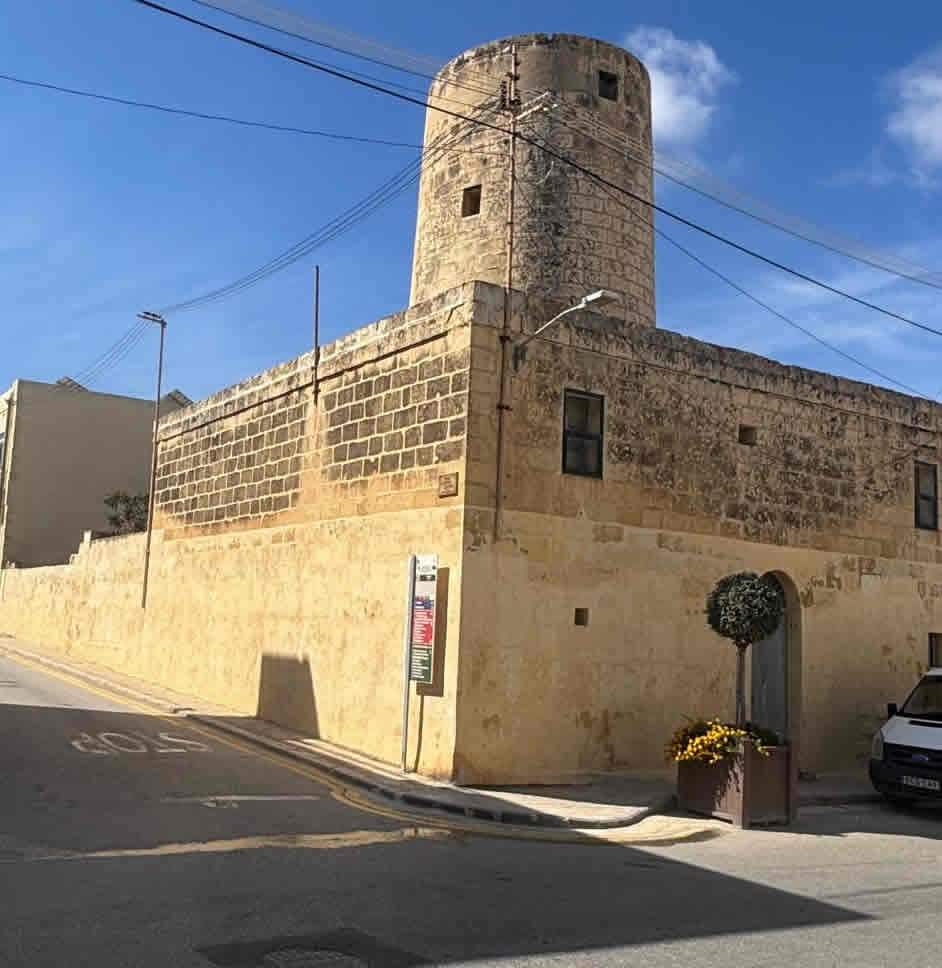
Built / date: most specialist windmill databases list 1862 as the building year for Ta’ Borom (this is the usual date reported in windmill catalogues for the Għarb mill).
Working life: the mill functioned as a commercial grain mill serving Għarb and nearby fields in the latter 19th century. As with most island mills, it was gradually made obsolete by steam- and motor-driven mills and by improved transport; popular lists note the sails were removed around c.1900.
Local memory & documentation: local community publications and newsletters (Għarb municipal / Leħen Punent articles) discuss the mill in local history pieces and point readers to the specialist studies on Gozitan mills for context. Those local pieces also reference the standard scholarly background on Gozo mills (see Attard Tabone’s study).
Architecture & construction details
Type & plan
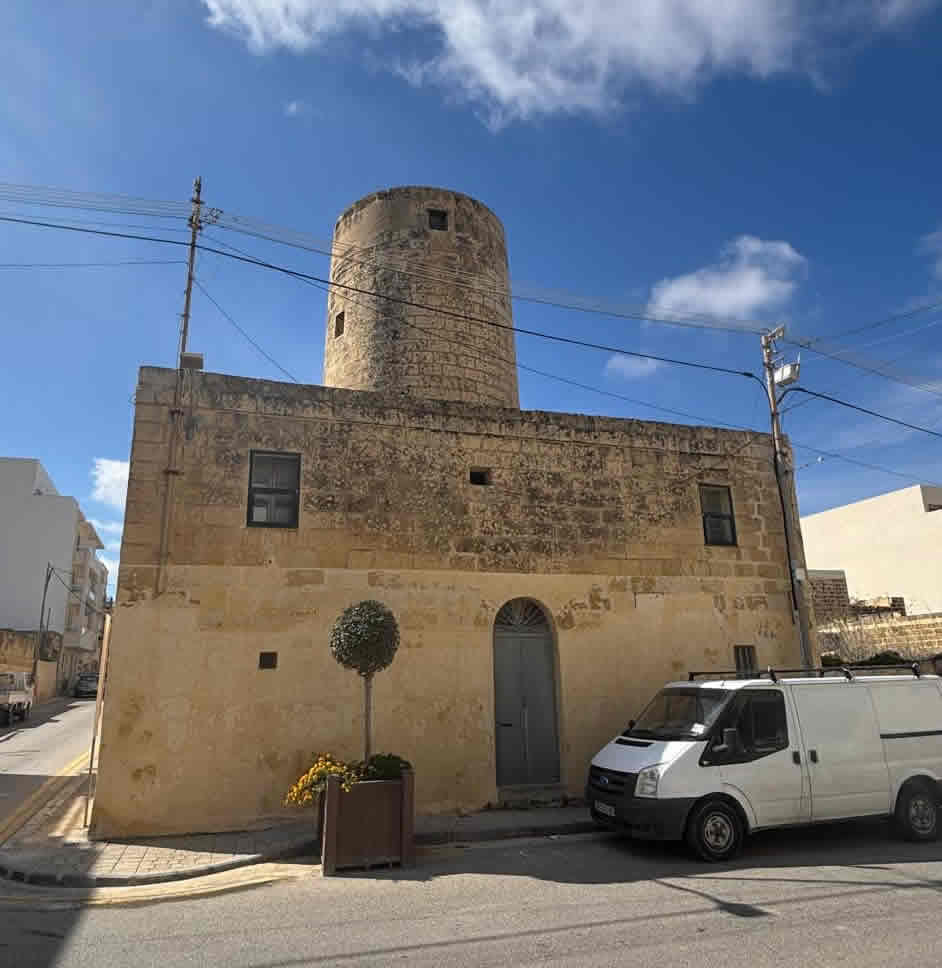
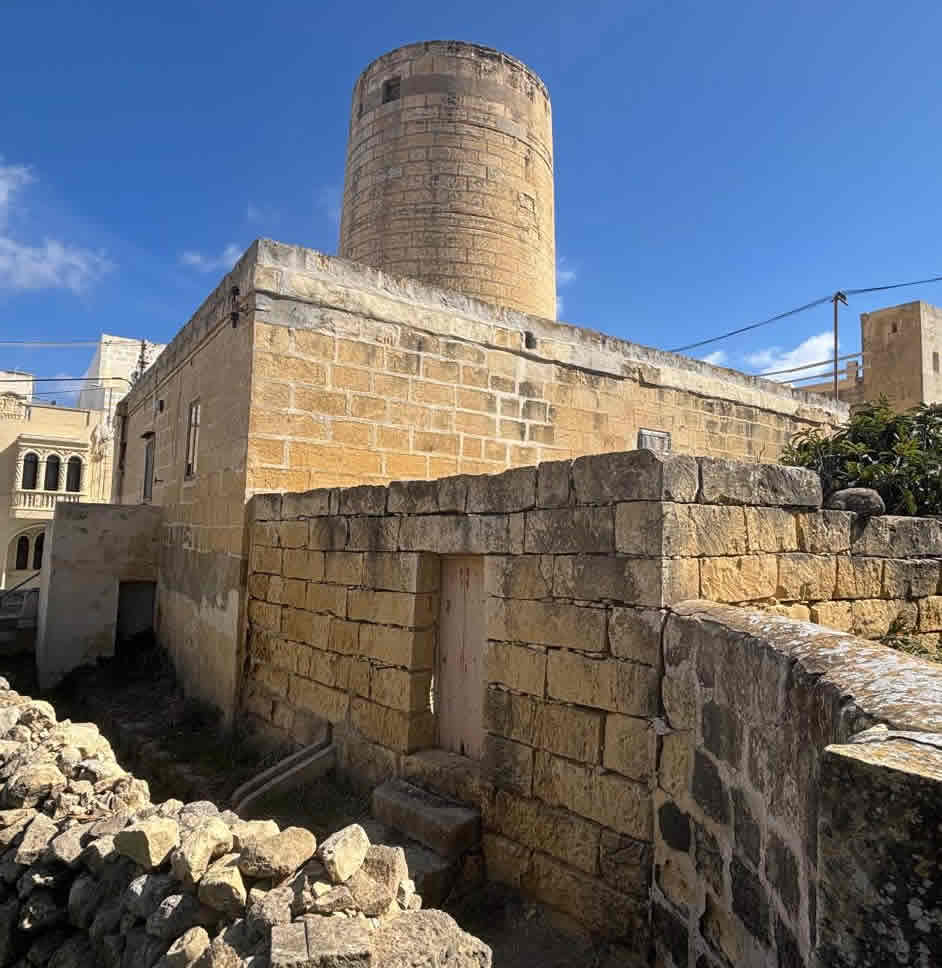
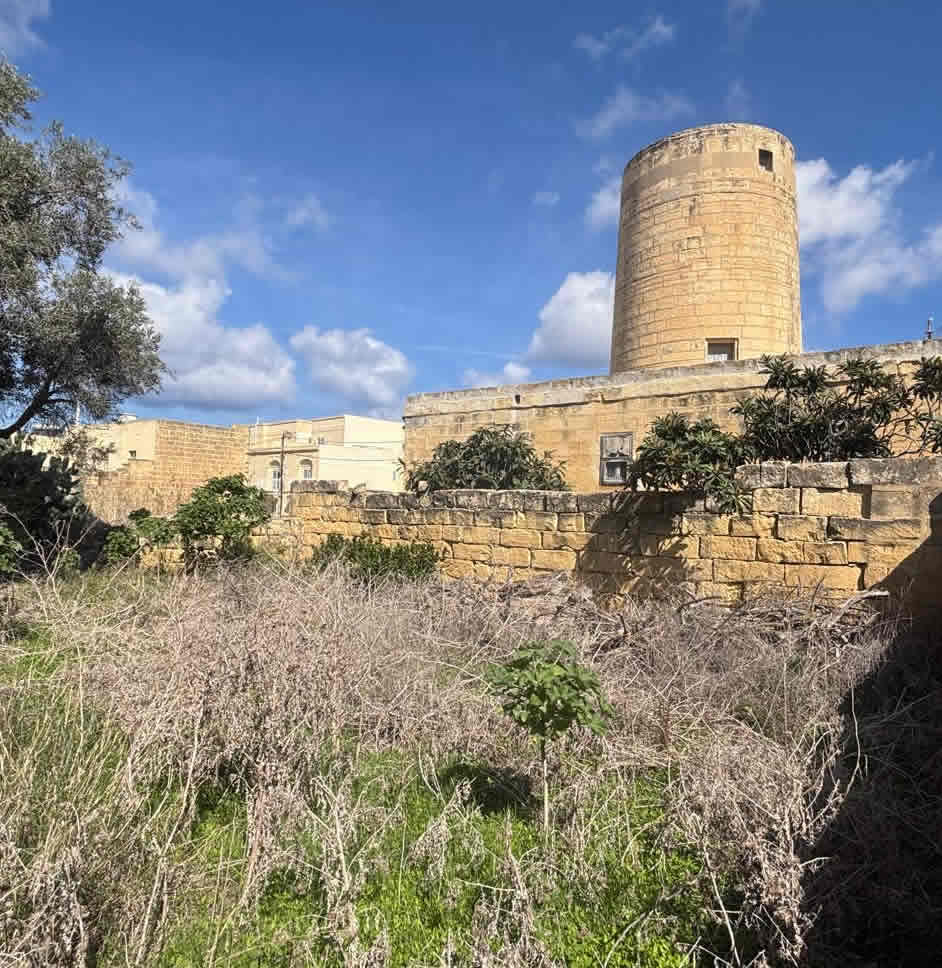
Ta’ Borom is a tower (round) windmill — the standard Maltese/Gozo form: a cylindrical masonry tower rising from a rectangular base containing ancillary rooms (storage, bakery or the miller’s accommodation). Historic photos and registry notes confirm this typology.
Materials & structure
Built in local limestone (globigerina/Gozo limestone) with lime mortar — the usual vernacular materials for Gozitan mills of the period. The masonry finish is utilitarian rather than decorative (typical for privately built mid-19th century mills).
Mechanics (how it worked)
Historically the mill would have had a wooden windshaft carrying 4–6 wooden sail arms (sweeps) with sailcloth or lattice, a brake wheel inside the tower, a vertical shaft and millstone pair (runner over bedstone) to grind grain. Specialist summaries report that, like most of the small Gozo mills, the original milling machinery and sails do not survive in working form on site today.
Use, ownership & social role
Ta’ Borom operated as a local commercial mill — farmers brought grain to be ground for bread and household use. Many mid-19th century Gozo mills were privately built/operated by local miller families or entrepreneurs; Ta’ Borom fits that economic pattern. Local articles and the Gozo windmills literature place it within the island’s late wave of mill-building.
Decline & later history
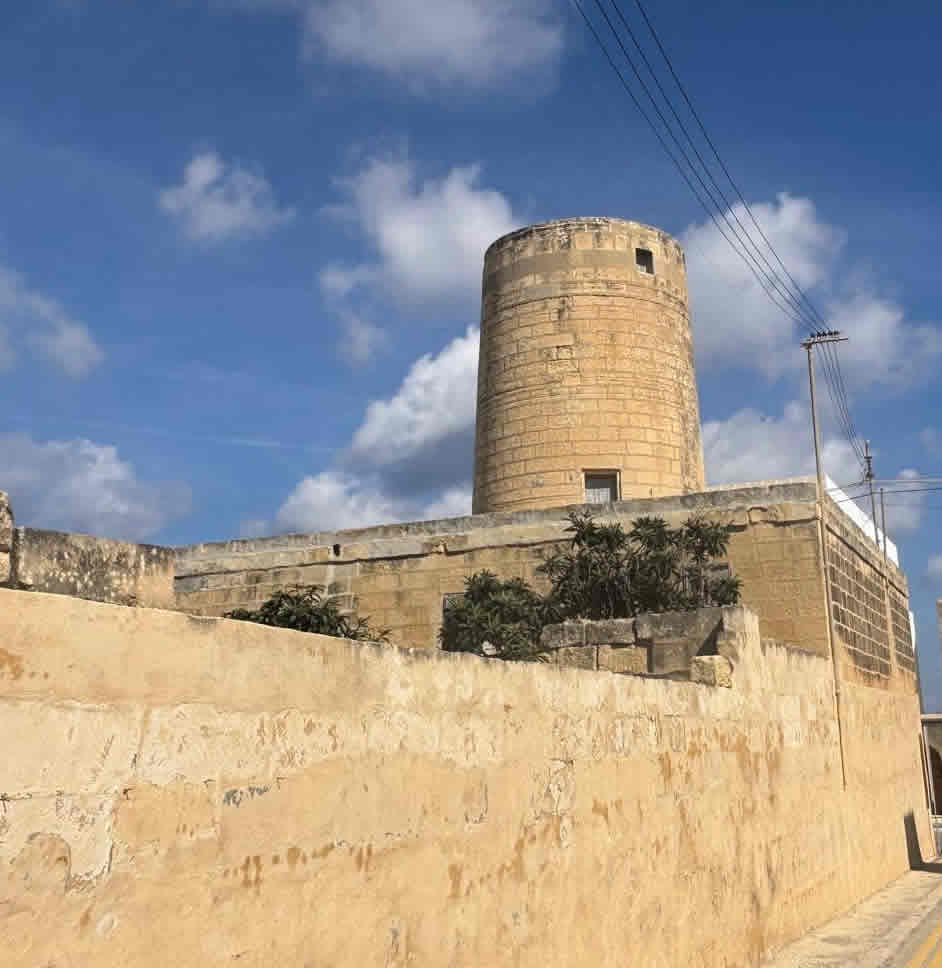
As motorised milling spread, small mills like Ta’ Borom became uneconomic; sails were removed and the buildings were often adapted for storage, housing or left derelict. Compiled lists and local photo captions indicate Ta’ Borom’s sails were removed around 1900 and the building thereafter ceased operating as a commercial mill.
Current condition & legal status
Listed / scheduled: Ta’ Borom appears in official government lists of historic mills and was included in Government Gazette listings of scheduled windmills (the Gazette/MEPA listings include the Għarb mill among the scheduled set). That means it is recognised in the national inventory and subject to heritage protections; any works would require authorisation from the Superintendence / Planning Authority.
Survival / public access: the structure is extant and visible in local photographs and village surveys; it is not one of Gozo’s large museum mills (e.g., Ta’ Kola) and is treated as a local historic building rather than a staffed museum. Public access is limited to viewing from the public road (as with many village mills).