Here’s a summary of the construction and history of Ta' Gheriexem Windmill in Rabat, Malta:
📍 Location
35.883458, 14.398400Ta’ Għeriexem (Tal-Balla) Windmill — full history & construction details
Short summary
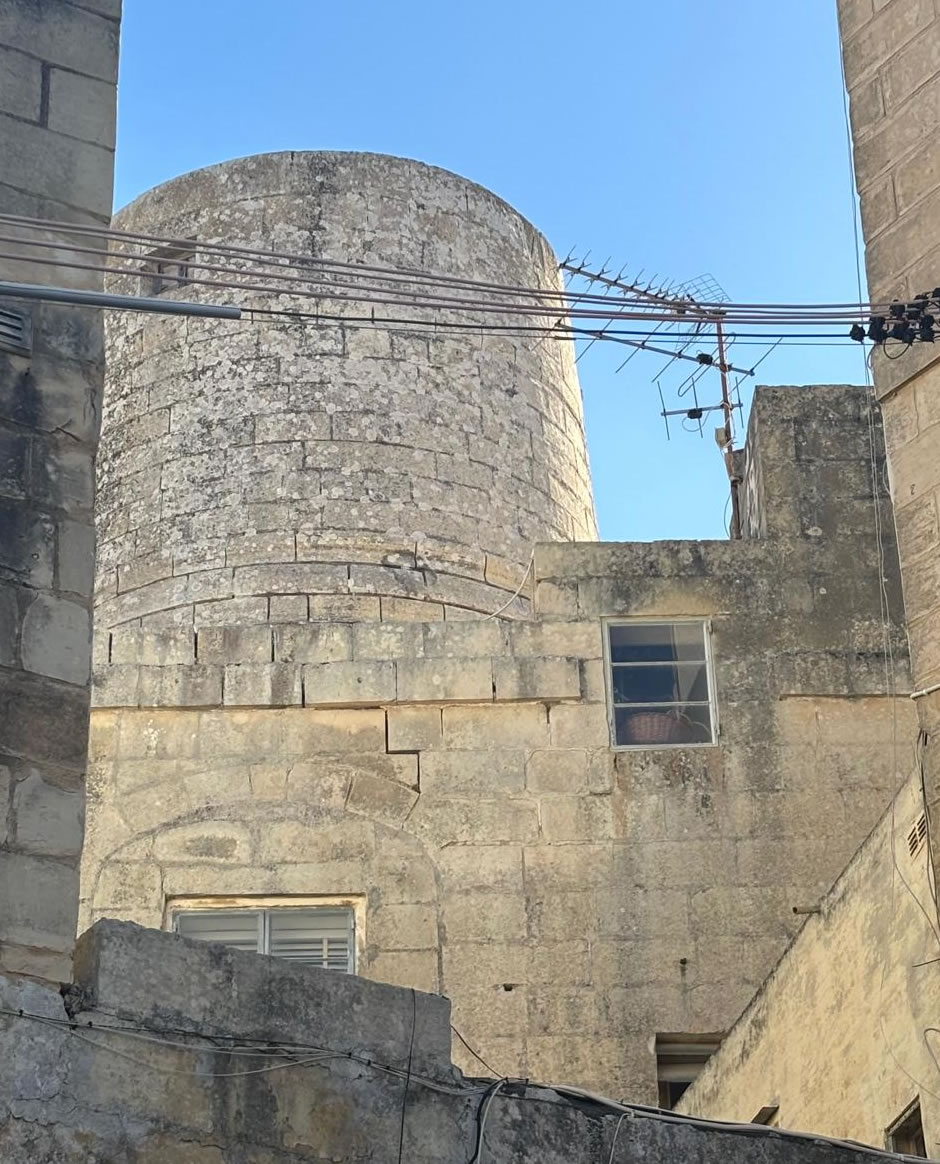
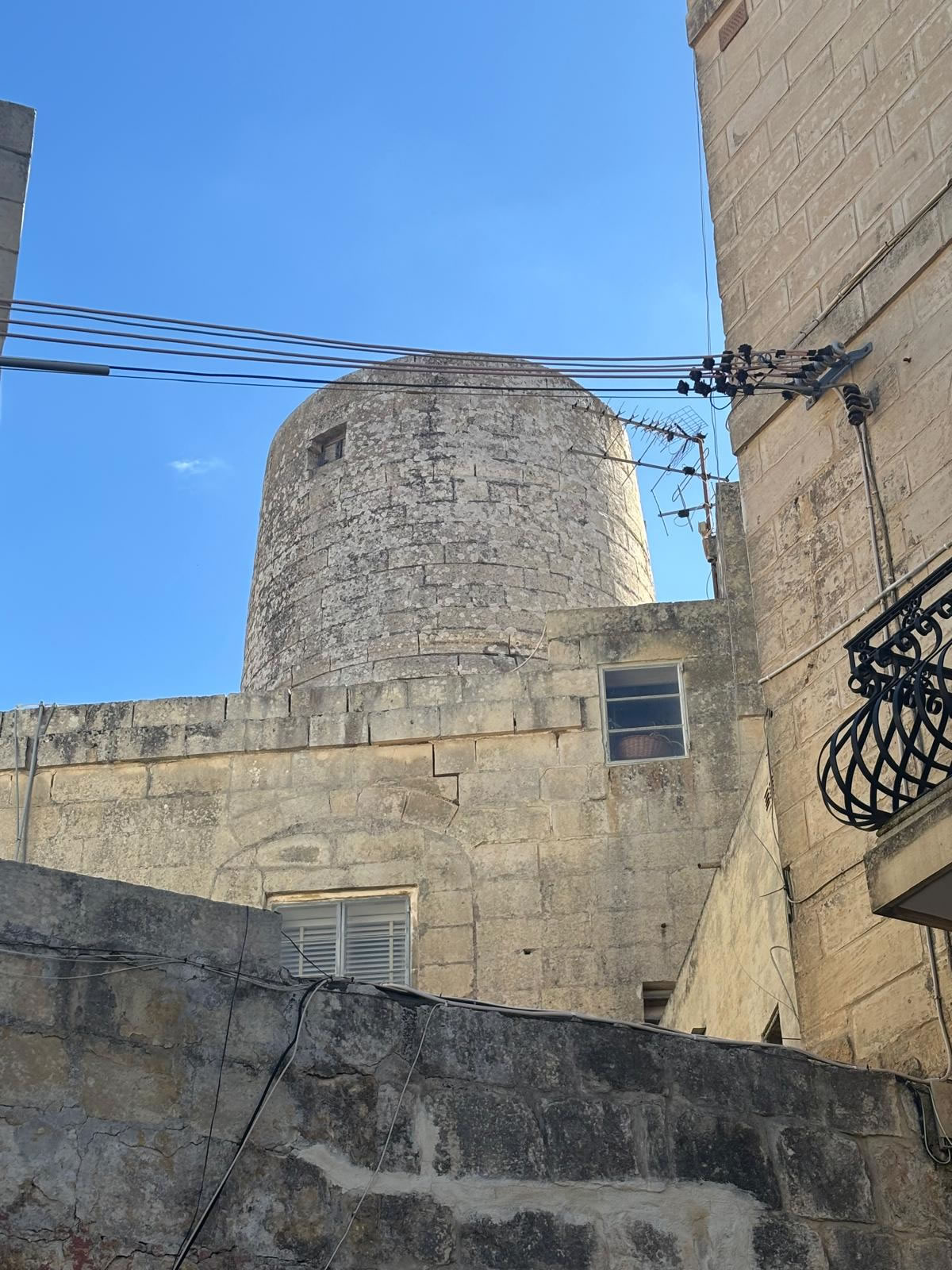
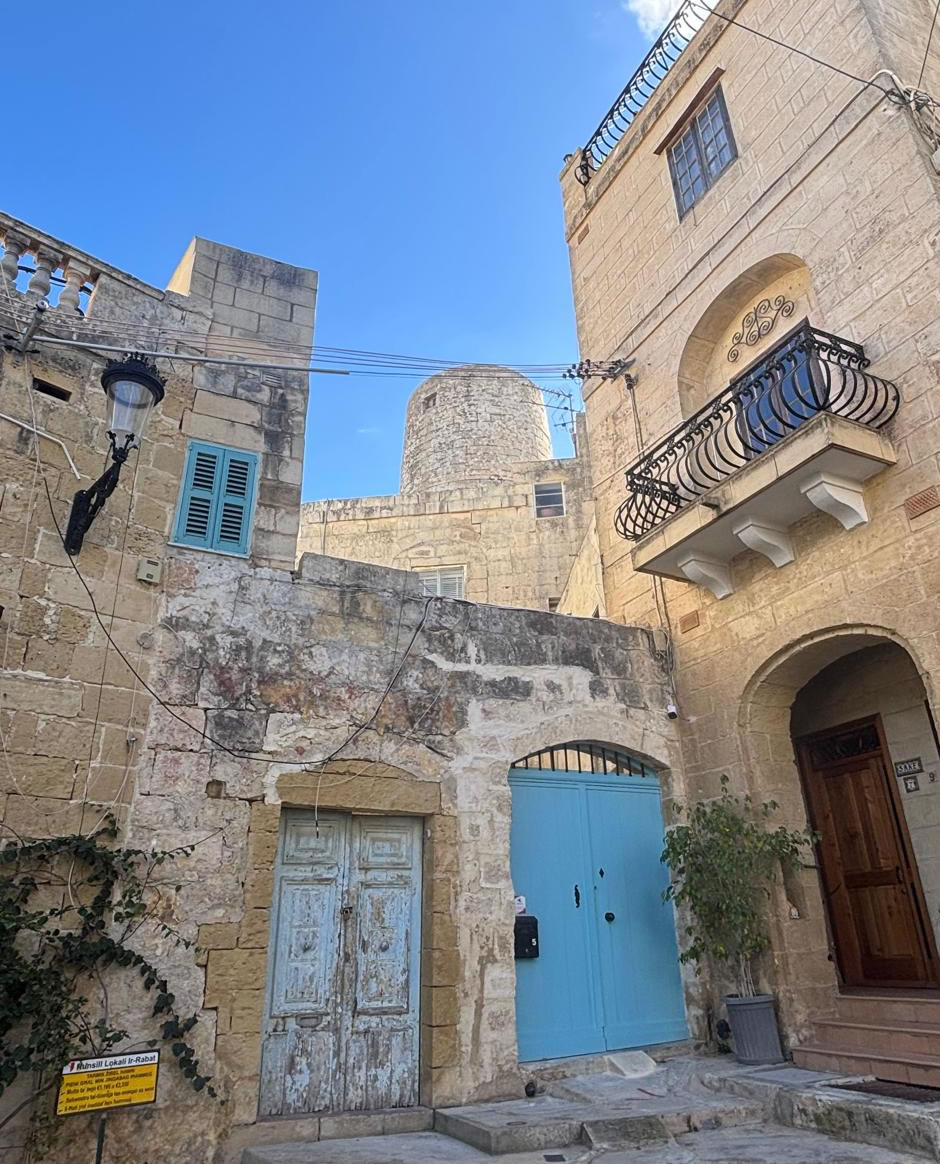
Ta’ Għeriexem (Tal-Balla) is a Manoel-period Maltese tower windmill in Rabat, commonly dated c.1730. It is a classic stone tower mill (cylindrical tower on a low rectangular base), its sails were removed long ago and it has been converted to private residential use. The mill sits in the Nigret / Triq il-Mithna — Triq l-Għeriexem area of Rabat (near the Gheriexem valley belvedere).
Full history & timeline
Date & patronage (c.1730): Specialist catalogues attribute Ta’ Għeriexem to the Manoel Foundation / Grand Master António Manoel de Vilhena era and record a construction date around 1730 — placing it among the 18th-century Manoel mills rather than the earlier Cottoner mills.
18th–19th centuries — working life: The windmill served the local rural community, grinding cereal (wheat/barley) produced in fields around Rabat and the Għeriexem valley. As with other village mills it would have been a local hub for milling and small-scale grain commerce throughout the 18th and into the 19th century.
Late 19th → 20th centuries — decline of wind milling: Industrial/steam milling and changing economics led to the removal of sails and progressive adaptation of many Maltese mills. Ta’ Għeriexem’s sails were removed and the building was adapted for domestic use during this post-milling phase (the common fate for many such mills).
Recent decades — conversion & setting: The mill now sits amid town fabric and was converted to residential/holiday accommodation in recent years (public rental/holiday listings show the converted windmill available for stays). The Triq l-Għeriexem / Gheriexem Road area has also been the subject of recent public works and a belvedere project, improving access and the immediate setting.
Construction — form, materials and original machinery
Typology & plan
Type: Tower windmill — a cylindrical masonry tower rising from a low, rectangular single-storey base. The base contained storage/work rooms and the tower housed the mill floors and drive assembly. This is the standard Maltese tower-mill plan and applies to Ta’ Għeriexem as recorded in the windmill catalogue.
Materials & masonry
Stone & mortar: built in local globigerina limestone with lime mortar (the typical Maltese building fabric). Walls were thick to resist wind loads and to support the rotating cap and internal machinery. Surviving external masonry — where visible — shows the same dressed stone and repairs common to adapted mills.
Cap, sails & internal machinery (original)
Cap & sails: originally fitted with a wooden rotating cap carrying a horizontal windshaft and 4–8 timber-framed sails/vanes (canvas or slatted). The cap could be wound to face the wind by tail-pole or simple gearing, as in other Maltese tower mills.
Millwork: inside the tower were one or more pairs of millstones (runner + bedstone), wooden gearing (cog wheels, crown wheel), vertical spindle and hoppers — timber floors supported the machinery. No public record indicates intact working machinery still survives at Ta’ Għeriexem (most conversions removed the millwork during adaptation).
Siting & orientation
Siting: placed to exploit prevailing valley winds from the Għeriexem/Wied area and located where local farmers could easily bring grain. Historic sketch maps and local-history drawings by Filippo/Alvin Vassallo reference the mill in maps of the Għeriexem area, confirming its local topographic role.
Alterations, present condition & heritage note
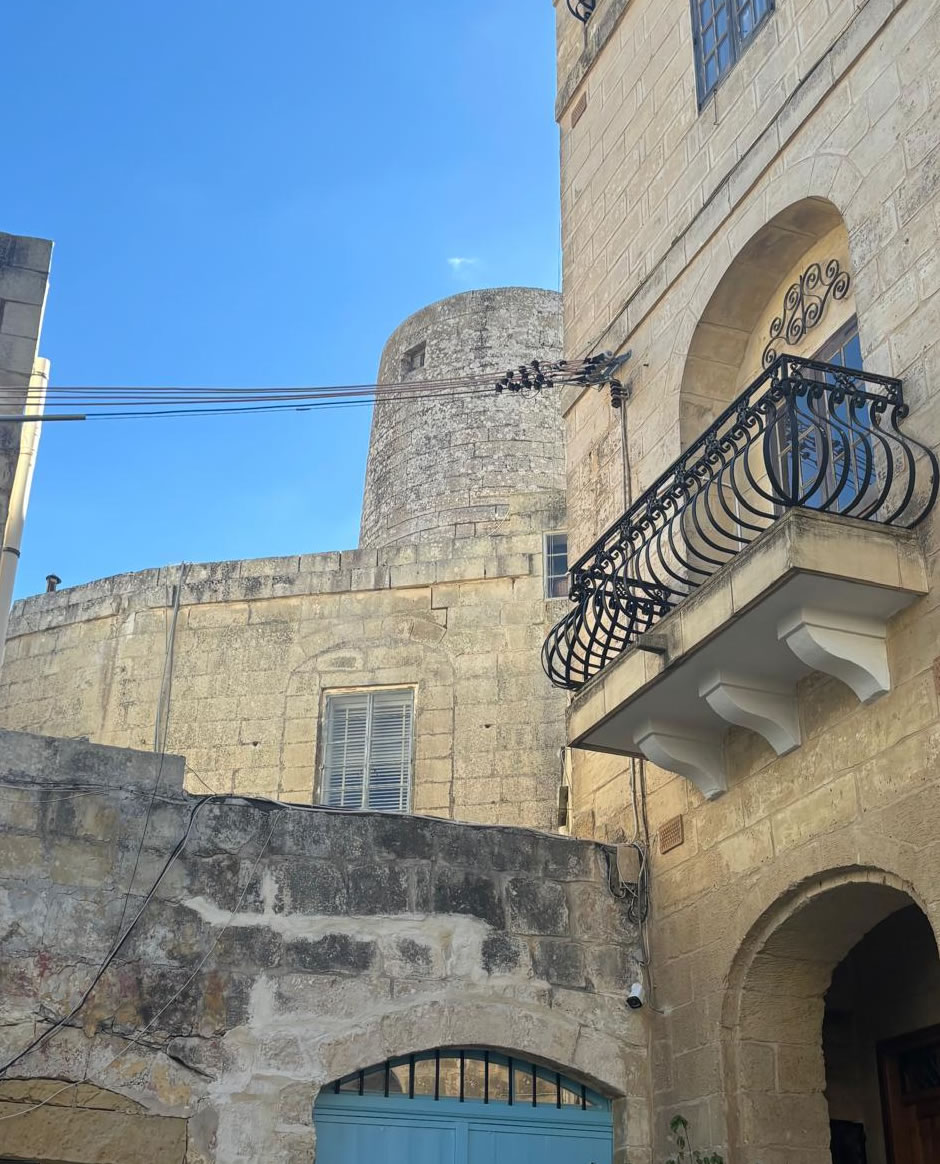
Alterations: sails/cap removed (date not precisely recorded in public sources). The tower was adapted to residential use — openings altered, internal floors reconfigured and modern services added in conversion. These are the usual interventions for such conversions.
Present condition / use: the mill survives and is in use as a private dwelling / holiday rental (public rental pages show recent refurbishing). It is not a working mill.
Heritage context: the mill is included in specialist windmill inventories and local heritage commentaries; if any intrusive works are proposed the Planning Authority / Superintendence would be the authority to consult for scheduling/archaeological constraints (the Rabat area has several archaeologically sensitive sites).