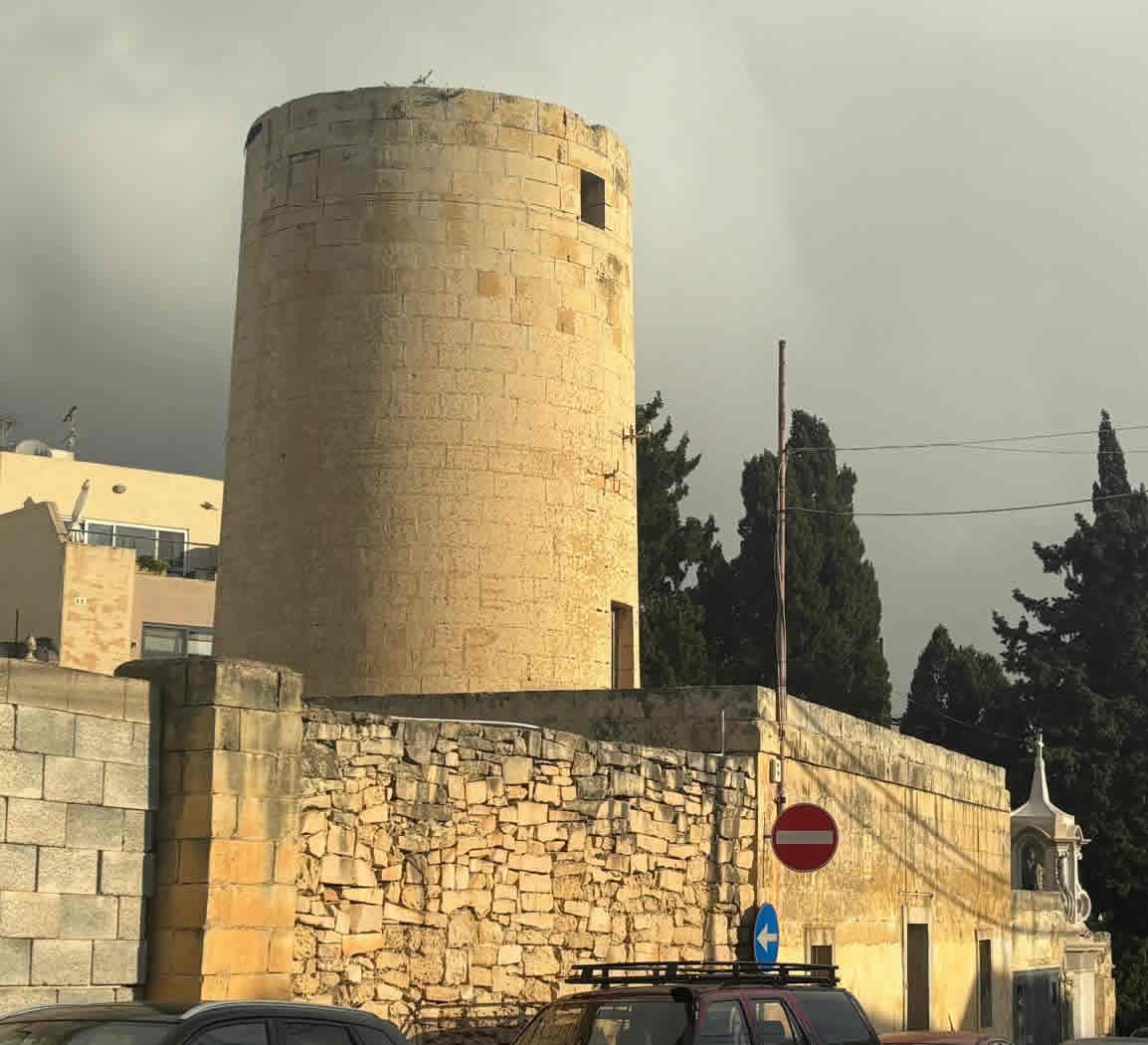
Ta' Kerceppu Windmill- Malta
History and construction description of the Ta' Kerceppu Windmill, Triq Santa Margerita, Siggiewi, Malta.
📍 Location
The coordinates of Ta' Kerceppu Windmill are:
- 35.858445, 14.442014
Ta' Kerceppu Windmill Triq Santa Margerita Siġġiewi)
Short summary / key facts
Name: Ta’ Kerċeppu (Ta’ Kerceppu).
Location: Triq Santa Margerita, Siġġiewi (coordinates recorded in heritage registers).
Type: Tower (round) windmill — the standard Maltese stone tower mill.
Legal/heritage status: Recorded in national heritage listings (Grade 1 / scheduled built heritage entry).
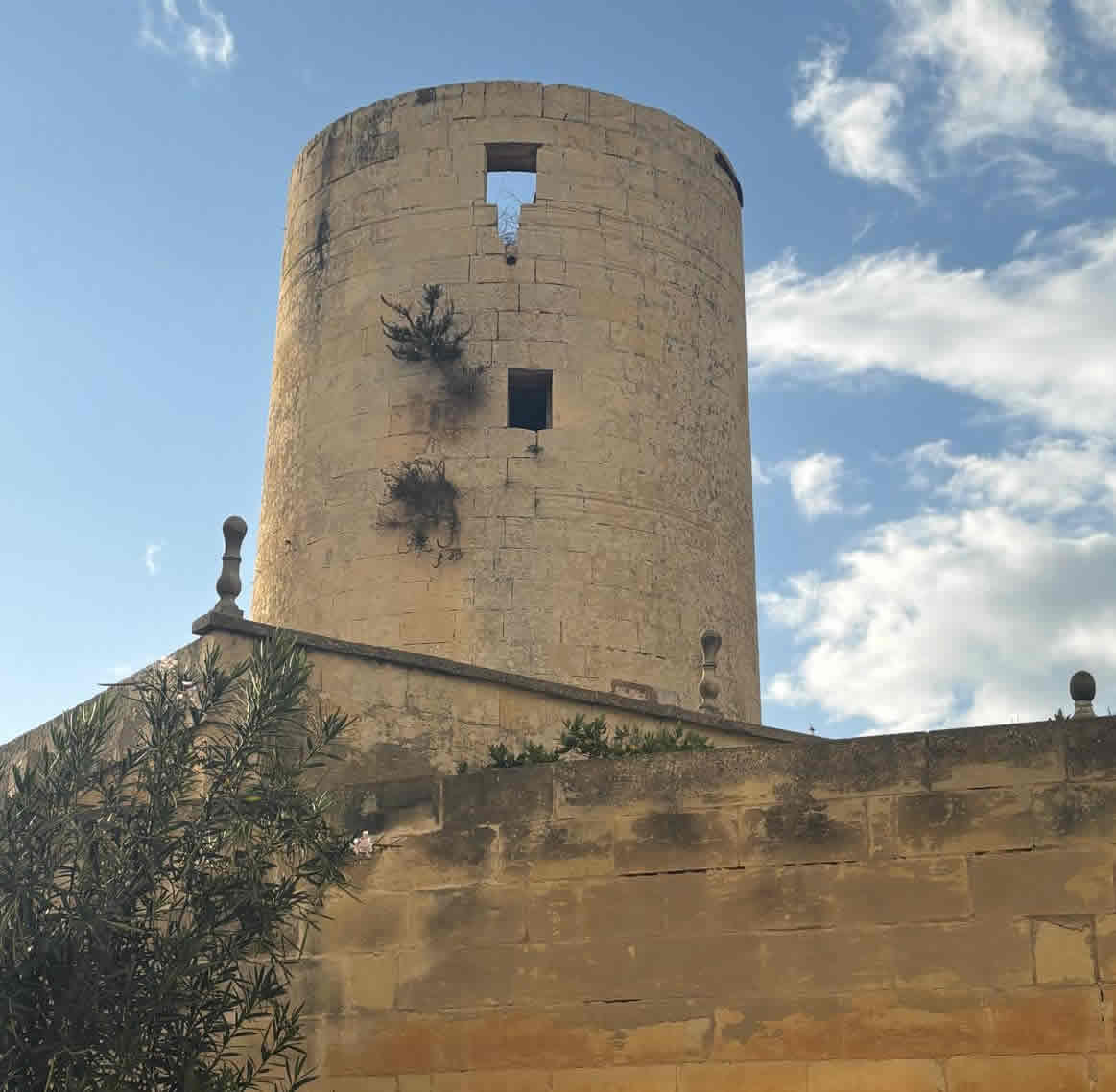
Current visible condition: tower extant; sails removed (no working sails). Sources record it as a standing (but not operational) mill.
History — what the sources say (and where they differ)
Primary secondary sources disagree slightly on the construction date:Vassallo History (compiled local history) lists Ta’ Kerċeppu as an **early/Knights-period mill (c. 1650) and attributes early mill building activity in Malta to Grandmasters such as Lascaris and the Cotoner/Manoel foundations (this source places several Siġġiewi mills in the earlier period).
Windmills of Malta database (specialist database of surviving mills) gives the building year as about 1800 for Ta’ Kerċeppu. That source is conservative about many build-dates and sometimes reports approximate or locally reported dates.
The Wikipedia “List of windmills in Malta” records Ta’ Kerċeppu as extant and having its sails removed, but does not furnish a precise year; it groups the mill with Siġġiewi’s other historic mills and gives the broader regional timeline for construction (many tower mills date from late 17th–18th centuries).
Interpretation / best reading: Ta’ Kerċeppu is certainly one of Siġġiewi’s traditional stone tower windmills and — depending on which local record you prefer — may date from the late 17th/early 18th century (Knights’ period) or could be a later 18th/early 19th-century rebuild/repair. The disagreement is common for Maltese mills because documentary records can be sparse or conflicting; architectural/archaeological inspection (masonry joints, mortar analysis, archival deeds) would be the best way to settle exact dating.
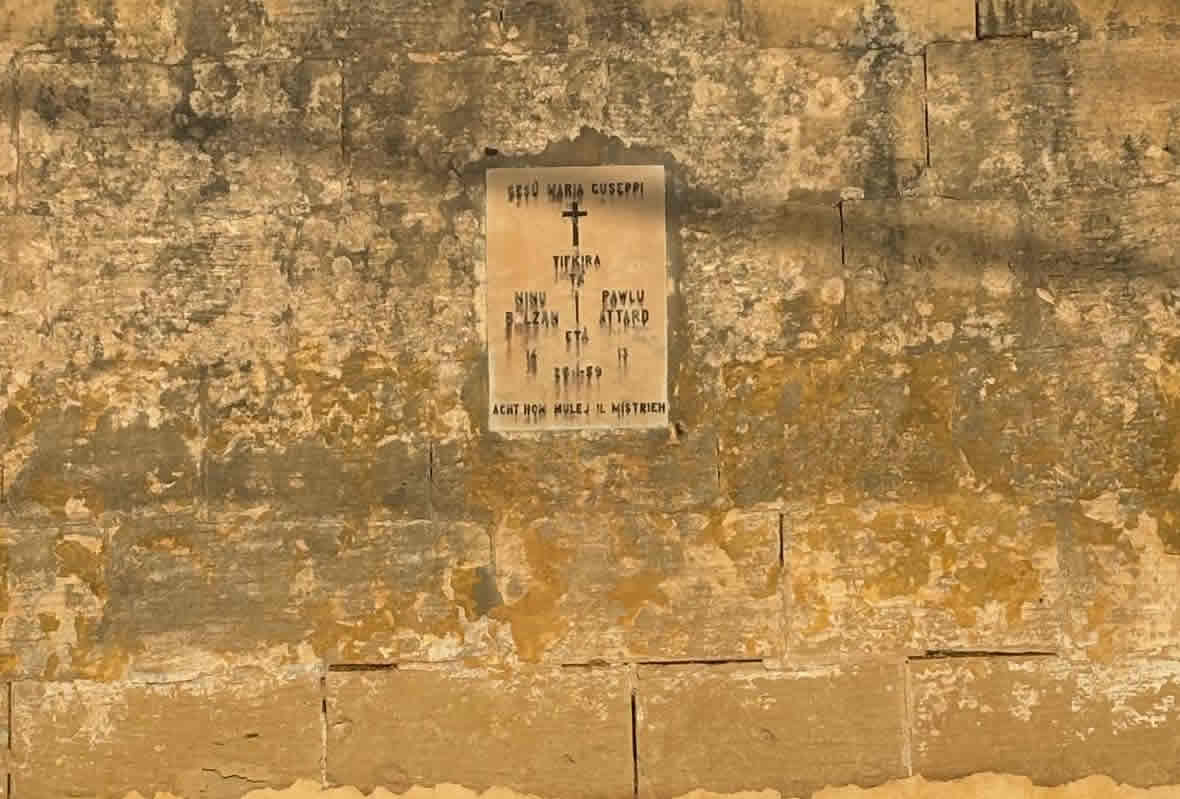
Historical role & operational life
Function: Like other village windmills, Ta’ Kerċeppu’s primary role was grinding cereal grain (wheat, barley) for the local community and agricultural hinterland. Windmills were essential to village food supply and often doubled as the miller’s home and store.
Operational span: Many Maltese tower mills remained in use into the late 19th–early 20th century; Ta’ Kerċeppu’s sails have been removed and it ceased operating as a windmill long ago (exact closure date not consistently recorded in secondary sources).
Construction: tower form, materials & dimensions (what’s documented and what’s typical)
Direct measured drawings for Ta’ Kerċeppu were not available, but the mill conforms to the standard tower-mill typology used across Malta. Below I summarize that typology and note specifics where sources refer to Ta’ Kerċeppu itself.
External structure & materials
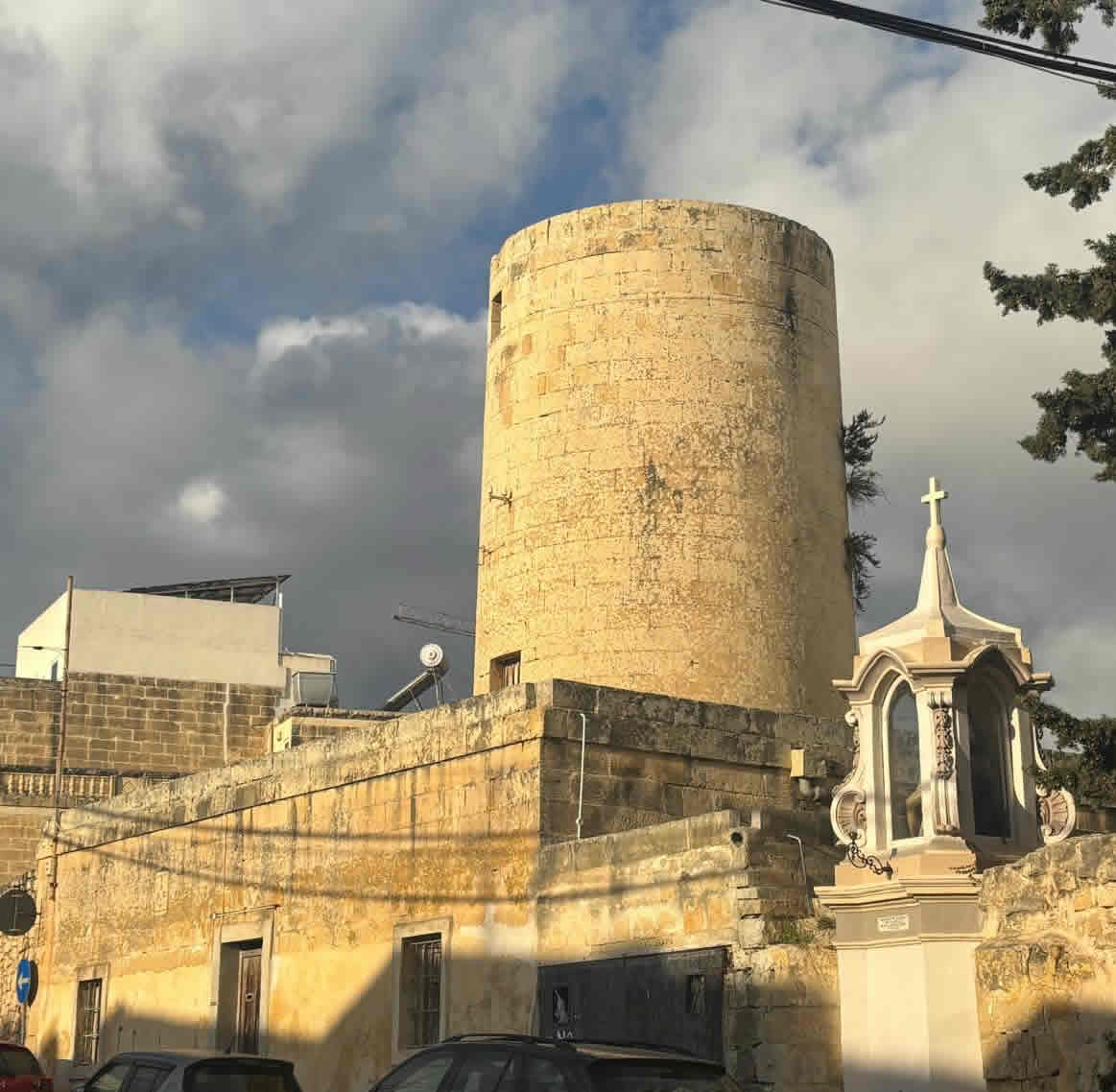
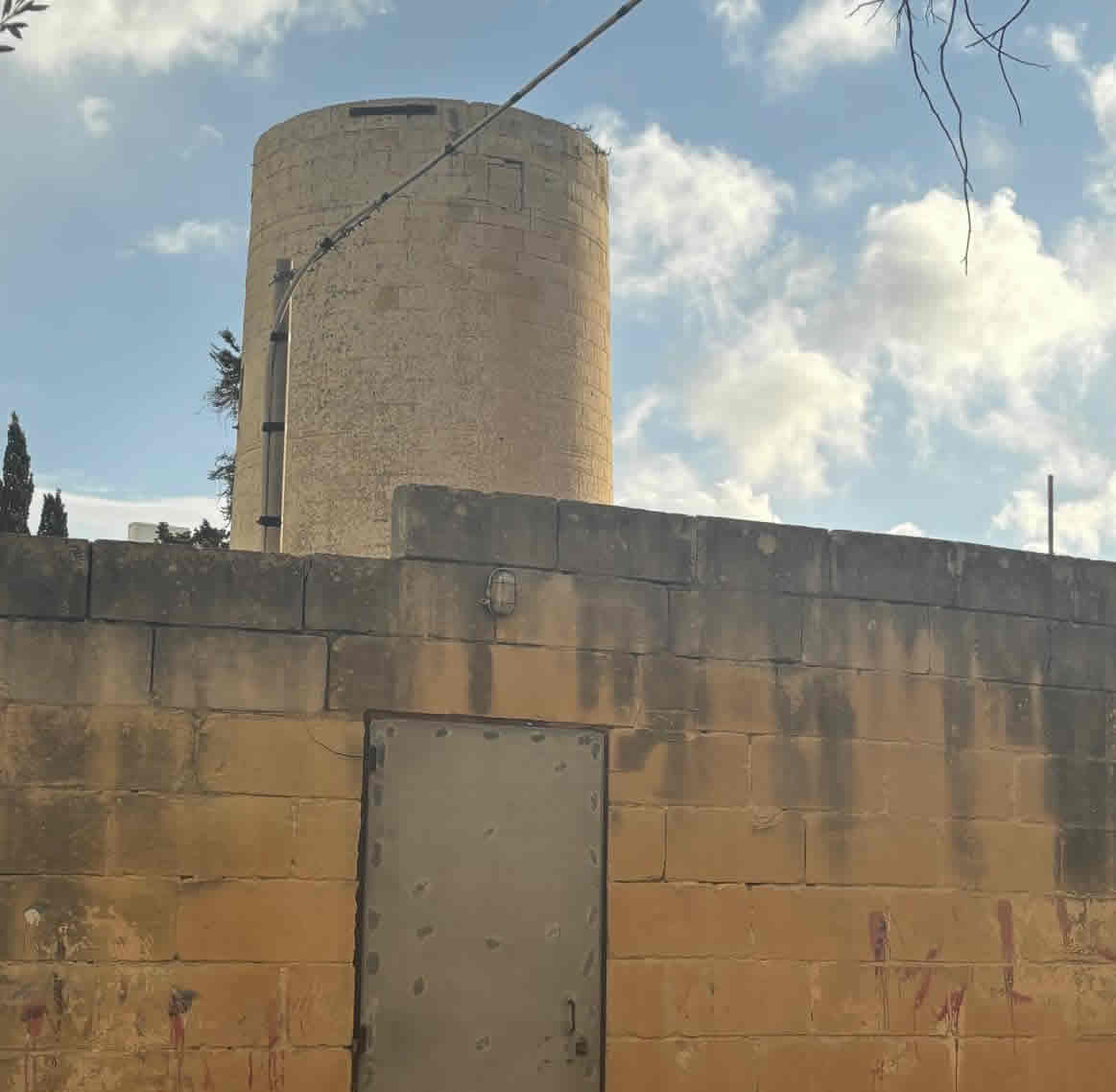
Masonry: built of local globigerina limestone, coursed rubble or ashlar on the exterior — the common Maltese building stone for rural vernacular and public structures.
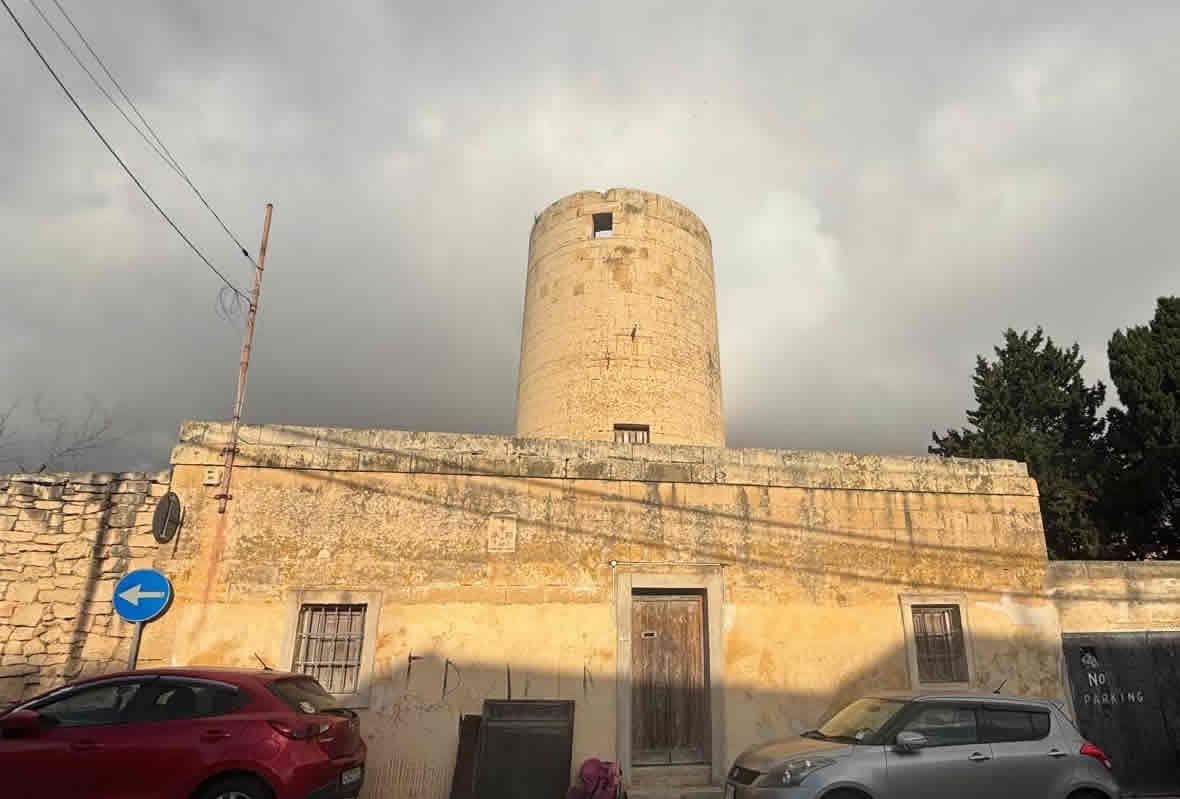
Plan & massing: a cylindrical (round) tapering tower rising from a square or roughly rectangular base of single- or two-storey service rooms that buttress the tower and provided storage and living space. These surrounding rooms also stabilize the tower against lateral wind loads.
Height & diameter (typical): Maltese tower mills often reach ~12–15 m in height with tower diameters of ~2–3 m at the base and tapering upwards (these are typical dimensions — an on-site measurement would confirm Ta’ Kerċeppu’s exact size).
Internal layout & access
Floors: usually 2–3 internal floors — ground floor (storage/workshop), main milling (grist) floor with millstones and gearing, and a cap/attic area for the windshaft and gearing.
Stair: a spiral or steep stone staircase is built into the tower wall to access upper floors — this is a nearly universal feature of Maltese tower mills. (Photographic records of Siġġiewi mills show this arrangement; Vassallo’s notes reference a single-door plan for Ta’ Kerċeppu.)
Cap, sails & wind machinery
Cap & sails: original mills had a rotating cap or a simple capped top carrying the windshaft and usually six sails (the Maltese tradition often used six canvas-covered timber sails on a lattice). Ta’ Kerċeppu’s sails have been removed — the tower remains without its original wind-swept cap arrangement.
Transmission & milling gear (typical set-up):
Windshaft (wood or iron) projecting from the cap carried the sails.
Brake wheel on the windshaft drove a vertical main shaft (or drove via a lantern pinion) down into the tower.
Millstones: a turning runner stone above a stationary bed stone on the milling floor — the runner stone’s rotation produced flour from grain fed through a hopper.
Ancillary gear: hoist mechanisms, grain chutes, sack-floor storage, and possibly a hand-operated brake to stop the sails. These components are standard for Maltese tower mills and would have been present at Ta’ Kerċeppu while operational.
Later alterations, reuse & conservation
Like many Maltese mills that stopped working as wind power became uneconomic, Ta’ Kerċeppu’s sails were removed and the building adapted for other uses (storage, dwelling, rooms). Different mills in Siġġiewi were converted to houses, water tanks or stores — Ta’ Kerċeppu follows that general pattern.
It is recorded in the national heritage schedule (grade/status entries appear in the MEPA / heritage register), which affords it legal protection and is the reason the tower still stands. For precise scheduling text lookups, consult the MEPA/Government Gazette listing referenced in the heritage record.