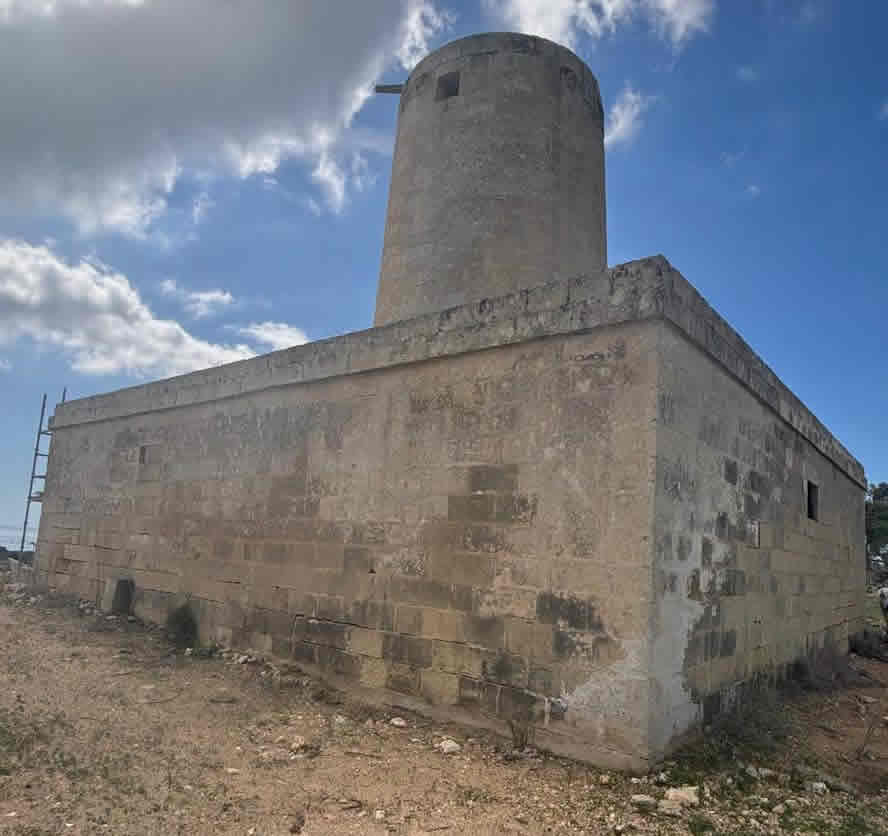
Ta' Sufa Windmill - Gozo
History and construction description of the Ta' Sufa Windmill, Gozo.
📍 Location
The coordinates of Ta' Sufa Windmill are:
- 36.037388, 14.307501
Ta' Sufa Windmill (on Triq Grunju, on the road between Qala and Nadur (west side of Qala village)) — full history, construction and restoration
Short summary
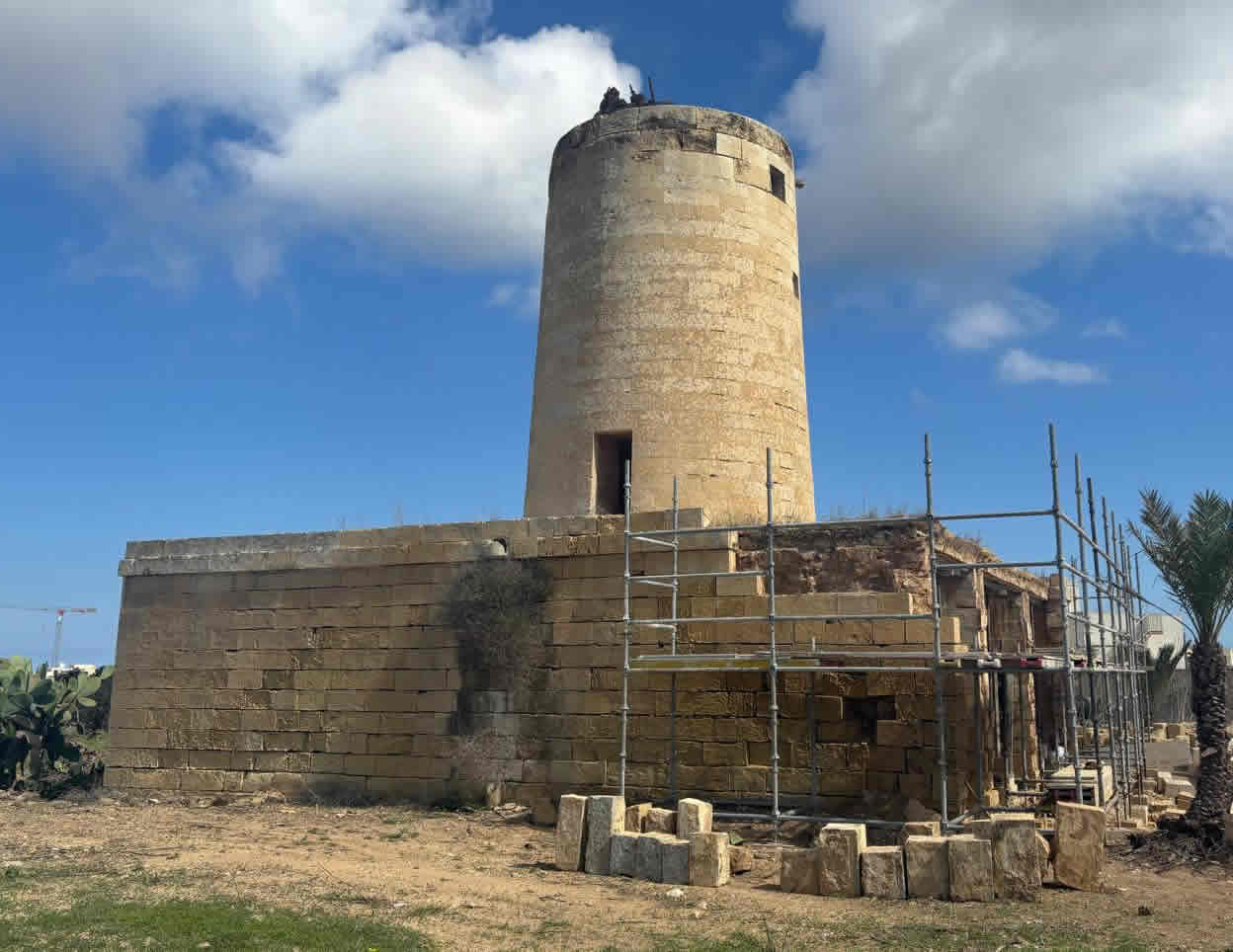
Ta’ Sufa is a mid-19th century tower windmill built in 1853 by the Camilleri brothers (Lorenzo, Giuseppe and “Randu”), served local milling needs, was later used as a private dwelling during WWII and today survives but is reported in poor condition and missing its sails. In 2025 It is being restored
Full history
The mill was constructed in 1853 by the Camilleri brothers (Lorenzo, Giuseppe and Randu), a family active in Gozo in the mid-19th century who built and operated several mills on the island. This mid-century date and the builder attribution appear in the specialist review of Gozo mills and the University of Malta thesis on Gozo mills.
The 1850s saw private entrepreneurs (often small families of millers) building mills in Gozo to meet local grain-milling demand. The Camilleri brothers are recorded building at least two Gozitan mills in the 1850s; Ta’ Sufa filled the local need between Qala and Nadur.
Ta’ Sufa worked as a conventional grain mill through the latter 19th century; like many small windmills it lost commercial viability as steam and motor mills spread. Local accounts record that during World War II the building was used as a private residence (Pool family) — a fate not uncommon for disused mills. After mid-20th century the mill fell into disuse and decay.
Architecture & construction details
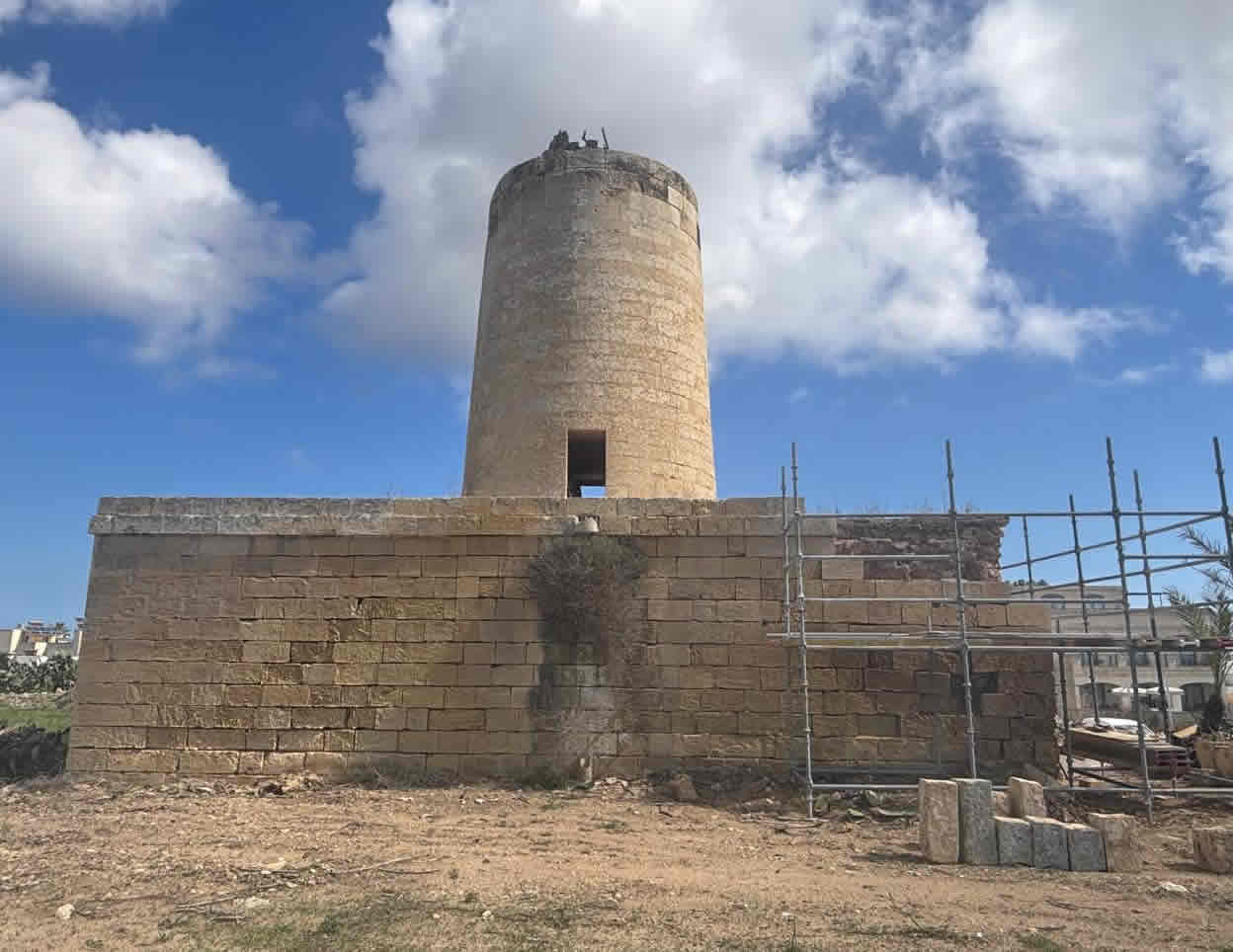
Round / tower mill — a cylindrical stone tower (the standard Maltese/Gozo tower mill plan), typically set on/within a low rectangular base of ancillary rooms (storerooms, bakery or miller’s quarters). Historic photos and database entries identify Ta’ Sufa as the classic round tower type.
Built in local limestone with traditional lime mortar (the normal vernacular material for Gozitan rural buildings). Finishes would have been plain and utilitarian — mid-19th-century private mills tended to be modest in detail.
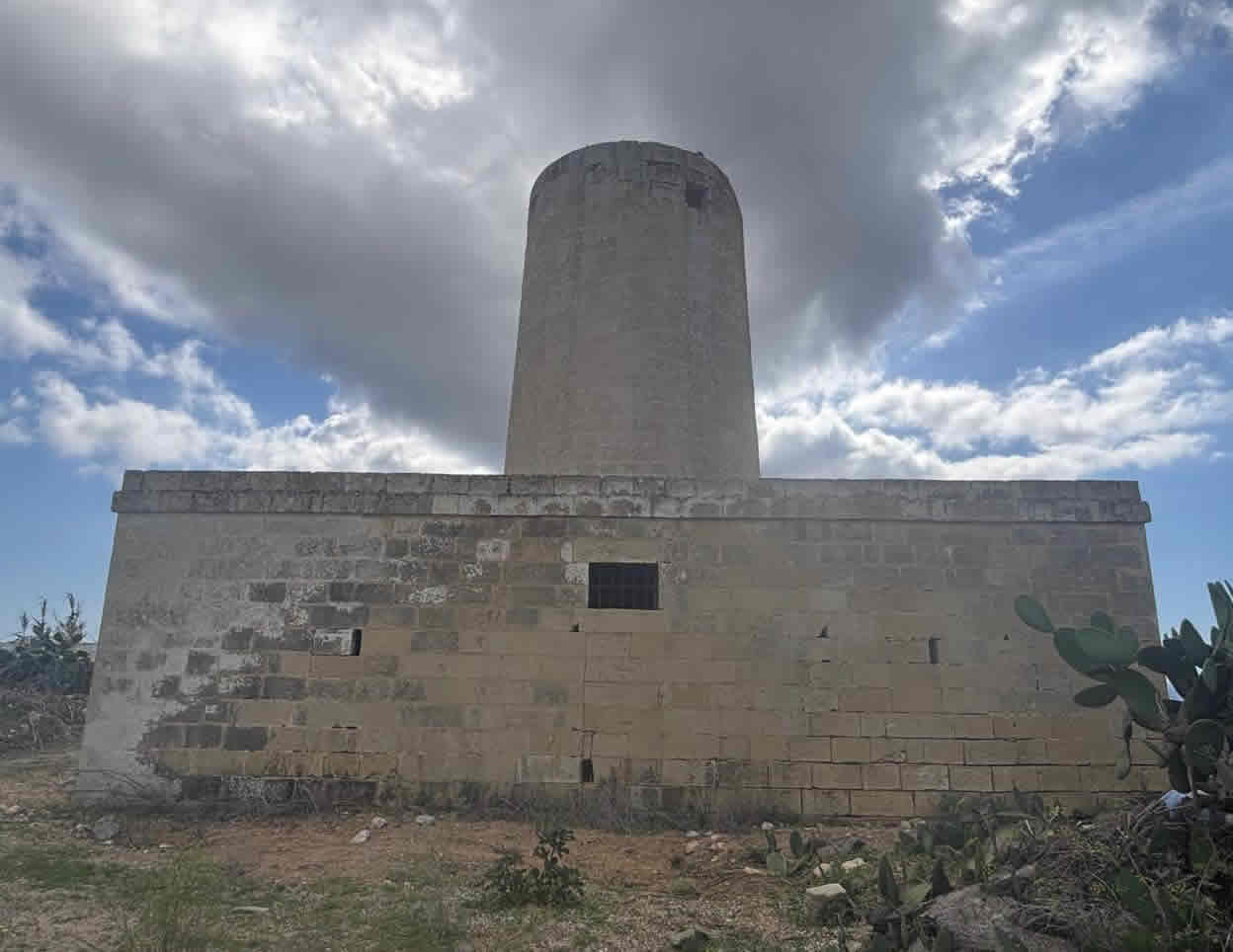
Historically fitted with a wooden windshaft and multiple sail-arms (sweeps) carrying sailcloth or lattice frames, with an internal brake wheel transferring power to the vertical shaft and millstones (runner and bedstone). No open source confirms surviving internal machinery; photographs and reports show the mill without sails today, which implies the external moving parts were removed long ago.
I did not find published measured plans or precise survey dimensions in public sources. Typical measured drawings (plans/sections) for Gozitan mills are found in conservation files, MEPA/Planning submissions or the National Archives; these do not appear to be posted for Ta’ Sufa online.
Current condition
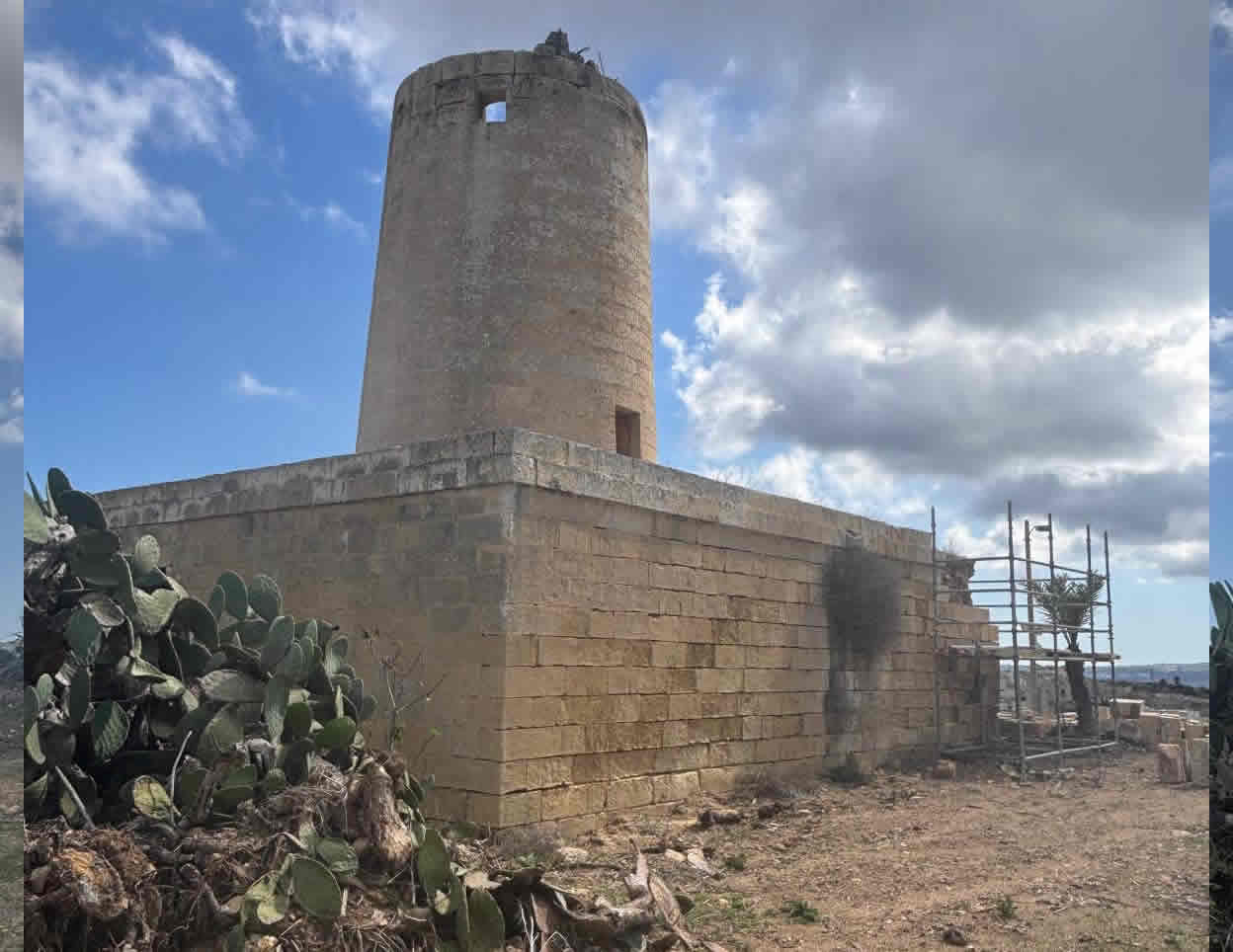
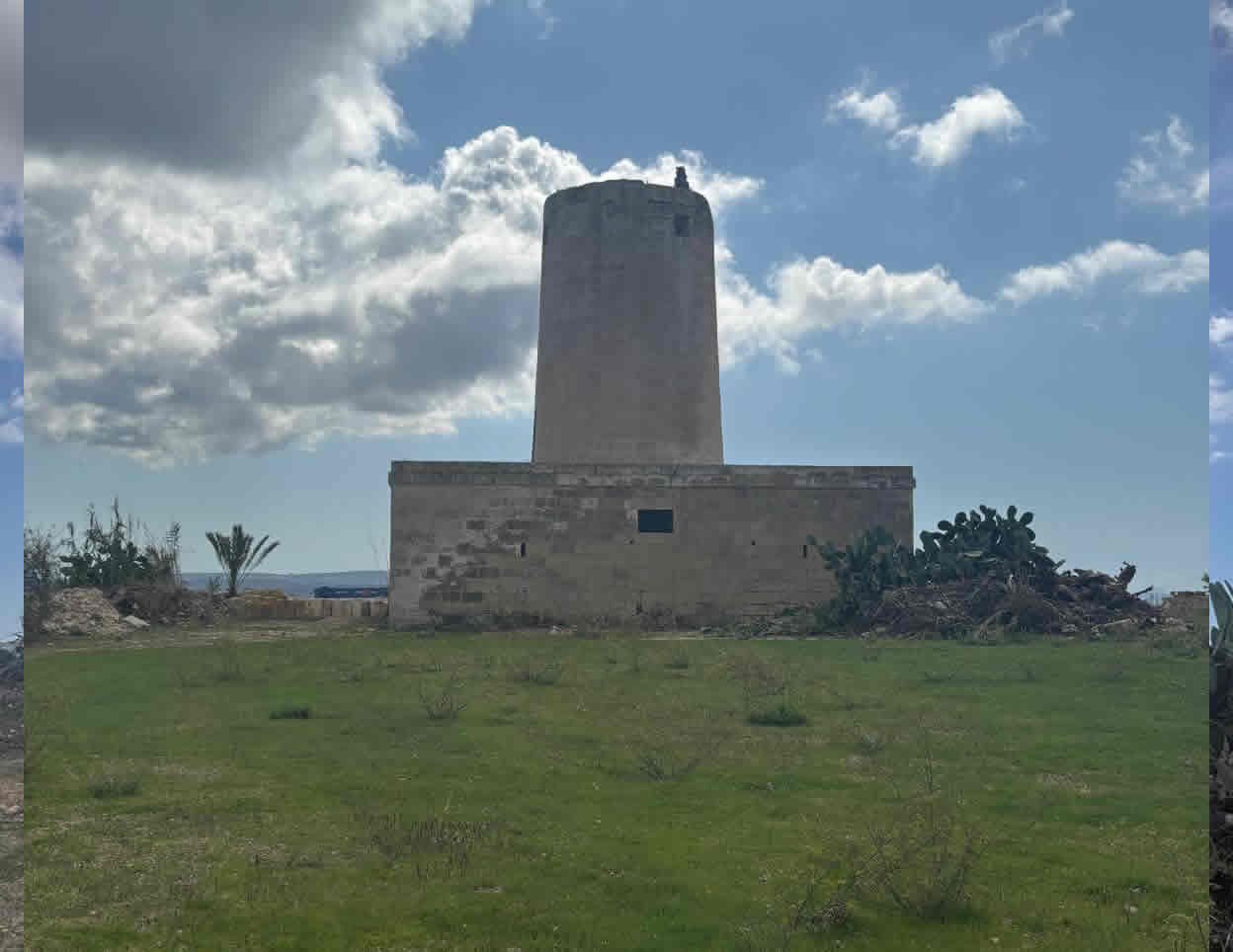
Multiple recent web listings and community posts describe Ta’ Sufa as standing but in poor condition and without sails. Photographs shared by local groups show the mill’s tower and base surviving but weather-worn and in need of conservation. It is not listed as an open museum site like Ta’ Kola; rather it’s an extant but neglected vernacular ruin.
In late 2025 there is a restoration project ongoing
Cultural / local notes
The Camilleri brothers (who built Ta’ Sufa in 1853) were active millbuilders/operators across Gozo in the 1850s; other mills attributed to them include Qala Ta’ Randu and mills in Rabat area — their work marks the late phase of traditional windmill construction in Gozo.