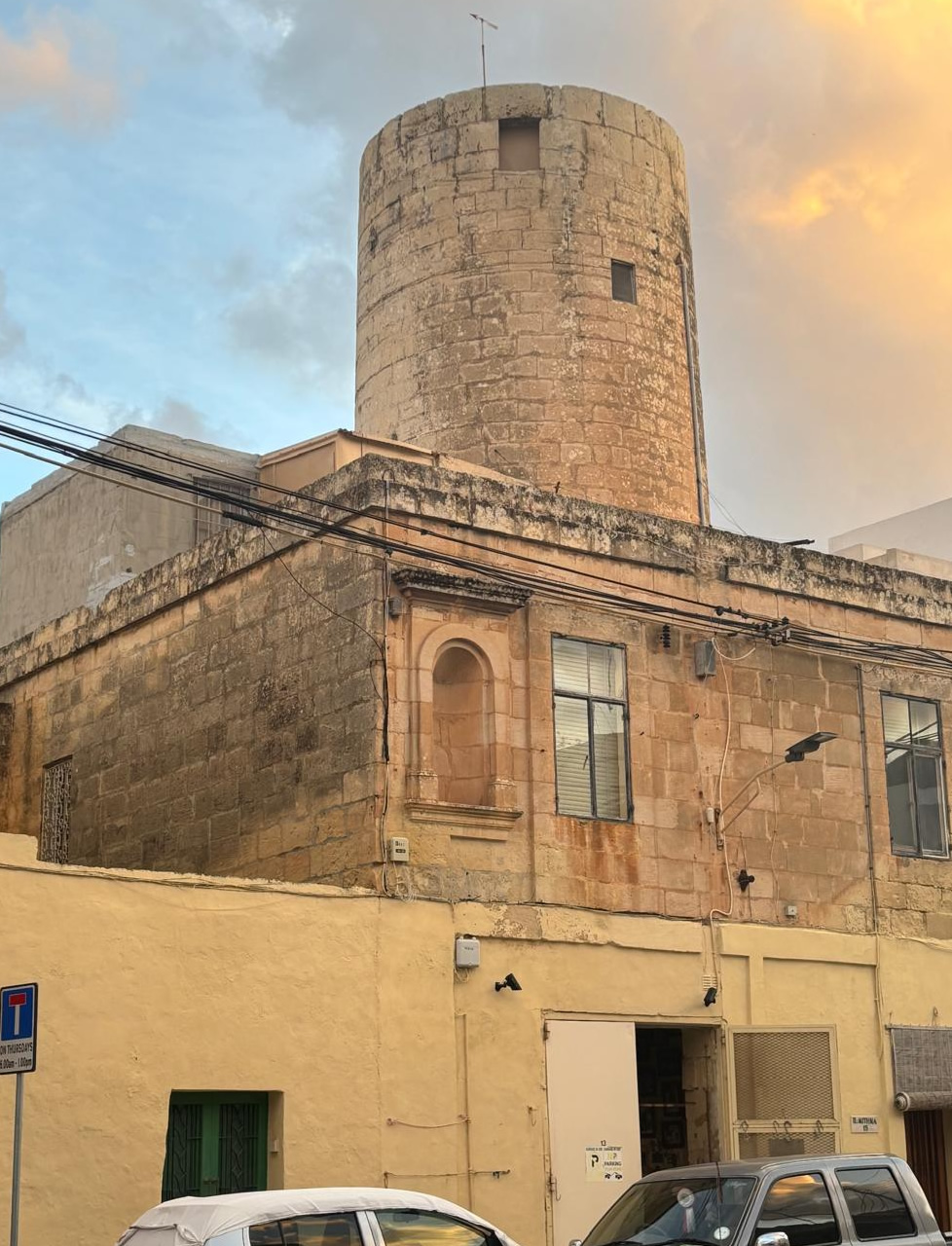
It is one of several historic windmills in Naxxar, Malta:
📍 Location
35.914083, 14.439833 Google Map LinkTa’ Ddejf Windmill – Naxxar, Malta (Built c. 1700s)
1. Historical Context of Construction (1700s)
Ta’ Ddejf Windmill was constructed during the 18th century, when Malta was under the rule of the Order of St John (Knights Hospitaller). This period marked the peak of windmill construction in Malta.
During the 1700s:
Malta’s population was increasing rapidly
Bread was the main staple food
Imported flour was unreliable during war or drought
The Knights encouraged private grain mills to support:
Rural agriculture
Food security
Economic self-sufficiency
Ta’ Ddejf belongs to the same wave of rural windmills as those of Żurrieq, Siġġiewi, Mellieħa and Qormi.
2. Origin of the Name “Ta’ Ddejf”
The name “Ta’ Ddejf” almost certainly derives from:
A family surname or nickname of the original mill owner or tenant
A now-lost rural estate or farming holding
This follows a typical Maltese custom where windmills outside fortified towns were named after:
The miller
The landowner
Or the local field name
3. Construction & Architectural Design
External Structure
Ta’ Ddejf Windmill followed the standard Maltese tower-mill design developed in the late 17th century:
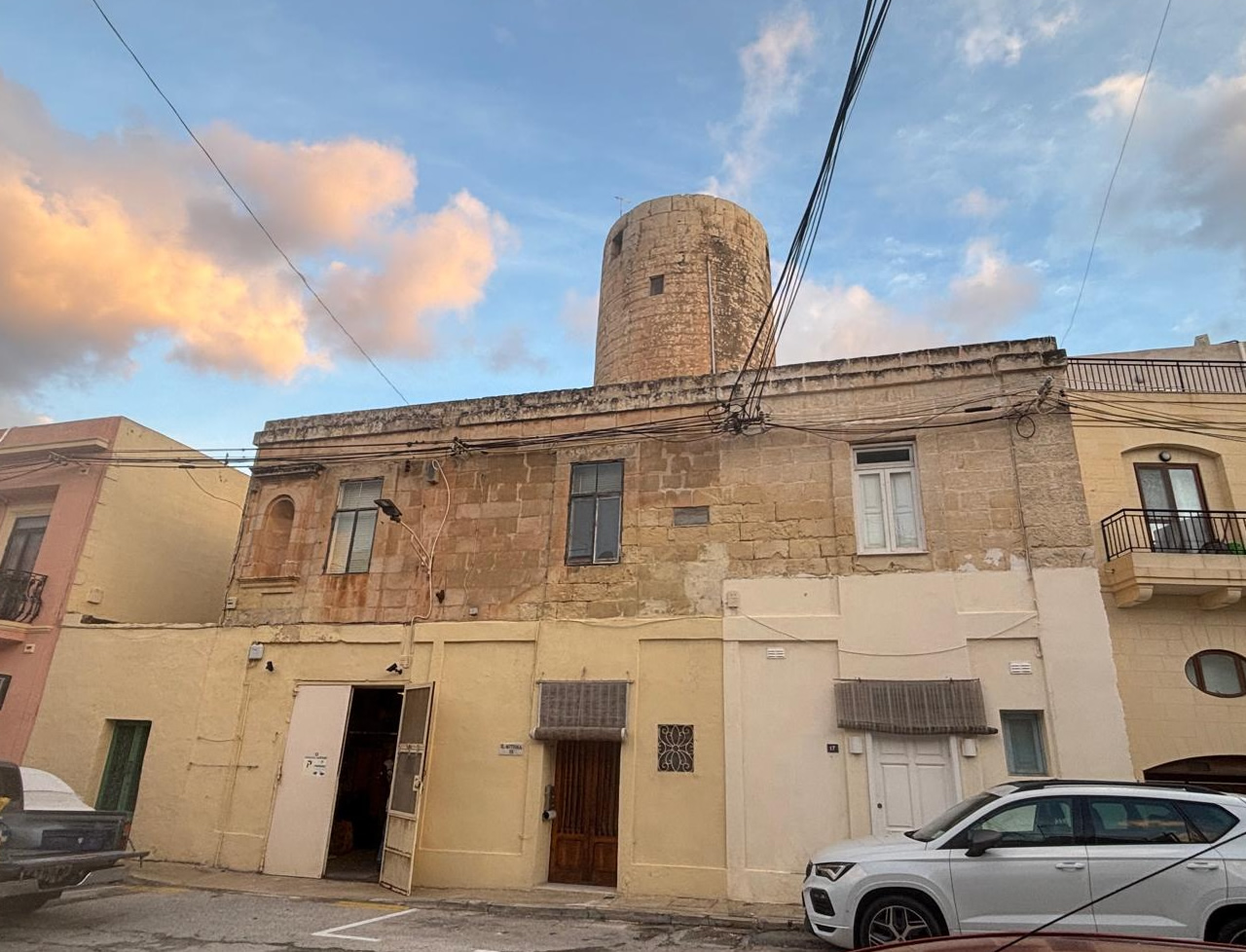
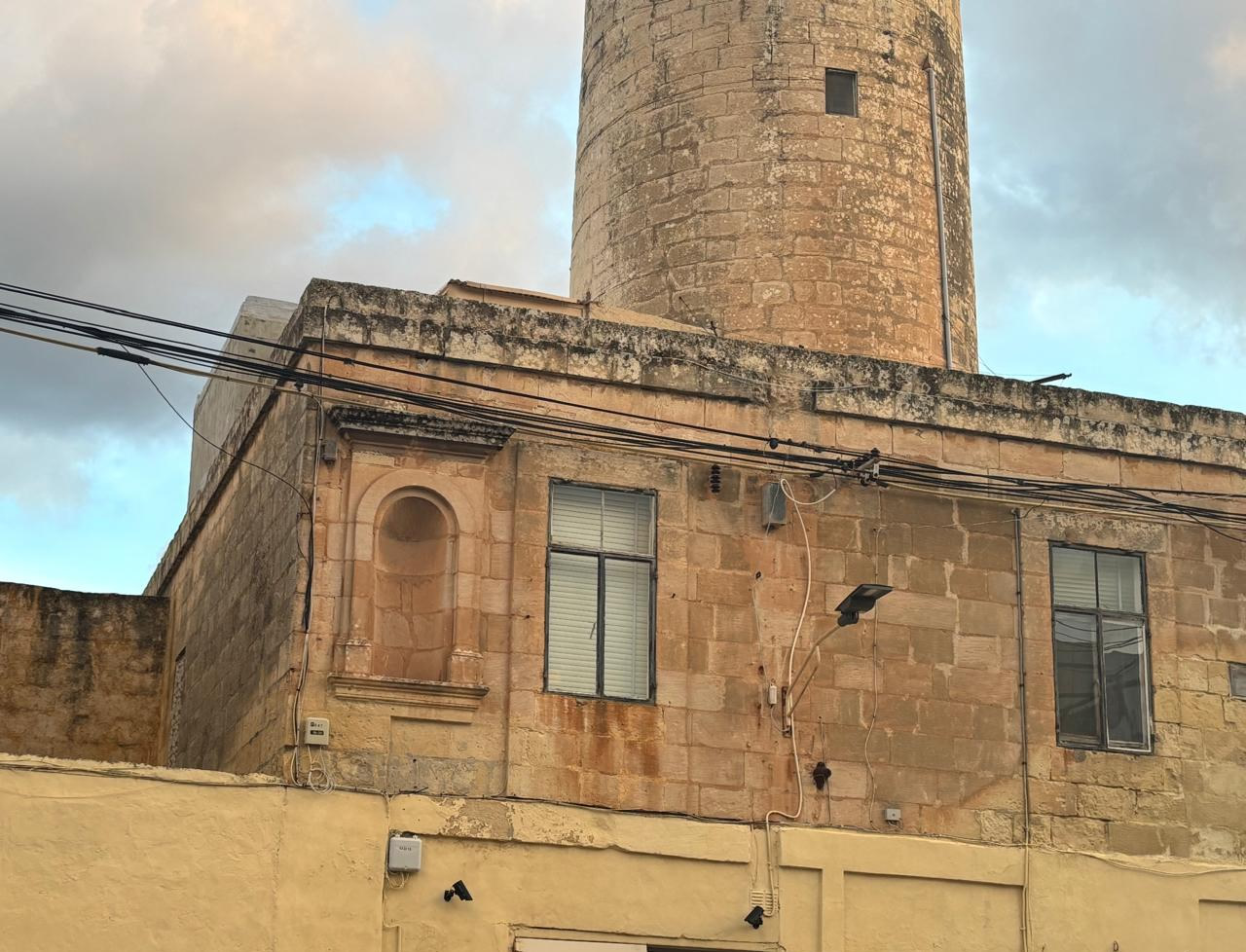
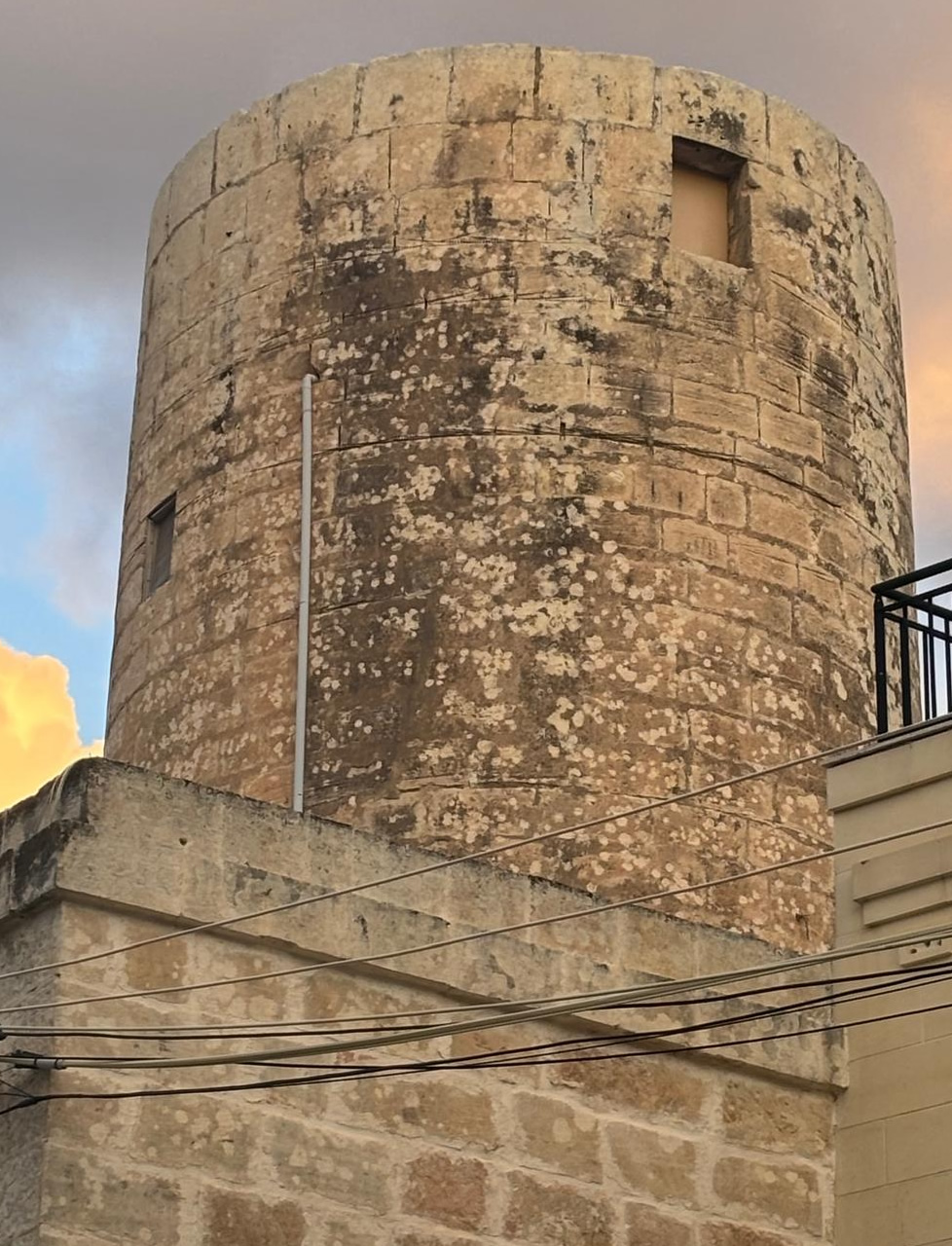
A tall cylindrical tower
Built from local globigerina limestone
Wall thickness up to 1.2–1.5 metres for vibration control
Originally topped by a:
Rotating wooden cap
Supporting four long timber sails
The tower would have stood on elevated farmland, fully exposed to:
North-easterly (Grigal) winds
North-westerly (Majjistral) winds
Internal Mechanism
Inside the tower was a complete 18th-century wind-driven milling system:
Vertical oak or pine main drive shaft
Large wooden brake wheel
Iron-toothed stone nut gear
Two circular millstones:
Bedstone (fixed)
Runner stone (rotating)
Wooden grain hopper
Flour collection bins at ground level
Everything operated purely by wind energy.
4. Use & Daily Operation
What It Milled
Ta’ Ddejf primarily milled:
Wheat (for bread)
Barley (for food and animal feed)
Occasionally mixed cereals
Who Used It
It served farmers from:
Naxxar
Għargħur
Mosta
Rural St Paul’s Bay hinterland
How It Worked in Practice
1. Farmers arrived by donkey and cart
2. Grain sacks were hoisted to the upper floor
3. Wind direction determined sail positioning
4. Milling toll was paid as:
A percentage of flour
Or part of the grain itself
On windy days, the windmill could work continuously from sunrise to sunset.
5. Economic & Social Importance
Ta’ Ddejf Windmill was vital because it:
✅ Guaranteed local food security
✅ Reduced dependence on state mills
✅ Provided steady income to the miller’s family
✅ Supported bread supply during:
Storms
Epidemics
Wartime shortages
For the surrounding community, it functioned as:
A commercial centre
A meeting place
An agricultural landmark
6. Decline in the 19th Century
By the mid-1800s, Ta’ Ddejf began to decline due to:
Introduction of steam-powered mills
Imported cheap flour
Mechanised roller milling
Expansion of roads & transport
By the late 19th century, it had ceased commercial milling.
7. 20th-Century Conversion & Survival
After closure:
The wooden sails were removed
The machinery was dismantled or sold as scrap
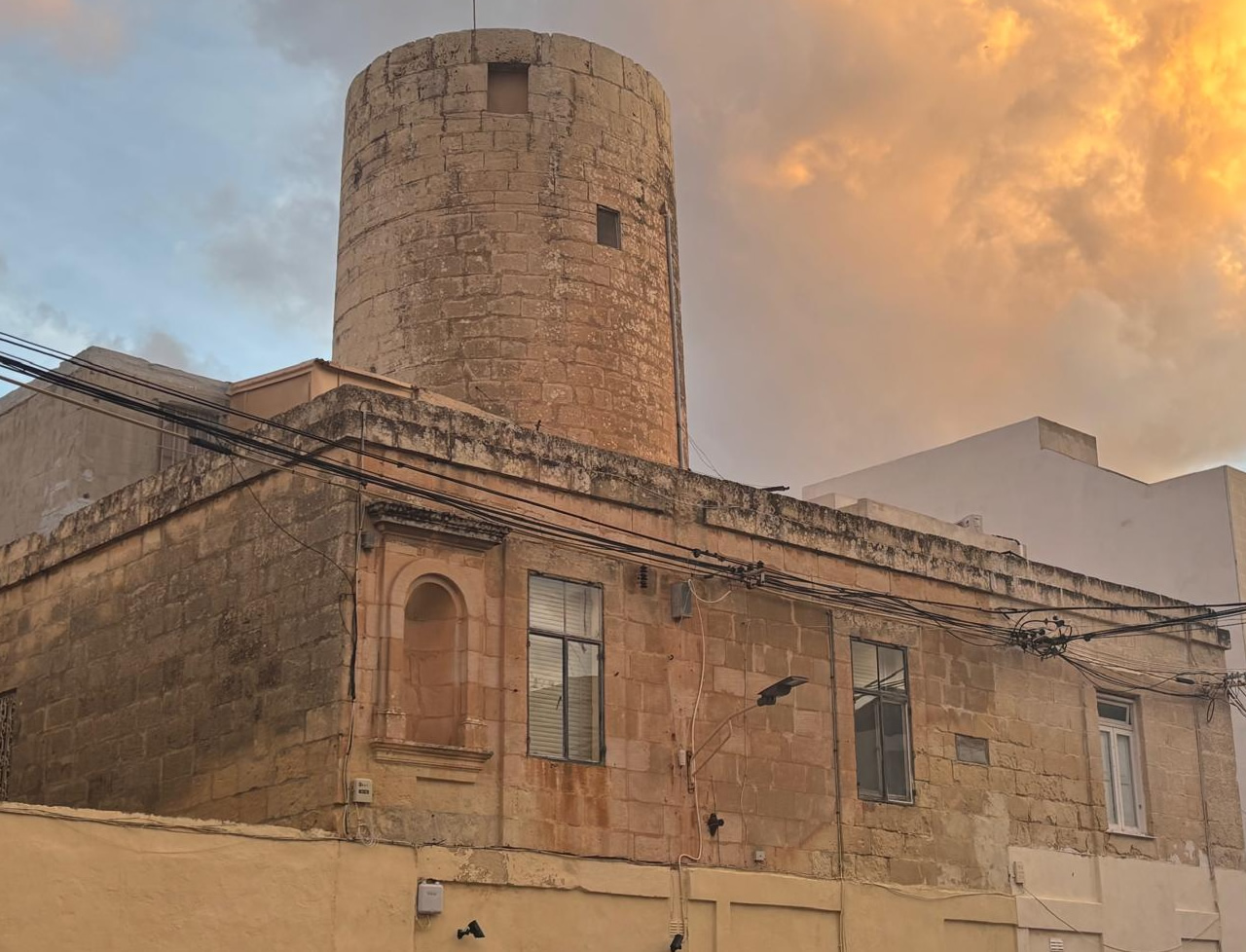
The tower was structurally retained
The building was reused as:
A store
A farm outbuilding
Later a private residence
8. Present-Day Condition
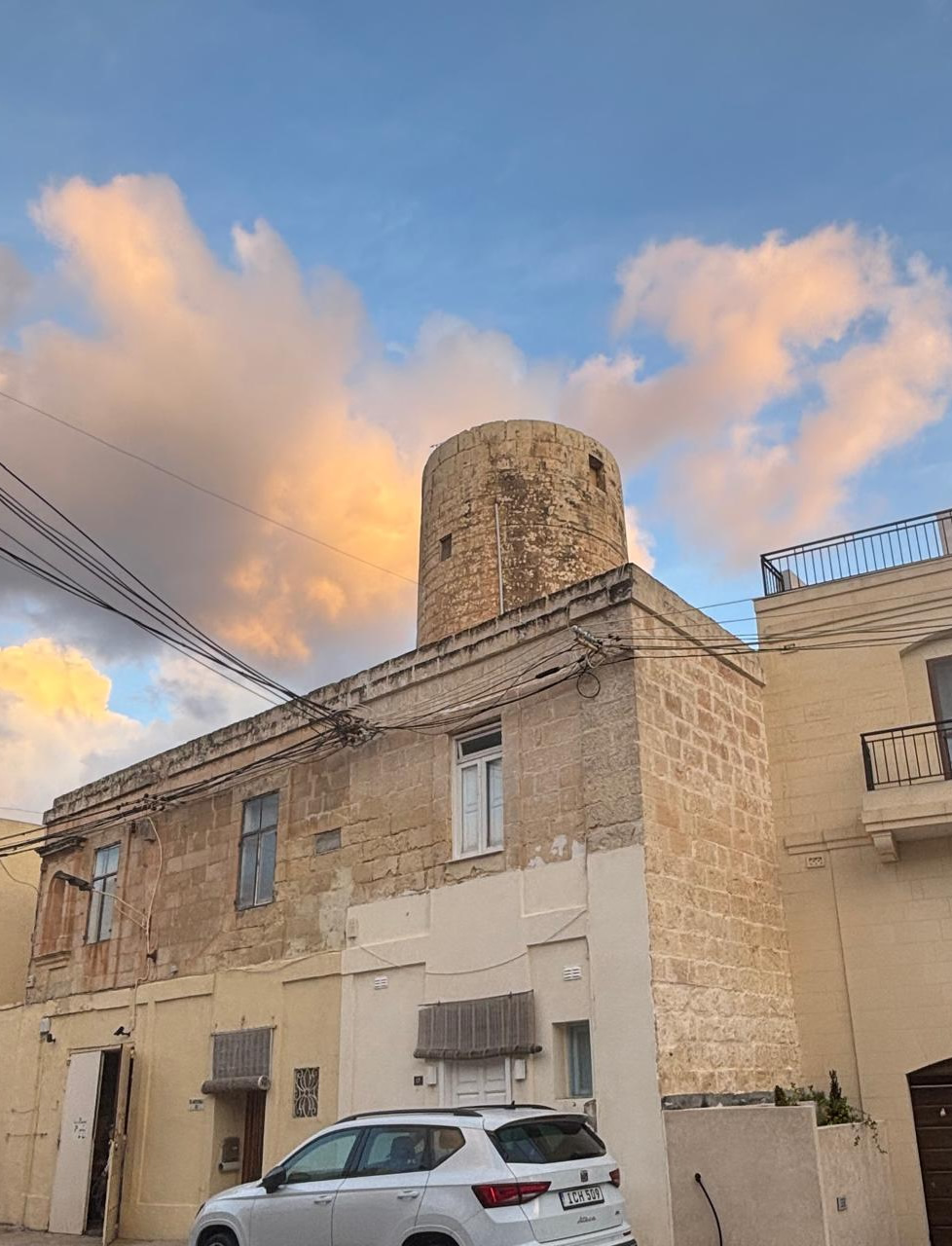
Today, Ta’ Ddejf Windmill:
✅ Still retains its original stone tower
✅ Has no sails or cap
✅ Has no internal milling machinery
✅ Is fully integrated into modern development
✅ Is one of Naxxar’s last surviving rural windmill towers
✅ Represents a rare surviving private 18th-century mill
9. Heritage Significance
Ta’ Ddejf Windmill is important because it:
✅ Represents private rural industry
✅ Shows how agriculture shaped Naxxar’s landscape
✅ Preserves pre-industrial technology
✅ Forms part of Malta’s disappearing windmill network
✅ Demonstrates reuse of industrial monuments as homes