History and construction details of Tal-Għaqba Windmill in Naxxar, Malta.
📍 Location & Names
Quick facts
Name: Tal-Għaqba (Il-Mitħna tal-Għaqba)
Location: Naxxar, near Giovanni Curmi Higher Secondary School.
Built: c. 1710 (commissioned by the Perellos foundation / Grand Master Ramon Perellos).
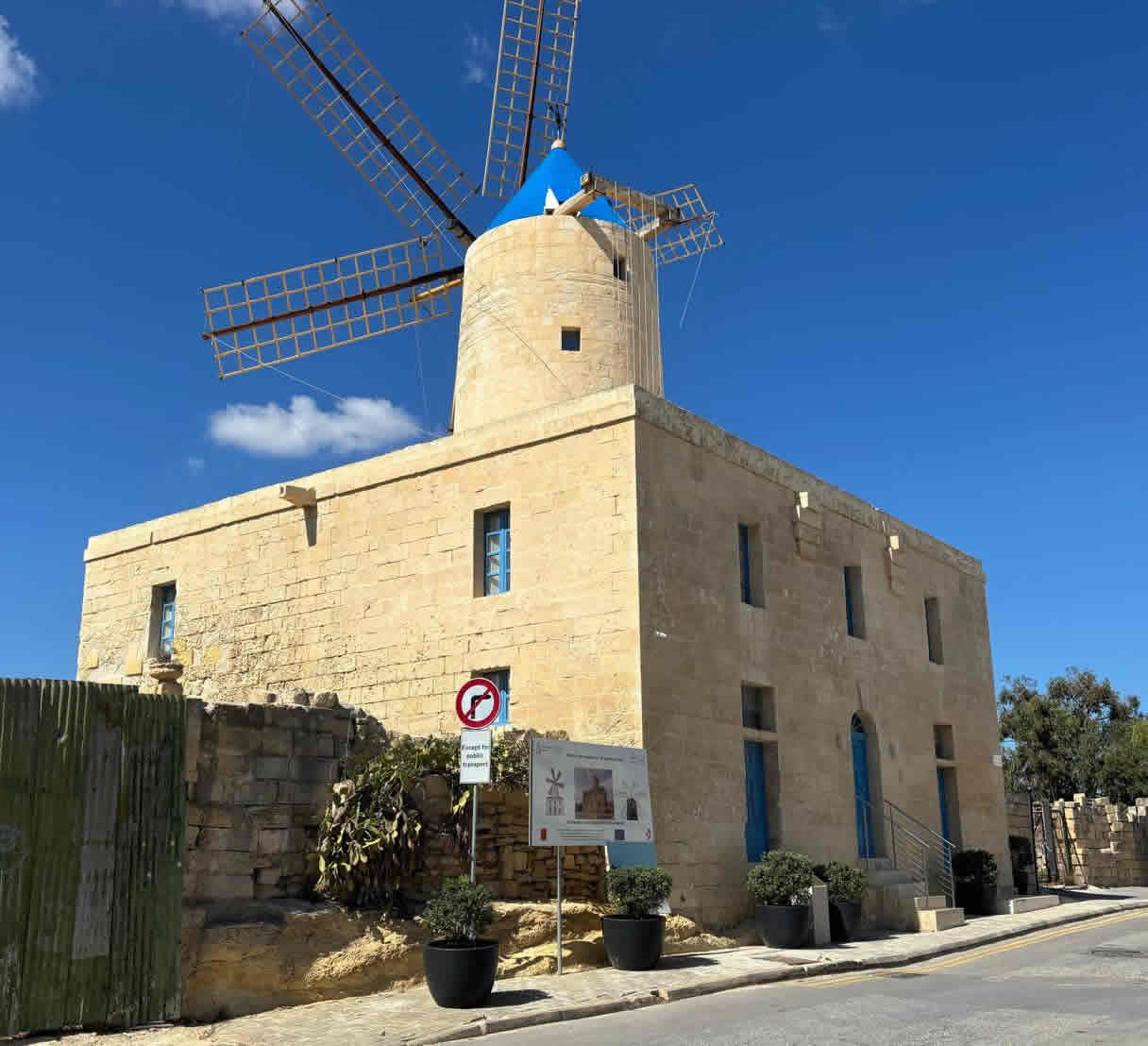
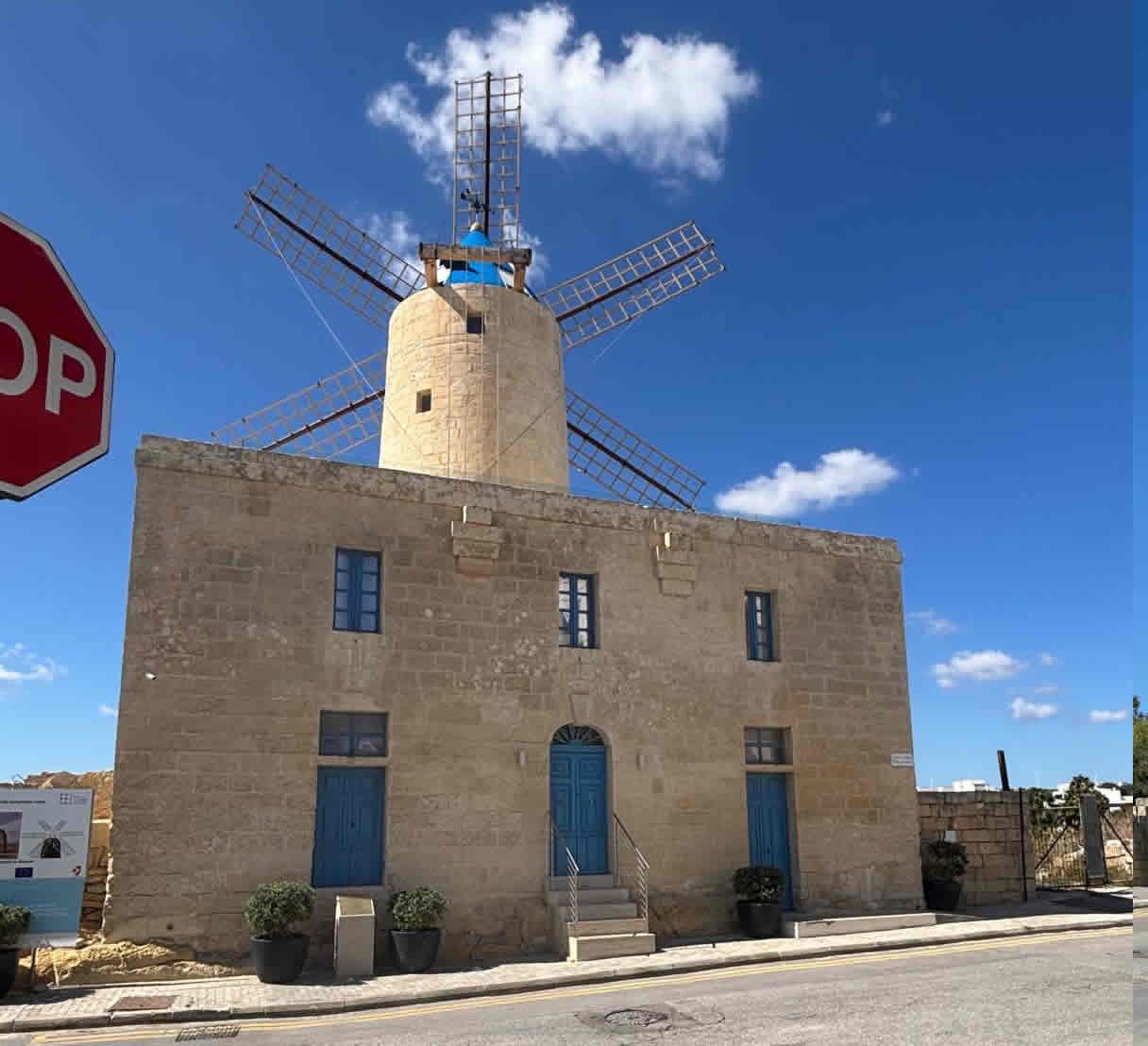
Type: Two-storey tower mill in Maltese limestone (tower with surrounding rooms).
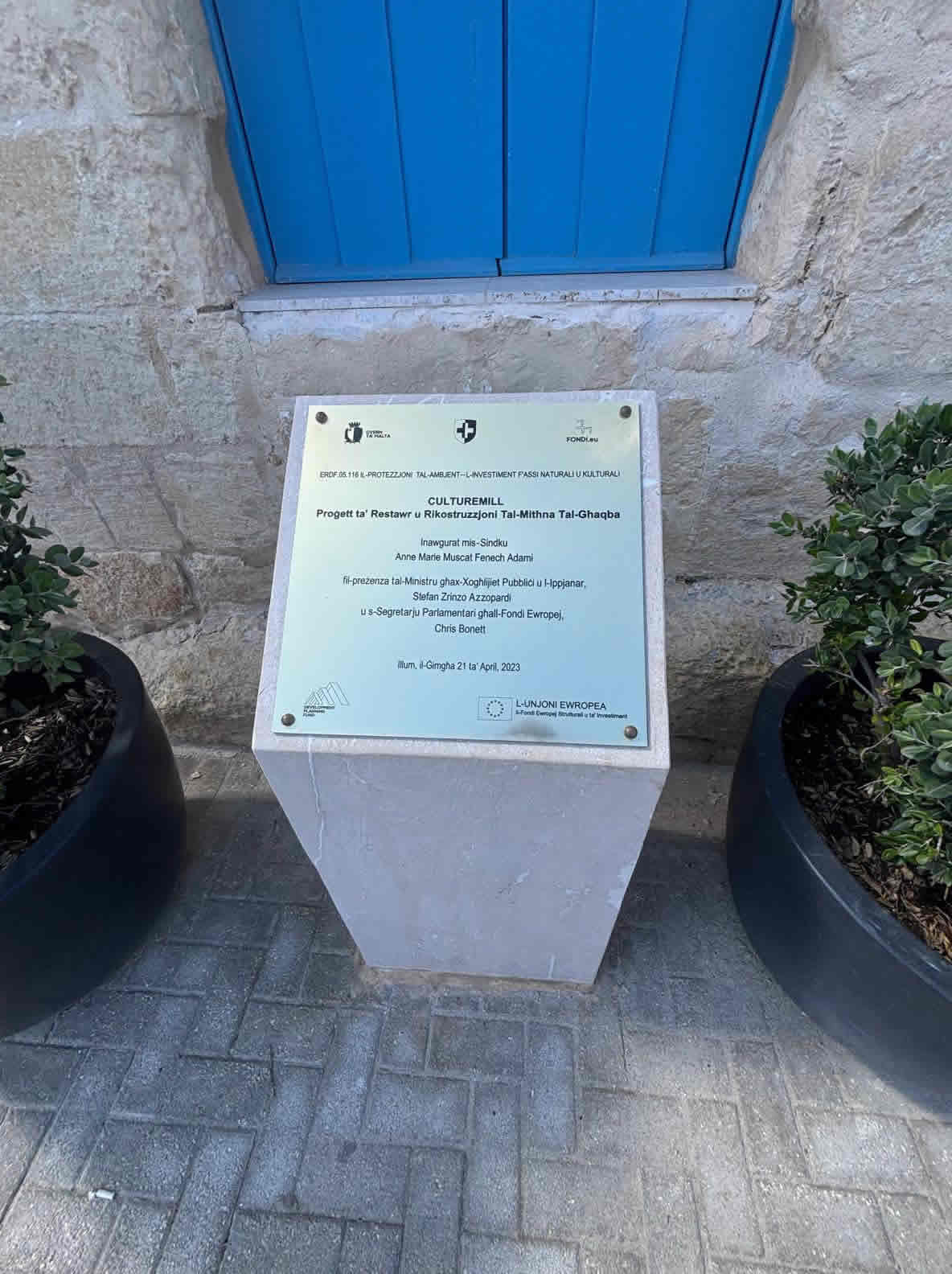
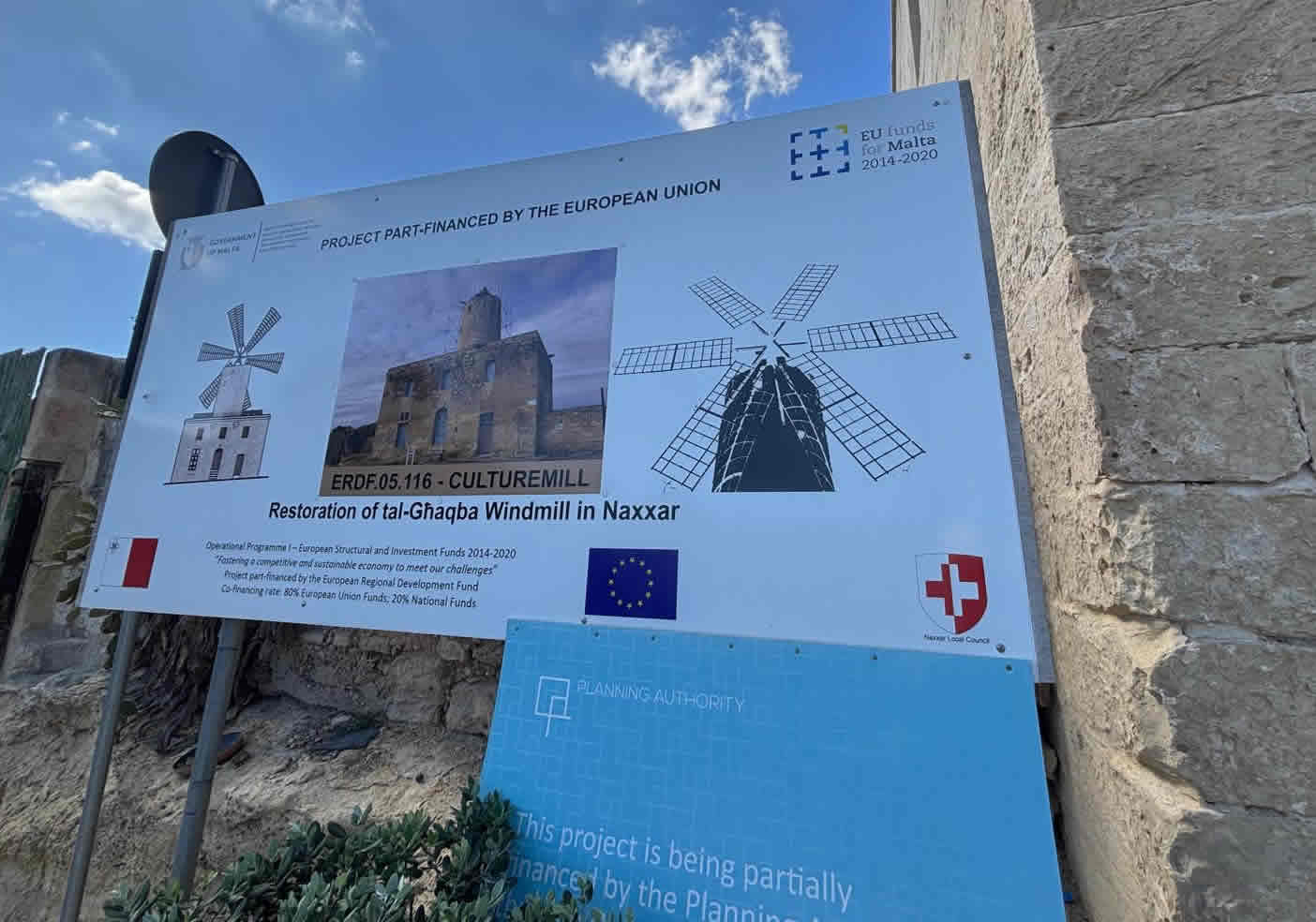
Recent restoration: Major €1.5 million conservation and reinstatement project completed / inaugurated in April 2023; sails/vanes turned publicly in May 2023. Funding included ERDF and national/local sources.
1) Construction & original form
Patron & date: Tal-Għaqba was built around 1710 by the foundation set up under Grand Master Ramon Perellos. It formed part of a wave of early-18th-century tower mills commissioned by knightly foundations to secure local grain-milling capacity.
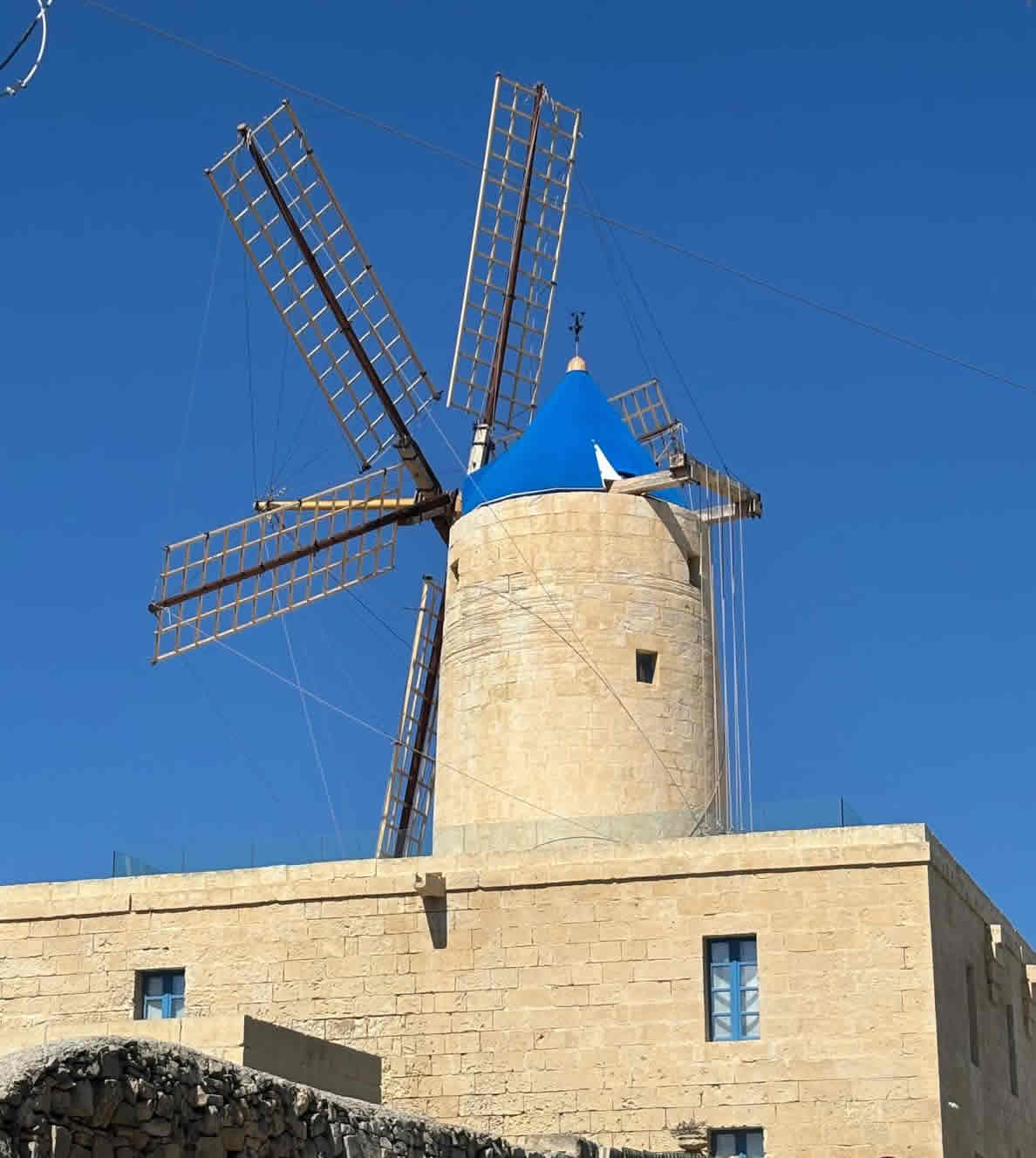
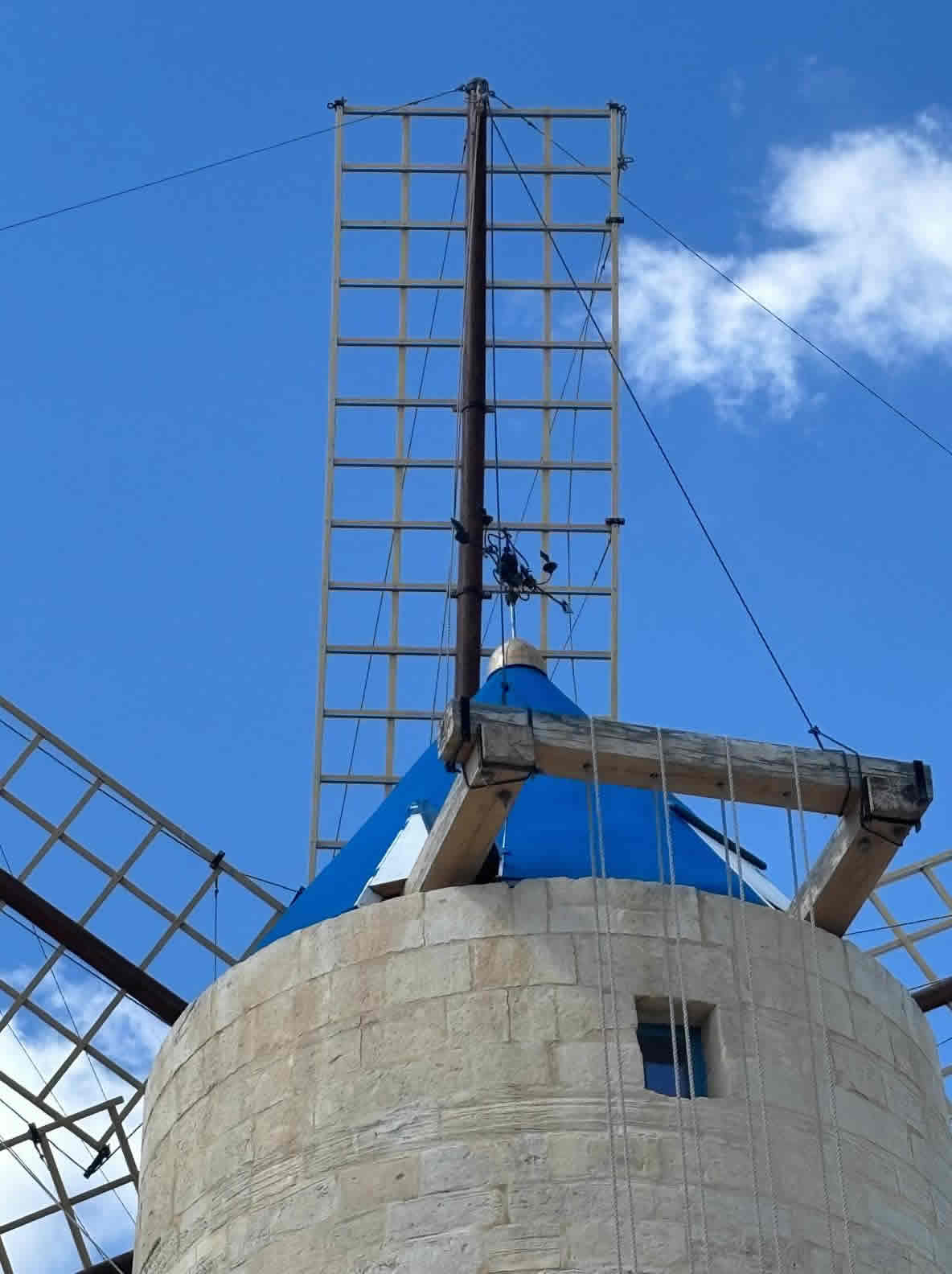
Architecture & machinery (original): A typical Maltese tower mill: a robust circular/near-cylindrical limestone tower housing the milling floor and stones, with ancillary rooms around/beside the tower for storage and the miller’s use. Externally the mill had a rotating cap carrying timber wind-shaft and canvas sails (vanes) that drove the internal gearing and millstones. Some of the historic milling mechanism survived in situ before the recent restoration.
2) Use, ownership and 19th–20th century history
Working life: Tal-Għaqba served as a grain mill for local agricultural communities through the 18th and 19th centuries (milling wheat/barley). Over time, steam and industrial mills reduced the economic viability of traditional windmills.
Later ownership / uses: Like many historic mills, Tal-Għaqba passed into private ownership and periods of changed use — residential occupation, partial reuse and ultimately abandonment/dereliction by the early 21st century. Planning and local heritage notes show the structure remained a visible landmark but in poor repair before restoration. (Public reports and council files document local ownership and the involvement of Naxxar locality in the building’s revival.)
3) Condition decline and the need for restoration
By 2019 the mill was reported to be dilapidated and at risk of collapse; structural decay and loss of traditional components prompted community concern and proposals for restoration. The Planning Commission approved restoration proposals in 2016 and further work and funding arrangements developed in subsequent years.
4) Restoration(s) — scope, funding, outcome
Approval & design: Planning permission for an extensive restoration was granted (press reports 2016 onward), with restitution of the fabric and adaptive reuse aspects overseen by conservation architects (Doric Studio led the architectural team for the later work). The aim was both structural conservation and reinstatement of working elements where feasible.
Funding & partners: The completed project cost approximately €1.5 million, with funding coming from the Planning Authority, Naxxar local council / government schemes and European Regional Development Fund (ERDF) contributions (reports cite roughly €600k ERDF among the funding).
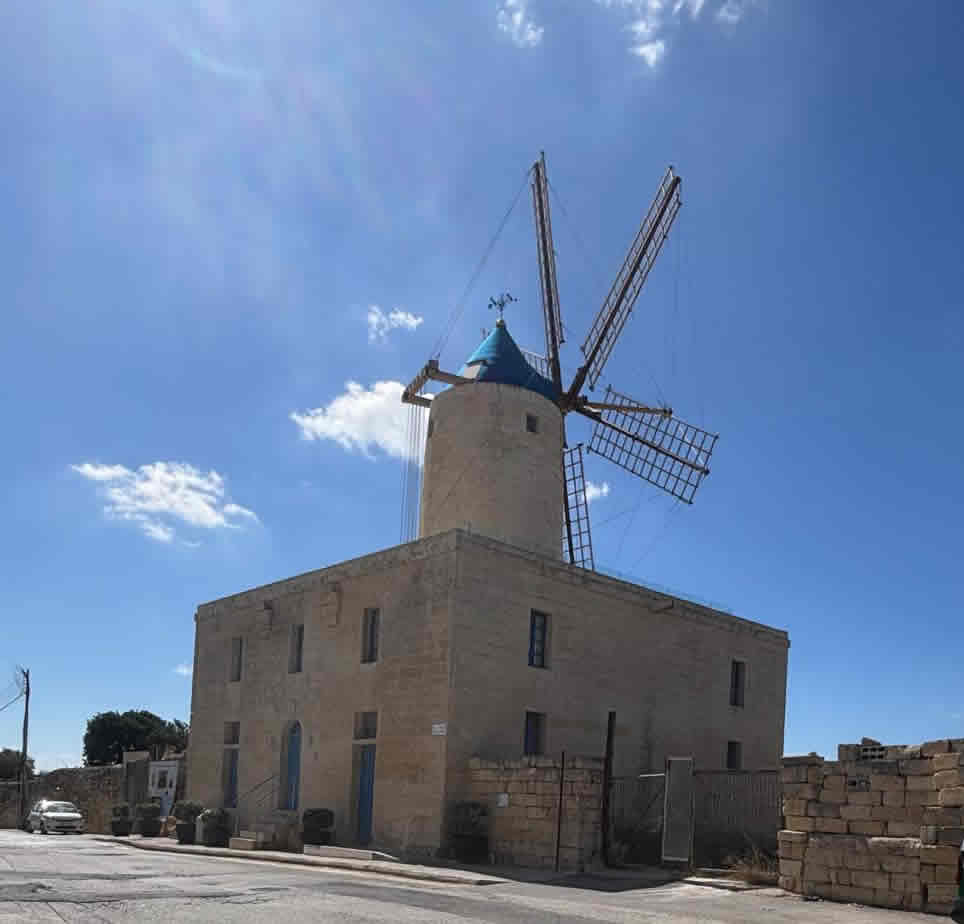
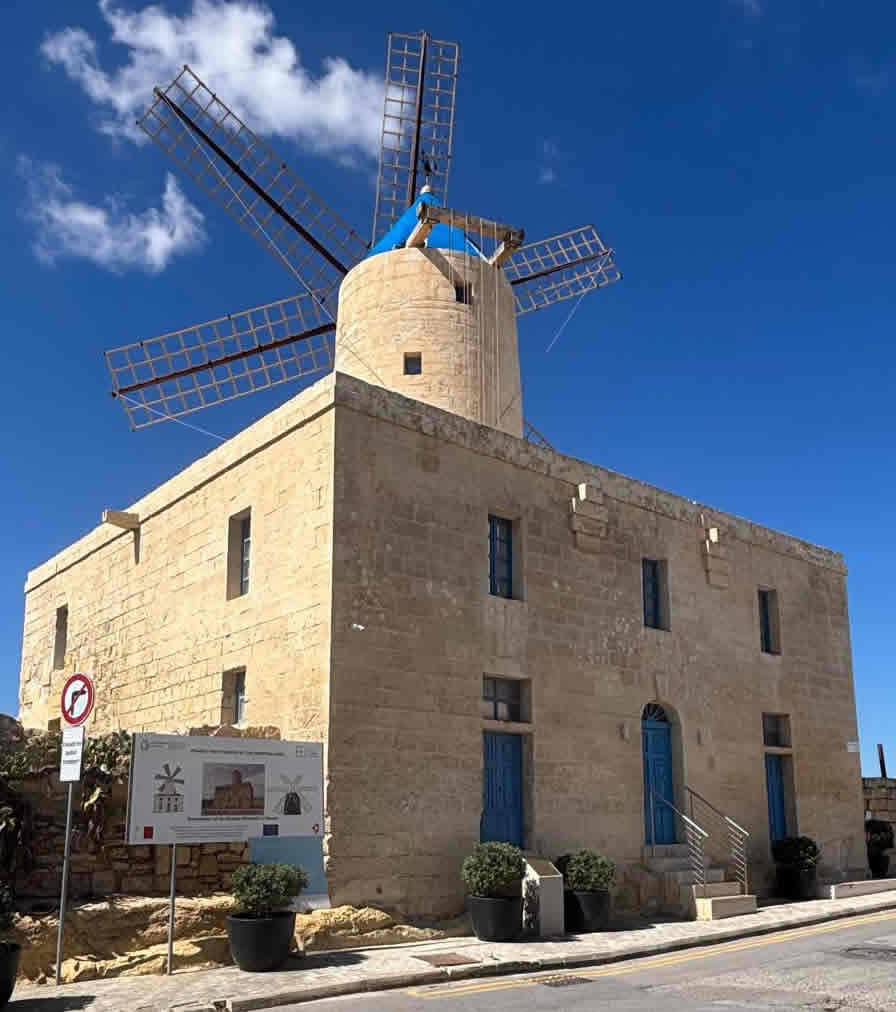
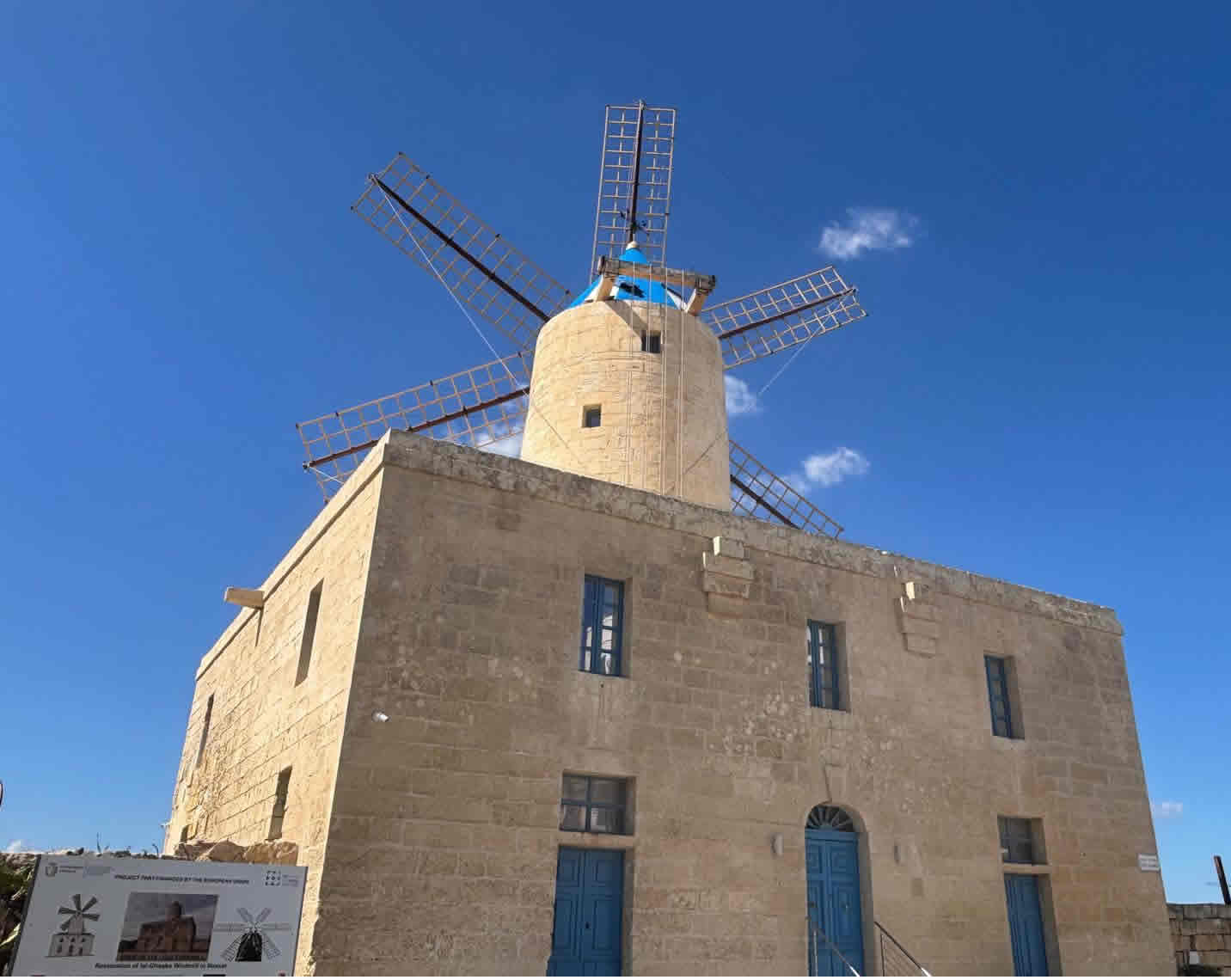
Work carried out: Structural consolidation of the tower and rooms; careful cleaning and conservation of interior finishes and any surviving historic fabric; reinstatement/repair of the cap and wind-shaft components where possible; reconstruction or repair of the sails/vanes so the mill could physically turn again as an interpretive/working exhibit. Conservation work was undertaken to modern conservation standards and included interpretive fitting-out for public access and cultural programming.
Reopening & live demonstration: The restored mill was inaugurated in April 2023 and the vanes were turned for the public in May 2023, marking the first time in generations the windmill’s sails have rotated as originally intended (both symbolic and demonstrative of mechanical reinstatement).
5) Current use, management & public access
The conserved Tal-Għaqba now functions as a local cultural/historic hub: the restoration includes museum/exhibition space and areas for events/education, under the aegis of local authorities and cultural bodies — the site is promoted for guided cultural visits. Operational management is coordinated between local/national heritage bodies and Naxxar locality.
6) Significance
Tal-Għaqba is an important example of Perellos-era (early 18th century) windmill construction in Malta — one of several knightly-foundation mills that formed the island’s pre-industrial milling infrastructure. Its full conservation and the reinstatement of turning vanes make it one of the few restored, demonstrably working historic windmills on the islands, and a case study in combining structural conservation with community reuse.
7) Documentary & archival sources
If you want primary records or documentary backup, the following are the best next steps:Naxxar Local Council / restoration project reports — project briefs often cite ownership/leases and contractor reports.
Planning Authority / Government approvals — PA e-apps and archived Planning Commission decisions (2016 onwards) hold the applications, drawings and ownership declarations.
National Archives / Order of St John records — for original foundation documentation about Perellos commissions (these may be in Malta’s national or ecclesiastical archives).
Press coverage & project website pages — Times of Malta, TVM, Independent articles and the regional “Regjun Tramuntana” site and design coverage provide good contemporary reporting and images.
Short timeline
c.1710 — Windmill built under the Perellos foundation.
18th–19th c. — Active as local grain mill.
20th–early 21st c. — Gradual decline; at times used for other purposes / left derelict.
2016 — Planning approval steps for restoration recorded.
2019 — Reported at risk and in urgent need of restoration.
2022–2023 — Major conservation project carried out; project inaugurated April 2023; vanes turned May 2023. €1.5m project with ERDF and national/local funding.