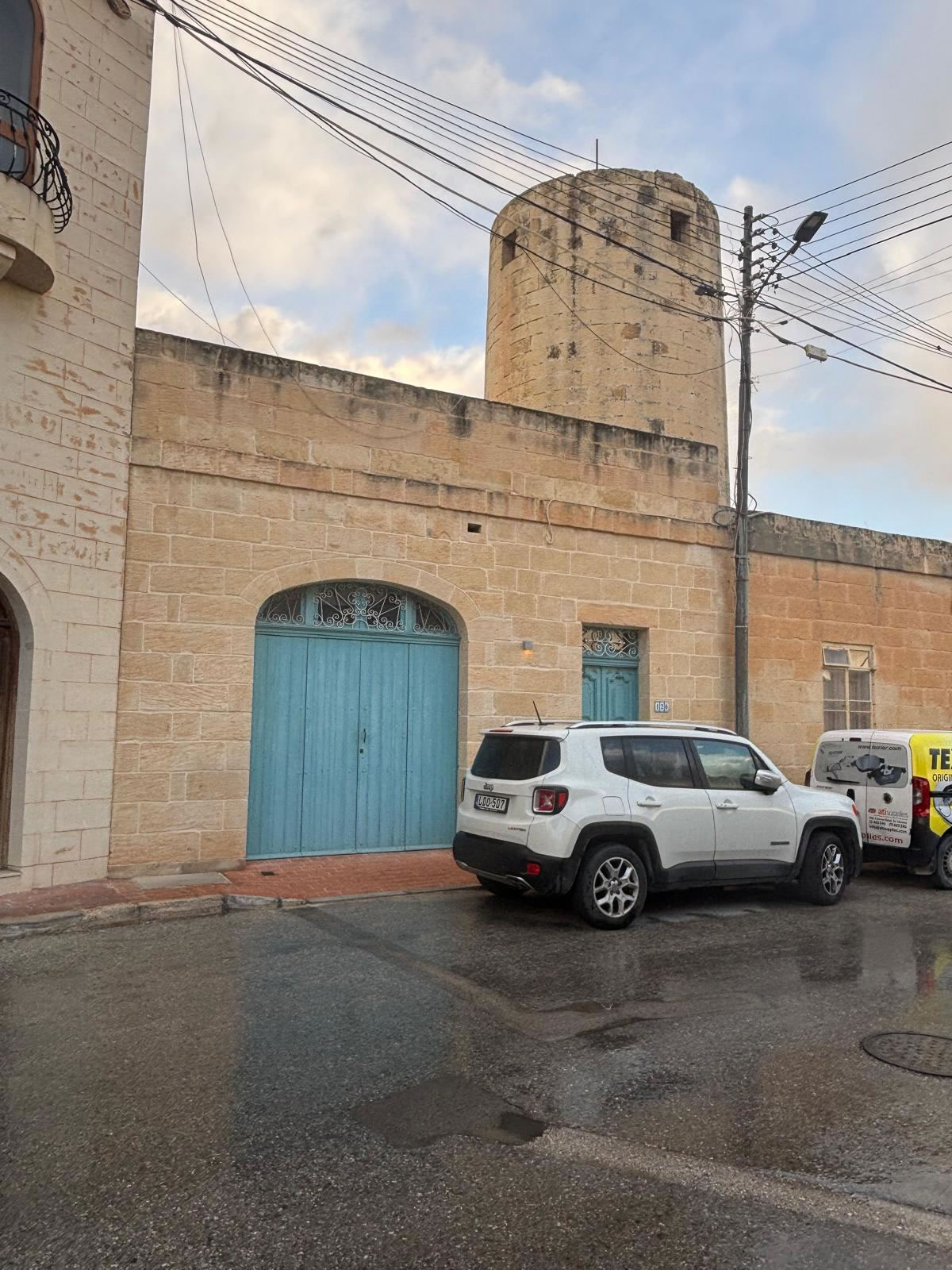
Tar-Rith Windmill Mqabba Malta
📍 Location
The coordinates of Tar-Rith Windmill are:
- 35.842938, 14.465230
Tar-Rith Windmill (the mill in Triq Santa Katerina, Mqabba) — its history, construction details, alterations and present condition as a private residence.
Short summary
Tar-Rith Windmill (Mqabba) is a traditional Maltese tower windmill built in the late 19th century (sources record it c.1873–1874), worked until the late 19th century (sails removed c.1890) and was later converted into a private dwelling. The tower and base survive in good condition and the building is currently a private residence; it was noted in local planning/scheduling actions (1997 scheduling of important Mqabba properties).
Full history & timeline
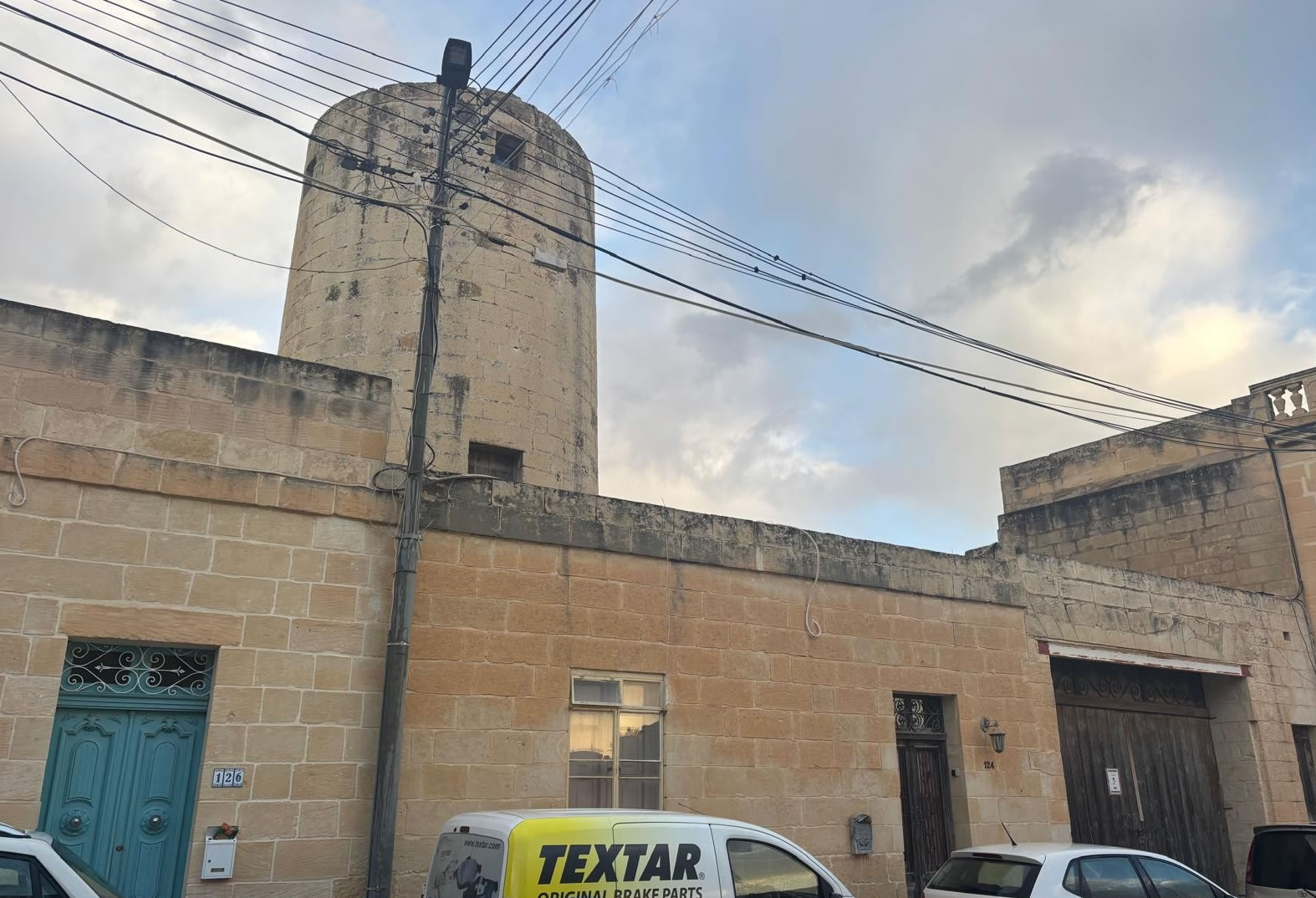
Date of construction: specialist windmill catalogues list Tar-Rith as a late-19th-century windmill, with construction dated around 1873–1874. This places it among the later Maltese tower mills (many earlier mills date to the 17th–18th centuries).
Operational life: the mill remained in working use through the later 19th century; most sources record the sails being removed around 1890 as wind-driven milling declined and steam/industrial processes took over.
Adaptive reuses: after it ceased to operate as a mill the tower was adapted — like many Maltese mills — into a permanent building. Historical references and local accounts indicate it was converted into a dwelling and later improved/maintained. By the late 20th century the building was in good repair and in private hands.
Planning / protection: Mqabba municipal / planning notes mention a scheduling action (Planning Authority, Jan 1997) that listed important local monuments and built assets for conservation; the windmill is referenced among the locality’s notable historic fabric. (Scheduling does not always change ownership but flags conservation interest.)
Construction — what the original mill was (and what survives)
Because Tar-Rith is a Maltese tower mill, we can describe its original construction and the physical features that are typical and — where visible / recorded — specific to this mill:
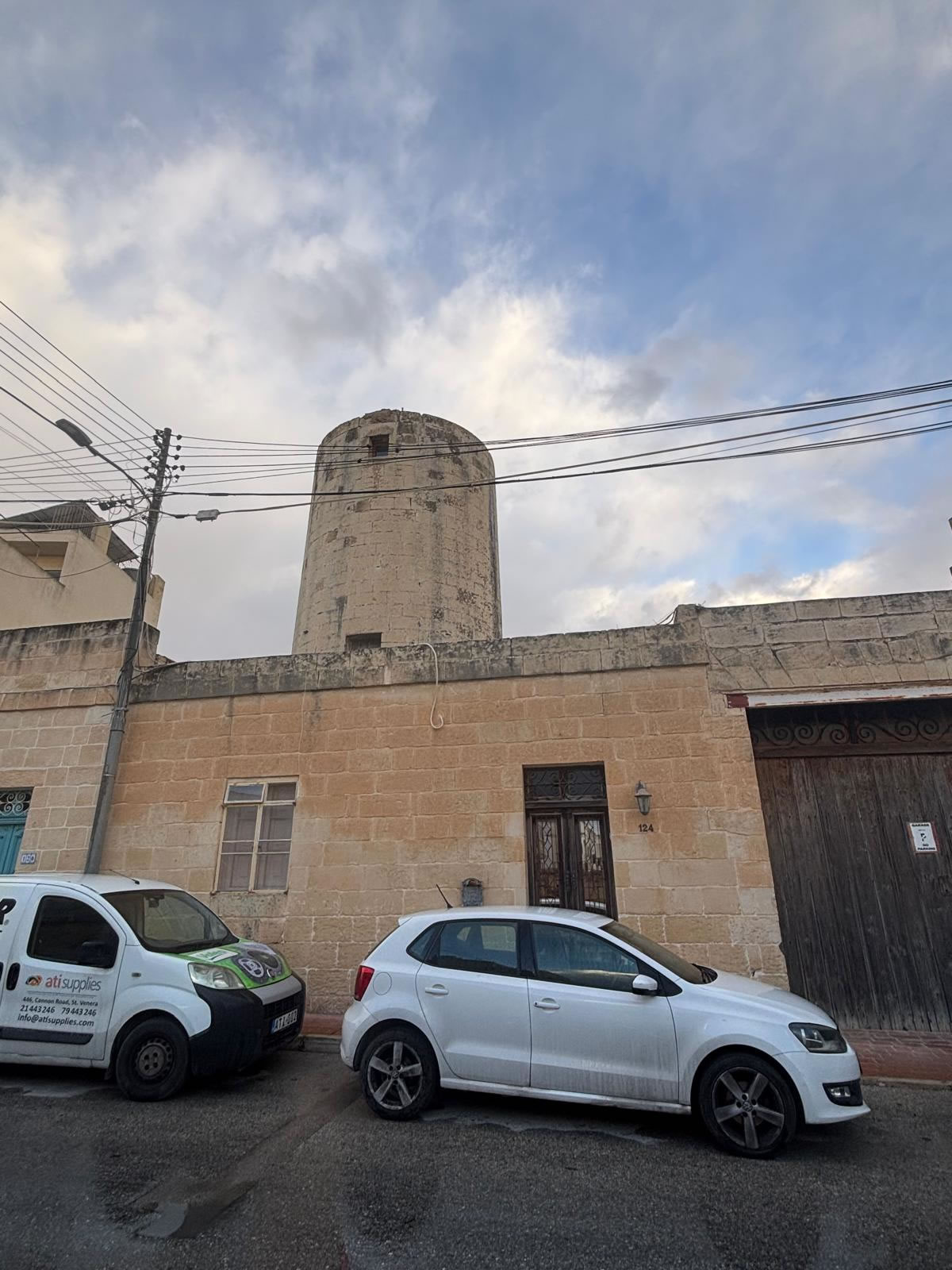
Typology & plan: a cylindrical stone tower (tower mill) rising out of a low rectangular base. The base typically contained storage rooms, mill-entrance, and sometimes stable or workrooms; the tower supported the cap and sails. The external profile of Tar-Rith matches this tower-on-base arrangement and survives intact as the dwelling’s main mass.
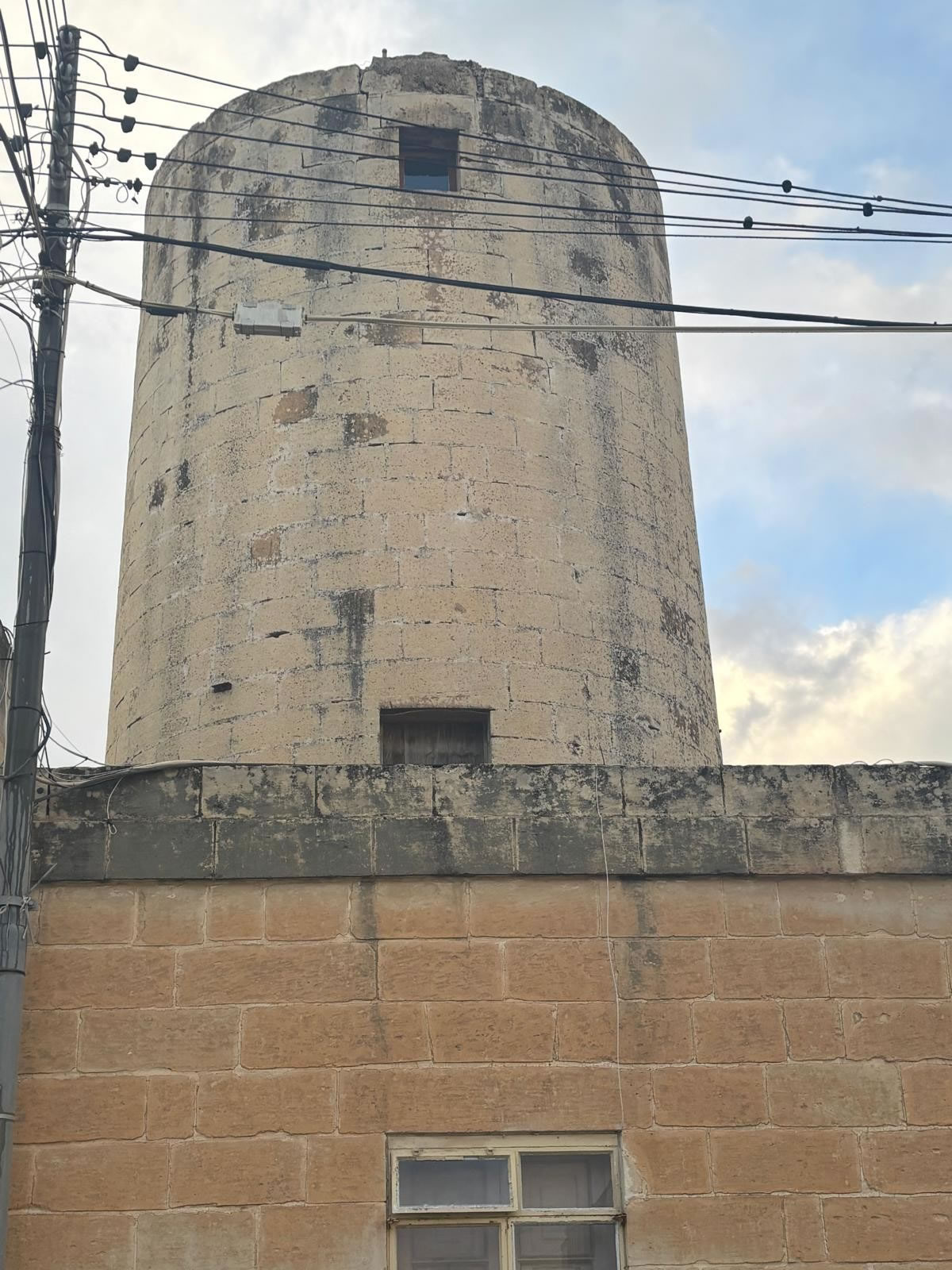
Materials: built in local globigerina limestone with lime mortar — the standard masonry of Maltese rural buildings and mills of the period. Walls are thick to support the rotating cap and to resist wind loads. Surviving external masonry appears well preserved (photos in catalogue entries show sound stonework).
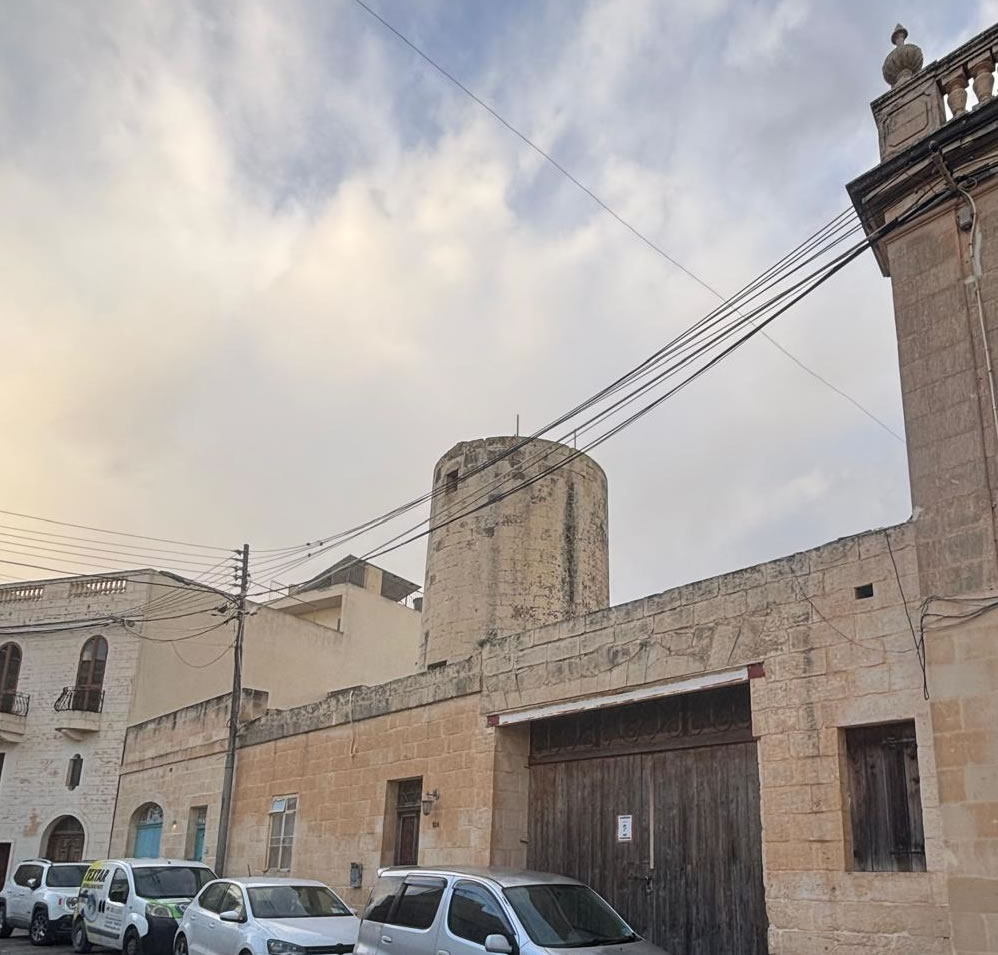
Cap & sails (original): originally the mill carried a wooden cap with a horizontal windshaft and timber-framed sails (vanes) — typical 19th-century Maltese mills had 4 to 8 vanes covered with canvas or slats. The sails at Tar-Rith were removed in the late 19th century (c.1890) and the cap was either removed or adapted during conversion. No working sails or cap remain.
Internal machinery (original): a working tower mill would have held at least one pair of millstones (runner + bedstone), a vertical spindle driven by gearing from the windshaft, wooden gearing wheels, hoppers and grain handling chutes. There is no reliable public record indicating that the original milling machinery survives in situ at Tar-Rith — most conversions removed or repurposed internal machinery when changing to residential use. If you want, I can check more specialised archival inventories or planning condition reports to see if any internal elements were retained.
Alterations & present condition
Sails removed ~1890: windmill records note the sails were removed around 1890 — a common fate for many rural Maltese mills when wind milling became uneconomic.
Tower reduced / cap removed : some Maltese mills had their caps removed or towers slightly reduced in height during conversion; available photographic and catalog notes for Tar-Rith show the tower as a coherent masonry volume adapted to domestic windows and doors, suggesting the cap is not extant in its original form. I did not find a detailed photographic timeline that documents a measured reduction in height for this specific mill.
Conversion to private residence / good condition: current public descriptions and local photographic notes describe Tar-Rith as in use as a private house and in good condition; the masonry and external fabric are reported as well maintained. Because it is private property, interior access and specific internal alterations are not usually publicly documented.