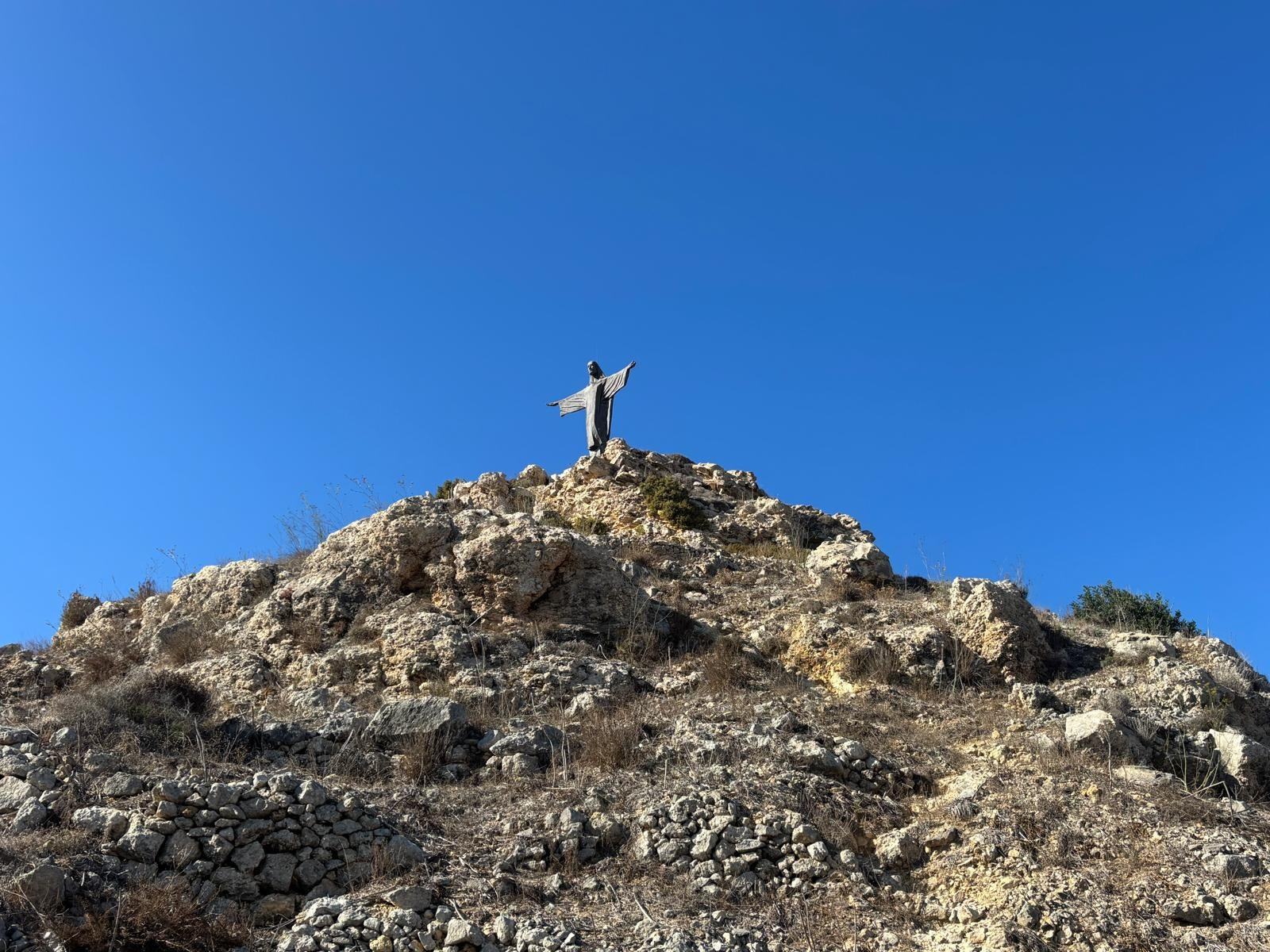
⚔️ The Tas-Salvatur Statue Above Marsalforn, Gozo
📍 Location
Situated near Marsalforn. Google Map Link
The coordinates of Tas-Salvatur Statue are: 36.066460, 14.254403
Overview — history, construction, legends, and present significance — of the statue of Tas‑Salvatur Statue (Our Saviour) on the hilltop near Marsalforn, Gozo (on Tas‑Salvatur Hill / Tal‑Merżuq Hill).
🏞️ Location & Overview
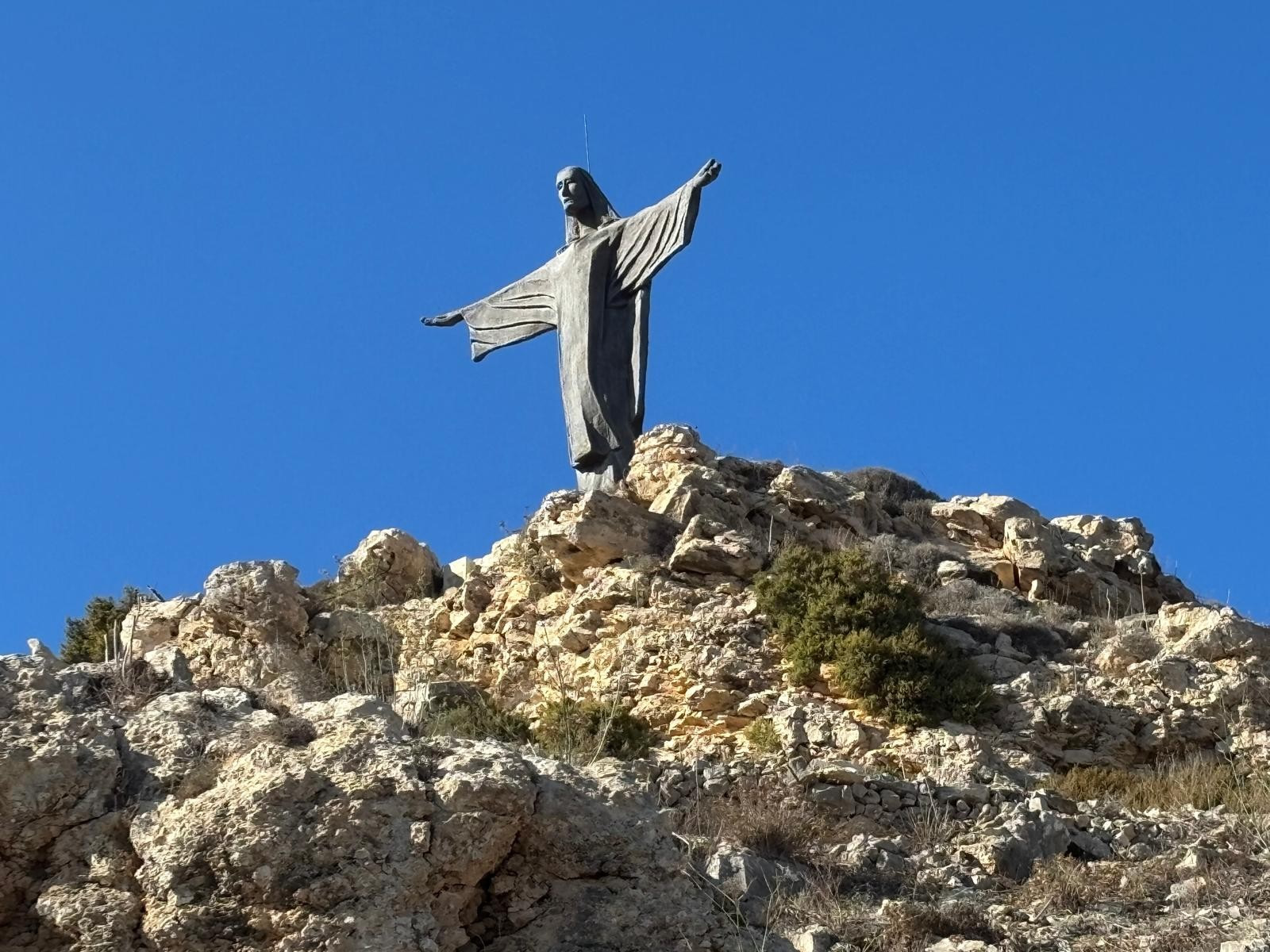
The statue stands atop Tas-Salvatur / Tal-Merżuq Hill — a prominent hill about 320 feet (≈ 97 m) above sea level, overlooking Marsalforn Bay and much of northern Gozo.
From the hilltop, visitors enjoy panoramic 360° views over the sea, countryside and nearby villages — making it both a spiritual landmark and a scenic vantage point for hikers and travellers.
📜 History & Evolution of the Statue
The spot has hosted several different monuments over time — reflecting layers of local devotion, changing needs, and structural realities.
🔹 1901 — Wooden Cross
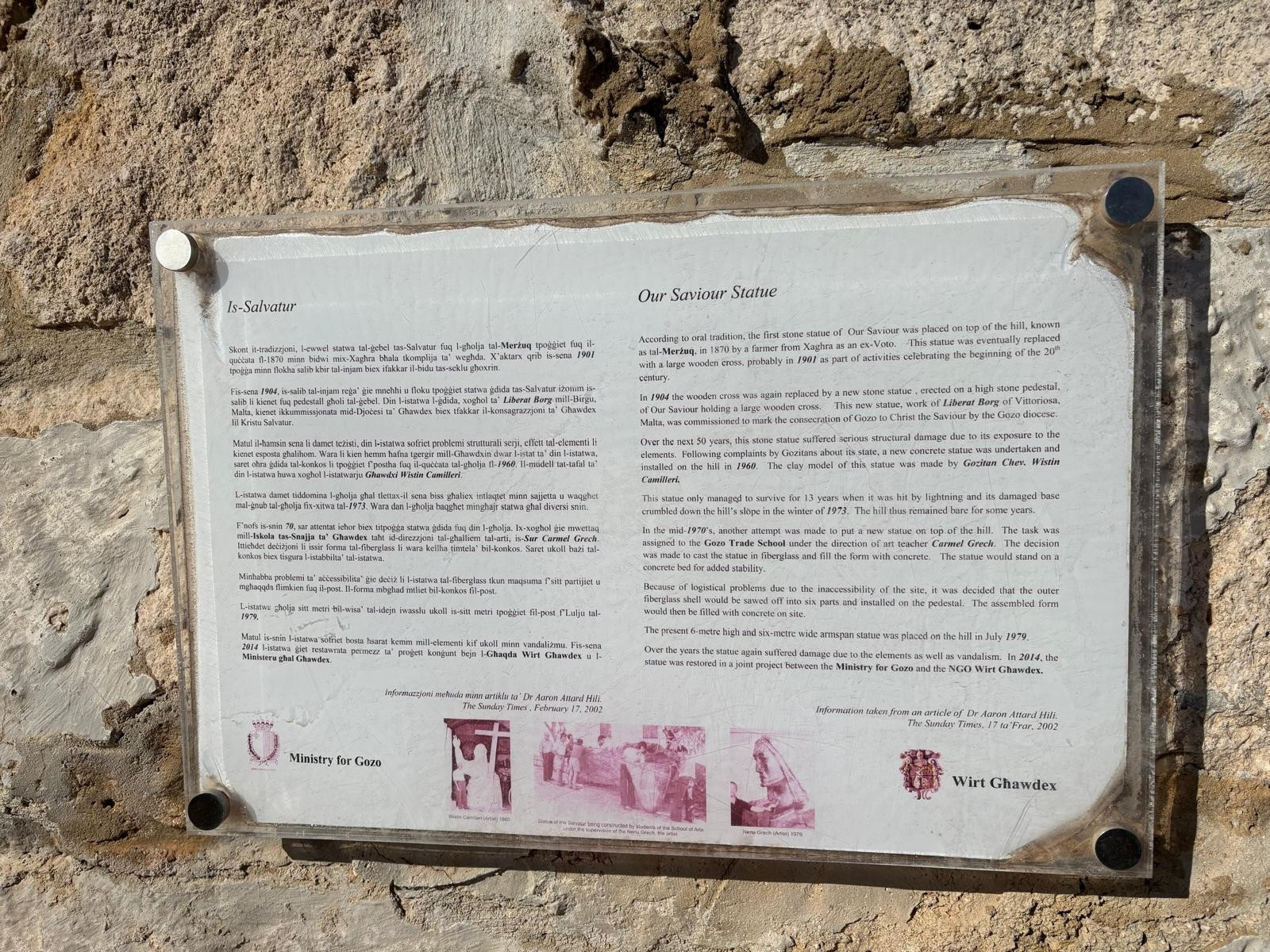
In 1901, local farmers erected a simple wooden cross on the hilltop. Its purpose was symbolic: to offer hope and protection for fishermen leaving and returning to Marsalforn Bay.
🔹 1904 — First Stone Statue
In 1904, when Gozo was consecrated to Christ the Saviour, that wooden cross was replaced with a stone statue of Jesus carrying a wooden cross, crafted by a sculptor from Birgu.
This marked the hill’s formal association with the devotion to “Our Saviour” — giving the hill its name “Tas-Salvatur” (The Redeemer / Our Saviour).
🔹 1960 — Concrete Statue
Over time the 1904 stone statue was badly affected by weather and deterioration. In 1960 locals commissioned a new concrete statue, created by Gozitan sculptor Wistin Camilleri.
⚡ 1973 — Statue Destroyed by Lightning
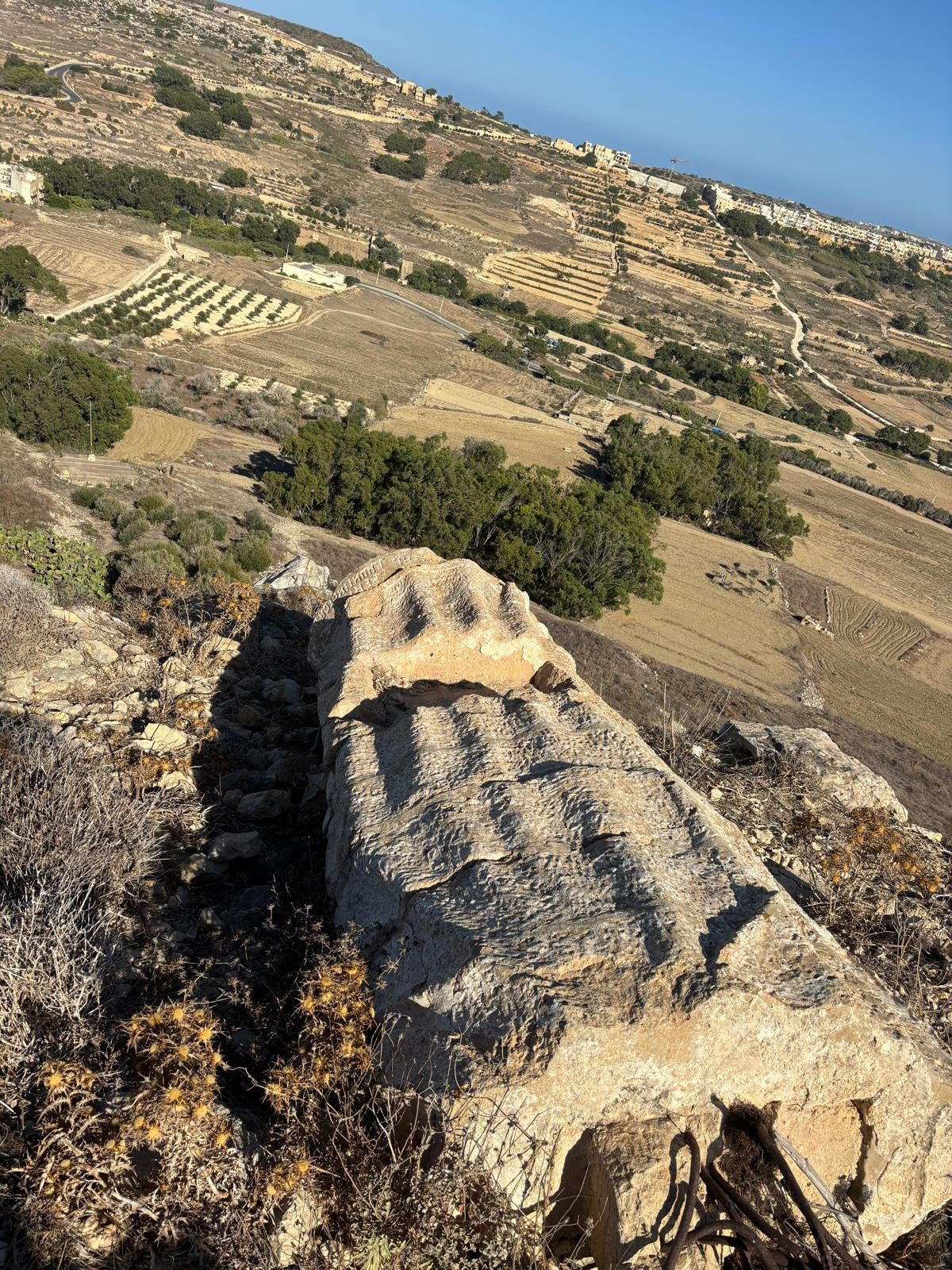
Unfortunately, that 1960 statue did not last long: in 1973 it was struck by lightning during a violent storm. What remained eventually crumbled and was scattered around the hilltop.
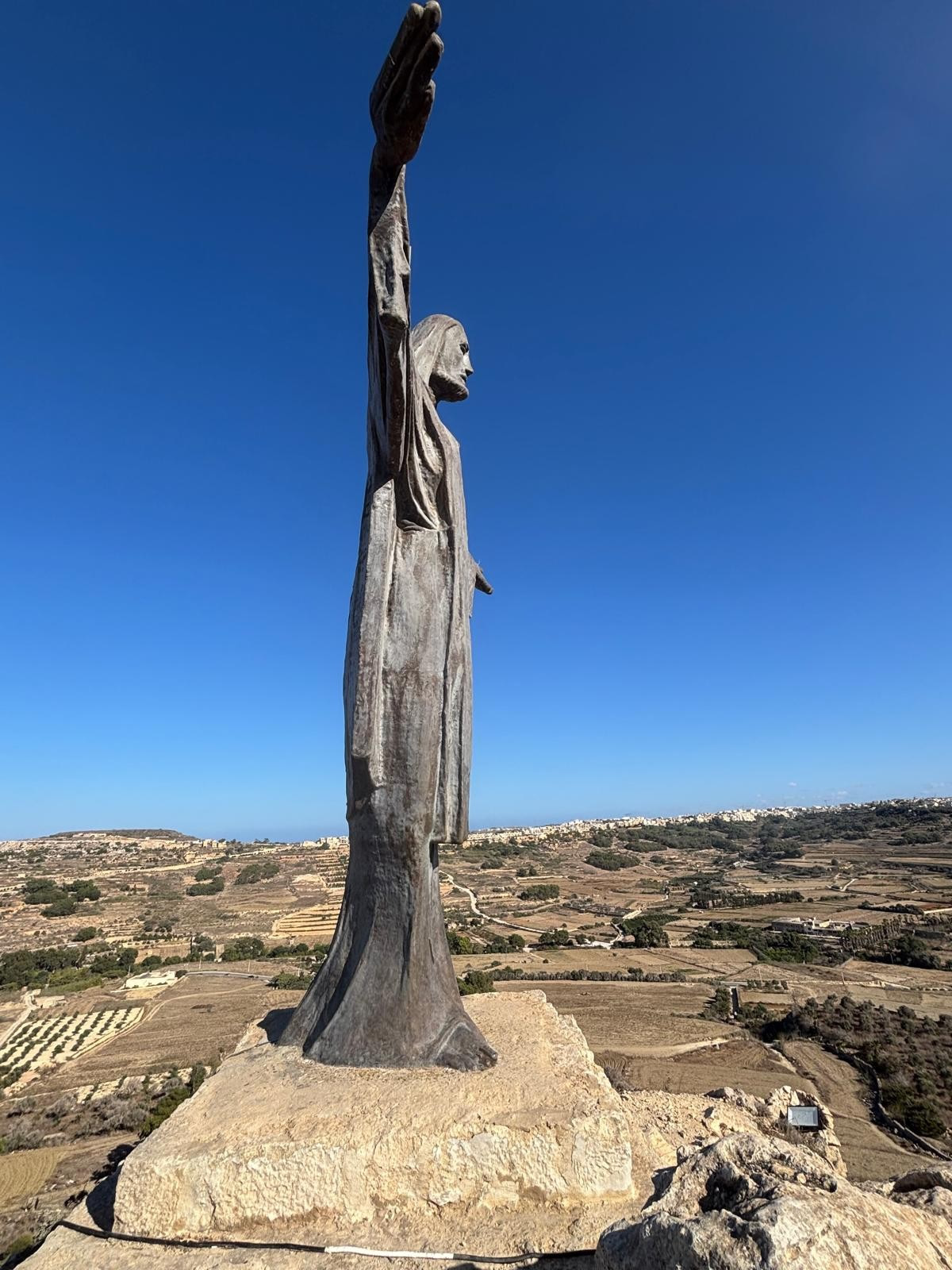
🔨 1978/1979 — Present Statue Erected
After some years with no monument, a new statue was commissioned and erected in the late 1970s (commonly 1978 or 1979).
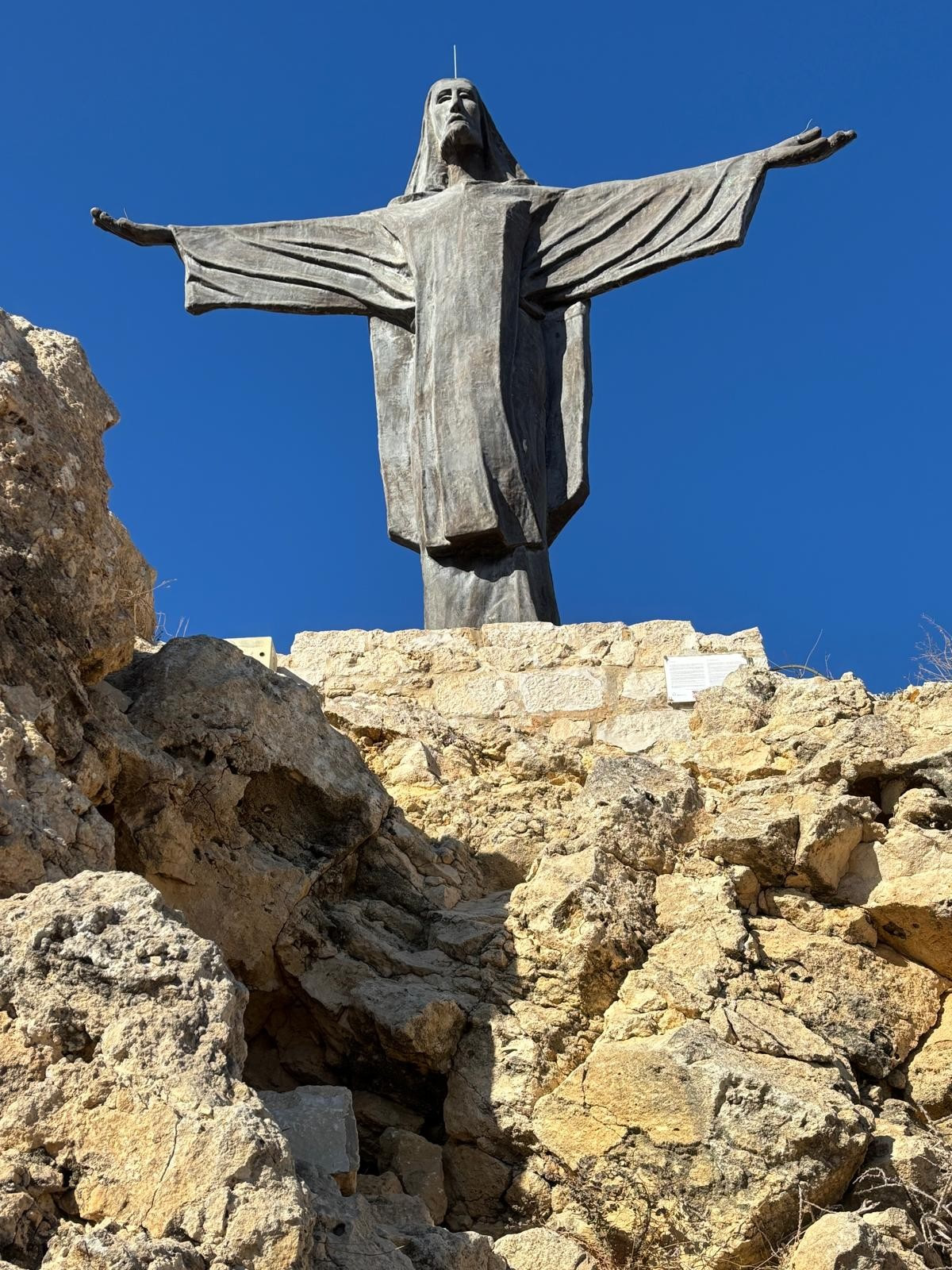
The sculptor was Carmel Grech — a Gozitan based artist (and schoolteacher). Local tradition says the statue’s design was modelled on his nephew, who later became a prominent church figure.
The statue is about 6 metres tall, with outstretched arms, resembling globally renowned “Christ the Redeemer”-style sculptures.
🛠️ Maintenance & Restoration
Over the decades the statue underwent maintenance: a protective gel-coating was applied to resist weather, and solar-powered lighting was installed so that the statue becomes visible at night.
After damage to the head area from a lightning strike, repairs were carried out by the local authorities and heritage bodies.
📖 Legends & Local Beliefs
The hill and statue are wrapped in several local legends and folk-stories:
The hill’s older name, Tal-Merżuq (“Ray of Light”), stems from a legend that during a period of divine retribution the island was engulfed in darkness for three days; on the third day a ray of light was seen emerging from the hilltop. This “ray of light” is said to have given the hill its name.
Another older belief held that the hill was once an inactive volcano — smoke rising from the summit fuelled this idea. Over time, this fear and the hill’s visibility over the sea made the site a focal point for religious protection rituals, especially for fishermen.
The repeated erection of symbols (cross, statues) on the hill reflects the deep-rooted desire among locals to invoke divine protection for the island and its coastal communities.
🧭 Current Role & Cultural Significance
The statue now stands as a prominent landmark visible from many parts of Gozo — from Marsalforn, Xagħra, Għasri, and beyond.
It is a popular destination for hikers and visitors: many take the uphill walk from Marsalforn to Tas-Salvatur Hill to enjoy the views and visit the statue.
For Gozitans and Maltese Christians, the statue is also a symbol of faith, hope and protection — especially for those with ties to the sea and fishing communities.