Here’s a summary of what I found on the post-mill of Senglea (“Isla”) — specifically the one that sources indicate existed around 1565 on the peninsula (Windmill Hill / Triq San Lawrenz or equivalent)
✅ What the sources tell us
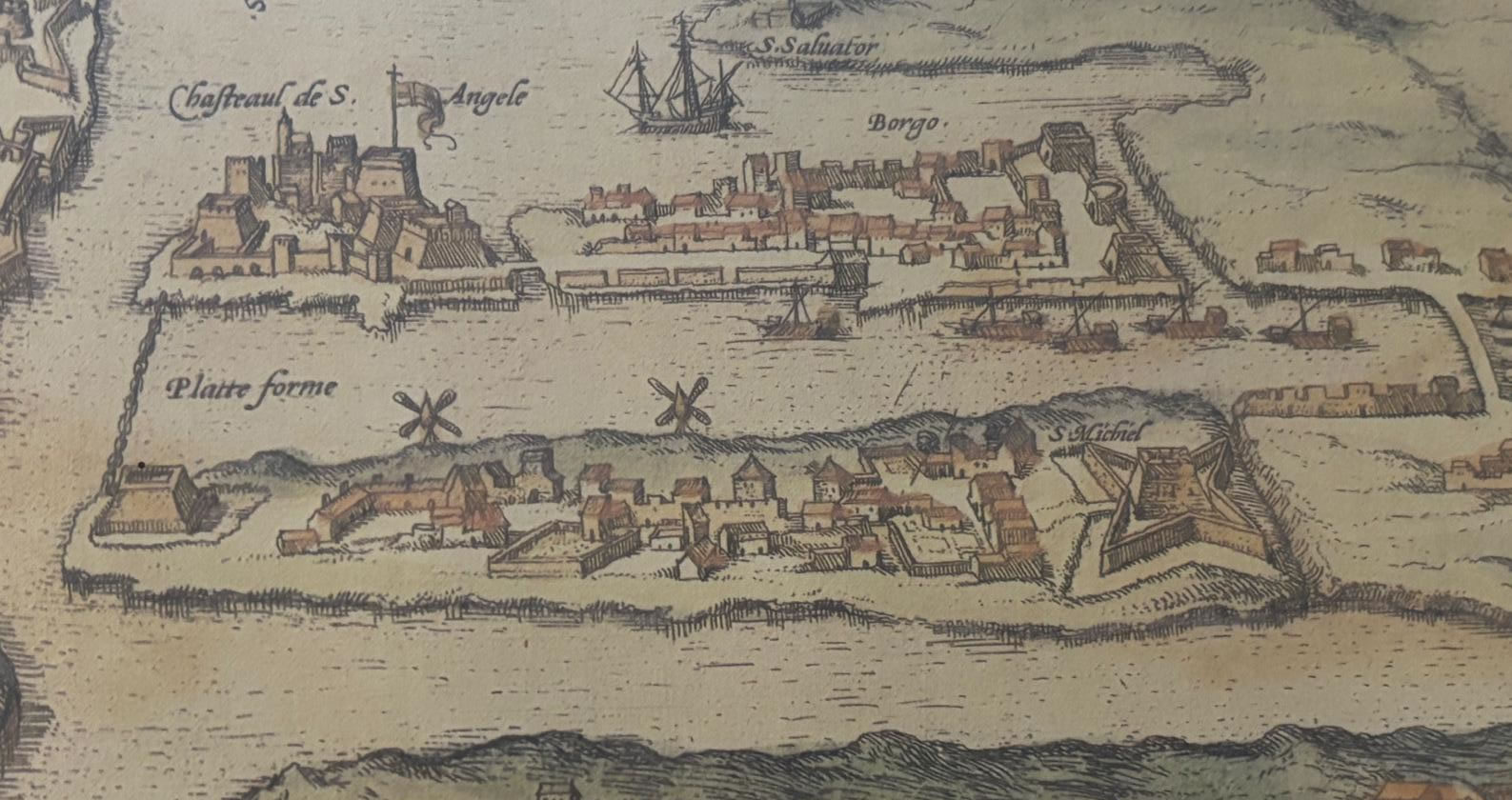
According to the database Windmills of Malta, “Already in 1530 there was a windmill on Malta and in 1565 two. Those were postmills in what now is Senglea.”
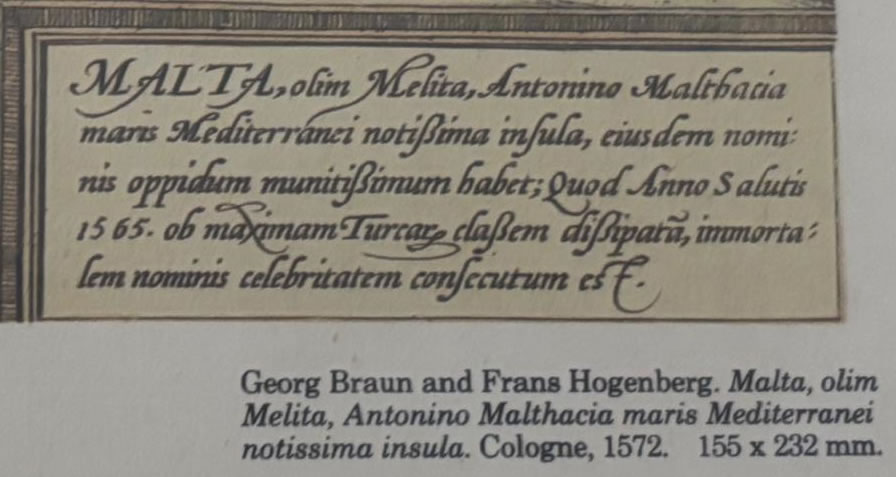
An article in Vigilo states: “On an old map … a post-mill is shown located on the peninsula where Senglea stands today. … These post-mills were greatly diffused at the time. The Senglea post-mill probably represents the Knights’ first attempt to harness the regular wind supply of their new home.”
The area of the peninsula (near the fortress and Windmill Hill) was historically known in Maltese as “Monte del Molino” (meaning “windmill hill”) according to a restoration document.
So: We know there was a post-mill (or possibly two) located on the Senglea peninsula by 1565, and that they were early wind-powered mills introduced by the Knights of the Order of St John.
🏗 Construction & typology (inferred)
Because there are no detailed surviving specific drawings of "the 1565 mill at Senglea", we rely on general typology of post-mills as applied in Malta:
It would have been a post-mill: The whole body of the mill (housing the milling mechanism) mounted on a central vertical timber post, which allowed the body to be turned to face the wind.
Materials: Likely timber superstructure (boss post, cross-trees, quarter-bars) set on a stone plinth or masonry base (the Maltese peninsula has limestone, so maybe a small masonry base plus timber above).
Sails: Probably timber lattice arms with cloth/ canvas covering (16th-century technology), though direct documentation for this specific mill is lacking.
Location: On the elevated ridge of the peninsula (Windmill Hill / “Monte del Molino”) to maximise wind exposure.
Function: Grinding grain (cereals) for the local settlement, possibly also supporting the fortified harbour community. The source “Windmills and Production of Gunpowder in Malta” mentions that mills were in full operation in 1565.
📜 Historical context & lifecycle
The mill was constructed in the early era of the Knights (they arrived in Malta in 1530) and reflects early adoption of imported wind-mill technology (from Rhodes). Windmills were strategic for food production near the fortified harbour towns. (Windmills of Malta website)
The site’s designation as “Monte del Molino” and its inclusion on old maps indicate the mill was a notable landmark.
Over time, as more durable stone tower mills were built elsewhere and as urban expansion occurred, the early timber post-mills ceased operation and likely were demolished or converted. The restoration document cites that the site later lost the windmill(s) in the course of the 19th century to urban development.
⚠️ Gaps & uncertainties
Exact build date: The “1565” date seems to come from “by 1565 two post-mills in Senglea” rather than a dated contract or inscription for that mill. So while 1565 is a useful datum, it may not be the precise construction year.
Precise location: The modern street Triq San Lawrenz / Windmill Hill is cited by you, but I did not locate a definitive primary source that states “post-mill built in 1565 on Triq San Lawrenz”. The references say “peninsula where Senglea stands”, “Monte del Molino” but not necessarily exact street today.
Physical remains: As is typical for early timber post-mills, the visible structure has not survived (or at least I did not find documented remnants). So we lack detailed drawings, machinery descriptions, exact dimensions for this mill.
Operational history & closure: The detailed operational timeline (when it ceased, who owned it, when it was demolished) is not clearly given in the sources I checked.