⚔️ The Westreme Battery in Mellieħa
📍 Location
Situated in Triq Dawret It-Tunnara, Mellieħa. Google Map Link
The coordinates of Westreme Battery are: 35.989768, 14.353443
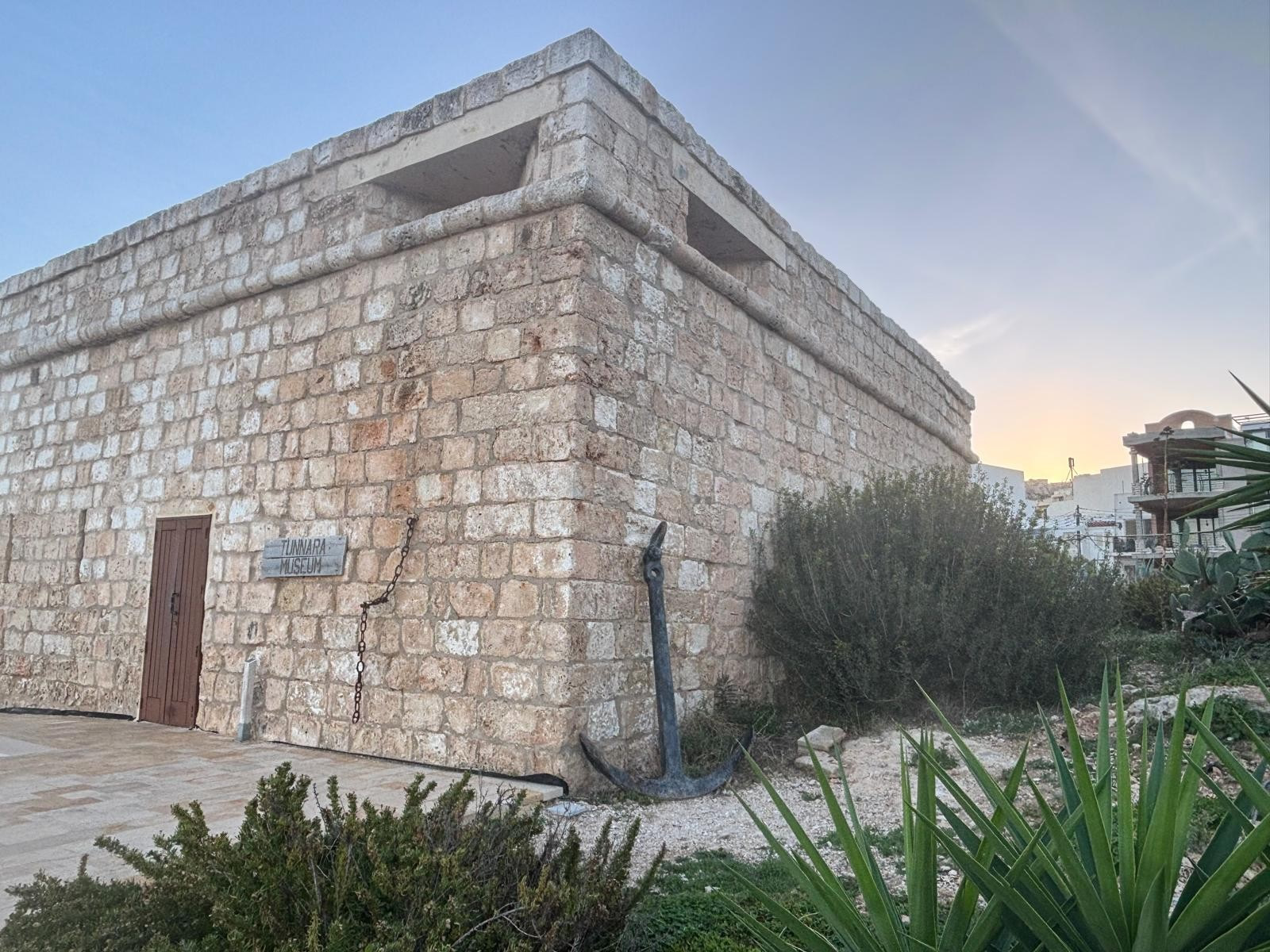
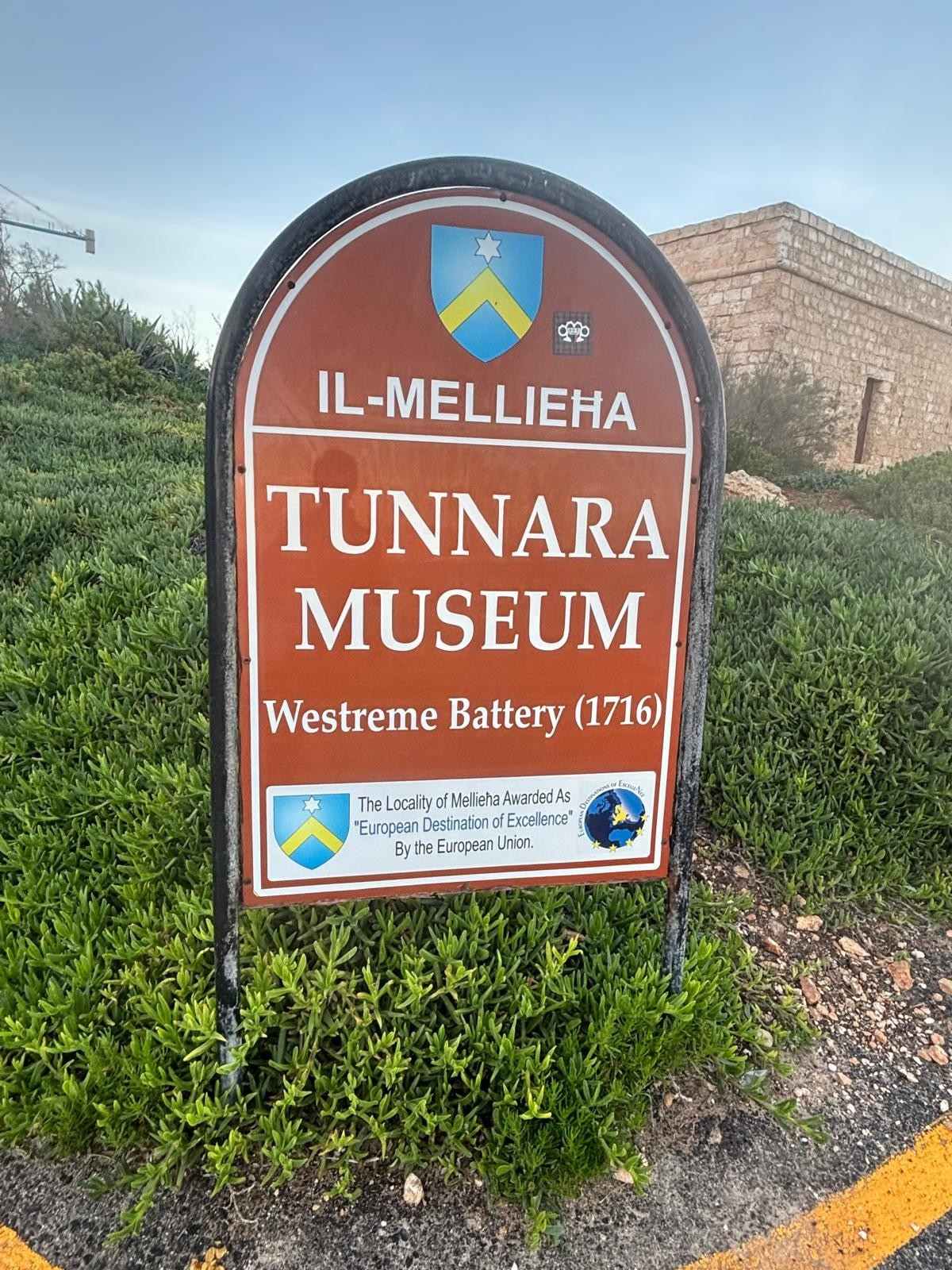
Westreme Battery (Maltese: Batterija ta’ Westreme), also known as ir-Rasus Battery or Mellieħa Right Battery, is a former coastal artillery battery overlooking Għadira (Mellieħa) Bay in northern Malta. Built by the Order of St John between 1715 and 1716 as part of the first major programme of coastal fortifications, it once formed a key part of the island’s northern defences. Today, its surviving blockhouse houses the popular Tunnara Museum, dedicated to Malta’s traditional tuna fishing.
Historical Background: Why Westreme Battery Was Built
In the early 18th century the Order of St John feared renewed attacks from Ottoman and North African corsairs. The wide sandy beach at Mellieħa Bay was recognised as one of the most vulnerable landing places on Malta, so the Knights launched the 1715–1716 coastal defence programme to protect the shoreline with towers, batteries, redoubts and entrenchments.
Westreme Battery was one of two artillery batteries guarding Mellieħa Bay, the other being the now-demolished Fedeau Battery. In the centre of the bay stood Mellieħa Redoubt, also now lost, giving overlapping lines of fire across the whole bay.
Construction of Westreme Battery (1715–1716)
Westreme Battery was built between 1715 and 1716, during the magistracy of Grand Master Ramón Perellós y Roccaful. It was probably named after a knight of the Order with the surname Westreme, although no detailed construction records survive. The battery was built in limestone, following a typical early-18th-century coastal artillery layout but on a distinctive, larger scale.
Plan and Architectural Features
- Semi-circular gun platform – The seaward side originally consisted of a semi-circular artillery platform. Its eastern face had a parapet pierced with five embrasures for cannons, while the rest of the platform was bounded by a lower breastwork.
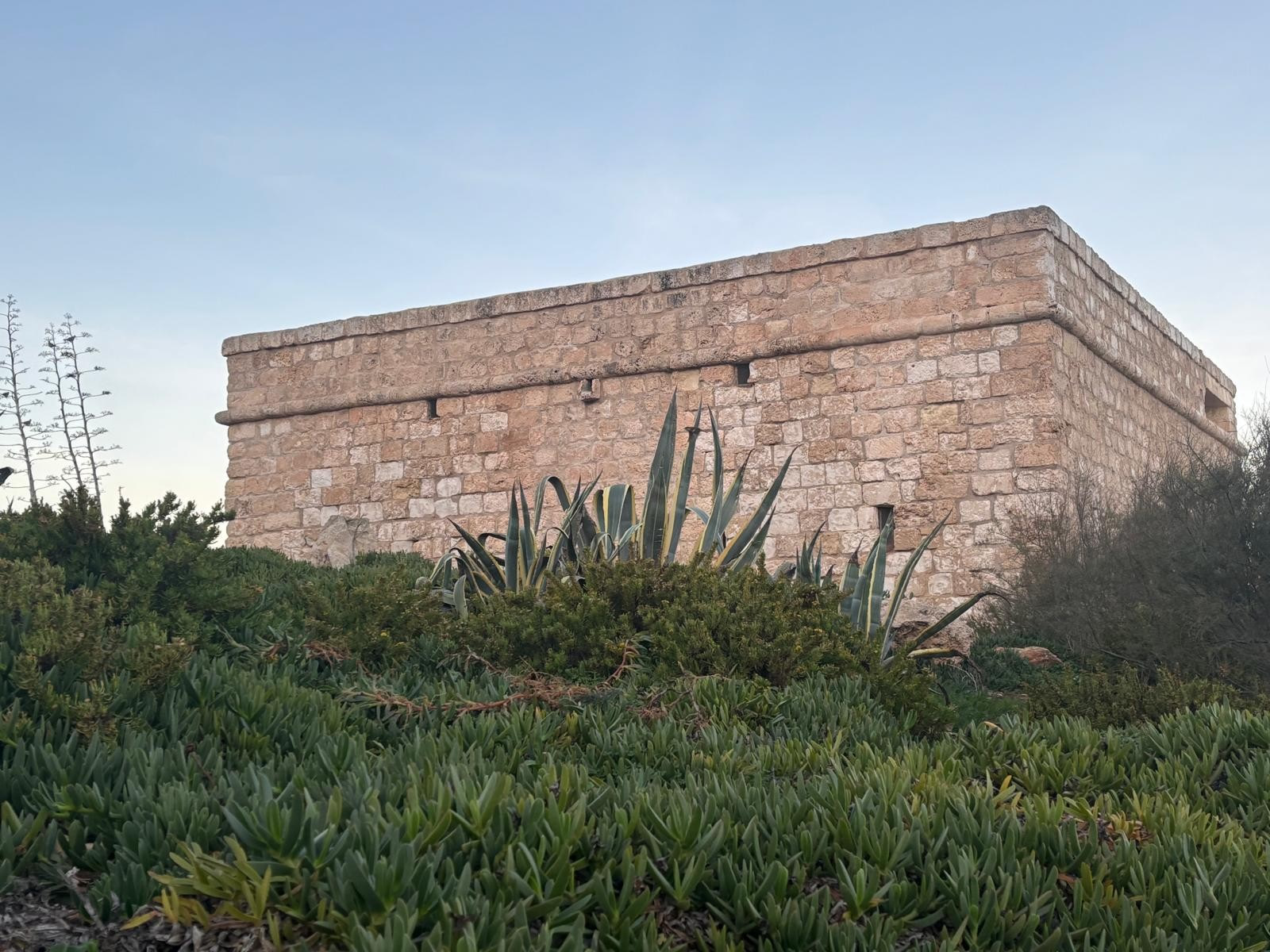
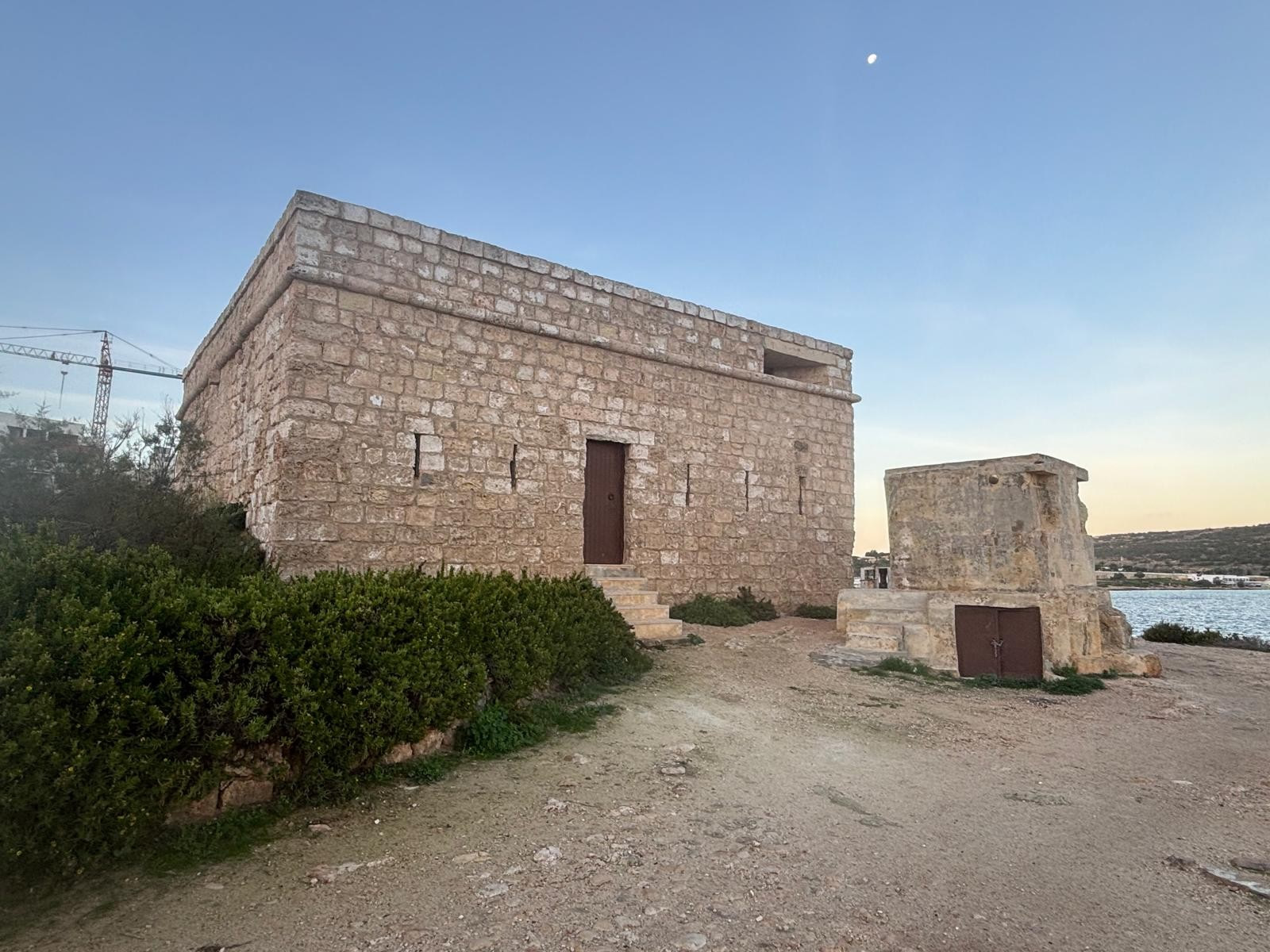
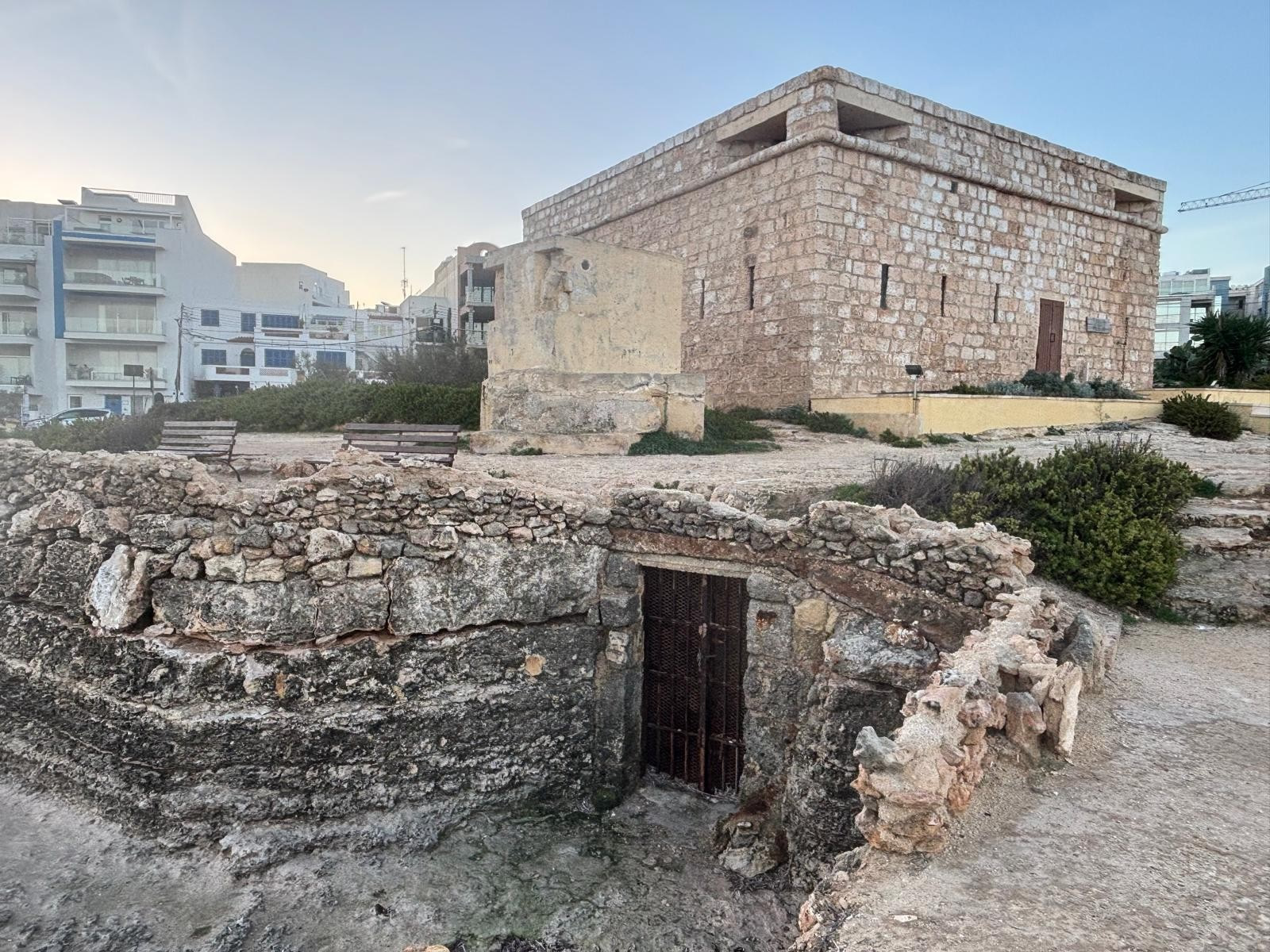
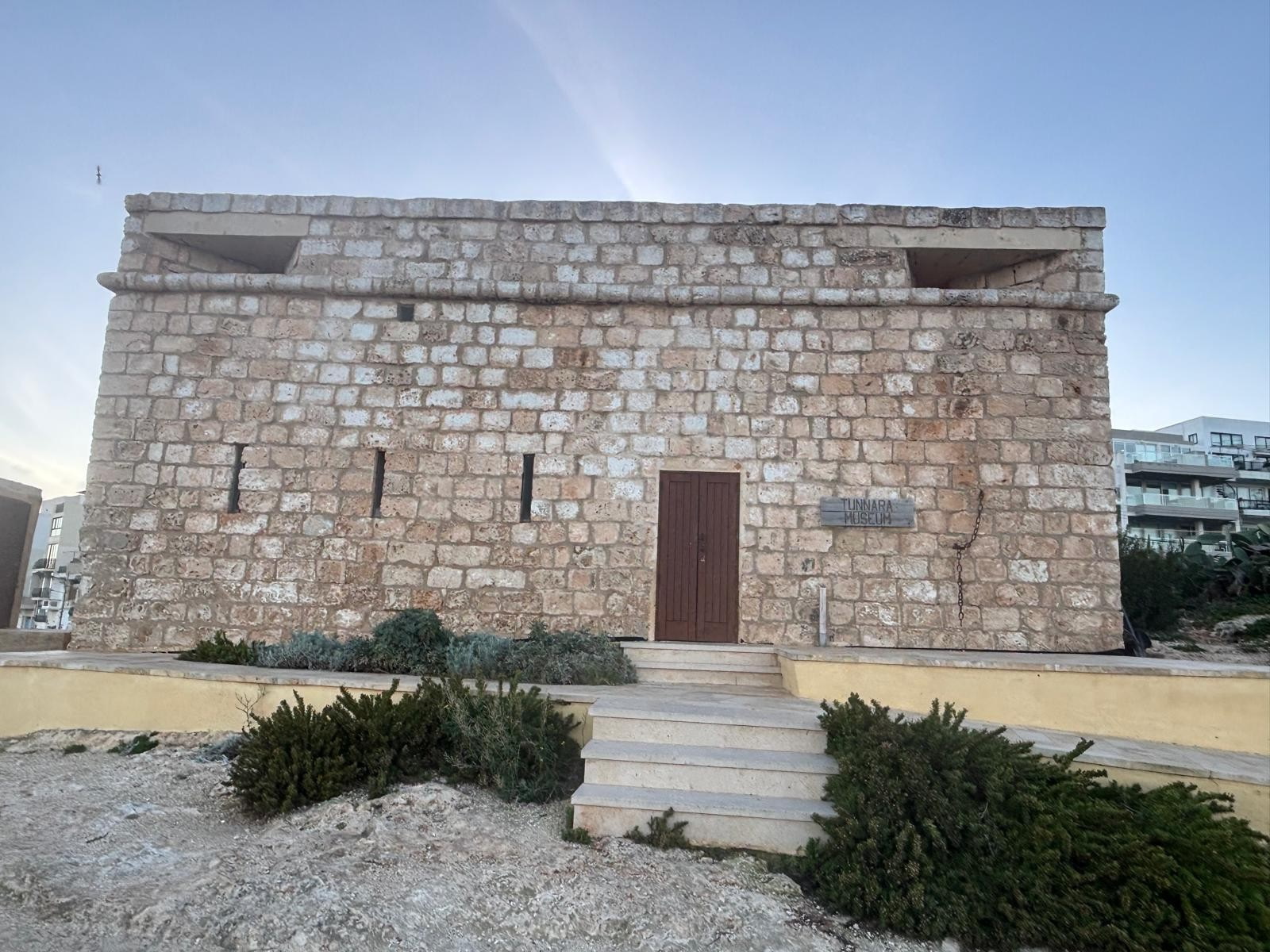
- Large blockhouse – Behind the platform stood a single, unusually large blockhouse, placed diagonally along the land front so its two outer faces formed a redan (salient angle). The walls were pierced with musketry loopholes for close-range defence. This blockhouse is considered one of the largest of any coastal battery in Malta, making the site architecturally unique.
- Defensive function – The gun platform controlled the bay with artillery fire, while the blockhouse served as a fortified barracks, magazine and last defensive refuge if the platform were overrun.
Strategic Role on Mellieħa Bay
Positioned at the right (western) side of Mellieħa Bay, Westreme Battery commanded the approaches to the island’s largest sandy beach. Together with Fedeau Battery on the opposite side and Mellieħa Redoubt in the centre, it formed a triangular defensive system capable of sweeping the bay with crossfire and discouraging enemy landings.
18th-Century Military Use
During the Order’s rule, Westreme Battery would have been armed with several medium-calibre cannon and manned by a small garrison and coastal militia. Their duties included keeping watch over Mellieħa Bay, challenging suspicious vessels and firing on any enemy force attempting to land.
The Tunnara: Tuna Fishing at Westreme Battery
In 1748, Grand Master Manuel Pinto de Fonseca inaugurated the tunnara, a traditional Maltese tuna-trap fishery, at Westreme Battery. Over time the battery’s military importance declined and the site was increasingly used to store nets and equipment connected with tuna fishing – a role it would keep for generations.
French Invasion & Later Military Use
French Invasion of 1798
During the French invasion of Malta in 1798, Westreme Battery was the first coastal battery to be overrun by the invading forces as they pushed inland from Mellieħa Bay. This marked the end of its primary role as a Knights-era coastal fort.
Westreme Battery in World War II
The surviving blockhouse returned to military service during World War II, when it was converted into a beach post. Rectangular machine-gun portholes were cut into its corners, and additional concrete positions and a searchlight emplacement were built nearby to defend Mellieħa Bay against possible Axis landings.
Decline, Restoration & the Tunnara Museum
Over the centuries, the semi-circular gun platform and parapet were largely destroyed, but parts of the rock-cut base remain visible. The blockhouse, however, survived and continued to be used by fishermen for tunnara-related activities after the war.
In the 2000s, the blockhouse underwent major restoration campaigns, with further works and a full renovation project announced in 2019, largely funded through EU funds. In 2022 it was formally inaugurated as an upgraded heritage site.
The Tunnara Museum Today
Today, Westreme Battery’s blockhouse is open to the public as the Tunnara Museum, run with strong local community involvement. Exhibits focus on:
- Traditional Maltese tuna-fishing techniques and equipment
- The history of the tunnara in Mellieħa Bay
- The wartime use of the battery and local coastal defences
Visitors can explore the vaulted interior, learn about Mellieħa’s maritime traditions and enjoy panoramic views of the bay from the roof. :
Visiting Westreme Battery (Tunnara Museum)
Westreme Battery is located on Triq Dawret it-Tunnara, at the seafront on the western side of Mellieħa Bay. The site is easily reached by car or bus from Mellieħa and Valletta, and entry to the museum is generally free, with donations welcome. Opening hours can vary, so it’s best to check locally or with the Mellieħa Local Council before visiting.
Frequently Asked Questions about Westreme Battery
When was Westreme Battery built?
Westreme Battery was built between 1715 and 1716 during the first coastal fortification programme of the Order of St John.
What was Westreme Battery’s original purpose?
Its original purpose was to defend Mellieħa Bay from enemy landings, working together with Fedeau Battery and Mellieħa Redoubt to cover the entire bay with artillery fire.
What remains of the battery today?
The original semi-circular gun platform and parapet have largely disappeared, but the blockhouse is still intact and fully restored. It now houses the Tunnara Museum, and traces of the rock-cut base of the platform can still be seen around it.
Is Westreme Battery open to the public?
Yes. The blockhouse is open as the Tunnara Museum, usually with limited weekly opening hours and free entry. Donations help support the upkeep of the museum and the site.
What makes Westreme Battery unique?
Westreme Battery stands out for its large, diagonally placed blockhouse, one of the biggest among Malta’s coastal batteries, and for its dual identity as both a military fort and a centre of traditional tuna fishing.