Here’s a detailed account of Xlendi Salt Pans:
Xlendi Salt Pans
📍 Location
Xlendi Bay, Munxar, Gozo
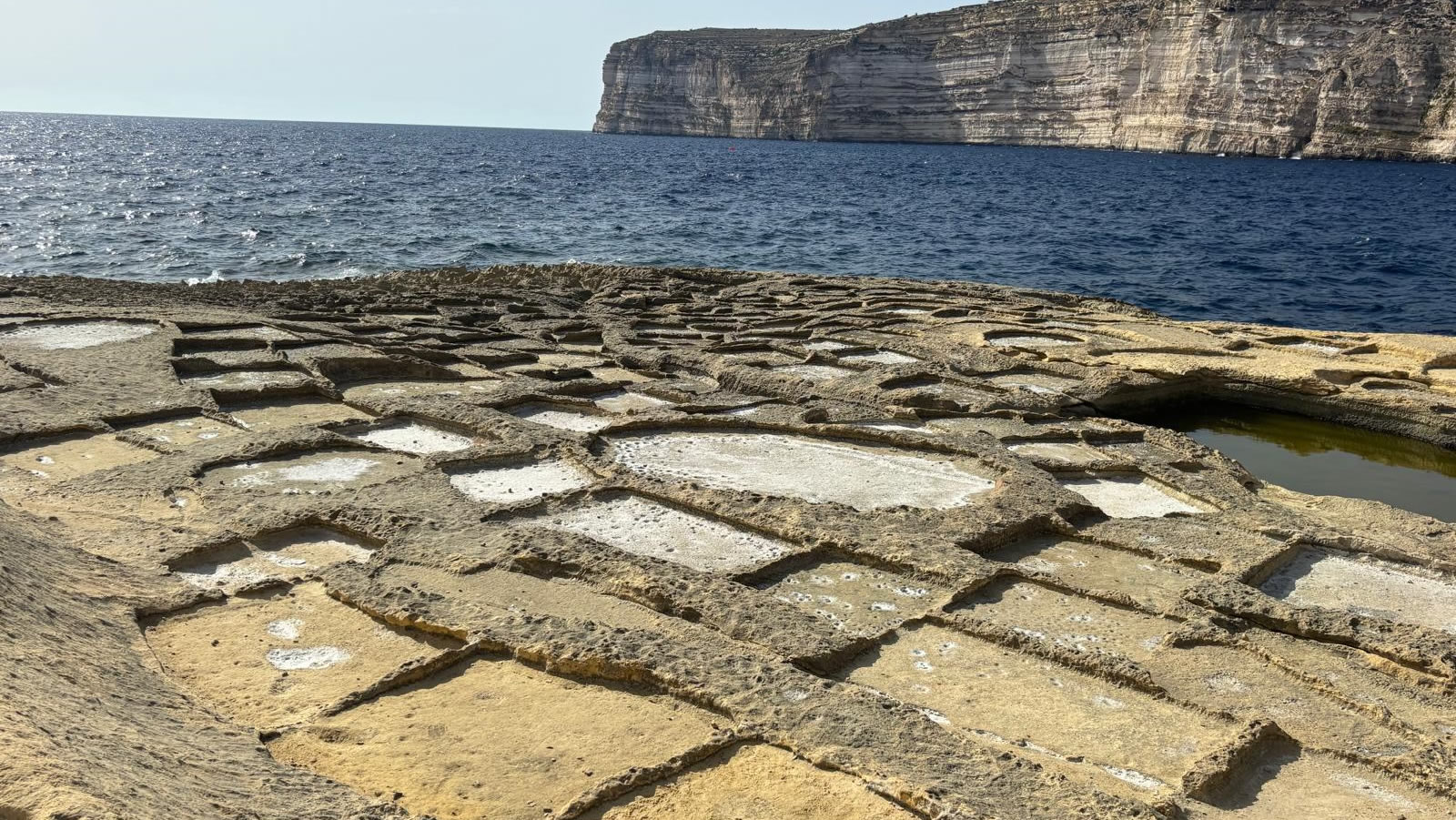
Found on the rocky coastline outside Xlendi Bay, in the limits of Munxar, Gozo.
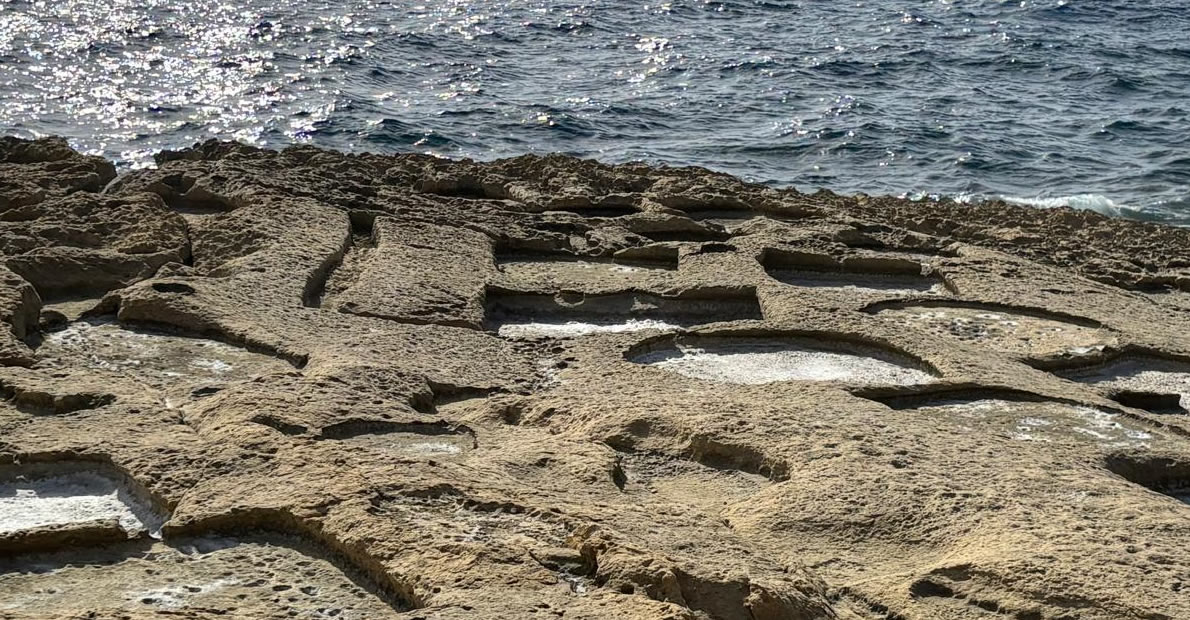
Carved into the flat coastal rock shelf along the cliffs.
Some are visible when walking the coastal paths around Xlendi Bay.
Coordinates: approx. 36.027819, 14.212523.
🏗️ Construction & Designn
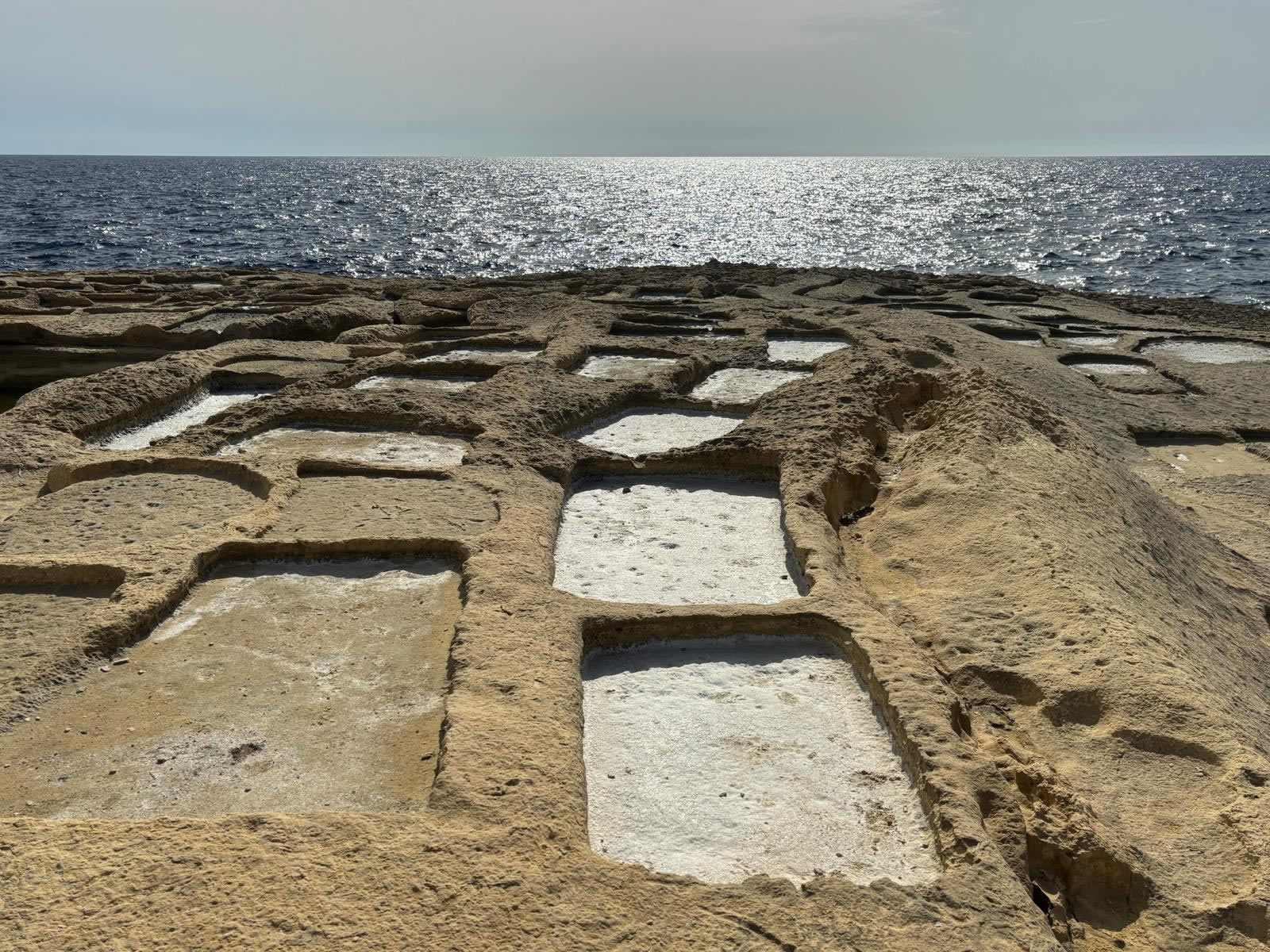
Salt pans were carved directly into the limestone by hand.
Typically rectangular or square basins, shallow and interlinked.
The system works by:
1. Sea water being diverted into larger pans (using channels and buckets).
2. Water left to evaporate naturally in the sun.
3. Salt crystals harvested after evaporation.
Some pans date back to the Roman period, though most of the surviving ones in Xlendi appear to be early modern (possibly 16th–17th century).
🏰 📜 Historical Background
Salt production in Malta and Gozo has ancient roots, going back at least to Phoenician and Roman times.
Salt was a vital commodity:
Used for preserving food (especially fish and meat).
Valued for trade and taxation.
In the Knights of St John period (16th–18th century):
Salt pans were maintained and often leased to private families.
Salt became part of the Order’s economy, especially in Gozo.
The Xlendi salt pans were small-scale compared to the Marsalforn salt pans, but served the local community.
🔹 Decline
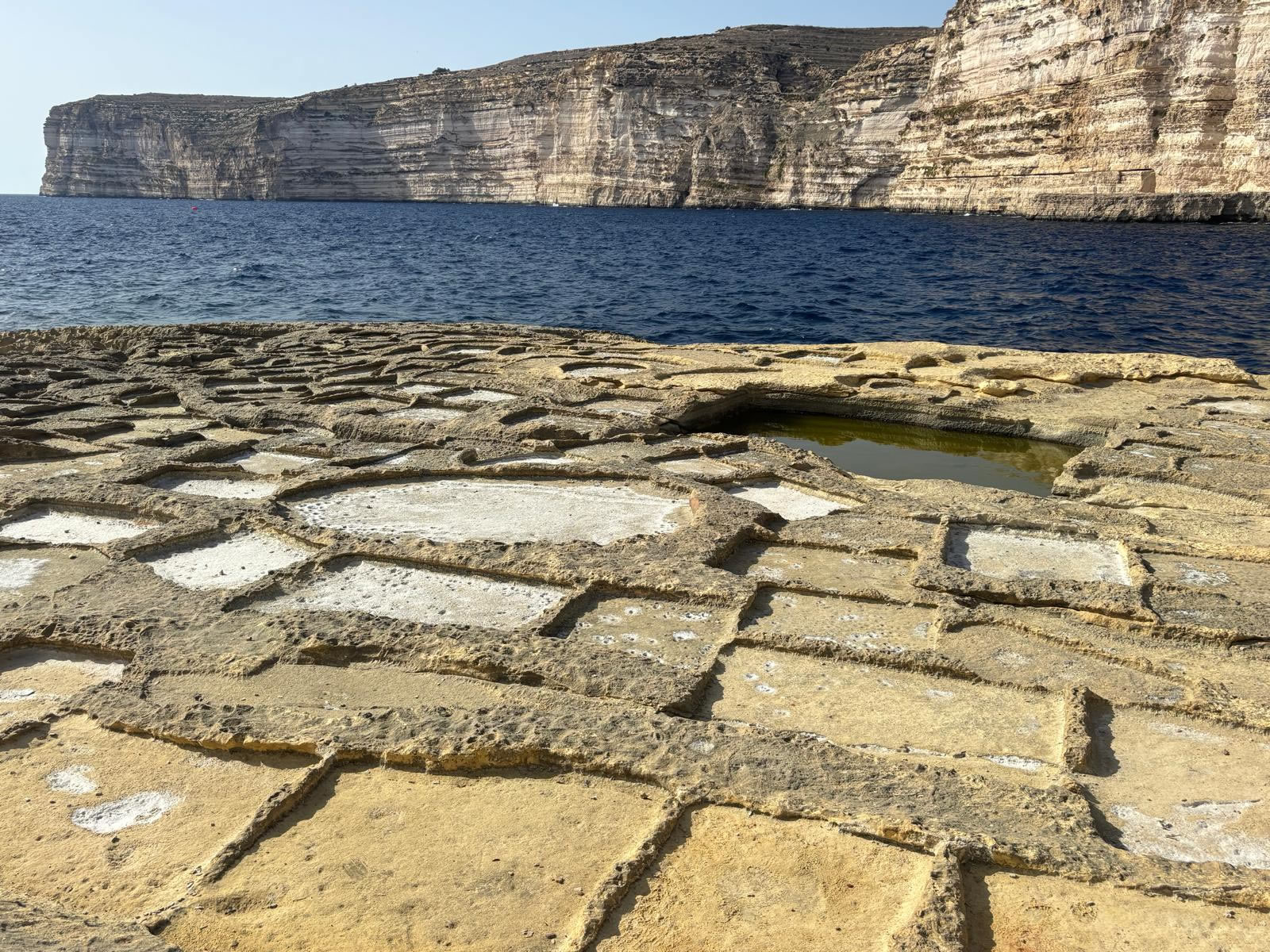
In the 19th and 20th centuries, industrial-scale salt production elsewhere reduced the economic importance of small pans.
The Xlendi pans gradually fell into disuse.
Today, most are abandoned but still visible, cut into the rock.
🌍 Present Day
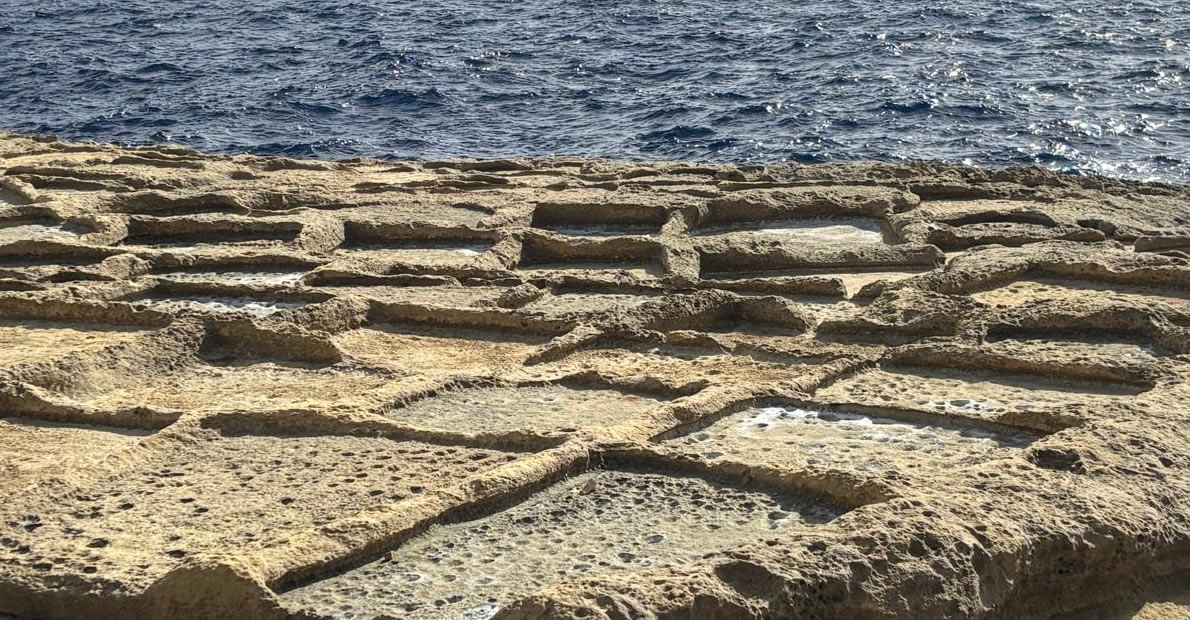
The pans are heritage features of Xlendi’s coastline.
They are not actively used for salt production anymore (unlike Marsalforn).
They remain a cultural landmark, part of Gozo’s traditional coastal economy.
Often noticed by hikers and visitors walking around Xlendi Bay cliffs.
🗂️ Quick Facts
| Feature | Detail |
| Type | Rock-cut salt pans |
| Location | Coastline near Xlendi Bay, Gozo |
| Period | Likely medieval/Knights’ period (with older origins)) |
| Function | Salt extraction by evaporation |
| Condition | Abandoned, visible good remains |
| Modern use | Heritage attraction, cultural memory |
✅ Summary:
he Xlendi Salt Pans are part of Gozo’s long salt-making tradition, carved into the coastal rocks to harness the sun and sea for salt production. Once vital to the local economy, they are now abandoned but remain as a historic reminder of traditional coastal life.