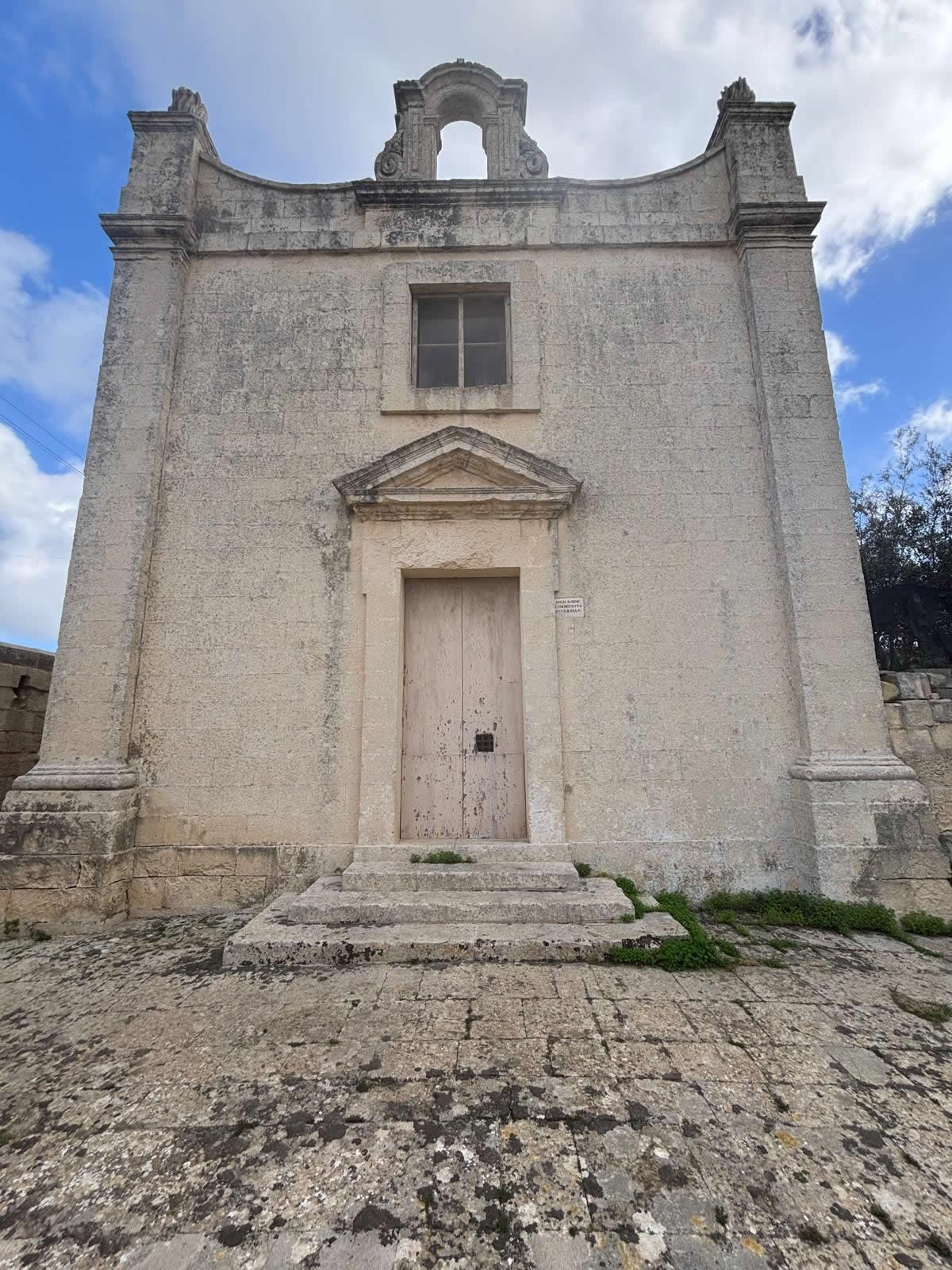
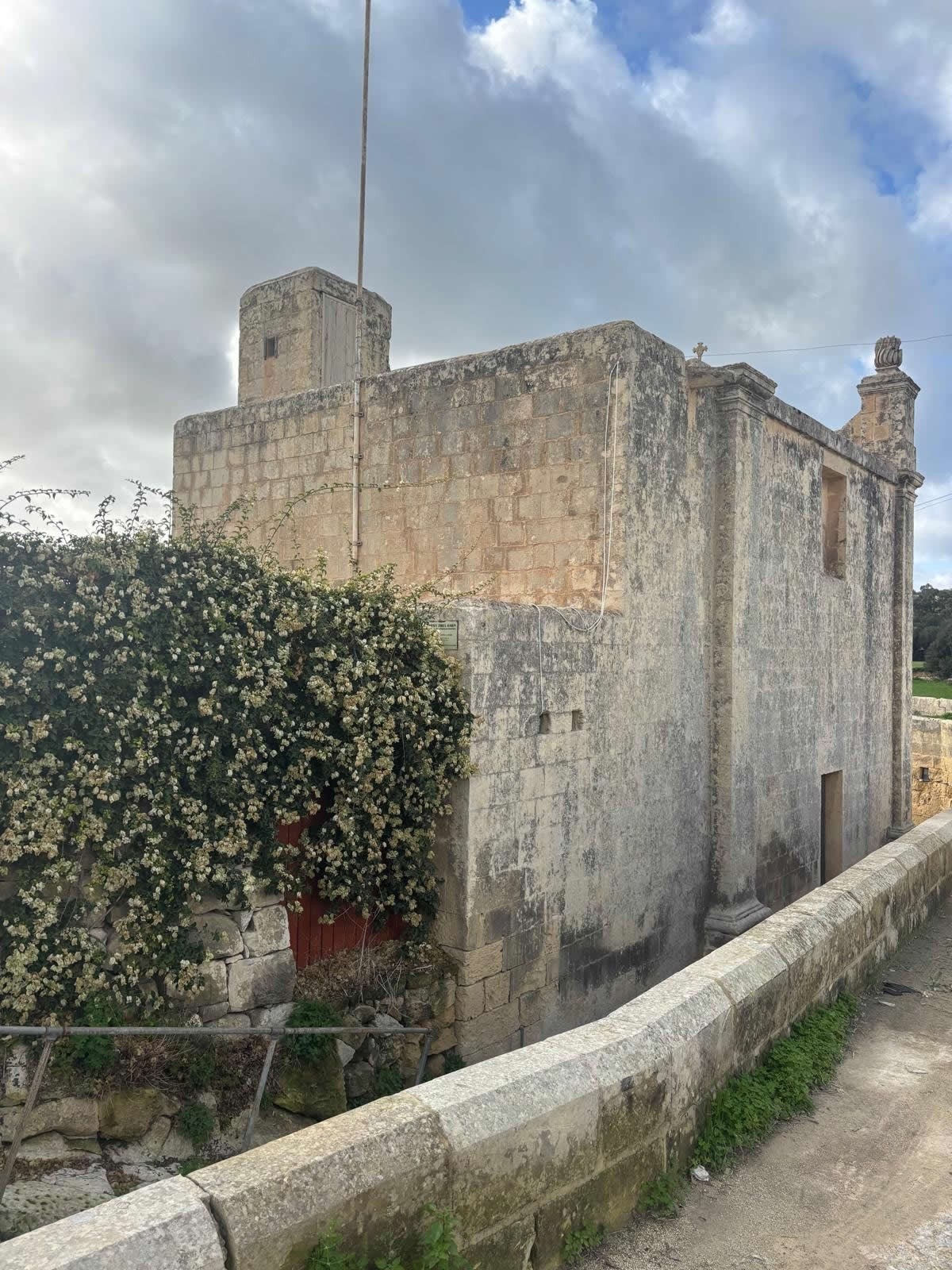
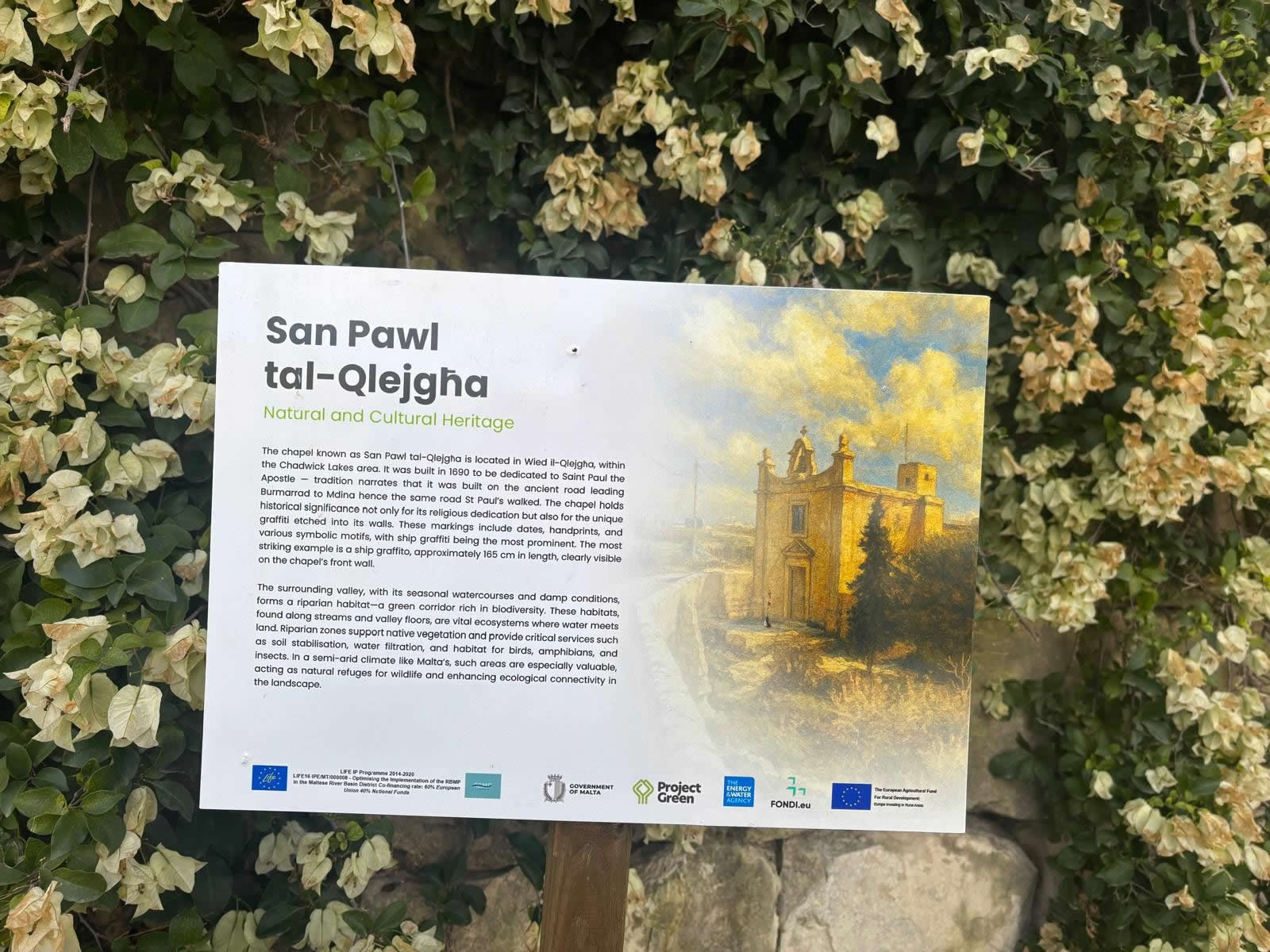
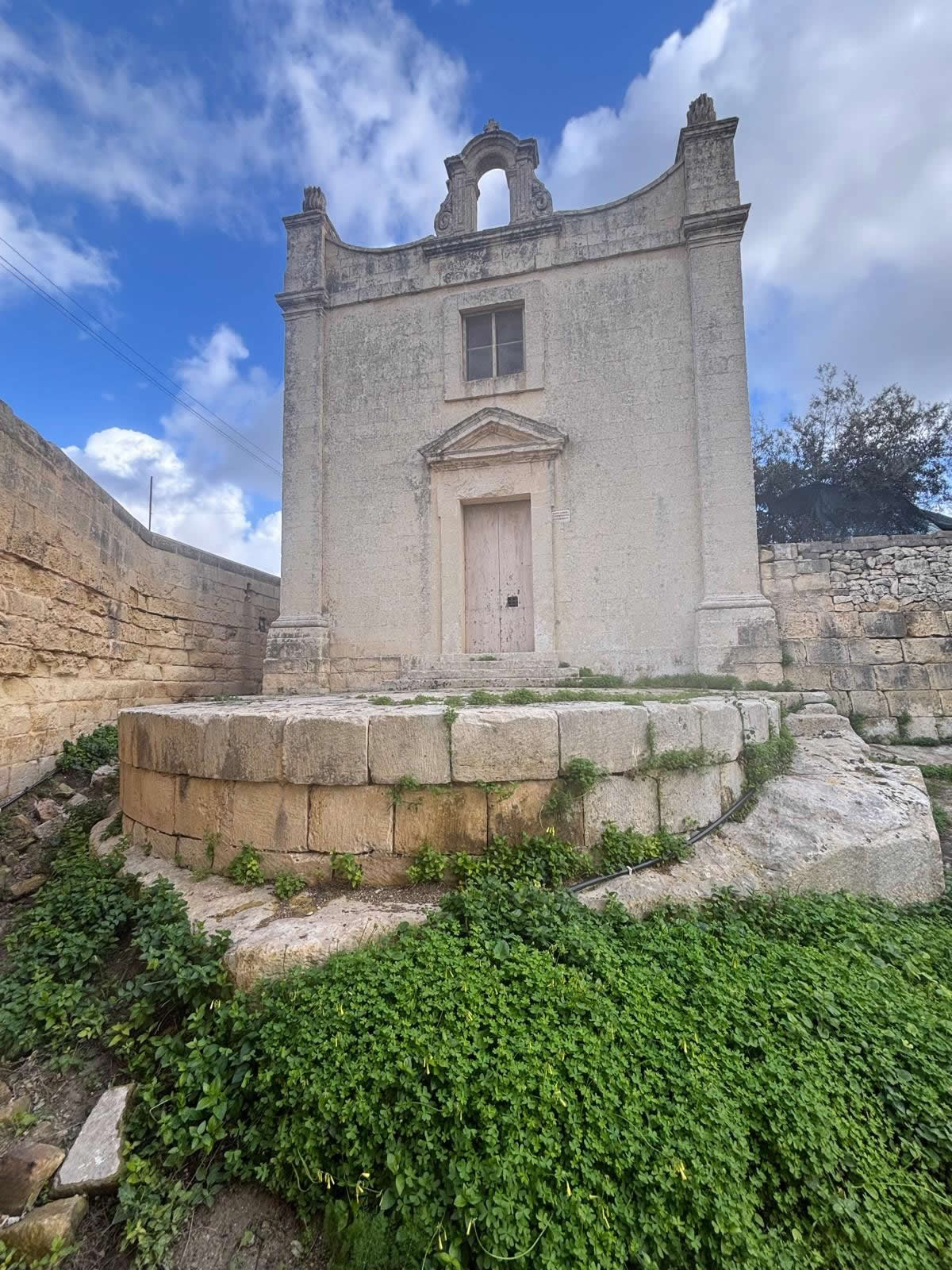
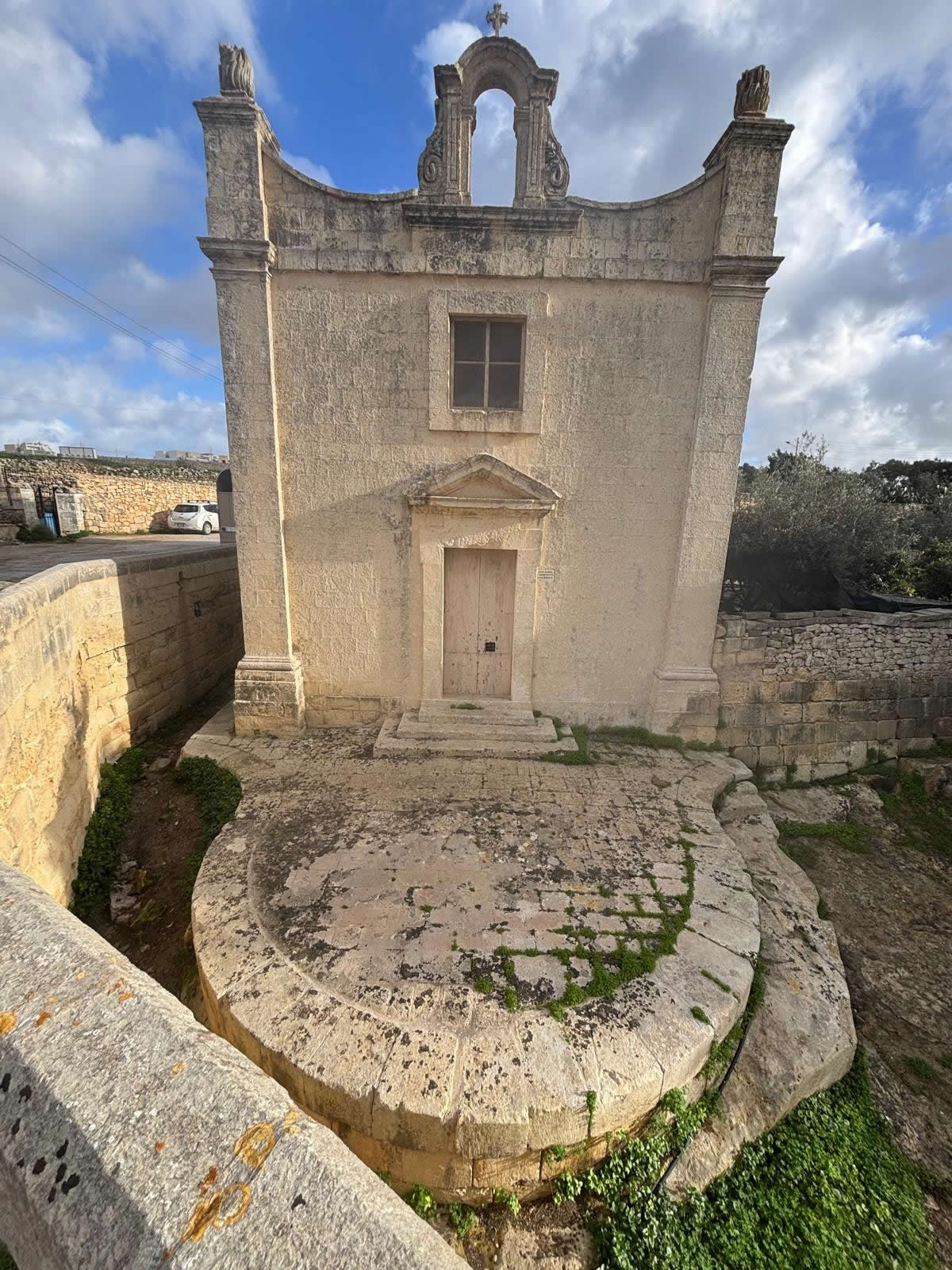
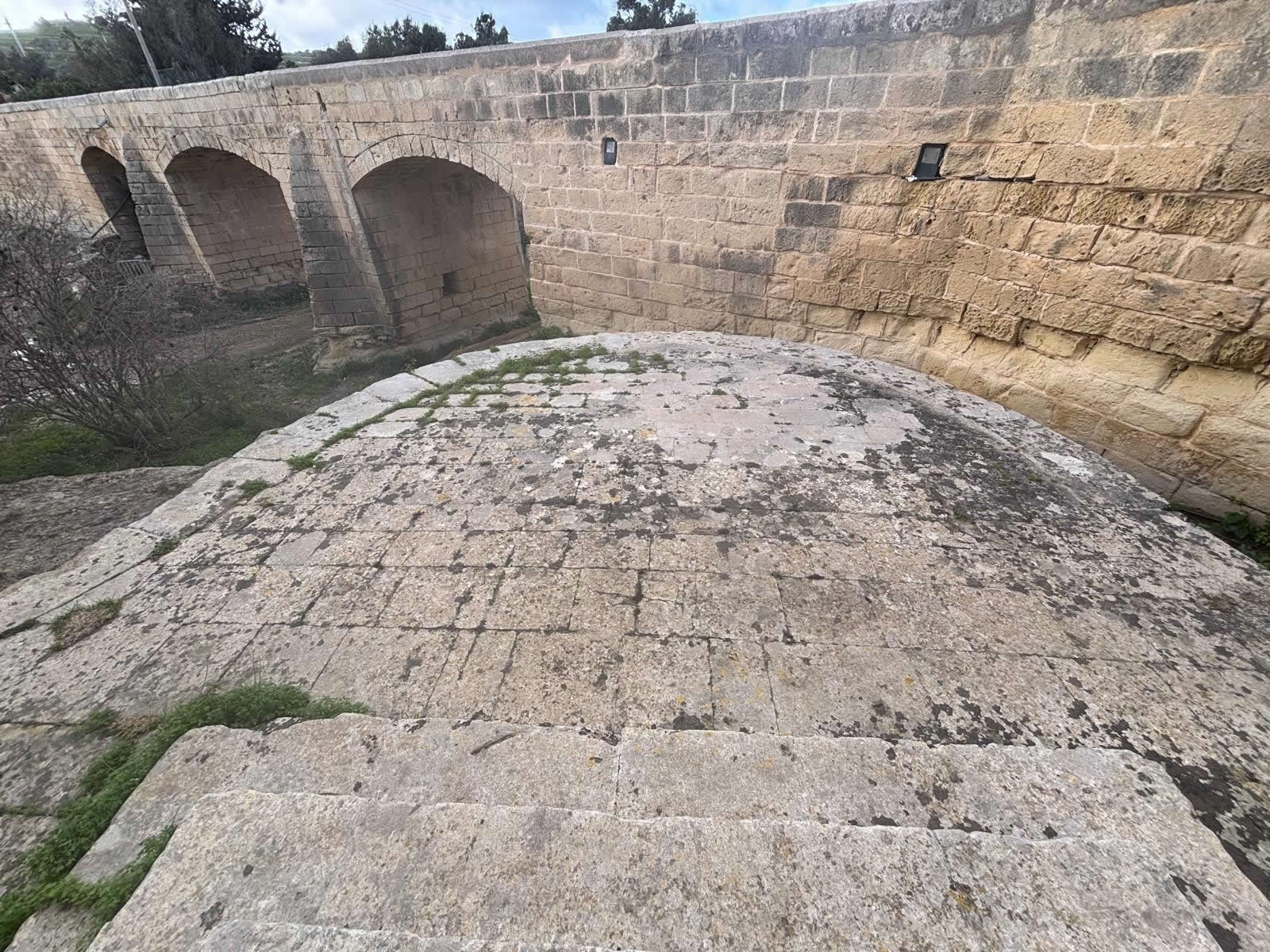
A landmark rural chapel in Wied il-Qlejgħa (Chadwick Lakes), Mosta—best known for its dramatic valley setting
and remarkable ship graffiti carved into its walls. Scholarly and local sources describe its origins in the late 1600s,
with construction believed to have begun around c. 1690.
Coordinates: 35.904771, 14.410408Setting: Chadwick Lakes / Wied il-QlejgħaOrigins: late 1600sBelieved start: c. 1690
At a glance
San Pawl tal-Qliegħa stands on the outskirts of Mosta on the route that historically connects the northern coastal area (St Paul’s Bay / Burmarrad)
with the Mdina–Rabat region.
TypeRoman Catholic rural chapel
LandscapeValley setting at Chadwick Lakes
BuiltLate 1600s; believed construction began c. 1690
What makes it uniqueShip graffiti and other carvings on façade and walls
Full history
“Confirmed” dates for small rural chapels can vary by source type. For this chapel, multiple modern references agree on a late-17th-century
origin, with construction believed to have begun around c. 1690.
Origins in the late 1600s
A modern locality feature describing a walk that starts at the chapel calls it a small historic church “built in the late 1600s.”
A separate Maltese chapel reference states that construction is believed to have begun around 1690, replacing an older chapel.
A rural sanctuary on a historic route
An academic study on chapels dedicated to St Paul notes that the chapel sits on the outskirts of Mosta on the road leading from the northern coastal area
toward Mdina–Rabat. Although it is inland and not sea-facing, it is still connected to maritime devotion through evidence on its walls.
Construction & architectural character
The chapel is widely recognised for a distinctive, easily identifiable silhouette in the rural landscape—standing apart from dense development and framed by
open countryside and valley features.
Ship graffiti and devotional “votive” marks
San Pawl tal-Qliegħa is especially notable for its carved graffiti—dates, symbols, palms of hands, text, and prominently ship graffiti.
The Malta Ship Graffiti Project documents multiple ship carvings, including a large ship graffito described as approximately 165cm long on the façade.
An academic discussion of the site explains that such ship graffiti on Maltese chapels can represent a “poor man’s votive” offering—an etched ship and a memory—often
connected to peril at sea, even when the chapel itself is inland.
Restoration and conservation
A Maltese chapel reference notes the chapel was restored “some time ago” and describes conservation work focused on preventing water ingress and stone damage—such as
cleaning façades, repointing/open-joint repair using compatible mixtures, stone “plastic repair” to missing or broken parts, and internal plastering and lime-based whitening.
If you can share the restoration year (e.g., from a plaque, parish bulletin, or contractor publication), this page can be made even more “date-confirmed”.
How the chapel is used today
Today the chapel functions as a heritage and devotional stop within the valley landscape of Chadwick Lakes, frequently visited by walkers and nature-explorers
starting routes through Wied il-Qlejgħa and nearby valleys.
Its carved graffiti—especially ship imagery—also makes it an important point of interest for cultural heritage documentation and interpretation.
Timeline (confirmed and widely-cited dates)
Date / period
Event
Late 1600s
Chapel described as built in the late 1600s.
c. 1690 (believed)
Construction believed to have begun around 1690, replacing an older chapel.
Modern documentation
Scholarly and heritage sources highlight ship graffiti and inland “votive” maritime links.
Restoration (date not published in open snippet)
Reported restoration focused on façade cleaning, repointing, stone repairs, and lime-based internal finishing.