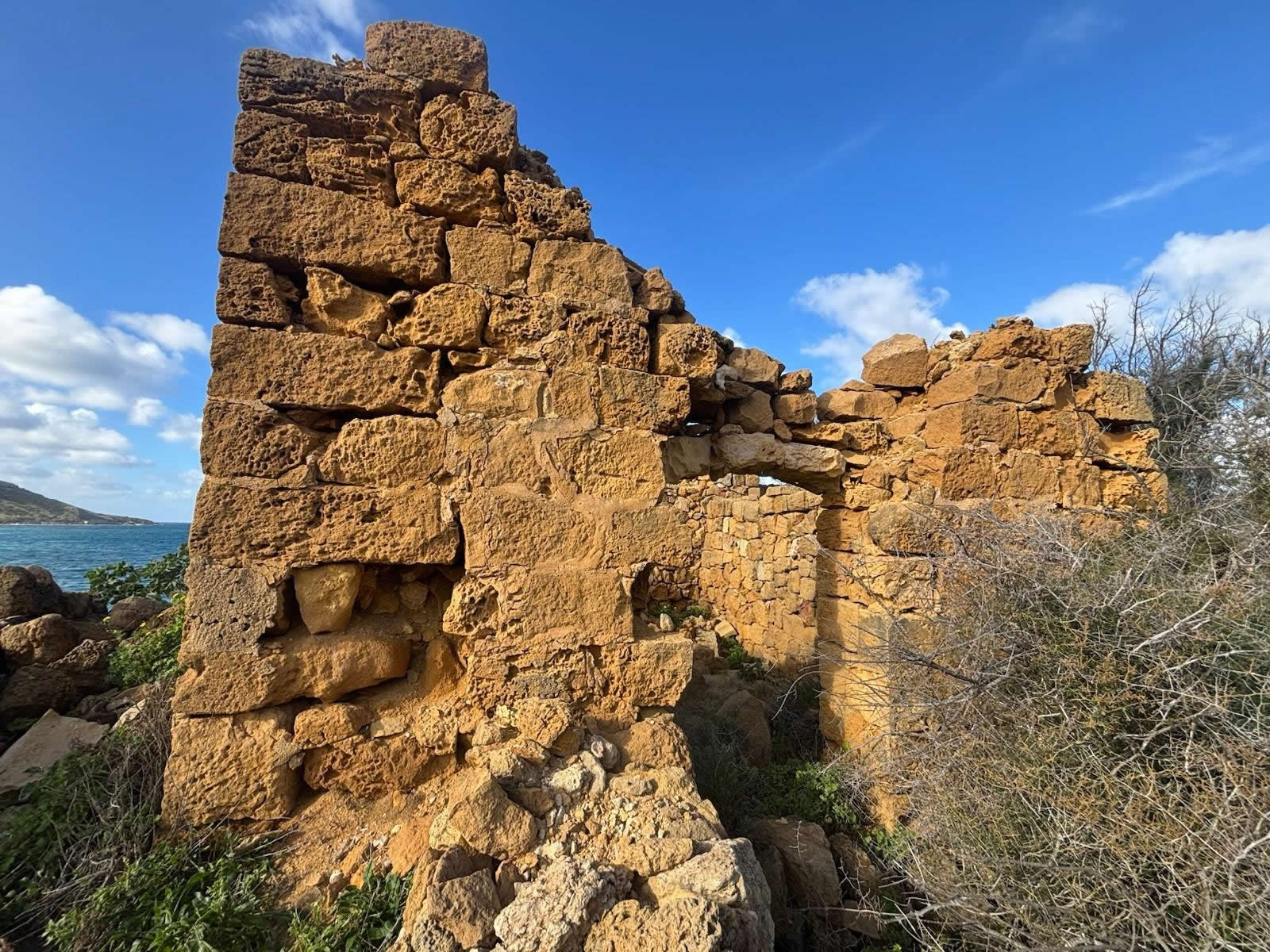
🏰 Ramla Bay Batteries – Gozo
📖 Historical Background
Built: 1715–1716 during the first major coastal defense program of the Order of St John.
Grand Master: António Manoel de Vilhena, who ordered the strengthening of Malta and Gozo’s vulnerable bays and landing places.
Purpose: Ramla Bay, Gozo’s largest sandy beach, was a potential landing site for enemy fleets. The battery was built to deny access to invaders, covering the beach with cannon fire.
To secure it, the Knights fortified both sides of the bay, integrating them with entrenchments across the valley and a central redoubt.
🏗️ Construction Details
Plan: A pentagonal-shaped artillery battery projecting towards the bay.
Gun platform: Wide, sea-facing, able to mount 5–6 heavy cannons.
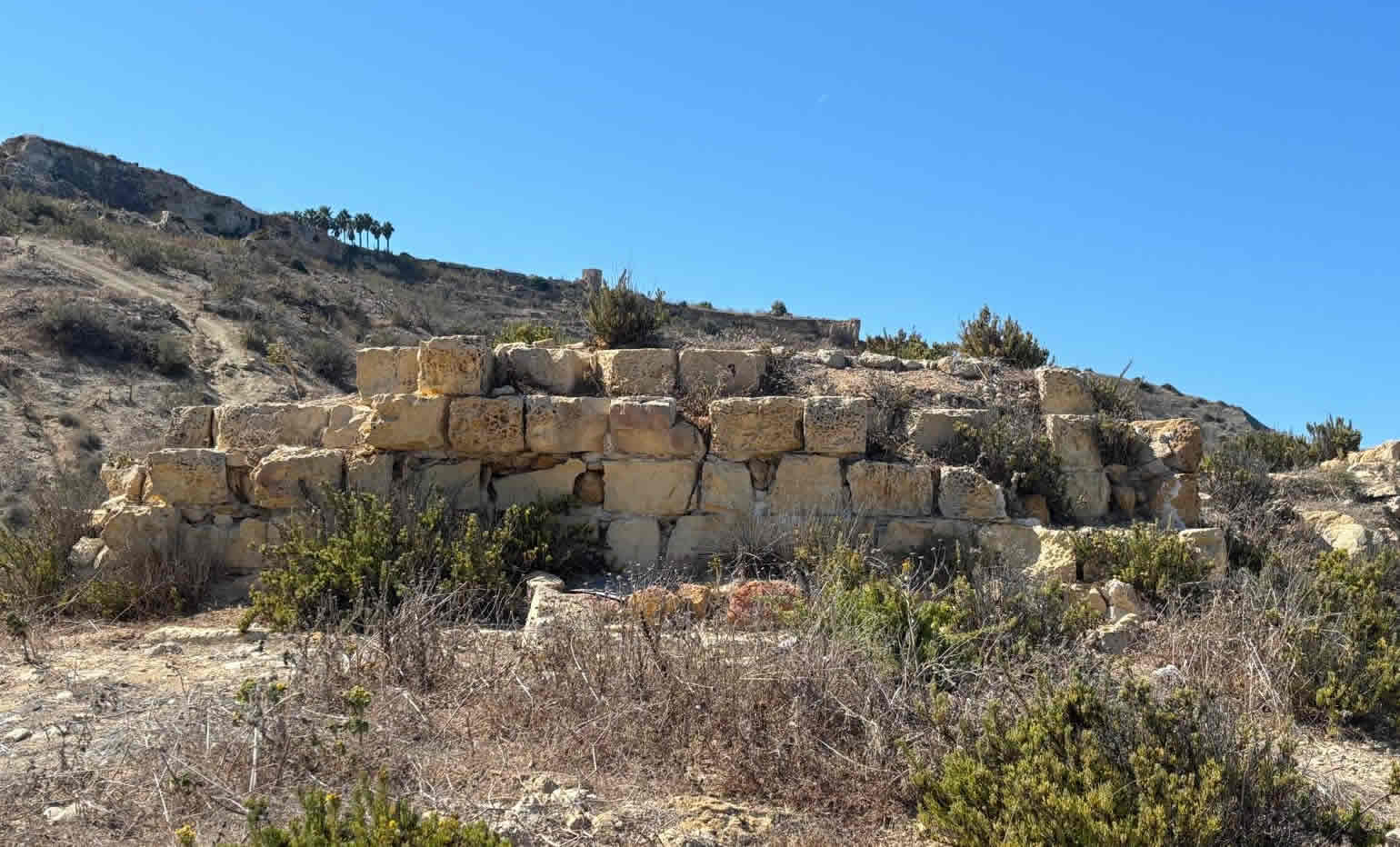
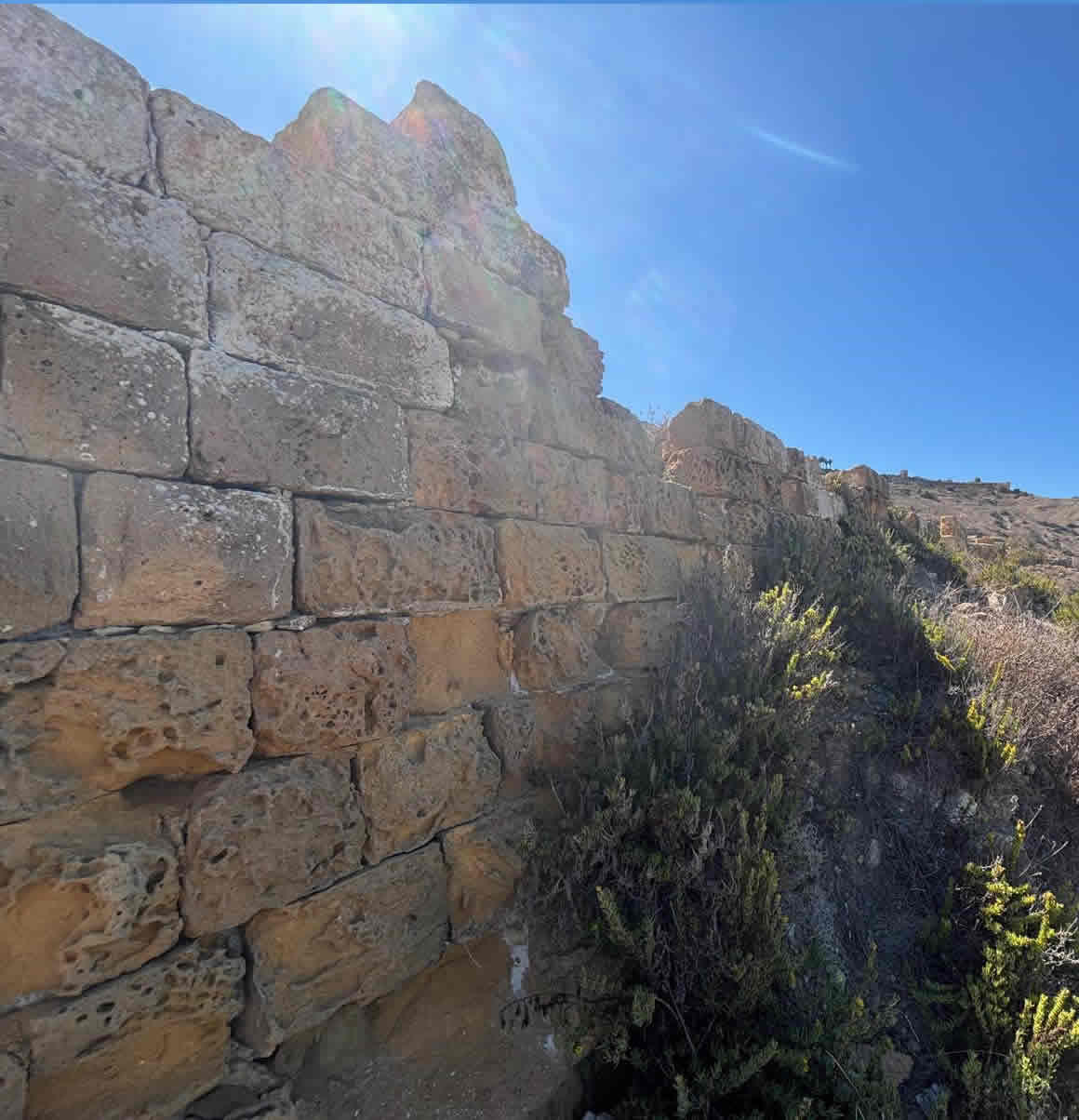
Parapet walls: Thick limestone walls with embrasures for artillery.
Blockhouse: At the rear of the platform, serving as ammunition storage and garrison quarters.
Ditch & Outworks: The battery was protected by a shallow ditch on the landward side and integrated with entrenchments across the valley.
Material: Built from local globigerina limestone, the same as other Hospitaller fortifications.
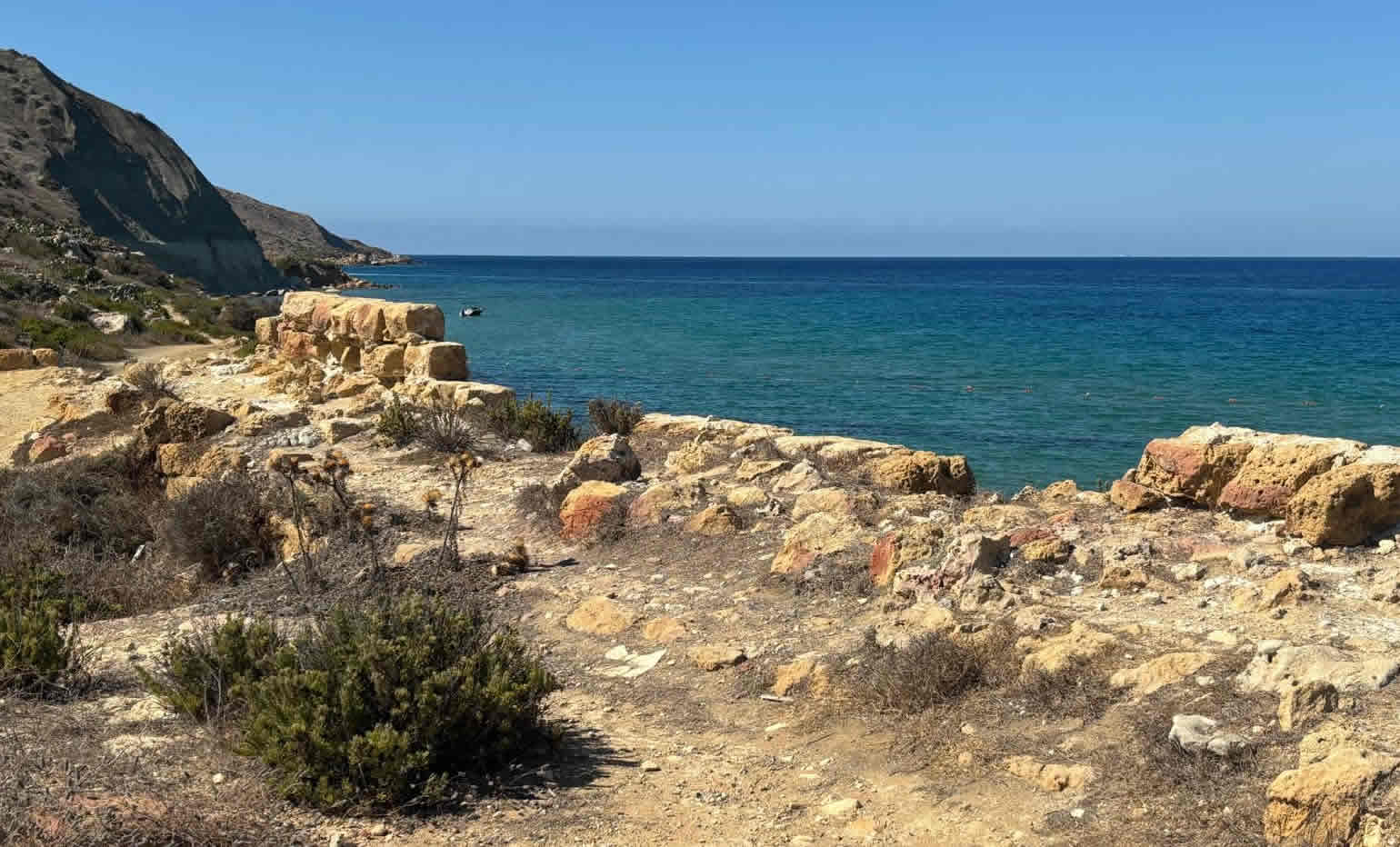
Ramla Left Battery (west side of bay)
Located on the western flank of the bay.
Consisted of:
A gun platform with multiple embrasures.
A blockhouse behind for powder and garrison.
Low defensive walls protecting the landward side.
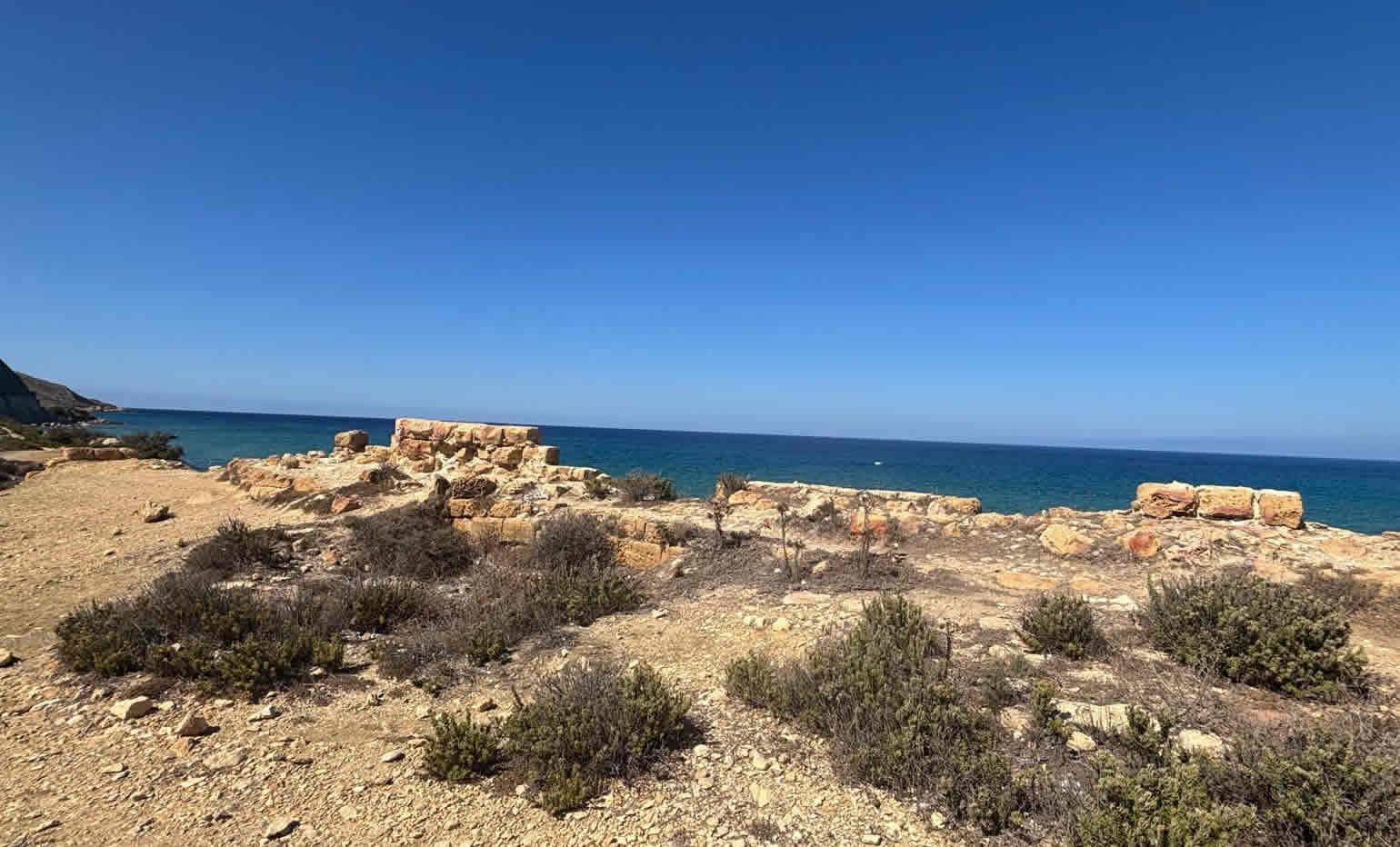
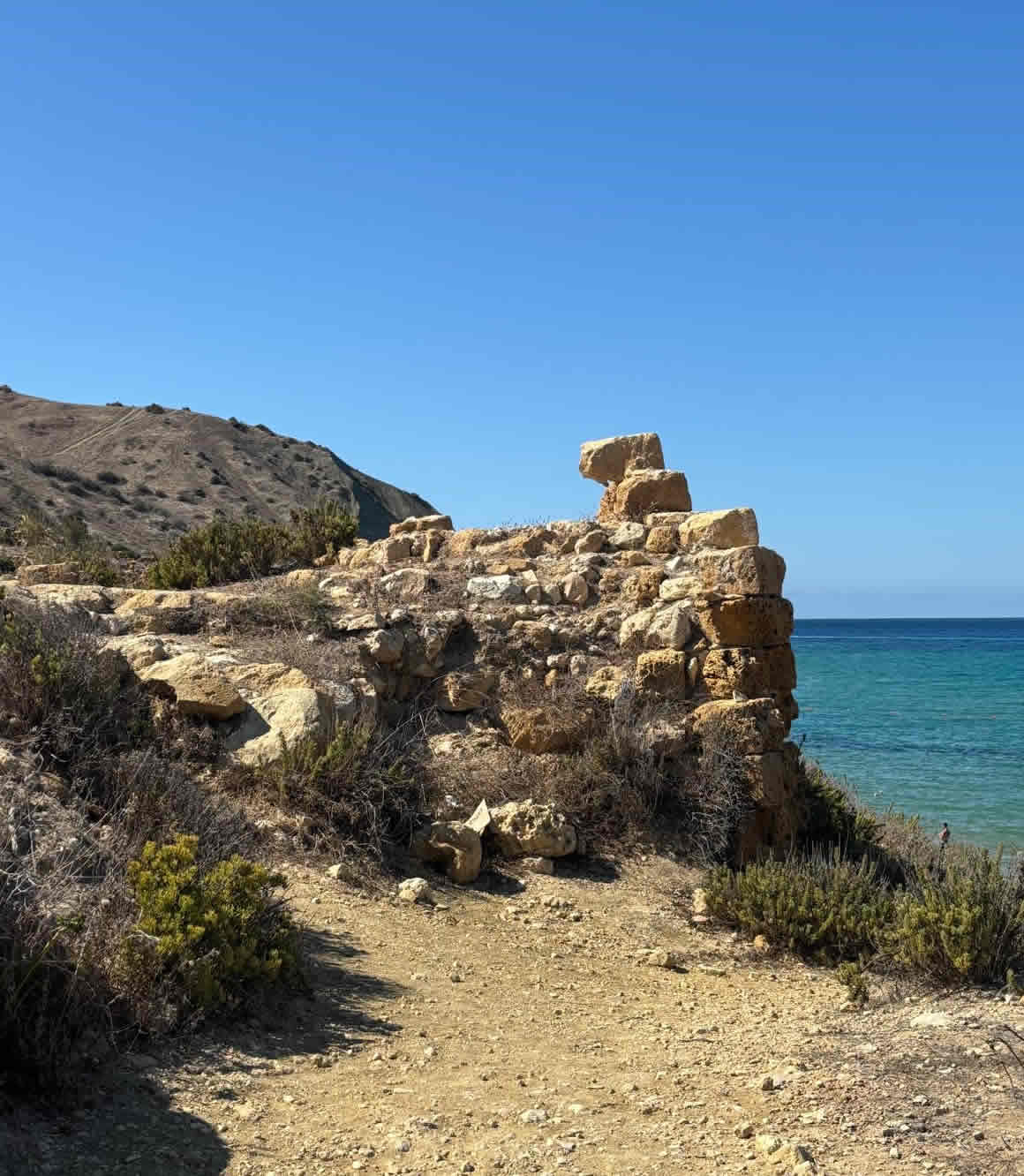
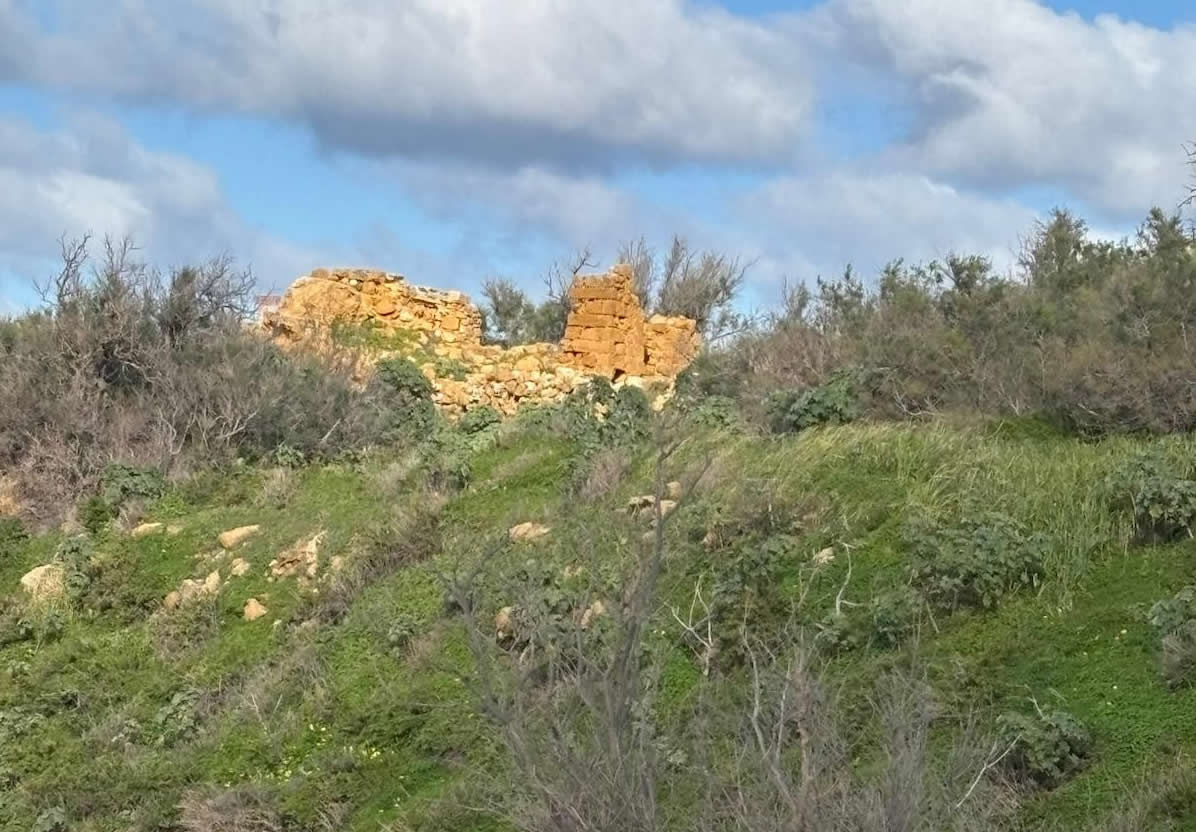
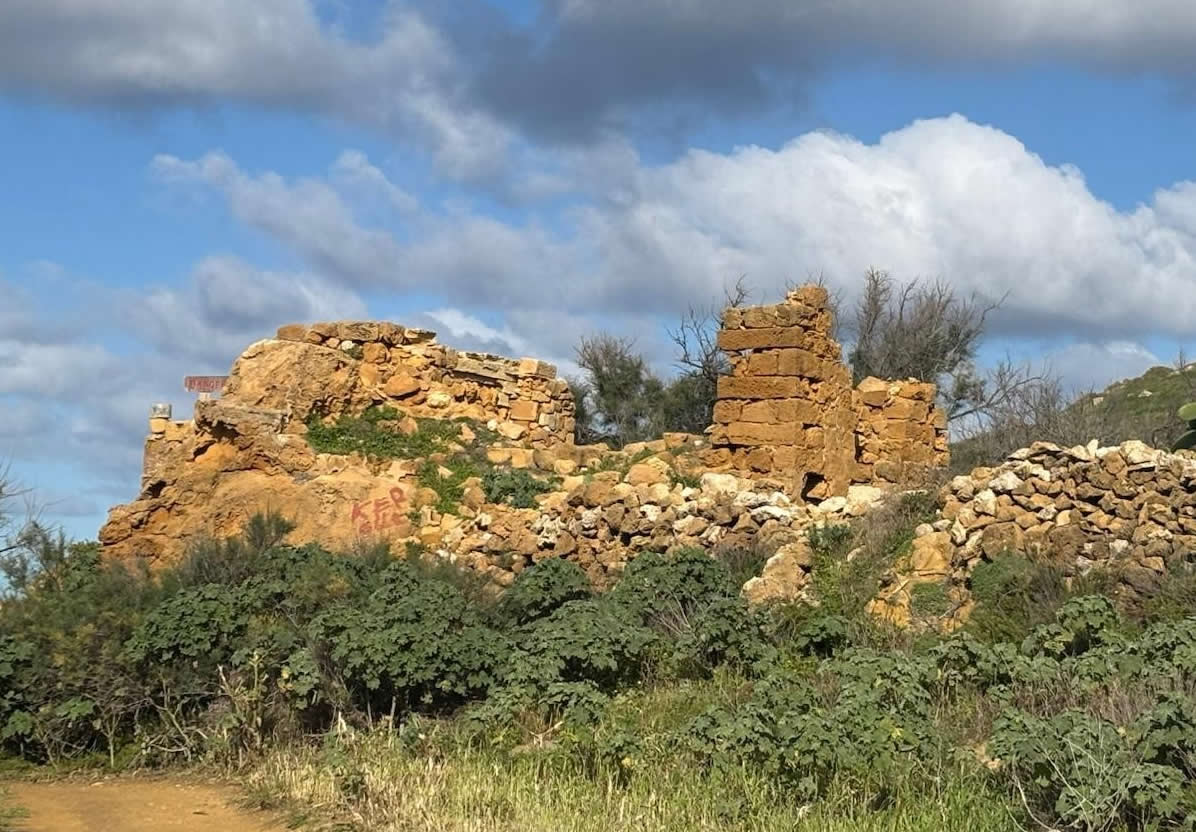
Remains today: Some masonry foundations, sections of the platform, and traces of the blockhouse survive. This side is better preserved.
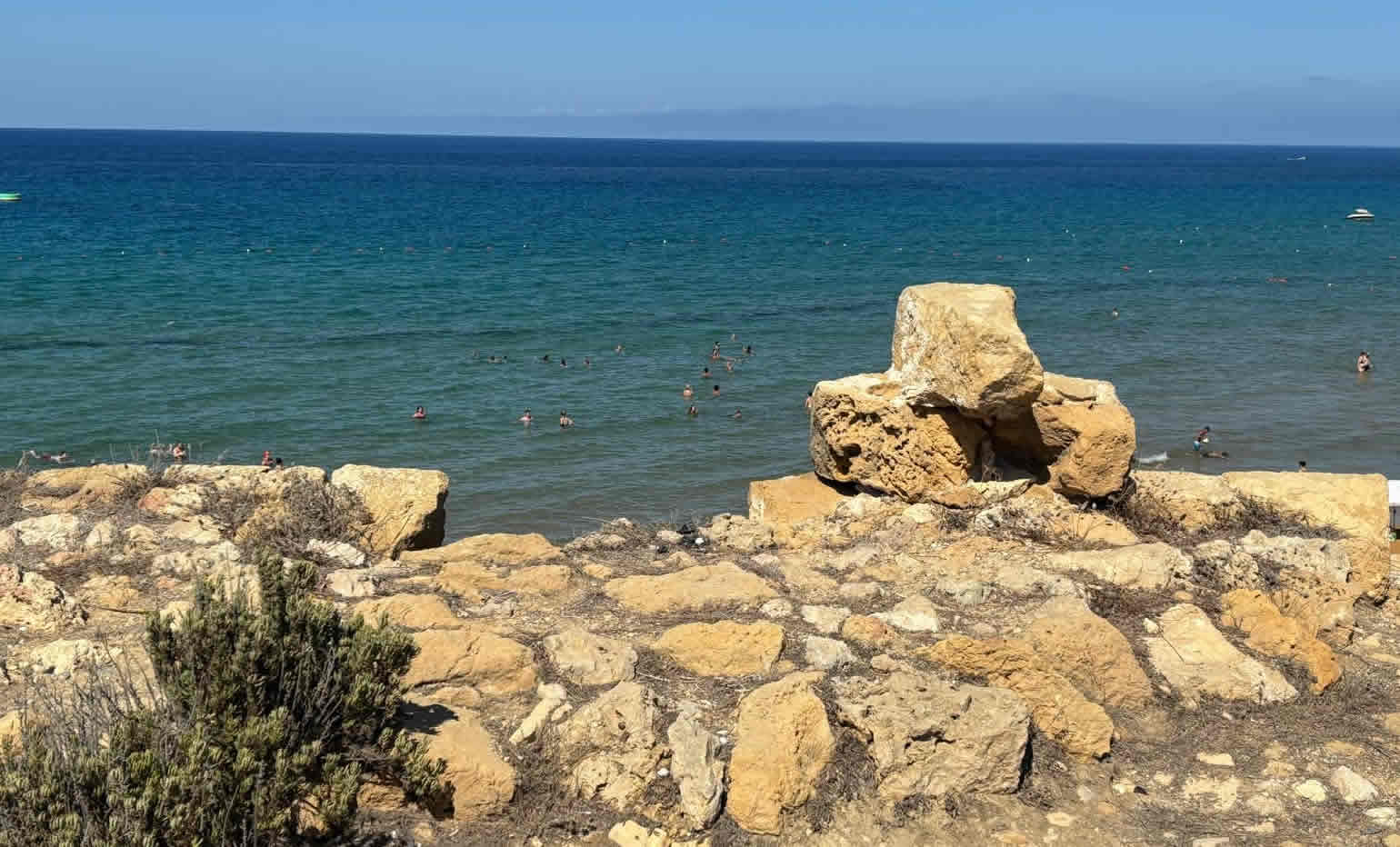
Ramla Right Battery (east side of bay)
Positioned on the eastern side of the bay.
Similar design — a semi-circular gun platform with rear blockhouse.
Remains today: Far less survives; most of the structure has collapsed or been eroded away, leaving faint traces beneath sand and vegetation.
Associated Defenses
Central Ramla Redoubt: Situated roughly in the middle of the bay, a small pentagonal fortification.
Entrenchments: Stone walls running across the mouth of the valley, linking the two batteries with the redoubt.
Together, this made Ramla Bay one of the best-defended beaches in Gozo.
⚔️ Military Role
Together with Ramla Redoubt and Entrenchments, the battery created a layered defense for the bay.
Its cannons could sweep the sandy shoreline and prevent enemy troops from establishing a beachhead.
It was garrisoned by local militia under the Knights.
📉 Later History & Decline
By the late 18th and 19th century, the battery was already falling into disuse.
The British made no upgradesand did not maintain the batteries, as artillery technology had advanced and other forts became more important.
Over the 19th–20th centuries, erosion, neglect, and removal of stones led to its destruction.
Both batteries deteriorated. The Left Battery (west) kept more visible remains, while the Right Battery nearly vanished.
🏛️ Present Day
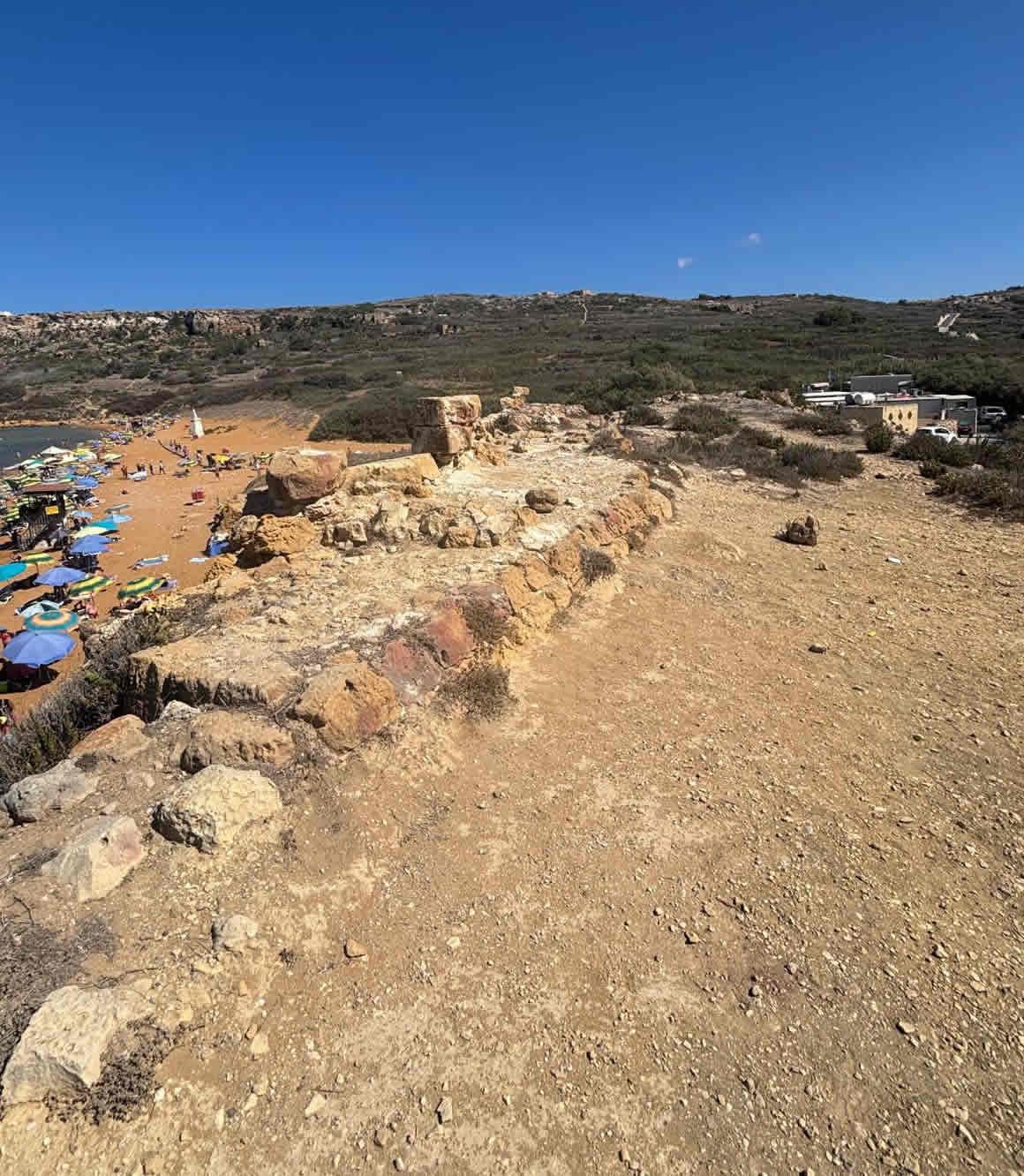
Today, only foundations and traces of the Ramla Battery survive near the sand dunes of Ramla Bay.
Ramla Left Battery: Masonry remains can still be seen west of the sandy beach, partially overgrown but identifiable.
Ramla Right Battery: Largely erased; only low traces are visible.
Redoubt foundations & entrenchments: Some traces survive in archaeological surveys.
Some remains are visible beneath sand and vegetation, especially near the dunes and valley mouth.
The area is now part of a protected cultural and natural heritage site, including the Romans’ villa ruins and Calypso’s Cave above the bay.
📌 Quick Facts
| Feature | Detail |
| Location | Ramla Bay, Gozo |
| Built | 1715–1716 |
| Builder | Order of St John (under Grand Master Vilhena) |
| Type | Coastal artillery battery |
| Shape | Pentagonal platform with rear blockhouse |
| Armament | 5–6 cannons |
| Purpose | Protect Ramla Bay from enemy landings |
| Current Status | Ruins; only foundations remain |
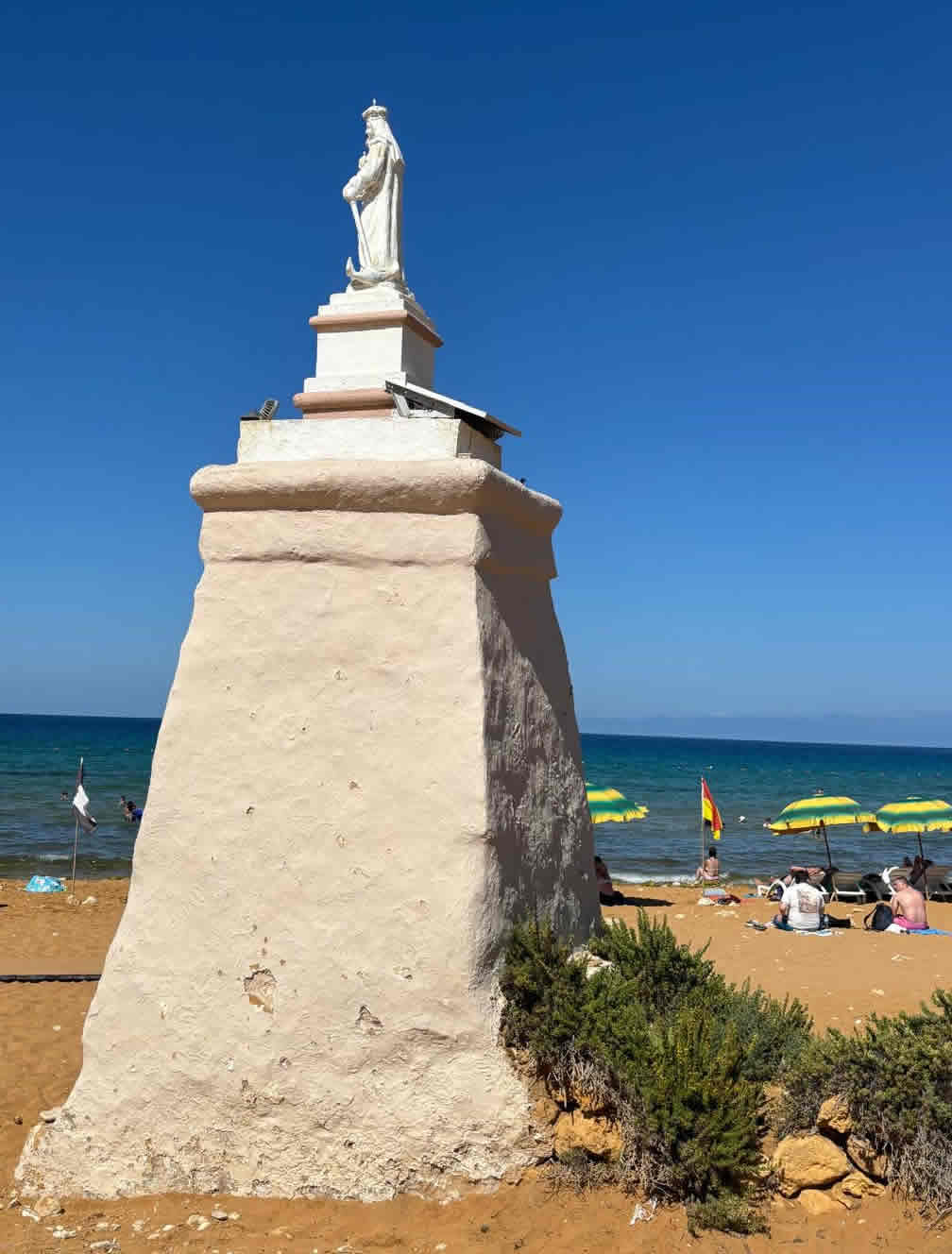
✅ Summary:
Ramla Bay was defended by two batteries (Left and Right), a central redoubt, and entrenchments, making it one of the most fortified bays in Gozo, built to secure the island’s most vulnerable sandy beach. Today, the Left Battery’s remains are more substantial, while the Right Battery is nearly lost, it reflects the strategic foresight of the Order of St John in fortifying every possible landing site.
📍 Ramla Bay Location
📍 Location of the Defenses
Ramla Bay is on the north coast of Gozo, below Nadur and Xagħra.
The sandy beach lies in a wide bay flanked by rocky headlands.
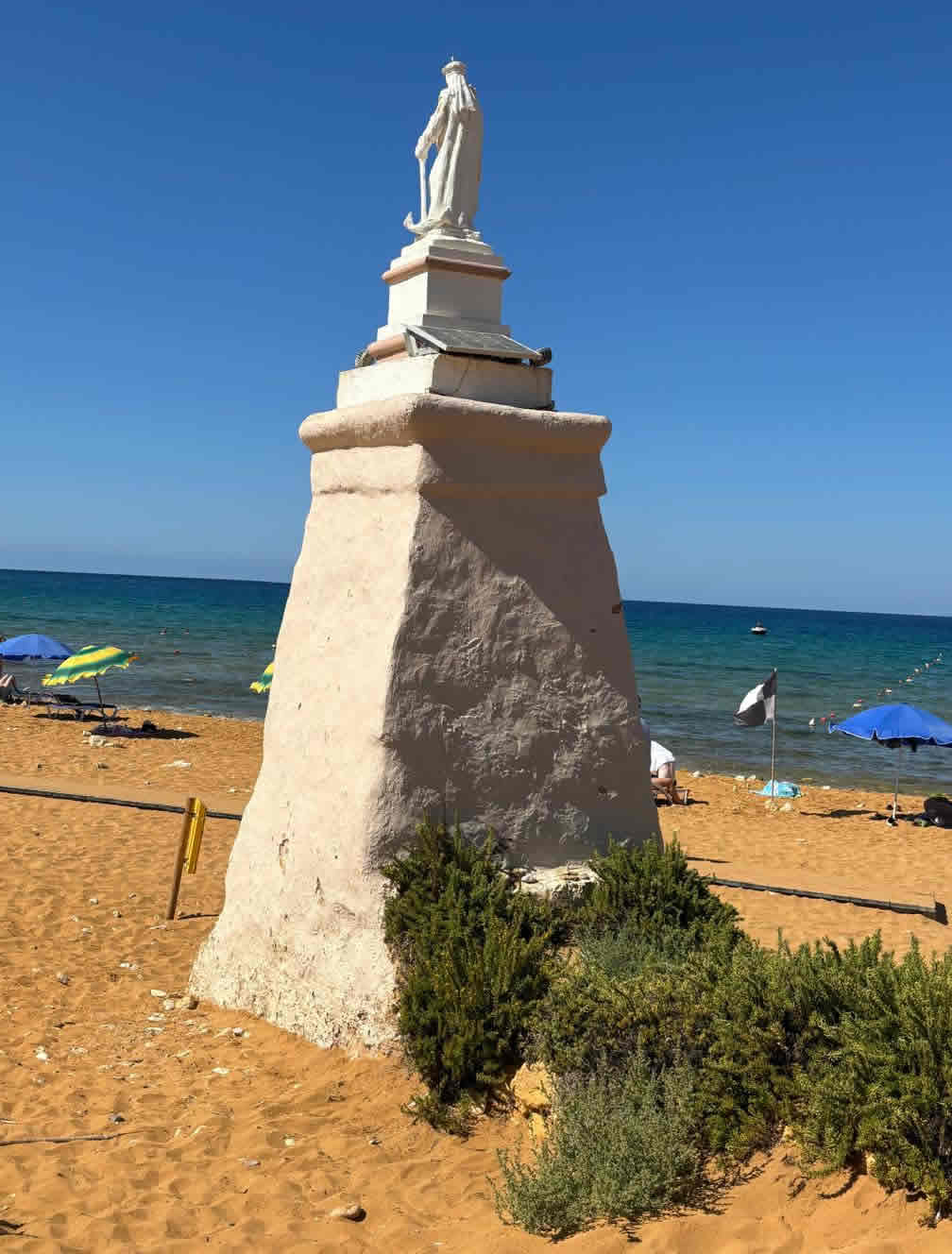
Ramla Left Battery (West Battery)
Position: Western side of the bay (to your left when facing the sea).
Built on the rocky spur overlooking the beach, slightly above the sand.
Remains: Low wall foundations and parts of the gun platform are still visible.
Approx. Coordinates: 36.061292, 14.282553
Ramla Right Battery (East Battery)
Position: Eastern side of the bay (to your right when facing the sea).
Built on a lower rocky outcrop near the sand.
Remains: Very little survives — mostly buried or eroded.
Approx. Coordinates: 36.062307, 14.286635
Ramla Redoubt (Central Fortification)
Position: Set back from the middle of the beach, in the dunes area.
Linked by entrenchments to both batteries.
Remains: Only traces of the foundations survive beneath the sand.
Approx. Coordinates: 36.061443, 14.284150
🗺️ Overview Map
Left Battery = west side rocky spur
Right Battery = east side rocky spur
Redoubt = centre of bay, behind dunes
Entrenchments = once ran across the valley mouth, now mostly gone