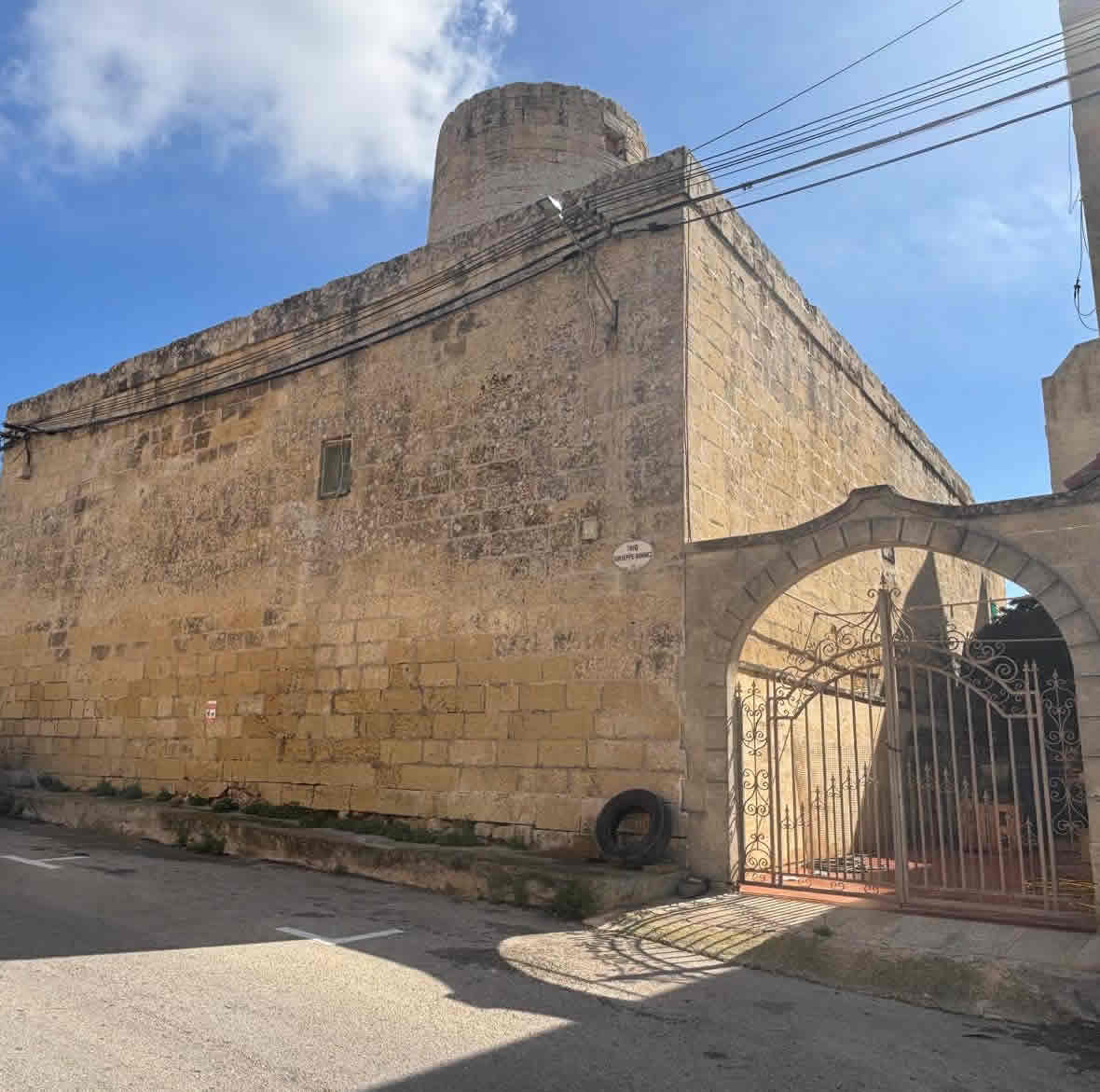
Here’s a summary of the construction and history of L-Gdida Windmill in Nadur, Gozo:
📍 Location
36.038210, 14.289718Quick facts
Name: L-Gdida / Il-Ġdida Windmill (literally “the New Windmill”).
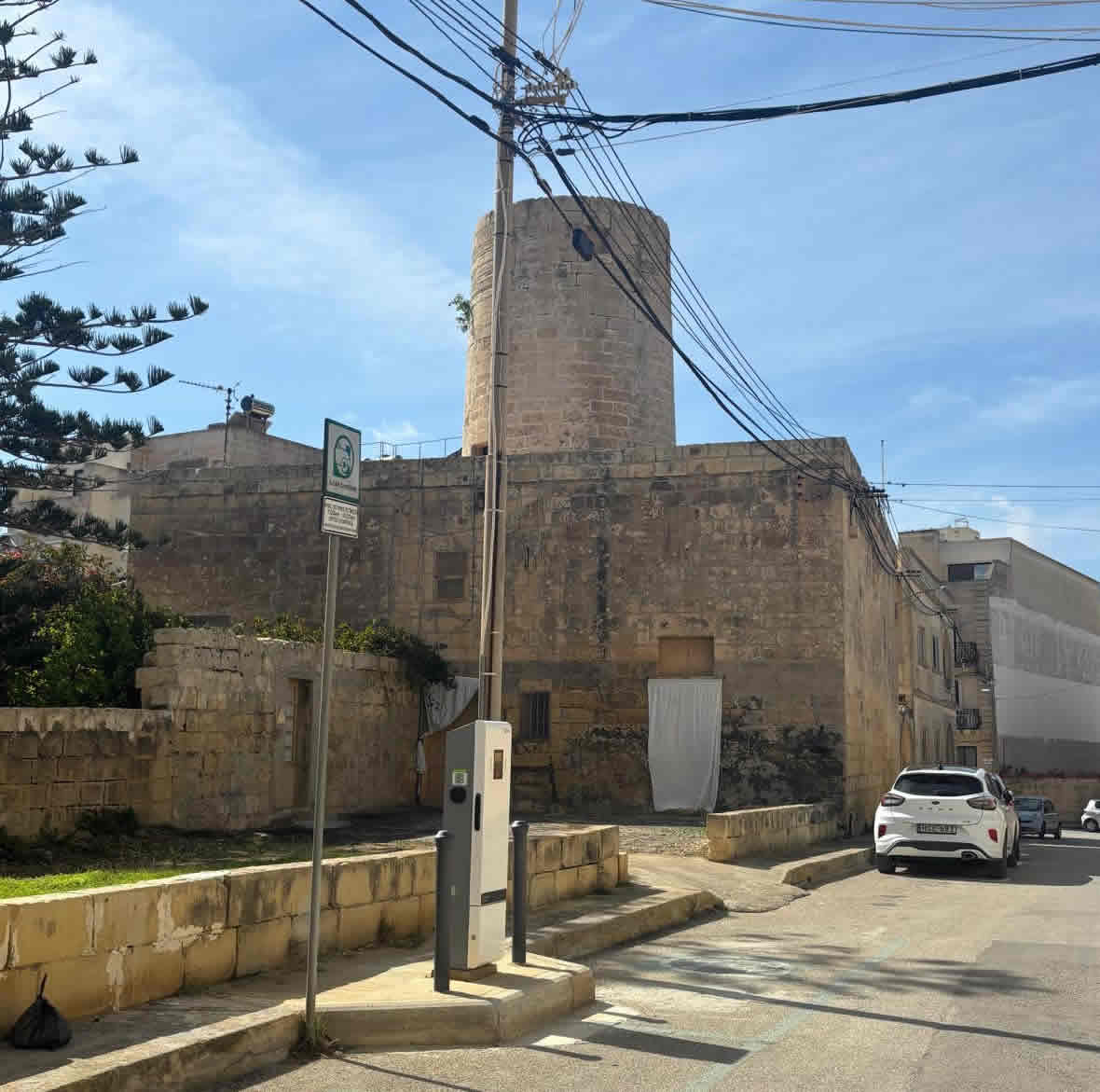
Location: Nadur, Gozo — Triq Ġużepe (Giuseppe) Bonnici / near Triq il-Madonna ta’ Lourdes.
Type: Tower (round) windmill — typical Maltese tower-mill form.
Built / replaced: 1787 — built to replace an earlier Nadur windmill (c.1727) which was demolished in 1787.
Current note: recorded in windmill inventories as having its sails removed (i.e., not functioning as a windmill today).
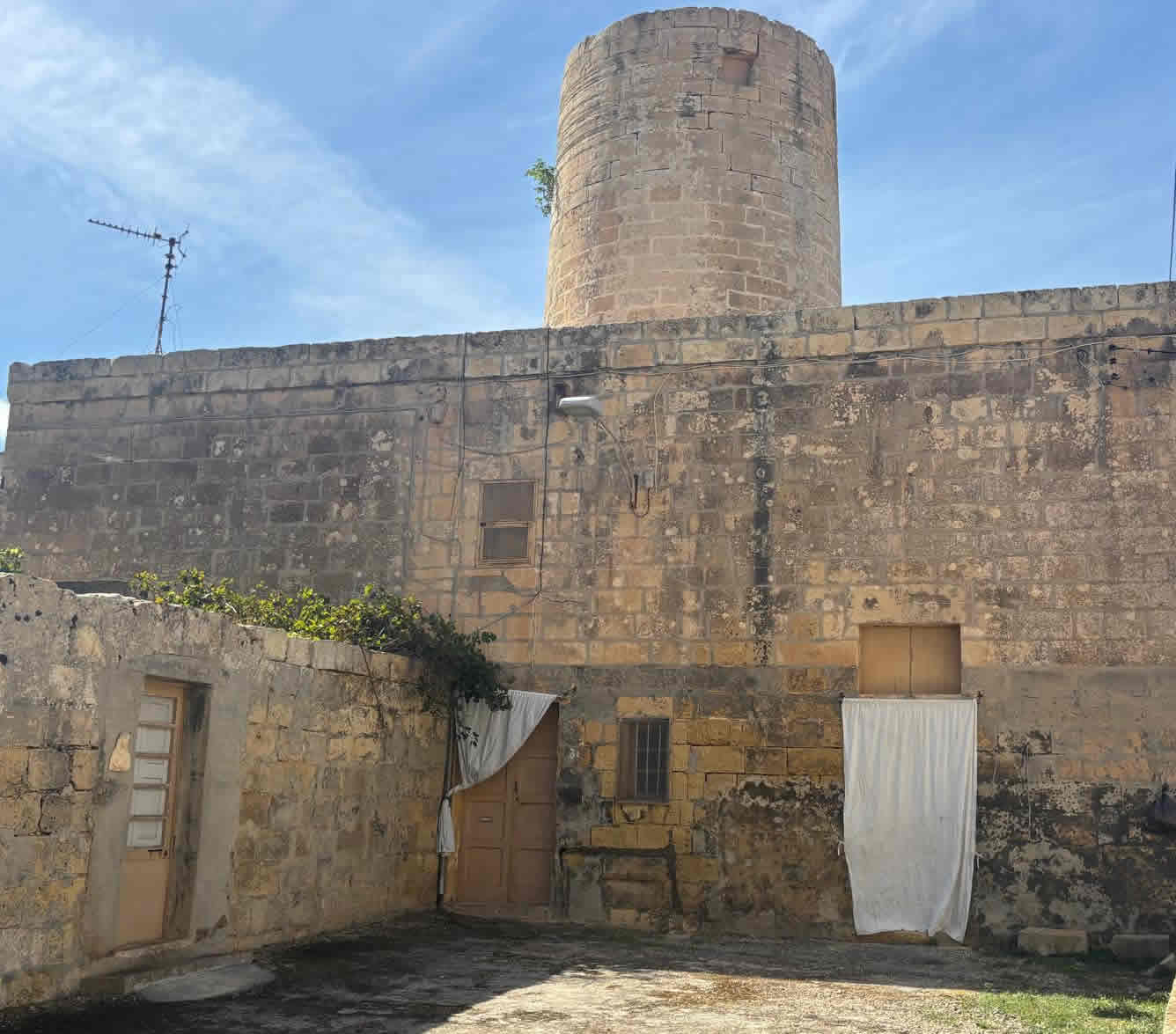
Historical summary
1. Early mills in Nadur: village records and the island-wide windmill lists show Nadur had an earlier windmill (often called the “old” mill) originally built in the early 18th century (c. 1727) — this earlier mill was judged poorly constructed and was demolished. The new replacement was sited elsewhere in the village.
2. Construction of Il-Ġdida (1787): the present “Il-Ġdida” (L-Gdida) was erected in 1787 to replace that demolished structure. The “new” name reflects that replacement. The 1787 date is consistently given by photographic archives and windmill registries.
3. Working life and decline: like most Maltese and Gozitan windmills, Il-Ġdida functioned as a local grain mill (grinding wheat/barley for the village). Over the 19th–20th centuries steam and industrial mills gradually made wind-powered milling uneconomical; many windmills stopped operation and had their sails removed. L-Gdida is listed among those with sails removed.
Construction & technical characteristics
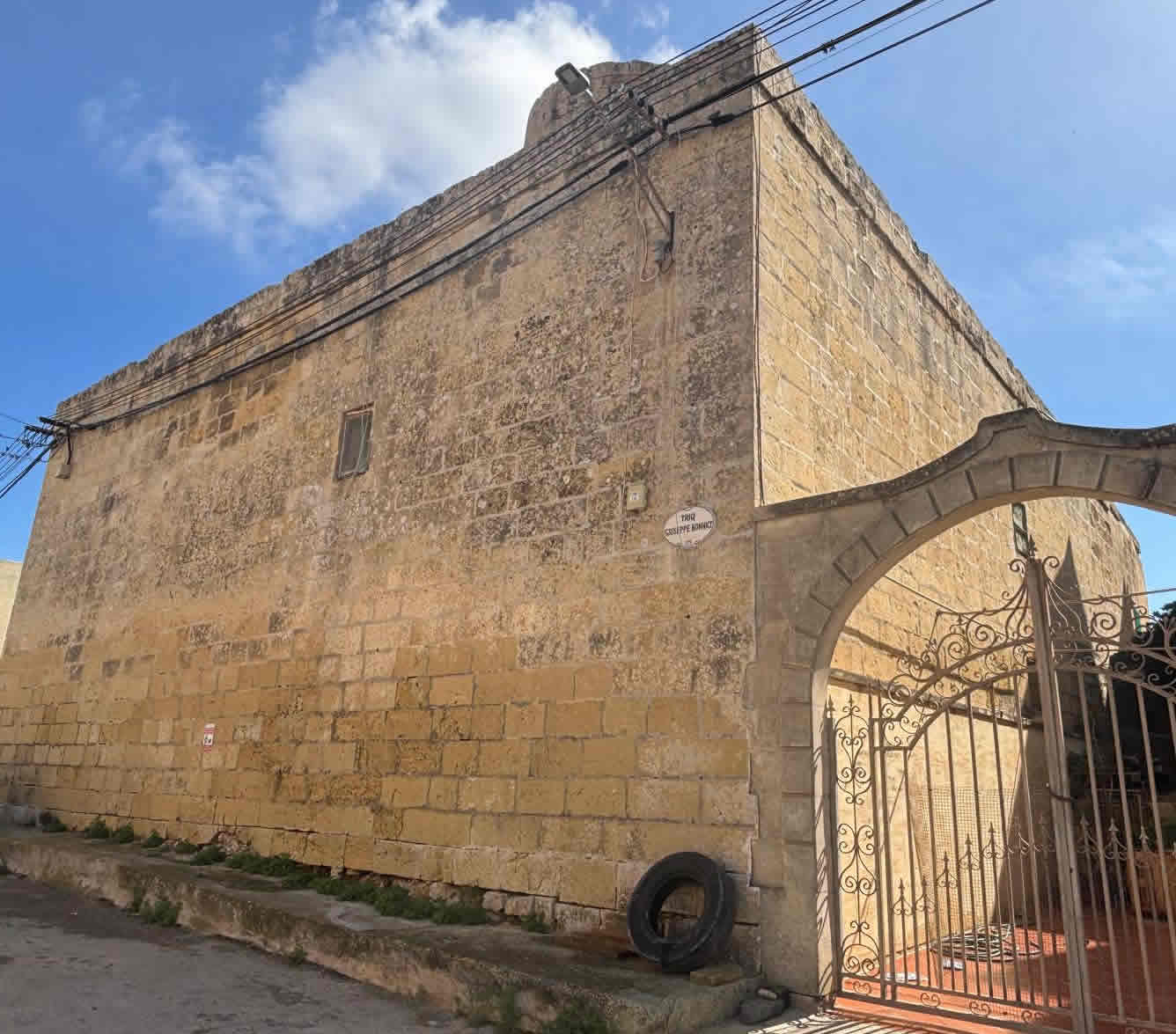
Direct archival blueprints for this specific mill are not published online, but Il-Ġdida follows the standard Maltese tower-mill model, so the following describes the original construction and machinery you would expect and which is supported by island-wide windmill studies:
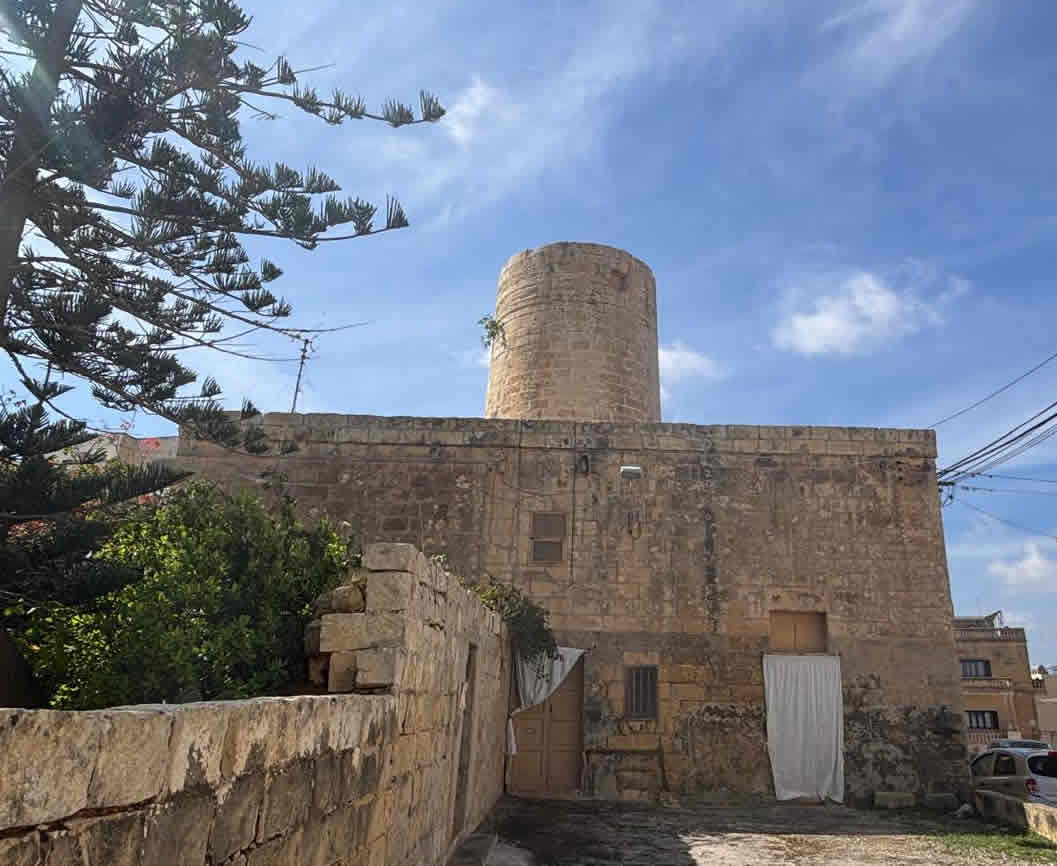
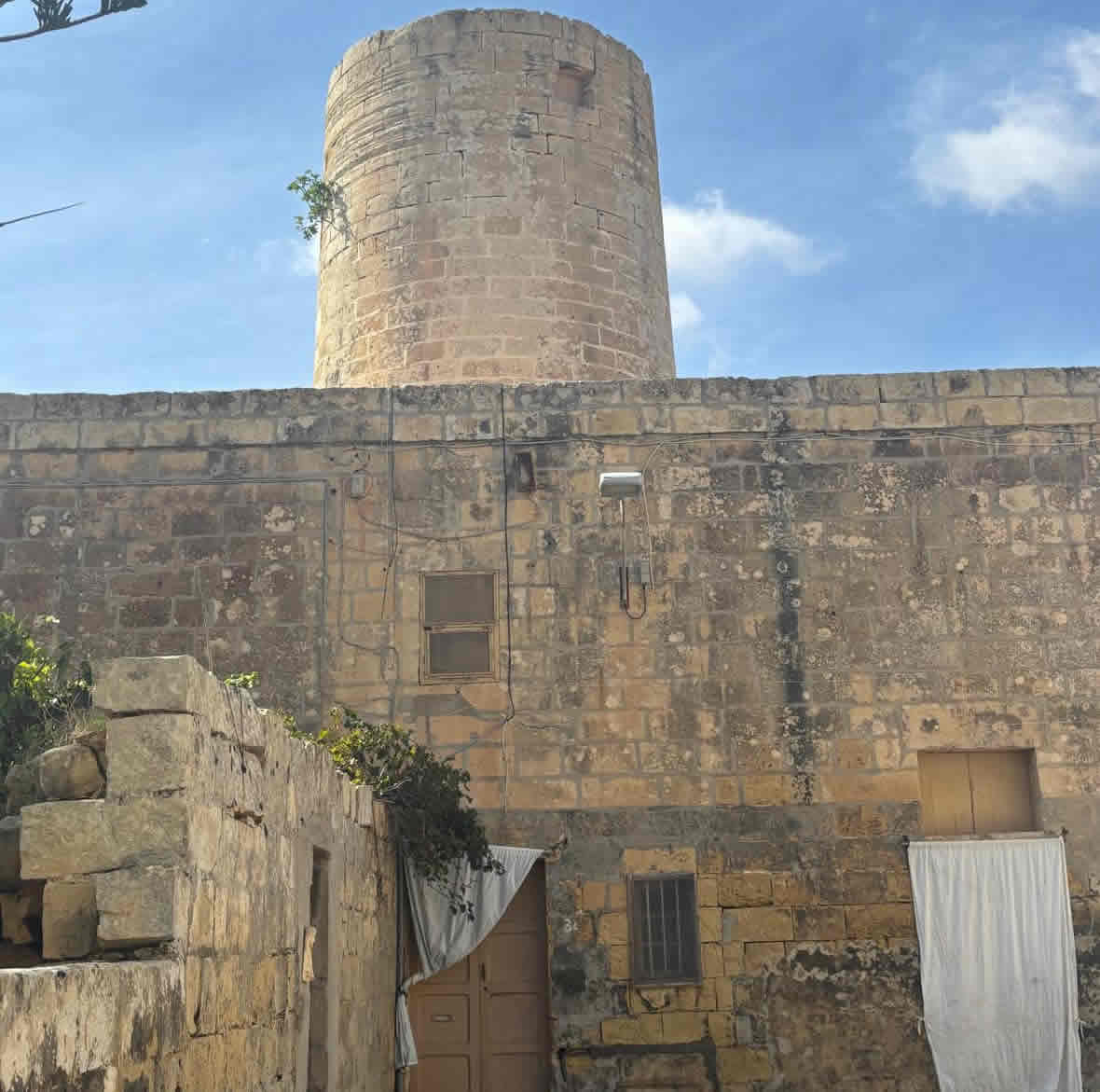
Masonry tower: built of local limestone (coralline / globigerina types common in Gozo), circular (round) plan. The tower form gives height to catch steady winds above low village roofs. Photographs of Il-Ġdida show a cylindrical tower integrated with low rooms.
Attached rooms / base: rooms around the tower’s base served as storage, workrooms and sometimes the miller’s dwelling — these also buttressed the tower against wind loads.
Rotating cap & sails: tower mills have a wooden cap (roof) that can be turned so the sails face the wind. Historically these mills on Malta had six sails (a typical configuration), wooden stocks and canvas or wooden slats. For Il-Ġdida the historical record simply records its type as a tower mill; later inventories note the sails have been removed.
Internal gearing: inside would have been a main wind shaft connected to brake wheel → wallower → vertical shaft → great spur wheel → stone nuts driving paired millstones (runner and bedstone). Floors allowed gravity handling of grain (feed from top floor to stones below) — standard practice in Maltese mills.
Access: internal spiral/circular stair or ladders gave access to upper levels for dressing sails, maintaining shafts and accessing hopper/feed mechanisms.
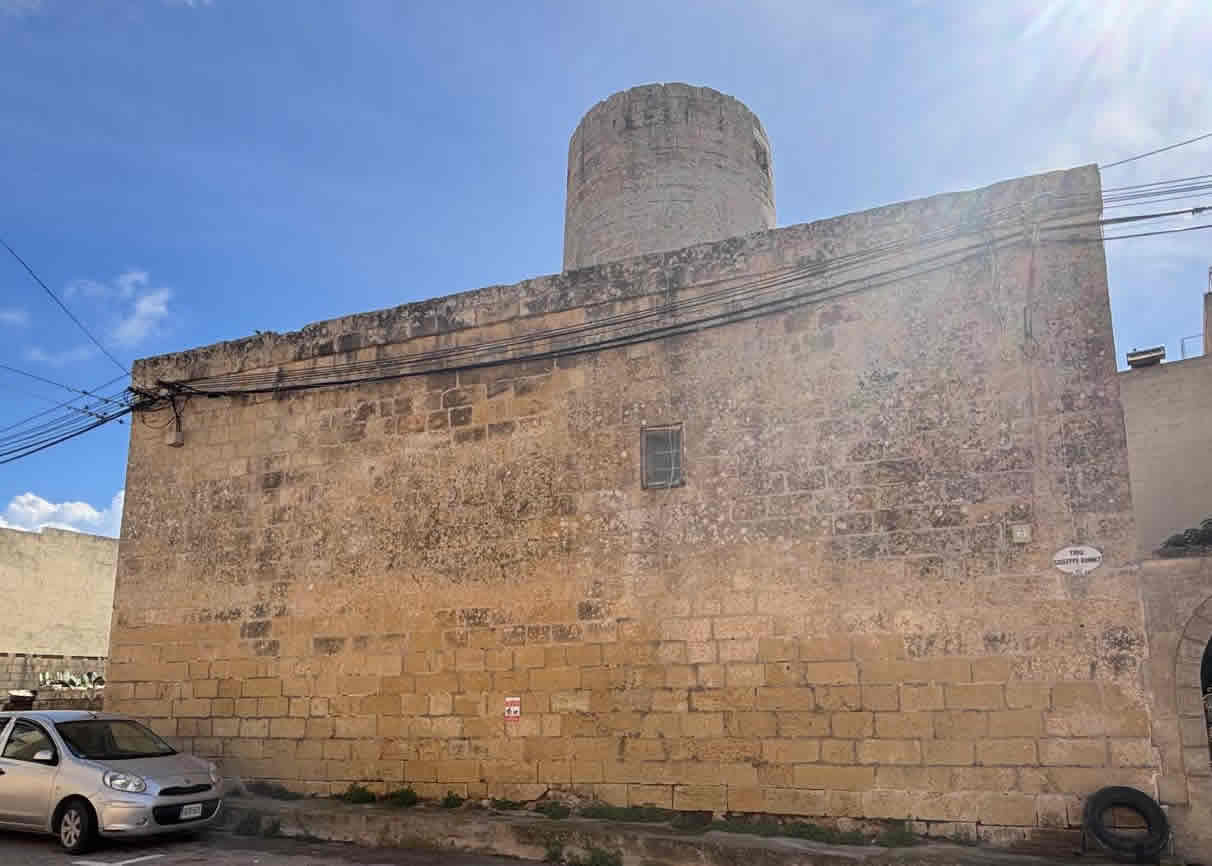
Cultural / heritage significance
Il-Ġdida is an example of the late-18th-century adjustment of rural milling infrastructure in Gozo — replacing a poor earlier structure and continuing to support village agriculture. Its name preserves that replacement story (“the New Mill” built 1787).
It appears in local photographic collections and Nadur heritage imagery — a local landmark in the village streetscape (and therefore part of Nadur’s built heritage).
What we know / what remains uncertain
Known with reasonable confidence:Built 1787, round (tower) type, location and coordinates, replaced a 1727 mill.
Less certain / not found online:
Exact builder (contractor/mason) or original miller name.
Detailed internal condition today (whether millstones / gearing survive inside) — photographic inventory shows exterior; interior surveys are not published in the online sources I checked.
✅ What is recorded
In the Government Gazette (Malta) No. 18,906 dated 27 April 2012, this windmill is listed under the section “Windmills and Granaries that … are scheduled as Grade 1 properties” and the list includes:
“Il-Mitħna l-Ġdida, Triq Giuseppe Bonnici, Nadur” (i.e., “the New Windmill, Triq Giuseppe Bonnici, Nadur”) – entry number 10 on the list.
This means the windmill is officially scheduled (protected) as a Grade 1 structure under the Environment and Development Planning Act, 2010.
The listing gives a specific address: Triq Giuseppe Bonnici, Nadur. That matches the known location of the windmill.
The scheduling document indicates that the building must be preserved in its entirety (Grade 1 means highest level of protection) — no demolition, alteration or works may compromise its character without permission.