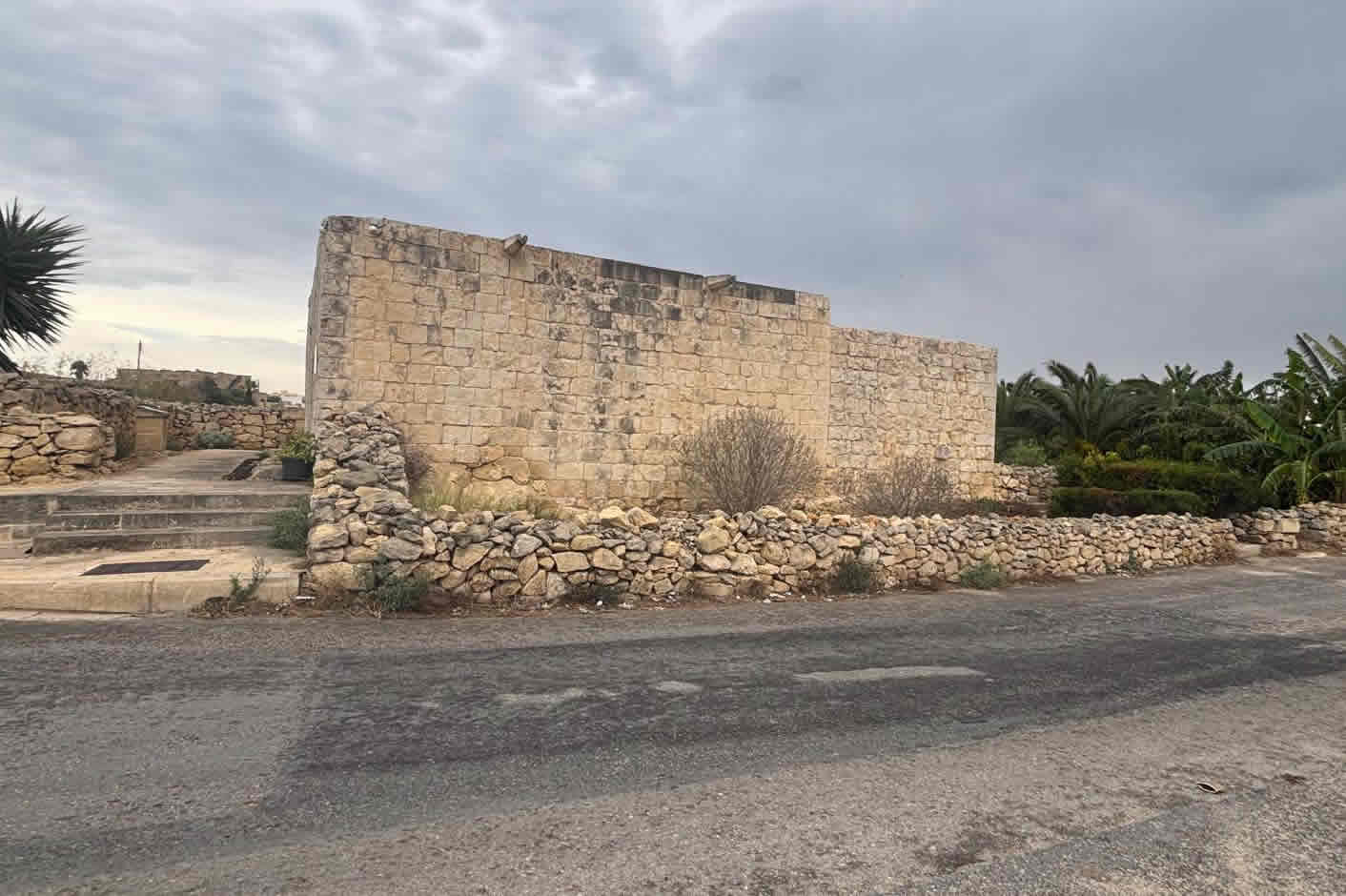
St Cecilia's Chapel
📍 Location
The coordinates of St Cecilia's Chapel are:
- 36.028586, 14.273703
Il-Kappella ta’ Santa Ċeċilja — full history & construction (Gozo)
Il-Kappella ta’ Santa Ċeċilja (St Cecilia’s Chapel / ta’ Santa Ċilja) is one of Gozo’s most evocative small monuments: the island’s only surviving medieval chapel, with a dramatic history of decline, damage and careful restoration.
Quick facts
Name: Il-Kappella ta’ Santa Ċeċilja (St Cecilia).
Location / parish bounds: limits of Għajnsielem / Xewkija area (often referenced with the nearby Santa Cecilia Tower).
Conventional construction date: c. 1540 (late medieval / early modern). It is widely described as the oldest surviving medieval chapel on Gozo.
Plan / size: almost square ~7 m × 7 m interior plan; simple single-nave (unaisled) medieval vernacular chapel.
Origins and early history
Medieval origin: The chapel is commonly dated to around 1540; the locality name (variants of Santa Cecilie del Mugiarro) appears in notarial records as early as the 15th–16th centuries, which supports an early foundation on that site. The chapel served the rural community and the families that lived in the area (notably families associated with the nearby tower).
Ecclesiastical mentions: Bishop-visit records and pastoral visits refer to the chapel in the 17th century (Bishop Cagliares’ visit in 1615 and later descriptions), which help place it firmly in the late-medieval / early-modern church landscape of Gozo.
Relationship with the Santa Cecilia Tower
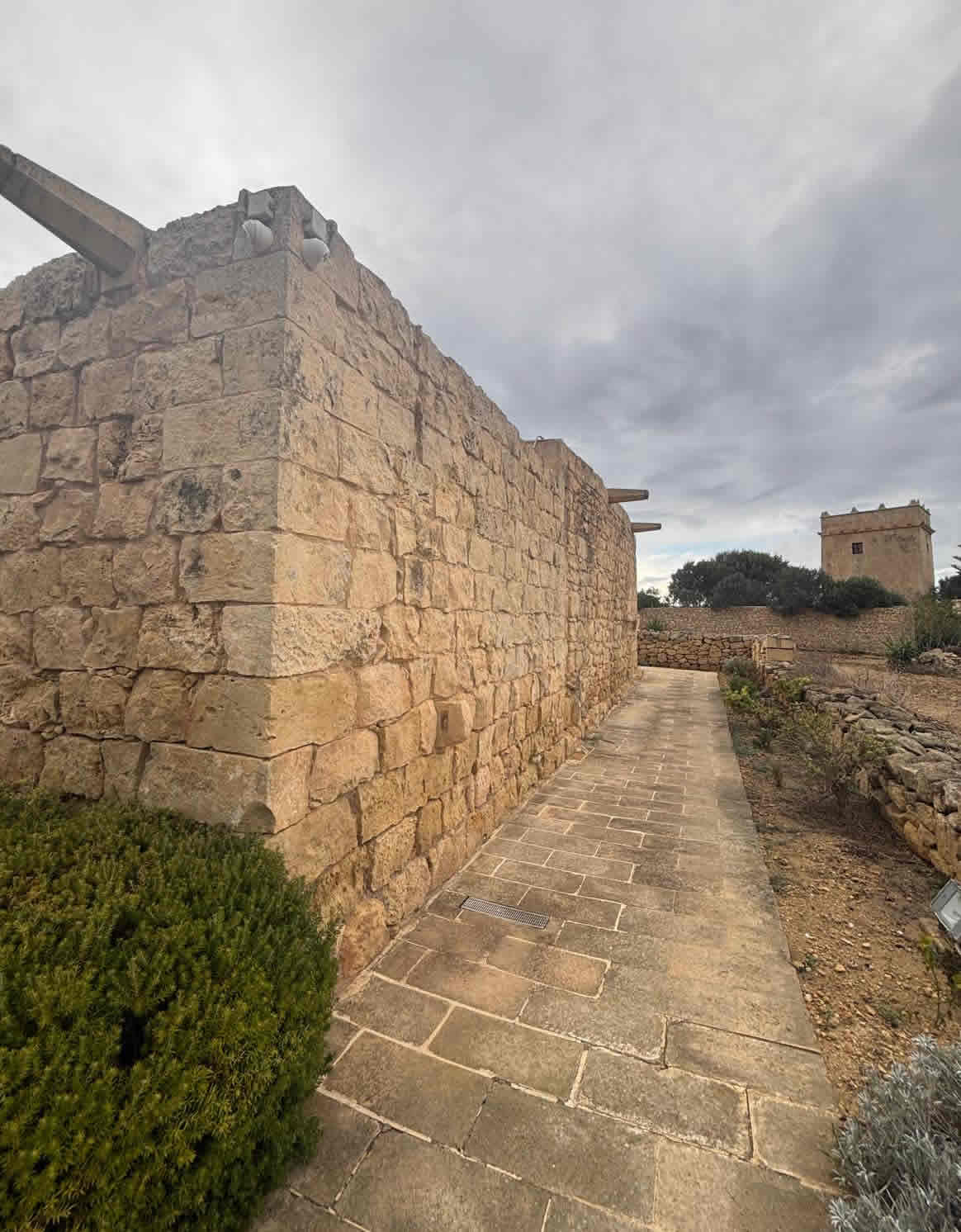
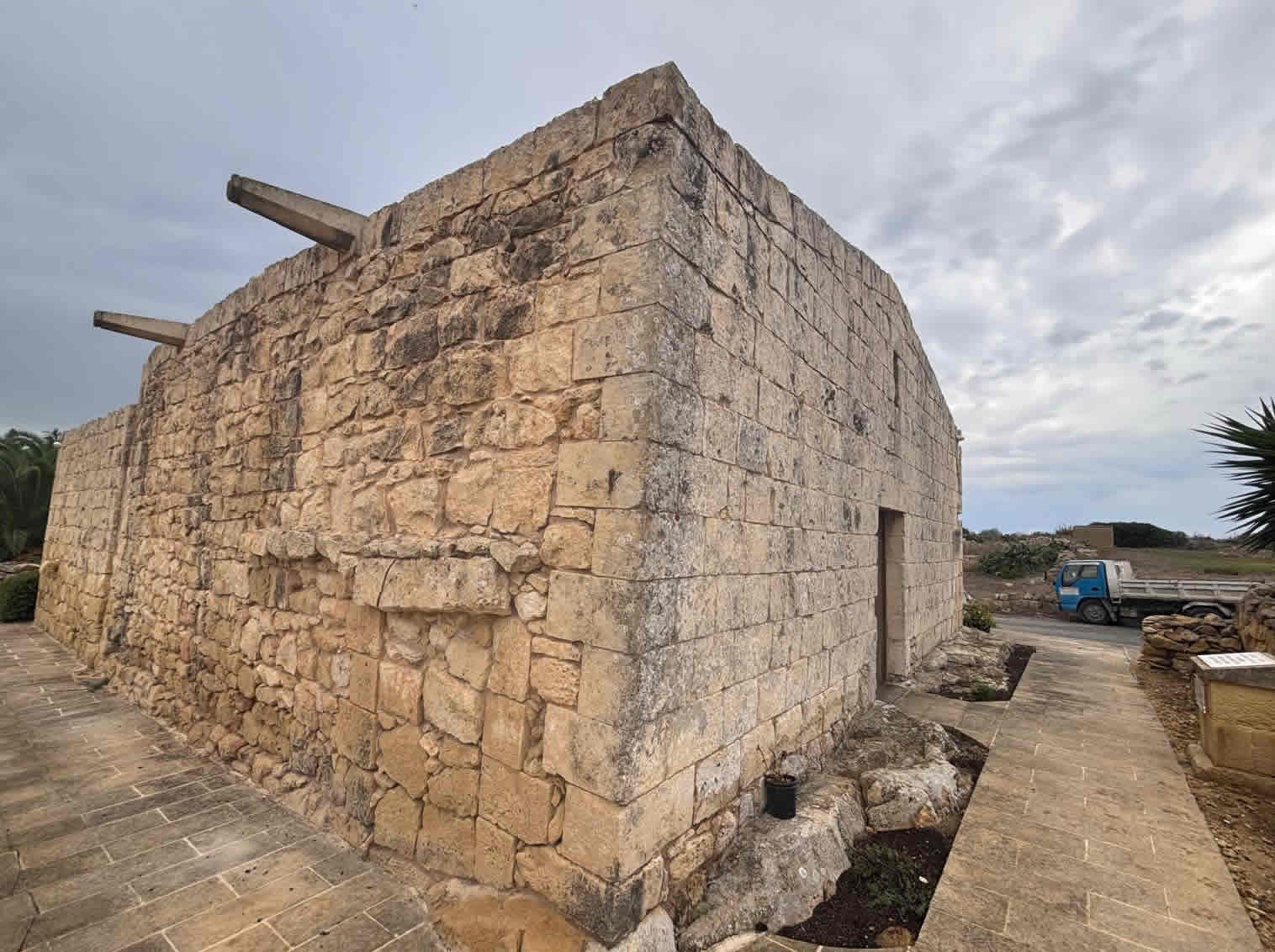
Tower built 1613: In 1613 Fra Bernardo Macedonia (a knight of the Order of St John) built a defensive tower nearby; that tower took its name from the chapel — people referred to the tower and the little church together as a single historic ensemble. Over time the chapel became an ancillary building to the tower (used as store/shelter/ancillary space).
Deconsecration, decline and vernacular reuse
Deconsecrated in 1644: The chapel fell out of liturgical use and was officially deconsecrated in 1644; afterwards it served practical functions linked to the tower (reports suggest it at times housed a mule-driven mill or was otherwise used as an outbuilding). By the 18th–19th centuries it was no longer a functioning chapel and later became an animal shelter and store.
Heritage recognition: Even while neglected, the historic importance of the building was recognised — it was scheduled as a Grade 1 monument in 1996 and an expropriation order was issued in 1997 (though practical execution required further steps).
21st century damage and emergency works
Arson (2007) and collapse (2008): Vandals set fire to the chapel interior in August 2007, destroying interior fabric; heavy rains in January 2008 then caused part of the west wall and roof slabs to collapse. Emergency shoring and stabilisation were carried out.
Rescue, restoration and new life (2008–2012)
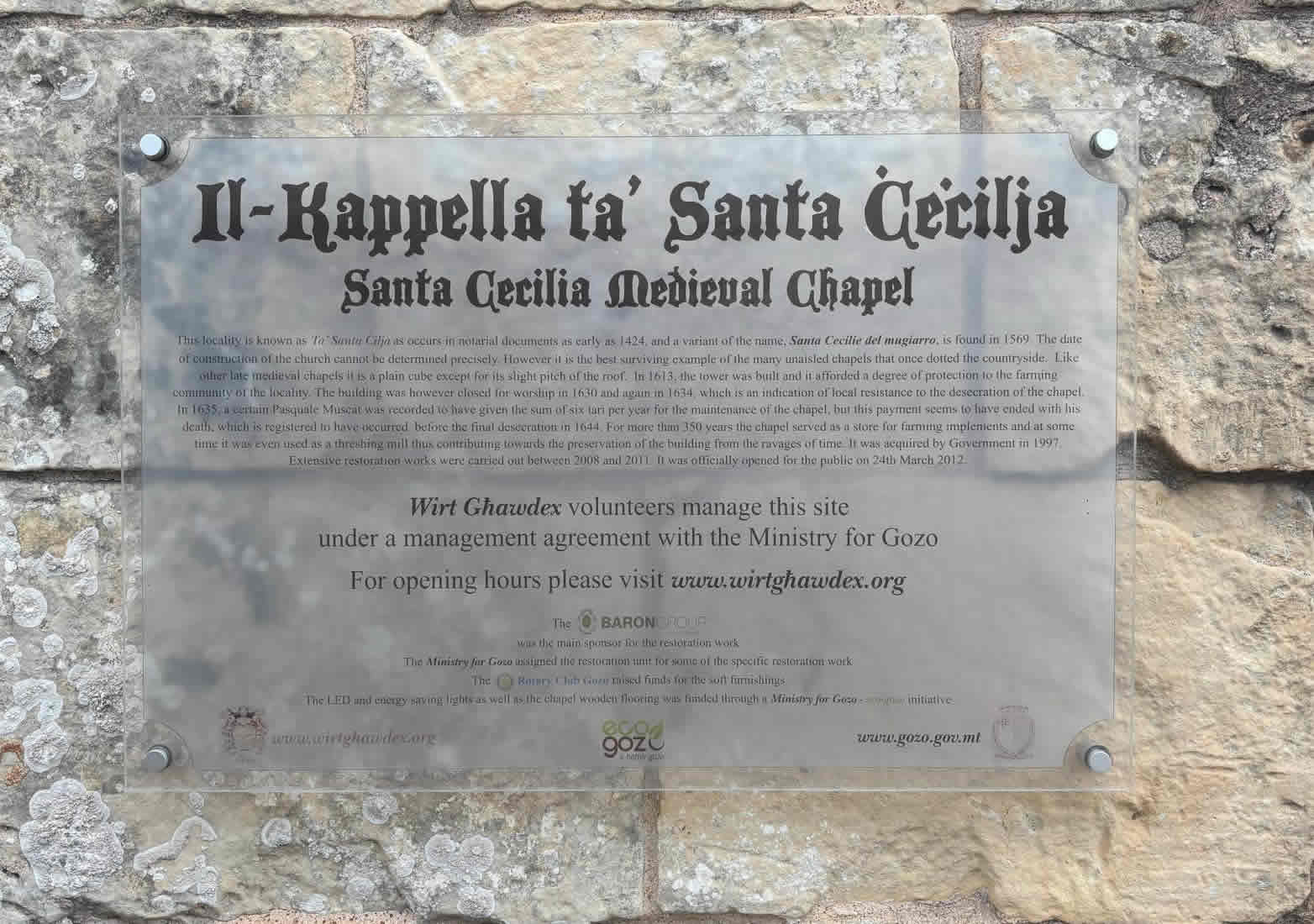
Wirt Għawdex involvement: After the collapse the government entrusted the chapel to the NGO Wirt Għawdex; with funding from the Baron Group, eco-Gozo projects, Rotary Club Gozo and the Ministry for Gozo, a full programme of consolidation and restoration was executed between 2008 and 2011.
Reopening / reuse: The restored chapel was inaugurated on 24 March 2012 and converted into a managed cultural venue used for concerts, lectures and small exhibitions. Wirt Għawdex operate it and keep it open to the public (regular monthly openings and by appointment). The project carefully conserved surviving medieval fabric, rebuilt collapsed walls using matching limestone and lime mortars, and stabilised the roof structure.
Architecture & construction details (fabric and plan)
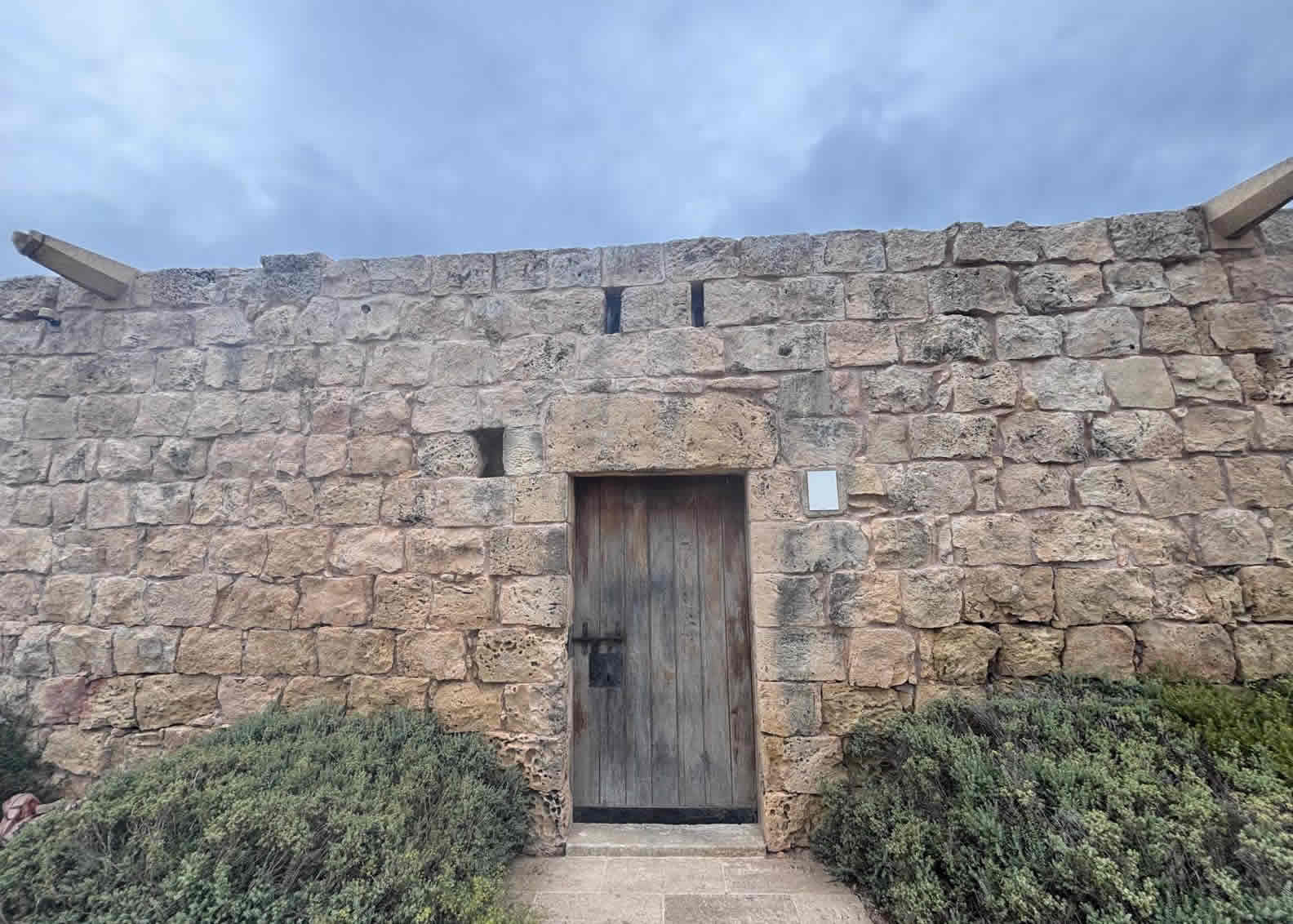
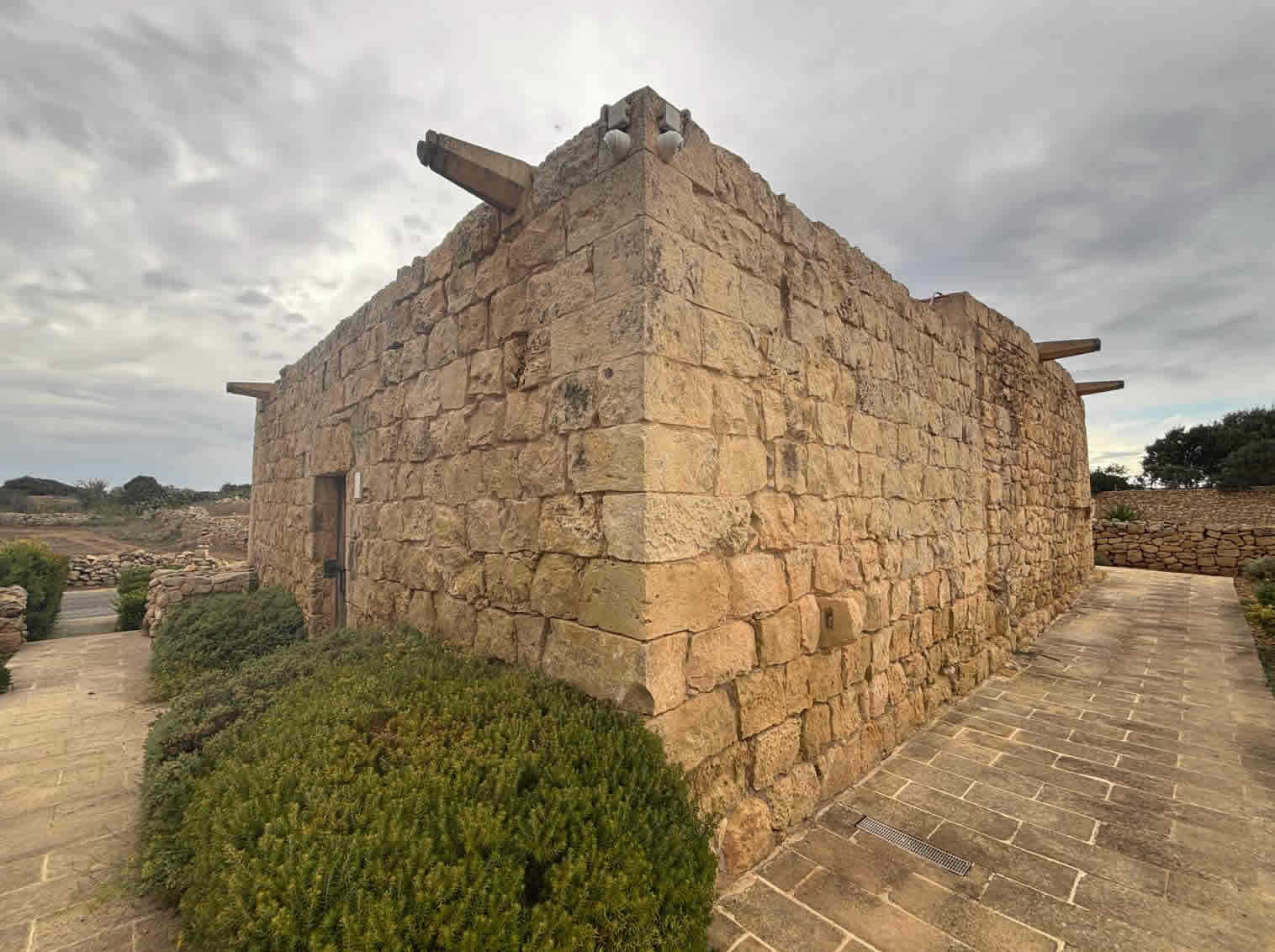
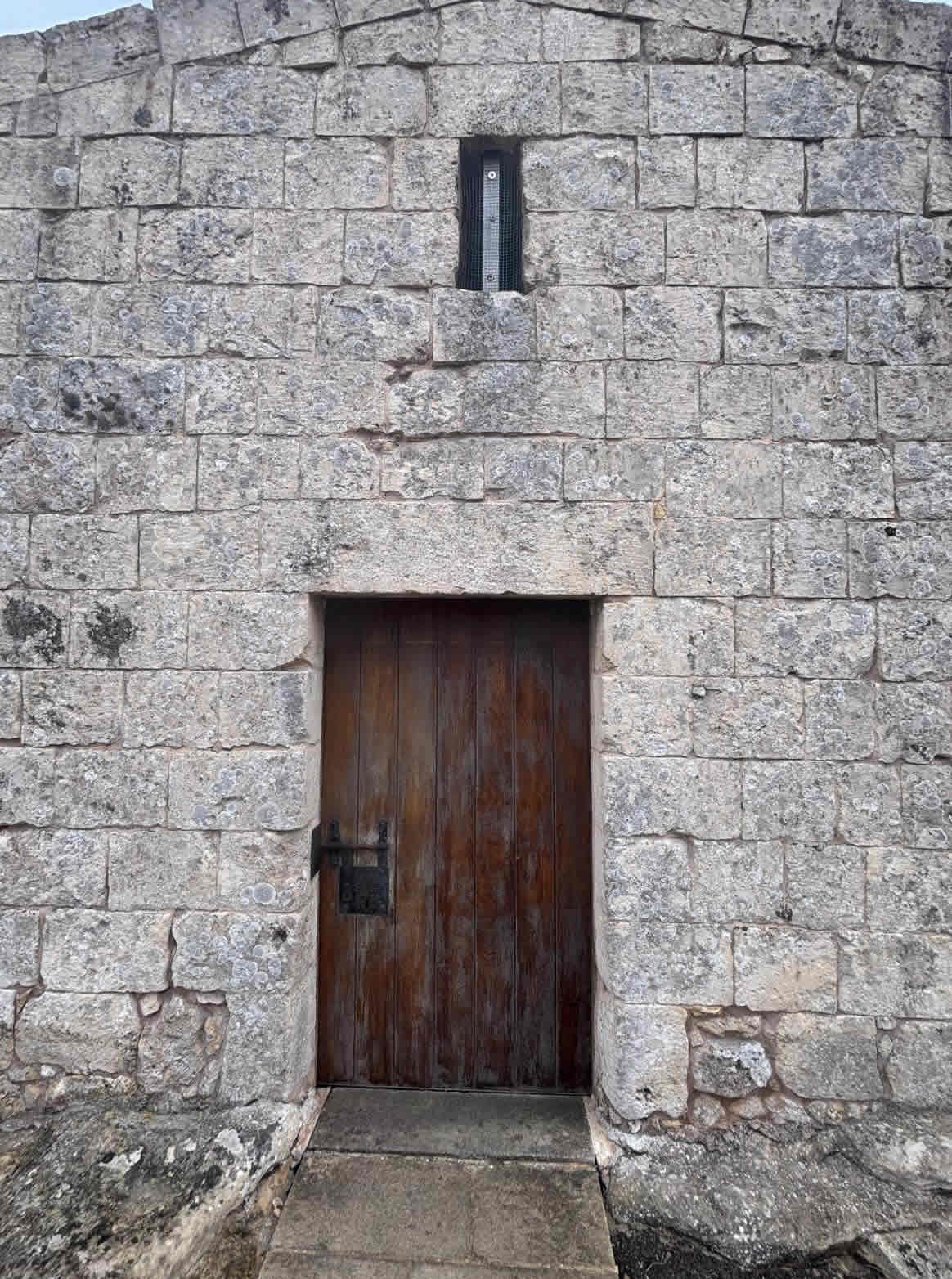
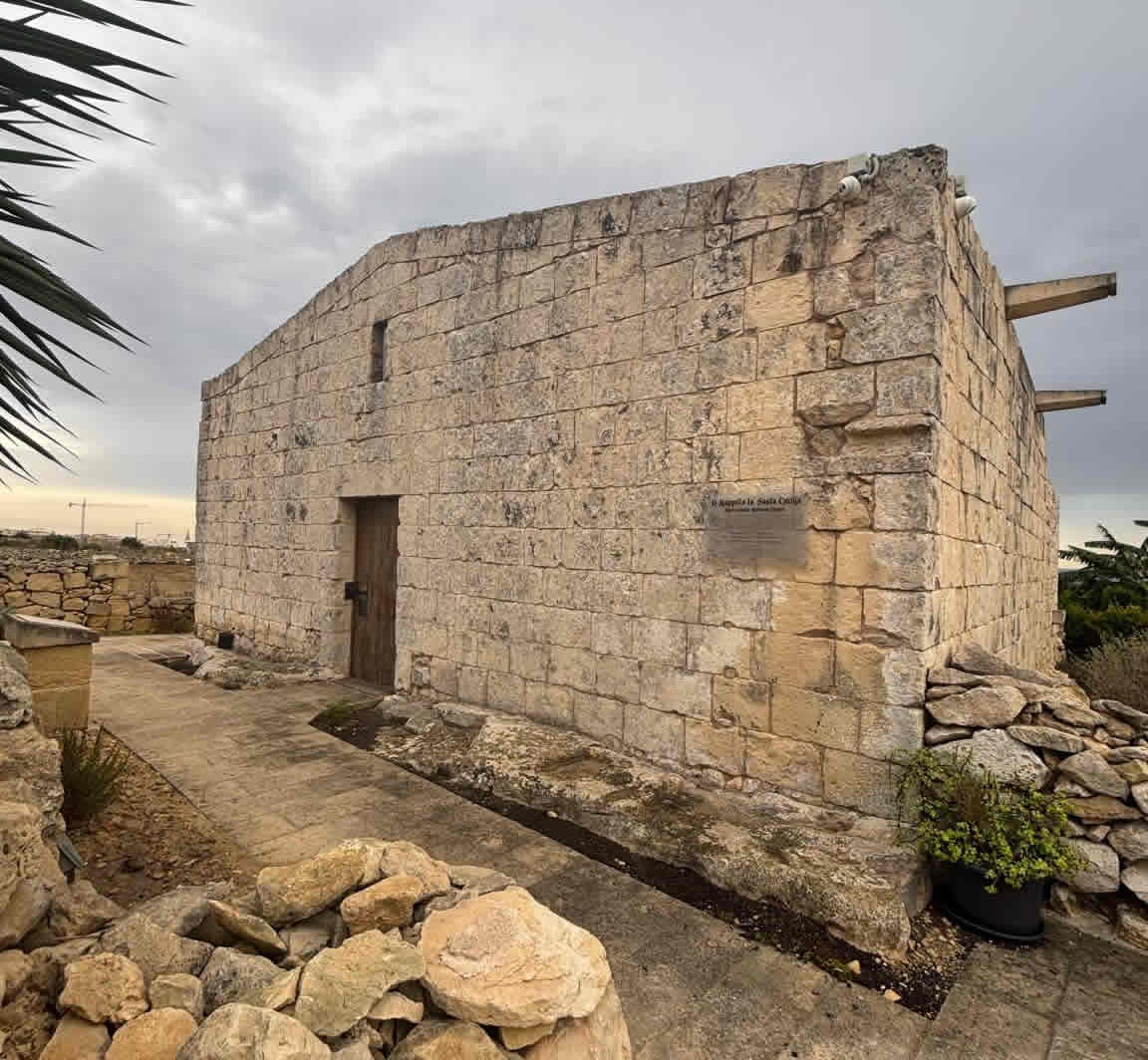
Plan & proportions: an almost perfect square plan: ~7 m × 7 m internally; low pitched roof. The floor is slightly sunken (about 1 m below surrounding ground level), entered by three steps. Internally the chapel is divided into four bays using three stone arches that support the roof — a simple but characterful late-medieval vernacular arrangement.
Materials & masonry: built of local limestone — the façade uses ashlar blocks while the other elevations are rubble masonry. Traditional lime mortars were used in repairs and the restoration replicated historic mortar mixes and stone-work techniques.
Lighting & openings: only the doorway and a small window above it provide natural light; the interior is characteristically dim and intimate, fitting a small country chapel.
Significance as an architectural survival: it is the best-preserved unaisled chapel (a single-nave medieval chapel) in the Maltese islands and the only surviving medieval chapel on Gozo — that rarity makes its preserved arches, roof-structure and plan particularly valuable for research.
Current use & visiting
Managed by Wirt Għawdex: the chapel is open to the public regularly (last Saturday of the month is a common opening) and by appointment; Wirt Għawdex runs cultural events there (concerts, talks) and a short booklet / monograph on the chapel was published to accompany the reopening.