Quick facts
- Old chapel: documented early; key restorations in the 1600s
- 1883: the “Come, come…” call linked to Karmela Grima
- Present basilica built: 1920–1932
- Consecrated: 31 August 1932
- Raised to Minor Basilica: 1935
Why it’s unmissable
- One of the most important Marian shrines in the Maltese Islands
- Striking architecture in local limestone, set among open countryside
- Living faith site: pilgrimages, votive offerings, Holy Year visits and liturgy
Ta Pinu
📍 Location
Location Map Coordinates 36.061538, 14.215967
Overview: a shrine that grew into a basilica
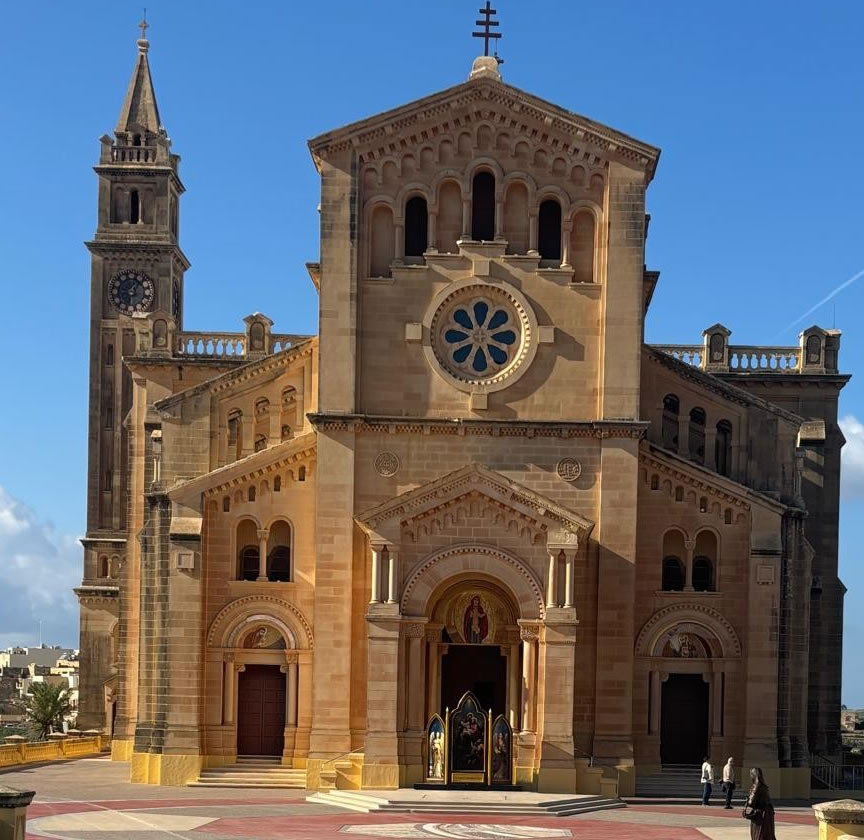
Ta’ Pinu began as a rural chapel in Gozo’s west. Over time it became a focal point for devotion, especially after the events of 1883 associated with Karmela Grima. The steady increase in pilgrims and thanksgiving offerings eventually made the old chapel too small, leading to the construction of today’s large basilica (1920–1932).
Map tip: Use 36.061538, 14.215967 to navigate to the basilica.
Full detailed history
Early chapel records and a survival story (1500s)
The shrine’s origins predate the modern basilica by centuries. Church records describe an existing chapel that was inspected during pastoral visits. In 1575, an apostolic visitor ordered the chapel closed and demolished due to its poor state; local tradition says the demolition attempt was abandoned after a workman broke his arm on the first blow—an omen that the chapel should remain.
From “of the Gentile” to “Ta’ Pinu” (1611–1858)
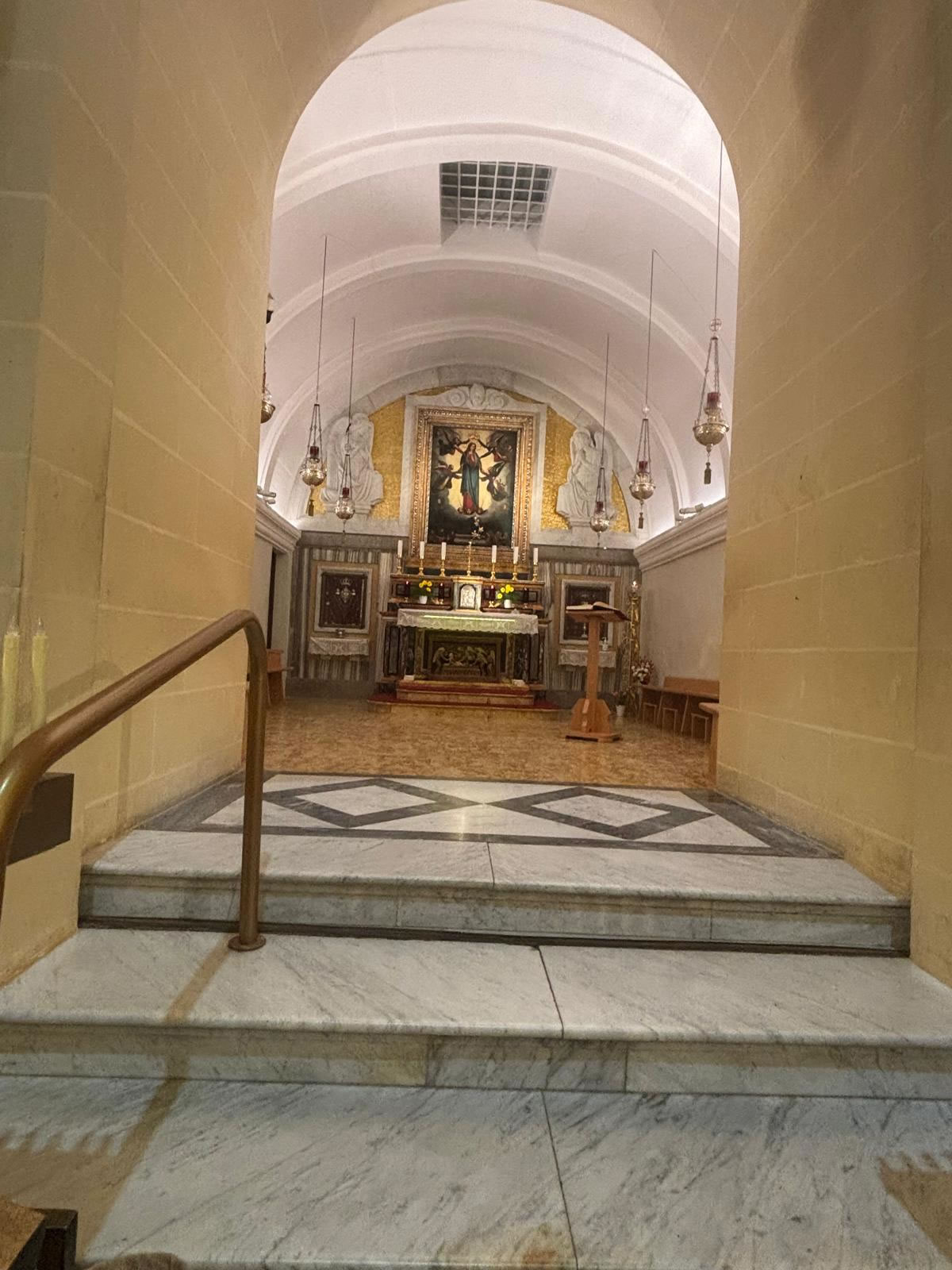
In the early 1600s the chapel was restored, with a stone altar installed and liturgical provisions improved. A major milestone was the commissioning of an altarpiece of the Assumption (dated 1619 in shrine summaries). In 1858, the chapel’s identity shifted: the property changed hands and the site became widely known as “Ta’ Pinu” (“of Philip”) after Pinu Gauci’s role as procurator and benefactor.
1883: “Come, come…” and the rise of pilgrimage
On 22 June 1883, Karmela Grima reported hearing a woman’s voice calling “Come, come…” from within the chapel. The call was associated with prayers and subsequent accounts of healing and thanksgiving, including narratives connected to Francesco Portelli’s family. The devotion spread rapidly; ecclesiastical authorities investigated, and pilgrimages intensified around the chapel and its revered image.
Decision to build a new sanctuary (1920)
The old chapel could no longer accommodate the crowds. A decision was taken to build a larger Romanesque-style church. Groundbreaking began in 1920, marking the start of the structure visitors recognise today.
Completion and consecration (1932)
The new church was blessed and opened to the public in 1932 and is also recorded as consecrated on 31 August 1932. This period cemented Ta’ Pinu’s role as Gozo’s leading Marian pilgrimage destination.
Minor Basilica and papal honours (1935 → today)
In 1935 the church was raised to the dignity of Minor Basilica. In the same era, the revered image received papal recognition and ceremonial honours (including a formal crowning in shrine accounts).
Ta’ Pinu has also been associated with major modern papal moments: Pope John Paul II visited in 1990, and later popes honoured the shrine with a Golden Rose (notably in 2010 and again on a later papal visit).
Construction and architecture
Architectural style
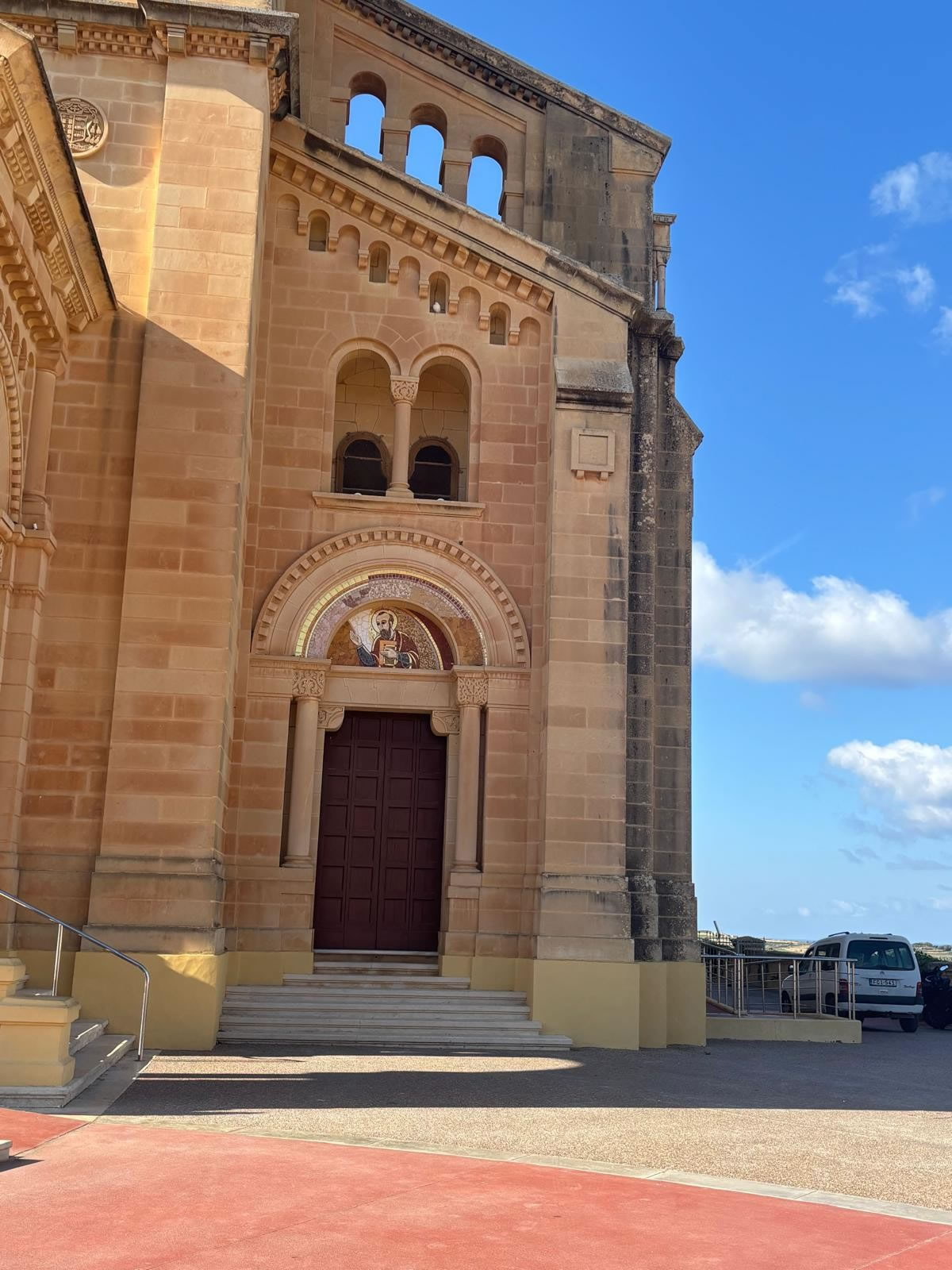
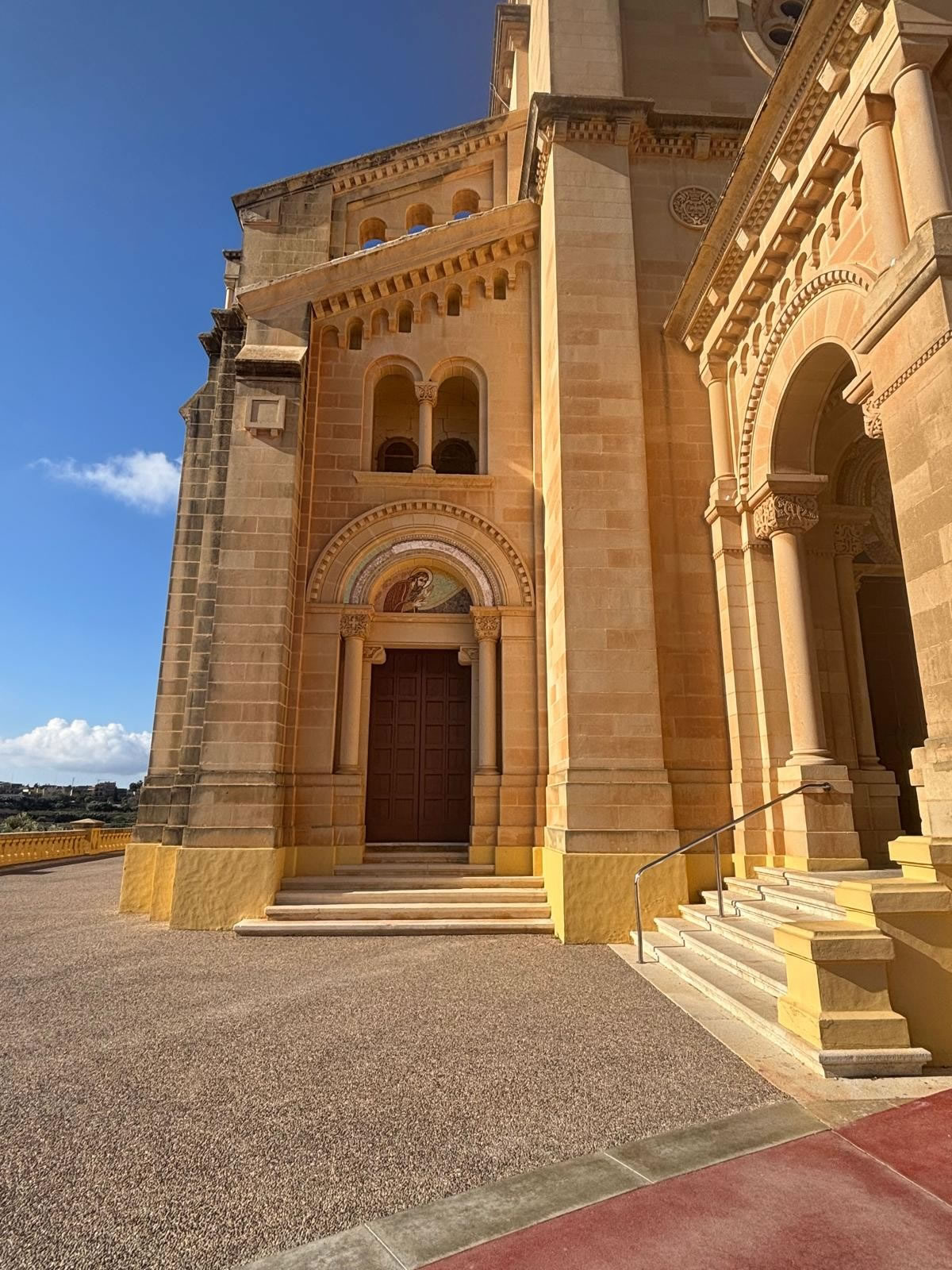
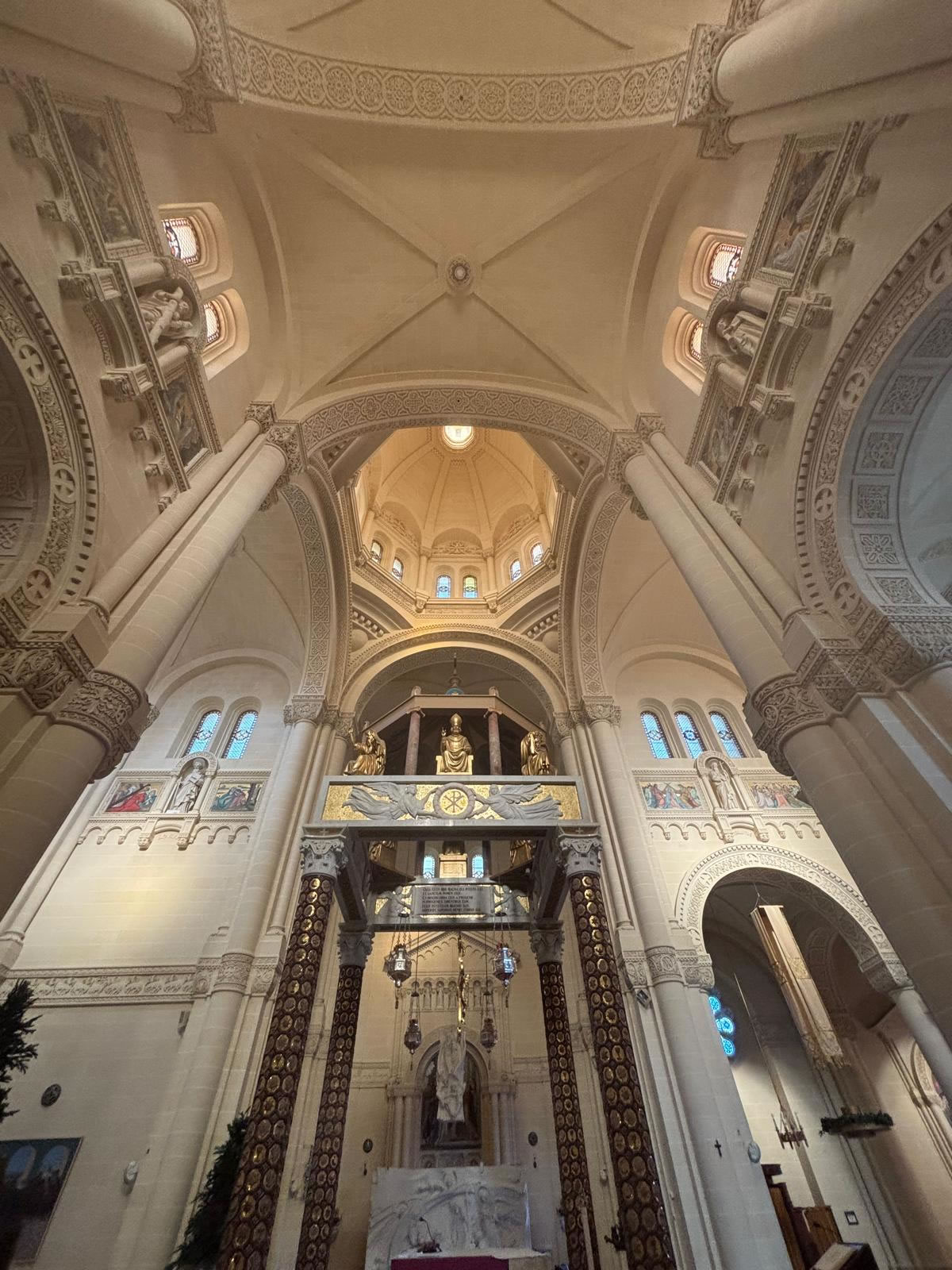
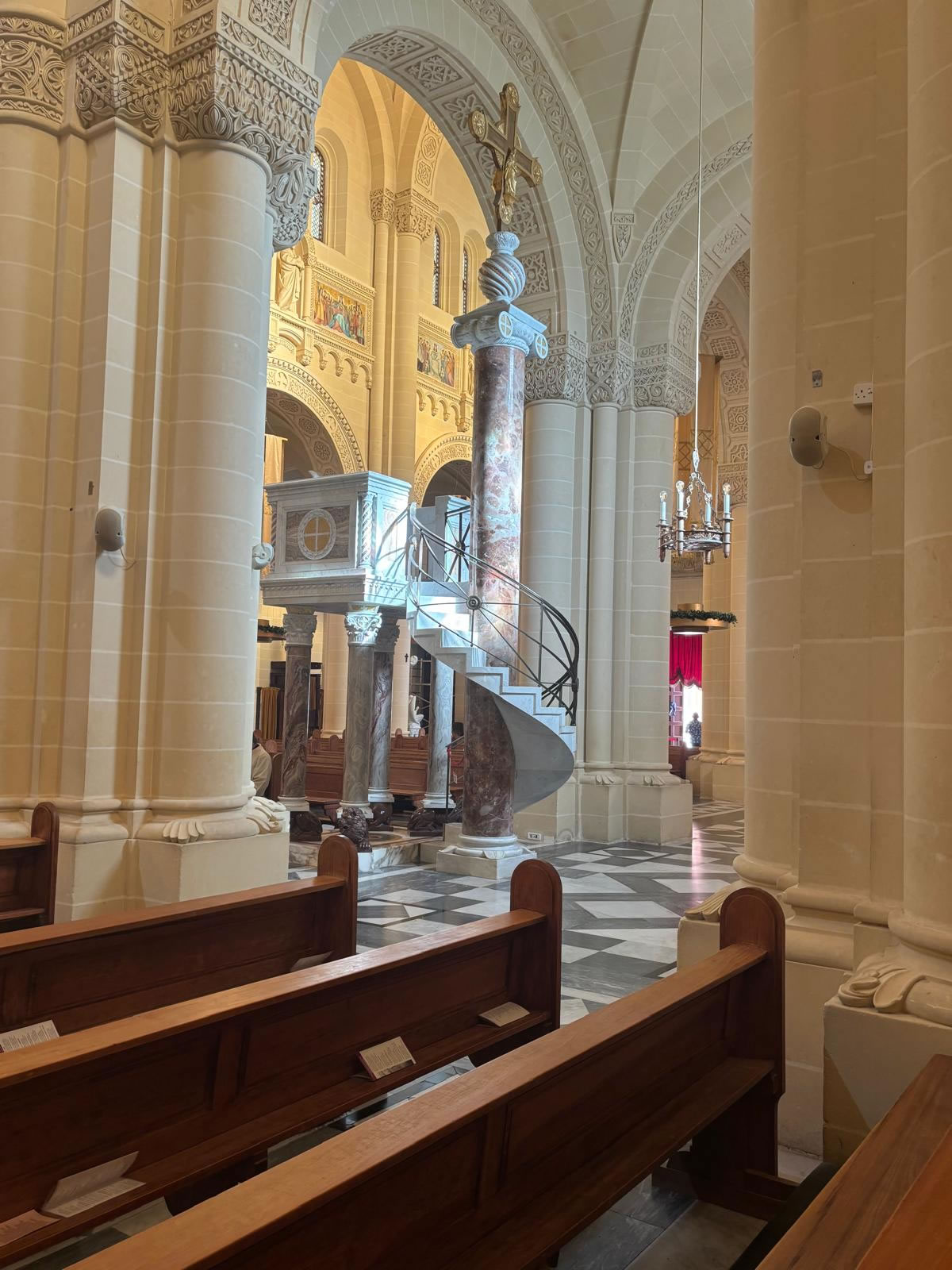
The basilica is a large neo-Romanesque church built in local limestone, designed to feel monumental yet harmonious with the Gozo countryside. Its massing, arched openings, and decorative arcades give it a distinctly Romanesque rhythm.
Key construction dates
- Construction began: 1920
- Opened/blessed: 1932
- Consecrated: 31 August 1932
- Minor Basilica: 1935
What to notice on site
- The imposing façade and forecourt (parvis), often used for large outdoor liturgies
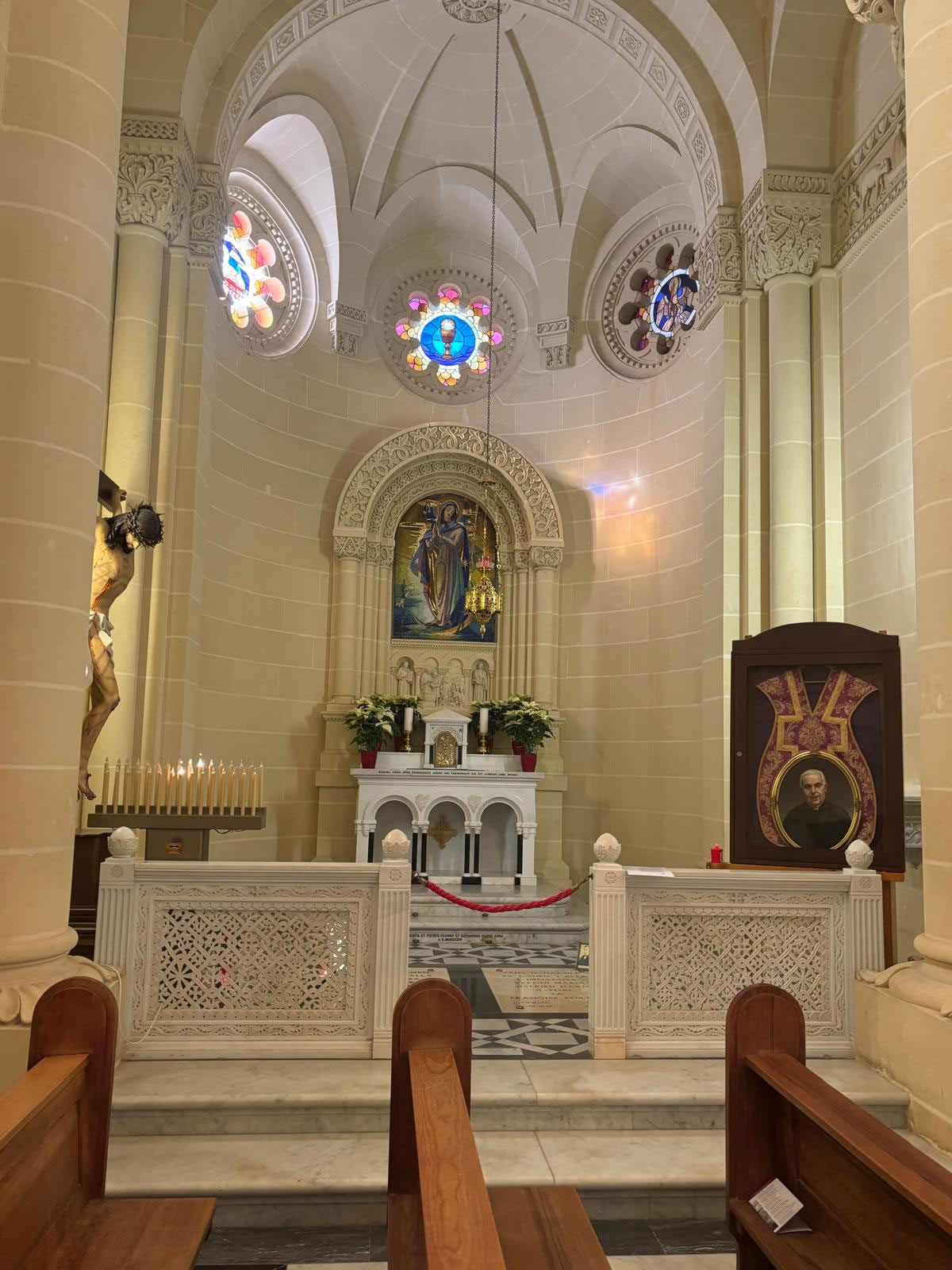
- The stained-glass features (including the rose window)
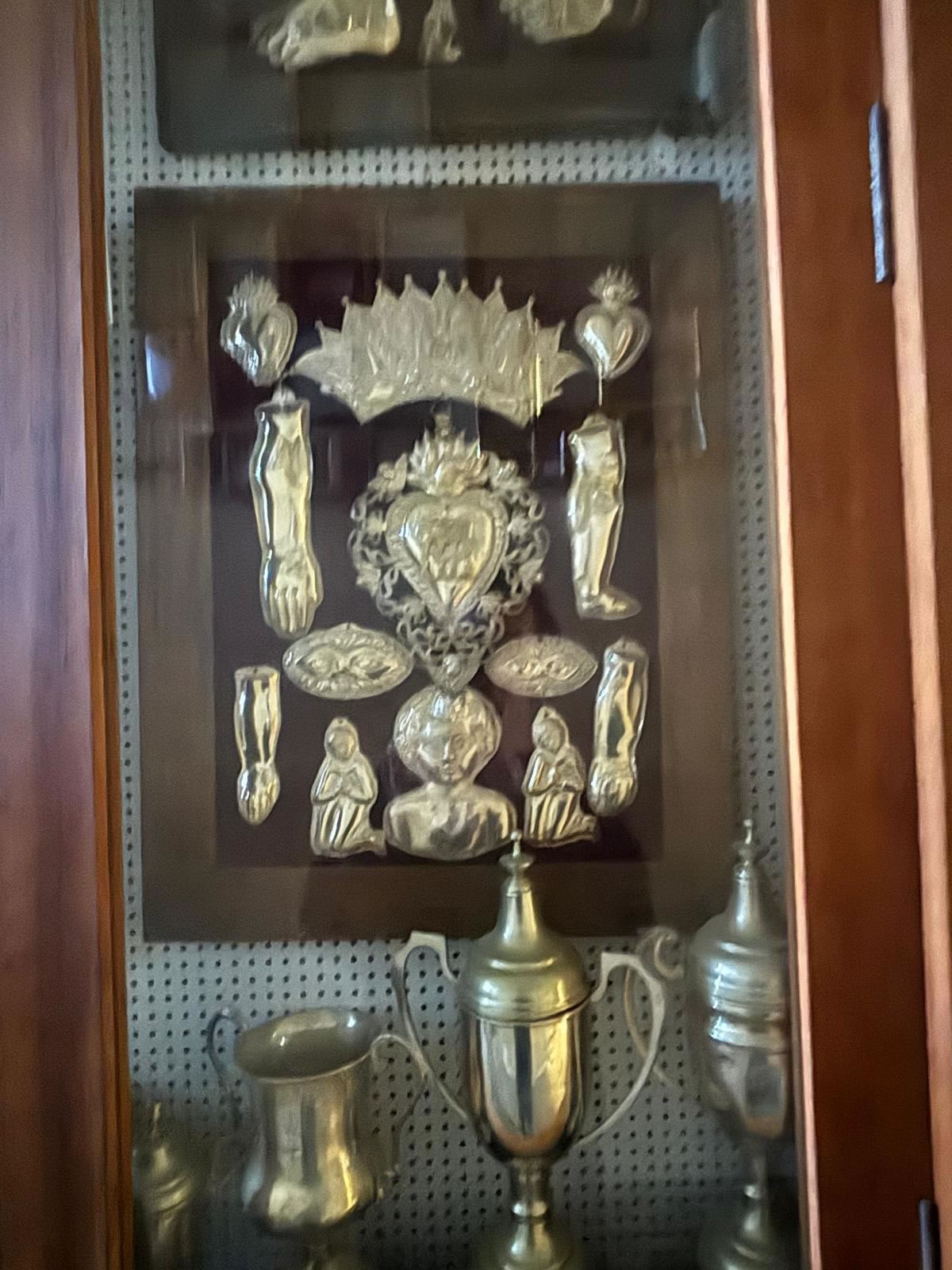
- Votive offerings and devotional chapels reflecting lived pilgrimage culture
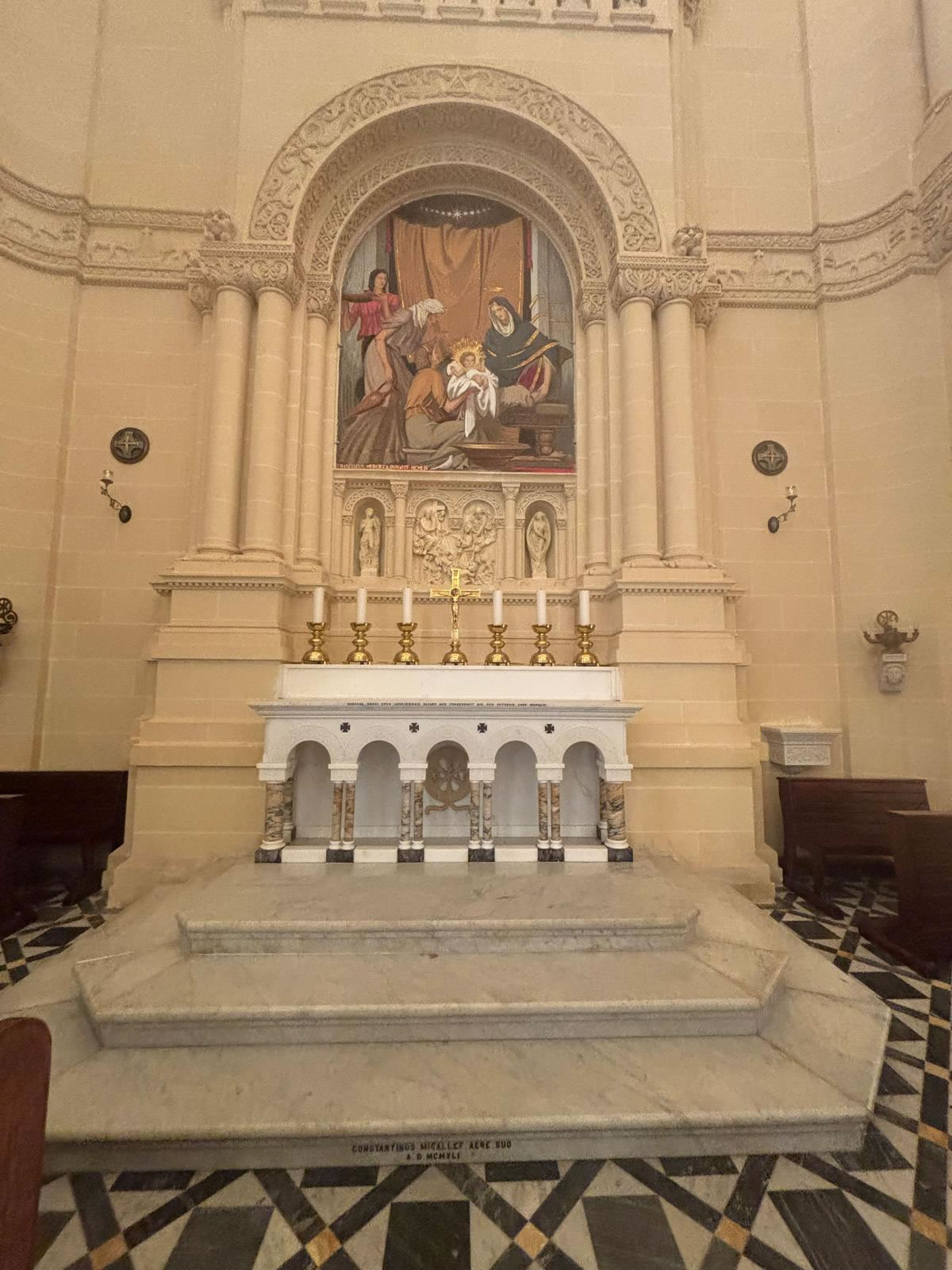
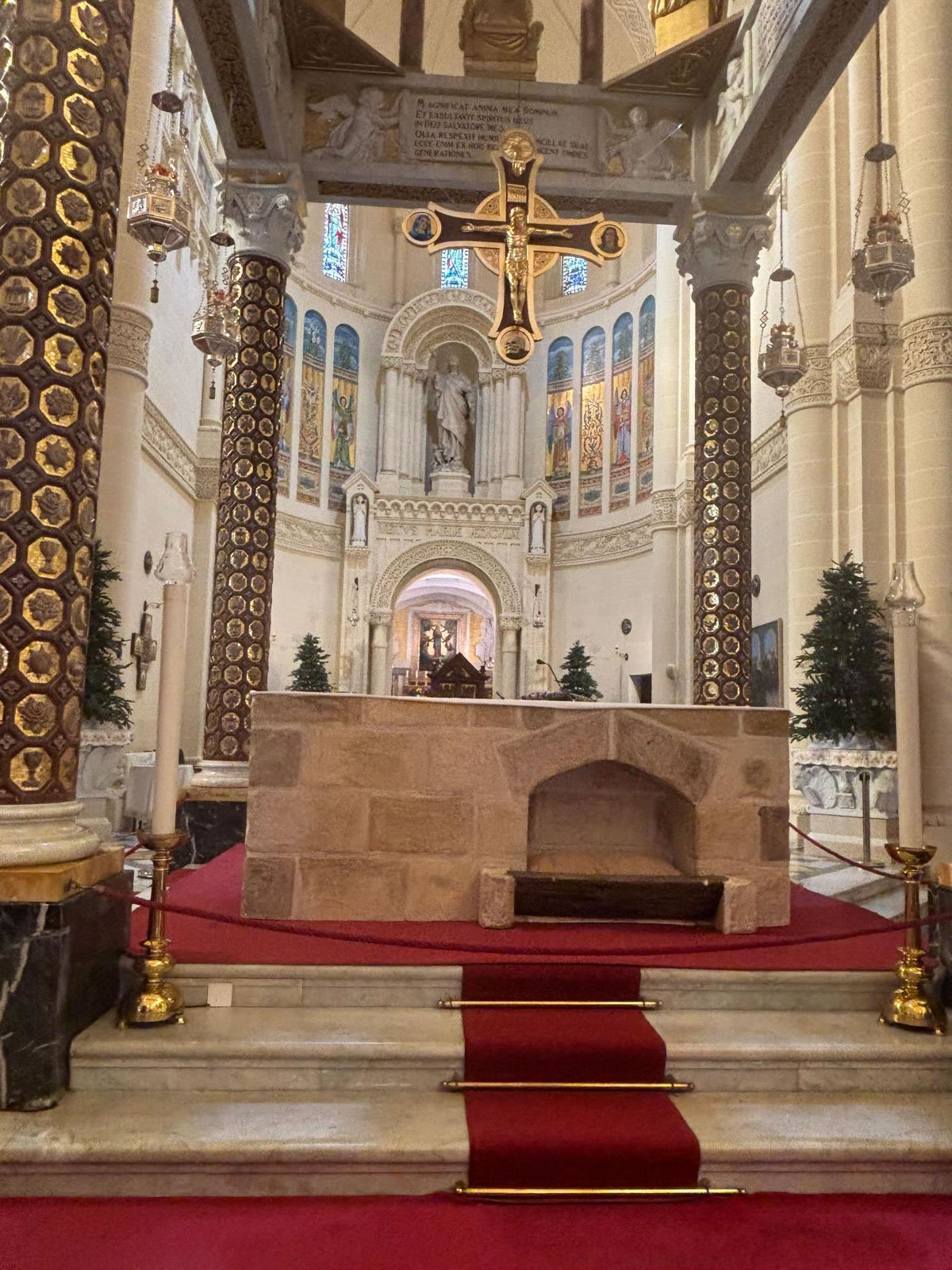
Local continuity: Shrine summaries emphasise that the earlier chapel remains central to devotion—Ta’ Pinu is not only a “new basilica”, but a living continuation of an older place of prayer.
Modifications and upgrades
Parvis and devotional art additions
The basilica’s forecourt has been used for major gatherings and has seen enhancements intended to deepen its theological and liturgical meaning for the thousands of pilgrims who visit each year (including mosaic-focused projects reported locally).
Museums and visitor interpretation
The shrine complex includes museum and interpretation spaces connected to the Ta’ Pinu story, including the house museum associated with Karmela Grima, which has undergone restoration and reopening initiatives in the modern era.
Restoration and conservation
As a high-profile pilgrimage church exposed to sea air and weather, Ta’ Pinu requires ongoing conservation of stone, metalwork, and glass. Restoration efforts documented by the shrine include stained-glass projects and façade-related repairs.
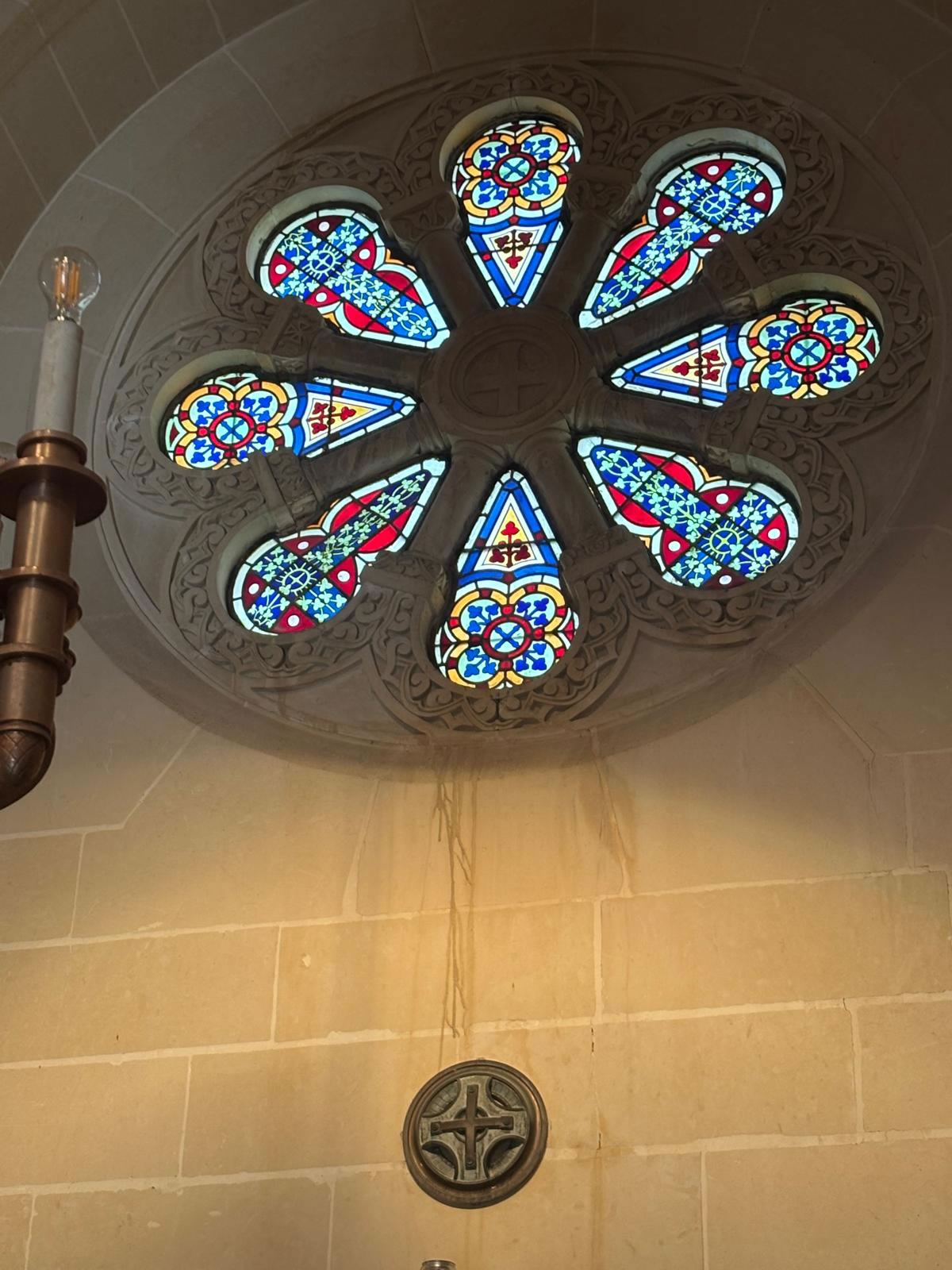
Rose window (made 1931) — restoration
The main rose window on the façade is described in shrine materials as a German-made stained-glass work (1931). Restoration initiatives have included removing and cleaning individual pieces, replacing damaged glass, and adding protective glazing.
Stained-glass programme — ongoing work
The shrine continues to document restoration programmes for stained-glass windows as part of its broader maintenance of the basilica fabric. These projects help preserve both artistic heritage and interior lighting conditions.
Stone and façade repairs
Restoration notes also reference the need to address damage discovered around parts of the façade and adjacent architectural elements, demonstrating how one conservation intervention can reveal further areas requiring attention.
Religious and community use today
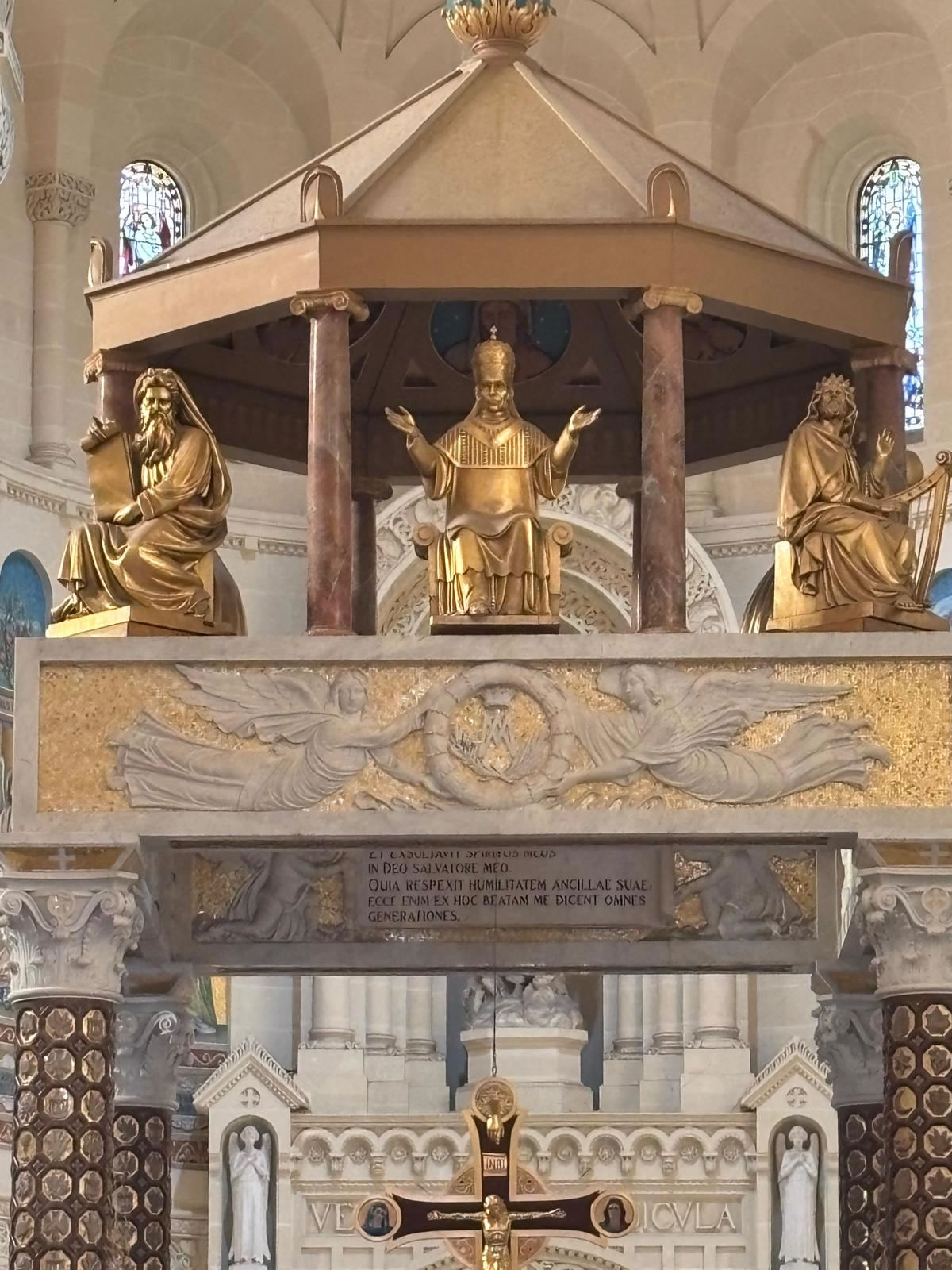
Ta’ Pinu remains an active place of worship and a key pilgrimage destination for Gozo and Malta. Its large forecourt supports public Masses, Marian celebrations, and special gatherings, while the interior and shrine spaces host daily prayer, confessions, and devotional visits. The basilica also functions as a cultural landmark—an architectural icon and a focal point for faith tourism.
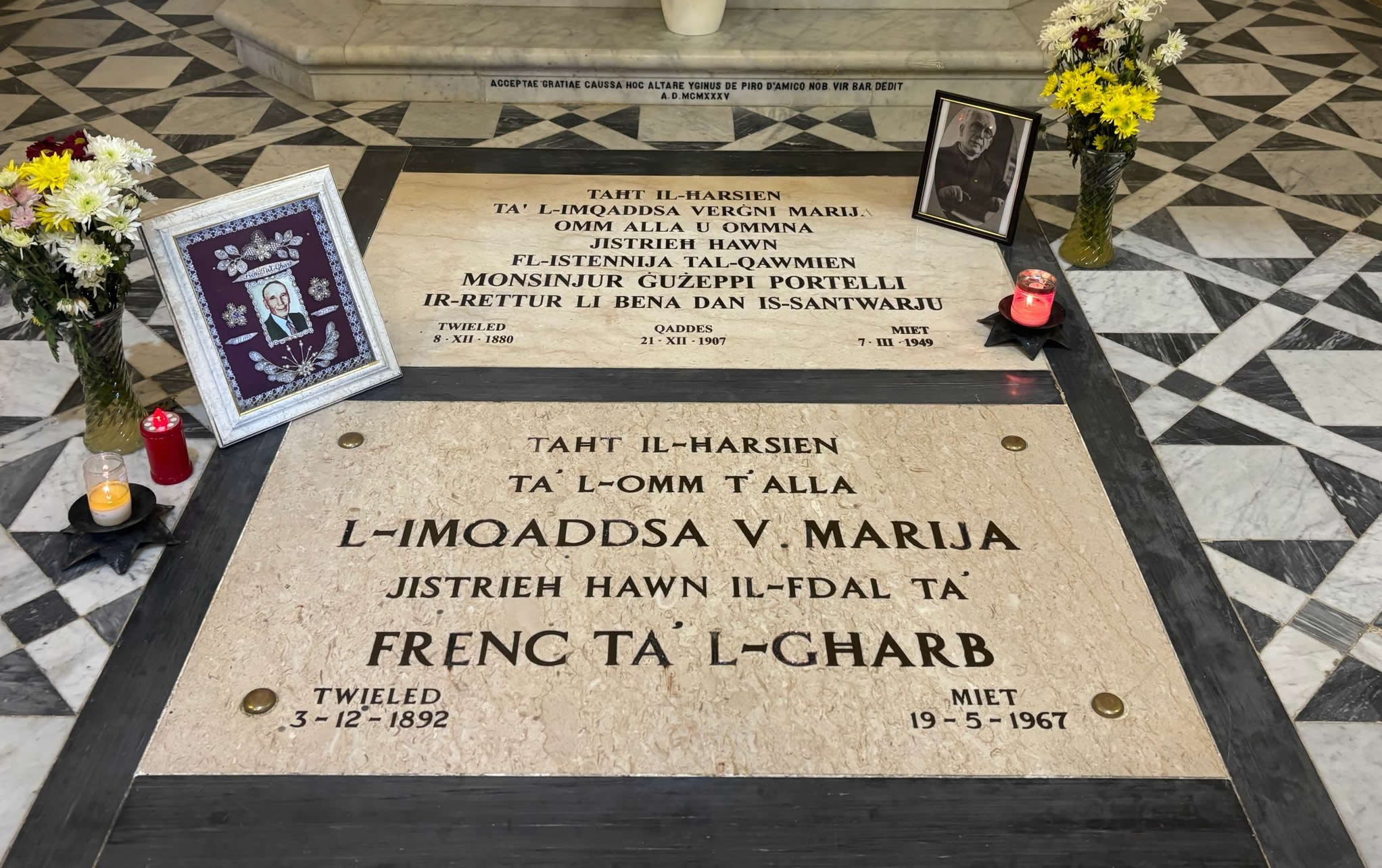
The Memorials and Resting Places of Ta' Pinu
While the National Shrine of Our Lady of Ta' Pinu does not feature a typical sprawling parish cemetery, its sacred interior and immediate precincts house the deeply revered final resting places and memorials of the foundational figures who shaped its miraculous legacy. Visitors exploring the quiet naves and side chapels will find dedicated marble monuments commemorating the visionary witnesses, the dedicated clergymen, and the historic holy figures of Gozitan devotion whose lives remain inseparable from the sanctuary’s history.
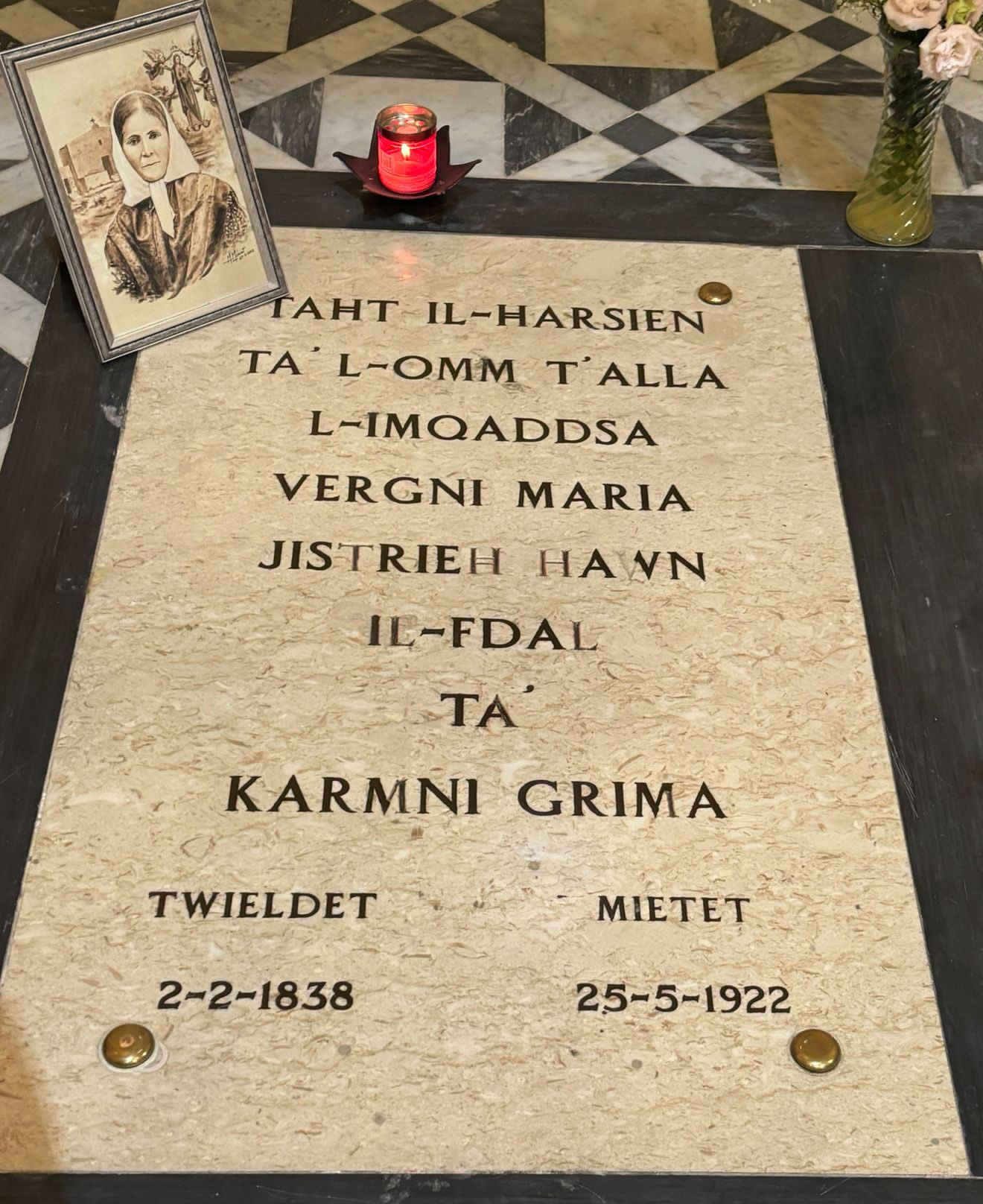
Karmni Grima (2 Feb 1838 – 25 May 1922)
The humble Gozitan peasant woman from Għarb who, on June 22, 1883, heard the transformative voice of the Blessed Virgin Mary emanating from the tiny, isolated countryside chapel. Her profound spiritual experience and subsequent life of quiet piety serves as the catalyst for the entire sanctuary complex.
Franġisk Portelli (6 Oct 1850 – 4 Feb 1926)
The second critical witness to the Marian manifestations at Ta' Pinu. Shortly after Karmni Grima's experience, Portelli also heard the voice of Our Lady from the chapel, urging him to honor Christ’s hidden shoulder wound. His testimony confirmed the miraculous nature of the site to the ecclesiastical authorities.
Rev. Mikiel Attard (1 Oct 1933 – 30 Jul 2004)
A deeply beloved Gozitan priest and now a declared Servant of God. Widely known during his earthly life for his immense sanctity, compassion, and tireless pastoral zeal, his mortal remains were exhumed and solemnly reinterred in a dedicated white marble tomb within the basilica's right nave in 2022 to accommodate the ongoing veneration of the faithful.
Rev. Mons. Ġużepp Portelli (8 Dec 1880 – 7 Mar 1949)
The visionary rector of Ta' Pinu who spear-headed the monumental task of constructing the massive Neo-Romanesque basilica we see today. It was under his direct initiative that work commenced in 1922, concluding with its grand consecration in 1932. Originally buried in Għarb, his remains were formally transferred into the basilica in 2008.
Franġisku Saverju “Frenċ tal-Għarb” Mercieca (3 Dec 1892 – 19 May 1967)
The legendary holy healer and mystic of Gozo. Despite having no formal training, Frenċ used a mixture of traditional medicinal herbs, intense prayer, and a profound, lifelong connection to Our Lady of Ta' Pinu to comfort and cure thousands of desperate pilgrims. His memorial at the site remains heavily visited, often decorated with fresh flowers left by grateful locals.
 |  |
 |
|
 |
|
Visiting Ta’ Pinu Basilica
How to get there
Ta’ Pinu is near Għarb in Gozo’s west. It’s easily reached by car, taxi, or bus routes that serve the area. The basilica sits in open countryside, so allow time to enjoy the views.
Best time to visit
- Morning for quieter prayer time
- Late afternoon for soft light on the limestone façade
- Feast days and special Marian celebrations for the full pilgrimage atmosphere
FAQ
Is Ta’ Pinu a basilica or a sanctuary?
Both. Ta’ Pinu is a National Shrine (sanctuary) and it was elevated to the dignity of a Minor Basilica.
What should I look for inside?
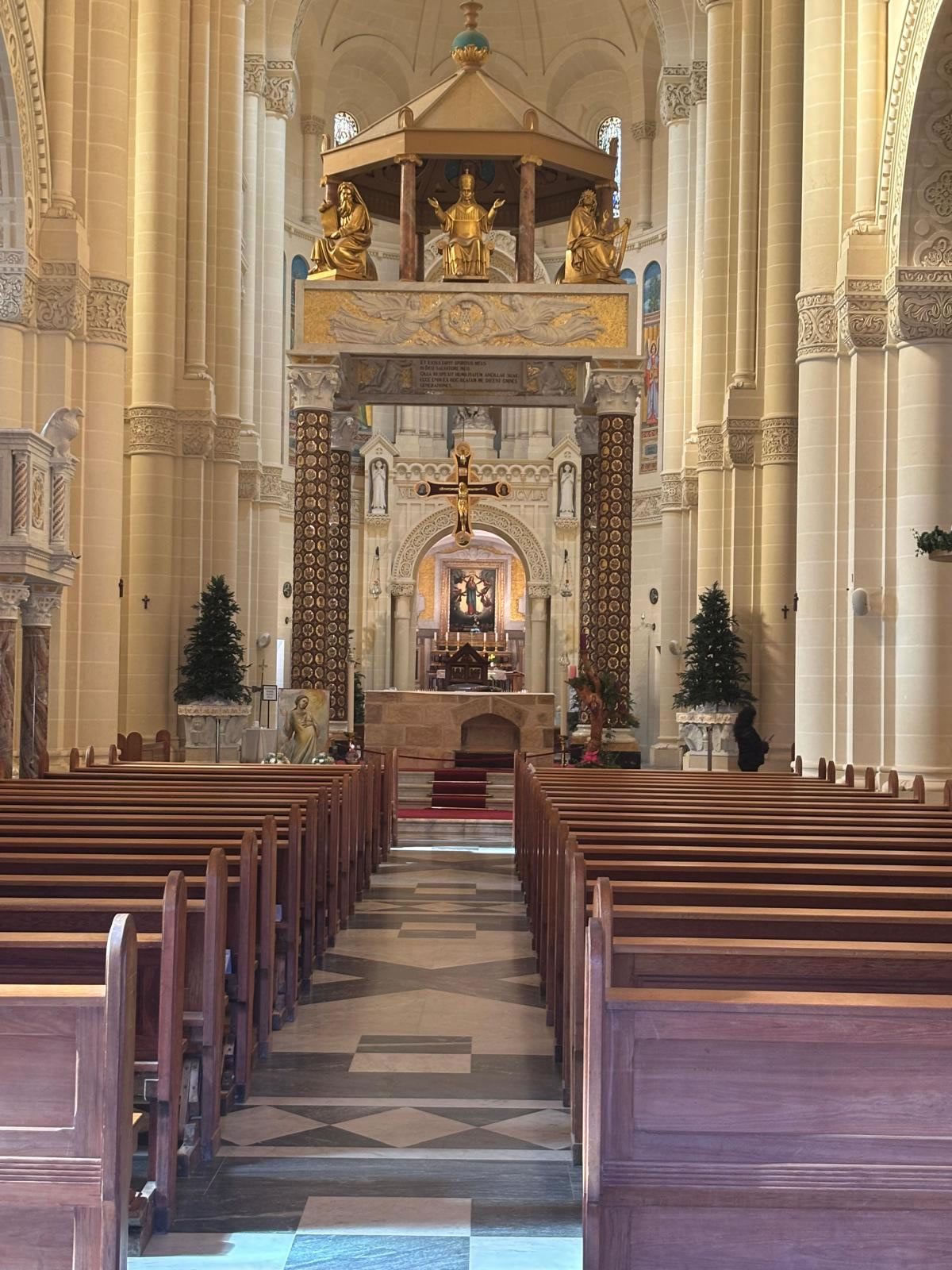
Key highlights include the shrine focus of Marian devotion, stained-glass features (including the rose window), and votive offerings that reflect centuries of thanksgiving and pilgrimage.
Is the visit suitable for families?
Yes. The basilica and parvis are spacious and welcoming. Please keep a respectful tone, especially during services.