Location Map Coordinates 35.832442, 14.533988
- Built: 1715–1716 (Order of St John).
- Alternative names: Qajjenza Battery; Saint George’s Battery.
- Funding/patronage: attributed to Fra Francesco Maria Ferretti (over 900 scudi recorded in summaries).
- Original plan: semi-circular gun platform with eight embrasures; gorge blockhouses linked by a redan.
- Major later changes: parapet/embrasures demolished; ditch turned into a seawater moat; seawall built; reused as a restaurant.
Overview
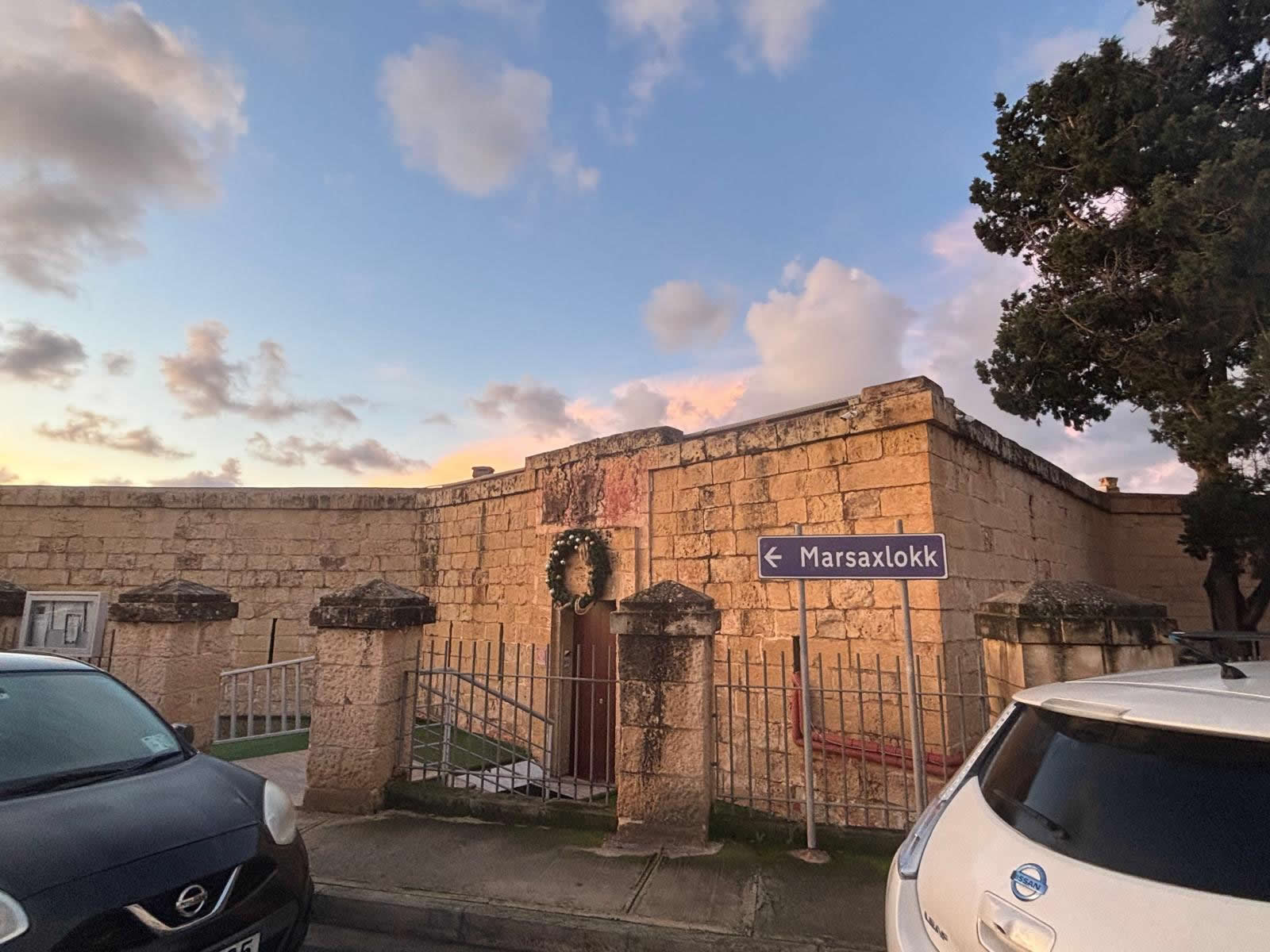
Ferretti Battery is one of Malta’s early 18th-century coastal artillery batteries, built by the Order of St John to strengthen the defences of the south-eastern shoreline. The battery stands at Qajjenza (within Birżebbuġa), close to the approaches of Marsaxlokk Bay. It is notable not only for its survival, but also for the way it has been adapted for modern use while still retaining key defensive features.
Strategic context: defending Marsaxlokk Bay
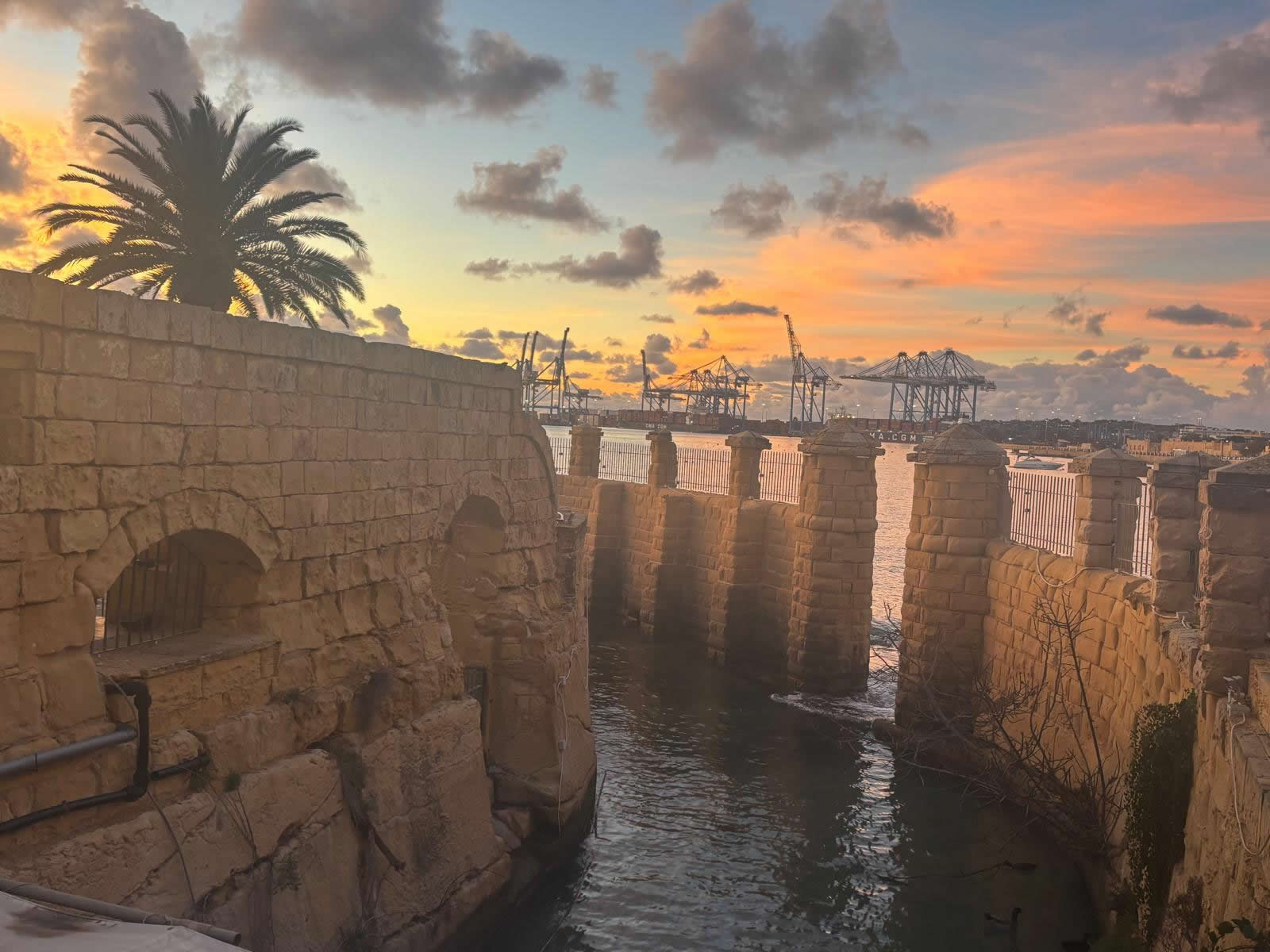
The battery formed part of a wider defensive chain around Marsaxlokk Bay that combined artillery batteries, towers, redoubts and entrenchments. Such networks were designed to deny hostile landings, protect anchorages, and bring overlapping fire onto small vessels approaching the coast.
Construction, builder and original design
Confirmed construction dates: Ferretti Battery was built in 1715–1716 by the Order of St John. It is named for Fra Francesco Maria Ferretti, a knight recorded as contributing substantial funds toward its construction.
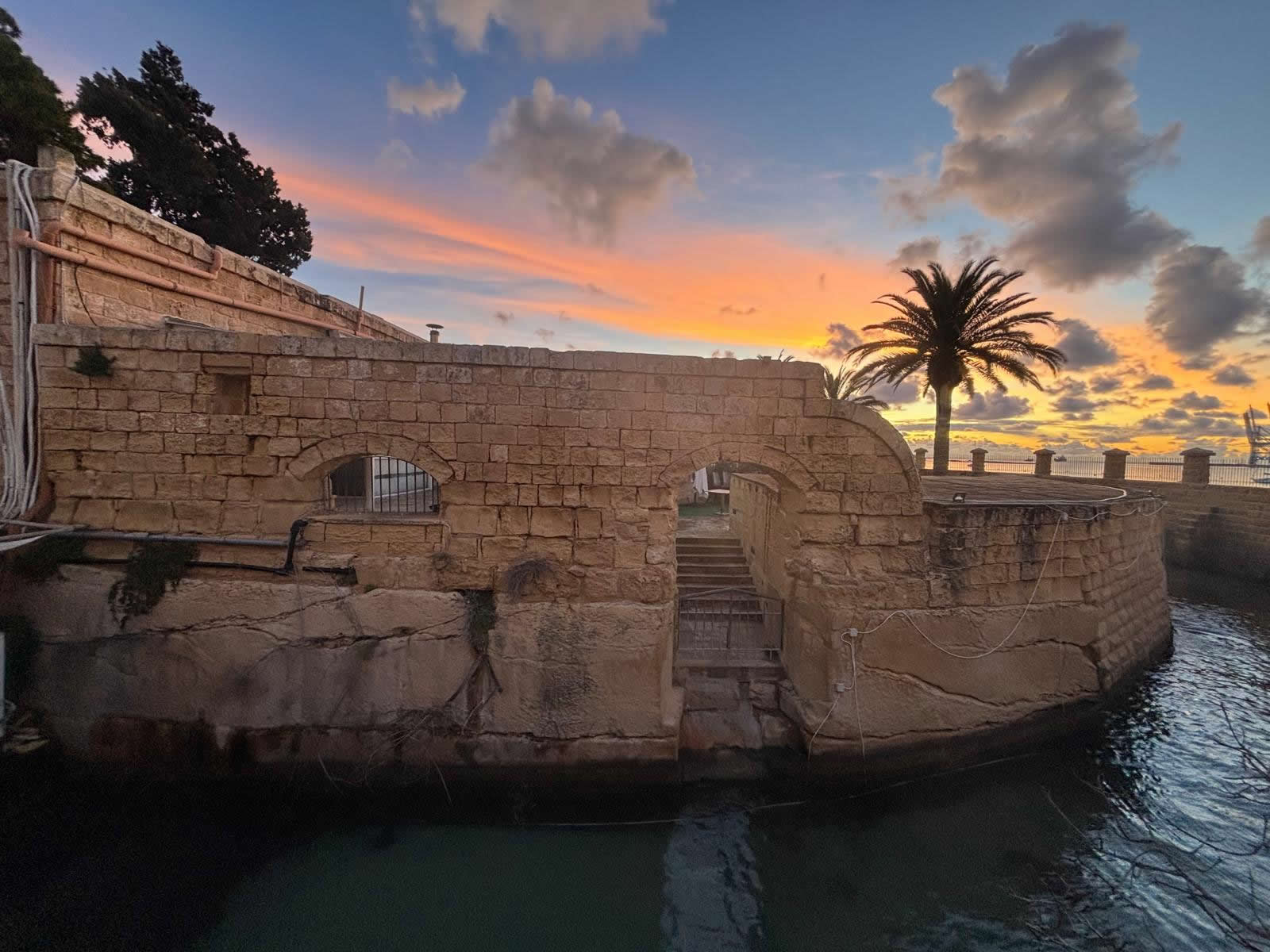
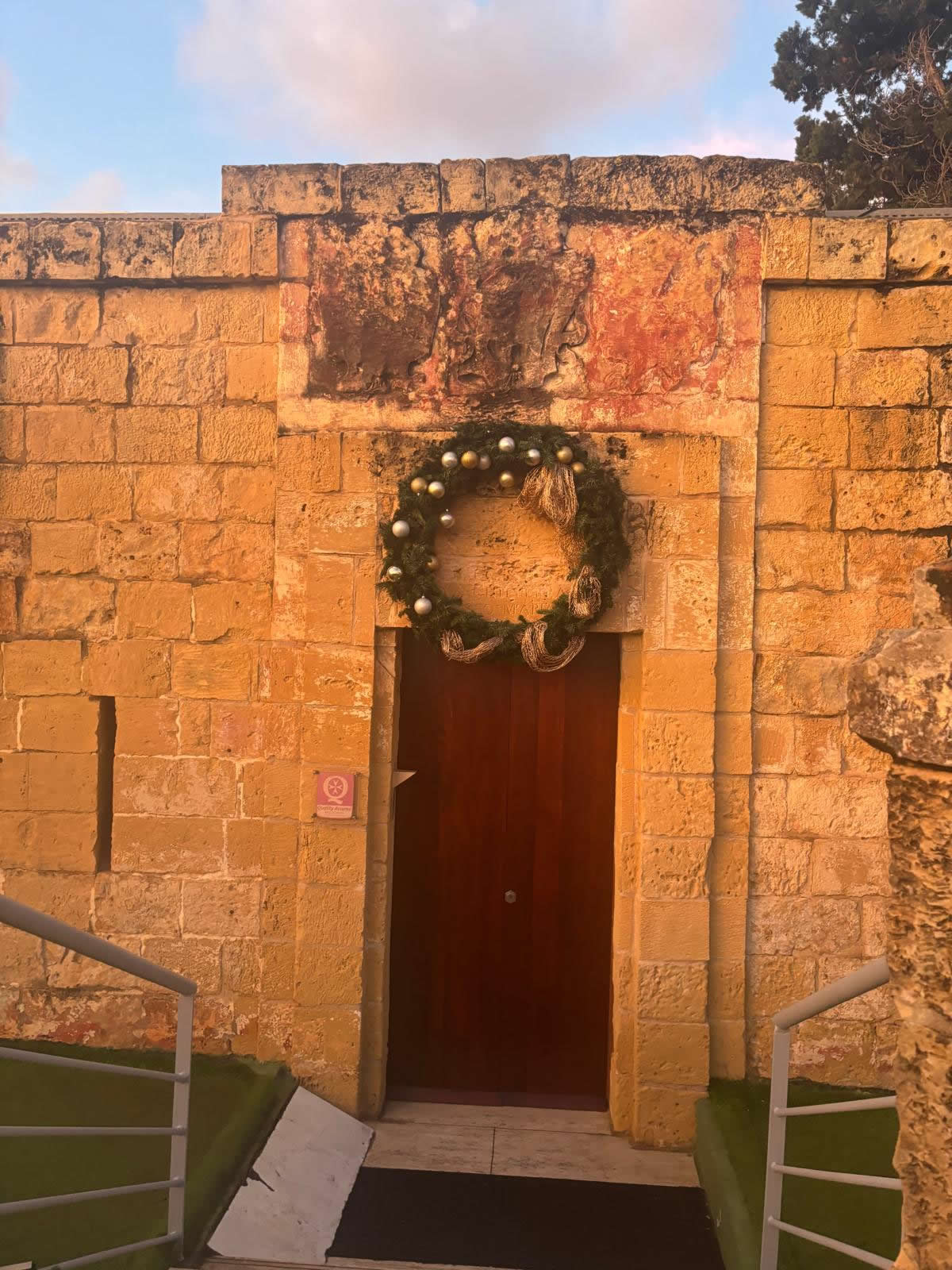
The original battery consisted of a semi-circular gun platform facing the sea. Its parapet contained eight embrasures for artillery. The gorge (rear) was more complex and defensible: it had two blockhouses linked by a projecting redan, with the blockhouses and redan pierced by musketry loopholes. The entrance lay within the redan and was originally surmounted by coats of arms (reported as later defaced).
A shallow rock-hewn ditch once added protection around the battery. This feature becomes important later in the battery’s “afterlife” when the defensive ditch was adapted into a water-filled feature.
Armament, function and service life
Like other Hospitaller coastal batteries of the period, Ferretti Battery’s role was to bring cannon fire onto hostile craft and to discourage sudden landings. Batteries in this defensive system were also intended to cooperate: a landing threatened at one point could be harassed by fire from neighbouring works while signals summoned response forces.
Ferretti Battery was decommissioned sometime in the 19th century, reflecting changing military priorities and the reduced relevance of many earlier coastal batteries in an age of newer artillery and different strategic requirements.
Confirmed modifications and later alterations
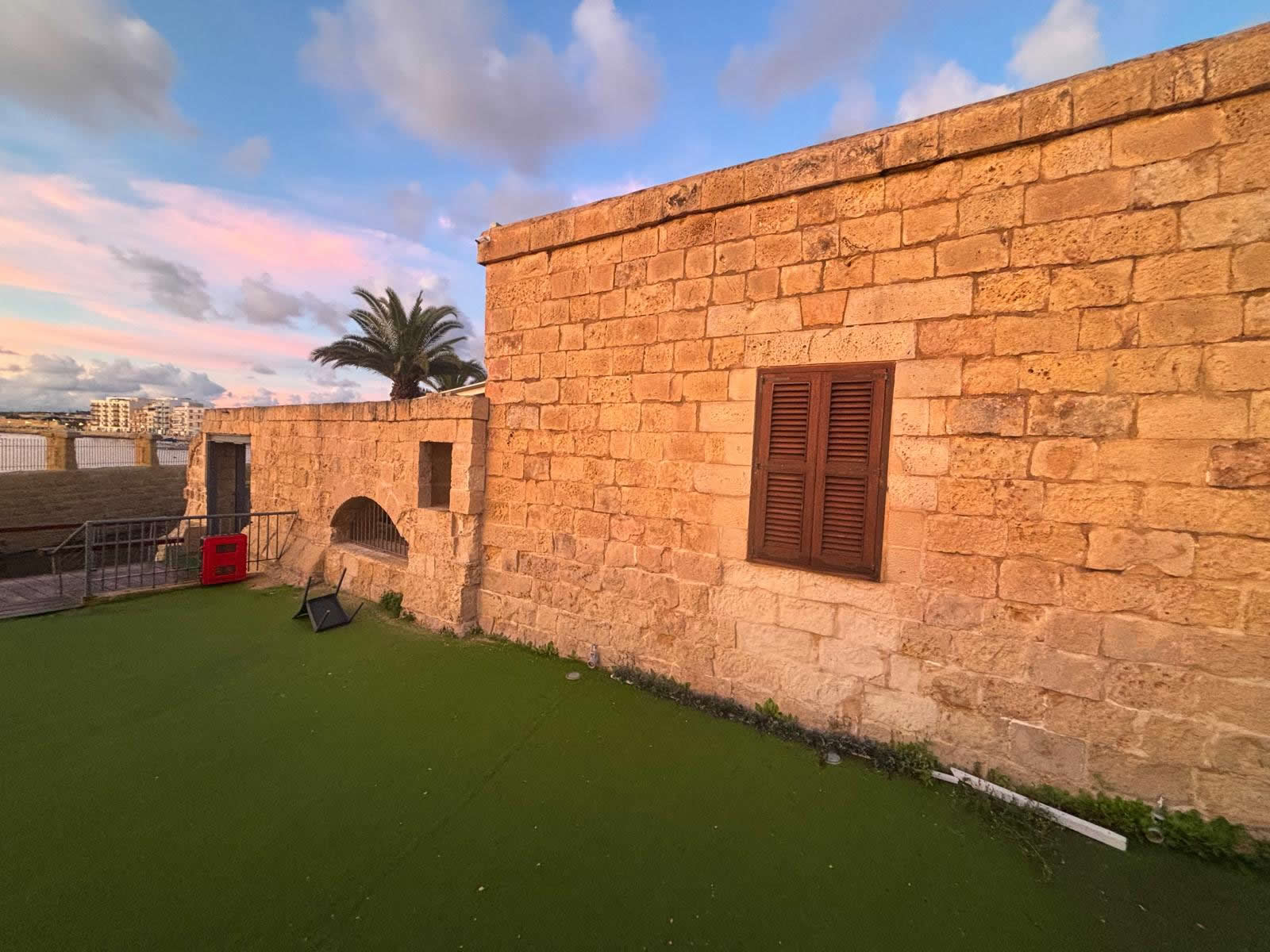
After decommissioning, the battery entered a long period of reuse. Published summaries state that it was converted into a summer residence and a boathouse. Major fabric changes followed:
- The parapet with embrasures was demolished.
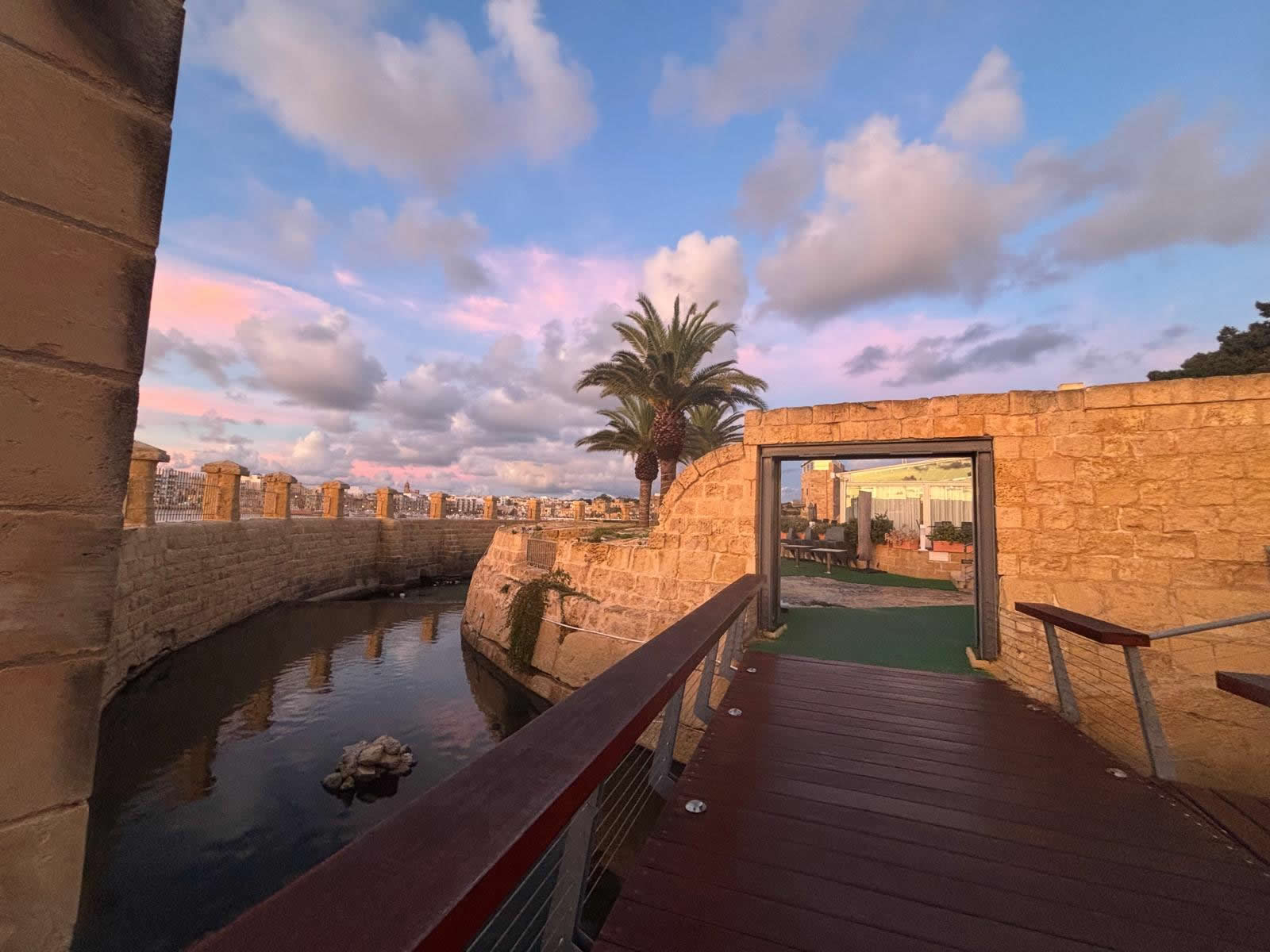
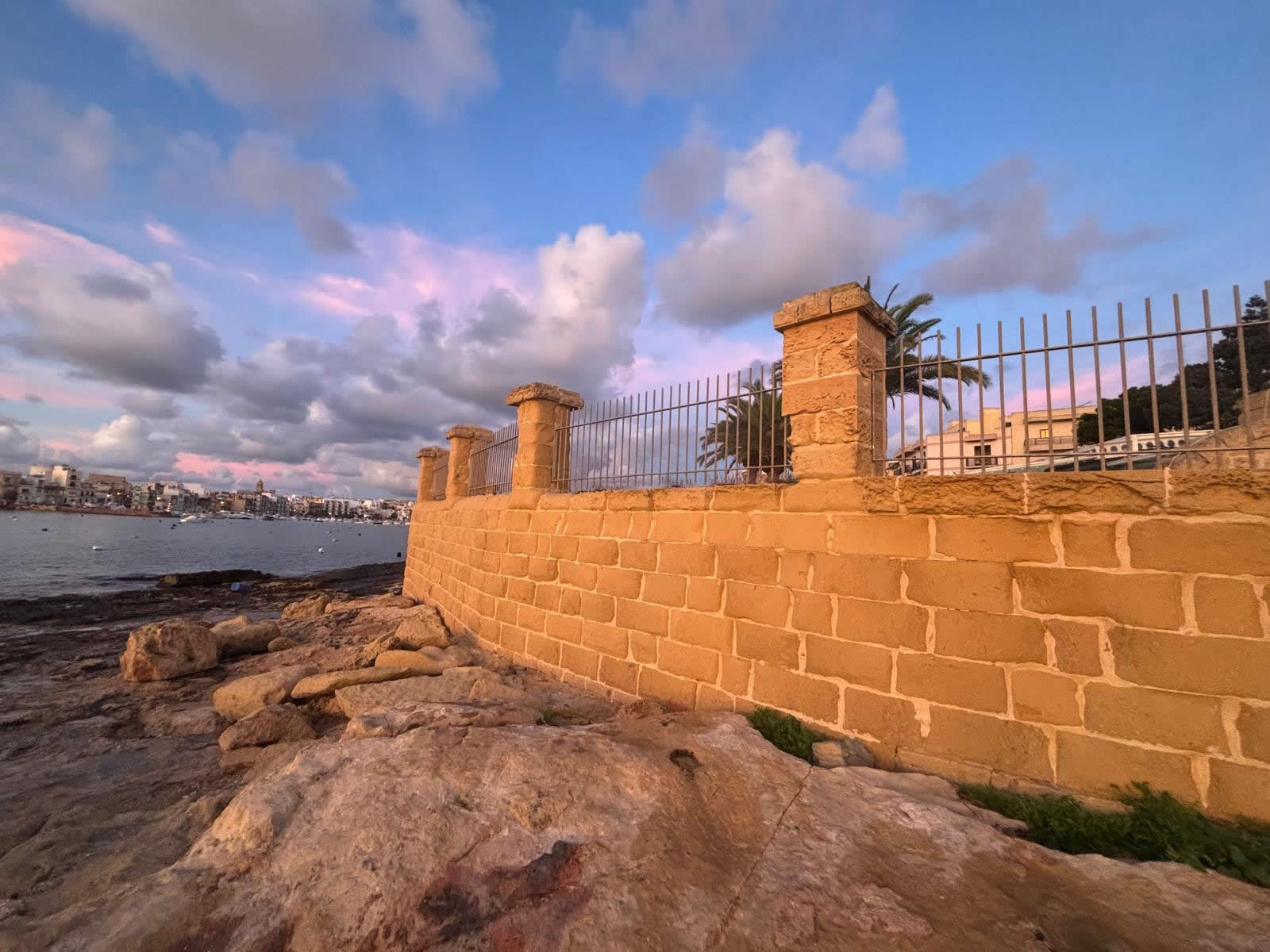
- The original ditch was converted into a moat filled with seawater.
- A high seawall was built around the battery.
Conservation, rebuilding and “restoration” in practice
Ferretti Battery is often cited as being in a generally fair state of preservation despite modern alterations. Some sources note that missing embrasures were rebuilt in recent times, helping the battery regain part of its original visual rhythm along the gun line.
Accuracy note for emalta.com:
Unless you have an official conservation report or a dated restoration record, it is safest to describe these works as
“repairs / rebuilding of missing embrasures” rather than a fully documented, conservation-led restoration campaign.
Present use: a battery reused as a restaurant
Today Ferretti Battery is open to the public as a restaurant operating within the historic fortification. Modern guides emphasise the setting: an 18th-century battery with bridge/moat features and fortification walls, adapted for hospitality while retaining recognisable military architecture.
Visiting notes
- Access: access is typically through the restaurant (private tenancy), so treat the site respectfully and follow on-site rules.
- What to document for emalta.com: the semi-circular plan, surviving blockhouses and redan, musketry loopholes, moat/seawall, and any coats-of-arms stones above the original entrance.
- Coordinates: 35.832442, 14.533988 (use these for mapping and structured data).
More on emalta.com
Built: 1715–1716 (Order of St John).
Modified: decommissioned in the 19th century; converted to summer residence/boathouse; parapet/embrasures demolished; ditch converted to seawater moat; seawall built; later repairs included rebuilding some embrasures; reused as a restaurant.