Location Map Coordinates 35.826597, 14.533094
- Built: 1715–1716 (Order of St John).
- Purpose: coastal artillery defence of the Marsaxlokk Bay area, with emphasis on the Birżebbuġa/Pretty Bay shoreline.
- Original layout: semi-circular gun platform with a parapet and eight embrasures; rear blockhouse protected by a redan.
- Later history: heavily altered; redan and much of the gun platform/parapet destroyed.
- Current use (blockhouse): adapted for commercial/storage uses (commonly described as a bar and a garage).
Overview ·
Strategic context ·
Construction & design ·
Armament & operation ·
Modifications & losses ·
Present condition & use ·
Visiting notes
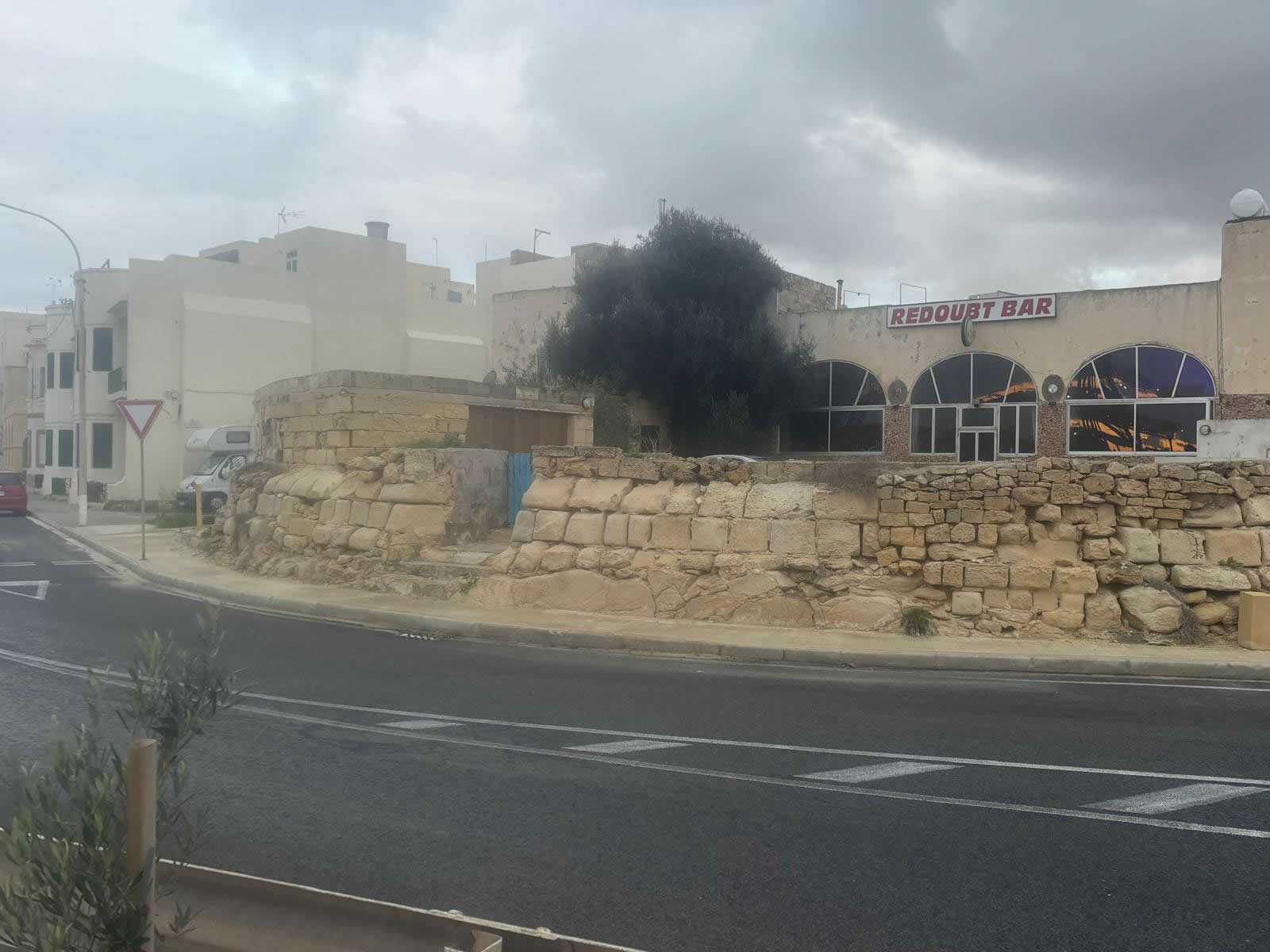
Overview
Pinto Battery is an early-18th-century coastal artillery battery in Birżebbuġa. It is also known as Għżira Battery and Kechakara Battery. Built in 1715–1716 by the Order of St John, it formed part of a wider defensive programme that strengthened vulnerable bays and landing places around the Maltese coastline.
Strategic context: the Marsaxlokk Bay defensive chain
The battery was one element in a network intended to defend Marsaxlokk Bay and nearby shores. Contemporary coastal defence in this period relied on a chain of batteries, towers, redoubts and entrenchments that could observe the coast, deny easy landings, and bring artillery fire onto targets approaching the shoreline.
In the Birżebbuġa area, the battery’s role is frequently linked with the defence of the bay and the sandy shoreline known today as Pretty Bay, where a landing force could otherwise establish itself quickly.
Construction, design and key architectural features
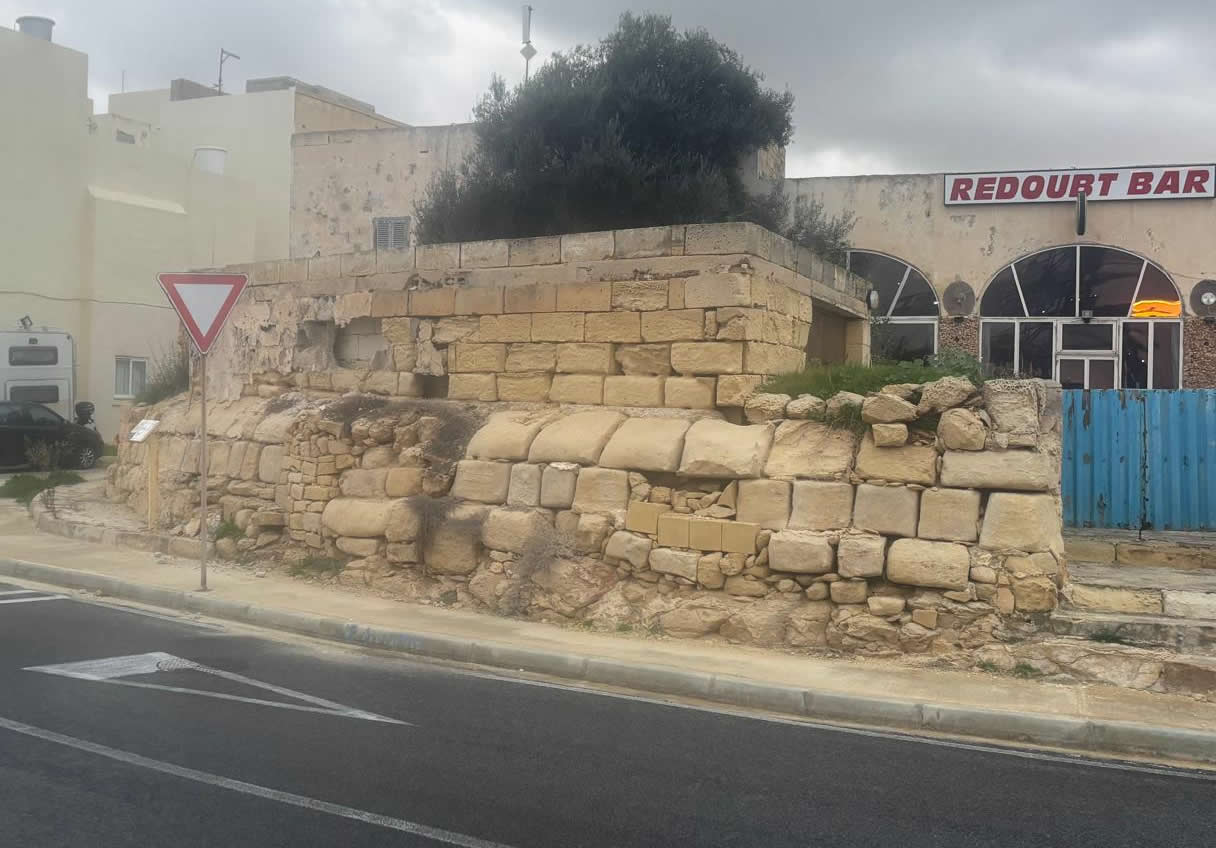
Confirmed construction dates: 1715–1716. The battery was built in local limestone and originally followed a typical Hospitaller coastal-battery formula: a forward gun platform focused on seaward fire, supported by a sheltered rear structure and a controlled entrance.
The original battery consisted of a semi-circular gun platform with a parapet containing eight embrasures. At the rear (the gorge) stood a large rectangular blockhouse, protected by a projecting redan. The entrance was located within this redan, channelling access through a defensible point.
Armament and service use
Pinto Battery was originally armed with cannons (typical for the period and the battery type). In practice, such batteries were intended to fire on boats and landing parties, support nearby positions, and provide a permanent coastal presence in an era when raids and sudden landings remained a real concern.
Modifications, demolition and later changes
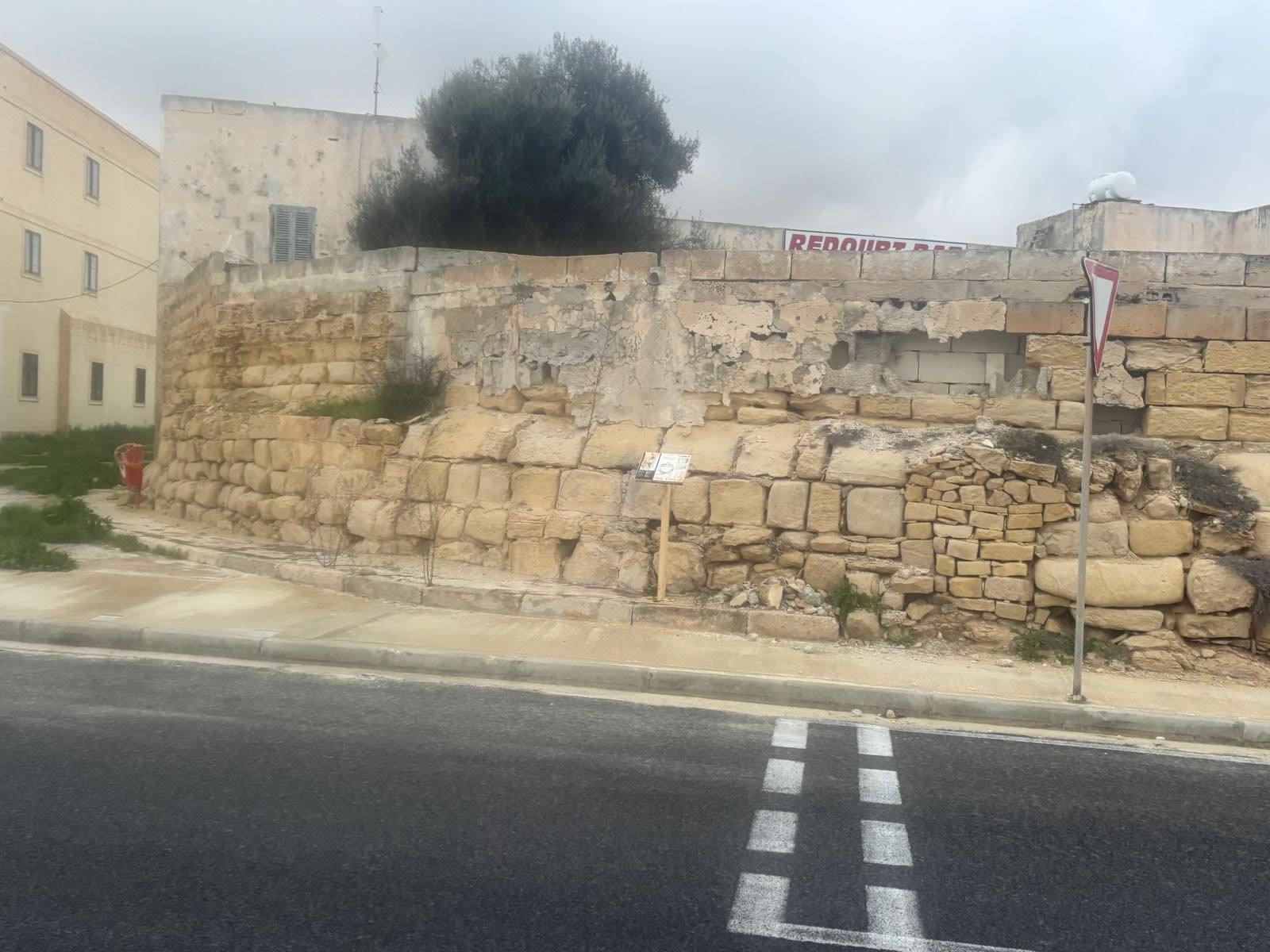
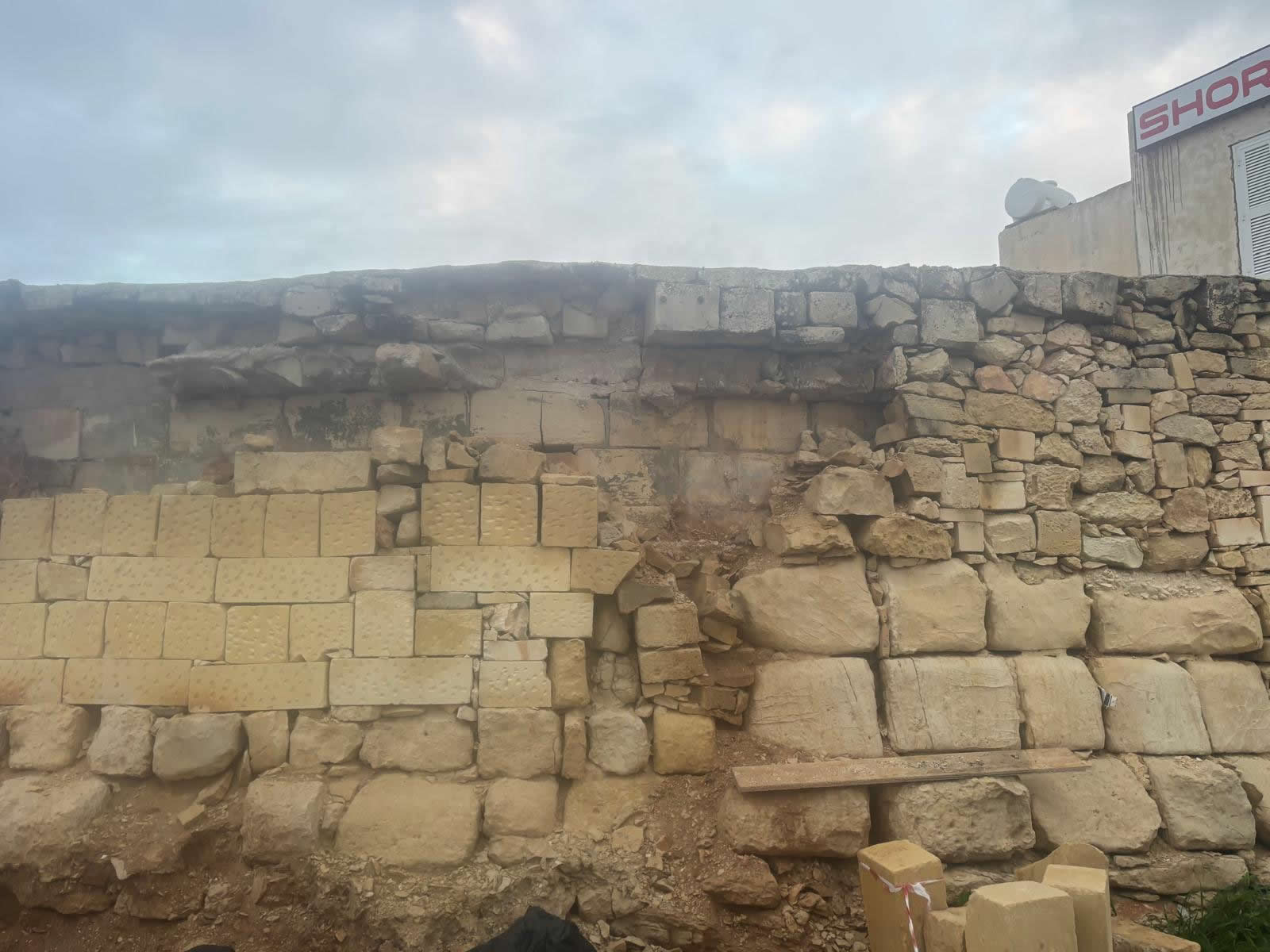
Unlike batteries that survive as coherent military monuments, Pinto Battery has been heavily altered. Over time, substantial parts of the defensive envelope were removed or destroyed.
The most significant losses are the destruction of the redan and the near-total loss of the gun platform’s parapet and embrasures. What remains is largely the general outline of the original semi-circular platform and the blockhouse massing—enough to read the plan, but not enough to experience the battery as an intact gun position.
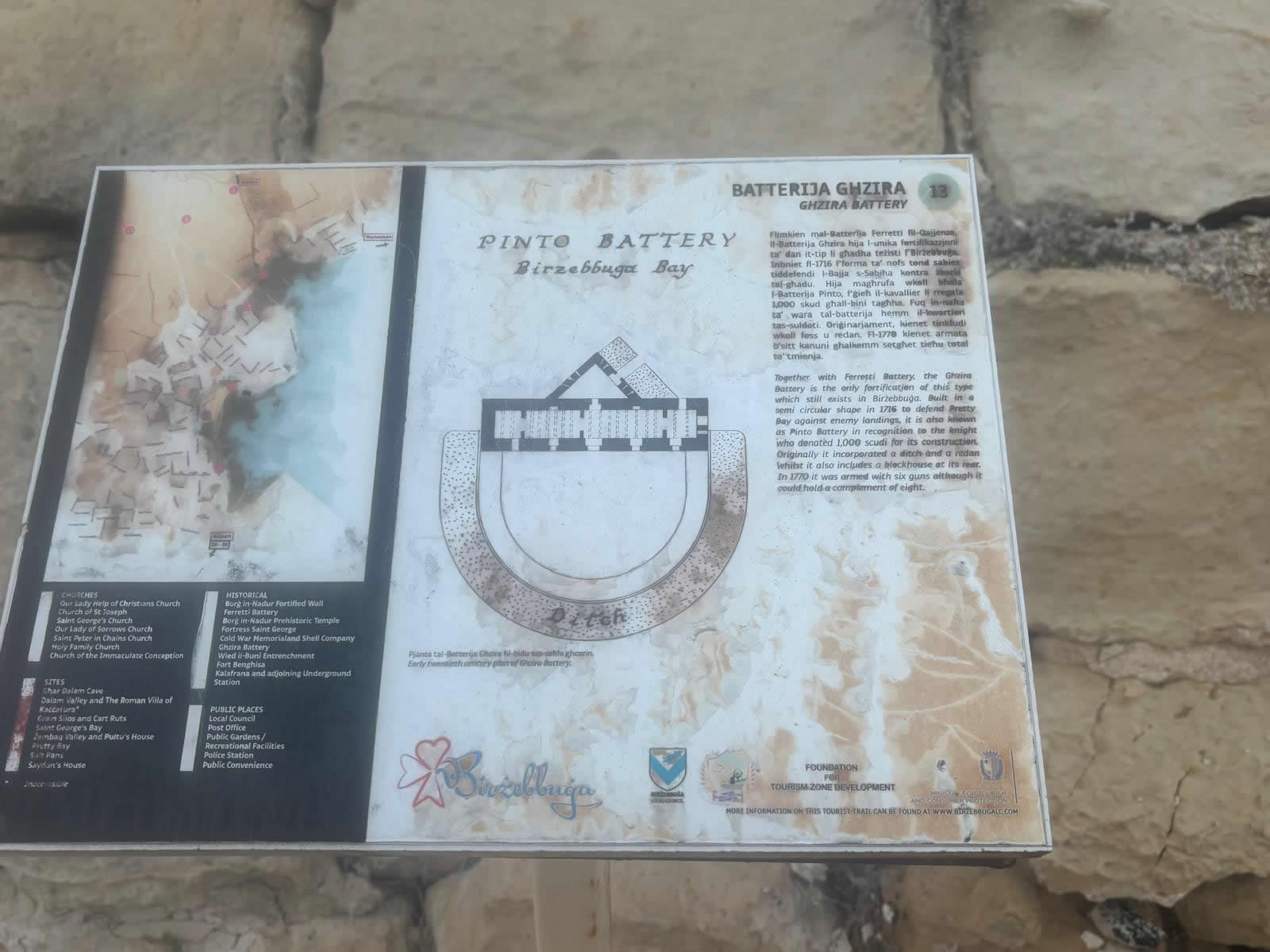
Present condition, reuse and “restoration” status
The blockhouse survives but has been adapted for non-military use and is commonly described as housing a bar and a garage. This reuse has ensured occupation but has also contributed to alteration of historic fabric.
Published summaries describe major alteration and loss rather than a formal conservation-led restoration campaign and the battery is being used as a bar.
Visiting notes
- Access: the structure is not generally treated as an open monument; approach respectfully and do not enter if access is restricted.
- What to photograph: the surviving blockhouse exterior, the curvature/outline of the original platform, and any surviving masonry details that indicate the former parapet line.
- Interpretation tip: from certain angles you can still read the battery’s intended seaward arc of fire from the remaining plan.
More on emalta.com
Built: 1715–1716 (Order of St John).
Modified: heavily altered in later periods; redan destroyed; gun platform/parapet largely destroyed; blockhouse adapted for commercial/storage use.