📍 Location
Location Map Coordinates 35.898343, 14.515025
Oratory of the Immaculate Conception – Valletta, Malta
Introduction
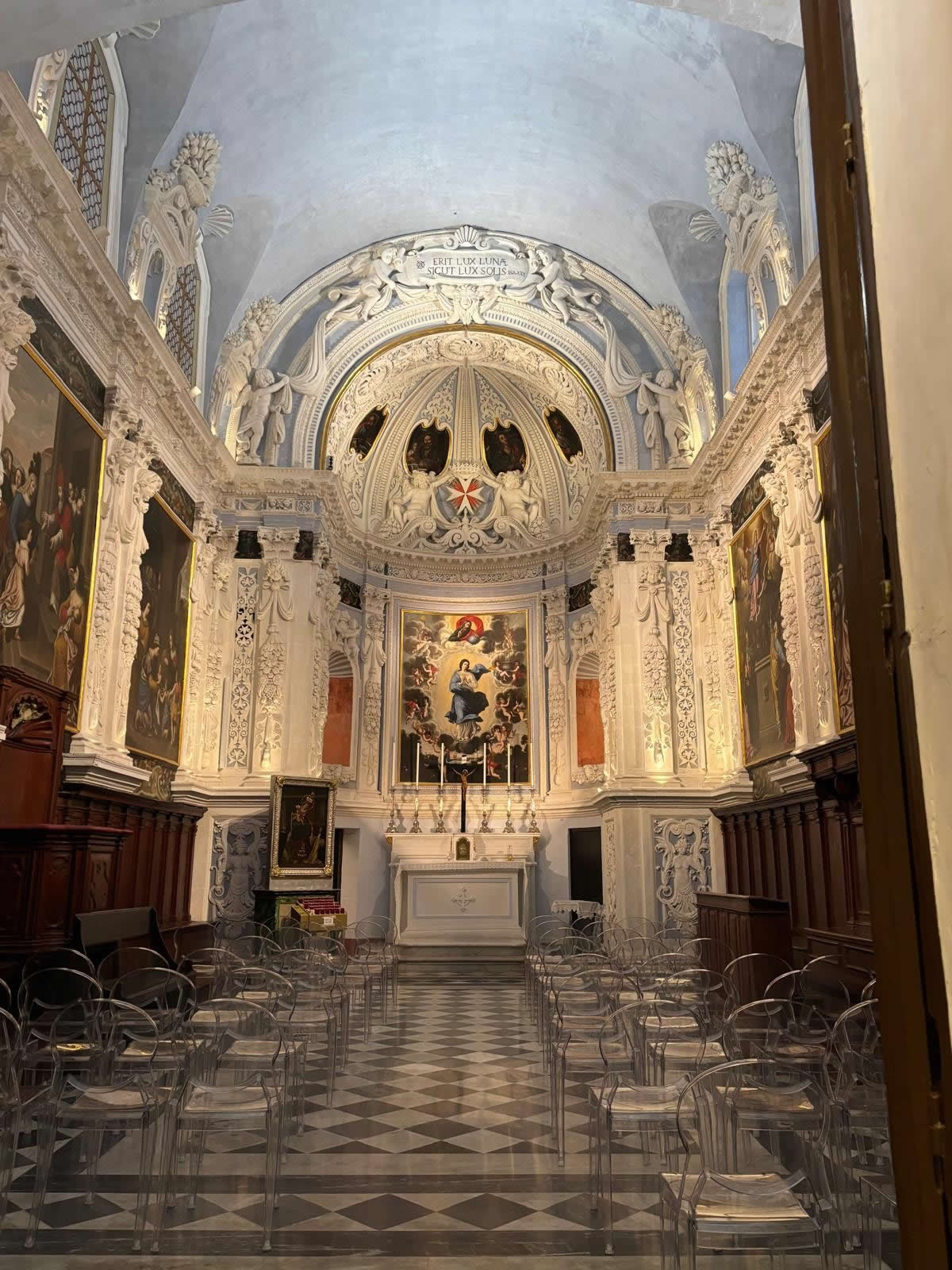
The Oratory of the Immacolata, formally known as the Oratory of the Immaculate Conception, is a historic Baroque chapel situated within the Jesuit Church complex in Valletta, Malta. Hidden within one of the most significant ecclesiastical complexes in the Maltese capital, the oratory represents an important element of Malta’s religious and artistic heritage. The chapel forms part of the wider Jesuit architectural ensemble which includes the Jesuit Church and the former Collegium Melitense, the educational institution that eventually developed into the modern University of Malta.
Dating back to the early seventeenth century, the Oratory of the Immacolata was constructed to serve a confraternity devoted to the Blessed Virgin Mary and particularly to the doctrine of the Immaculate Conception. This doctrine, which emphasises the belief that Mary was conceived free from original sin, held strong devotional significance within Catholic communities during the Counter-Reformation period. The oratory provided a sacred environment where members of the confraternity could gather for prayer, meditation and religious instruction.
Historical Origins
The Oratory of the Immaculate Conception was built during the first half of the seventeenth century within the Jesuit Church complex in Valletta. The building was intended as a devotional chapel for a confraternity established by the Knights of St John, the religious order that governed Malta from 1530 until the arrival of the French in 1798.
Confraternities were an important feature of religious life in Malta during the early modern period. These lay religious organisations brought together individuals from different social backgrounds who wished to participate more actively in spiritual and charitable activities. Members would gather regularly for communal prayer, devotional exercises, and works of charity within their local communities.
The Oratory of the Immacolata therefore served as a private devotional space linked to the Jesuit Church, allowing members of the confraternity to cultivate a deeper spiritual life centred on Marian devotion. Its construction also reflects the strong influence of the Jesuit Order in Malta during the seventeenth century, particularly in the fields of education and theology.
Architecture and Design
Although historical documentation regarding the architect of the Oratory of the Immacolata remains limited, some scholars attribute its design to the Italian Baroque architect Francesco Buonamici, who worked extensively in Malta during the seventeenth century. Buonamici was responsible for several major architectural projects associated with the Knights of St John and is known for introducing elements of Italian Baroque design to the island.
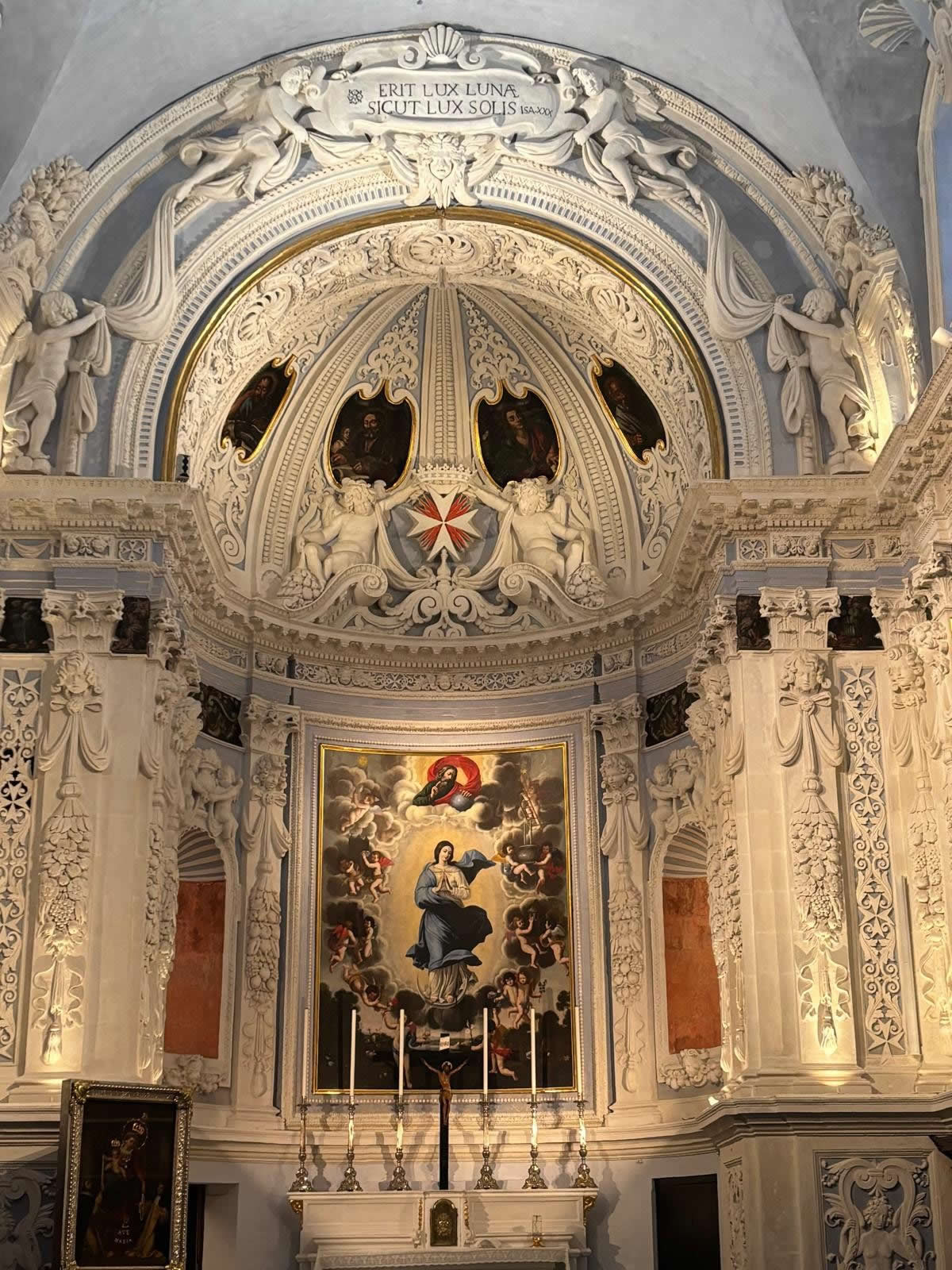
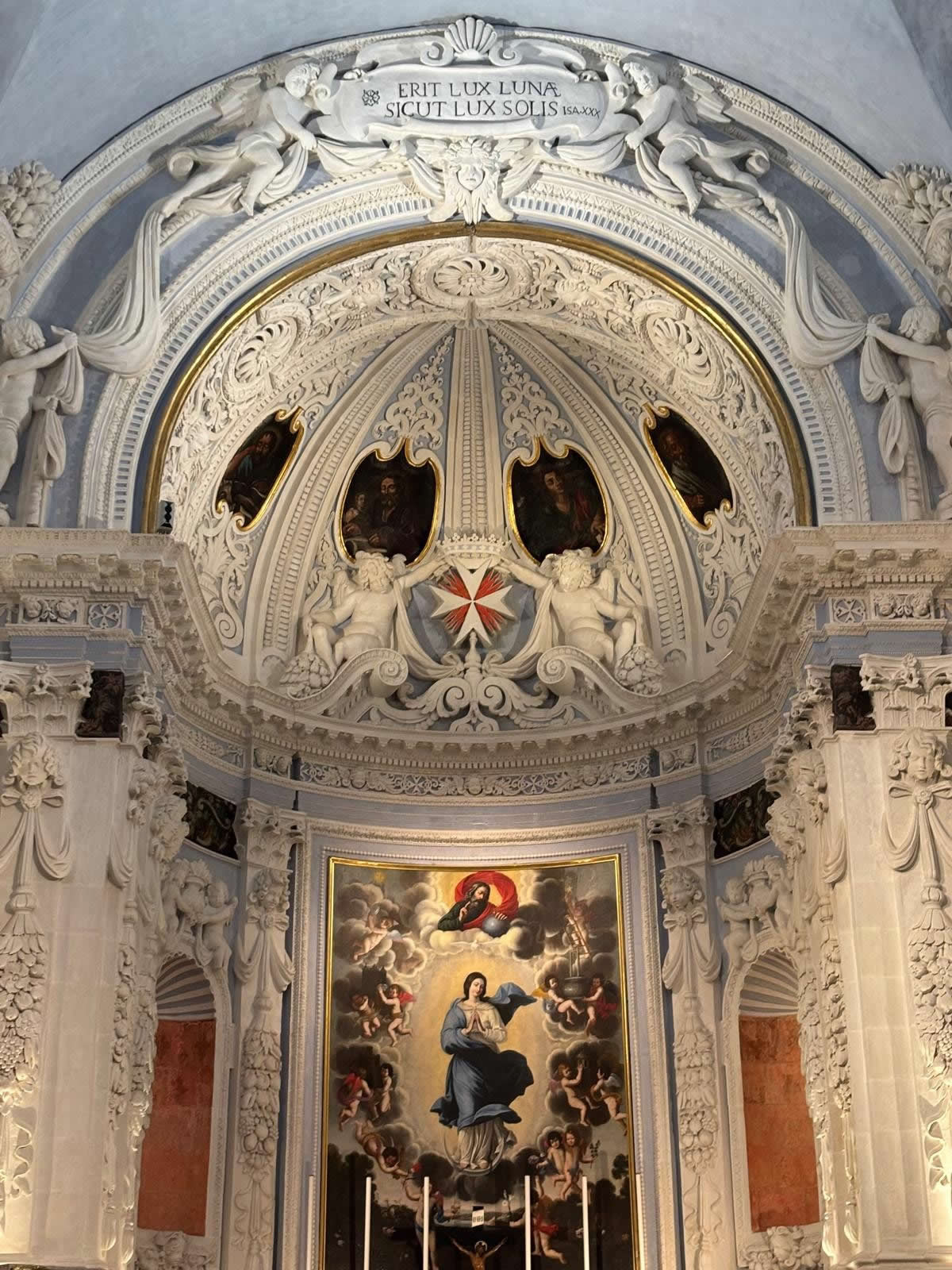
The oratory reflects the stylistic characteristics typical of Baroque religious architecture. Its interior is designed to inspire devotion through dramatic visual effects, rich decorative elements, and carefully composed spatial arrangements. The chapel’s layout emphasises the altar area, drawing the attention of worshippers towards the central focus of Marian devotion.
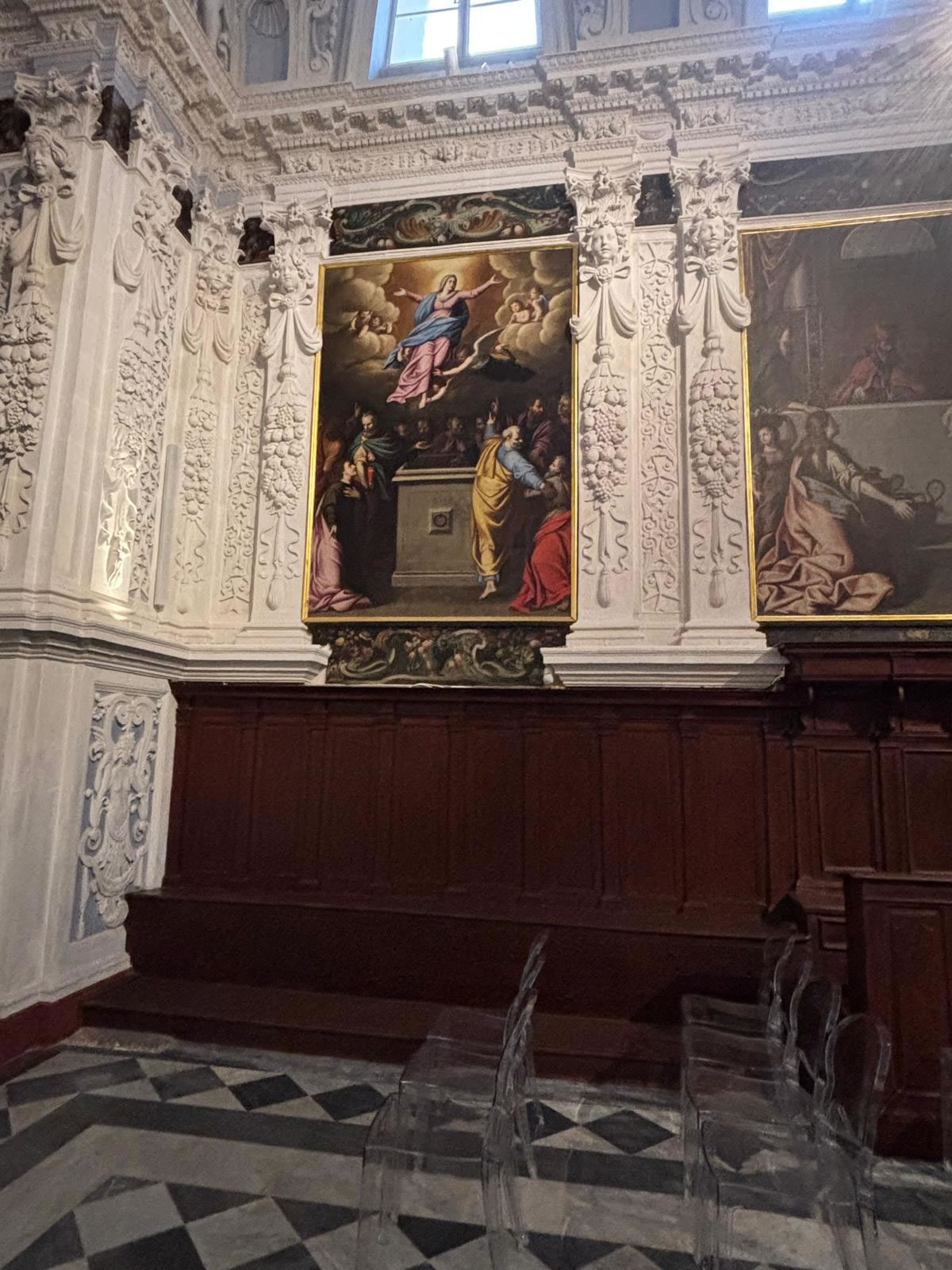
Decorative stucco work, carved architectural details and ornamental panels contribute to the elegance of the space. These artistic features create a harmonious environment where architecture and painting combine to produce an atmosphere of spiritual reflection.
Artistic Heritage
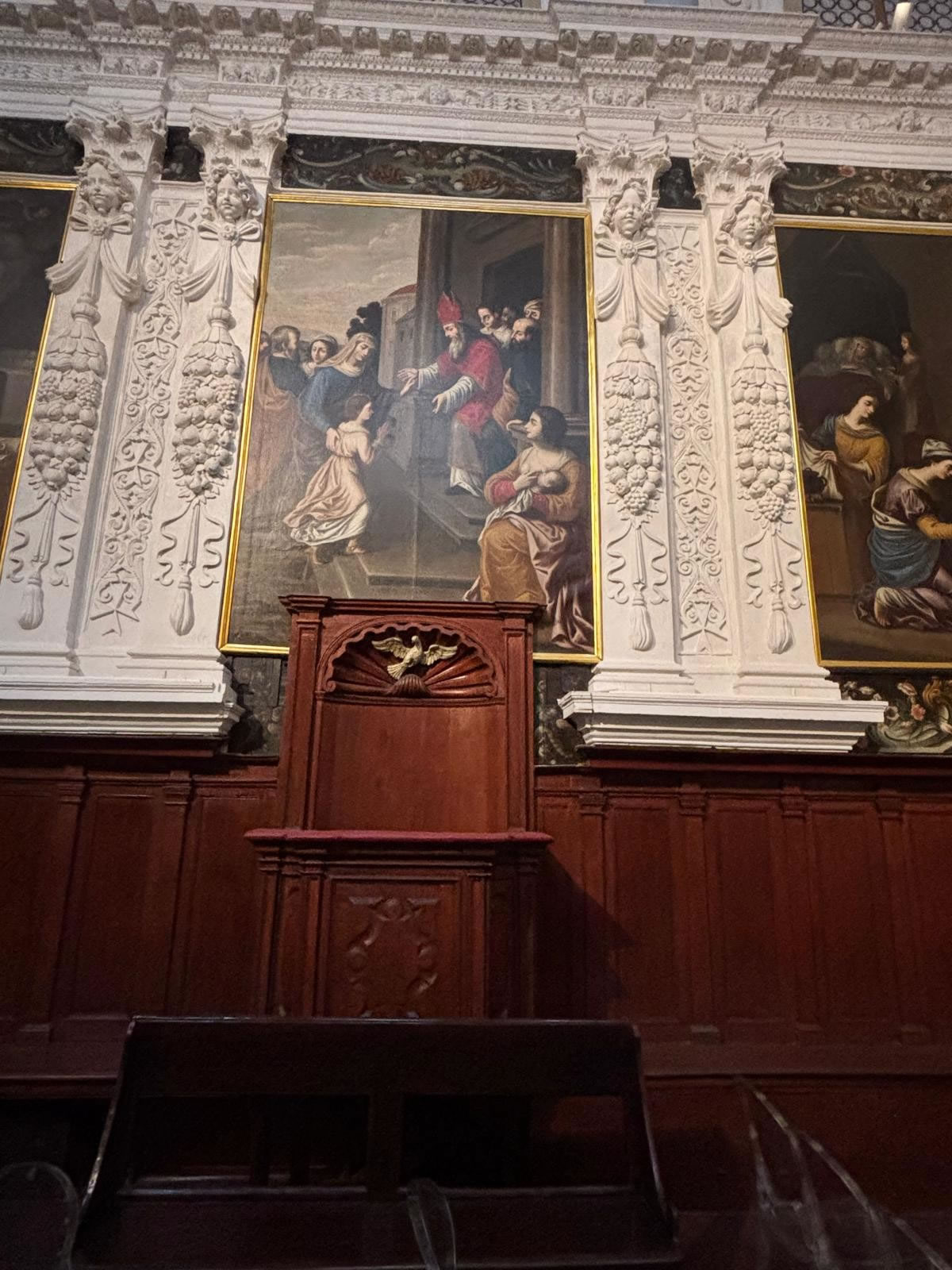
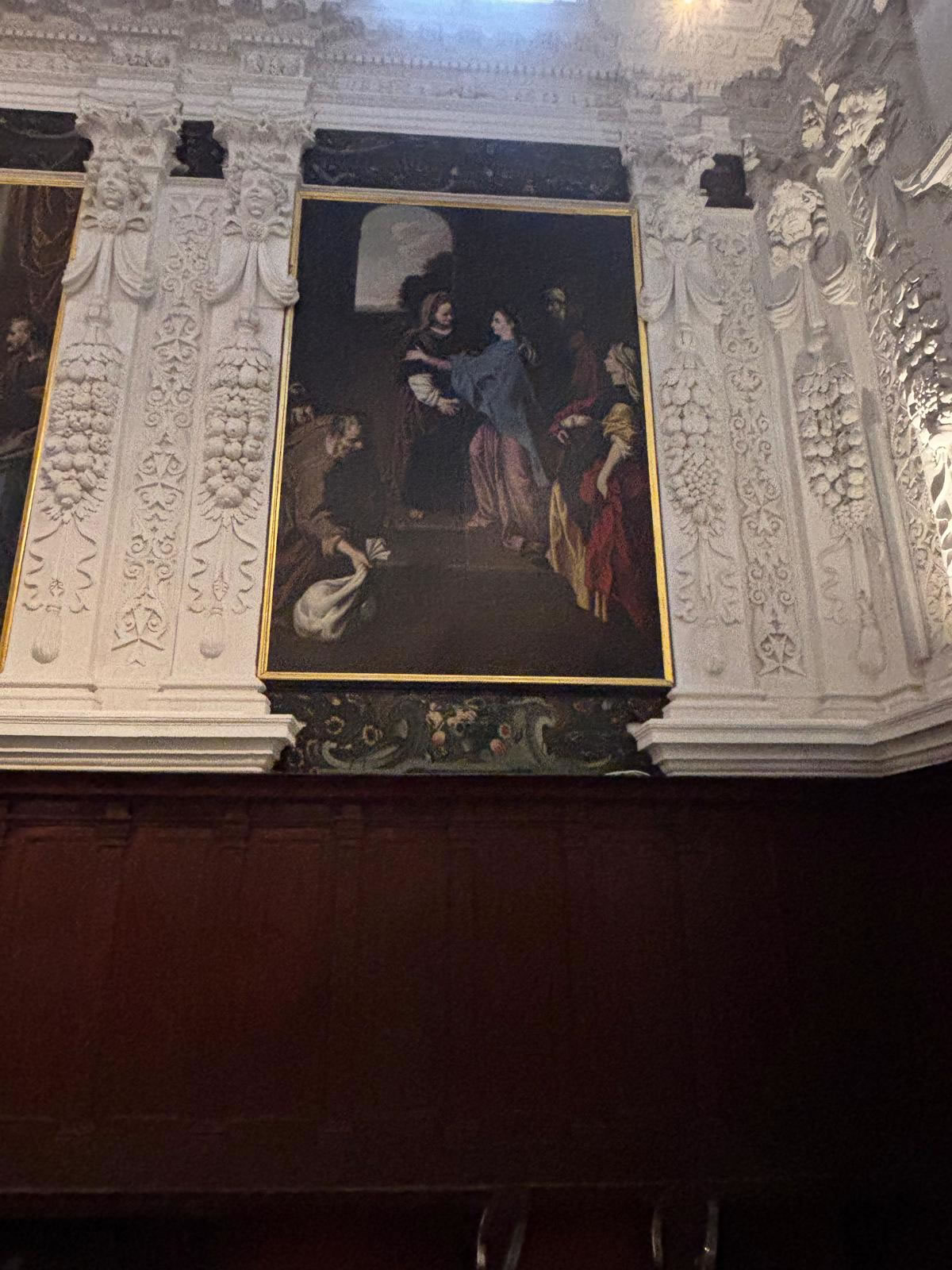
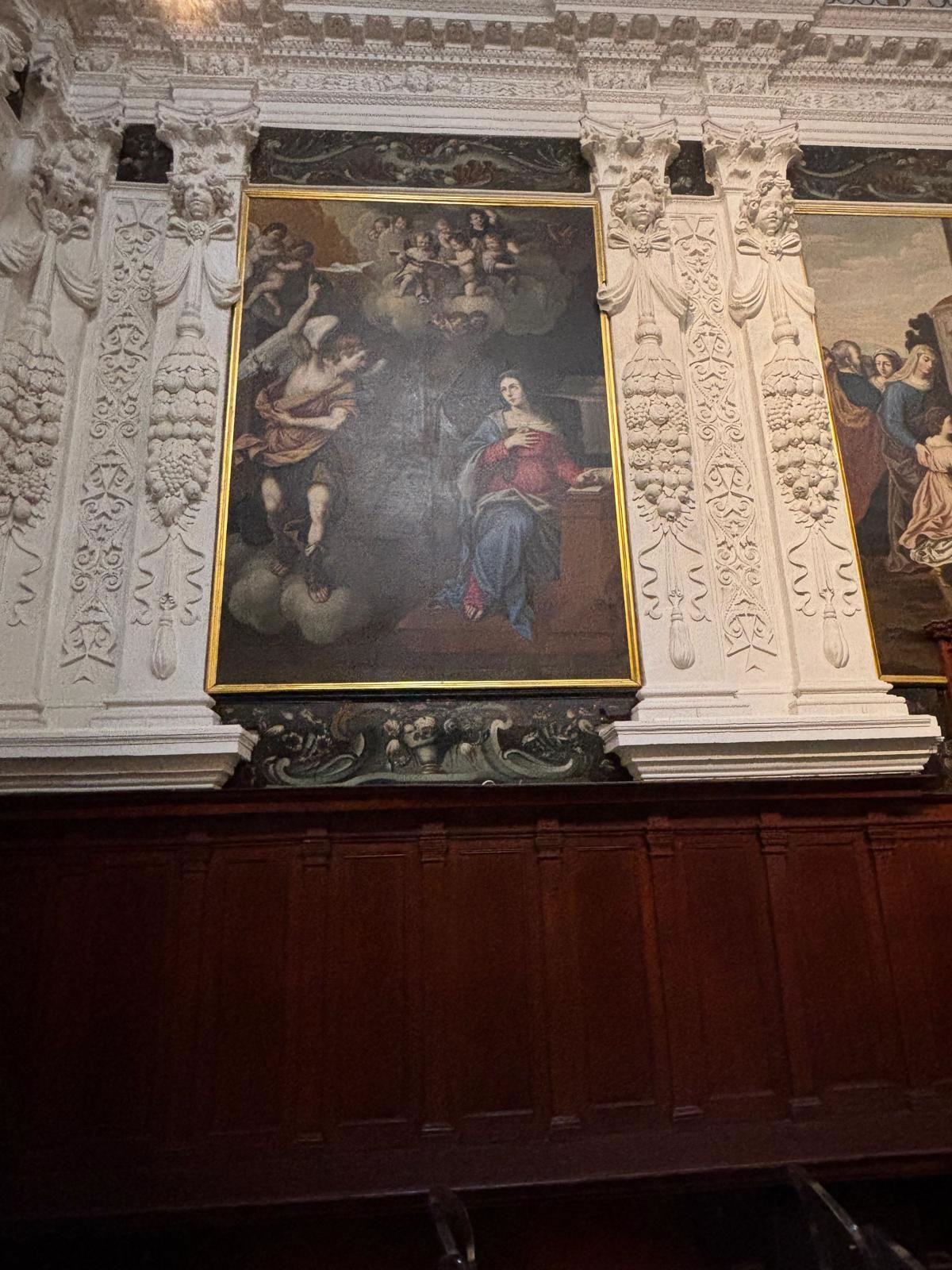
One of the most remarkable aspects of the Oratory of the Immacolata is its collection of Baroque paintings illustrating episodes from the life of the Virgin Mary. The decorative programme was created by prominent Maltese Baroque artists including Filippino Dingli, Stefano Erardi and Alessio Erardi.
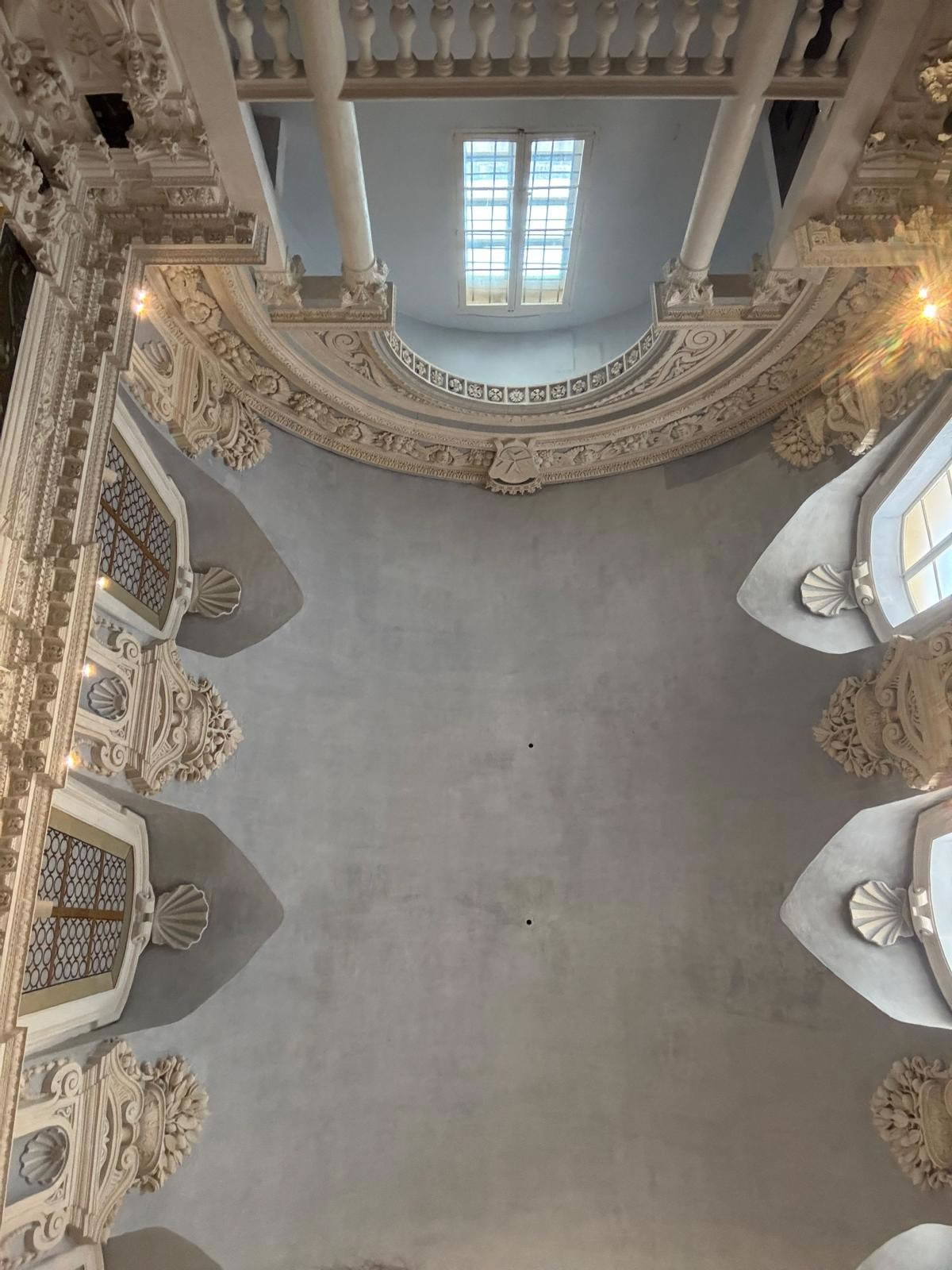
These artists were among the leading painters active in Malta during the seventeenth century. Their works display strong influences from Italian Baroque art, characterised by dramatic lighting, expressive figures and vibrant colours.
The titular altarpiece depicting the Immaculate Conception is attributed to Filippino Dingli and dates back more than three centuries. The painting portrays the Virgin Mary surrounded by symbolic imagery representing her purity and divine grace.
Together, the paintings form a coherent narrative cycle celebrating the life and virtues of the Virgin Mary. Through these visual narratives, the artworks served both educational and devotional purposes, reinforcing key theological themes associated with Marian devotion.
Connection with the Jesuit College
The Oratory of the Immacolata formed part of the Jesuit Church complex that also included the Jesuit College, one of the most important educational institutions in Malta during the early modern period. The college provided instruction in philosophy, theology, and the humanities and attracted students from across the Mediterranean region.
Over time the Jesuit College developed into the University of Malta, making the site one of the oldest centres of higher education in the region. The presence of the oratory within this complex illustrates the close relationship between education and spirituality within Jesuit institutions.
Students and members of the Jesuit community would have used the chapel for private devotion, prayer services and religious ceremonies. The oratory thus played a significant role in the spiritual formation of generations of students.
Modern Restoration and Conservation
In recent years the Oratory of the Immacolata has undergone extensive restoration as part of a large conservation programme aimed at safeguarding the Jesuit Church complex. The restoration project involved significant financial investment and included structural repairs, conservation of paintings and decorative elements, and the installation of modern lighting and safety systems.
Conservation specialists carried out detailed studies of the original colour schemes used in the chapel, allowing the restoration team to reproduce the historical colours accurately. Repairs were also undertaken to the masonry, windows and sacristy areas, ensuring the long-term preservation of the structure.
Following the completion of restoration works, the Oratory of the Immacolata was reopened to the public and is now used for both religious and cultural activities. Concerts, exhibitions and educational events are occasionally held within the space, allowing visitors to experience the chapel’s remarkable artistic environment.
Visiting the Oratory
Today the Oratory of the Immacolata is considered one of Valletta’s hidden Baroque treasures. Although smaller than the adjacent Jesuit Church, the chapel offers visitors a unique opportunity to appreciate Maltese Baroque art in an intimate setting.
Visitors exploring Valletta’s historic centre can discover the oratory as part of the Jesuit Church complex, where it stands as a testament to the island’s rich religious traditions and artistic achievements. Its combination of architecture, painting and spiritual symbolism makes it an important cultural landmark within Malta’s UNESCO World Heritage capital city.
Location
Oratory of the Immacolata
Jesuit Church Complex, Merchants Street
Valletta, Malta
Coordinates: 35.898343, 14.515025