Location Map Coordinates 35.914149, 14.438242
- Confirmed period: the chapel is described in recent reporting as dating to the 18th century before 1716.
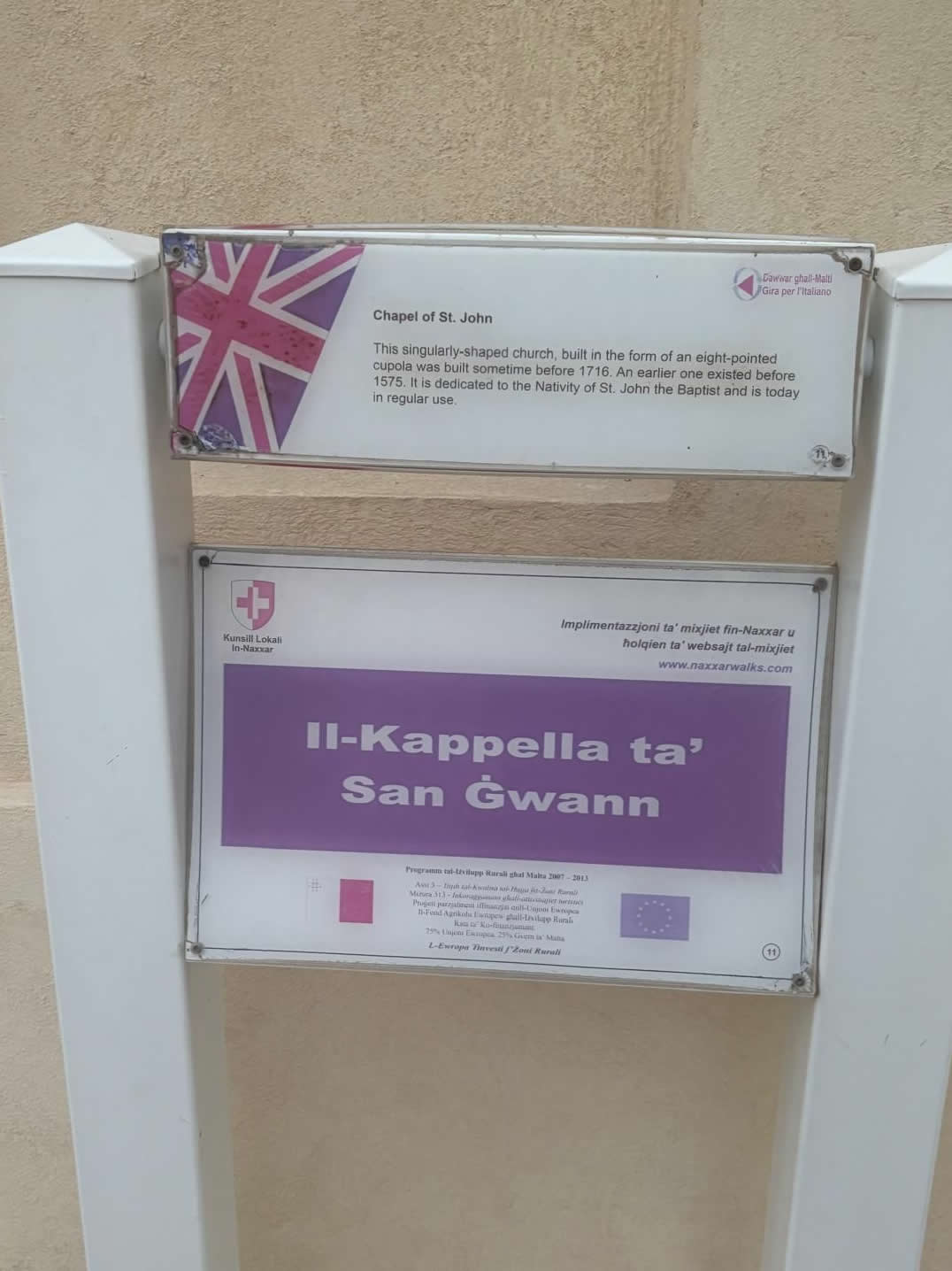
- Dedication: St John the Baptist (San Ġwann Battista).
- Notability: singled out for a distinctive / unusual form among Naxxar’s chapels.
- Setting: an urban streetscape chapel whose visibility and context have been discussed in planning applications.
Overview
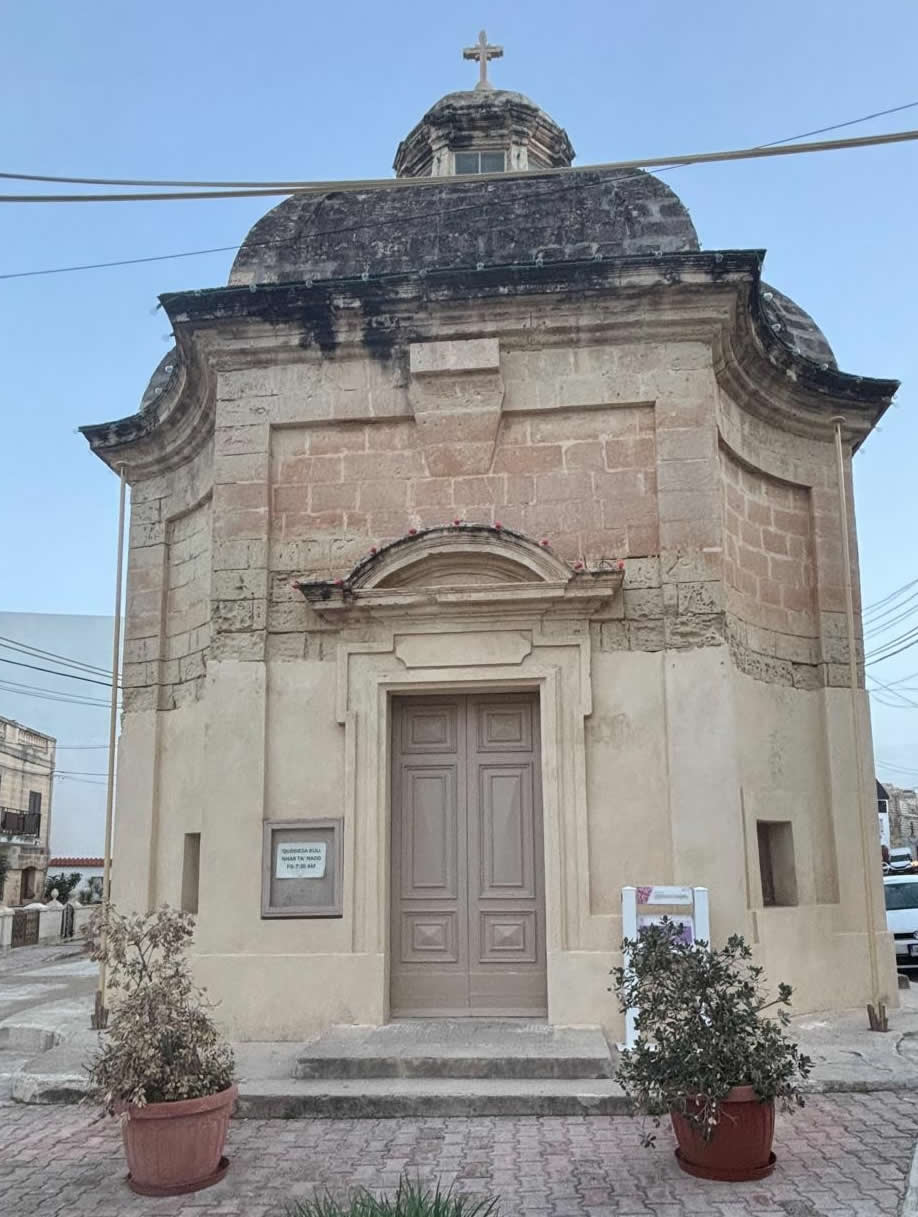
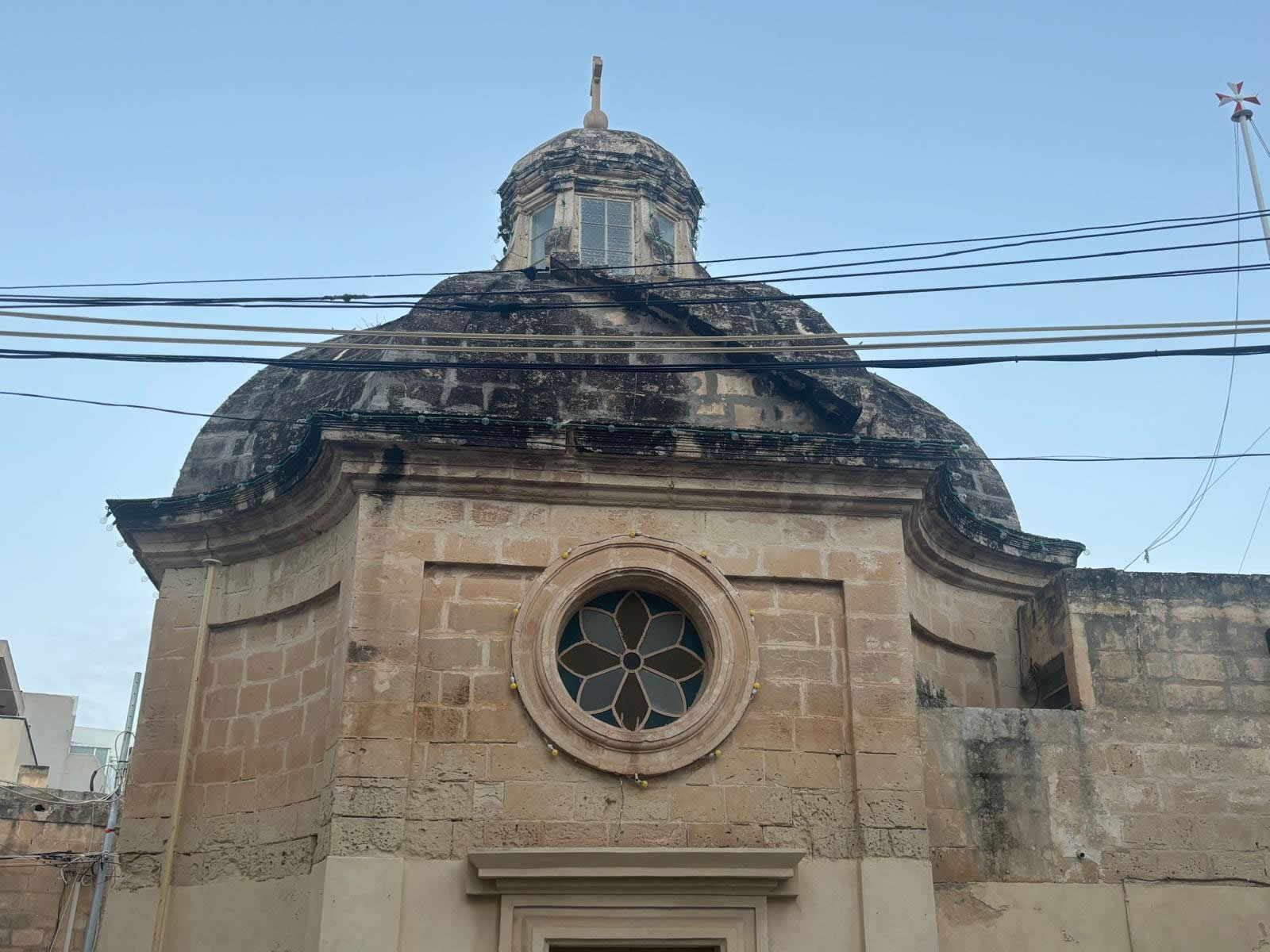
Kappella ta’ San Ġwann Battista is one of Naxxar’s smaller chapels dedicated to St John the Baptist. Although modest in scale, it stands out for its distinctive, centrally planned appearance and domed roofline, giving it a memorable presence within the streetscape.
History and confirmed dates
Based on publicly available recent reporting, the chapel is described as dating back to the 18th century, before 1716, and is noted specifically for its unique shape. While many Maltese chapels began as private foundations serving a neighbourhood or a devotional group, this site’s surviving form suggests an intention to create a visually striking, durable limestone structure rather than a simple wayside shrine.
A precise build year and a full list of modifications (e.g., altar replacement, façade reworking, dome repairs) normally require a primary source: a diocesan visitation, a notarial foundation deed, an inscription, or an official scheduling / heritage record. If you have any document extracts or a clear inscription date from the chapel itself, add them to the “Timeline” section below.
Construction and architectural character
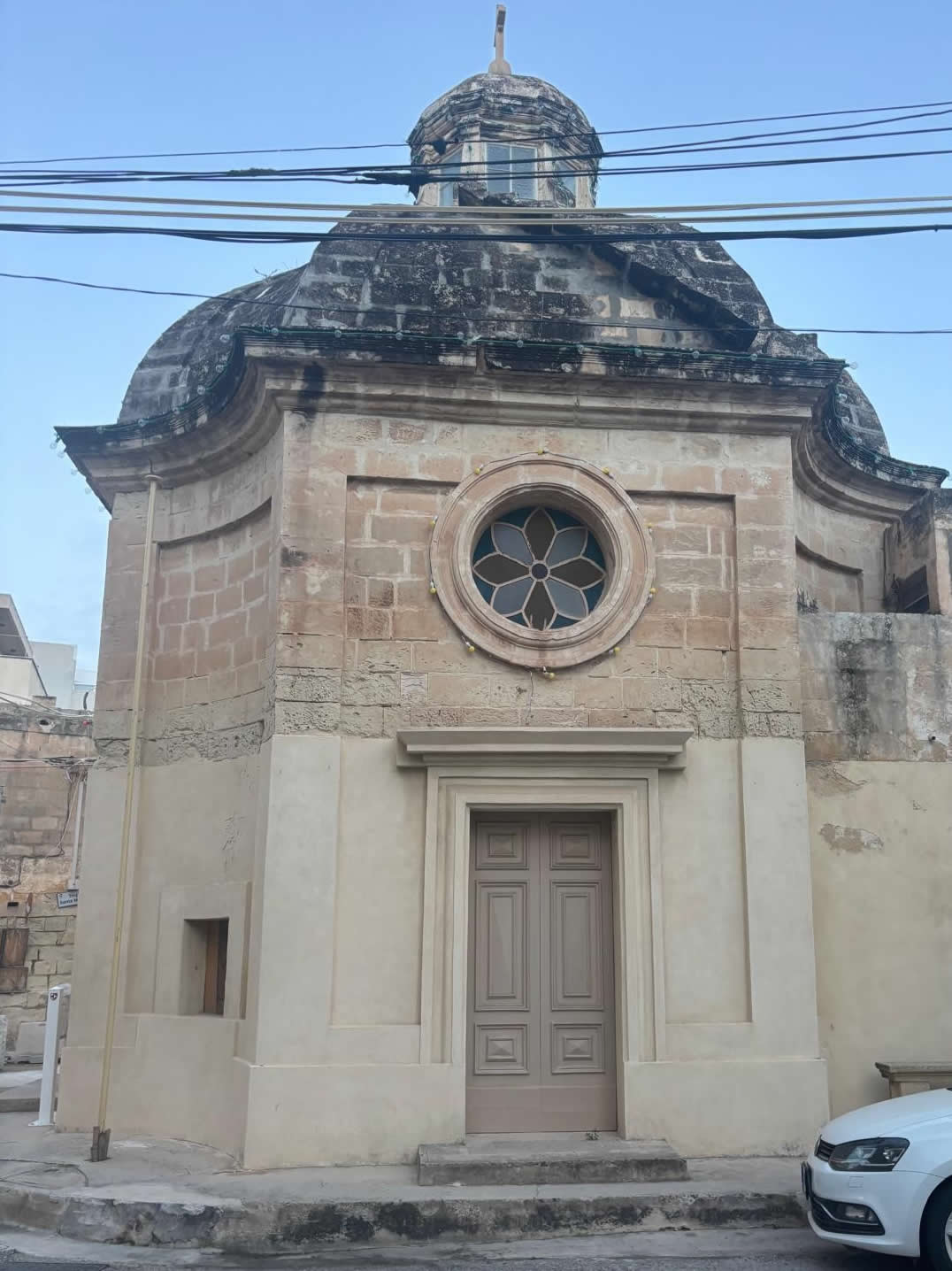
The chapel is built in Maltese limestone and reads as a central-plan structure crowned by a dome. This type of design—compact, symmetrical, and strongly defined by its roofline—differs from the more common rectangular, gable-fronted rural chapels found across Malta. Its wall-massing and curved volumes give it a “sculptural” quality when viewed from close range.
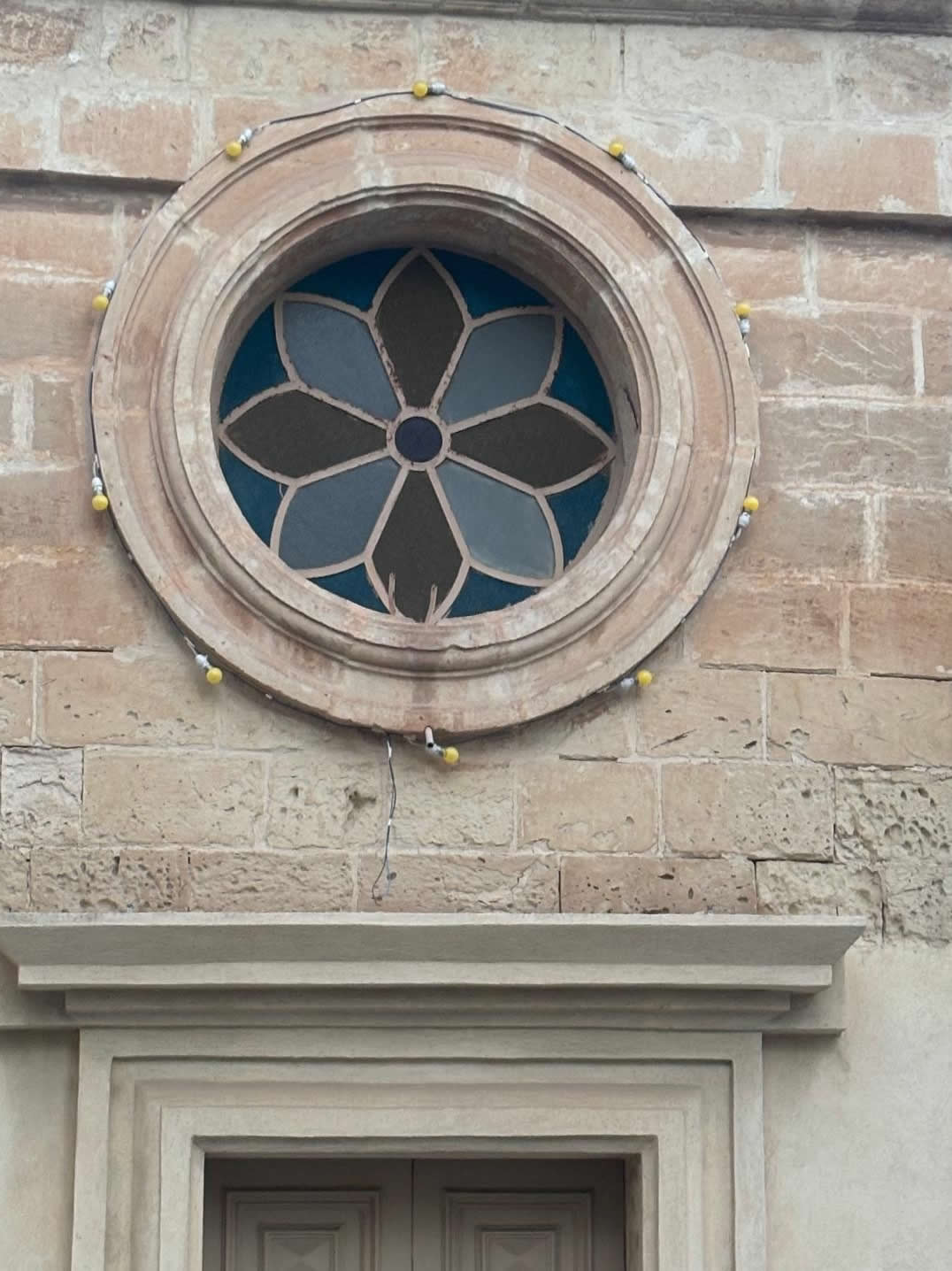
Key features to document on-site for a full architectural record include: the footprint (octagonal or multi-faceted plan), the dome profile, doorway mouldings, any façade niches, the bell feature (if present), and interior elements such as altar design, framing, and devotional imagery.
Urban setting and heritage context
The chapel stands at/near the junction of Triq Santa Marija and Triq San Ġwann in Naxxar. In the modern era, this setting means the chapel is not only a devotional landmark but also part of a wider discussion about how new development affects the visibility and character of traditional buildings.
Planning reporting in 2025 highlighted proposals for a multi-storey residential development opposite/near the chapel, with objections raised about visual impact and the risk of the chapel being “lost” within taller surrounding construction.
Restoration, repairs, and condition
Detailed public documentation of specific restoration campaigns for this chapel (dates, contractors, materials, scope) is limited in the sources consulted for this page. However, typical conservation needs for domed limestone chapels include: stone cleaning, repointing, repair of deteriorated blocks, lime-based plastering where historically appropriate, and water-management works to prevent moisture penetration at cornices and dome junctions.
If you want this section to be fully “confirmed”, the best next step is to add a short restoration timeline sourced from: (1) an official restoration press release or council notice, (2) an SCH / heritage condition report, or (3) a PA application method statement that includes conservation specifications.
Use, dedication, and local devotion
Dedication to St John the Baptist links the chapel to a strong Mediterranean devotional tradition centred on purification, renewal, and the saint’s role as forerunner. Like many small chapels, it likely served local residents for prayer and small services, and as a visible marker of neighbourhood identity—particularly before modern transport made parish churches easier to reach for everyone.
Visiting notes
- Access: treat as a religious and heritage site; entry may be limited or by arrangement.
- Best documentation photos: façade straight-on, side elevations showing the plan, dome close-up, doorway/stonework, and any inscriptions.
- Respect the streetscape: be mindful of traffic/parking; do not obstruct residents.
More chapels on emalta.com
Sources and further research
The following publicly accessible source was used to confirm key points for this page:
-
Newsbook (22 Sep 2025): notes the chapel “dates back to the 18th century”, highlights its “unique shape”, and places it at Triq Santa Marija / Triq San Ġwann in Naxxar.