Location Map Coordinates 35.845014, 14.467069
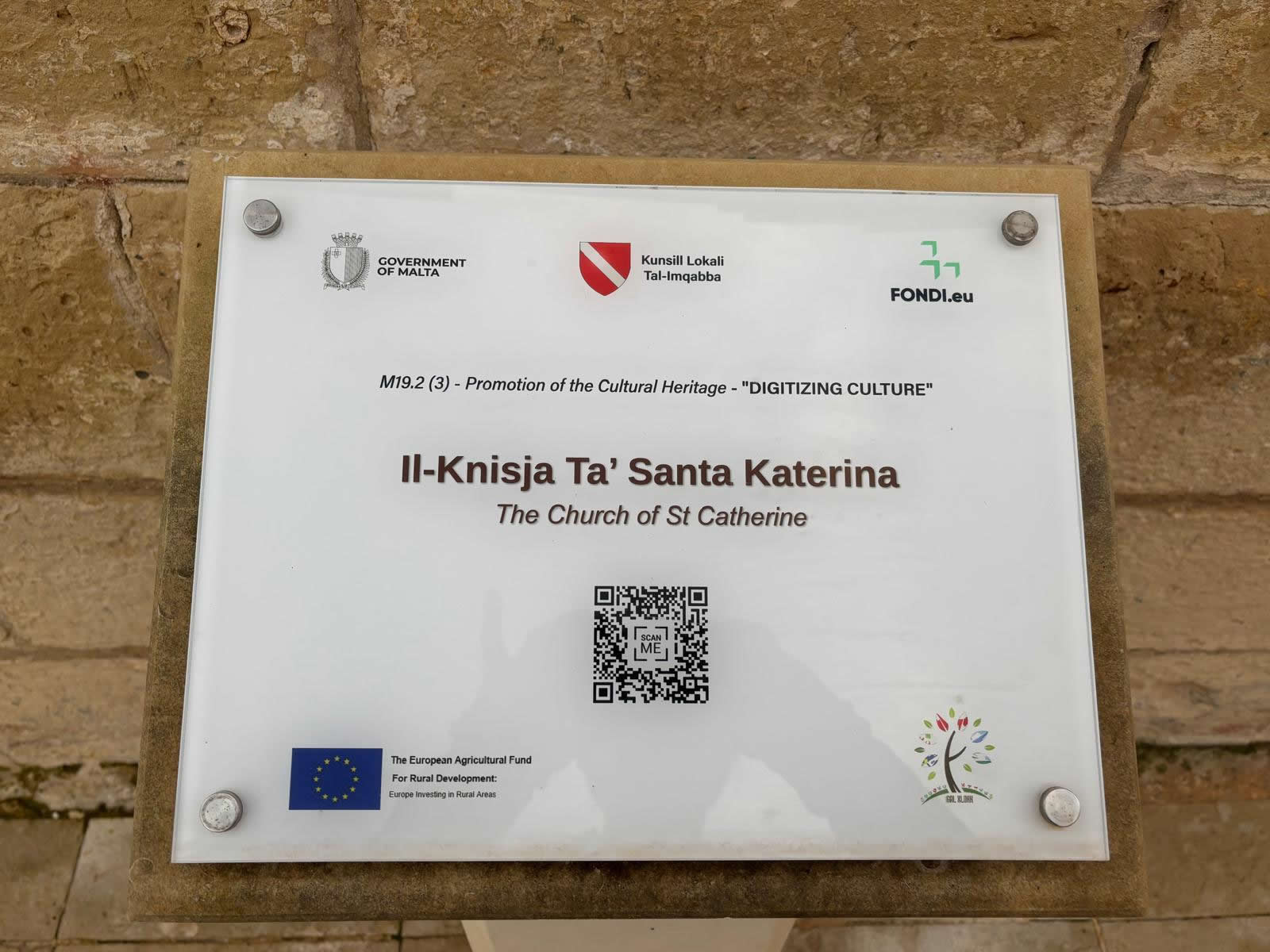
L-Imqabba, Malta Coordinates: 35.845014, 14.467069 Historic chapel St Catherine of Alexandria
Overview
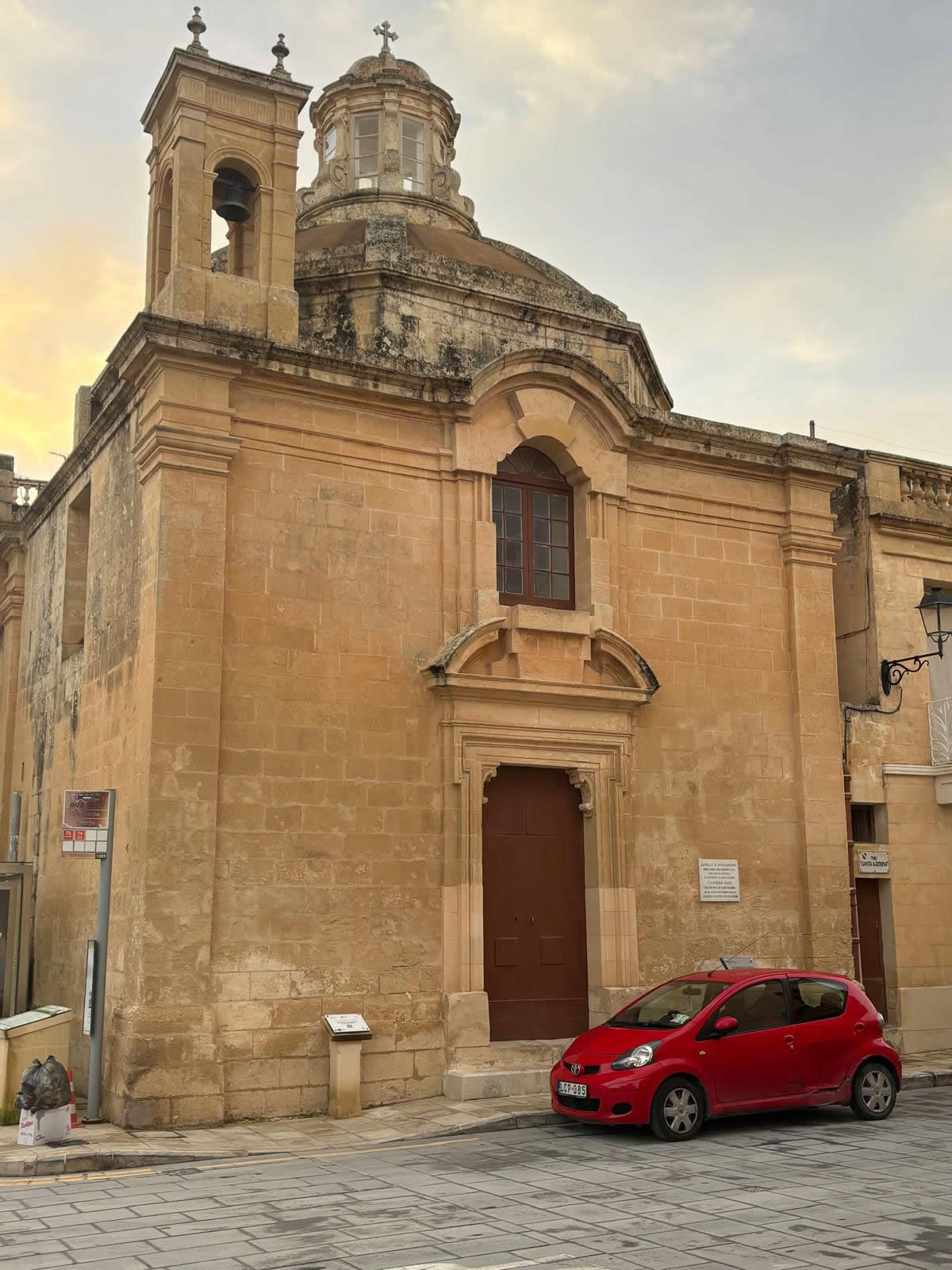
Kappella ta’ Santa Katerina is one of the most recognisable heritage chapels in L-Imqabba, set prominently close to the village’s main parish square. Although the present building is largely an 18th-century reconstruction, the site preserves a much older devotional footprint—an example of how Maltese villages renewed sacred spaces over centuries while retaining their traditional dedications and communal memory.
When it was probably built
The safest “probable built” statement is that the site is pre-1550. In 16th-century accounts linked to the 1575 apostolic visitation, the chapel visited is described as having been built in 1550, while also noting that an older chapel existed. This implies that devotion and a structure on the site likely predate 1550, even if the earliest precise date is difficult to confirm.
In practice, this means: origins before 1550 for the first chapel(s) on the site, with the present church fabric being mainly the result of the 18th-century rebuilding.
16th–17th century records
Kappella ta’ Santa Katerina appears in early ecclesiastical records that frequently assessed the condition and readiness of village chapels. Such visitations commonly list altars, images, furnishings, and whether Mass could be celebrated with dignity. Over time, records show that the chapel’s condition and equipment improved and that its devotional role continued alongside other village chapels.
What these early records tell us
- Continuity of devotion: the dedication to St Catherine endures in village tradition.
- Changing material culture: images, furnishings, and liturgical objects are replaced or upgraded over time.
- Growth pressures: the need to rebuild is often driven by structural decline and community expectations.
Collapse risk, demolition, and rebuilding (1759–1774)
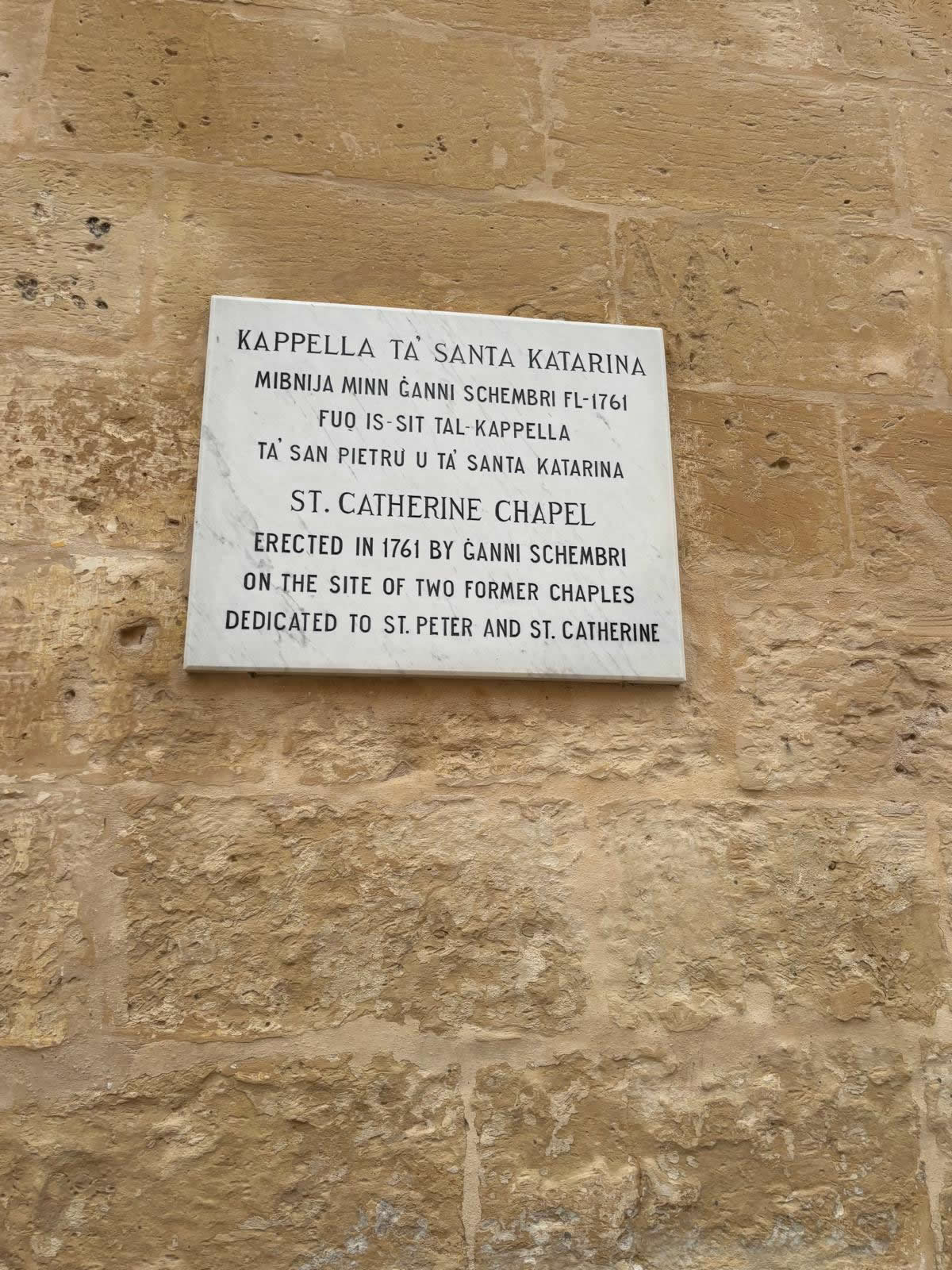
By the mid-18th century, the older structures on the site were reportedly in poor condition. In 1759 the then bishop ordered the demolition of the two older churches/chapels (dedicated to St Catherine and St Peter), and the community began planning a single replacement church.
The first stone of the present chapel was laid in August 1764. Construction continued through the decade, and the chapel was completed in 1774. The new building carried the combined identity of St Catherine and St Peter, visually and devotionally consolidating the site’s earlier twin-chapel history.
Key dates (quick timeline)
- Pre-1550 – Probable earlier chapel(s) already present on the site.
- 1550 – A chapel is described as built in this year, with mention of an older one existing.
- 1575 – Mentioned in the apostolic visitation tradition associated with Dusina-era records.
- 1759 – Order to demolish the deteriorating earlier chapels.
- Aug 1764 – First stone laid for the present chapel.
- 1774 – Works completed; the new chapel enters use.
- 2004 – Restoration works reported, focusing on stonework and conservation needs.
Architecture and features
Façade
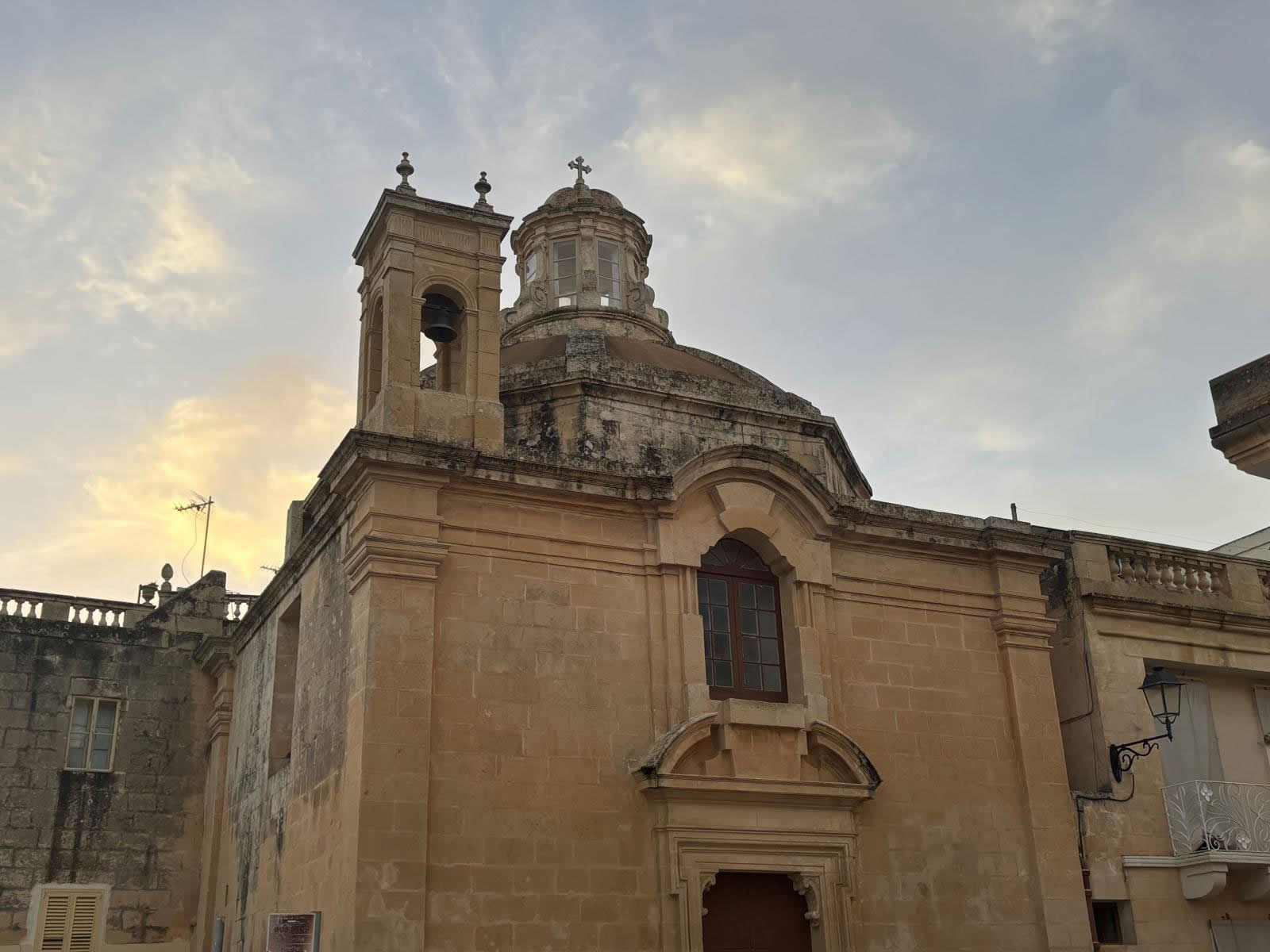
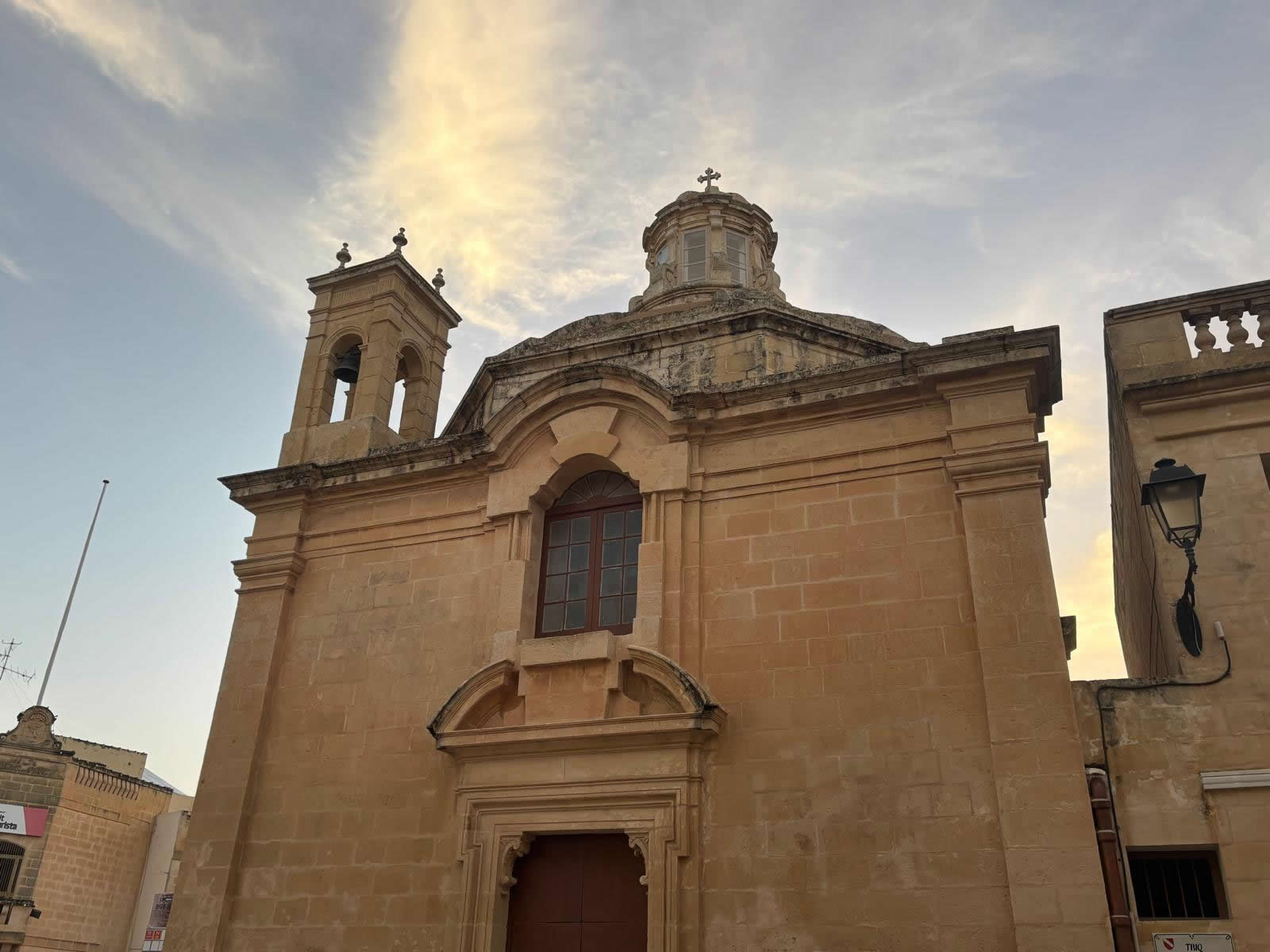
The chapel’s façade is characteristically Baroque yet restrained: it relies on proportion, shallow pilasters, and a strong portal composition rather than heavy ornament. A large arched window provides daylight to the interior and becomes one of the façade’s principal visual features.
Dome and bell tower
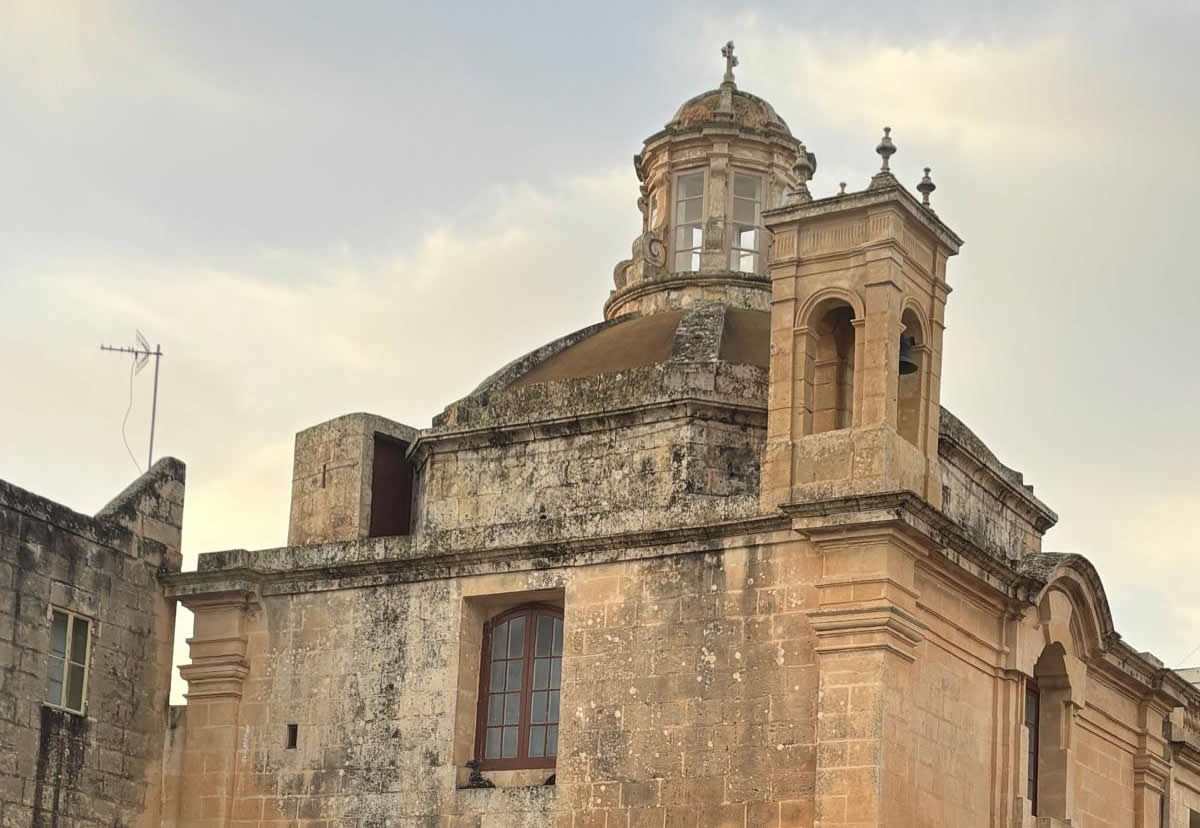
The building includes a dome element—one of the features that distinguishes it from many simpler rural chapels. A modest bell structure rises above, echoing the façade’s calm decorative language and marking the building’s liturgical identity within the village square.
Heritage inventories describe the chapel’s architectural and historical value as very high, reflecting its role as a landmark building within Mqabba’s historic core.
Interior and titular imagery
The chapel’s identity is anchored in its titular dedication to St Catherine of Alexandria, commonly represented with attributes associated with her martyrdom and intellectual witness. Accounts of the 18th-century church mention a titular painting completed shortly after the building’s completion, consistent with a common Maltese pattern: once the fabric was finished, communities invested in liturgical art to express the renewed sacred purpose of the space.
Devotional focus
- St Catherine: central patronal devotion (often linked with learning and steadfast faith).
- St Peter: historically linked through the earlier adjacent chapel and the site’s combined title.
- Marian imagery: older references to Our Lady imagery alongside saints reflect long-standing village piety.
Restoration and conservation
Like many limestone buildings in Malta, the chapel has faced conservation challenges over time—especially open joints, water penetration, and salt movement that can accelerate stone decay. Restoration campaigns have focused on stabilising masonry, improving pointing, and addressing weathering damage, ensuring the chapel remains safe, dignified, and visually coherent within the village square.
Conservation priorities (what typically matters most)
- Stone pointing: compatible lime-based pointing to reduce water ingress.
- Vegetation control: removal of growth that wedges into joints and cracks.
- Metal fixings: careful replacement/mitigation where corrosion can crack stone.
- Preventive maintenance: seasonal checks after storms and humid winter months.
Use today
Kappella ta’ Santa Katerina is not the main parish church, but it remains part of Mqabba’s living heritage. Use typically includes quiet prayer visits, occasional liturgical celebrations, and community activity connected with local devotional traditions. As with many Maltese chapels, opening can vary with parish or locality schedules, feast preparations, and conservation needs.
- Devotional visits: private prayer, especially by locals.
- Occasional services: Mass or prayer events depending on the calendar.
- Heritage presence: a prominent architectural marker within the village core.
Visiting info & map
Location
Kappella ta’ Santa Katerina
L-Imqabba, Malta
Coordinates: 35.845014, 14.467069
Visitor tips
- Visit during daylight; access is easy from the village core.
- If open, dress respectfully and keep noise low.
- For interior photos, follow any posted guidance or parish instructions.
FAQ
When was the chapel probably built?
The site is probably pre-1550, because accounts describe a chapel built in 1550 while also noting an older chapel existed. The present building was built later.
What period is the present chapel from?
The current building is an 18th-century chapel: first stone laid in 1764 and completed in 1774.
Why does St Peter appear in the chapel’s history?
The present chapel replaced two earlier chapels on the same site—one dedicated to St Catherine and the other to St Peter—so the combined title reflects that continuity.
Explore more chapels on emalta.com
Browse the full directory here: emalta.com/chapels/