A small but deeply loved Qrendi chapel rooted in a Great Siege-era vow, documented by the 1580s and still cherished for quiet devotion today.
Overview
Kappella ta’ Sant’Anna is a compact Roman Catholic chapel in Qrendi with unusually strong documentary anchors:
a founder’s vow associated with the Great Siege of Malta (1565), notarial evidence in the 1580s, a recorded blessing in 1589,
and a later change of dedication to St Anne in 1796. It is also known for ex-votos and a titular painting that
links multiple local devotions, including St Venera.
Key dates (at a glance)
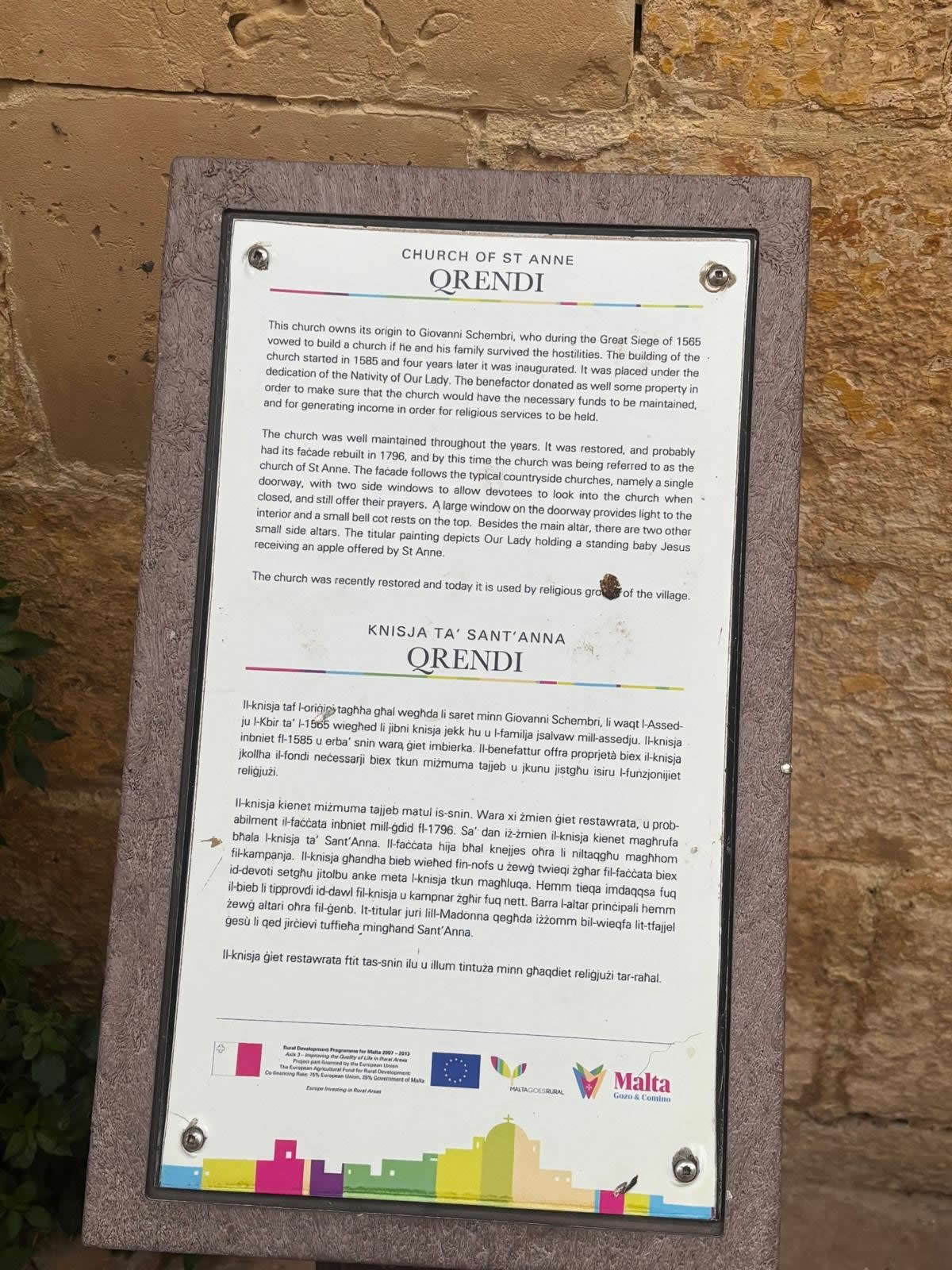
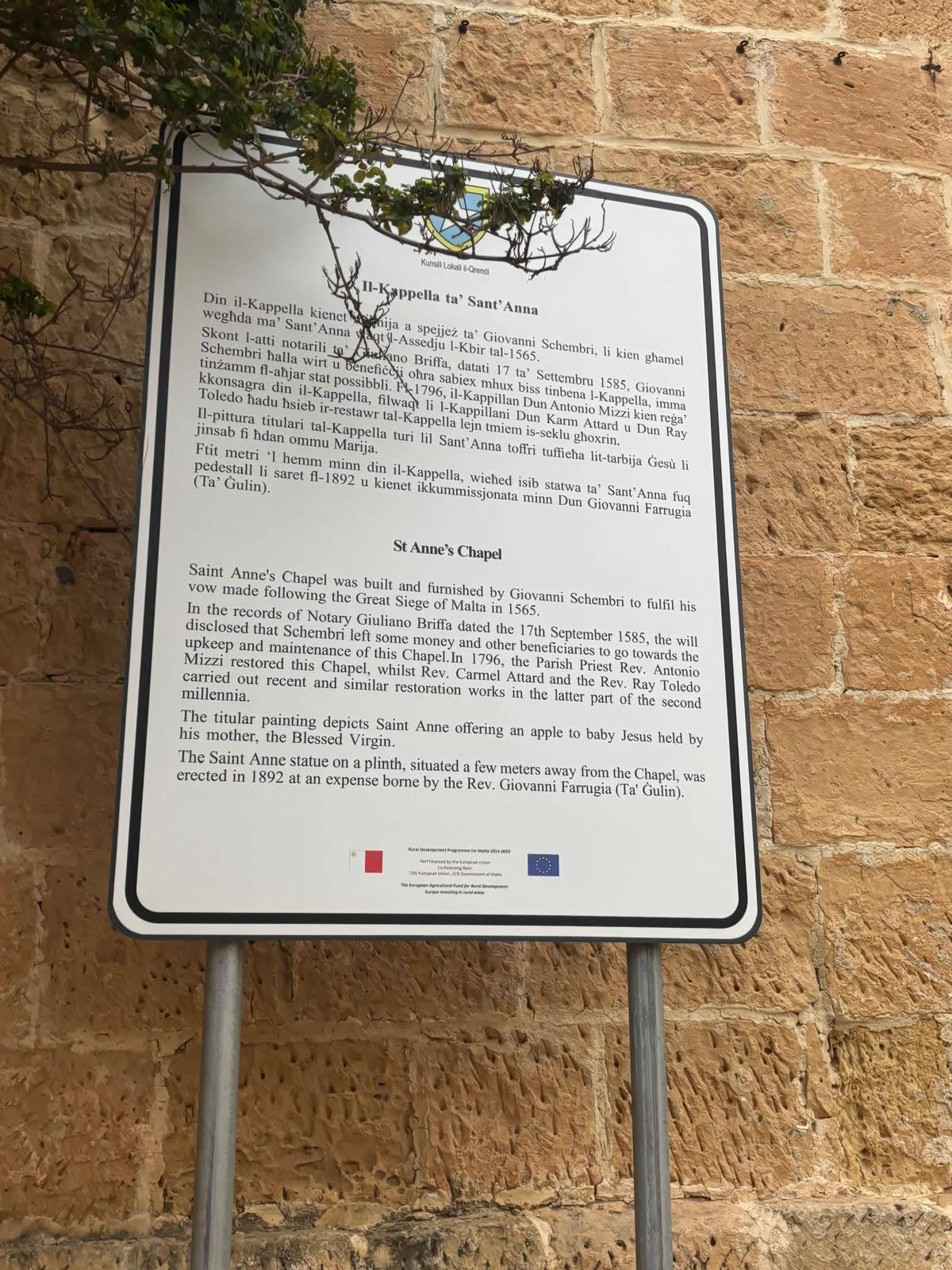
1565: linked to a vow made during/after the Great Siege; tradition connects the founder to Giovanni (Gianni) Schembri.
17 September 1585: notarial record notes Schembri’s provisions for upkeep and worship obligations.
6 September 1589: chapel blessed by the parish priest of Żurrieq (when Qrendi still formed part of that parish).
1598: referenced in records as a “recent building”.
1796: dedication changed to St Anne; restoration carried out under Rev. Anton (Antonio) Mizzi.
1892: statue of St Anne erected near the chapel (expenses borne by Rev. Giovanni Farrugia, “Ta’ Gulin”).
Late 20th–early 21st century: restoration campaigns renewed the chapel, including external works and internal restoration continued under parish initiatives.
Full detailed history
1) A Great Siege vow and an early-modern chapel
Local tradition connects the chapel to Giovanni (Gianni) Schembri, who is said to have promised to build a chapel if his family
survived the dangers of 1565. The chapel’s early devotion is often described as Marian, reflecting the founder’s vow and the feast traditions that
developed around it.
2) Documentary anchors: 1585–1598
A key milestone is the notarial documentation dated 17 September 1585, cited as evidence of Schembri’s financial provisions for
maintenance and worship. Later records in 1598 refer to the chapel as a “recent building”, supporting an end-16th-century foundation
narrative even while the vow story points back to 1565.
3) Blessed in 1589 (while Qrendi belonged to Żurrieq’s parish)
The chapel was blessed on 6 September 1589 by the parish priest of Żurrieq, which is consistent with the wider ecclesiastical geography of the period,
when Qrendi had not yet been established as a separate parish.
4) Feast traditions: Marian devotion and St Venera
Historical summaries note an early Marian feast tradition (linked to September celebrations), and a second observance connected to St Venera,
who also appears in the chapel’s titular painting. This blending of devotions—Marian, St Anne, and St Venera—helps explain why local naming and dedication
evolved across time.
5) The 1796 turning point: dedication to St Anne and restoration
In 1796 the chapel’s dedication shifted from the Nativity of Mary to St Anne. Accounts commonly explain that the change may reflect
popular usage—people increasingly associating the chapel with St Anne because she features prominently in the titular painting. In the same year, a restoration
was carried out under the initiative of Rev. Anton (Antonio) Mizzi.
6) 19th-century devotional landscape: the St Anne statue (1892)
A statue of St Anne was erected close to the chapel in 1892, funded by Rev. Giovanni Farrugia (“Ta’ Gulin”),
adding an outdoor devotional focus that complements the chapel’s interior life.
7) Modern restoration and continuity of use
The chapel has continued to be maintained through parish and community initiatives, including more recent restoration campaigns with both external and internal works.
Such efforts are part of a broader Qrendi tradition of caring for small chapels as living places of devotion rather than static monuments.
Architecture and interior
Exterior character
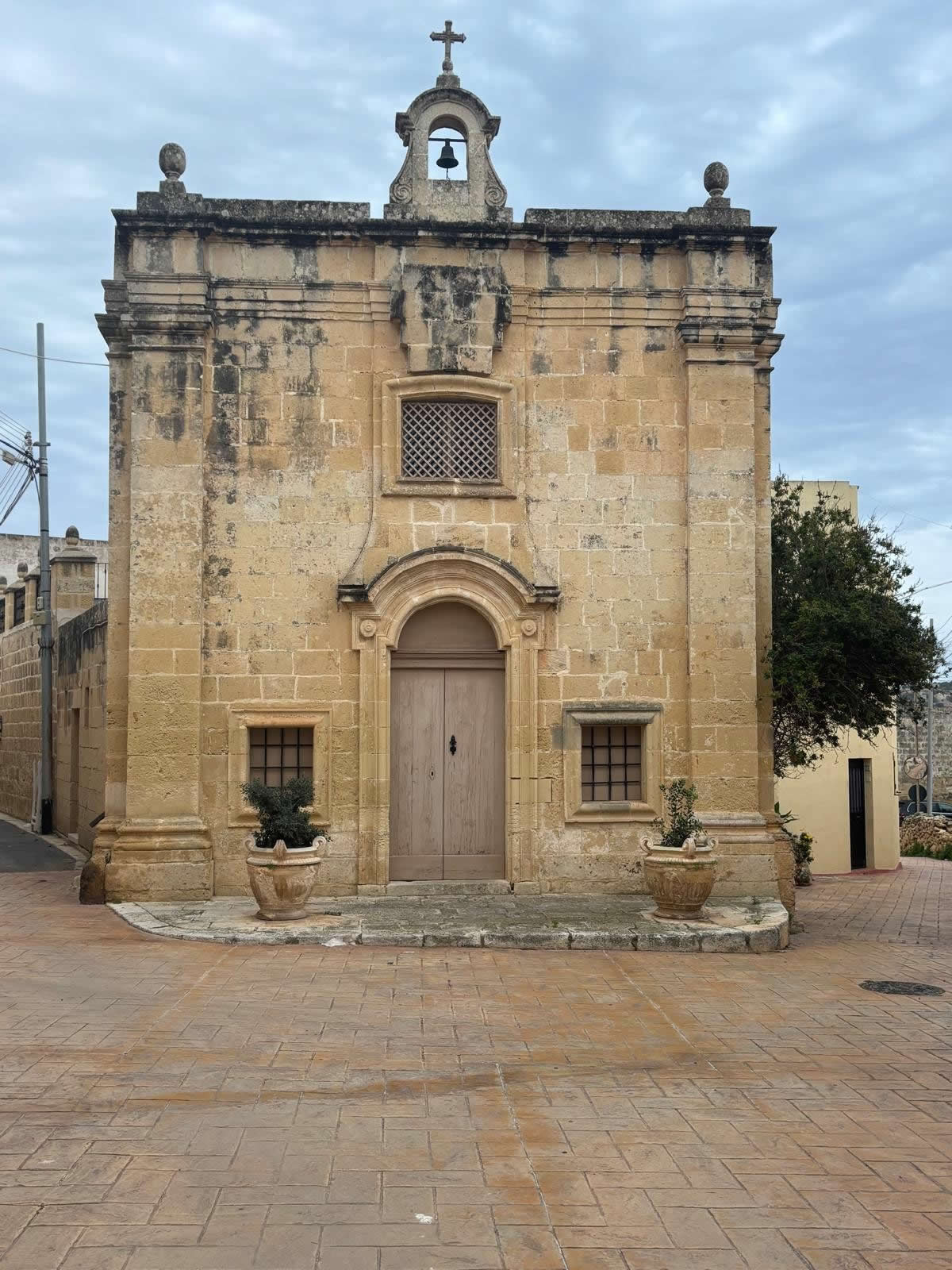
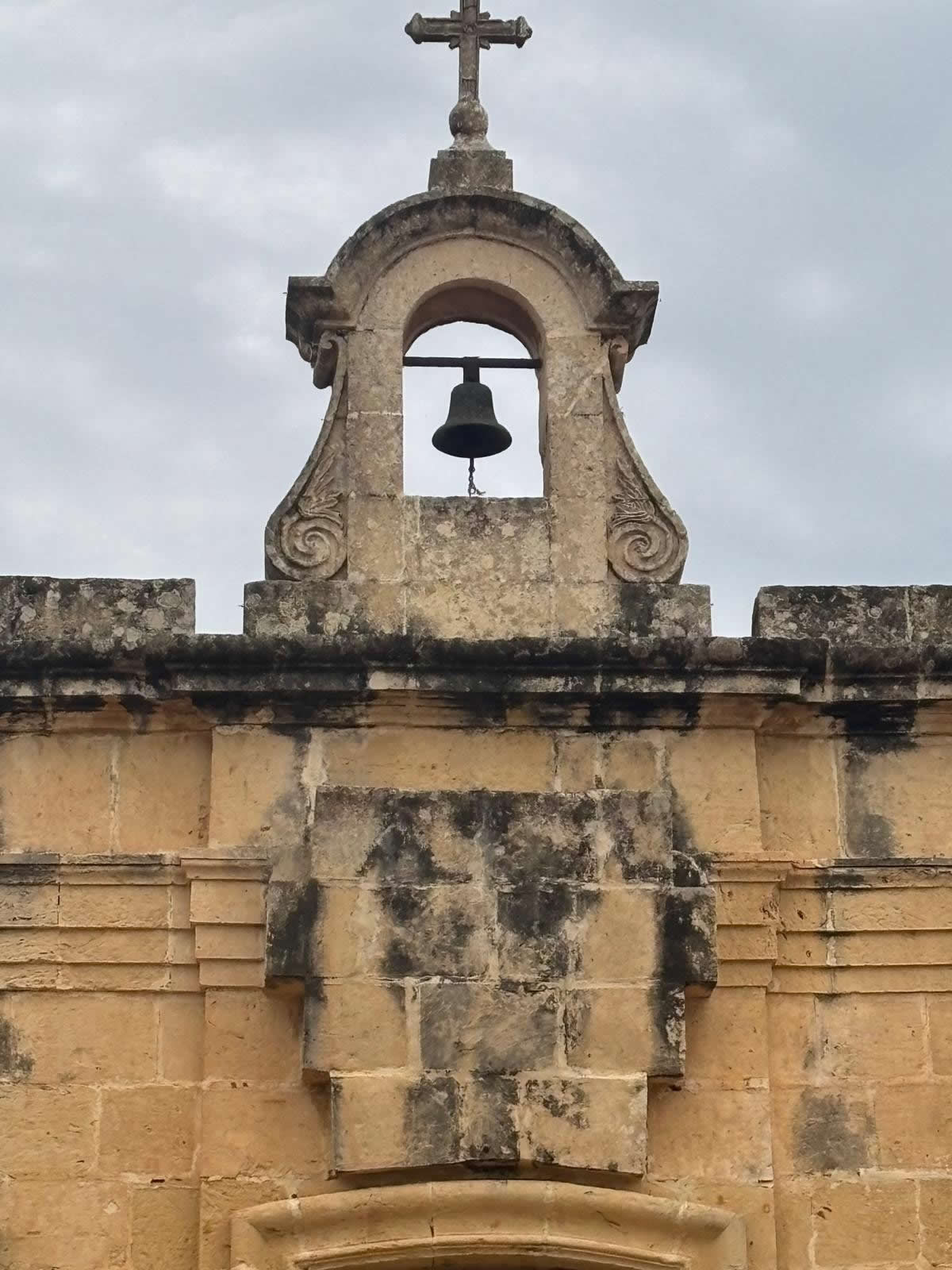
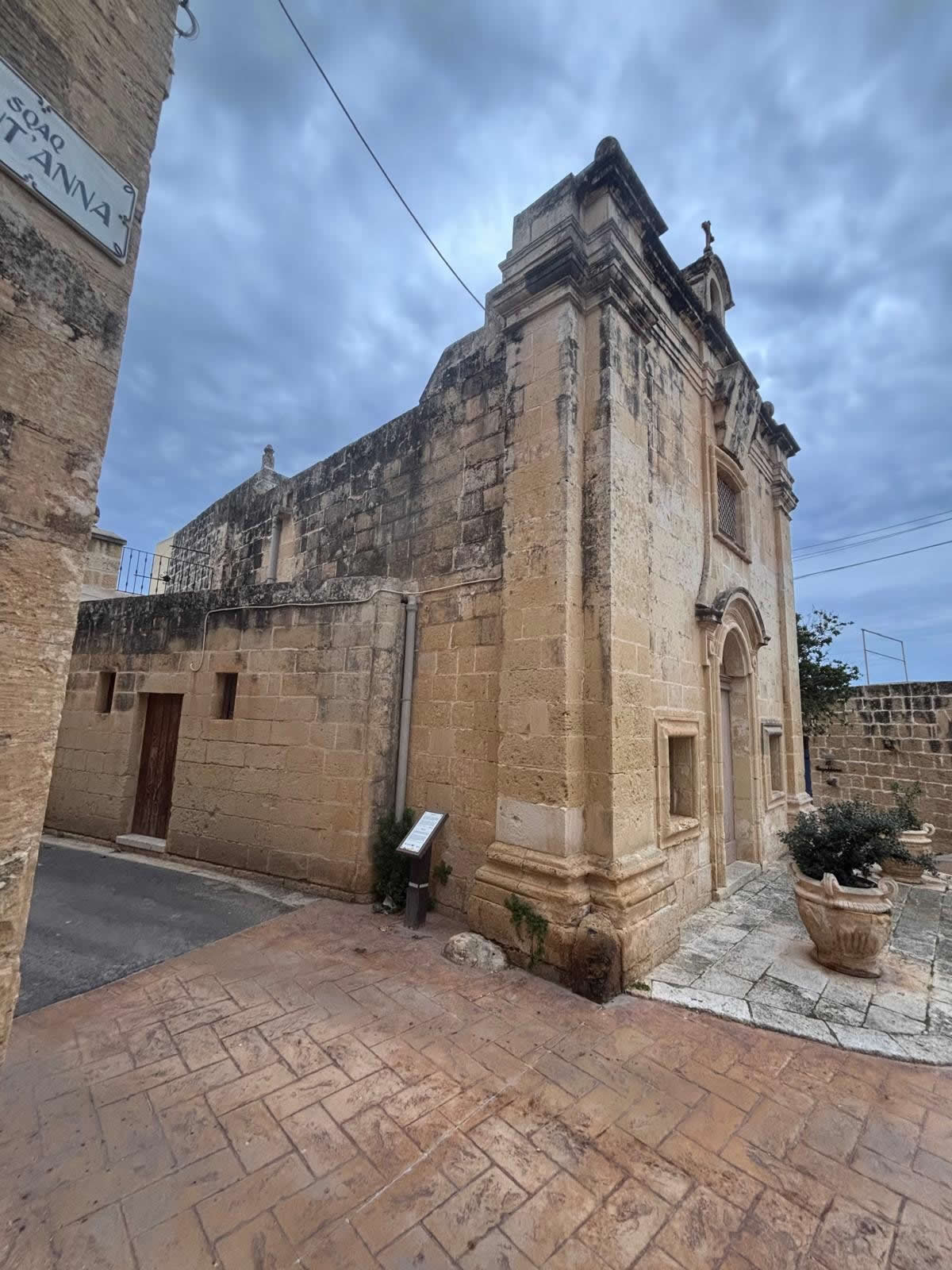
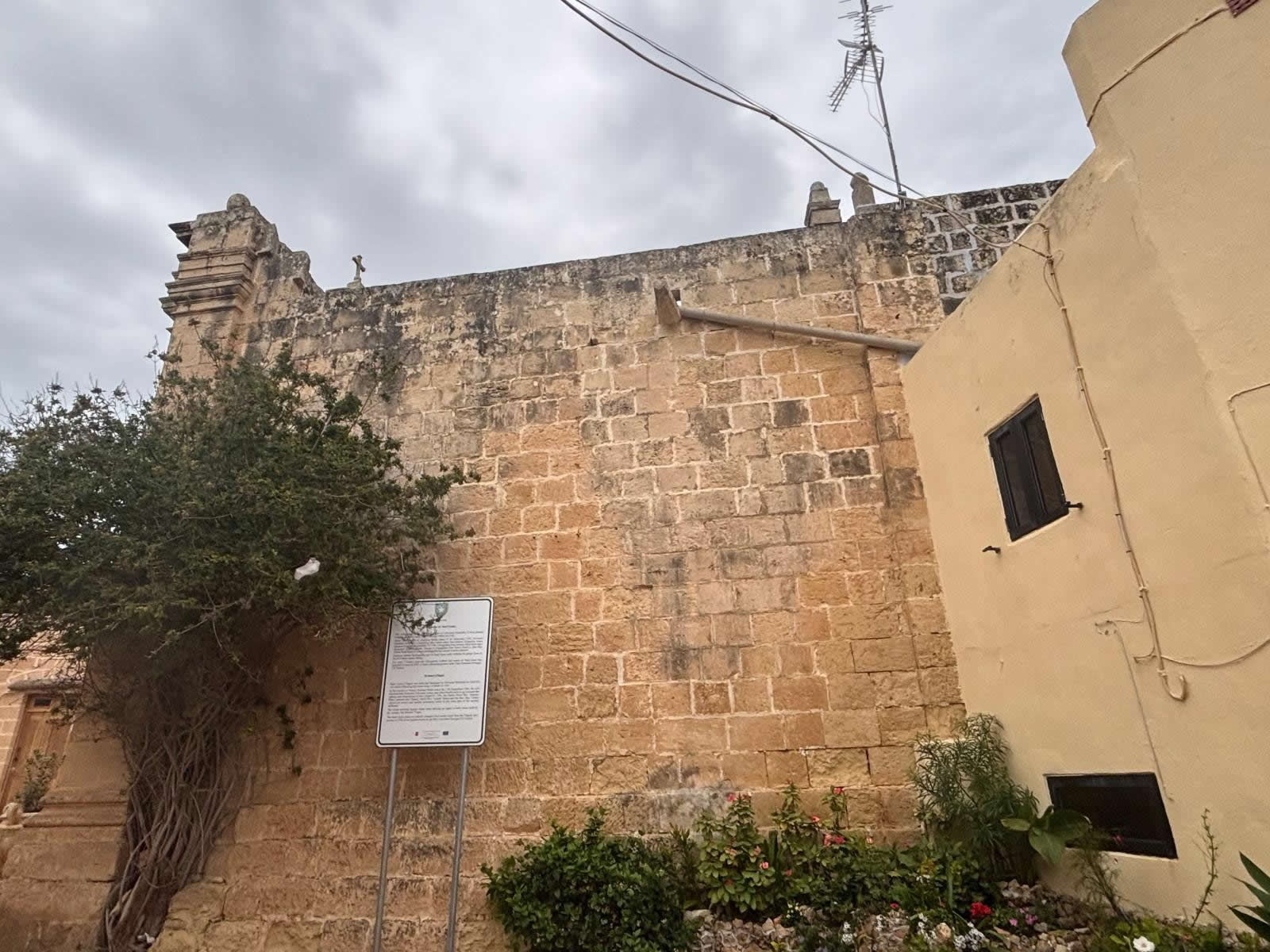
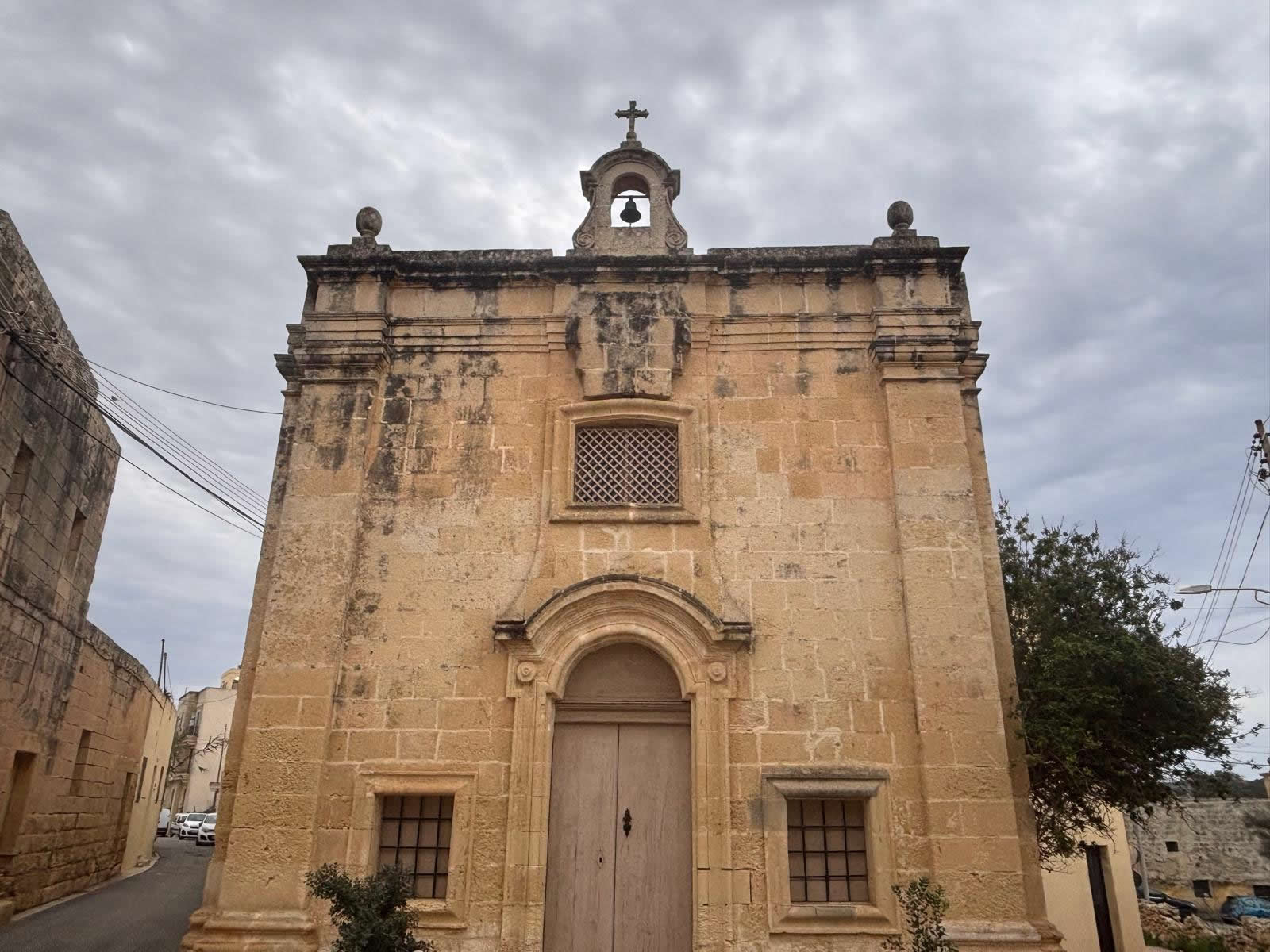
St Anne’s Chapel is small, built in Maltese limestone, and designed for intimate worship. Descriptions emphasise the façade’s openings that bring daylight into the interior
and a modest belfry that signals services and devotional gatherings.
Altars and titular painting
The chapel is described as having three altars (a main altar and two side altars). The titular painting is traditionally described as showing the Virgin and Child
with St Anne, St John the Baptist, and St Venera—a composition that preserves older layers of devotion.
Ex-votos
Devotional gifts (ex-votos) are commonly noted as part of the chapel’s character, reflecting answered prayers and long-term local attachment.
Present-day use and visiting notes
How it is used today
Kappella ta’ Sant’Anna remains part of Qrendi’s living religious landscape—opened for prayer and for liturgical occasions tied to the parish’s devotional calendar.
It also functions as a natural “link hub” for your Qrendi chapel cluster, especially for pages related to Il-Maqluba and the chapels nearby.
Visiting etiquette
Respect: modest dress and quiet behaviour are recommended inside.
Photography: be mindful during prayer or services.
Navigation: use the coordinates above for the most accurate point location.