Location Map Coordinates 35.924685, 14.432360
- Confirmed founding date: commonly given as 1607 (early 17th century).
- Historic setting: linked with the old hamlet of Ħal Pissa in the Wied il-Għasel area.
- Type: small rural / wayside chapel serving countryside devotion rather than a village parish church.
- Later condition: reports describe periods of damage and neglect, followed by repair / restoration works in modern times.
Overview
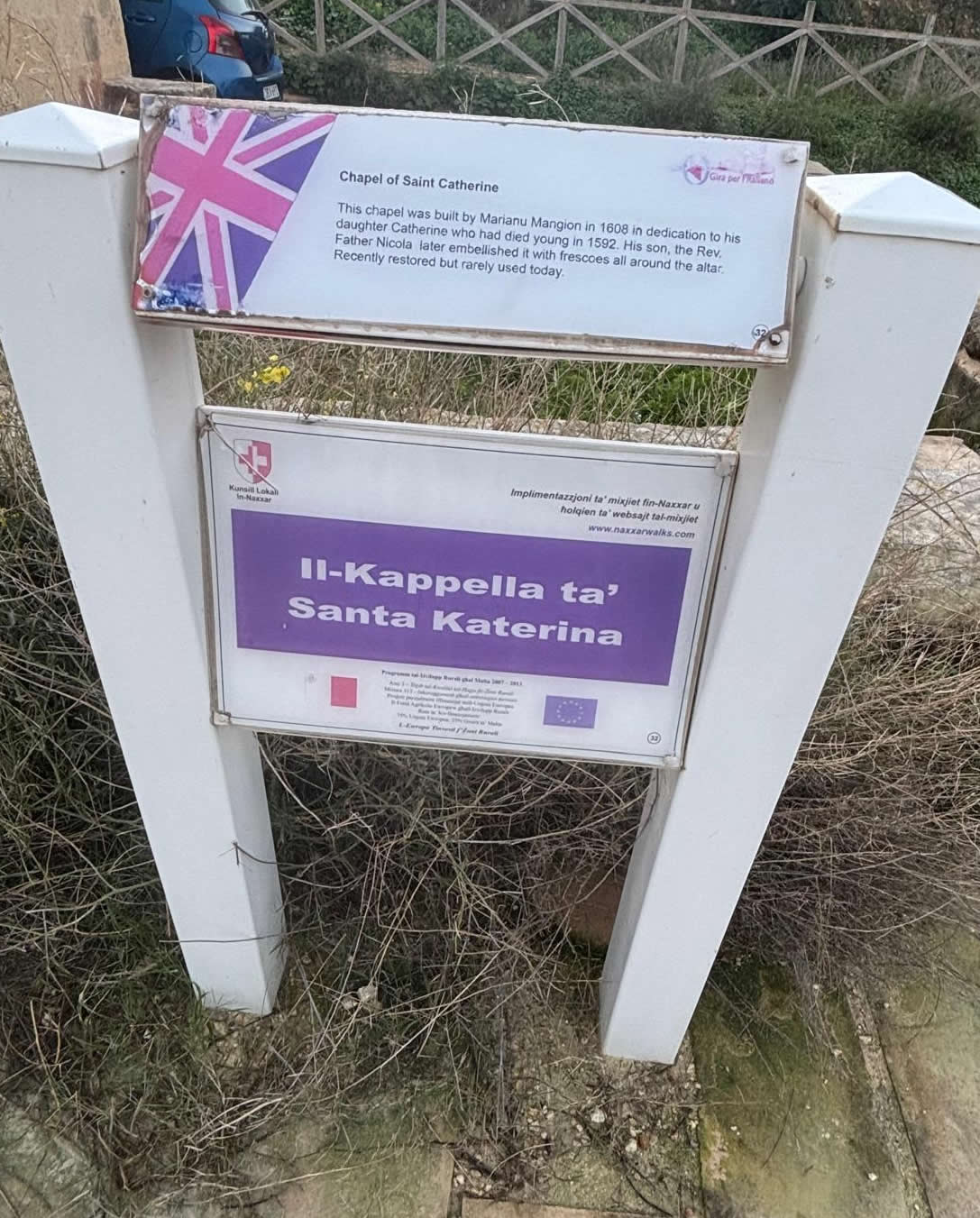
Il-Kappella ta’ Santa Katerina is a small countryside chapel in the Naxxar district, close to Wied il-Għasel. It is one of the rural sanctuaries that once marked the devotional geography of Malta’s valleys and cultivated land: modest in scale, but important as a focus for prayer, vows, and the rhythm of Sundays and feast days in the surrounding fields.
History and confirmed dates
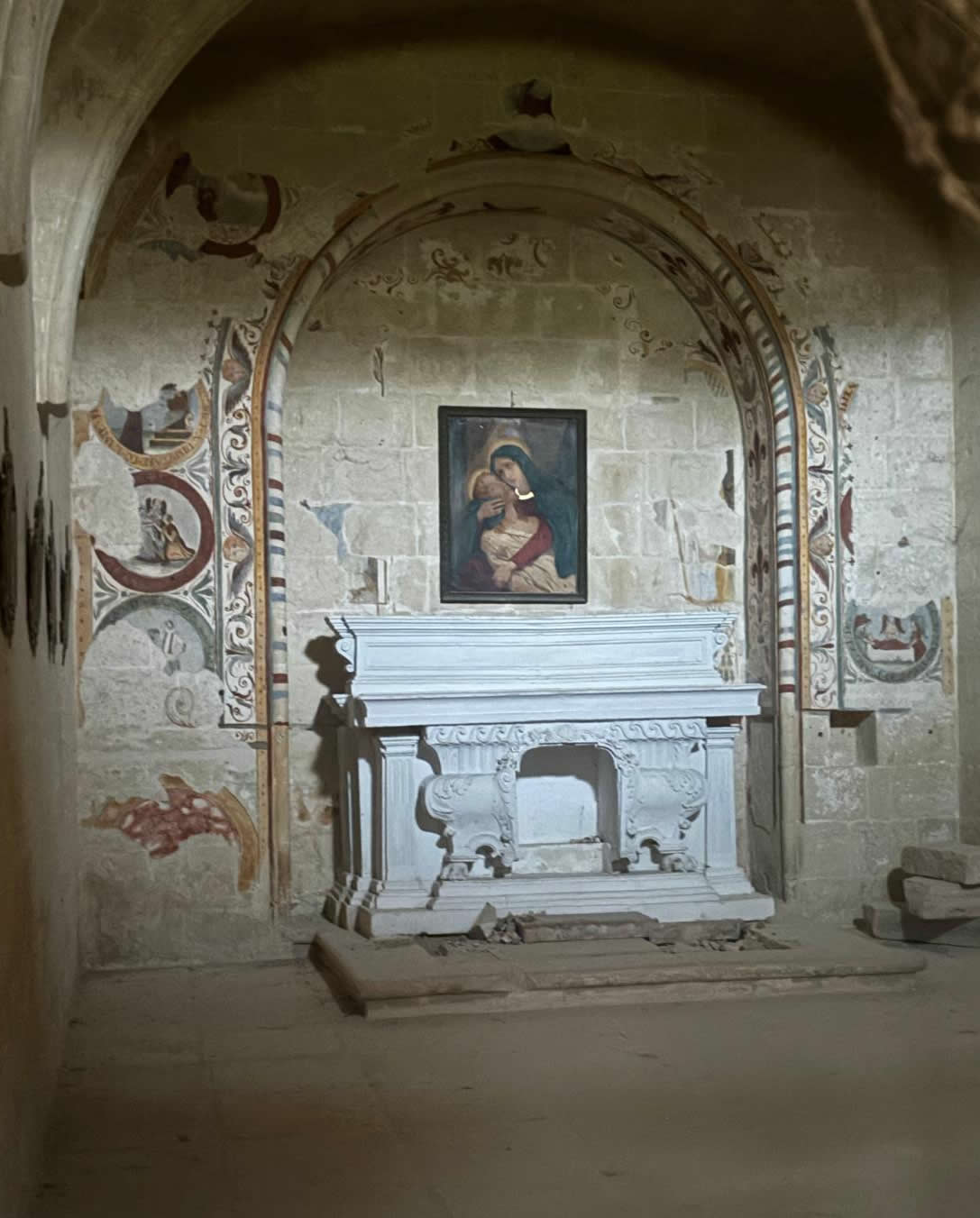
The chapel is generally dated to the early seventeenth century, with a founding year given as 1607. Local tradition and later summaries connect the chapel with the area that formed part of the old rural settlement of Ħal Pissa, and describe its establishment as the outcome of private patronage—typical of Maltese countryside chapels of the period.
In practical terms, such chapels were built to secure regular worship nearer to farms and seasonal work sites. The founding narrative is commonly linked with the obligation (or custom) of ensuring Mass on Sundays and principal feast days, particularly when access to the parish church in the village centre was difficult for field workers.
Construction and architectural character
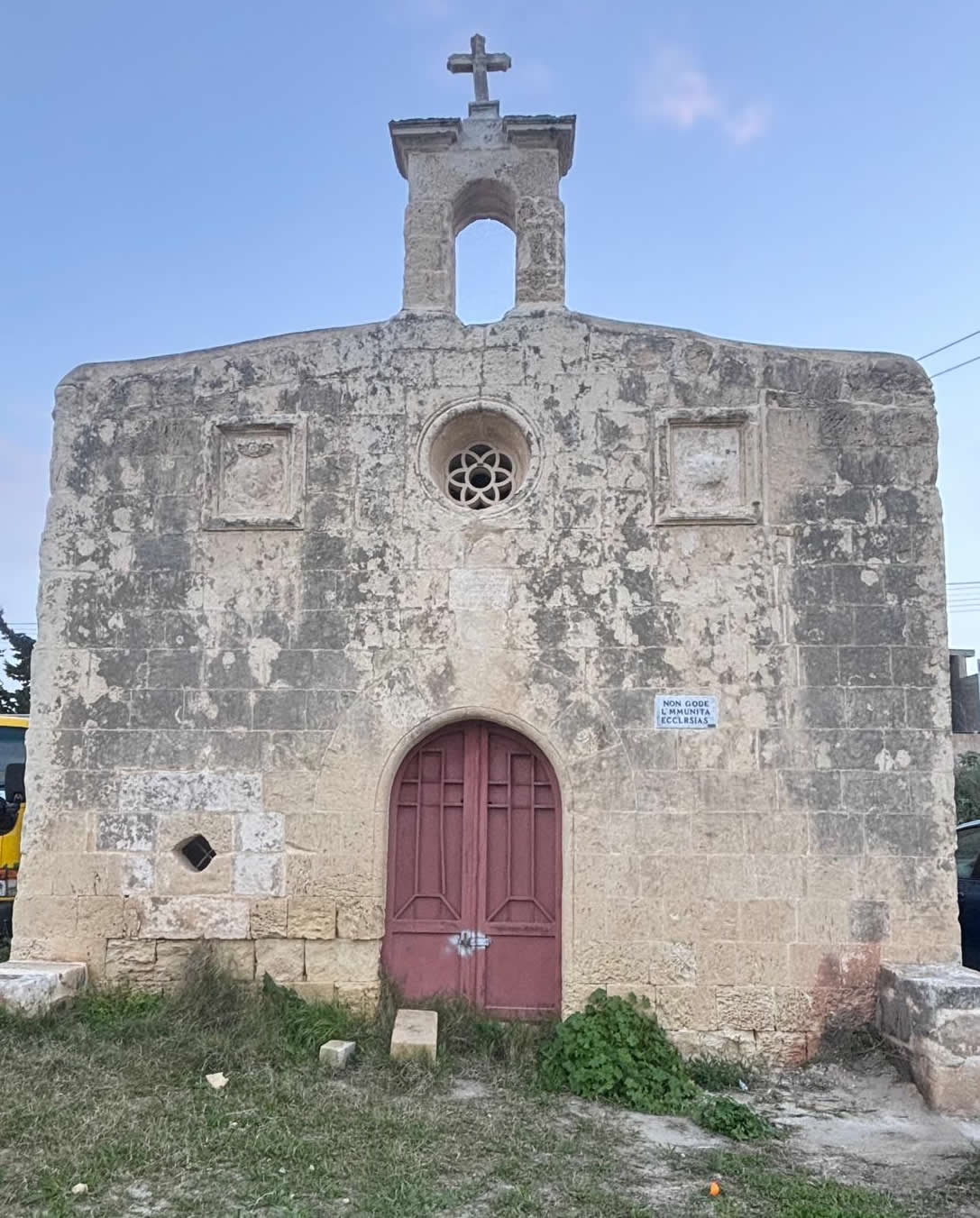
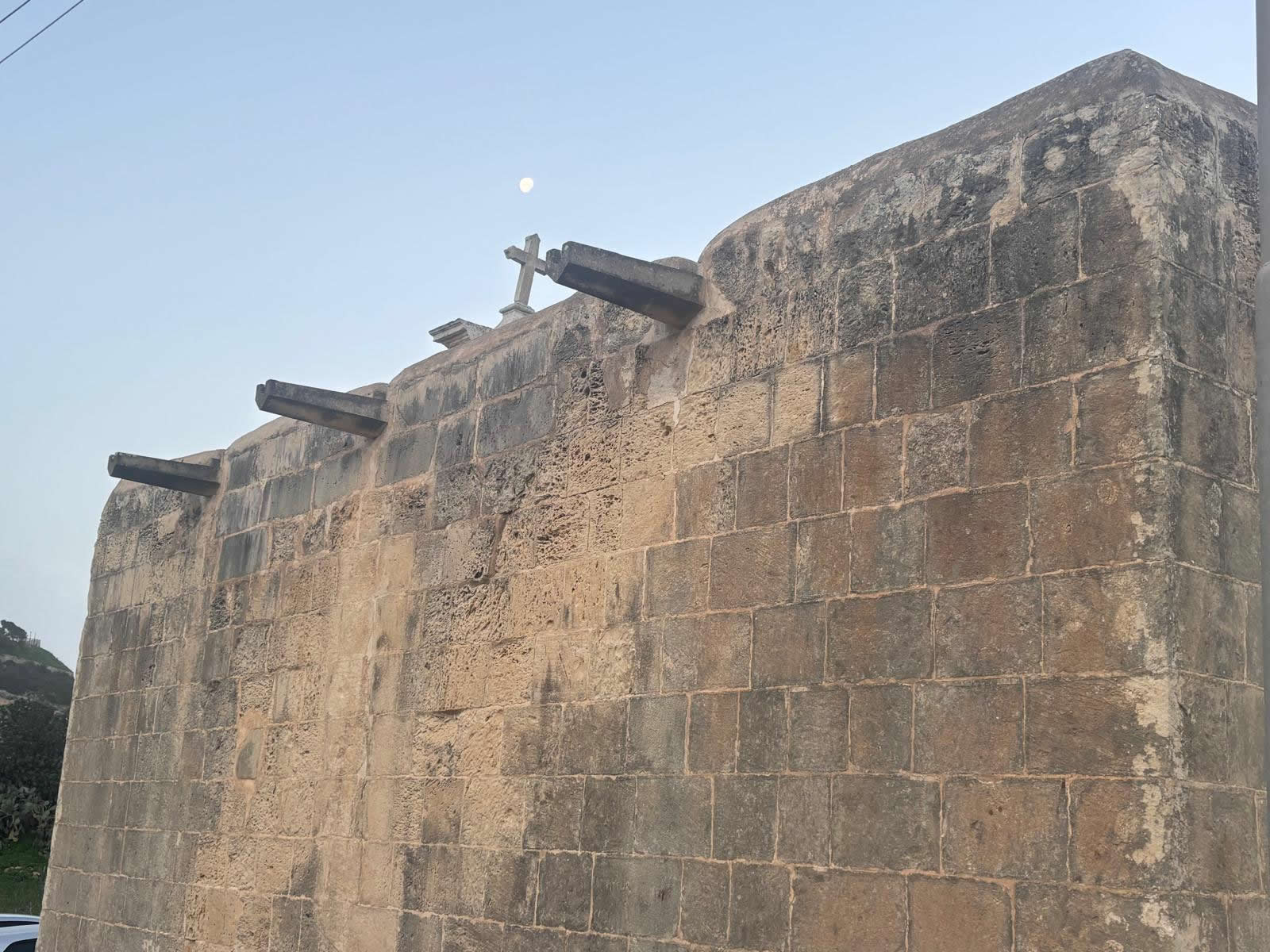
Architecturally, Santa Katerina is understood as a compact limestone chapel with a simple façade and a small belfry. Its proportions and restrained decoration are typical of wayside chapels: built for durability, visibility, and devotional function rather than grandeur.
The chapel’s countryside siting is also part of its “architecture”: it stands as a landmark on routes through the valley system, and forms a visual anchor for the surrounding landscape of terraced fields, rubble walls, and valley paths.
Inscriptions, sanctuary, and the limits of “immunity”
Rural churches in Malta sometimes carried warning inscriptions stating that the building did not enjoy ecclesiastical asylum (often encountered in Italian as “Non gode l’immunità ecclesiastica”). Such stones were historically used to prevent criminals from claiming sanctuary in remote chapels and to clarify jurisdictional control.
This chapel specifically: has such an inscription and it shows on the photos of the front of the chapel, it links to the wider story of law, order, and church-state tension in early modern Malta.
Restoration, repairs, and modern condition
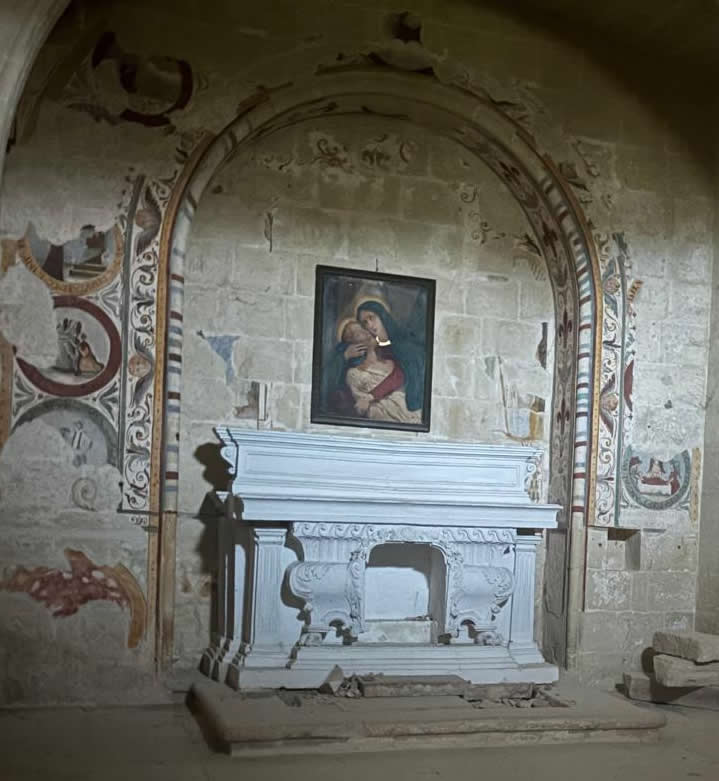
Like many countryside chapels, Santa Katerina has been vulnerable to weathering, vandalism, and long periods without regular maintenance. Some modern guides report restoration work in the early 2000s, focused on stabilising the structure and improving the condition of the exterior fabric.
In the broader environmental context, Wied il-Għasel has also been the focus of clean-up and rehabilitation initiatives, and reporting on the valley notes the area’s cultural value and the presence of protected heritage features within it.
Use today: devotion and heritage
Today the chapel is best understood as a heritage and devotional landmark rather than a regularly scheduled church. Even when not used frequently for Mass, such chapels retain cultural value: they preserve local memory, older patterns of countryside piety, and the historic link between settlement, agriculture, and worship.
Visiting notes
- Respect the site: treat as a religious and heritage place; avoid entering if closed or clearly private.
- Best approach: visit as part of a Wied il-Għasel walk; be mindful of uneven terrain and weather.
- What to photograph for documentation: façade details, belfry, doorway mouldings, any inscriptions, and the setting within the valley.