Location Map Coordinates 35.876732, 14.384292
Lunzjata Chapel, Rabat (Kappella tal-Lunzjata / Tħabbira lill-Madonna)
Set within Rabat’s rural outskirts along Triq tal-Lunzjata, the Lunzjata Chapel is a deeply historic Marian sanctuary tied to the Carmelite tradition. Its story is shaped by medieval benefactors, centuries of liturgical life, and major rebuilding phases that have preserved the site into the present.

Quick facts
- Name: Lunzjata Chapel (Chapel of the Annunciation)
- Maltese: Kappella tal-Lunzjata / Tħabbira lill-Madonna
- Address: Triq tal-Lunzjata, Rabat, Malta
- Coordinates: 35.876732, 14.384292
- Key early date: 5 June 1418 (testamentary bequest linked to the chapel and adjoining religious house)
- Early documentary reference: 26 March 1446 (record naming Carmelites living at the site)
- Major rebuild: 1713–1714 (church rebuilt within the existing footprint)
- Major restoration: 1844 (memorialised by carved date)
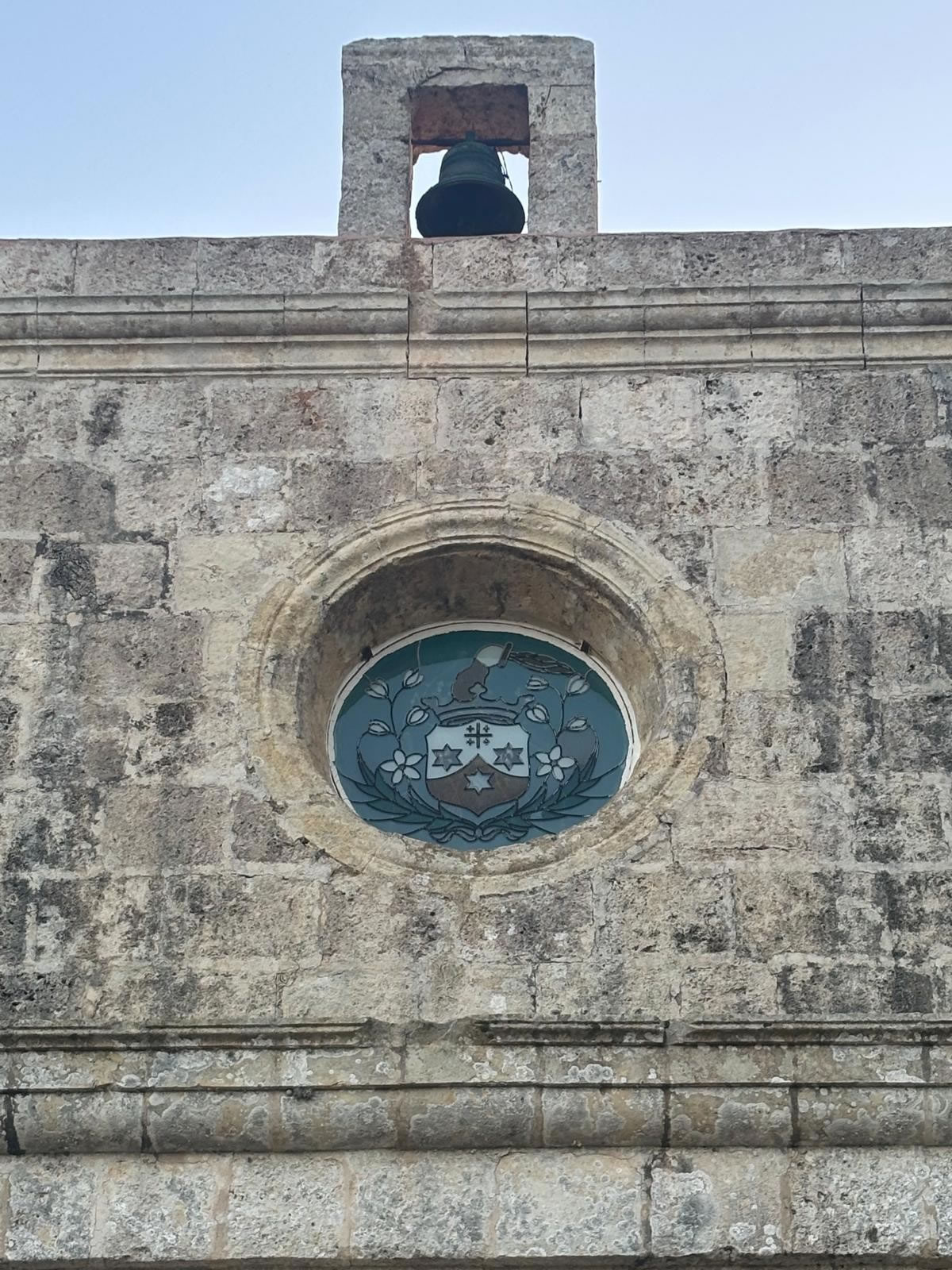
- Bell-cot built: 1846 (present façade bell-cot)
- Modern reopening / re-blessing: 5 April 1975
- Outdoor worship space created: 1984
Nearby: St Leonard Cave Church, Rabat.
Full history and key dates
Before 1418: earlier origins and the “San Leonardu” countryside
The Lunzjata is traditionally regarded as one of the oldest rural sacred sites around Rabat. While the precise date of the earliest chapel is not securely recorded, historical research notes that the church existed before the 1418 bequest and that some building stone appears to have been reused from an earlier structure, with scholarly opinions suggesting a much earlier medieval phase.
5 June 1418: the bequest of Margherita d’Aragona
A major cornerstone date for the site is 5 June 1418, when a noblewoman, Margherita d’Aragona di Pellegrino, left a countryside church dedicated to the Annunciation together with an adjacent religious residence, in the area associated with San Leonardu near Rabat/Imdina. The bequest required that the community using the church maintain daily prayer (the Divine Office), a detail that reflects the chapel’s intended role as a lived devotional and liturgical centre.

26 March 1446: Carmelites documented at the Lunzjata
A document dated 26 March 1446 refers back to earlier records and lists Carmelite friars living at the Lunzjata convent. The naming of a Carmelite prior is often treated as strong evidence that the community had already become established and organised at the site.
16th–17th centuries: growth, altars, and liturgical life
By the late 1500s and early 1600s, inventories and Carmelite records describe an active church with multiple altars and devotional artworks. An inventory of 1613 describes a stable building with a pitched roof and a developed liturgical setting. In the decades that followed, works are documented including:
- 1631: steps built for the main altar.
- 1633–1634: a wooden choir installed for the Divine Office.
- 1643: new church furnishings including gilded candlesticks and a new confessional.
1659: the Carmelites relocate, but the site continues to be maintained
The friars left the Lunzjata complex in 1659 when a new convent opened in Mdina/Imdina, yet the church and the site did not disappear from local life. Even as the complex faced deterioration, records show continuing repair efforts where needed and repeated attempts to protect the setting from dumping and neglect.
1672: structural concern and urgent repairs
In 1672, repairs are recorded after concerns that the roof was failing, including the construction of a supporting wall to stabilise part of the structure.
1693: earthquake context and the bell tower removed
The church formerly had a more substantial bell tower (with several bells). After the major Malta earthquake of 1693, the tower was dismantled in February 1693 to remove a dangerous structural risk.
1713–1714: major rebuild and reduction to a single altar
By 1713, the church had deteriorated so severely that it required near-total rebuilding. The solution adopted was to rebuild the church within the existing structure without fully demolishing the older fabric. From this phase onward, the church functioned with a single principal altar dedicated to the Annunciation. The date 1714 is carved into the interior roof area as a memorial of this major restoration/rebuild.
1759: altar embellishment
In 1759, an inscribed stone plaque associated with high-quality stonework was acquired and placed at the chapel’s altar, reinforcing the site’s continued devotional importance even as the complex changed.
1844–1852: extensive works and memorial date
Another landmark restoration is memorialised by the carved date 1844, linked to a major general repair campaign. An extensive restoration phase of the wider complex is recorded between 1844 and 1852.
1846: the present bell-cot
In 1846, the small bell-cot visible on the façade today was built, fitted for a single bell. The bell is associated with a Carmelite donation from Fleur-de-Lys.
1960s–1984: revival, reopening, and outdoor church
From the 1960s, there were renewed efforts to give the Lunzjata site new life as a place for retreats and Marian devotion. After building works and improvements, the site was reopened and re-blessed on 5 April 1975. Further development continued, and in 1984 an area that had once formed part of the older convent yard was converted into an outdoor worship space.

Construction and architectural character
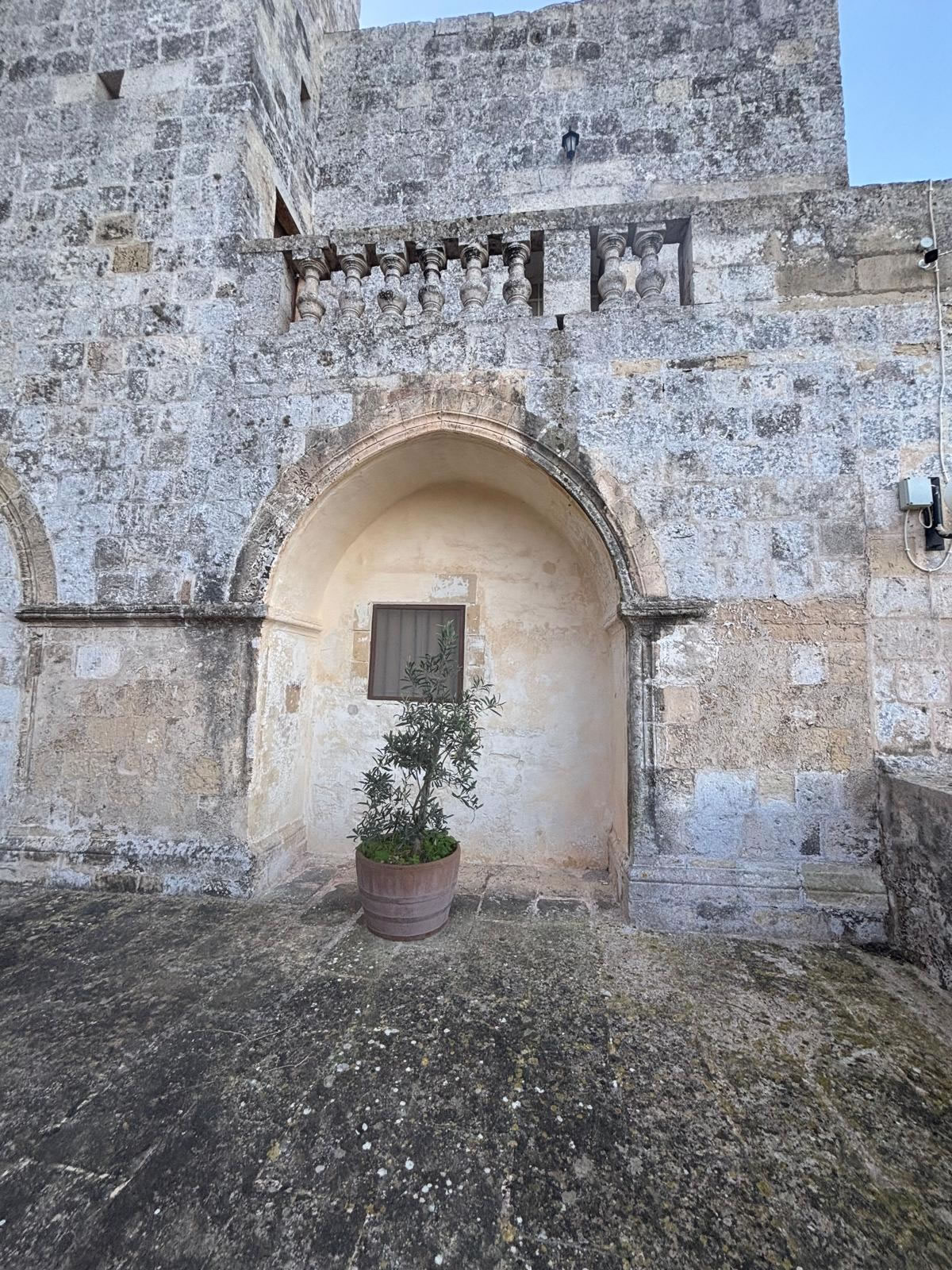
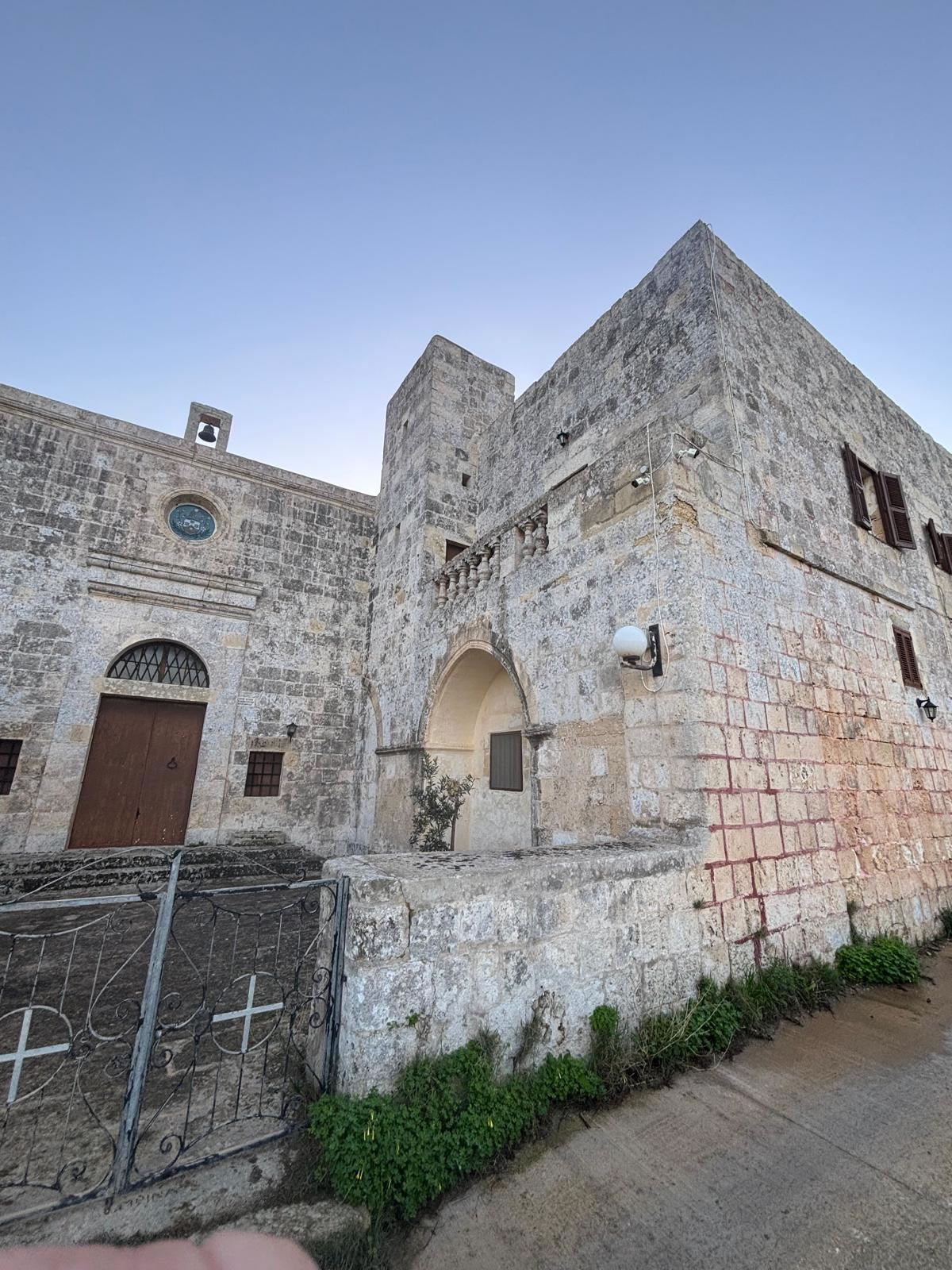
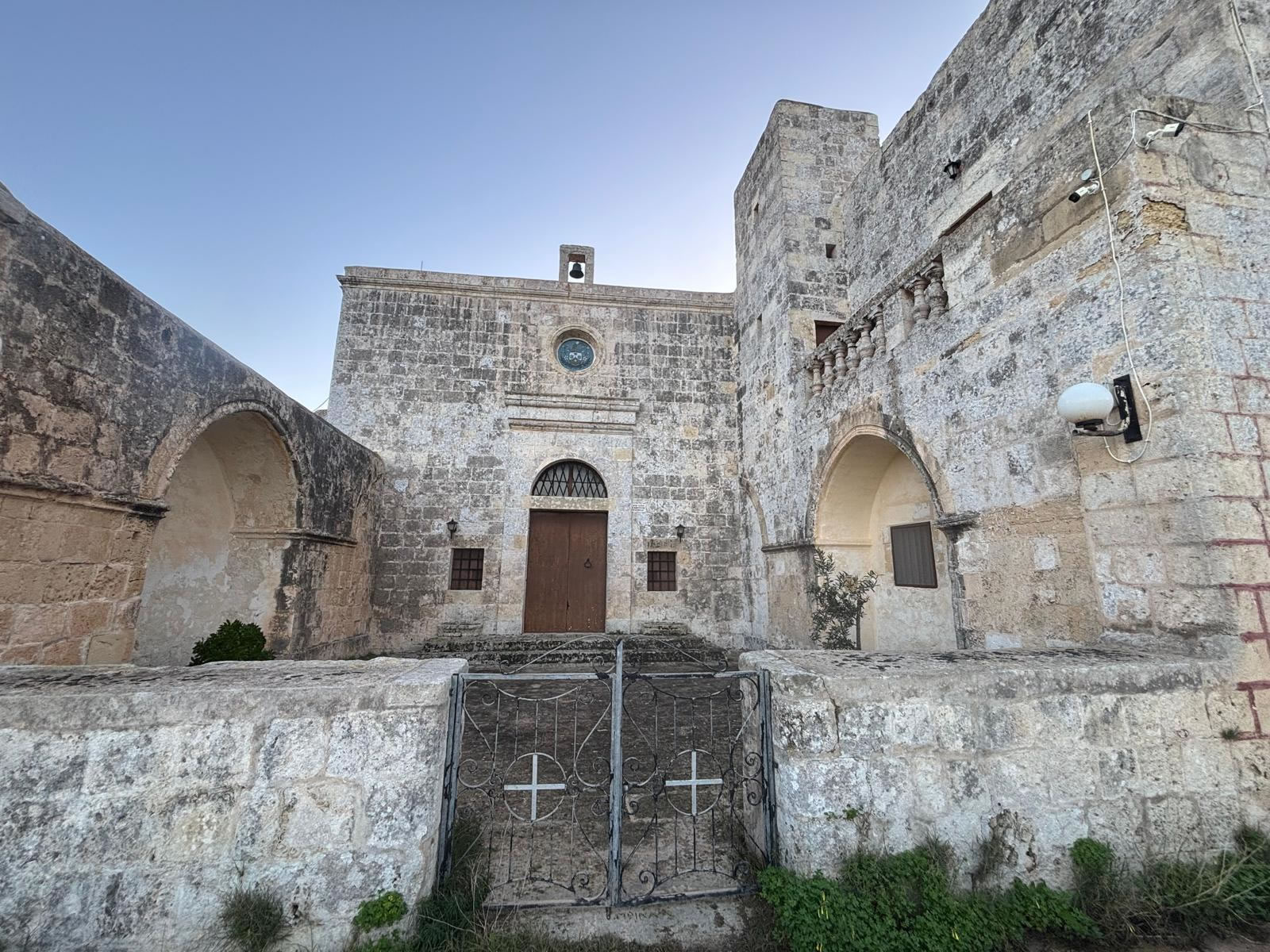
The Lunzjata’s built form reflects centuries of change: an early rural sanctuary strengthened and expanded for Carmelite life, later reduced and rebuilt after structural decline, and finally stabilised through 18th–19th-century restoration. The site is traditionally linked to a broader sacred rural landscape that includes nearby devotional points and historic pathways.
While the chapel’s footprint and appearance were altered by the major 18th-century rebuilding, the Lunzjata remains valued not only for its architecture but for the continuity of worship it represents across medieval, early modern, and modern Malta.
Notable features and heritage details
- 1418 bequest tradition: strong documentary anchor for the chapel’s Carmelite-associated history.
- 1446 documentation: an early record naming Carmelites living at the site.
- 1714 and 1844 carved dates: memorial markers of major restoration phases.
- 1846 bell-cot: the present façade bell-cot built after earlier bell-tower removal.
- Claude de la Sengle (1557): the site is associated with a memorial stating his heart was buried here.
Use today
The Lunzjata Chapel continues to function as a devotional place within Rabat’s rural landscape. It is especially associated with Marian devotion to the Annunciation and is used for scheduled Masses on selected Sundays and for occasional community services. As with many Maltese countryside chapels, access can vary depending on liturgical use and caretaking arrangements.
Visiting information
- Address: Triq tal-Lunzjata, Rabat, Malta
- Coordinates: 35.876732, 14.384292
- Best for: heritage walks, Marian devotion, rural Rabat scenery
- Respect: this is an active religious site; dress modestly when open and keep noise low.
FAQ
When was the Lunzjata Chapel built?
The chapel existed before 1418, but its exact original construction date is not precisely recorded. A major confirmed historical anchor is the 5 June 1418 bequest connected with the Annunciation church and residence, and there is documentary evidence of Carmelites at the site by 26 March 1446.
What are the most important restoration dates?
The chapel underwent a major rebuild in 1713–1714 (the date 1714 is memorialised), and another major restoration in 1844 (also memorialised). Wider complex works are recorded between 1844 and 1852, with the present bell-cot added in 1846. The site was reopened and re-blessed on 5 April 1975.
Why is it called “Lunzjata”?
“Lunzjata” is the Maltese form commonly used for the Annunciation of the Blessed Virgin Mary (Tħabbira lill-Madonna), the chapel’s dedication.