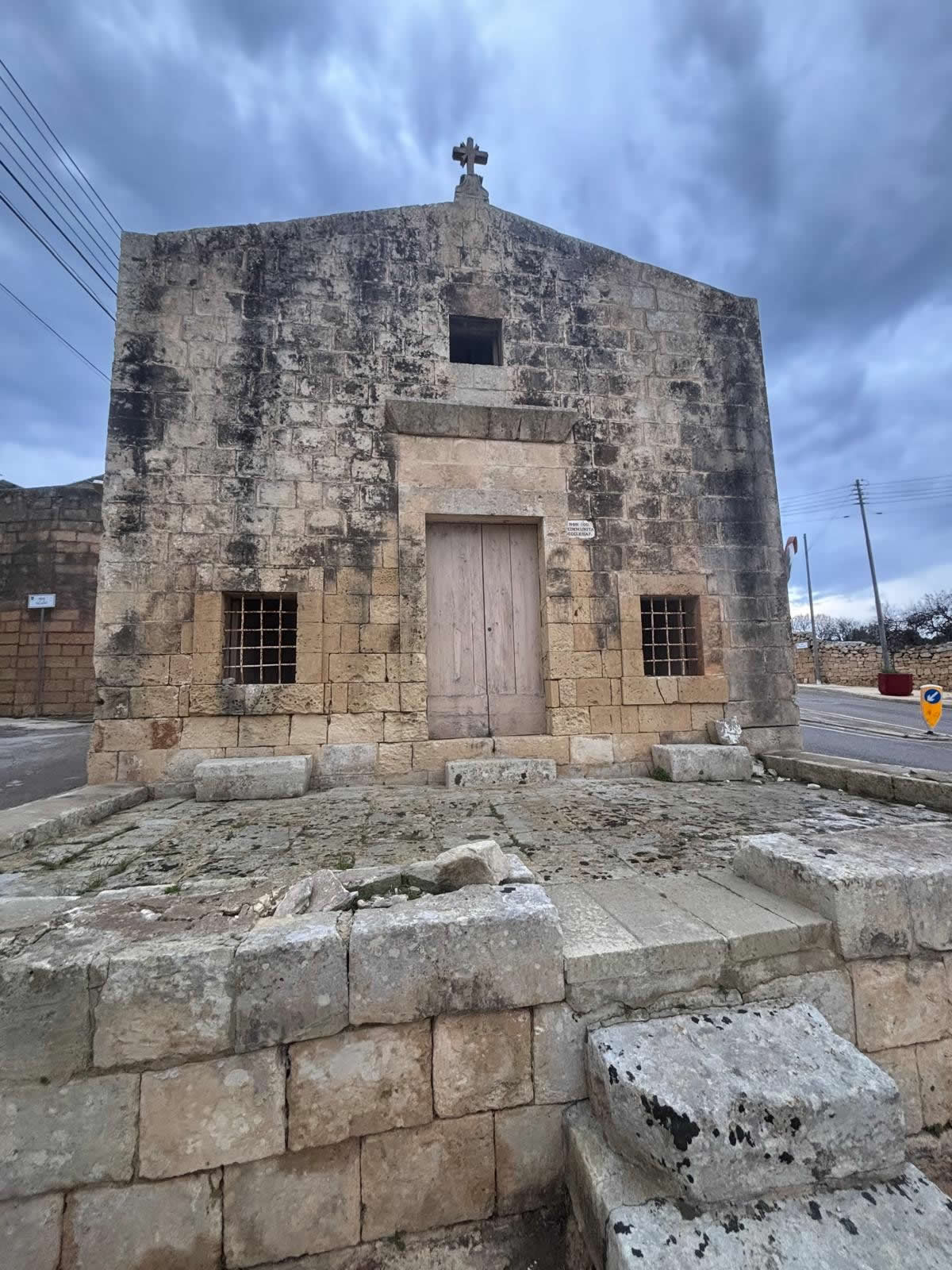
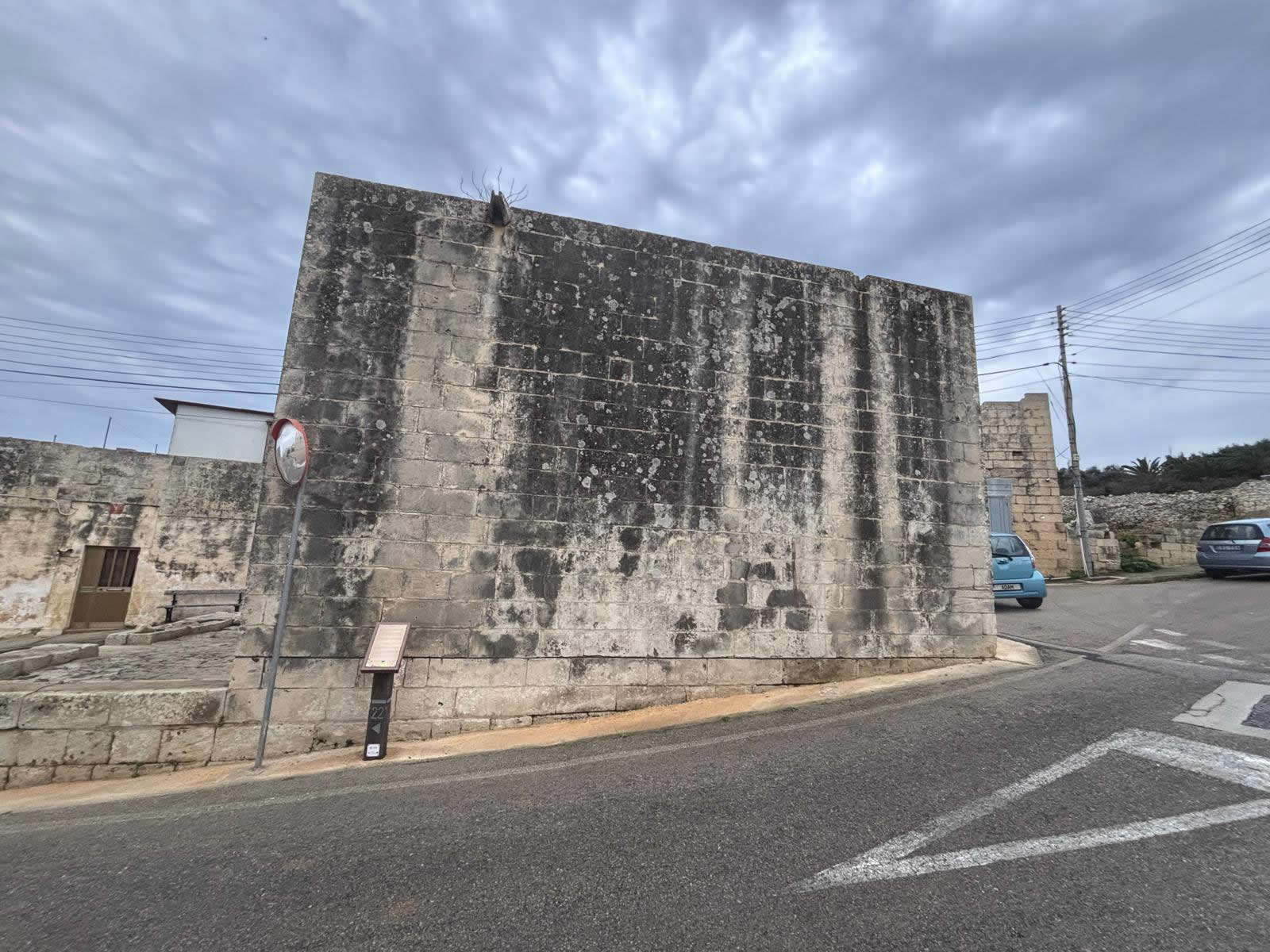
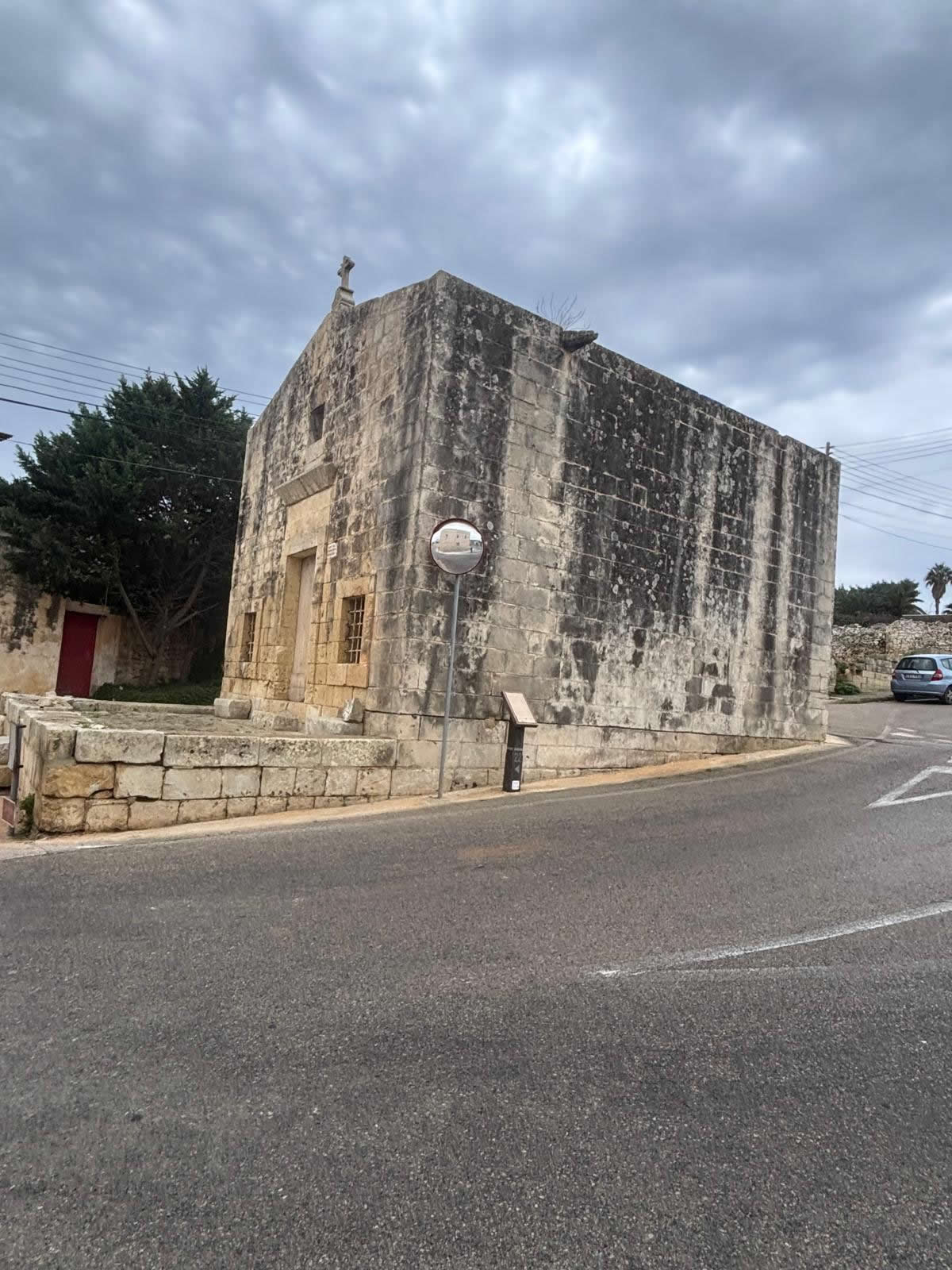
A modest 17th-century countryside chapel built in 1658, once dedicated to Our Lady of Victories and later known as Tal-Grazzja—Our Lady of Grace.
Overview
Known locally as Tal-Grazzja, the Our Lady of Grace Chapel sits on the outskirts of Qrendi in the Tal-Maqluba area,
along the route leading towards Ħaġar Qim. It is valued less for lavish decoration than for its simplicity—an honest, prayerful building made to serve
everyday devotion in the rural landscape.
Original dedication:Our Lady of Victories (with a traditional feast connected to 8 September).
Later dedication: rededicated to Our Lady of Grace (Tal-Grazzja).
Feast tradition: some popular accounts place the “Tal-Grazzja” dedication shift in 1781.
2007: modern restoration returned the chapel to clean, devotional use.
Full detailed history
1) A 17th-century foundation (1658)
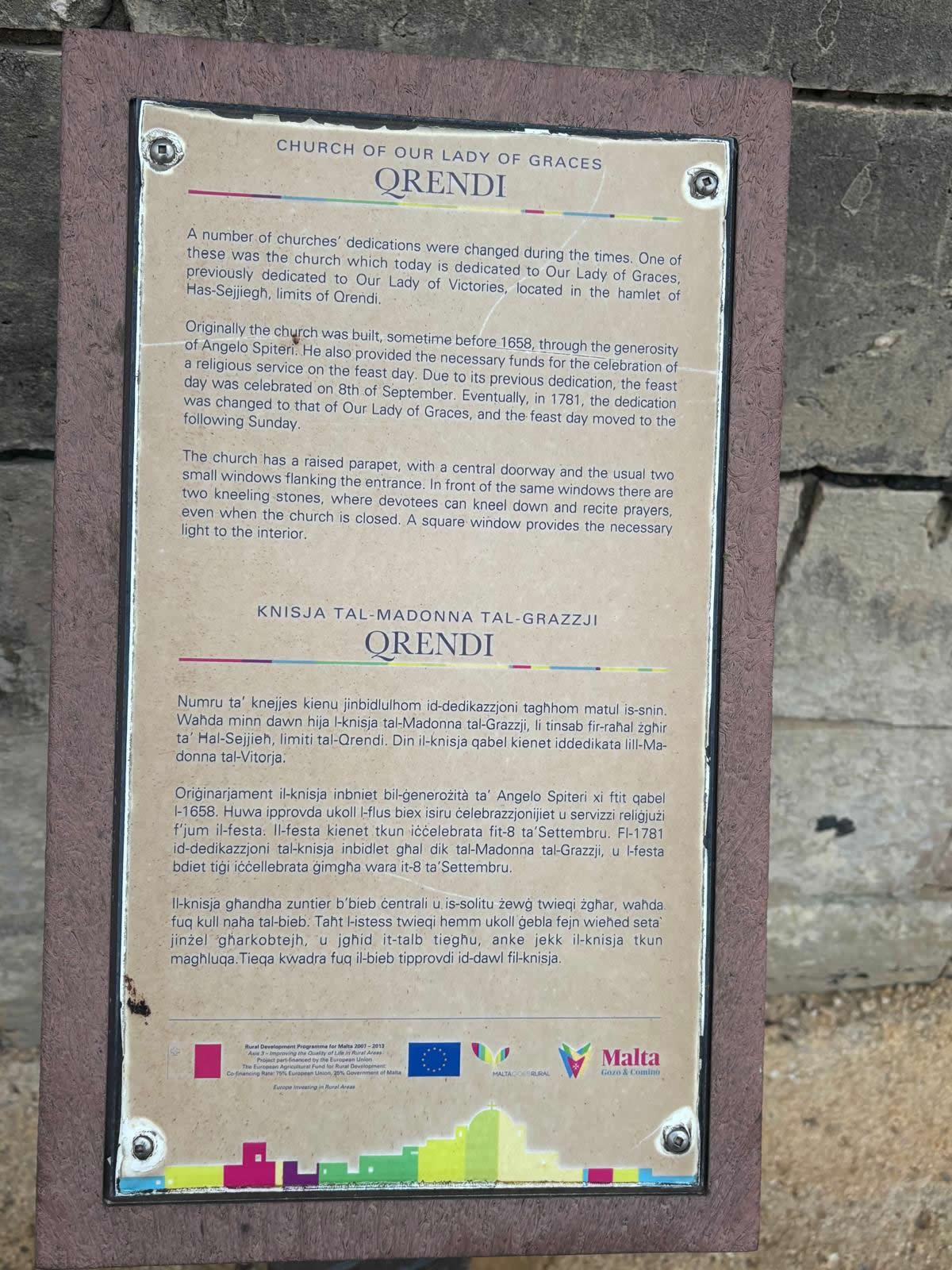
The chapel was built in 1658 through the initiative of Angelo Spiteri from Qrendi. Like many Maltese rural chapels, it
reflects a blend of personal devotion and public benefit: Spiteri is remembered for leaving funds intended to support the celebration of Mass and the singing
of vespers on the feast day, ensuring the chapel had an ongoing liturgical life rather than remaining a private monument.
2) From Our Lady of Victories to Our Lady of Grace
The chapel was originally dedicated to Our Lady of Victories, with a feast traditionally connected to 8 September (a major
Marian date in Malta’s calendar). Over time the chapel became known instead as Our Lady of Grace—Tal-Grazzja.
Some popular accounts place this shift in 1781, with the celebration moving to the first Sunday after 8 September, though local tradition is
often stronger than formal documentation for exact dates of dedication changes.
3) Why this chapel mattered in the countryside
Qrendi’s chapel network developed to serve people living and working beyond the village core—farmers, herders, and travellers moving through the plateau.
Small roadside chapels like Tal-Grazzja offered a place to stop for prayer, mark feast days, and maintain community identity across a dispersed landscape.
4) Restoration and continuity (2007)
A modern restoration in 2007 renewed the chapel and reinforced its devotional role. After restoration, accounts note the simple interior was
kept intentionally restrained, with a small devotional painting introduced and the chapel’s architectural clarity made more legible—stone altar, round arches,
and the clean geometry of the space.
Architecture and notable features
A deliberately plain façade
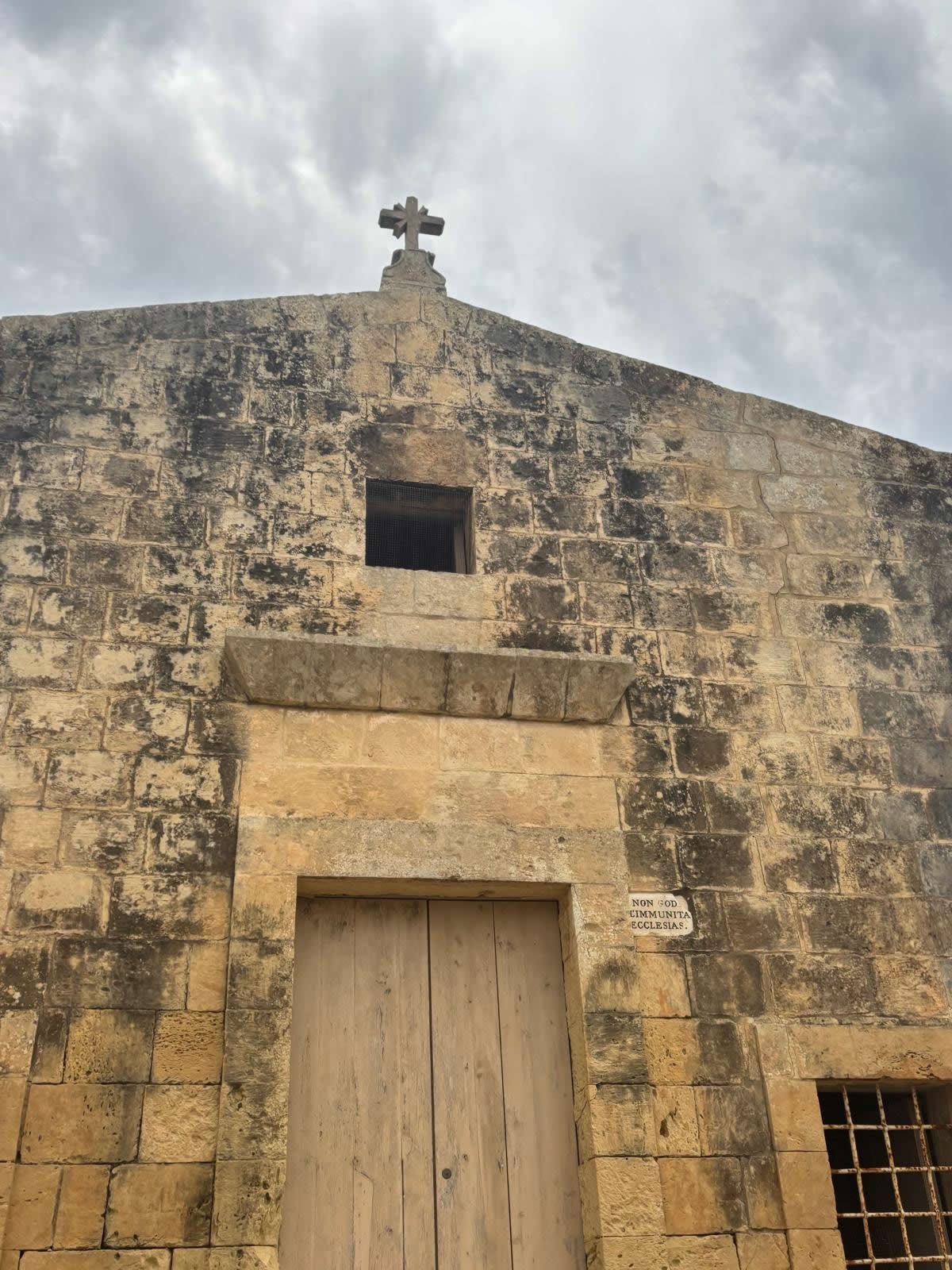
Tal-Grazzja is known for a façade that is largely undecorated—an aesthetic that feels consistent with its rural function. Three small square windows define
the front: two flank the doorway and a third sits higher above it, bringing daylight into the interior.
Stone “kneelers” for prayer outside
A distinctive feature is the pair of stone kneeling blocks (often called “kneelers”) beneath the side windows, allowing people to pray even when the chapel
is closed—an understated but powerful sign of lived devotion.
Crucifix and the sanctuary plaque
Above the façade a small stone crucifix crowns the chapel. Another memorable detail is a Latin/Italian notice plaque reading
“Non Gode L'Immunita Ecclesiastica”—a declaration that the chapel does not grant church immunity (sanctuary) to offenders seeking refuge.
Interior
Inside, the chapel is typically described as having a single stone altar and a ceiling articulated by round arches—an atmosphere designed for quiet prayer
rather than spectacle.
Use, worship and visiting notes
How it is used today
Our Lady of Grace Chapel remains part of Qrendi’s active devotional landscape. When opened, it serves private prayer and occasional liturgical observances,
and it contributes to the wider Marian identity of the village and its chapel network.
Visiting etiquette
Respect: modest dress and quiet behaviour are recommended.
Do not tamper with the façade stones, windows, or external kneelers.
Photography: be mindful if the chapel is open for worship.
FAQ — Our Lady of Grace Chapel (Tal-Grazzja)
Why is it called “Tal-Grazzja”?
“Tal-Grazzja” is the common Maltese shorthand for “(Our Lady) of Grace”, the dedication by which the chapel is best known today.
What was the earlier dedication?
The chapel is widely described as originally dedicated to Our Lady of Victories, before being rededicated to Our Lady of Grace.