This countryside chapel stands in the Għajn Riħana area (Triq Burmarrad) within the limits of St Paul’s Bay. It is described as having
very old origins and a long-standing historical connection to the Mdina Cathedral Chapter.
Coordinates: 35.925509, 14.415401Deconsecrated: 1658 Reactivated: late 17th century Enlarged: 1849 Extension added: 1866 New façade: 1882
Build-date confirmation: available published summaries describe the chapel as having very old origins, but do not give a single
confirmed foundation year. The most secure, dated milestones are its deconsecration in 1658, reactivation in the late 17th century,
and the documented 19th-century building phases (1849, 1866, 1882).
Full detailed history
Ancient origins and rural devotion
The chapel is repeatedly characterised as an old countryside place of worship serving the agricultural landscape of Għajn Riħana.
Despite its antiquity, one summary notes that it is not mentioned in the 1575 ecclesiastical visitation attributed to Dusina, even though it fell for many years under the parish of Naxxar while remaining connected to the Cathedral in Mdina.
1658: deconsecration
A key turning point recorded in secondary historical summaries is its deconsecration in 1658.
Late 17th century: reactivation
The chapel is then described as being brought back into service for the faithful by the late 17th century.
19th-century transformation: enlargement and new façade
The building’s modern appearance is strongly shaped by three 19th-century phases:
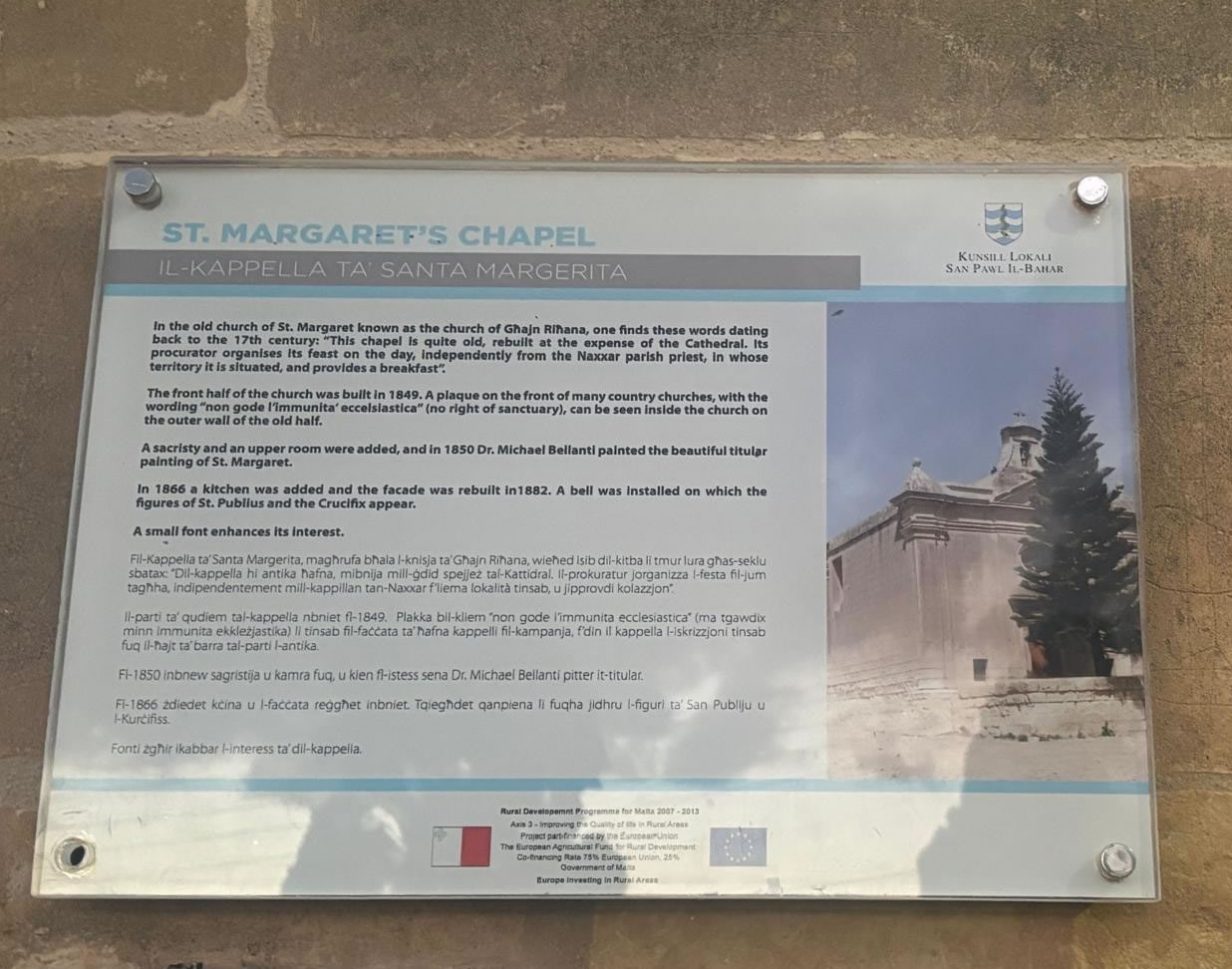
1849 — the chapel was enlarged towards the front.
1866 — an additional room was added (described as serving as a kitchen).
1882 — a new façade was added.
Construction and architectural description
Plan and structure
The chapel is described as having an interior divided into an older and a newer part, reflecting its incremental enlargement over time.
Façade and external features
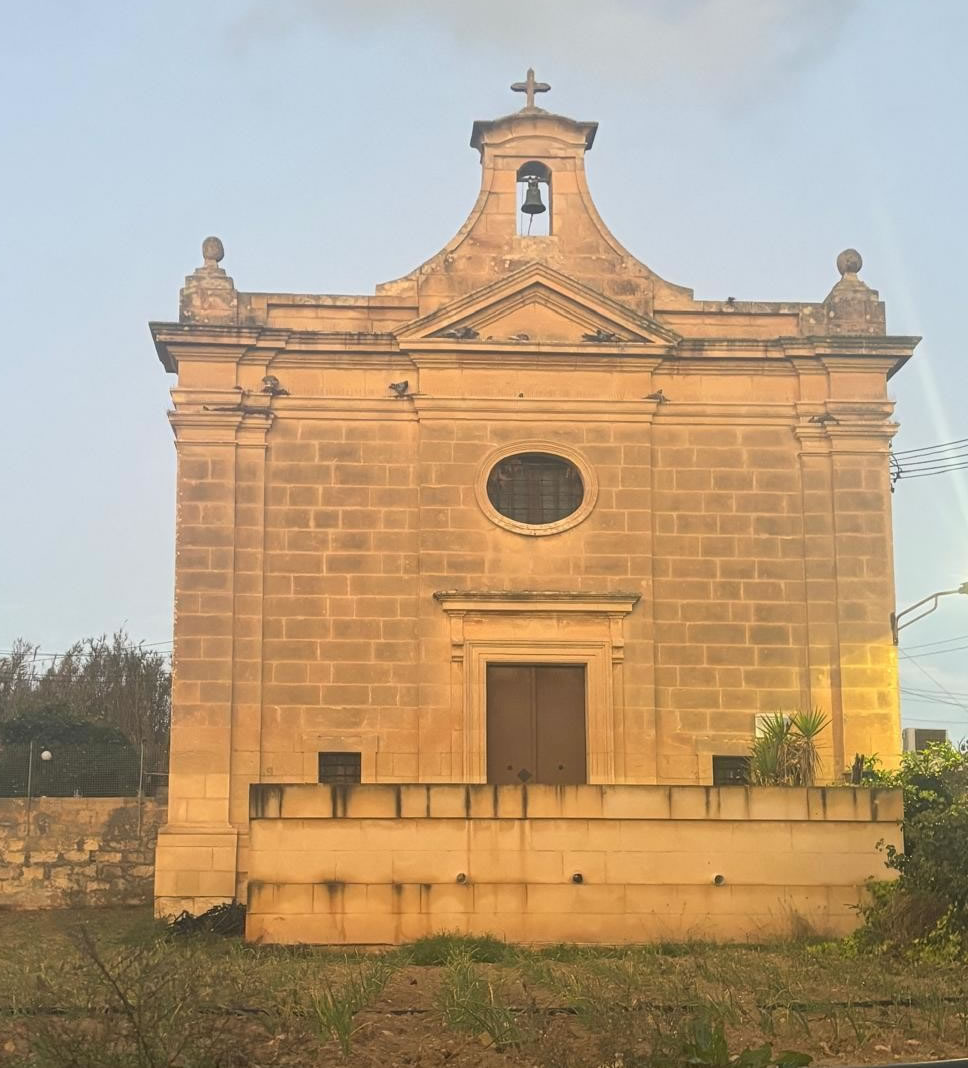
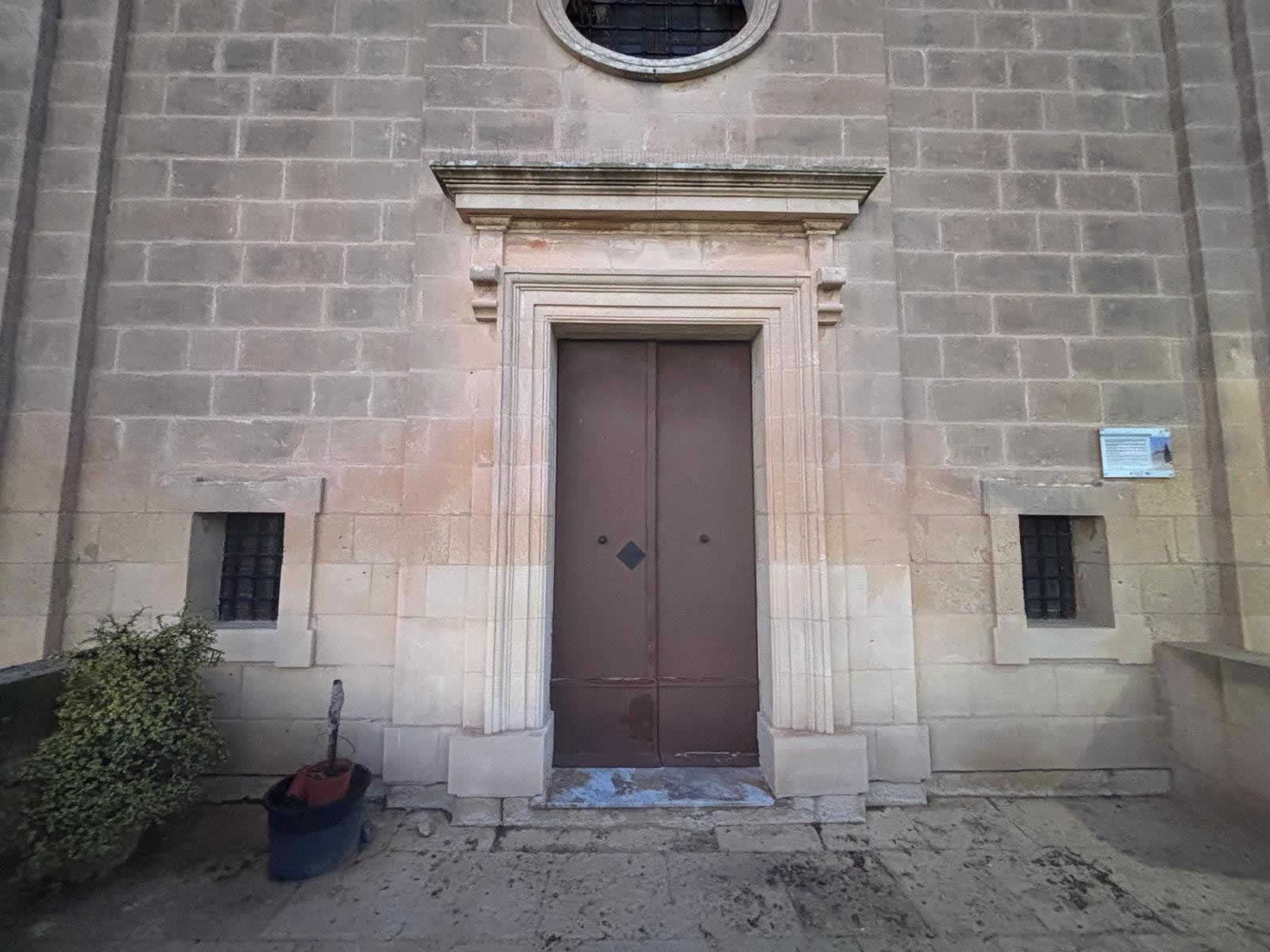
Descriptions emphasise a small but elegant façade: pilasters, a pediment, and a bell-cot above, with a round oculus window lighting the interior and small
square windows on either side of the main doorway.
Restoration and conservation
20th-century restoration work
The chapel is reported as having been restored in the 1970s and 1980s, associated with Fr Frank Grech SJ and Anġlu Carabotta (Żejtun).
Recent management notes (2000–2013)
A noteworthy site-management episode is recorded: a tree planted in front of the main door in 2000 grew to obstruct the façade and access, and was removed in 2013.
Conservation focus for emalta.com: because the chapel’s significance lies in its layered fabric (older core + 1849/1866/1882 additions),
conservation best practice is to document each phase, treat stone decay/salts, and ensure water shedding at rooflines and junctions so earlier masonry is not damaged.
Use: past and present
Historic role
As a rural chapel, it functioned as a devotional focus for the surrounding fields and small hamlets, with oversight historically linked to the Cathedral Chapter in Mdina.
Present-day use
Today it is primarily visited as a heritage site in the countryside. A chapel listing for the same dedication notes no scheduled mass times, which aligns with an “occasional use / not regularly served” pattern.
Timeline
Pre-1658
Chapel described as of very old origins; historically tied to Mdina Cathedral Chapter.
1658
Recorded deconsecration.
Late 17th century
Recorded reactivation into service.
1849
Enlarged towards the front; old façade wall remains identifiable by an internal plaque reference.
1866
Additional room added (described as a kitchen).
1882
New façade added.
1970s–1980s
Restoration campaign reported.
2000–2013
Tree planted in front (2000) later removed (2013) after blocking façade/access.
Visiting notes
This chapel lies in the rural Għajn Riħana landscape. Please visit respectfully: keep gates and field edges clear, avoid carving or scratching stone,
and treat the building fabric as fragile heritage.