📍 Location
Location Map Coordinates 35.898865, 14.514555

Introduction
The Greek Catholic Church of Our Lady of Damascus, commonly known in Maltese as Id-Damaxxena, is one of the most historically distinctive churches in Valletta. Unlike most Maltese churches which follow the Latin rite of the Roman Catholic Church, this church serves the Greek Catholic community and celebrates the Byzantine liturgy. It stands as a living reminder of the diverse cultural and religious traditions that have shaped Malta since the arrival of the Knights Hospitaller of St John in the sixteenth century.
Located in the historic centre of Valletta, the church is particularly renowned for housing the icon of Our Lady of Damascus, one of the most revered Marian icons in the Maltese Islands. The icon is believed to date from the 11th or 12th century and was brought to Malta from Rhodes by the Knights of St John when they settled in the islands in 1530.

Origins of the Greek Catholic Community in Malta
The story of the church is closely tied to the history of the Greek Christian community that accompanied the Knights Hospitaller to Malta after the fall of Rhodes to the Ottoman Empire in 1522. Many Greek Catholics and Orthodox Christians relocated to Malta along with the Knights, bringing with them their religious traditions, clergy, and sacred objects.
Among these treasured objects was the miraculous icon of Our Lady of Damascus, which had long been venerated in the Eastern Christian world. When the Knights arrived in Malta in 1530, the icon was initially kept in a church in Birgu (Vittoriosa), where the Greek community was first established.
However, as Valletta was built following the Great Siege of Malta of 1565, plans were made to establish a new church there to serve the Greek Catholic faithful and to provide a suitable sanctuary for the icon. The project was initiated by the Greek merchant and benefactor Giovanni Calamia.

Construction of the Valletta Church
The church dedicated to Our Lady of Damascus was completed around 1580. Its purpose was specifically to house the revered icon and to serve as the main centre of worship for the Greek Catholic community in Malta.
Although Calamia died before the church was finished, his executors ensured the completion of the project according to his wishes. In 1587, the icon of Our Lady of Damascus was solemnly transferred from Birgu to the newly completed church in Valletta.
This event marked the beginning of centuries of devotion to the icon within the capital city. Over time, the church became the principal parish of the Greek Catholic community in Malta and remained an important spiritual centre for Eastern Christians living on the islands.

The Miraculous Icon of Our Lady of Damascus
The most important treasure of the church is the famous icon of the Virgin Mary known as Our Lady of Damascus. The icon, painted in the Byzantine tradition, depicts the Virgin holding the Christ Child and is revered as a miraculous image.
Art historians believe the icon dates back nearly a millennium, probably to the 11th or 12th century. It travelled with the Knights and Greek Christians from Rhodes to Malta in 1530 and soon became one of the most beloved Marian images in the islands.
During the period of the Knights of St John, the icon attracted both local and international devotion. Historical accounts recount that Grand Master Jean Parisot de Valette himself prayed before the icon during the difficult months of the Great Siege of Malta in 1565.
Today the icon remains the focal point of the church's interior and is preserved under controlled conditions to protect it from environmental damage. A major restoration project lasting several years was completed in 2022, ensuring the preservation of this exceptional piece of religious heritage.

Destruction during World War II
Like many buildings in Valletta, the church suffered devastating damage during the Second World War. On 24 March 1942, enemy bombing raids struck the area and completely destroyed the historic building. Numerous sacred artworks and more than thirty icons were lost in the rubble.
The destruction represented a major blow to Malta's small but significant Greek Catholic community. Nevertheless, determination to rebuild the church quickly emerged, and plans were drawn up to reconstruct the sanctuary while preserving its historical and spiritual significance.

Reconstruction and Consecration
Following the war, the church was rebuilt through the efforts of clergy and members of the Greek Catholic parish. The new structure incorporated elements inspired by Byzantine architecture while adapting to the realities of modern construction.
The rebuilt church was solemnly consecrated on 15 August 1951, restoring the spiritual centre of the Greek Catholic community in Malta.
The reconstruction also ensured that the icon of Our Lady of Damascus would once again have a permanent home in Valletta.

Architecture and Interior
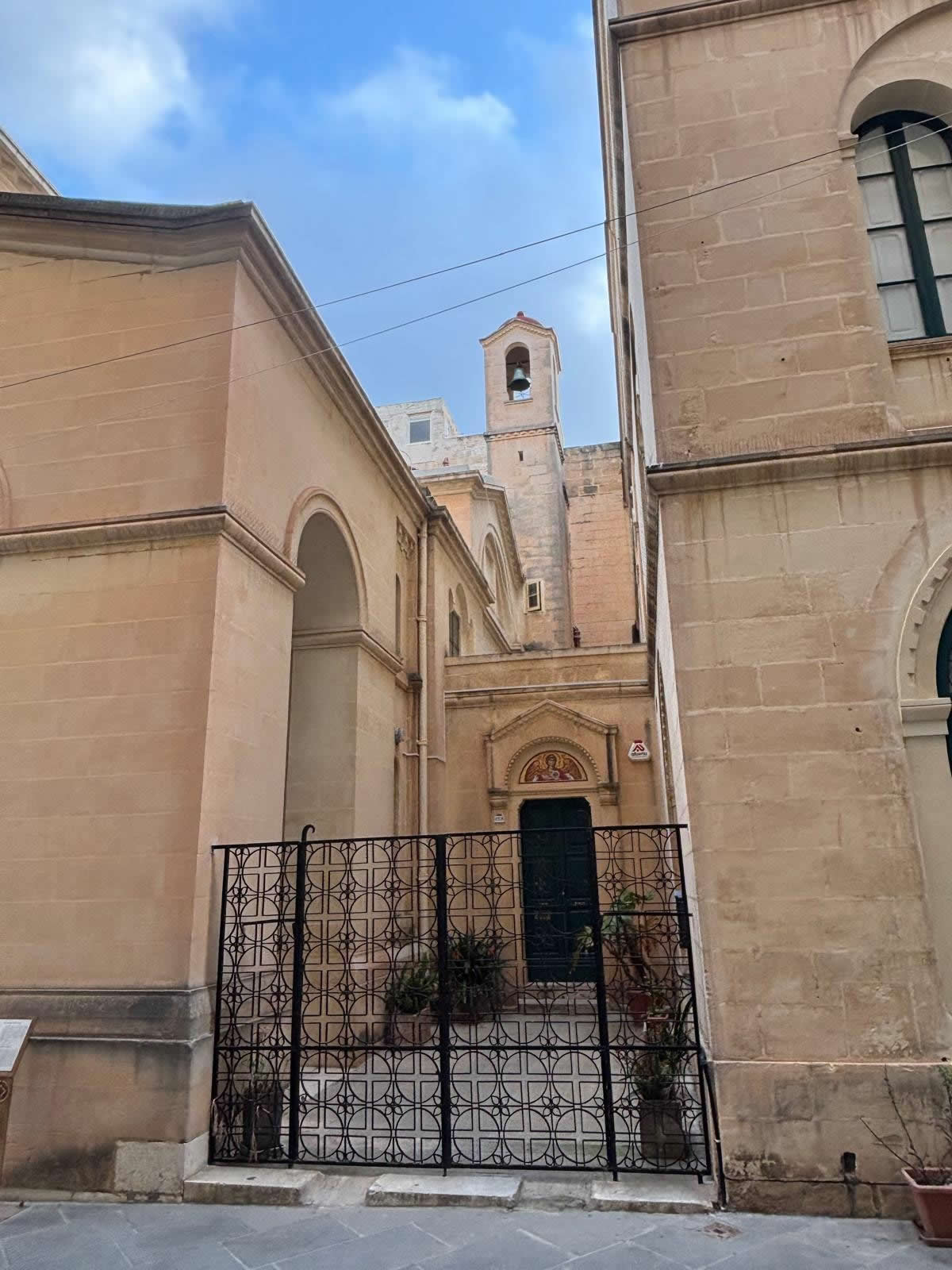
The current church presents a distinctive architectural character that reflects the Byzantine tradition. While many Maltese churches are strongly Baroque in style, this building incorporates elements associated with Eastern Christian sacred architecture.
The church features a prominent dome and a relatively compact nave designed to focus attention on the sanctuary and the icon of the Virgin. Decorative elements inside the church reflect Byzantine artistic influences, including iconography, liturgical furnishings, and symbolic ornamentation.
The sanctuary area contains the iconostasis and the niche that houses the icon of Our Lady of Damascus. Visitors often note the spiritual atmosphere of the church, which differs from the Latin-rite churches common throughout the Maltese Islands.
Religious Life and Liturgical Use
The church continues to serve as the main centre of worship for the Greek Catholic community in Malta. Liturgical celebrations follow the Byzantine rite, which differs in form and symbolism from the Latin Mass used in most Maltese churches.
In addition to serving Greek Catholics, the church occasionally hosts liturgical celebrations for other Eastern Christian communities present in Malta, including Melkite and various Orthodox groups. This reflects the historic role of the church as a meeting point for different Eastern Christian traditions.
The annual feast of Our Lady of Damascus is celebrated on 24 January, attracting devotees who come to venerate the ancient icon and participate in special liturgical celebrations.

Cultural and Historical Significance
The Greek Catholic Church of Our Lady of Damascus is an important monument within the religious landscape of Valletta. Beyond its spiritual role, it represents the multicultural nature of Maltese history and the enduring presence of Eastern Christian traditions on the islands.
Its association with the Knights of St John, the Great Siege of Malta, and the centuries-old Damascene icon makes the church one of the most historically meaningful religious sites in the capital city.

Location
| Location | Valletta, Malta |
|---|---|
| Church Name | Greek Catholic Church of Our Lady of Damascus (Id-Damaxxena) |
| Coordinates | 35.898865, 14.514555 |
| Founded | 1580 |
| Consecrated | 15 August 1951 |
| Architectural Style | Neo-Byzantine |
| Rite | Byzantine Rite (Greek Catholic) |

Visiting the Church
Visitors exploring Valletta often encounter the church while walking through the historic streets of the capital. Although modest in size compared with Valletta's grand Baroque churches, the Greek Catholic Church of Our Lady of Damascus offers a unique glimpse into a different tradition of Christian worship.
Pilgrims, historians, and travellers alike are drawn to the church to admire the ancient icon, learn about Malta's Greek Christian heritage, and experience the rich liturgical traditions of the Byzantine rite.