📍 Location
Location Map Coordinates 35.899657, 14.516774
The Orthodox Church of St Nicholas in Valletta is one of Malta’s oldest surviving Christian sites and a key centre for Orthodox liturgical life. Originally constructed in the 16th century for the Greek Orthodox community, it has been rebuilt, restored, and entrusted to the Ecumenical Patriarchate of Constantinople in the 21st century to serve Orthodox Christians of diverse ethnic backgrounds, including Greek and Ukrainian faithful.
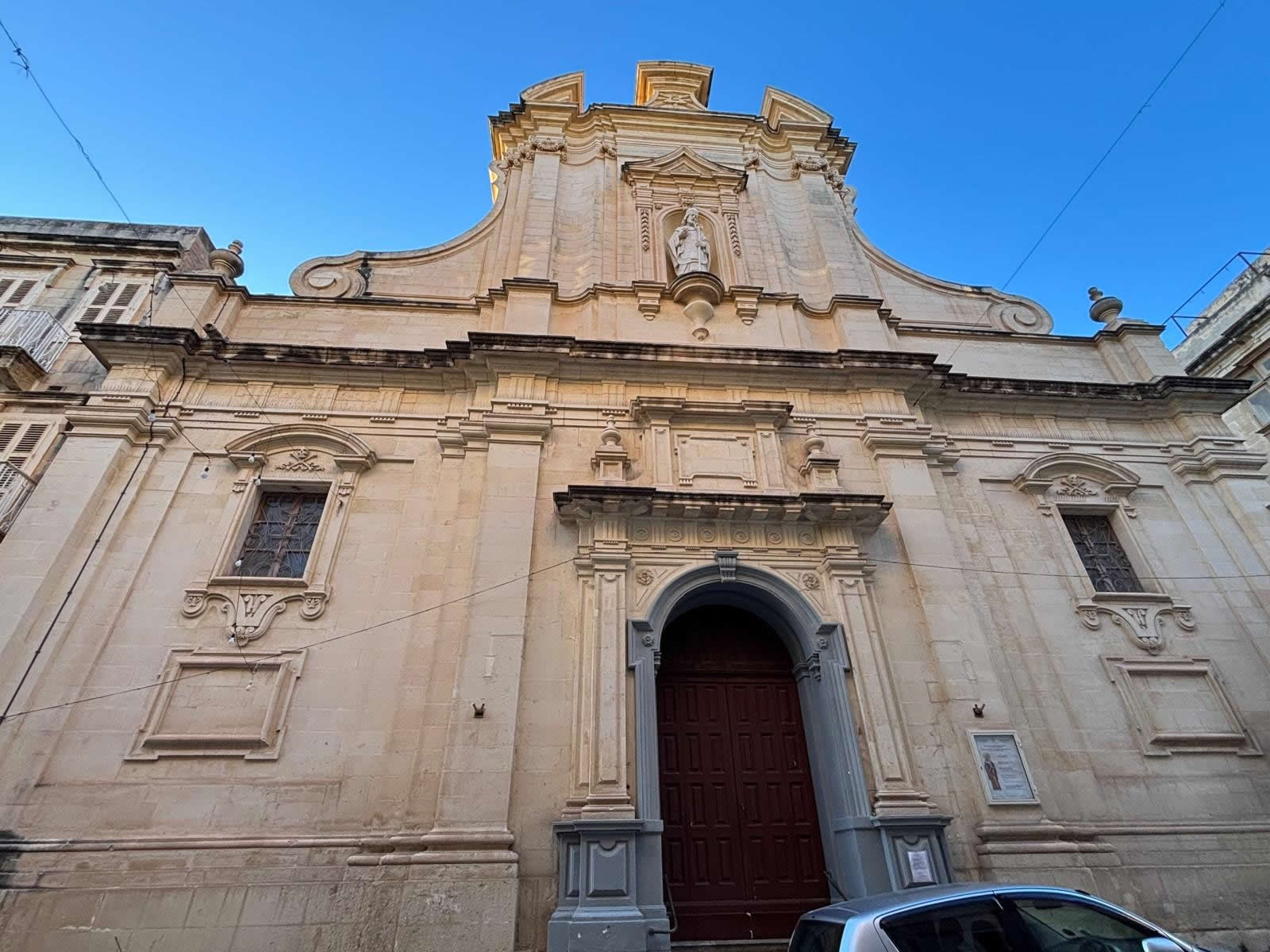
Origins & First Construction (1569)
The Church of St Nicholas was originally built in 1569 to serve the Greek Orthodox community residing in Valletta, a thriving Mediterranean port city. At a time when trade and cultural contact bridged Europe’s east and west, this church provided a spiritual home for Orthodox faithful, reflecting the multi-ethnic makeup of Valletta’s populace.
Although details of the earliest structure are sparse, its initial purpose as a Greek Orthodox place of worship affirms the presence and religious diversity of Eastern Christians in Malta shortly after Valletta’s foundation in the mid-16th century.
17th-Century Transition & Baroque Rebuilding (1639–1652)
In 1639, the Orthodox parish priest, Papas Giovanni Metaxi, joined the Greek Catholic Church — a group in communion with Rome but retaining Byzantine liturgical rites. As a result, the church came under the care of the local Confraternity of the Souls in Purgatory, commonly referred to in Maltese as Ta’ l-Erwieħ.
Recognising the need for architectural renewal, the Confraternity commissioned the Italian architect Francesco Buonamici to redesign the Sacral space in the Baroque style. By 1652, the church was rebuilt to a striking Baroque design that blended traditional Byzantine ecclesiastical layout with Western Baroque aesthetics — a unique architectural synthesis in the Maltese context.
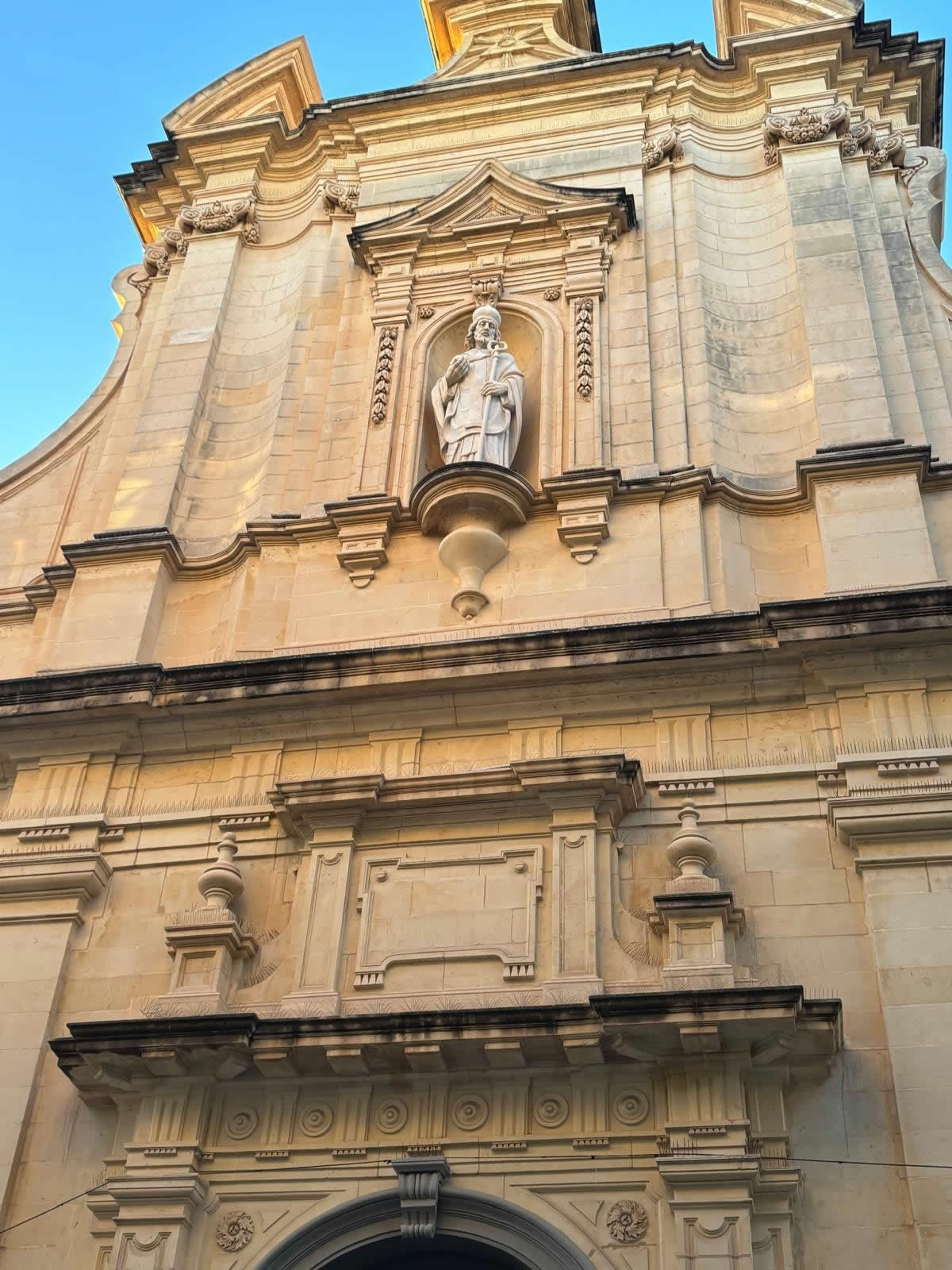
Architectural Features & Baroque Design
The Orthodox Church of St Nicholas is built in the Baroque style typical of 17th-century Malta, combining dynamic forms and classical motifs carved from local limestone. Its façade is organised into three bays at ground level with a central upper section that rises above the entrance.
Crucially, the interior is planned on a Greek cross layout — a hallmark of Byzantine architectural tradition — with equal arms extending from the central space. The dome, which caps the crossing, is supported by four free-standing columns, drawing the eyes upward toward the heavens as worshippers enter the sacred area. A choir area occupies the apse, flanked by a sacristy, while a single bell tower is positioned at the rear of the building.
Role During World War II & Post-War Restoration
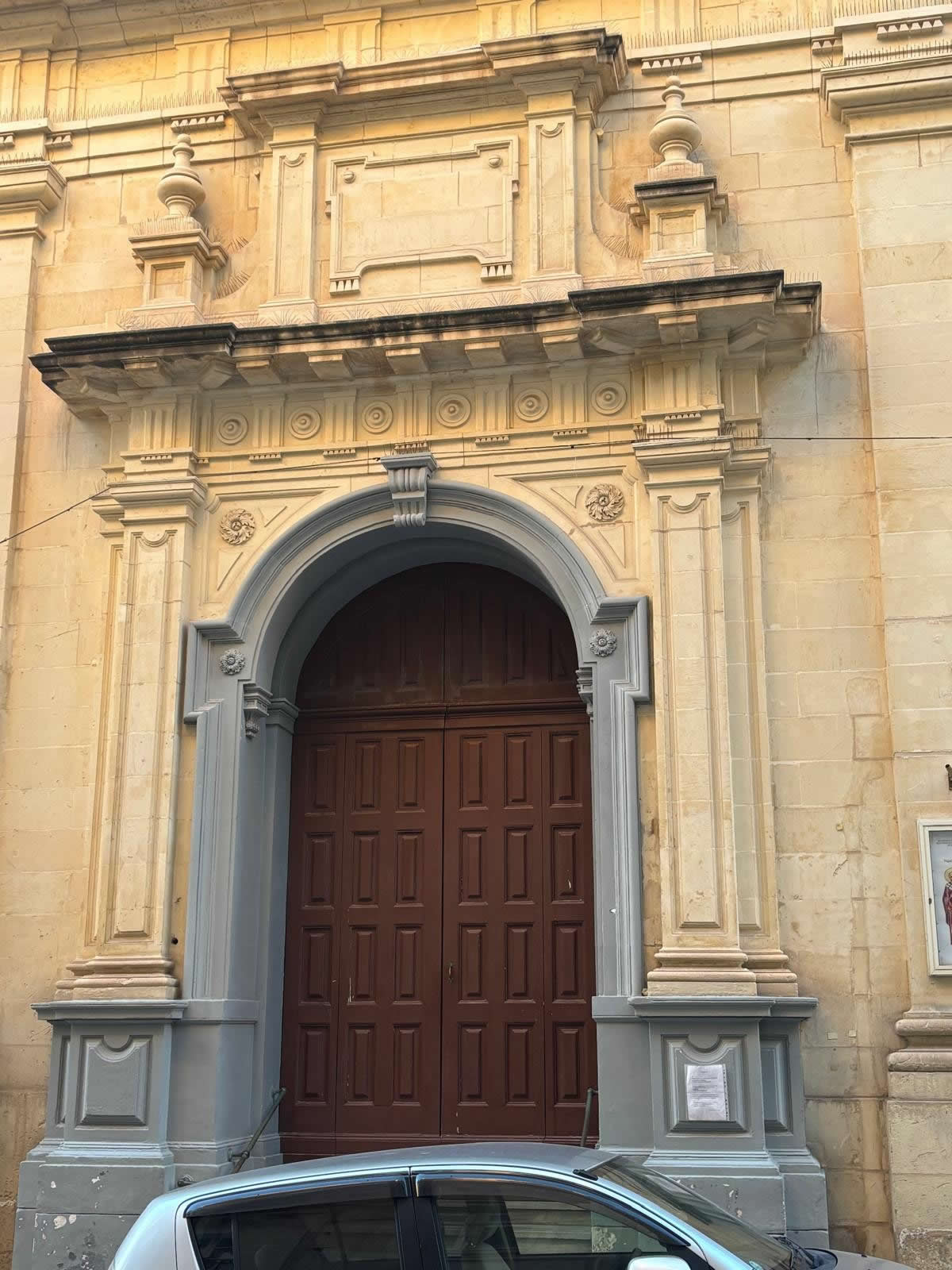
Like many historic buildings in Malta, the Church of St Nicholas suffered significant damage during World War II due to aerial bombardment. Its façade was particularly affected, necessitating substantial reconstruction in the immediate post-war years. By 1951, repairs had been completed, restoring structural integrity and returning the church to its role as a place of communal worship.
Ecclesiastical Turn & Return to Orthodox Use (21st Century)
Although the church was formally returned to the Greek Catholic community in 2014, its use evolved again in the 2020s. On 14 January 2021, the Holy Synod of the Ecumenical Patriarchate of Constantinople established the Holy Patriarchal Exarchate of Malta, creating a dedicated ecclesiastical structure to better serve the Orthodox faithful across the Maltese islands.
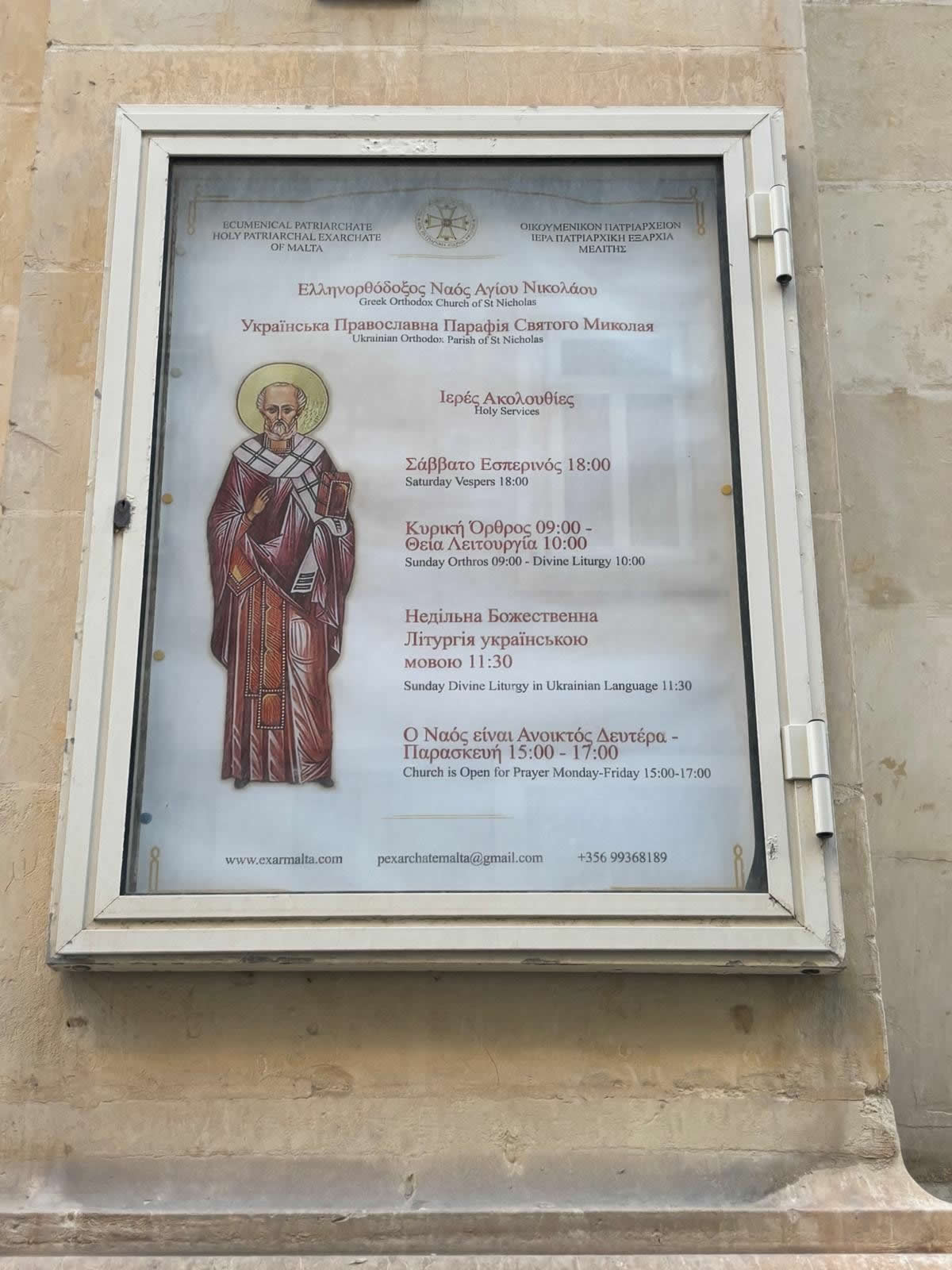
Following this development, the Roman Catholic Archdiocese of Malta entrusted the Church of St Nicholas to the Exarchate. This marked a renewed Orthodox presence for the historic building, now serving both Greek Orthodox and Ukrainian Orthodox parishes, with regular liturgical services conducted in Greek, Ukrainian, and English.
Parish Life & Liturgical Tradition
Today, the Orthodox Church of St Nicholas is an active centre for Orthodox Christian worship. Regular services include Vespers on Saturday evenings, Orthros (Matins) on Sundays, followed by the Divine Liturgy. Additionally, on certain Saturdays a Divine Liturgy in English is offered, accommodating diverse language needs among the Orthodox community in Malta.
Under the spiritual leadership of the Patriarchal Exarch and resident clergy — including the Greek Orthodox Archimandrite and Ukrainian Orthodox Hieromonk — the church provides pastoral care, sacramental rites, and catechetical instruction for its congregations.
Cultural Significance & Ecumenical Engagement
The Church of St Nicholas holds a unique place in Malta’s religious landscape, symbolising centuries of Christian diversity and dialogue. In December 2022, His All-Holiness Bartholomew I, the Ecumenical Patriarch of Constantinople, made a historic visit to Malta — the first official visit by a reigning Ecumenical Patriarch. During this visit, he presided over Great Vespers for the feast of Saint Nicholas at this church, emphasising its importance for Orthodox Christians and its broader role in inter-religious engagement on the islands.
Feast of Saint Nicholas & Devotional Practice
The feast of Saint Nicholas the Wonderworker is celebrated annually on 6 December according to the Orthodox liturgical calendar. Saint Nicholas, Archbishop of Myra in Lycia, is one of the most venerated saints in Eastern Christianity, revered for his compassion, miracles, and steadfast witness to the faith.
Feast celebrations at the church typically include a solemn Divine Liturgy, processions, and community gatherings that bring together Greek and Ukrainian parishioners in a shared expression of Orthodox faith and tradition. Such observances reinforce the church’s identity as a spiritual home for Orthodox Christians in Malta.
Quick Facts & Timeline
- Founded: 1569 as a Greek Orthodox church
- Rebuilt (Baroque Style): 1652 by architect Francesco Buonamici
- World War II Repair: Reconstructed by 1951
- Returned to Orthodox Use: 2014–2021 transition to Holy Patriarchal Exarchate
- Ecclesiastical Jurisdiction: Ecumenical Patriarchate of Constantinople
- Annual Feast: 6 December (Saint Nicholas)
- Languages of Liturgy: Greek, Ukrainian, English