St. Venera, Santa Venera, Malta — A Living Centre of Faith and History
📍 Location
Location Map Coordinates 35.888119, 14.479958
- Home
- Church List
- Santa Venera Parish Church
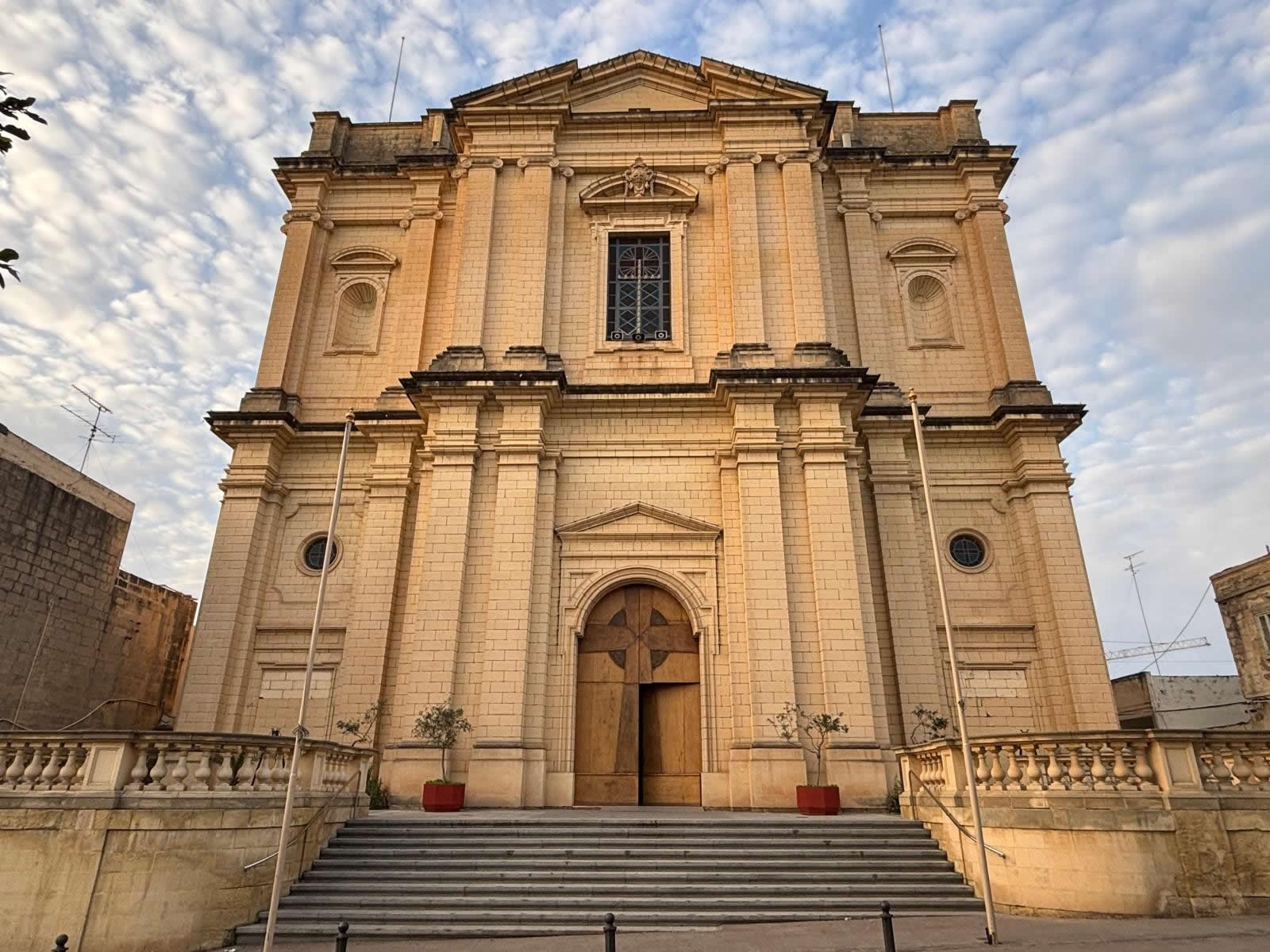
The Santa Venera Parish Church (Maltese: Knisja Parrokkjali ta' Santa Venera) is the principal Roman Catholic church serving the town of Santa Venera, Malta. Dedicated to Saint Venera, the church is an active parish within the Roman Catholic Archdiocese of Malta and remains one of the most significant modern ecclesiastical buildings in the Maltese Islands.
History of Santa Venera Parish Church
The origins of the parish in Santa Venera trace back to the early 20th century when the settlement began to grow rapidly. The original parish was established in 1918, after the Carmelite friars took stewardship in 1912, reflecting both pastoral demand and the town’s expanding population.
While the first church structure dated to earlier times, the need for a larger place of worship saw the decision made in the mid-20th century to construct a new, more capacious parish church. Construction began on 19 April 1956, following designs by Perit Ġużè Damato in a Romanesque Revival style. Early works completed the roofing and balcony by the late 1960s, but progress was halted due to financial constraints.
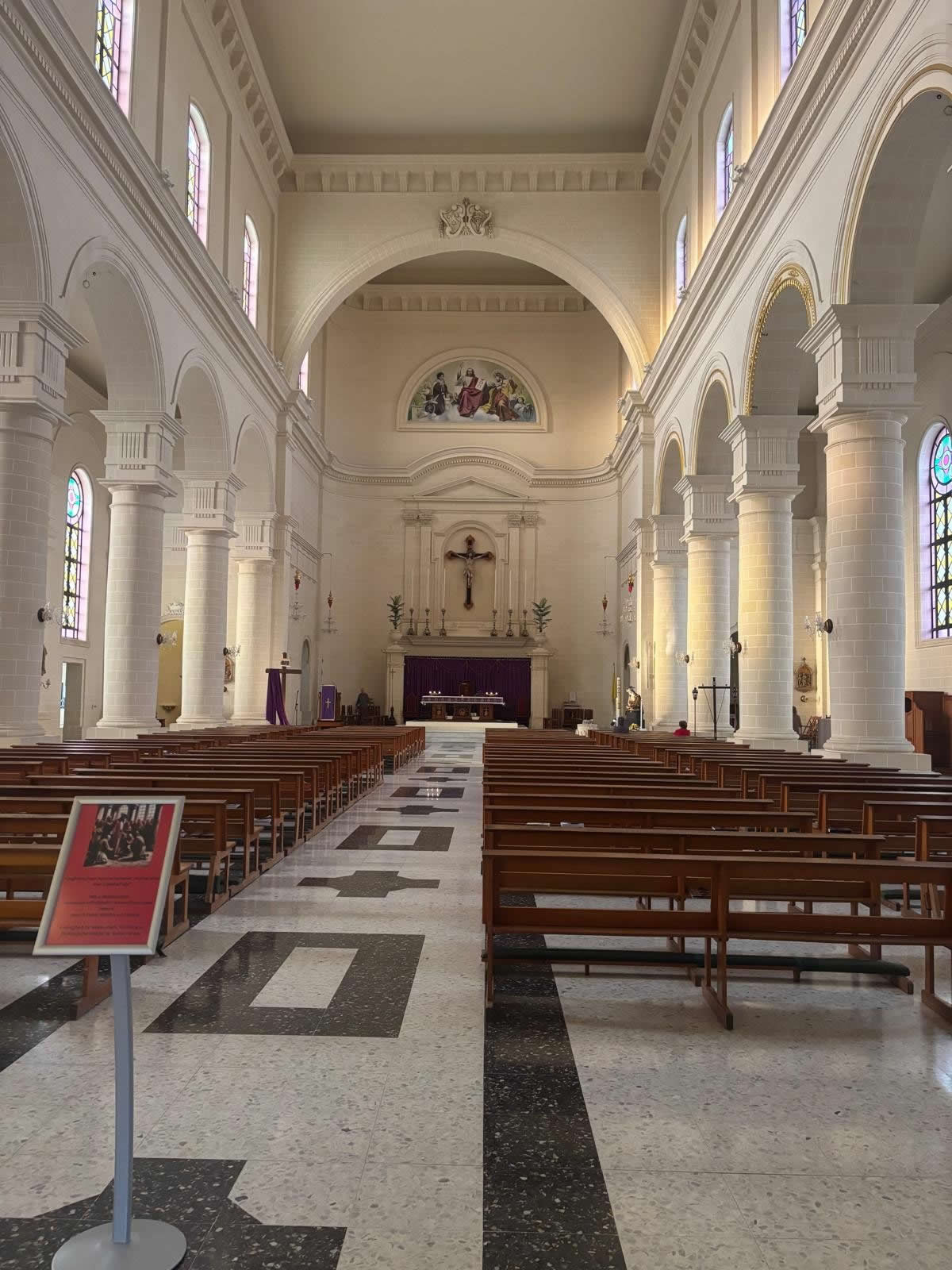
During a long period when the main building stood unfinished, the crypt underneath was actively used as the liturgical space by parishioners. Recognising the need for a completed structure, architects Louis A. Naudi and Godwin Aquilina were later commissioned to complete the project. A redesign ensured compliance with liturgical norms following the Second Vatican Council.
After decades of intermittent building works, the Parish Church was officially opened and blessed on 17 July 2005 by Archbishop Joseph Mercieca. However, even today, the church awaits the completion of its intended bell towers.
Architecture & Style
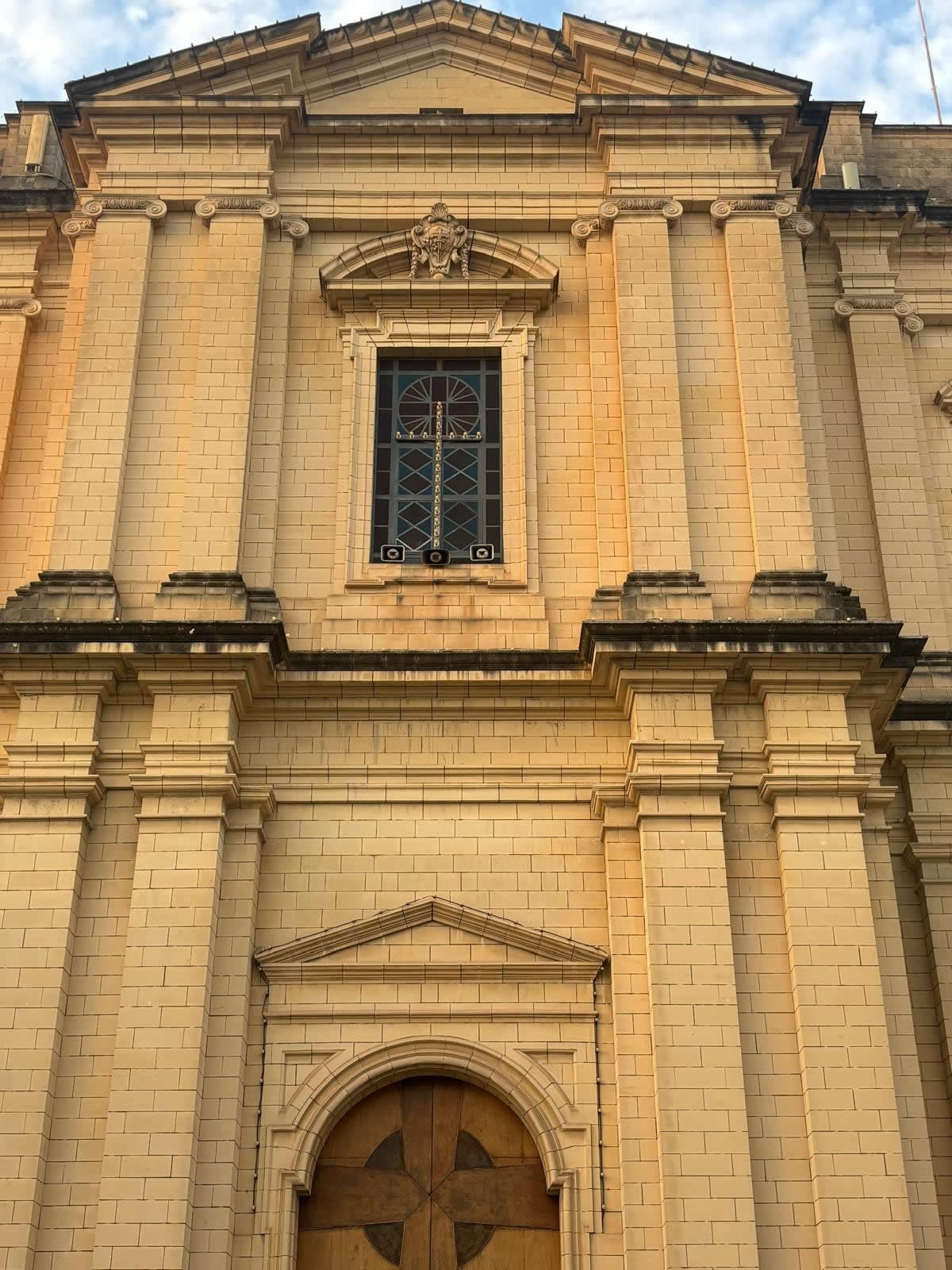
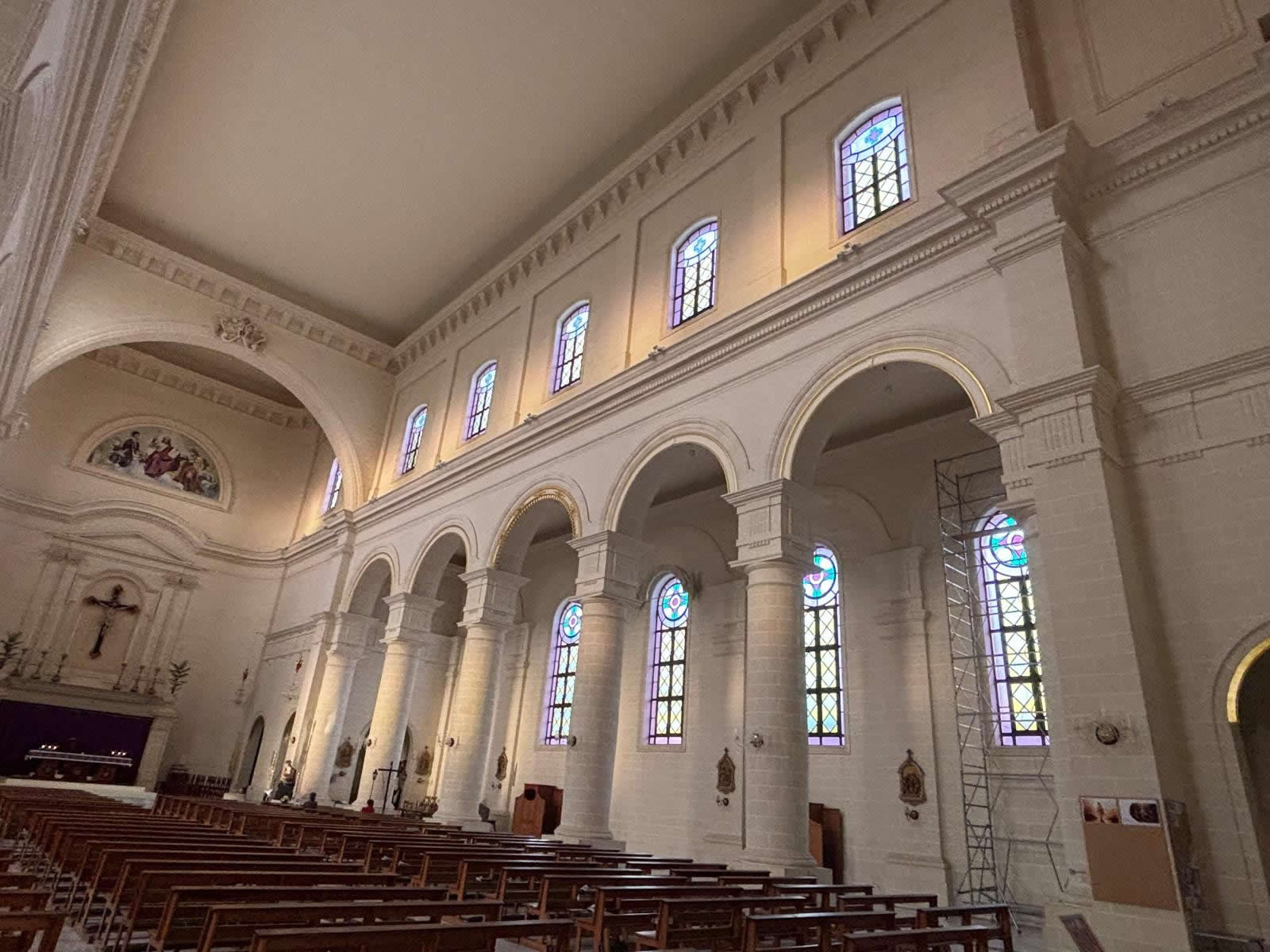
The structure combines elements of Romanesque Revival and Baroque architectural influences, characterised by its limestone and reinforced concrete construction — typical of Maltese ecclesiastical architecture.
Key architectural features include a spacious nave designed for congregational participation, clerestory lighting, and classical proportions which create a tranquil atmosphere ideal for worship. Although the planned bell towers remain unfinished, the existing elevation maintains a harmonious visual dialogue with the surrounding townscape.
Artworks, Statues and Interior Elements
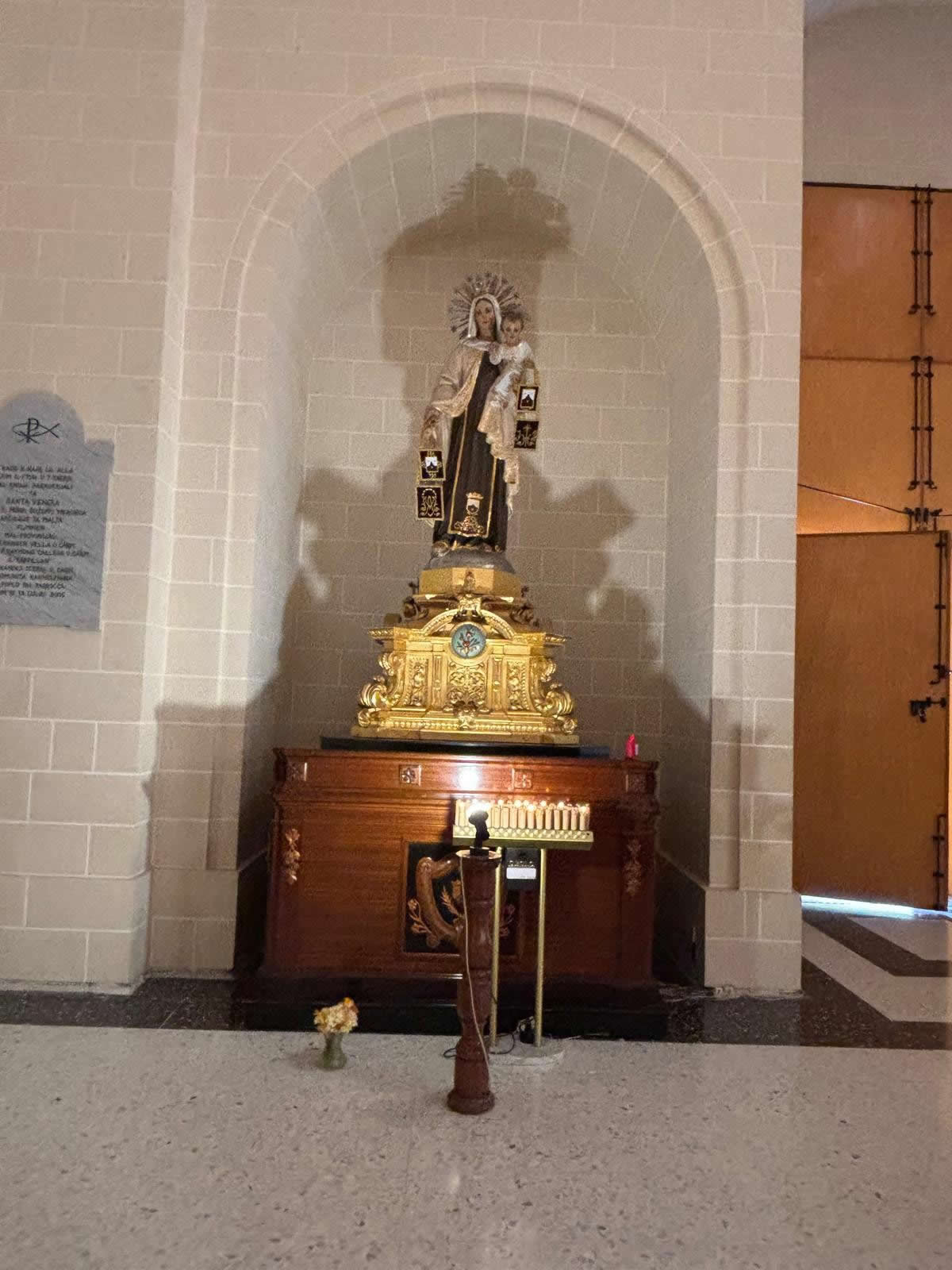
Inside the parish church, the liturgical space is enriched by devotional artworks and sculptural elements that contribute to the spiritual ambience. Of particular note is the Titular Statue of Saint Venera, sculpted in 1919 by Maltese artist Karmenu Mallia (“il-Lhudi”). This statue has been central to the parish feast celebrations and was carefully restored and re-gilded in recent years as part of ongoing preservation efforts. :
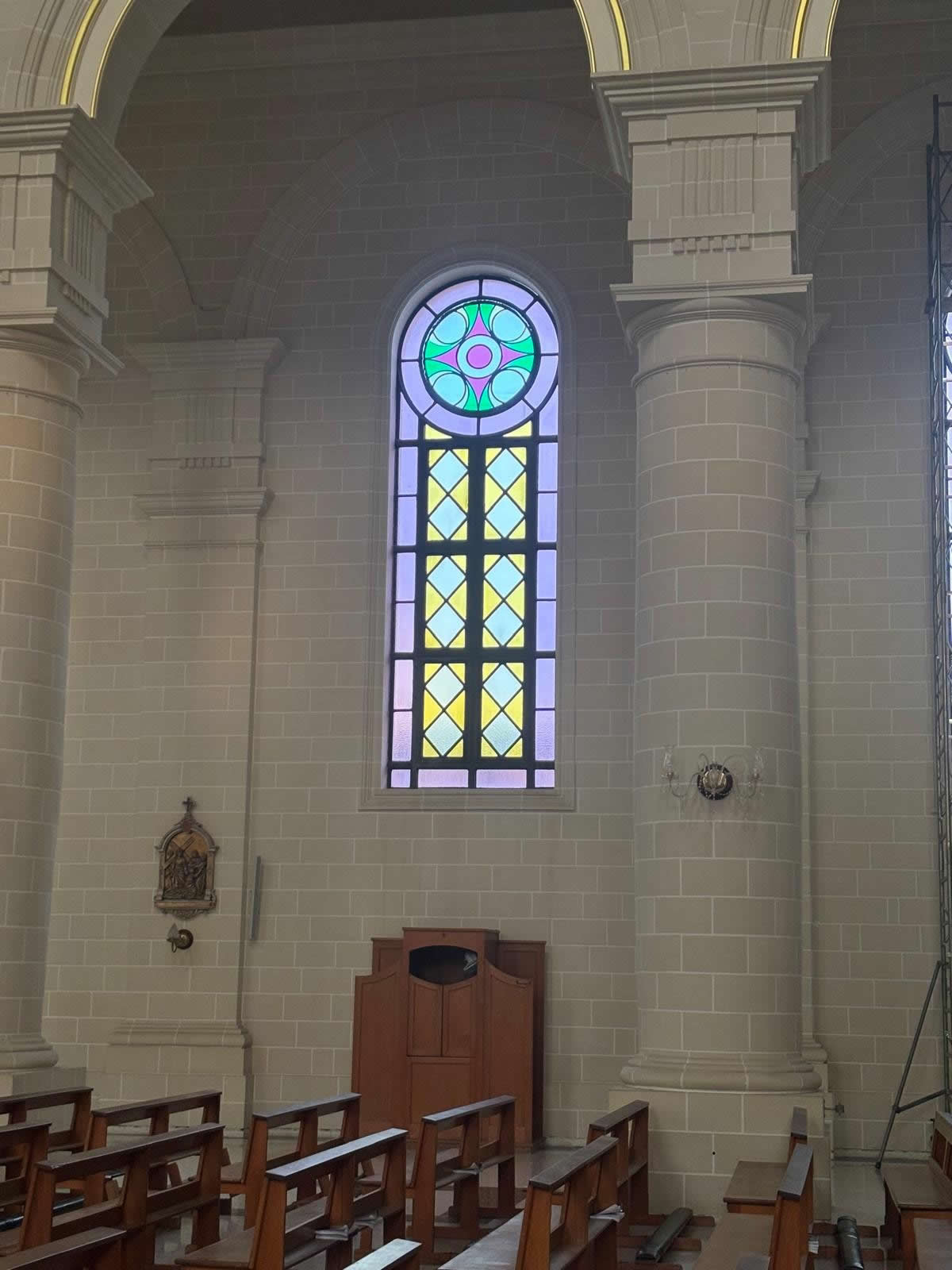
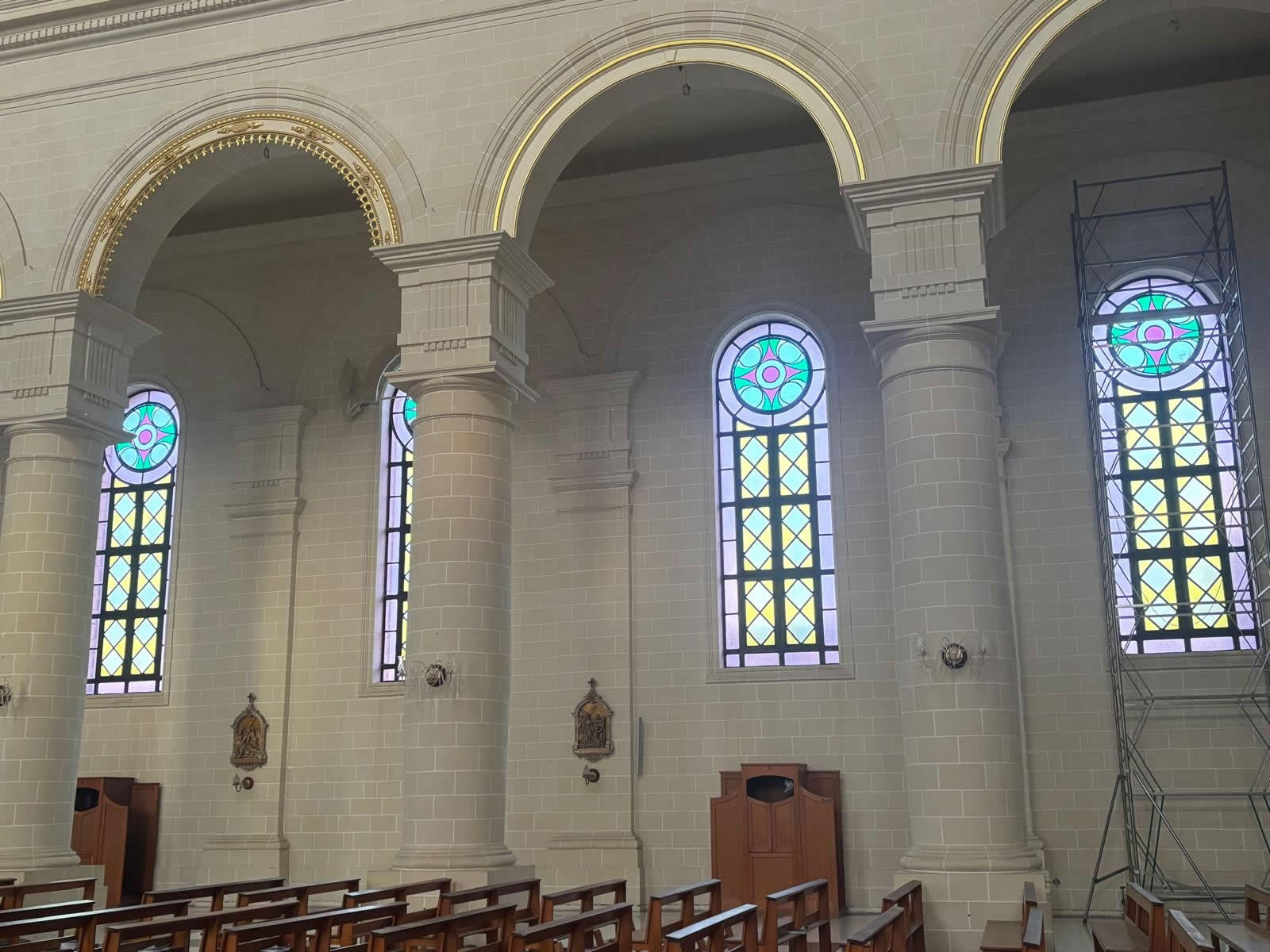
Other pieces of religious art, stained glass, and altar furnishings reflect both local and broader European traditions, making the church not only a place of worship but a repository of Maltese sacred artistic heritage. Communities periodically showcase devotional icons and historical religious artefacts within the parish centre.
Parish Life & Feast Traditions
The parish remains active with a full schedule of liturgies, devotions, and community activities throughout the year. Weekday and Sunday Masses follow traditional and vernacular rites, drawing both residents and visitors for communal prayer.
The annual feast of Saint Venera, celebrated in the town’s festa season (often on the last Sunday of July and 14 November), combines religious procession, traditional band marches and fireworks — a vibrant celebration of faith and Maltese culture.
The Old Church of Santa Venera (Knisja l-Qadima)
The historic Old Church of Santa Venera, commonly known locally as Knisja l-Qadima, stands at coordinates 35.891916, 14.478579 in Triq il-Knisja l-Qadima. Although closely associated with the parish, it is located approximately 500 metres north-west of the present Santa Venera Parish Church. This historic building represents the earlier spiritual centre of the community before the construction of the modern parish church in the 20th century.
The origins of the church date back to at least the 15th century. Historical records suggest that a chapel dedicated to Saint Venera existed in the area by the late medieval period. As the local population increased, the chapel underwent enlargement around 1500, reflecting the growing religious importance of the settlement.
Between 1658 and 1688, during the period of the Knights of St John in Malta, the building was extensively rebuilt and expanded into a more substantial Baroque church. The reconstruction transformed the modest medieval chapel into a larger parish church capable of serving the surrounding rural community which at that time consisted largely of farmhouses and estates.
For centuries this church functioned as the principal place of worship for the inhabitants of Santa Venera and nearby hamlets. When Santa Venera was formally established as a parish in 1918, the old church continued to serve the community until the growing population made the construction of a much larger parish church necessary.
The modern Santa Venera Parish Church began construction in 1956. However, due to financial and construction delays the building was completed many decades later. During this period the old church remained an important liturgical space and continued hosting religious services and parish activities.
Today the Old Church of Santa Venera is valued as an important piece of Maltese ecclesiastical heritage. Conservation works carried out in recent decades revealed historic decorative layers including Baroque and Rococo frescoes. The church also houses important religious artworks and altarpieces associated with Maltese artistic traditions.
Although no longer the primary parish church, Knisja l-Qadima continues to play a role in the religious and cultural life of the town. It is occasionally used for special liturgical celebrations, heritage events, and historical commemorations connected to the long religious history of Santa Venera.
Visitors interested in Maltese church history often explore both sites: the modern parish church, representing the 20th-century growth of the town, and the Old Church, which preserves the memory of Santa Venera’s earlier rural community and centuries-old devotional traditions.