📍 Location
Location Map Coordinates 35.886864, 14.487275
Home › Churches of Malta › St Gaetan Parish Church, Ħamrun
Introduction
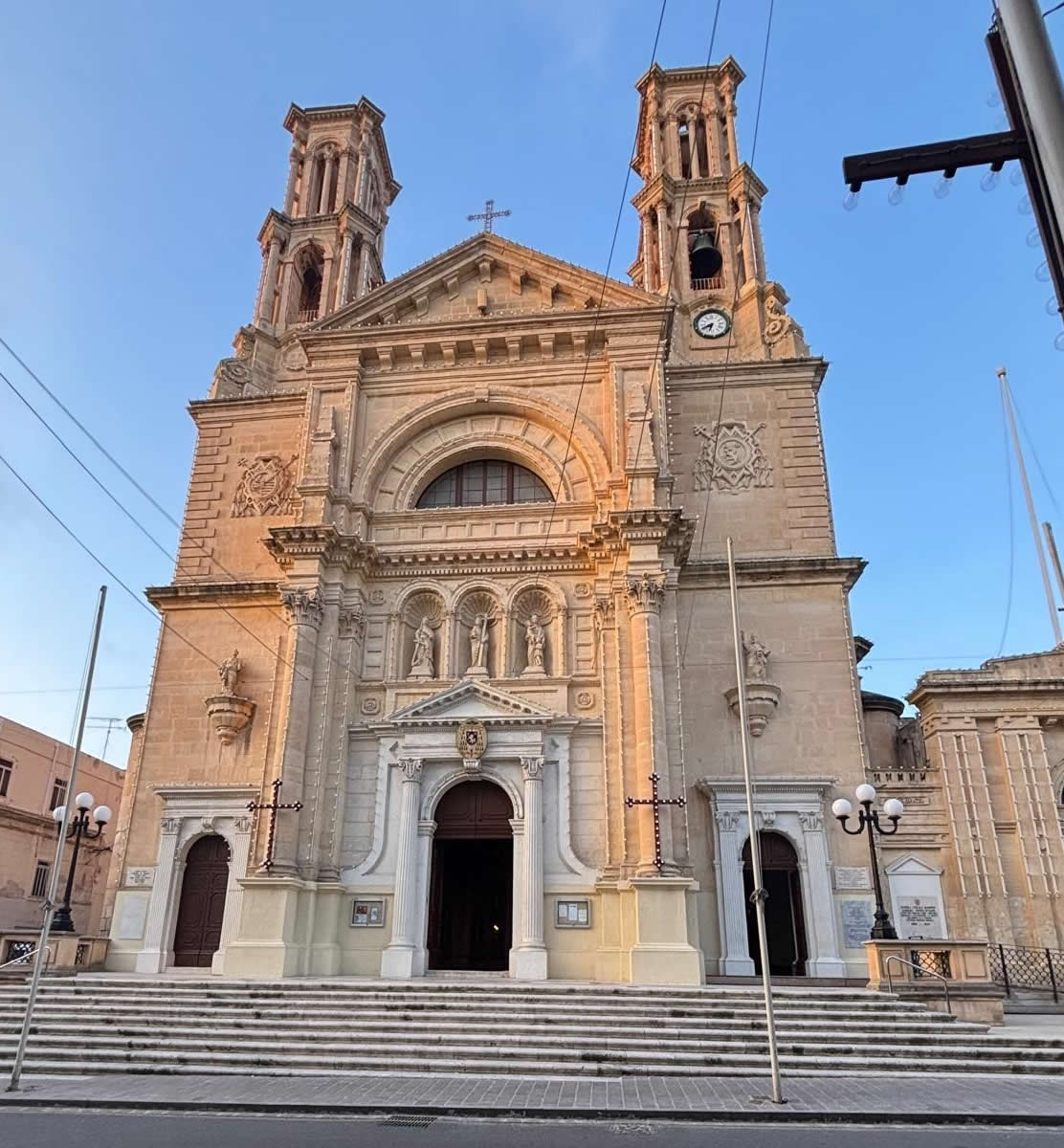
The Parish Church of St Gaetan (Maltese: Knisja Parrokkjali ta’ San Gejtanu ta’ Thiene) is the principal Roman Catholic parish church located in the town of Ħamrun, Malta. Positioned near the heart of the locality along St Joseph High Road, the church serves as one of the most important religious and architectural landmarks in central Malta.
Constructed in the second half of the nineteenth century, the church reflects the rapid development of Ħamrun during the period when the town expanded from a small rural settlement into a thriving suburb of Valletta. Designed by the architect Giorgio Costantino Schinas, the church blends architectural influences from both Gothic Revival and Baroque traditions, creating a distinctive façade and monumental interior that dominate the townscape.
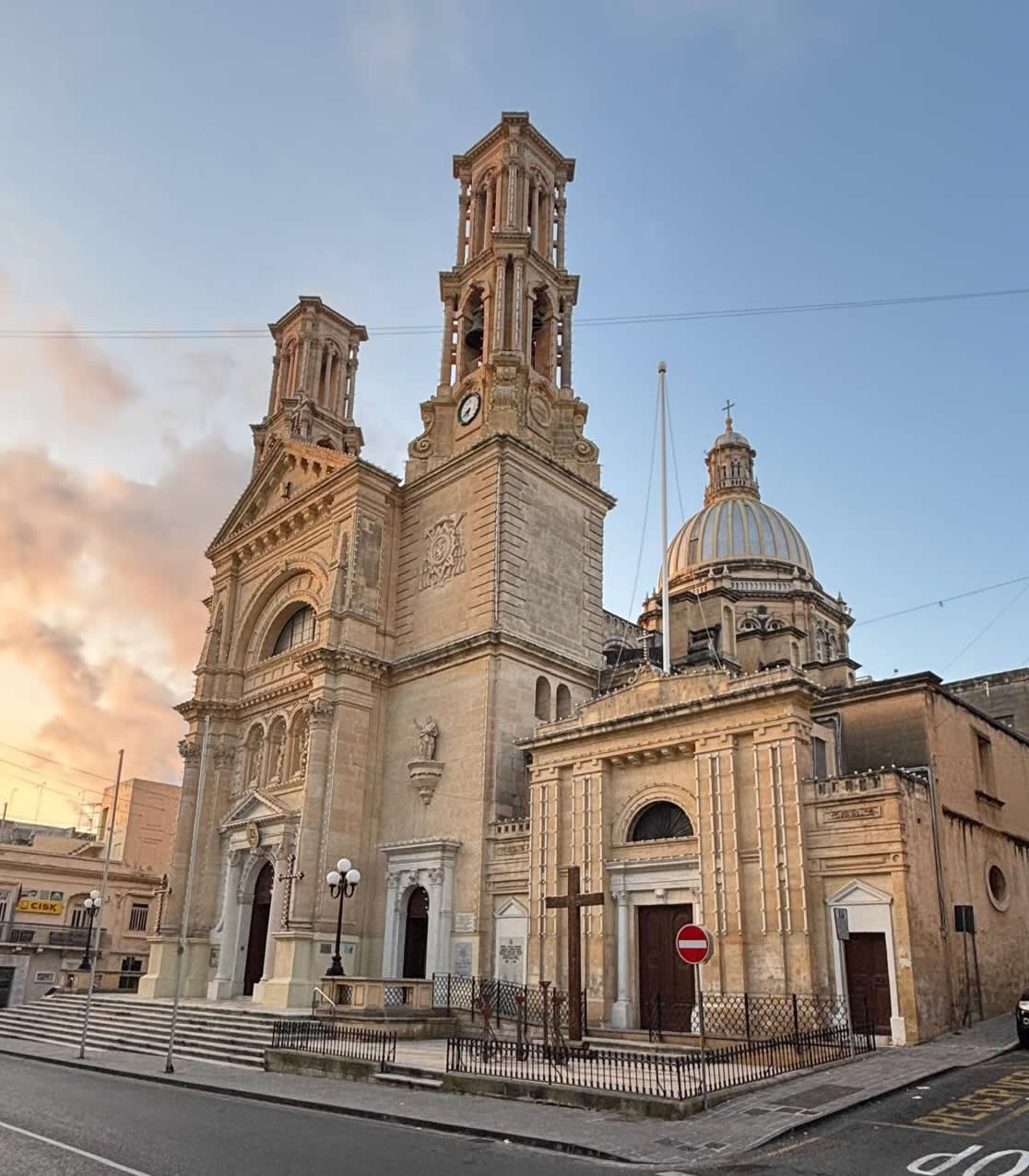
The building was constructed between 1869 and 1875, and after the formation of the parish of Ħamrun in 1881, it became the official parish church dedicated to Saint Cajetan of Thiene, a 16th-century Italian priest and founder of the Theatine Order.
Today the church remains an active centre of worship and community life, hosting daily liturgical services, major religious celebrations, and the annual feast of St Gaetan which attracts large crowds of residents and visitors alike.
Origins of the Parish of Ħamrun
During the early nineteenth century the area now known as Ħamrun was still a largely rural settlement commonly referred to as Casale San Giuseppe. The population gradually increased as new housing developments appeared along the road connecting Valletta with the inland villages of Malta.
Before the construction of the present parish church, the religious needs of the inhabitants were served by two small chapels: the Church of Our Lady of Atocia (Tas-Samra) and the Church of Our Lady of Porto Salvo (Ta’ Nuzzu). As the population expanded, these churches proved insufficient to accommodate the growing number of faithful.
Local community leaders therefore began planning the construction of a larger church capable of serving the expanding district. Land for the project was donated by the judge Giovanni Conti, while funds were raised through donations from parishioners, government assistance, and benefactors interested in supporting the development of the area.
Construction of the Parish Church (1869–1875)
The foundation stone of the new church was laid on 13 June 1869. The project was entrusted to the Maltese architect Giorgio Costantino Schinas, a prominent figure in nineteenth-century Maltese architecture who designed several important ecclesiastical buildings across the island.
Schinas planned a monumental church that would reflect both the spiritual importance of the parish and the growing status of the locality. Construction progressed steadily during the following years, with the limestone structure gradually rising above the surrounding streets.
By 1875 the main building was completed and opened for worship. The church was inaugurated on 11 July 1875 by Bishop Carmelo Scicluna. At that time Ħamrun was still part of the parish of Qormi, but the new church already functioned as the central place of worship for the local population.
The growing community soon led to the creation of an independent parish, and on 1 December 1881 Ħamrun was officially established as a parish with the Church of St Gaetan serving as its parish church.
Dedication and Later Additions
Although the church was in use for decades, its formal consecration took place on 26 September 1930. This ceremony marked the completion of several improvements and confirmed the church’s permanent role within the Archdiocese of Malta.
Throughout its history the building underwent several architectural additions and modifications. In 1895 an oratory was constructed next to the church according to designs by architect Andrea Grima. This structure served as a space for devotional activities, parish meetings, and catechism classes.
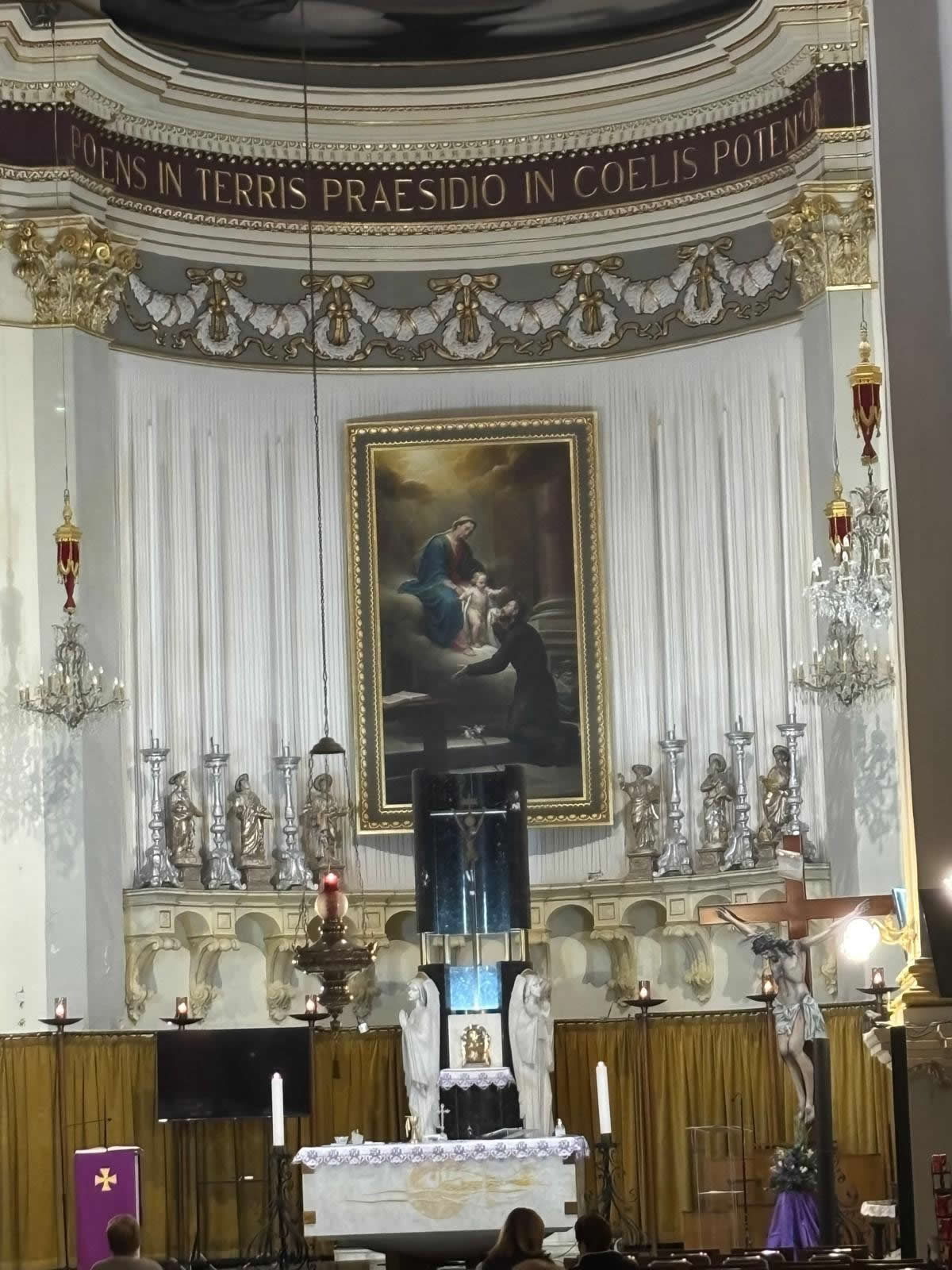
The most dramatic addition to the church came in the mid-twentieth century with the construction of its imposing dome. Although the design had originally been prepared in the 1920s by the celebrated architect Andrea Vassallo, financial and logistical difficulties delayed the project for several decades.
Construction of the dome eventually began on 13 April 1953 and was completed on 20 April 1955 under the supervision of engineer Ġużè Damato. The dome became one of the most striking architectural features of the church and remains visible from many parts of Ħamrun and surrounding localities.
Architectural Style
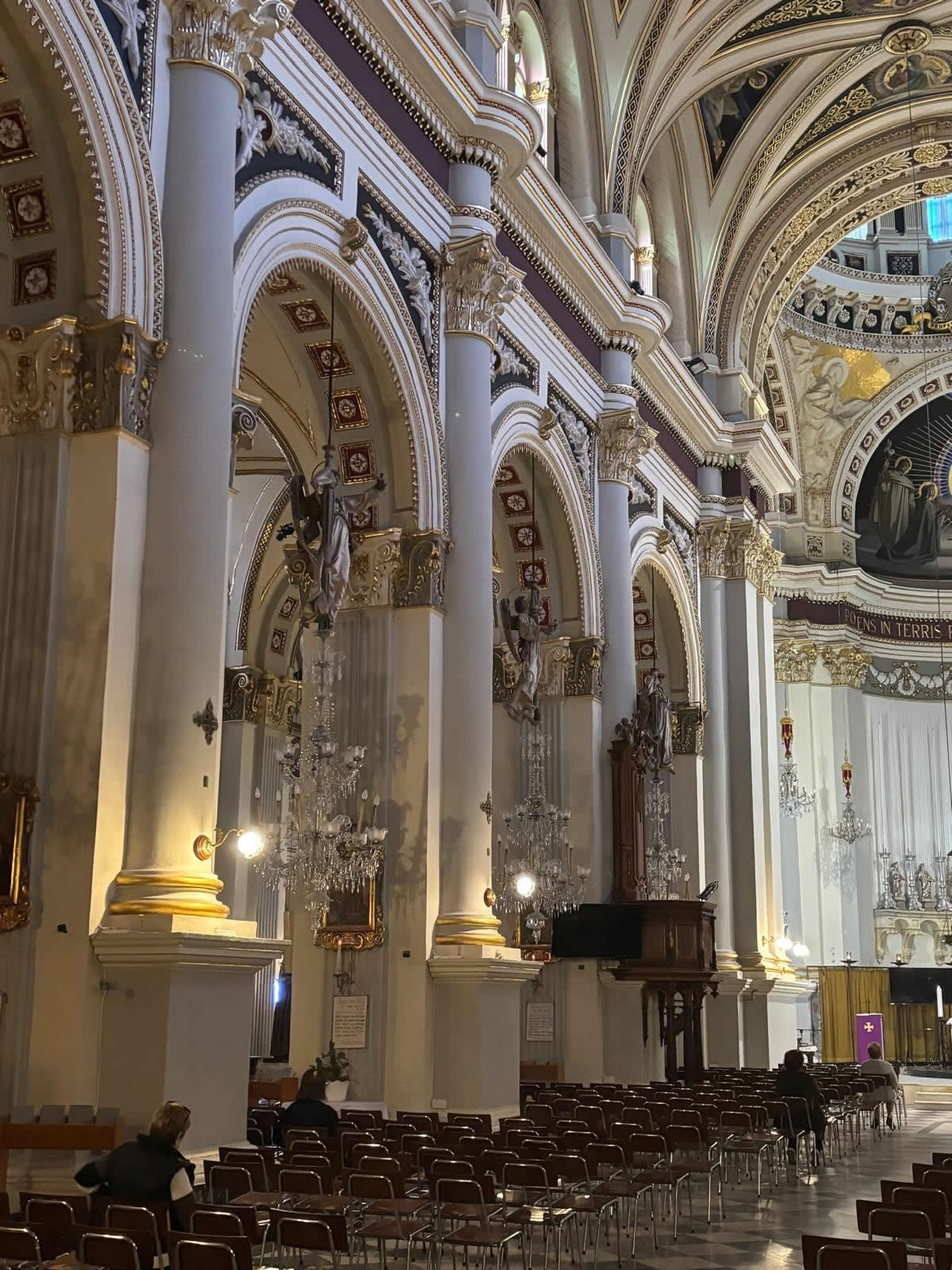
The Parish Church of St Gaetan presents a fascinating architectural synthesis of styles typical of nineteenth-century Maltese ecclesiastical architecture. Schinas drew inspiration from the Gothic Revival movement while also incorporating Baroque elements that echo the earlier architectural traditions of Malta.
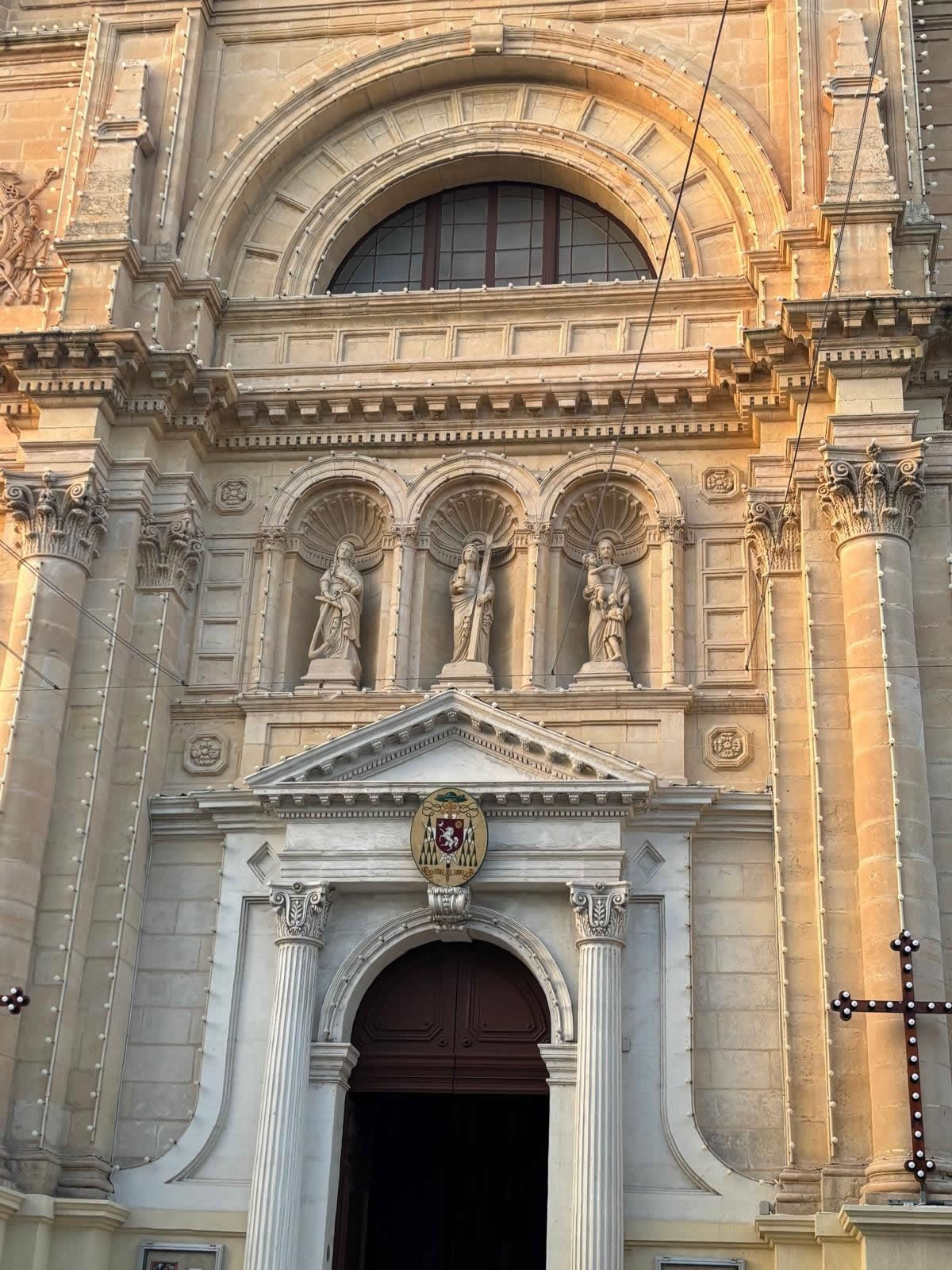
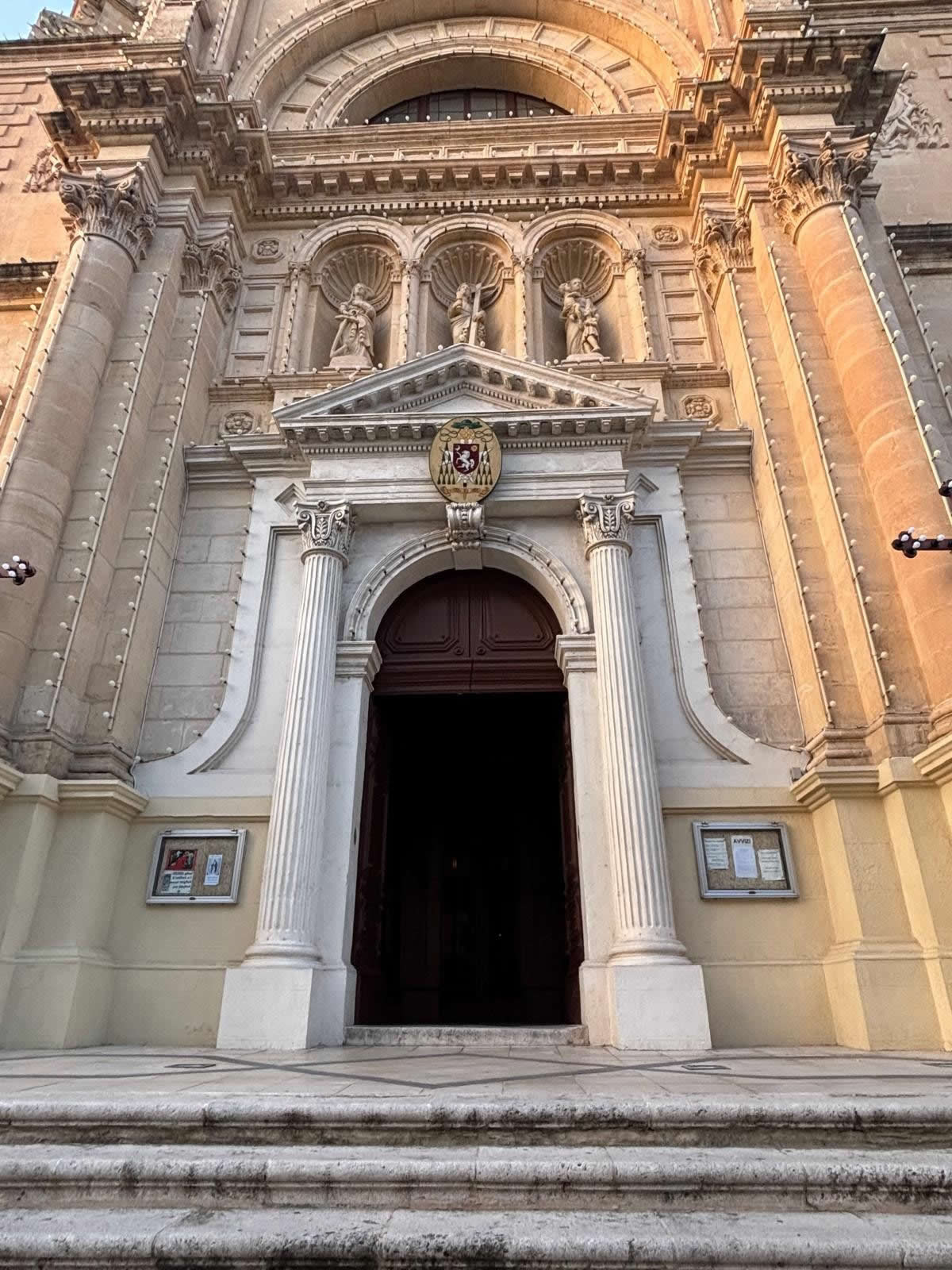
The church façade consists of three main vertical sections, with the central bay projecting outward to emphasize the main entrance. Decorative pilasters, sculptural details, and tall arched openings create a vertical rhythm that enhances the monumental character of the building.
Architectural historians have noted that the façade reflects influences from French Gothic cathedrals combined with the dramatic Baroque compositions found in Venetian churches. This blend of styles was typical of the Romantic architectural movement which influenced many buildings constructed in Malta during the nineteenth century.
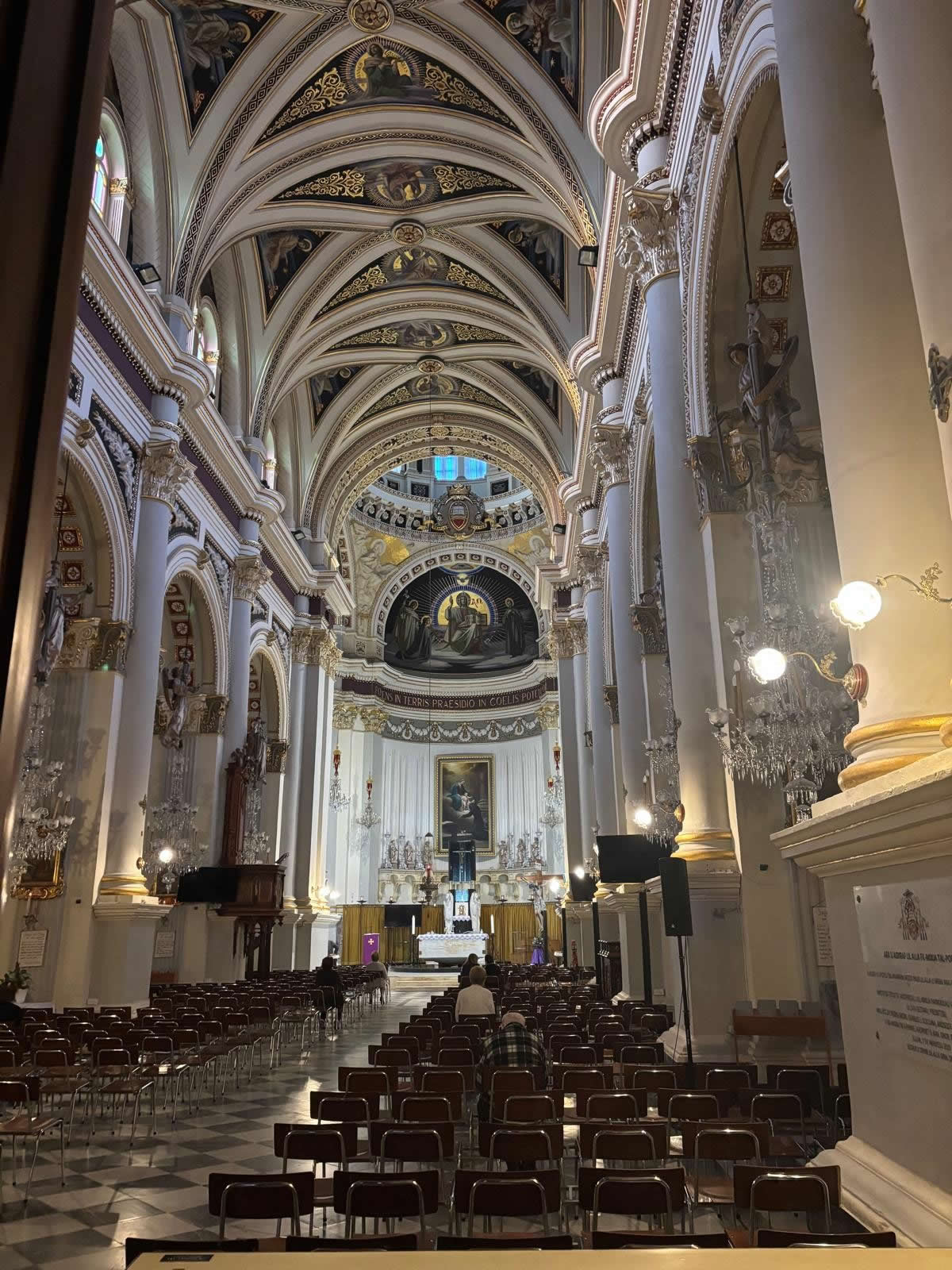
The interior follows a traditional basilica layout, featuring a central nave flanked by side aisles and a deep sanctuary at the eastern end. High arches support the structure, while the large dome dominates the crossing above the nave and transept.
Artworks and Religious Heritage
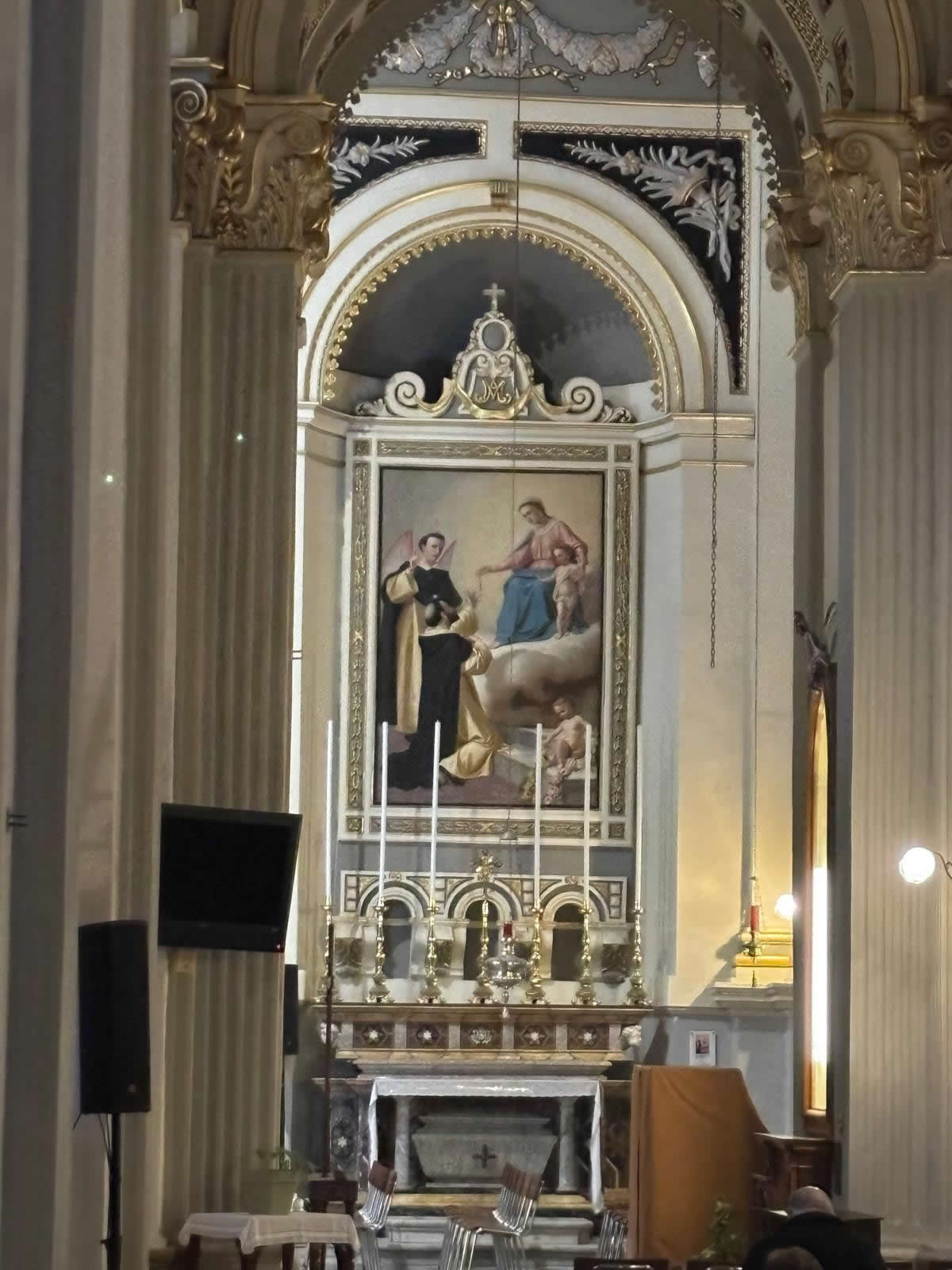
The church contains a rich collection of religious artworks reflecting the development of Maltese sacred art from the nineteenth century onwards. One of the most significant pieces is the titular painting depicting Saint Cajetan receiving the infant Jesus from the Virgin Mary. This work was painted by the Italian artist Pietro Gagliardi.
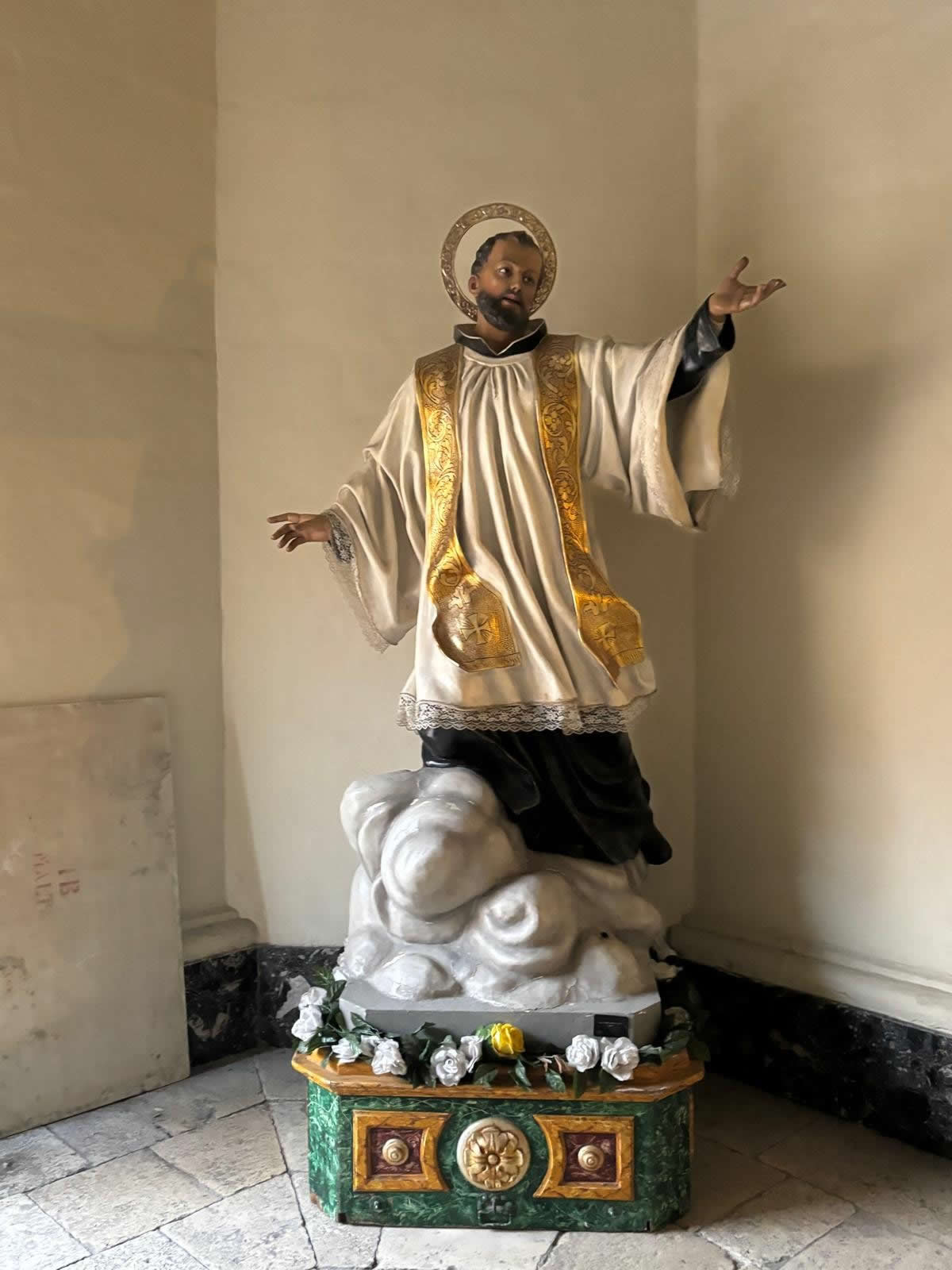
The processional statue of Saint Cajetan is another important work of art associated with the church. Created between 1885 and 1888 by the renowned Maltese sculptor Karlu Darmanin, the statue forms the focal point of the annual feast celebrations. The pedestal was crafted by Giovanni Farrugia while the detachable platform was designed by Antonio Sciortino.
Additional paintings within the church were produced by several Maltese and international artists including G. Briffa, Raphael Bonnici, Ramiro Calì and others. These works portray biblical scenes, saints, and devotional subjects that contribute to the spiritual atmosphere of the interior.
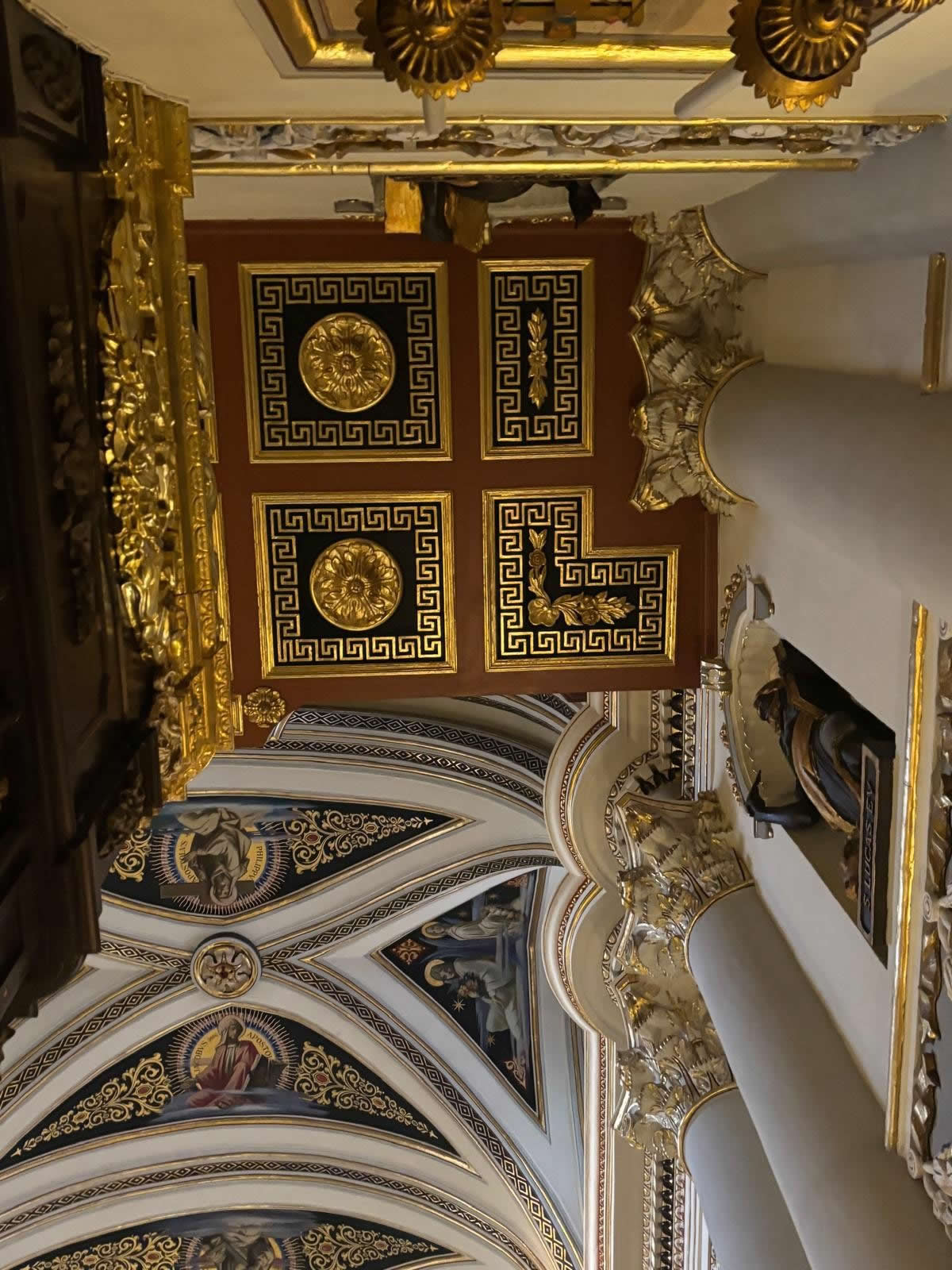
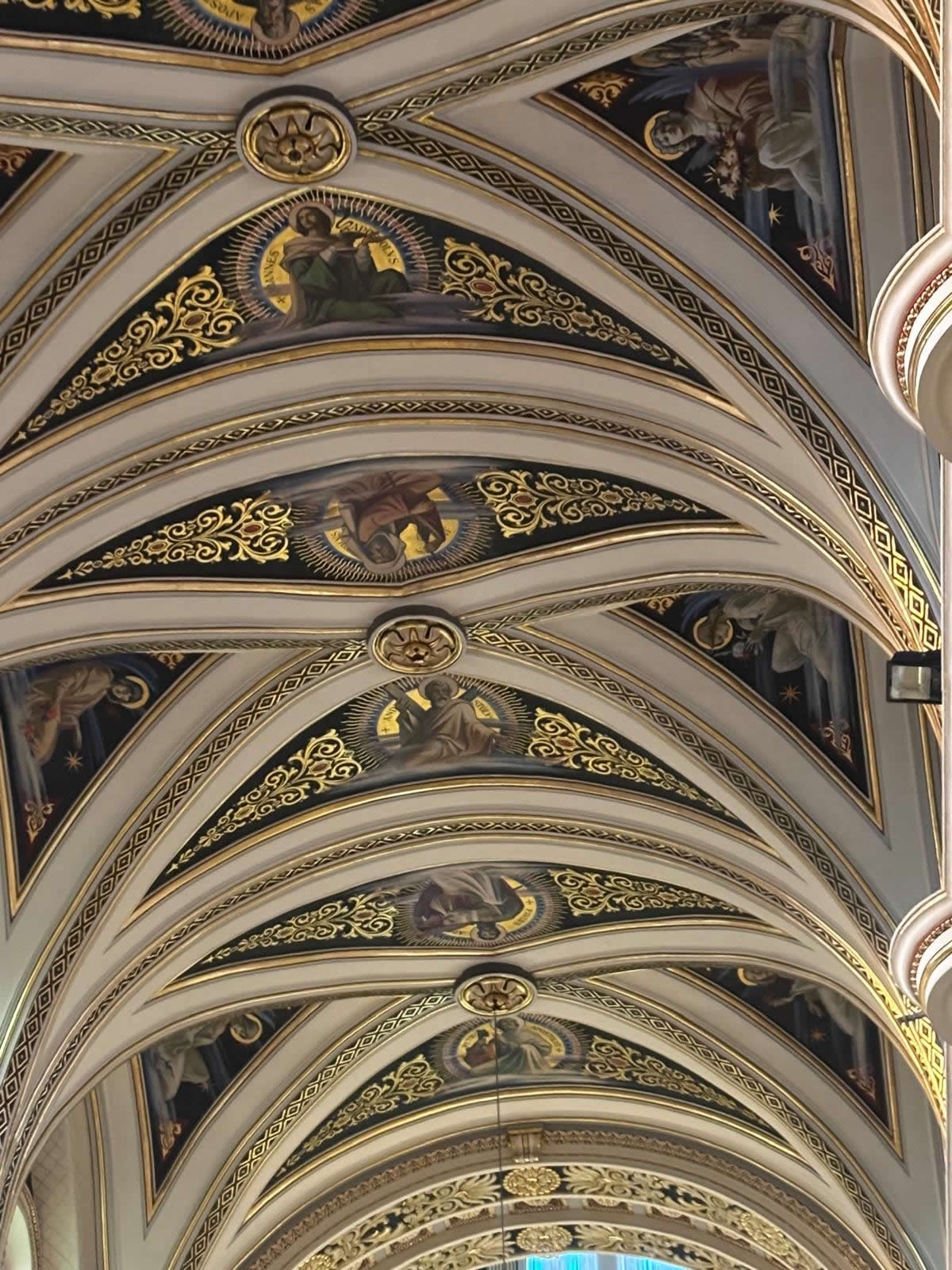
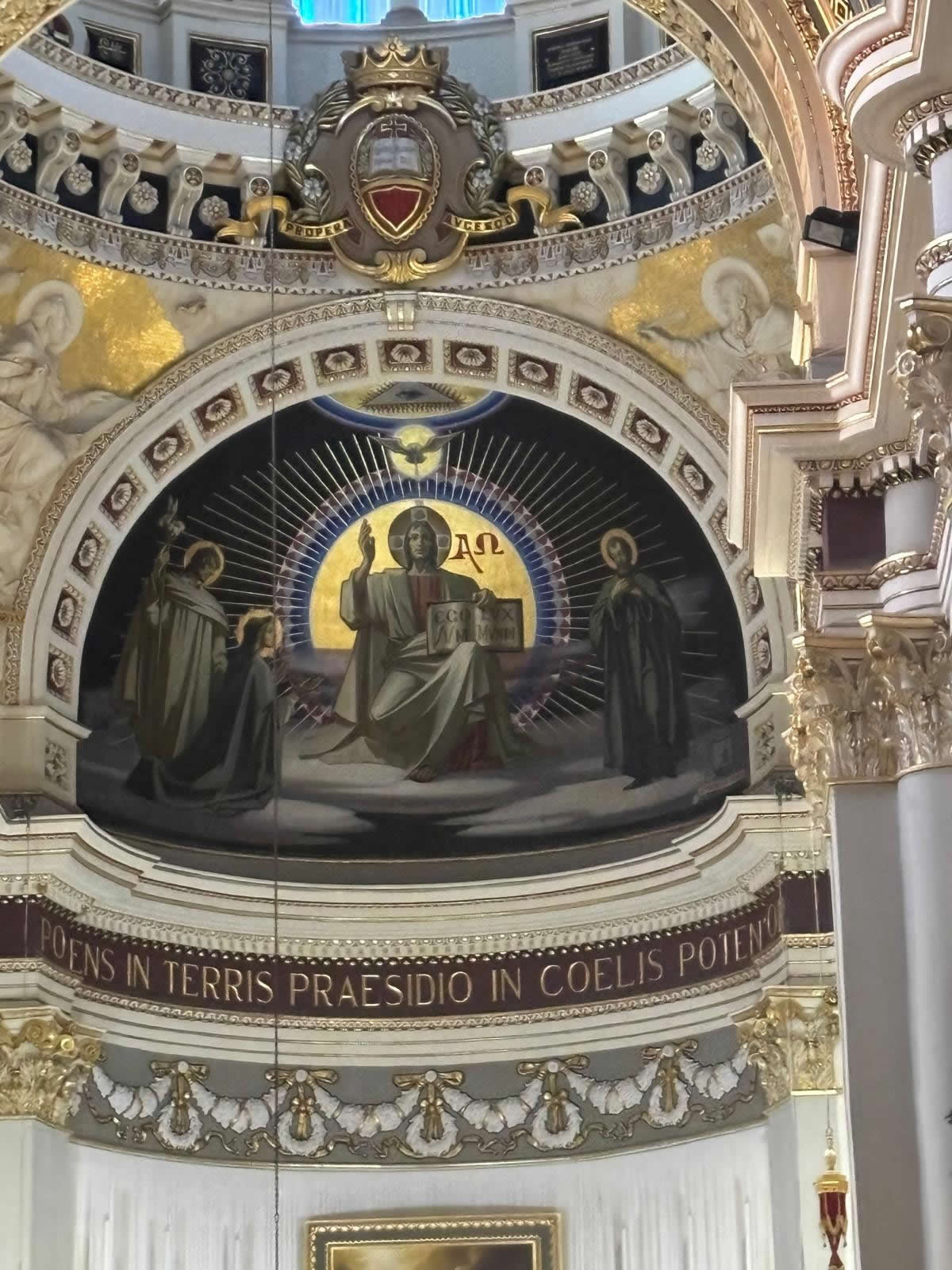
The interior decoration of the church also features remarkable paintings by the celebrated Maltese artist Emvin Cremona, whose work adorns parts of the ceiling and dome. His artistic contribution has been widely regarded as one of the highlights of the church’s interior decoration.
Restoration and Conservation
Like many historic Maltese churches, St Gaetan Parish Church has undergone several restoration campaigns aimed at preserving its artistic and architectural heritage.
Major restoration works were undertaken in the early twenty-first century to conserve the interior decoration and paintings. Restoration of the ceiling paintings was completed in 2008, followed by a comprehensive project to restore the dome between 2009 and 2012. These works ensured that the intricate decorative schemes created by Emvin Cremona were preserved for future generations.
In 2023, further restoration works were carried out on the church façade. The project included stone cleaning, desalination treatments, structural repairs, and replacement of deteriorated stone elements. The restoration was partly funded through European Union heritage programmes and aimed to protect the building from pollution and environmental damage.
The Feast of St Gaetan
One of the most important cultural and religious events in Ħamrun is the annual feast of St Gaetan, celebrated on the Sunday following 7 August, the liturgical feast day of the saint.
During the feast week the streets surrounding the church are decorated with colourful banners, statues, and illuminations. Processions featuring the statue of St Gaetan pass through the town accompanied by band clubs, fireworks displays, and traditional celebrations that reflect the strong communal identity of Ħamrun.
These festivities form an essential part of Maltese cultural heritage, blending religious devotion with local traditions that have been preserved for generations.
Location and Visiting Information
The Parish Church of St Gaetan is located in the town centre of Ħamrun, approximately three kilometres from Valletta. The church is easily accessible from St Joseph High Road, one of the main transport routes connecting several towns in central Malta.
Coordinates: 35.886864, 14.487275
The church remains active as a parish church within the Archdiocese of Malta and hosts regular Mass services, weddings, baptisms, and community events throughout the year. Visitors interested in Maltese religious heritage will find the church a fascinating example of nineteenth-century ecclesiastical architecture combined with twentieth-century artistic decoration.