📍 Location
Location Map Coordinates 36.035792, 14.311406
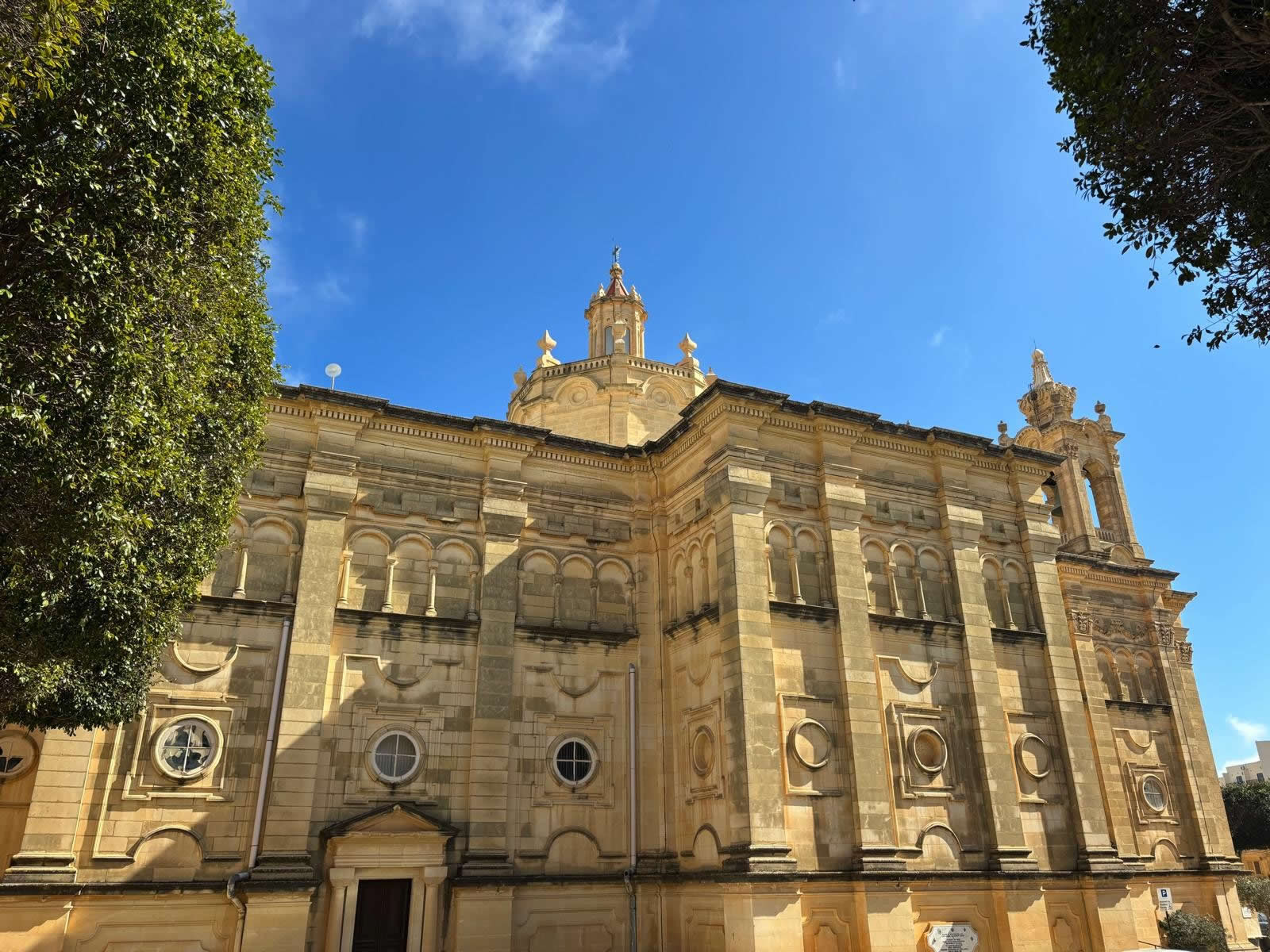
The Qala Parish Church, officially dedicated to Santa Marija (Our Lady of the Assumption), is the central Roman Catholic parish church in the picturesque village of Qala on the Maltese island of Gozo. Distinguished by its elegant Baroque architecture, prominent dome, and rich artistic heritage, this church has stood at the heart of Qala’s spiritual and community life since its early 20th-century construction and consecration.
Origins & Parish Establishment (1898)
The district of Qala, located on the easternmost part of Gozo and facing the picturesque waters of Qala Bay and Wied il-Għasri, was historically under the pastoral care of the parish of Għajnsielem. As the local population grew steadily in the late 19th century, residents sought a dedicated parish for closer pastoral care. Their determined efforts led to the formal erection of Qala as a separate parish on 28 April 1898 by Bishop Domenico Scicluna, marking a defining moment in the spiritual identity of the village. (Church records; local historical accounts)
Design & Construction: 1903-1914
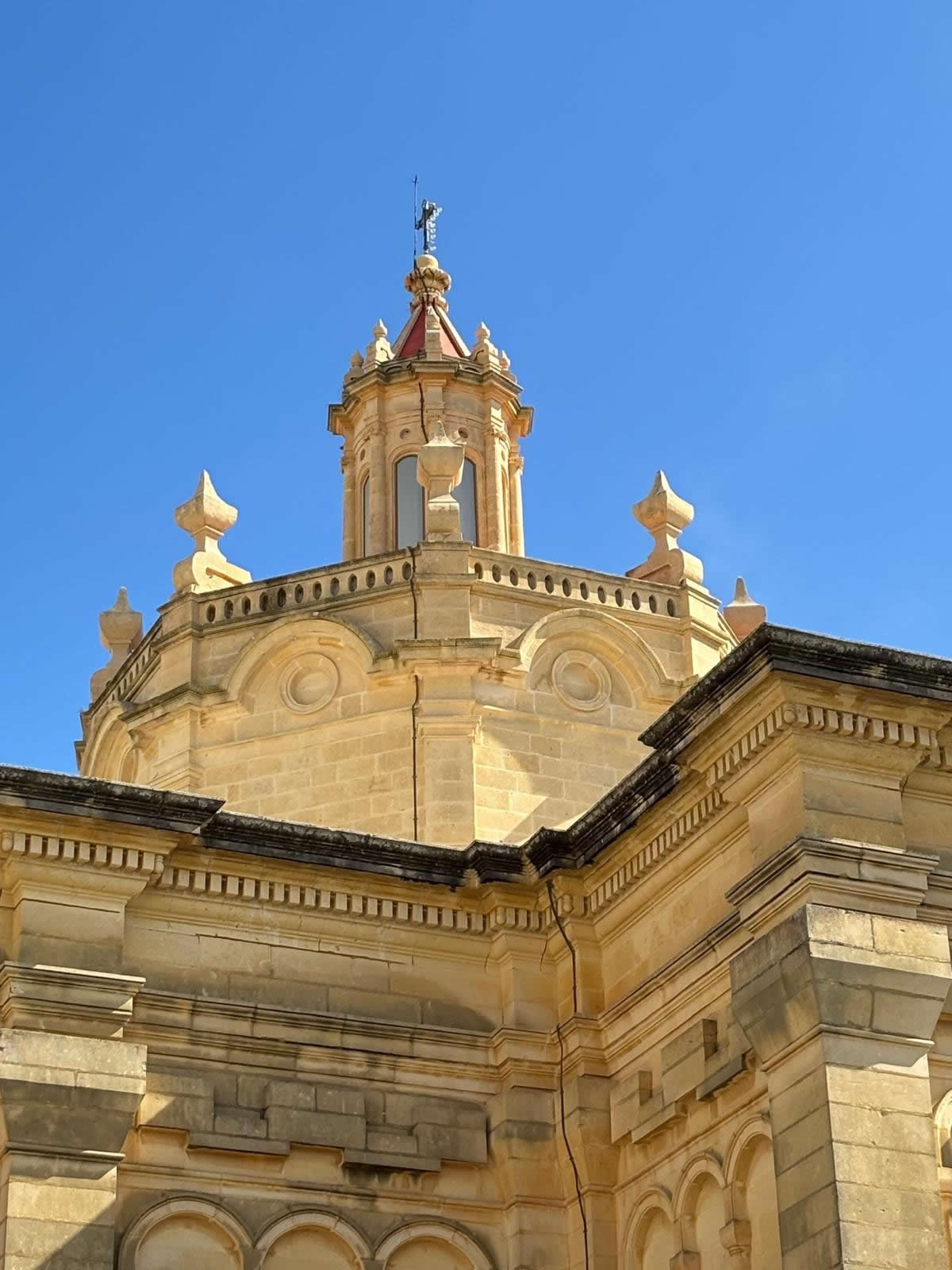
After parish status was granted, plans were soon drawn up for a grand church befitting the community’s aspirations. The architectural design — inspired by Baroque traditions — was commissioned to Maltese architects well versed in the ecclesiastical style that characterises many of Gozo’s parish churches. Construction began in earnest in 1903, on a site that would allow for a large nave, side chapels, and the towering dome that today dominates Qala’s skyline. (Parish documents; architectural sources)
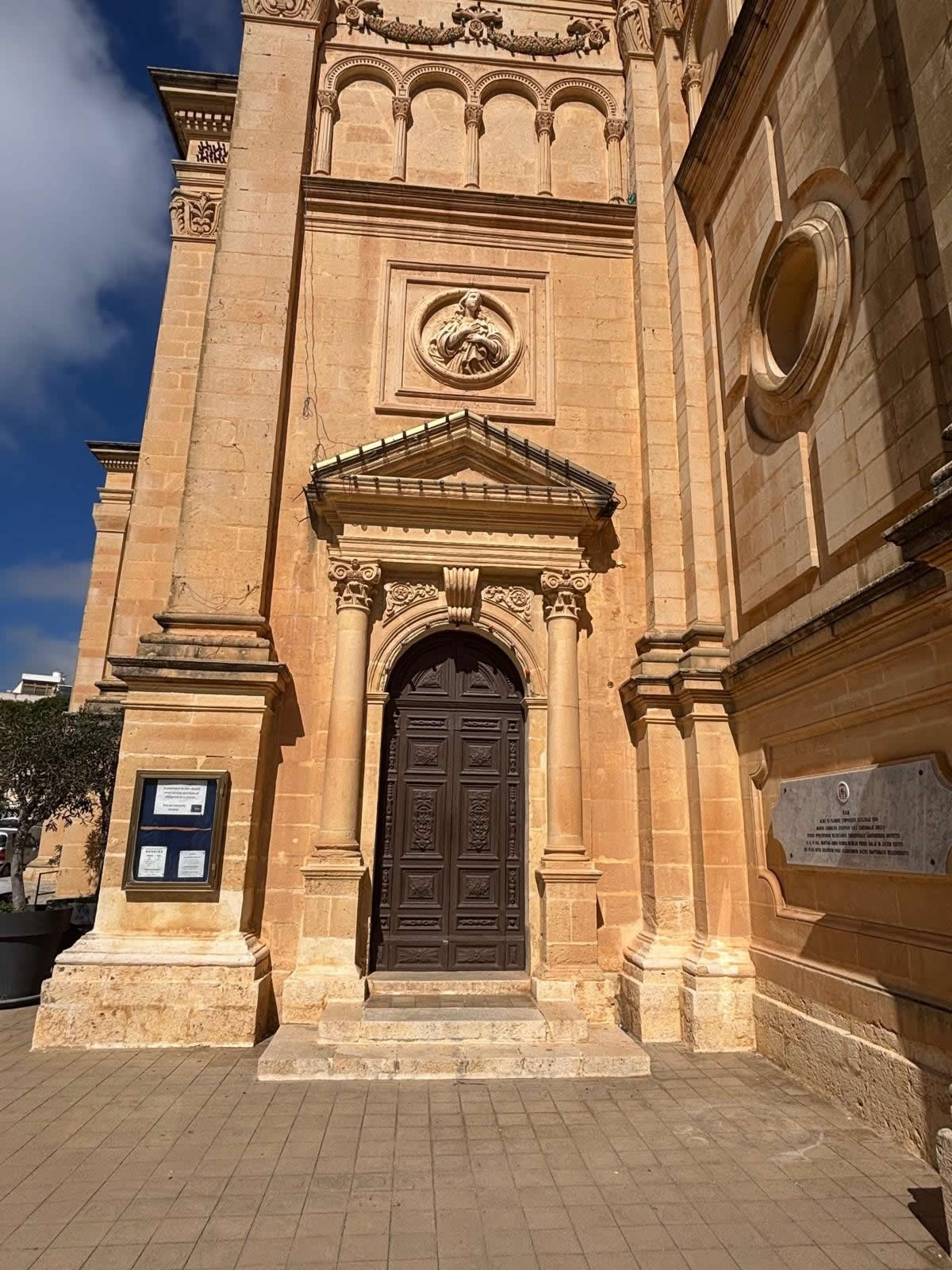
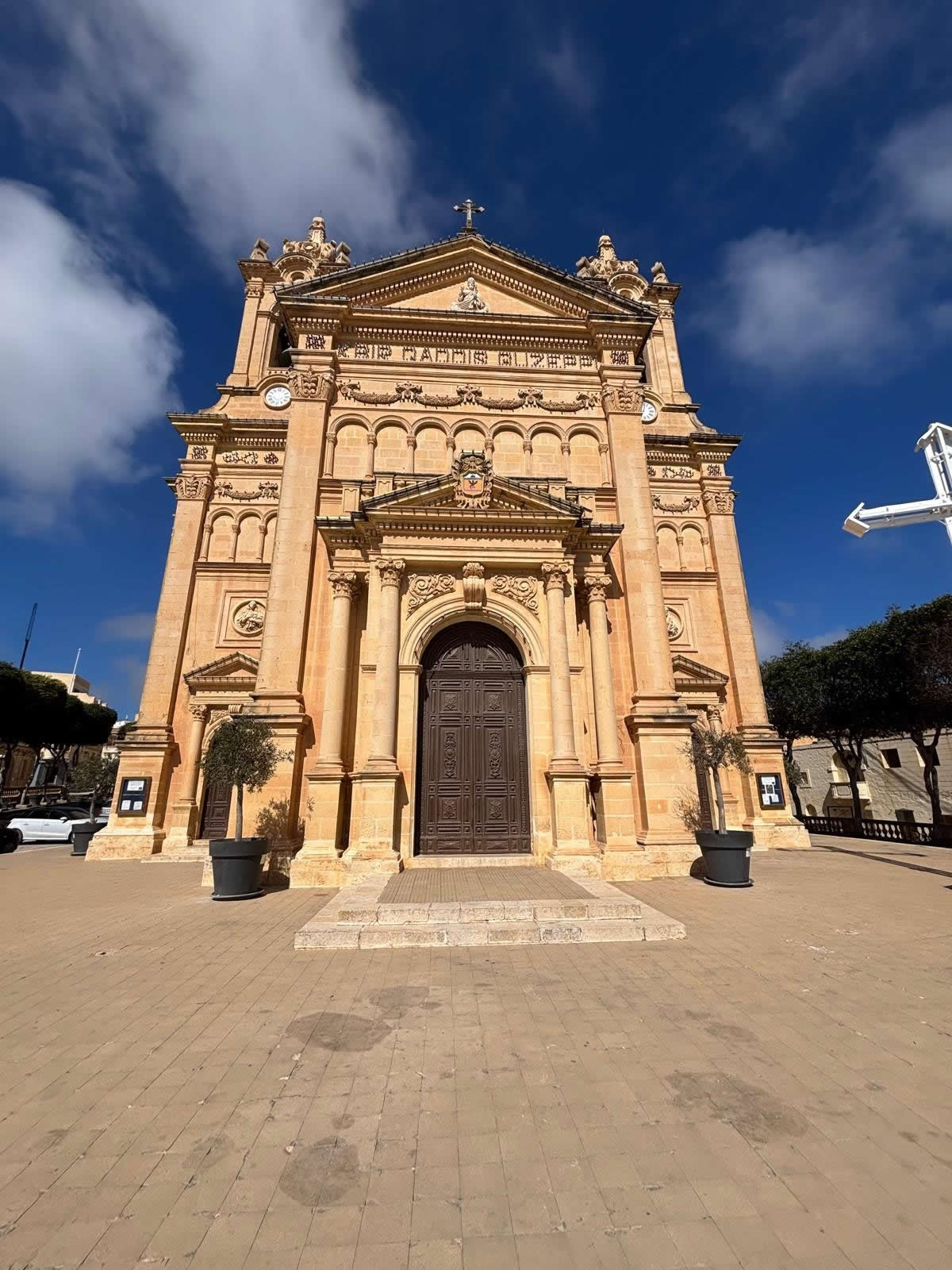
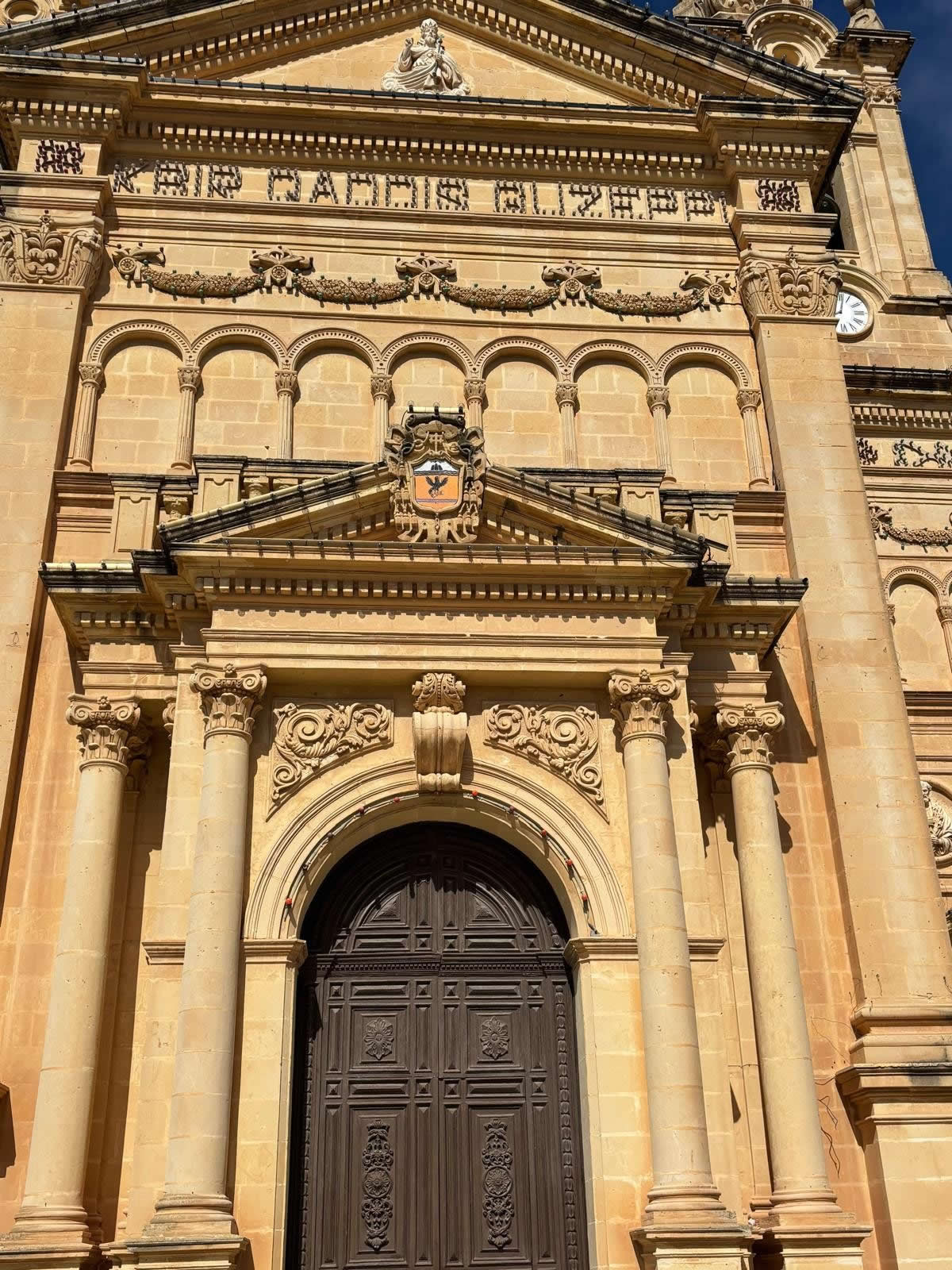
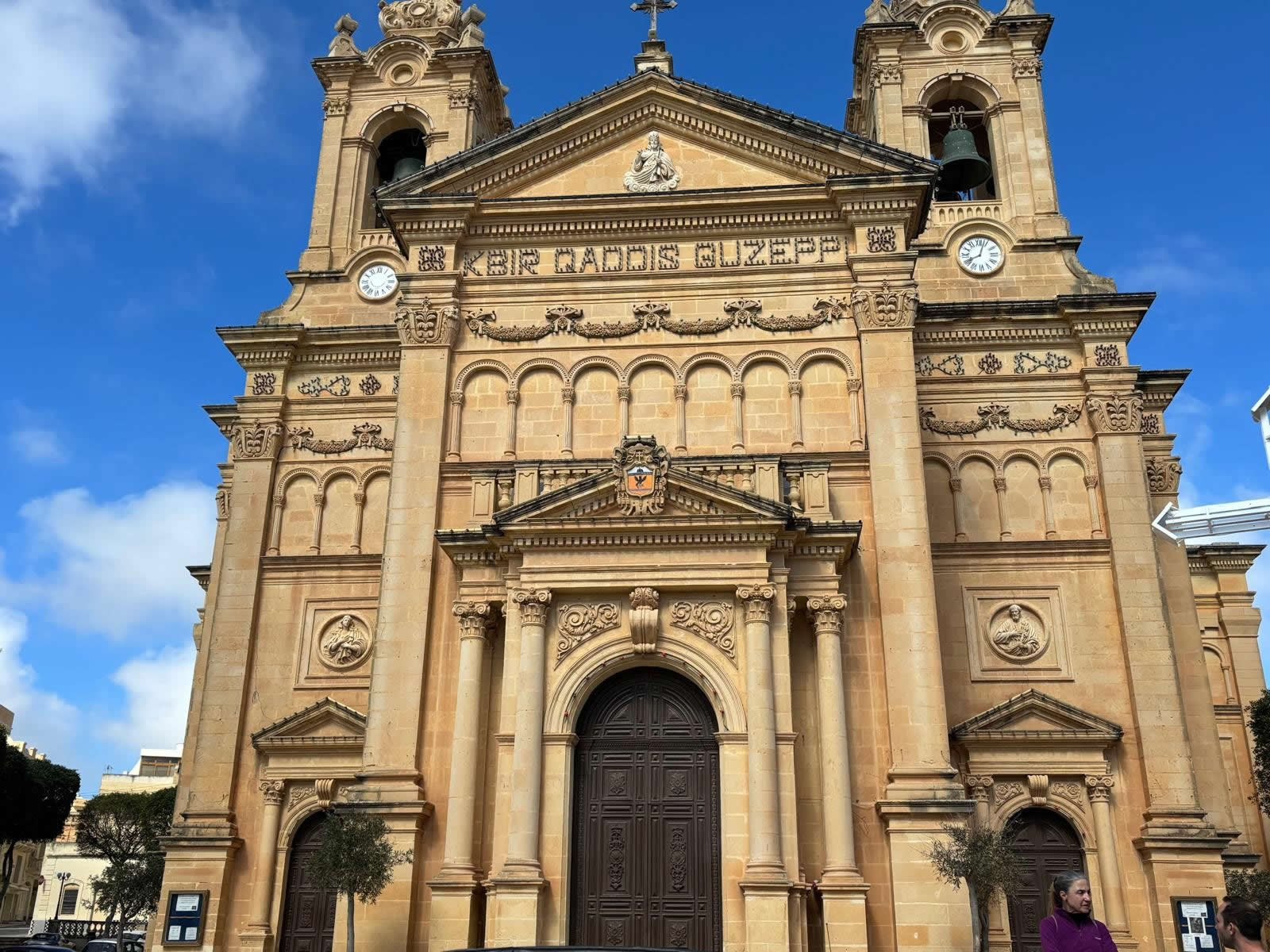
Over the next decade, masons and artisans — many of them locally based — worked meticulously to erect the limestone structure. The building incorporates classic Baroque elements: a balanced façade articulated with pilasters and cornices, a grand central portal framed by elegant ornamental stonework, and a high dome rising above the nave. After years of dedicated work by the local community and their benefactors, the church was completed and blessed in 1914. (Parish archives; architectural analysis)
Consecration & Spiritual Dedication (1925)
Following its completion, the solemn consecration of Qala Parish Church took place on 7 June 1925. This ceremony formally dedicated the building for sacred worship and established its liturgical function within the Archdiocese of Malta. The dedication to Santa Marija reflects deep devotion to the Virgin Mary — particularly under her title of the Assumption, a feast celebrated with great splendour in the parish each year. (Church records)
Architectural Features & Design Highlights
Qala Parish Church exhibits an exemplary fusion of Baroque architectural vocabulary and local Gozo building tradition. Constructed from warm local limestone — the signature material of Maltese churches — the church showcases the craftmanship of Gozo stonecutters and masons. (Architectural surveys)
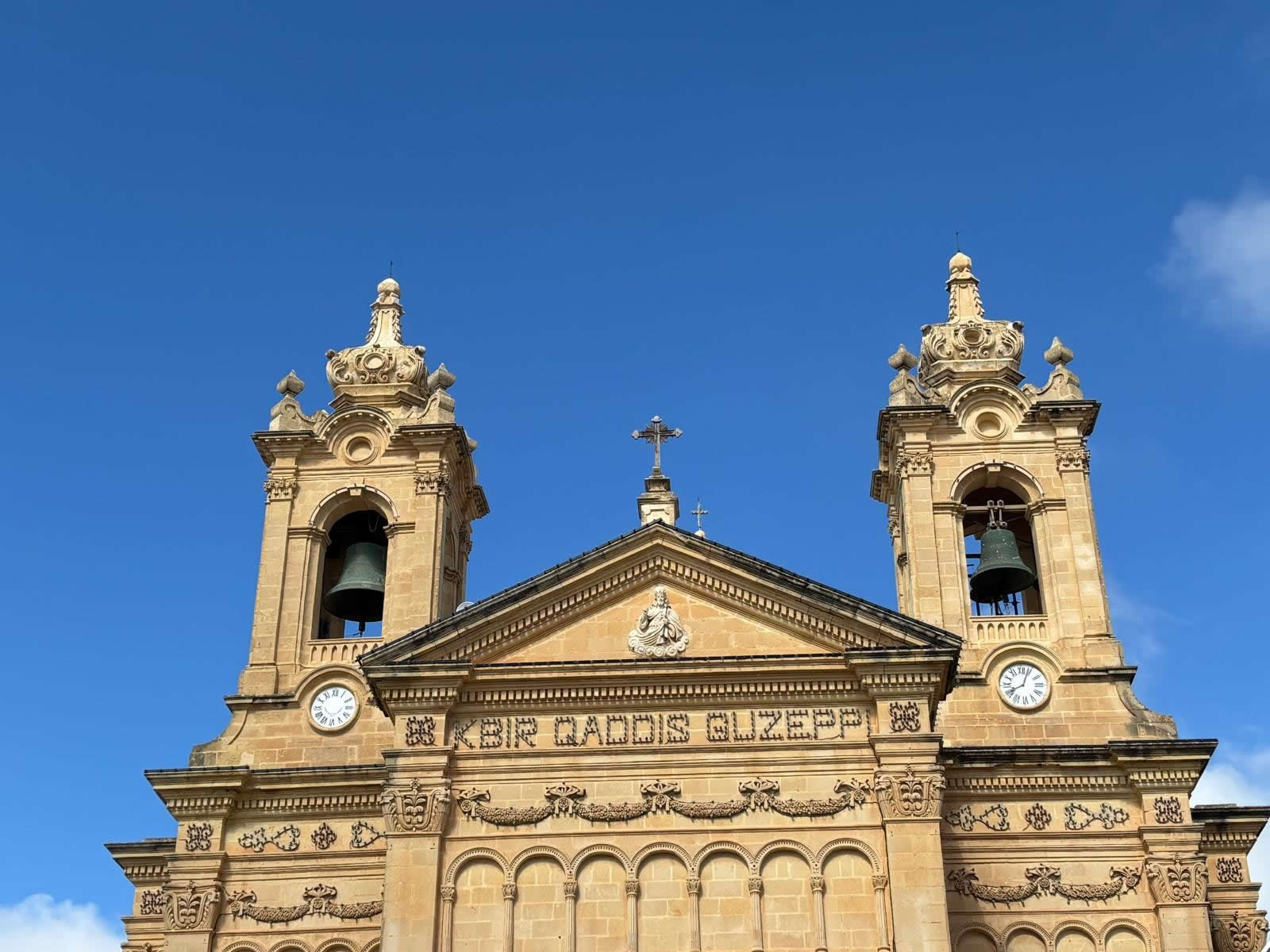
The imposing façade rises with symmetry and poise, accented by twin bell towers flanking a central window that bathes the nave with natural light. The main portal is adorned with fine carvings and a stone relief of the Virgin Mary. Above, the pediment curves gracefully, drawing attention upward toward the sky — a hallmark of Baroque’s upward-reaching aesthetic. (Architectural studies)
Dominating the interior is the magnificent dome — a visual anchor for the surrounding countryside and a focal point of the church’s external silhouette. Supported by pendentives and decorated with plasterwork, the dome’s interior surface reflects light and enhances the sense of verticality that characterises Baroque sacred spaces. (Interior architectural analysis)
Interior Altars & Artistic Treasures
Within the church, multiple altars and devotional spaces enrich the experience of worship and provide occasions for private prayer. The main altar, prominently dedicated to the Assumption of Mary, features a celebrated titular painting depicting the Virgin Mary’s ascent into heaven — a depiction rooted in traditional Catholic iconography and revered by the Qala parish community. (Parish art collection)
Side altars honour other saints, including St Joseph and St Anthony of Padua, reflecting popular devotional practices among parishioners and historically significant votive traditions. Each altar is adorned with sculpture, painting, and carved stone elements that demonstrate a balanced interplay of artistic craftsmanship and religious symbolism. (Parish art documentation)
Sacred Music & Liturgical Tradition
Music plays a central role in the liturgical life of Qala Parish Church. The church boasts a traditional pipe organ installed in the chancel area, frequently used during solemn liturgies, feast celebrations, and parish concerts. The organ’s resonant tones complement choirs that participate in worship, lending an atmosphere of reverent harmony that enriches devotional gatherings. (Music ministry records)
Annual Feast of the Assumption (August 15)
The parish feast of the Assumption of the Blessed Virgin Mary — observed each year on 15 August — is the most significant celebration in Qala. Festivities traditionally begin with a novena, culminating in the solemnity of the feast day itself, which includes processions, band marches, fireworks, and special Masses. The entire village participates in this cultural and spiritual highlight, reinforcing community bonds and intergenerational devotion. (Parish feast announcements)
Role in Community Life & Social Identity
From its establishment as a separate parish in 1898, Qala Parish Church has served as a centre of community life beyond mere spiritual duties. Baptisms, weddings, funerals, catechesis, and youth programs are integral to the parish’s rhythm. The church fosters a sense of belonging and continuity for residents, while also welcoming pilgrims, visitors, and those seeking moments of reflection. (Parish pastoral records)
Local traditions — including seasonal pilgrimages and devotional groups — thrive around the church, linking daily life with longstanding ecclesiastical customs. Whether in morning prayer, evening rosary, or celebration of life’s milestones, the church remains a living expression of faith and community identity in Qala. (Parish pastoral reports)
Restoration & Conservation Efforts
Over the decades, Qala Parish Church has undergone several restoration and maintenance campaigns to preserve its architectural integrity and artistic heritage. Malta’s Mediterranean climate — characterised by salt-laden breezes and intense sunlight — necessitates vigilant care to protect stonework, plaster, and decorative surfaces. (Heritage conservation studies)
Major restoration work in the late 20th and early 21st centuries focused on façade conservation, structural reinforcement of roof elements, repair of deteriorated stone carvings, and refurbishment of interior plaster and paint surfaces. Conservation experts worked with parish committees to ensure that repairs honoured traditional building methods and respect for historical detail. (Heritage Malta and diocesan reports)
Visitor Experience & Cultural Access
Visitors to Qala Parish Church are welcome throughout the year and may attend Mass daily or explore the church’s interior with reverence. Informational signage and guided tours — particularly during the Easter and summer tourist seasons — help contextualise the building’s art, history, and spiritual significance. (Visitor services)
Photography and quiet reflection are encouraged, allowing visitors to appreciate both the beauty of the sacred space and the pastoral warmth that has characterised parish life for more than a century. (Visitor guidance notes)
Quick Facts & Historical Timeline
- Parish Established: 28 April 1898
- Construction Started: 1903
- Church Completed: 1914
- Consecrated: 7 June 1925
- Dedication: Our Lady of the Assumption
- Architectural Style: Baroque influence with Gozo stone craft
- Feast Day: 15 August
- Location: Qala, Gozo, Malta