📍 Location
Location Map Coordinates 35.900600, 14.512039
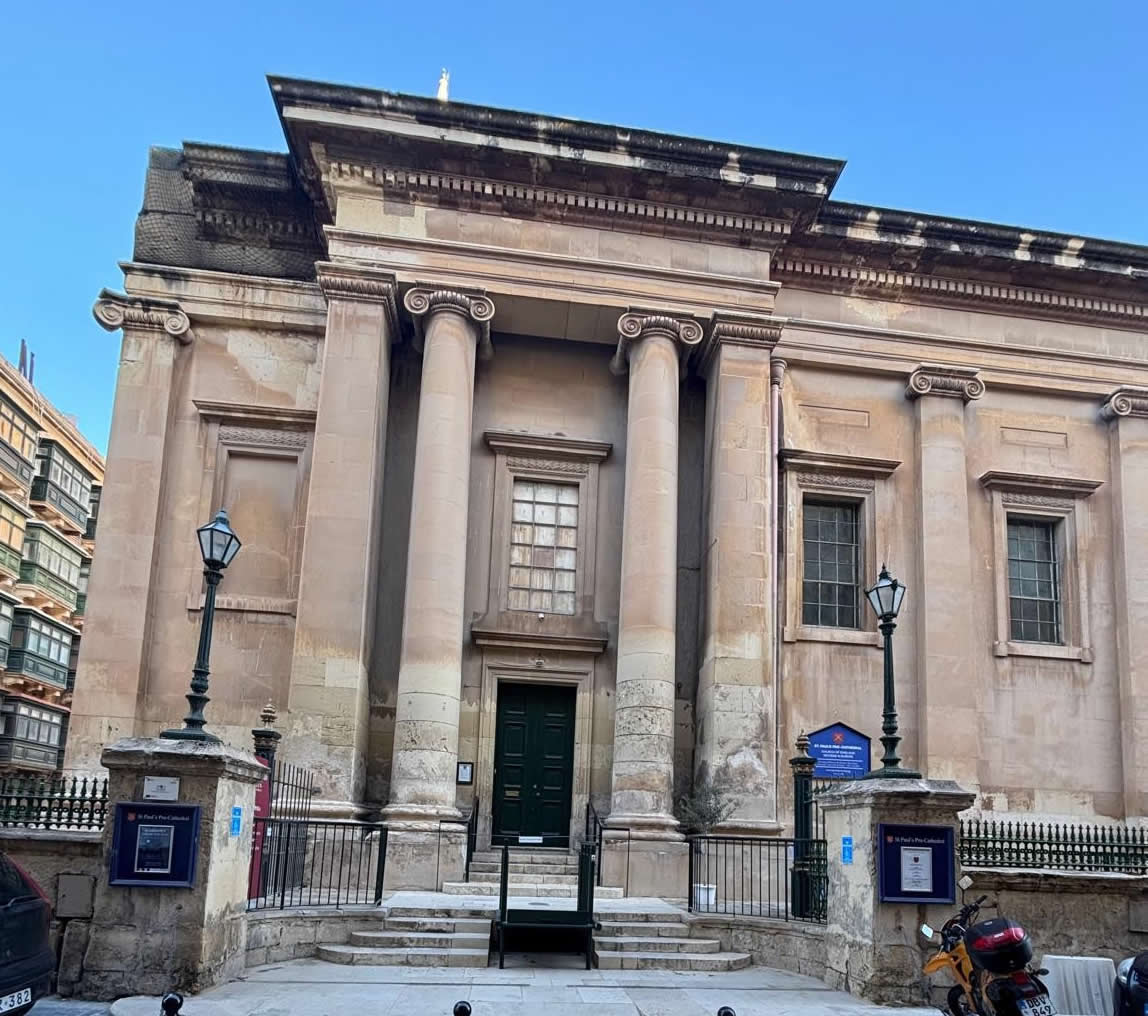
The neo-classical St. Paul’s Cathedral, commonly referred to as St. Paul’s Pro-Cathedral, is one of Valletta’s most iconic religious buildings. Rising above Old Theatre Street and West Street, this Anglican cathedral has been a centre of worship, cultural identity, and heritage in the capital city since its completion in 1844.
Origins & Commissioning (1839)
The story of St. Paul’s Cathedral begins in the early 19th century when Malta, under British colonial administration, lacked a permanent Anglican place of worship in its capital city. Recognising this absence, the Dowager Queen Adelaide initiated the founding of a cathedral where Anglican worship could be celebrated.
The foundation stone was laid on 20 March 1839 on the historic site previously occupied by the Auberge d’Allemagne — the conventual residence of the German Knights of the Order of St. John. This location, in Independence Square near Valletta’s bustling harbourfront, symbolised both continuity and renewal amidst Malta’s layered history.
Initially designed by Richard Lankasheer, the construction faced significant engineering challenges due to local limestone properties and structural instability. After Lankasheer’s untimely death in 1841, British Admiralty architect William Scamp was tasked with revising the plans and overseeing the cathedral’s construction, establishing its enduring neo-classical design with refined proportions and elegant lines.
Completion & Dedication (1844)
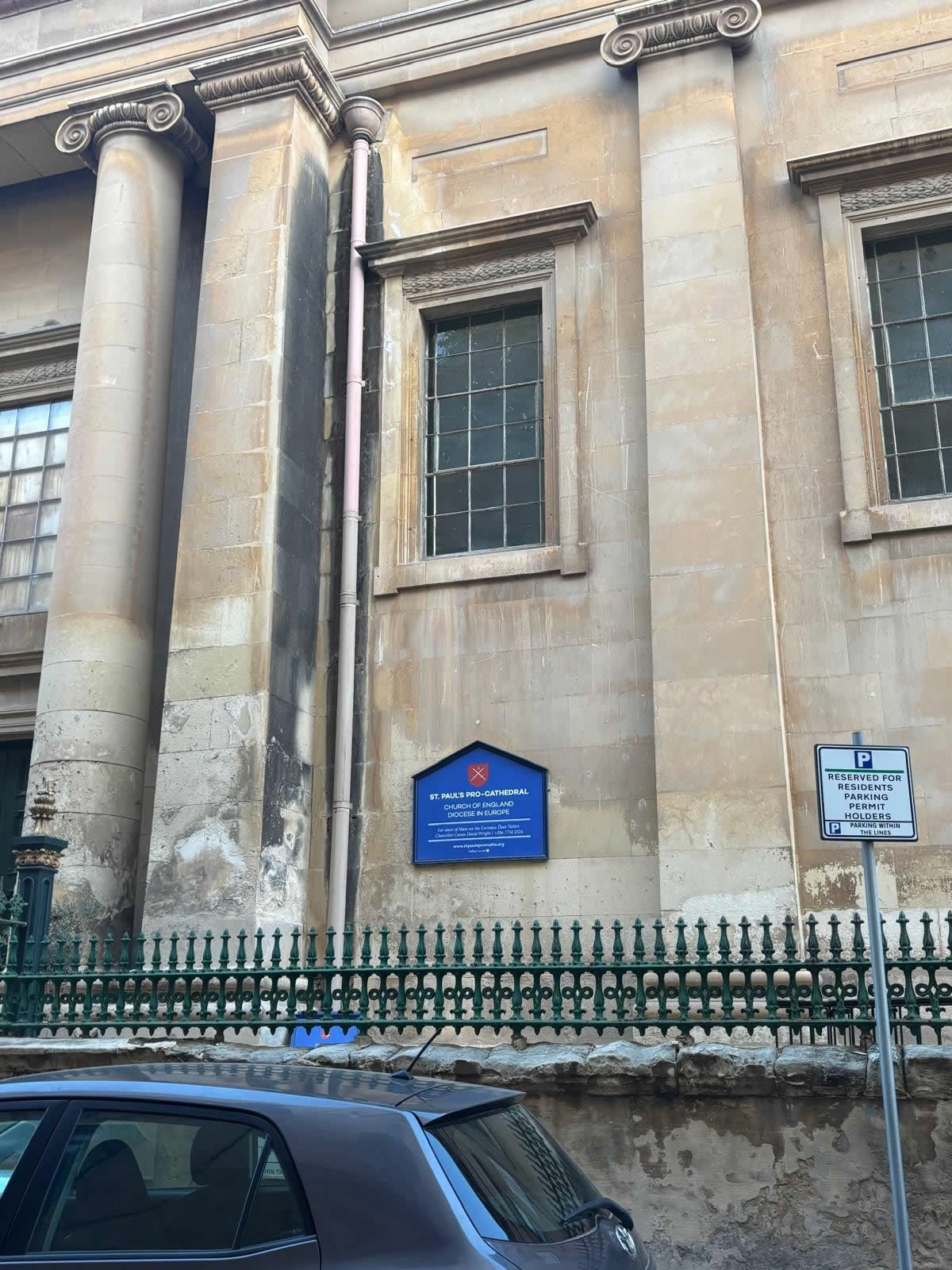
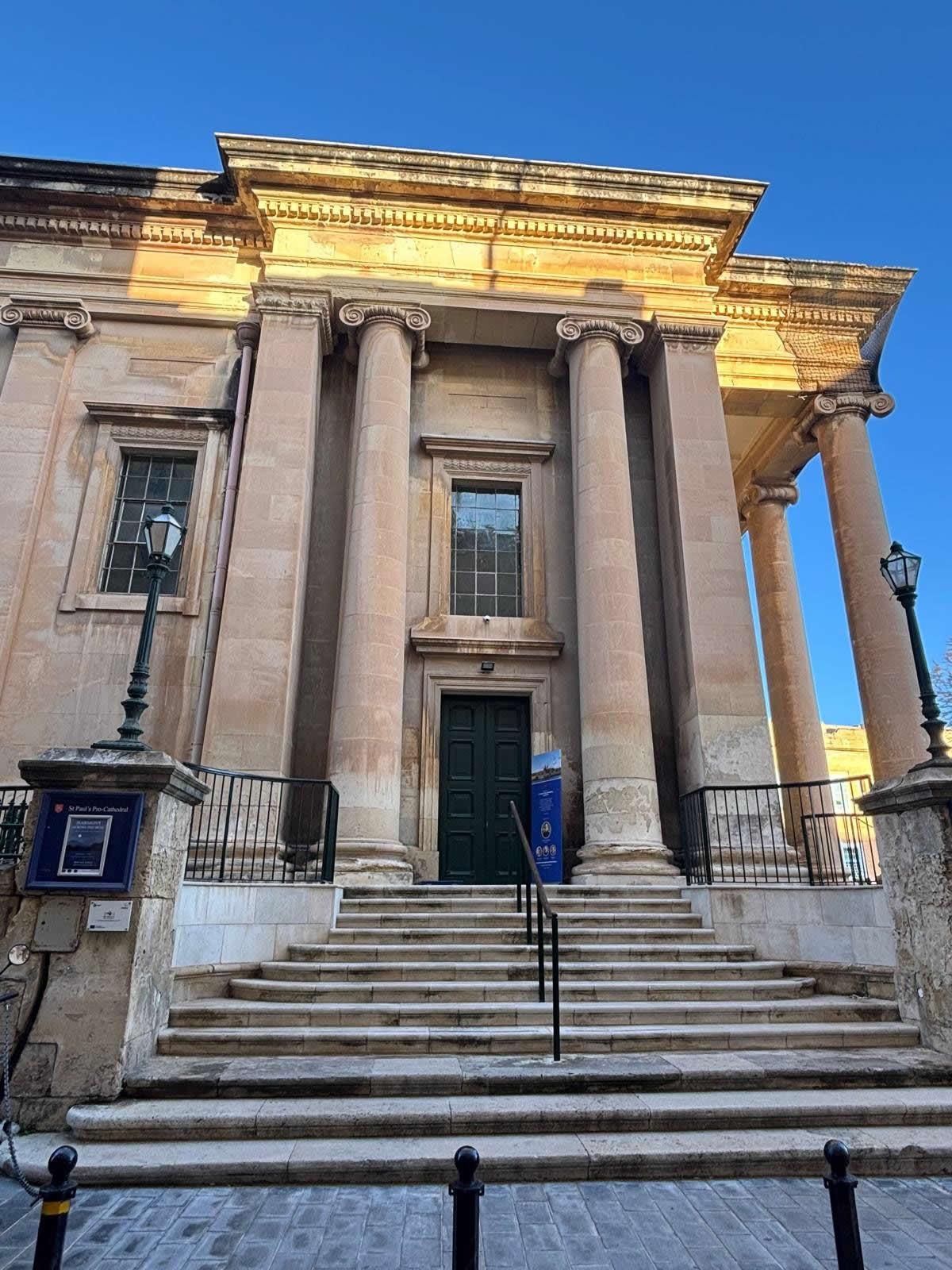
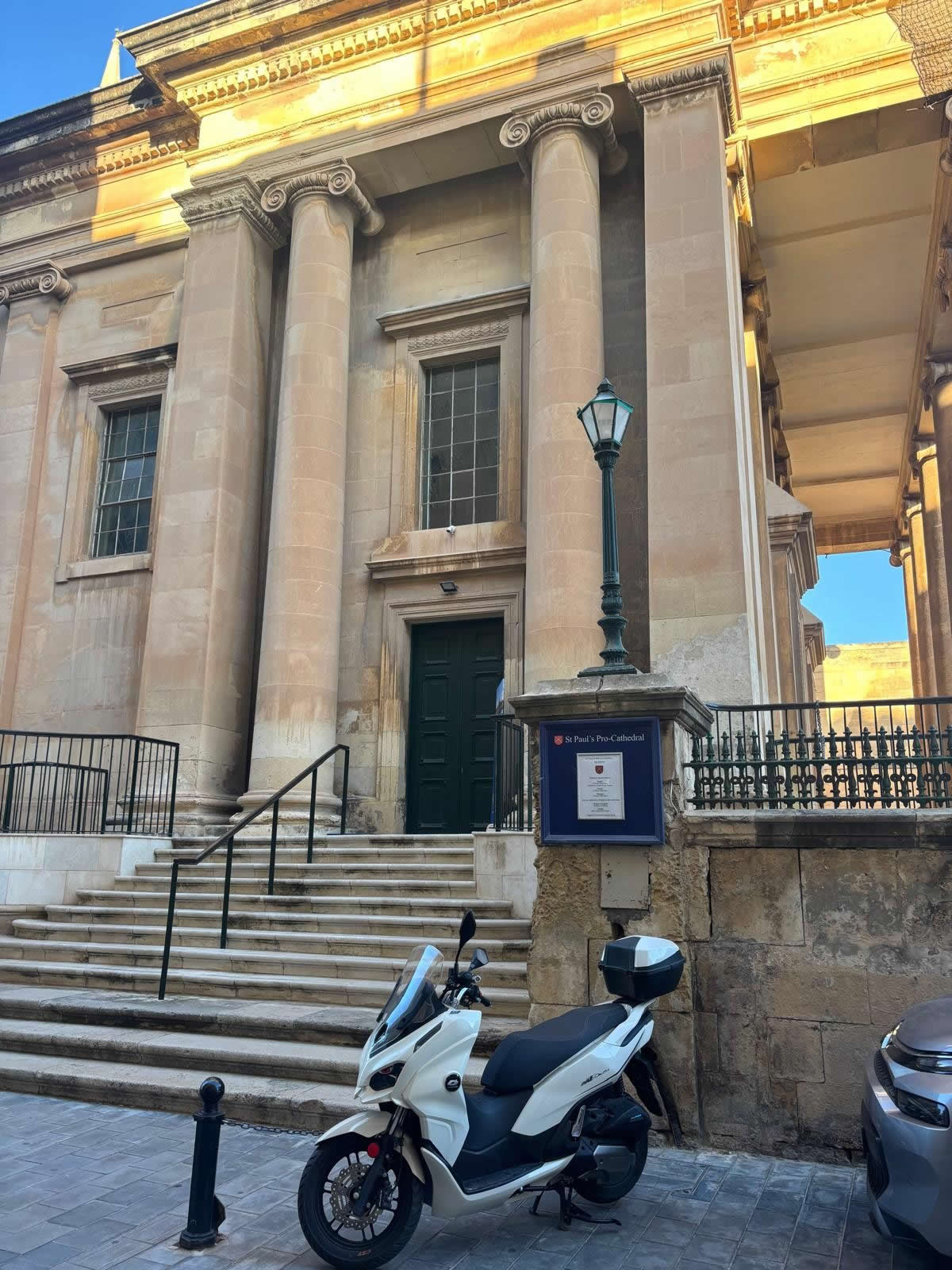
Work continued rapidly under Scamp’s supervision, and the cathedral was completed by 1844. On 1 November 1844, St. Paul’s Pro-Cathedral was officially dedicated, marking its formal role as a major venue for Anglican worship in Malta. Its design features classical columns, fluted pilasters with Corinthian capitals, and a balanced façade that harmonises with Valletta’s architectural context.
Architectural Style & Exterior Description
St. Paul’s Cathedral is an outstanding example of neo-classical architecture in Malta. Built predominantly of local Maltese limestone, the cathedral uses classical orders and symmetrical form to convey both solemnity and elegance. Its soaring spire — rising to approximately 60+ metres — has for decades been a distinctive element on the Valletta skyline, visible from across Marsamxett Harbour and Sliema.
The front façade presents a dignified portico supported by Ionic columns, while the interior space emphasises clarity and proportional harmony — hallmarks of classicism adapted to ecclesiastical scale.
Interior Elements & Memorial Artifacts
While more austere than richly ornamented Roman Catholic churches, St. Paul’s Cathedral’s interior carries deep historical and memorial significance. Many of the oak panels around the sanctuary serve as memorials to Allied units that participated in the defence of Malta during World War II, representing groups such as the Royal Navy, Royal Air Force, and British Merchant Navy.
The cathedral also houses a traditional organ with historic lineage, reputedly connected to the musician George Frideric Handel during his travels. Although the organ has been reconstructed over time, it remains a notable feature in the building.
The chancel and rood screen — added during the post-war restoration — reflects the collaborative spirit between Maltese worshipers and British officials. Princess Elizabeth (later Queen Elizabeth II) attended the dedication of the new chancery in 1949, underscoring the cathedral’s role as a venue of cultural as well as spiritual connection.
War Time & Later Use
During World War II, the cathedral suffered minor damage from bombing, and the roof collapsed in places. However, its core structure survived, allowing extensive restoration and conservation in the post-war period. In 1928, the undercroft — originally built on the foundations of the Auberge d’Allemagne — was opened as a parish hall and later adapted as an air-raid shelter, reflecting its multiple civic roles in critical years.
Modern Restoration & Preservation (2017–2025)
By the late 2010s, structural assessments highlighted urgent needs for restoration, especially of the iconic tower and spire, which had suffered prolonged exposure to natural deterioration. Beginning in 2017, a comprehensive restoration programme — dubbed the “Save Valletta’s Skyline Appeal” — was launched with a combination of European Union funds, national support, benefactors, and community donations.
Restoration works focused on strengthening the tower and spire, timber repairs, masonry conservation, accessibility improvements, and installation of structural monitoring systems. The project, coordinated by AP Valletta and executed by leading Maltese contractors, progressed through meticulous documentation and adherence to original design principles.
In 2024, the restored tower and spire were officially unveiled, reinstating the cathedral’s visual prominence and architectural integrity. Subsequent works completed in 2025 included the restoration of bells and associated structures, marking a new era of preservation for the cathedral.
Visitor Experience & Community Engagement
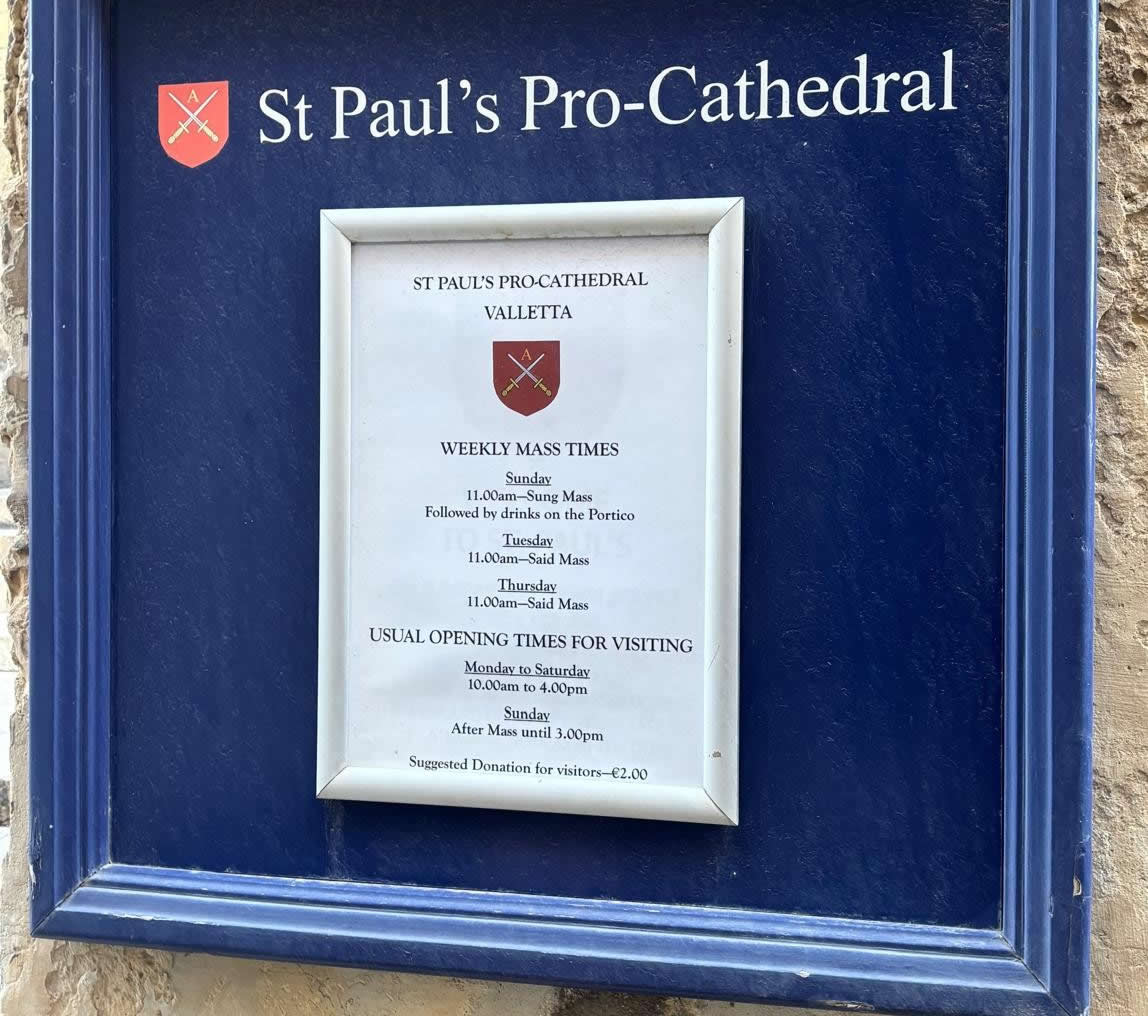
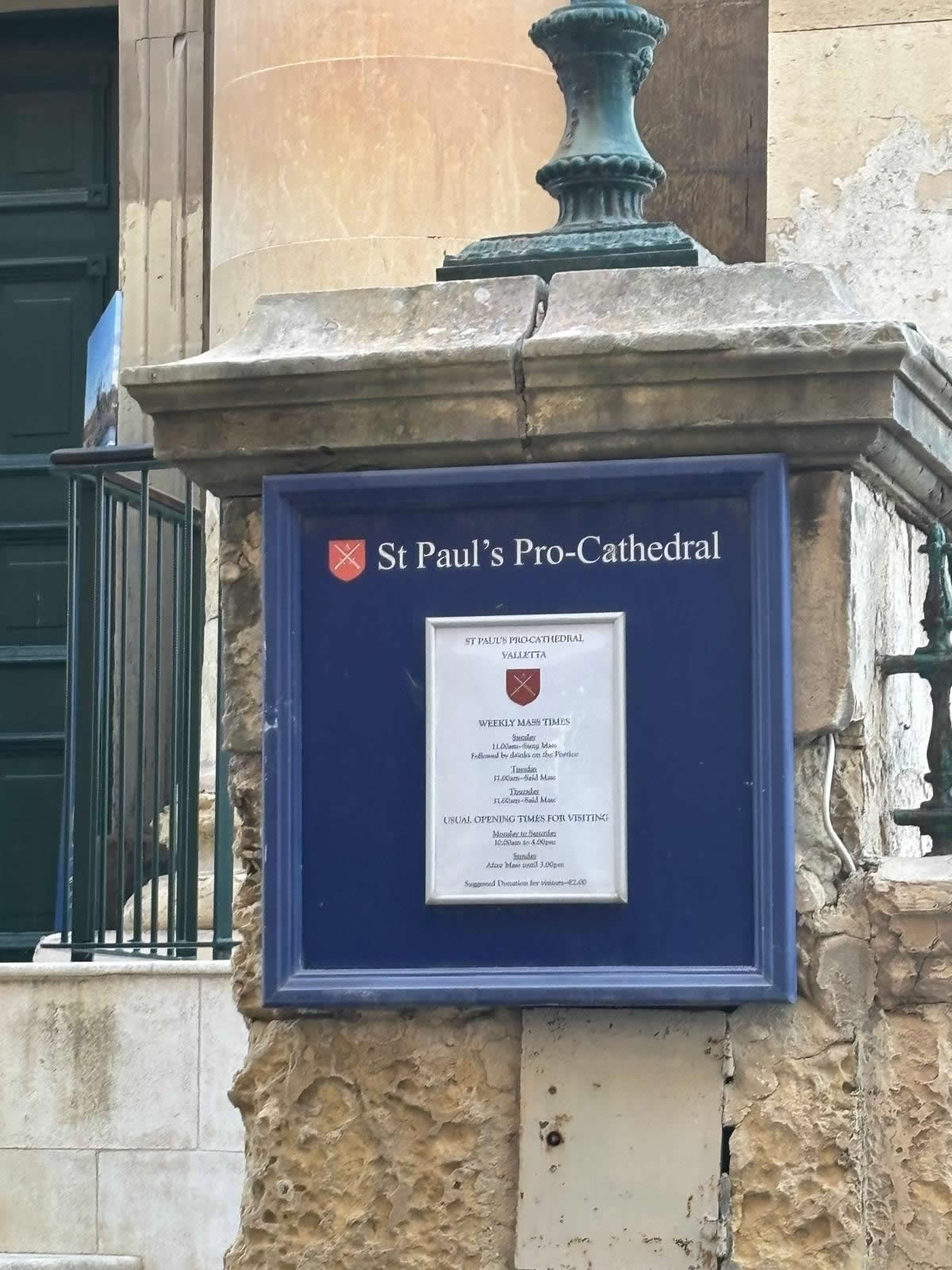
St. Paul’s Cathedral welcomes visitors for quiet reflection, guided tours, and heritage exploration. Entry is free, with optional donations supporting ongoing upkeep and restoration efforts. An audio-guided tour and visitor centre in the undercroft provide deeper insight into the cathedral’s history and artefacts.
Quick Facts & Historical Timeline
- Founded: 20 March 1839
- Completed: 1844
- Architectural Style: Neo-classical
- Significant Restoration: 2017–2025
- Iconic Feature: Tower & Spire (~60+ m)
- Memorial Panels: Allied Forces, WWII
- Location: Old Theatre Street & West Street, Valletta