📍 Location
Location Map Coordinates 35.900049, 14.515030
Knisja Ta’ Santa Katerina (Church of St Catherine of Alexandria) is a historic Roman Catholic Baroque church located on Republic Street in the heart of Valletta, Malta. Originally founded by the Italian knights of the Order of St John in the 16th century, this church has evolved into a masterpiece of Maltese Baroque architecture and houses significant artworks, including the celebrated masterpiece by Mattia Preti. It continues to serve as an active place of worship and community gathering for Italian-speaking Catholics and visitors alike.
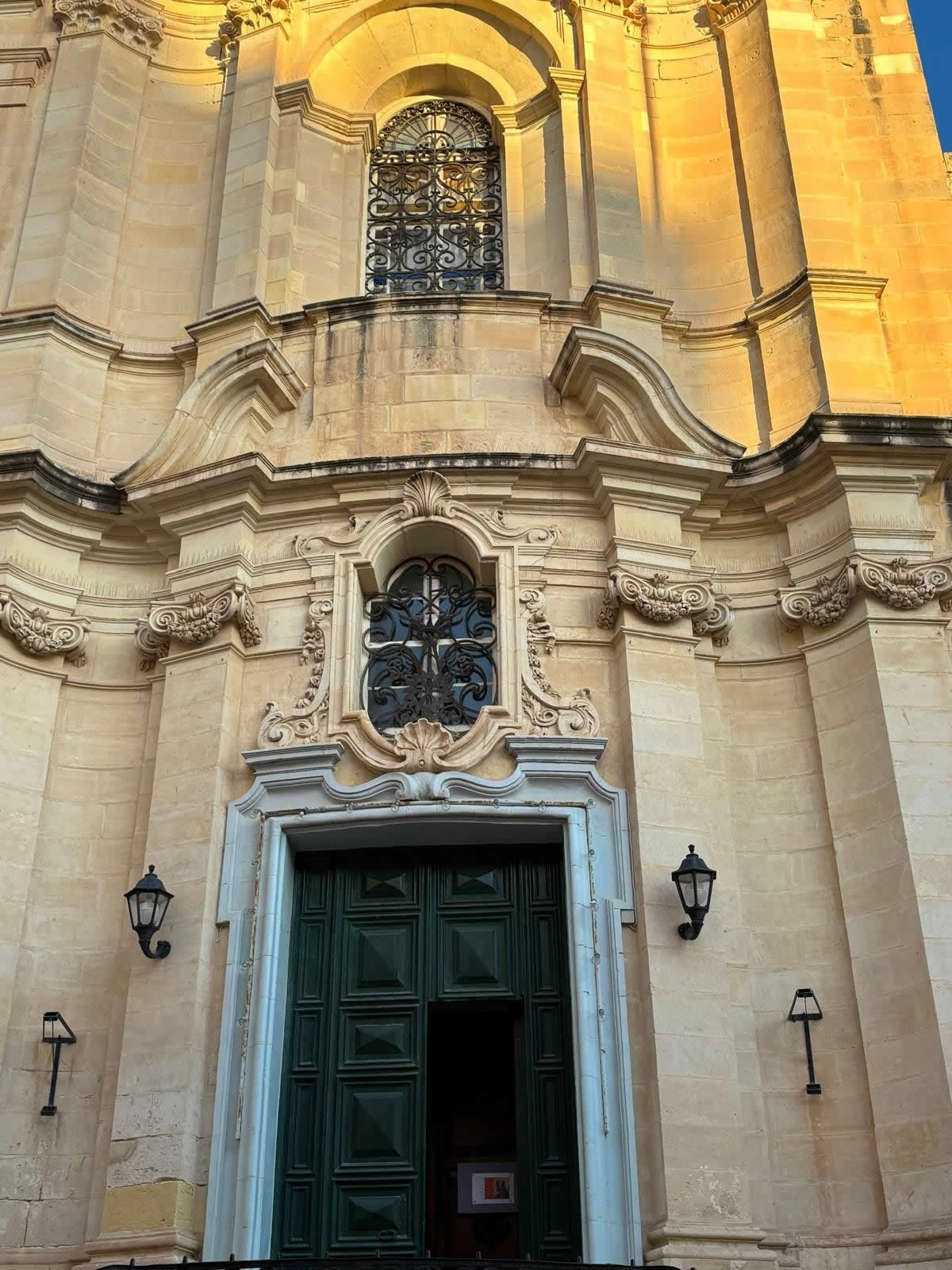
Founding & Early History (1576)
Valletta was strategically built by the Knights of St John following the Great Siege of 1565, and the Church of St Catherine of Alexandria was one of the earliest ecclesiastical foundations established within the city’s grid. In 1576, the Italian Langue (branch) of the Order commissioned the construction of this church adjacent to the Auberge d’Italia, serving as their chapel and spiritual centre. The initial architect was Girolamo Cassar, the chief engineer of Valletta’s early urban masterplan, who gave the church its Renaissance foundations integrated with early Baroque influences that were emerging across Europe.
The foundations were explicitly intended to provide the Italian knights with a dedicated chapel where daily Mass, confraternal prayers, and special liturgical observances could take place. At this time, Malta was a crossroads of Mediterranean cultures, and the church’s construction was both an expression of faith and identity for the Italian community residing in the new capital.
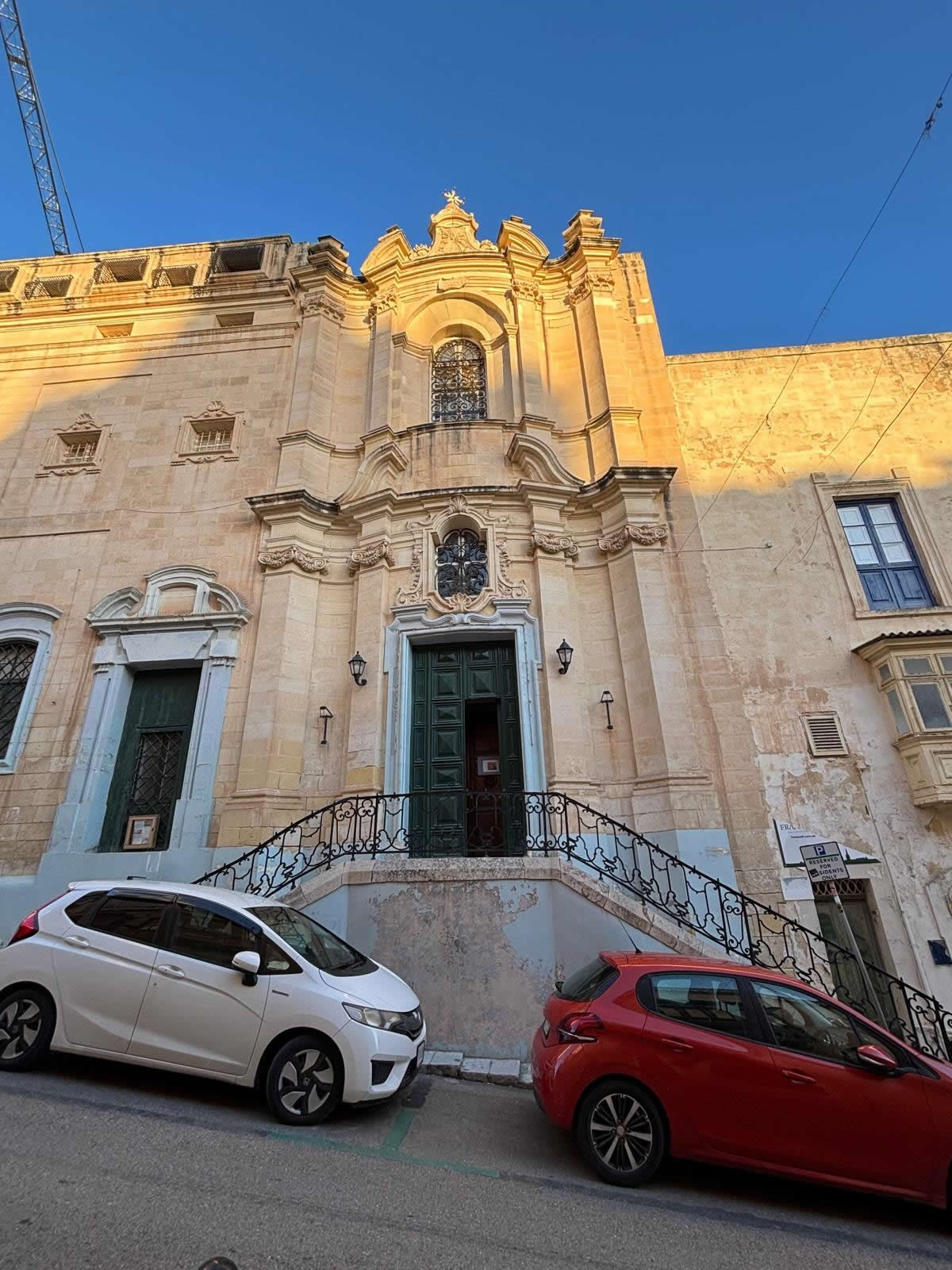
Baroque Transformation & Architectural Expansion
Over a century later, the Church of St Catherine underwent a thorough transformation. Around 1713, under the patronage of the Prior and several prominent knights, the church was redesigned in the Baroque style by the Italian architect Romano Carapecchia, who was responsible for notable architectural works in Malta including parts of St John’s Co-Cathedral and other parish churches. Carapecchia’s redesign involved a new Baroque façade, dramatic internal spatial enhancements, and embellishments that aligned the building with the grand ecclesiastical aesthetics of the period. Visitors can still see the dynamic Baroque articulation that characterizes the façade’s pilasters, cornices, and sculptural details framing the entrance.
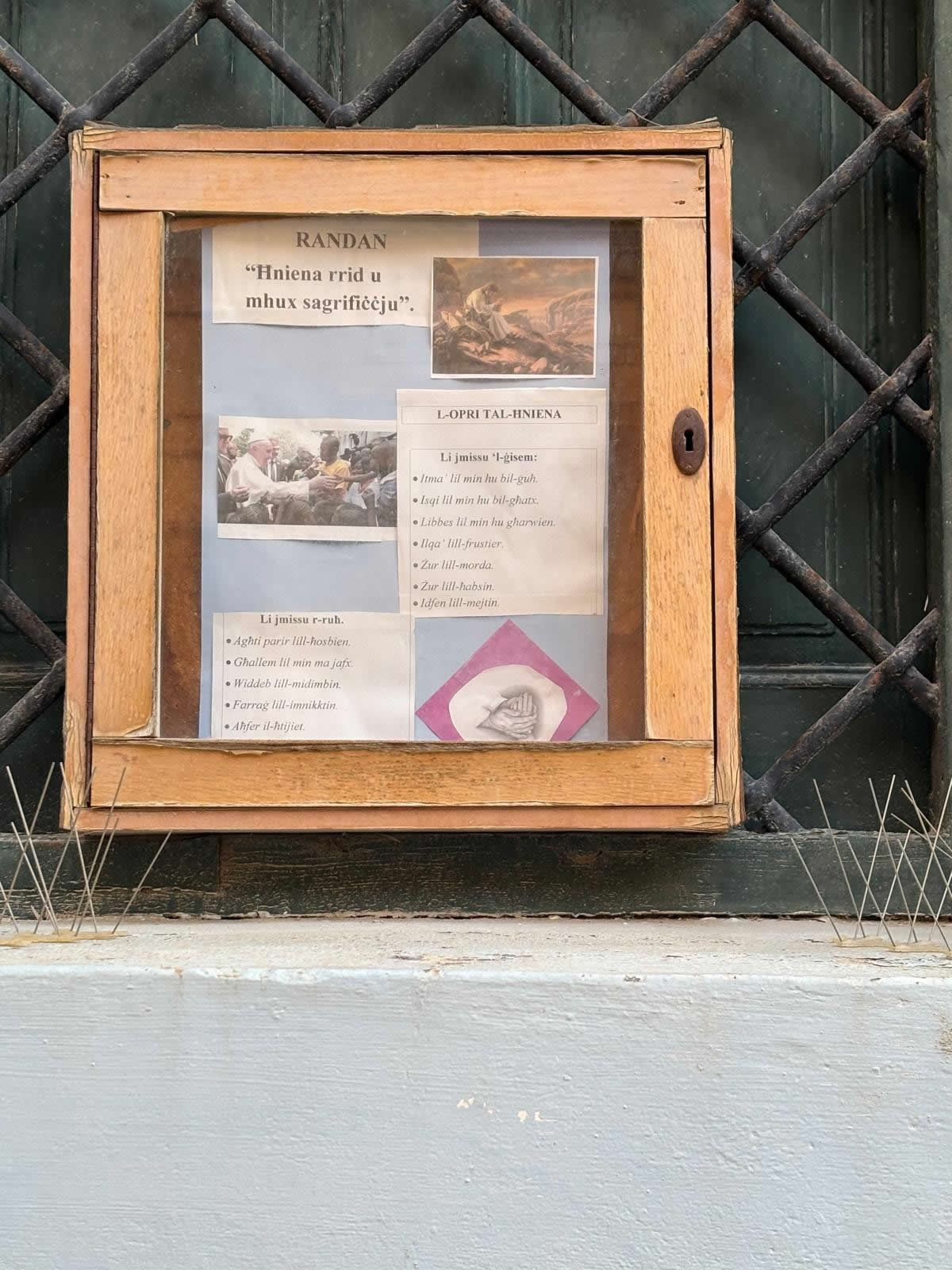
Urban Context: Republic Street, Valletta
Republic Street — one of Valletta’s principal thoroughfares — runs through the heart of Malta’s capital, connecting City Gate with Fort St Elmo at the entrance to the Grand Harbour. Placing Knisja Ta’ Santa Katerina on this prominent street gave the church central visibility within Valletta’s sacred heritage landscape, amid civic buildings, palaces, and neighbouring churches. Its position underscores the historical importance of religious institutions in daily life and urban identity throughout Malta’s history.
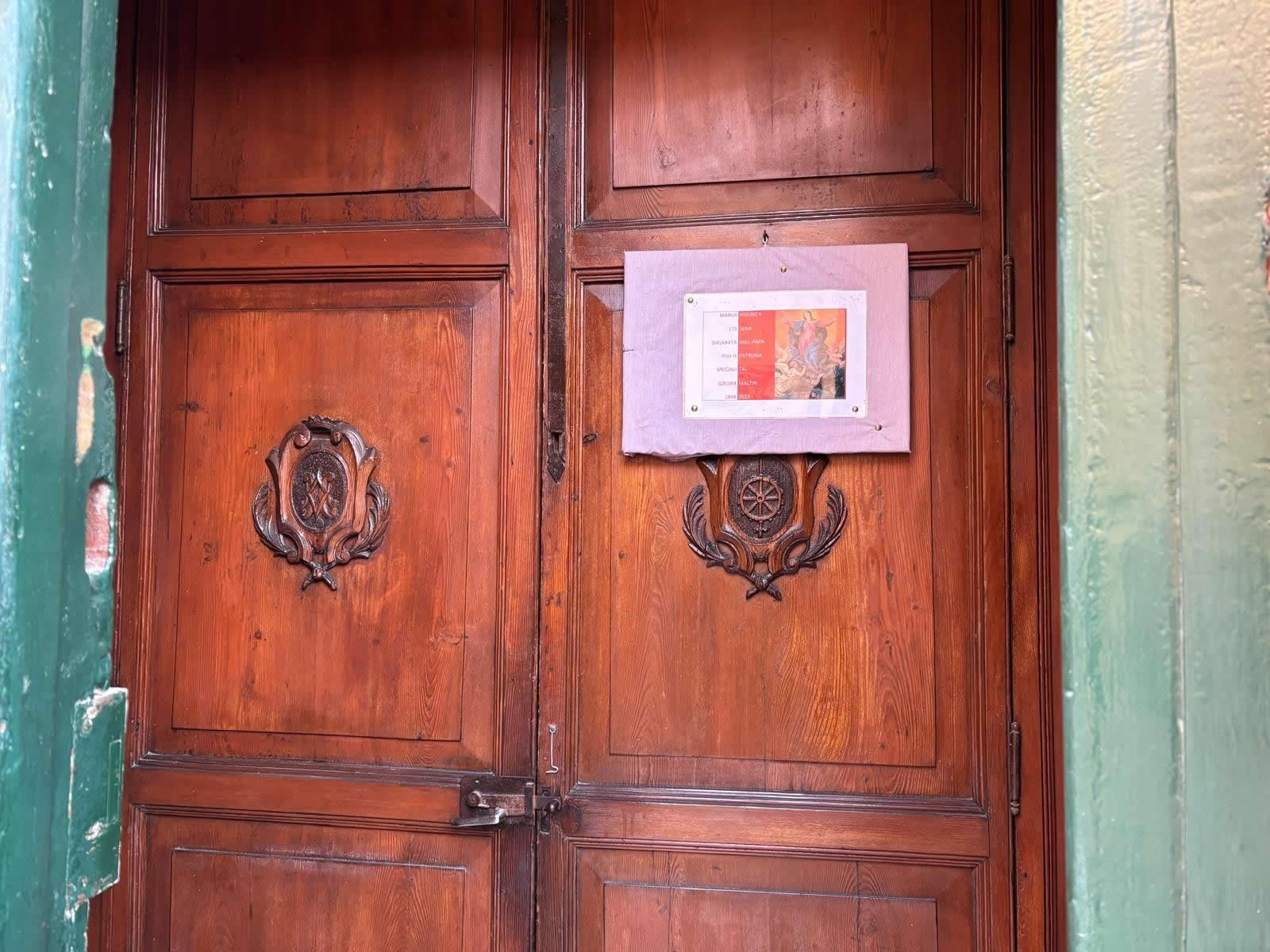
Architectural Features & Interior Layout
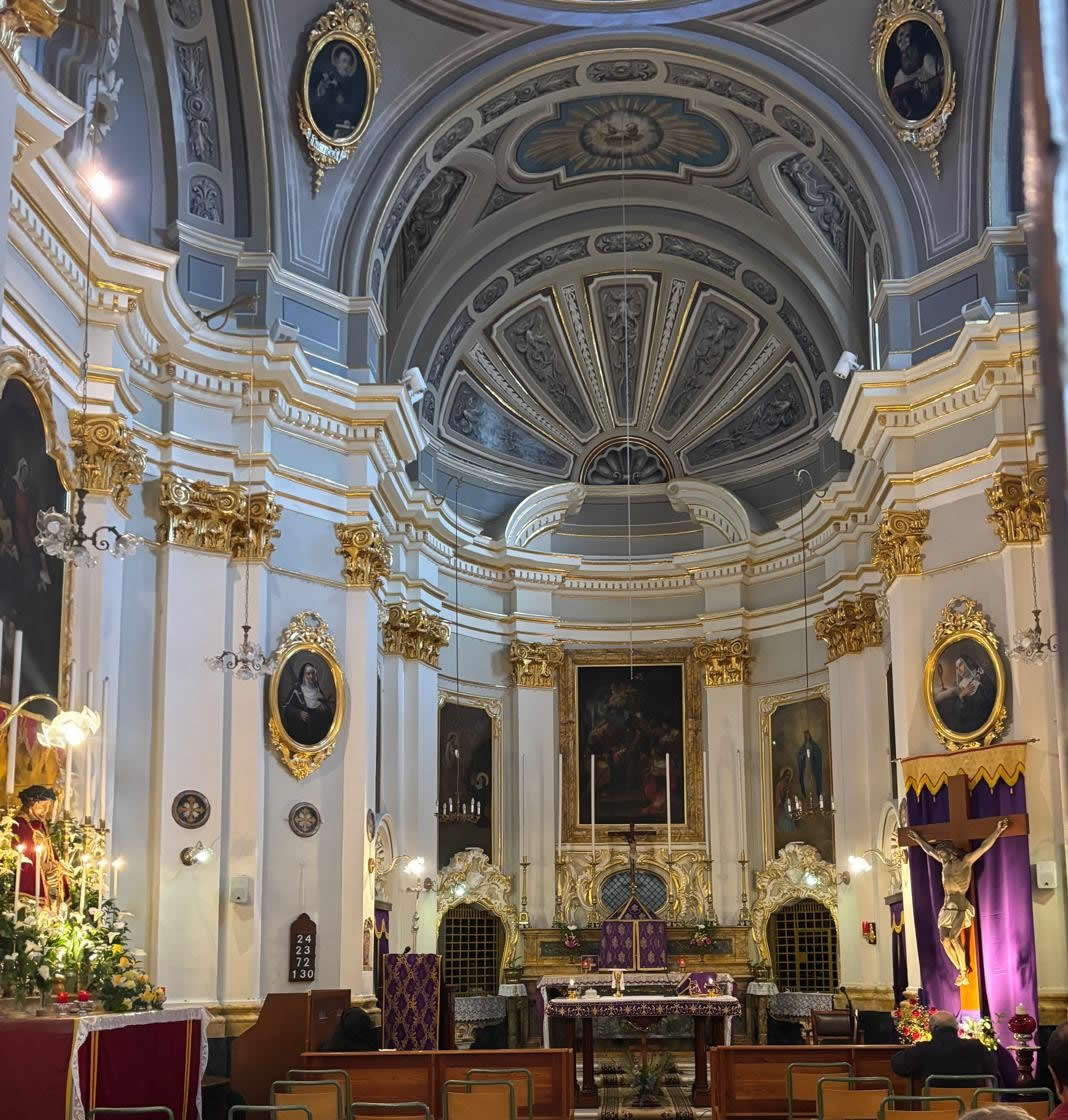
The church is constructed from Maltese limestone — a hallmark of the island’s architecture — with a design that balances both Baroque ornament and spatial intimacy. The façade’s vertical emphasis directs attention upward, framed by classical orders that reflect harmony and spiritual uplift. Inside, the building features a longitudinal nave leading to an elevated sanctuary beneath an octagonal dome, typical of Baroque planning that seeks to create both light and sacred focus.
One of the most striking interior innovations is the dome’s frescoed ceiling, a sculptural and painted surface that draws the eye toward heaven, emphasising the Baroque objective of enveloping the worshipper in an environment of divine beauty. Combined with ambient natural light from windows and clerestory openings, the interior space achieves both grace and solemnity.
Artworks & Masterpieces: Mattia Preti’s Legacy
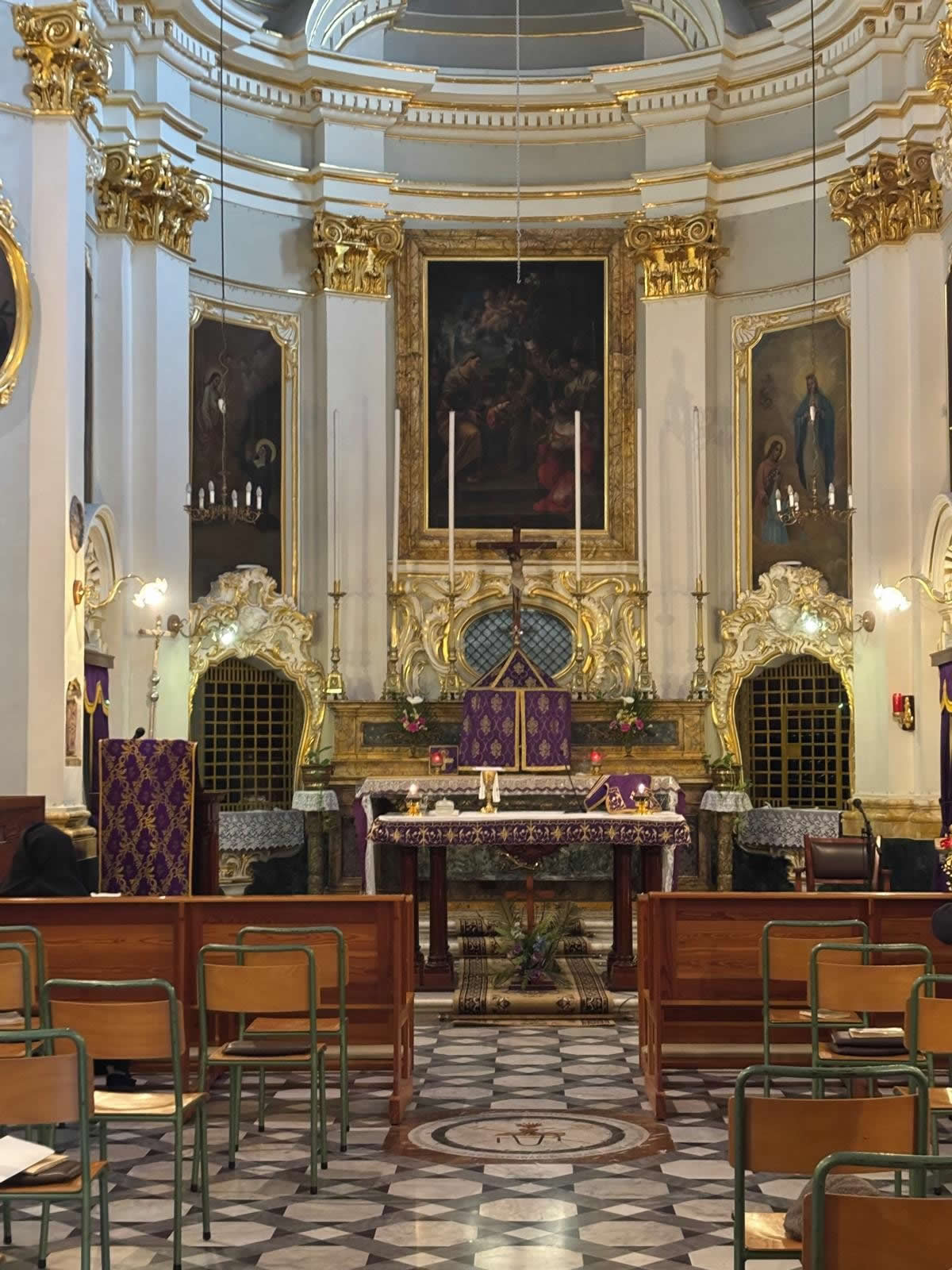
The artistic heart of Knisja Ta’ Santa Katerina is undoubtedly its main altarpiece: The Martyrdom of St Catherine of Alexandria, painted by the Italian Baroque master Mattia Preti. Preti — known to have worked extensively in Malta from the mid-17th century — was a principal figure in the island’s Baroque artistic heritage, also contributing major works to St John’s Co-Cathedral. His altarpiece here captures the dramatic martyrdom of St Catherine with intense emotional expression, dynamic composition, and masterful use of light and shadow.
Rippling folds of clothing, radiant celestial light, and expressive figures create a visual narrative that resonates with the theological themes of sacrifice, virtue, and spiritual triumph. The figure of St Catherine is depicted with dignity and resolve, making this work a focal point of devotion as well as artistic admiration.
The dome’s interior is further enhanced by monochrome frescoes by Preti, illustrating scenes from the life of St Catherine. Rendered with artistic finesse and symbolic richness, these panels serve not merely as wall decoration but as visual theology — transmitting biblical story and saintly witness through imagery.
Confraternity & Community Use
Since its founding, the Church of St Catherine has been associated with lay confraternities and Italian expatriate communities in Malta. The confraternity originally responsible for the church’s care facilitated spiritual care, charitable activities, and communal gatherings. Over the centuries, the church’s role expanded beyond its initial function as a chapel for knightly orders to become a parish focal point for Italian-speaking Catholics and Maltese devotees alike.
Today, Knisja Ta’ Santa Katerina remains a vibrant parish within the Roman Catholic Archdiocese of Malta. Mass is celebrated regularly, with a strong emphasis on liturgical observances tied to the Italian community due to historical and cultural traditions. Sacraments such as baptisms, weddings, and feast day liturgies continue to draw parishioners and visitors to this enduring place of worship.
Restoration & Heritage Conservation
Given its age and artistic significance, the Church of St Catherine has undergone multiple restoration efforts across centuries to preserve both its structural integrity and artistic patrimony. Notable restoration campaigns occurred in the late 20th and early 21st century, focusing on:
- Masonry Conservation: Cleaning and stabilisation of the limestone façade and ornamental detailing to address weathering and deterioration.
- Fresco & Painting Conservation: Specialist restoration of the dome frescoes and canvas altarpieces, revitalising original colours and ensuring long-term preservation.
- Structural Reinforcement: Repairs to roof timbers, vaults and support systems to maintain safe occupancy and liturgical use.
- Interior Furnishing Care: Conservation of pews, altars, balustrades and liturgical furnishings with attention to historical authenticity.
Authorities such as Heritage Malta and the Catholic Archdiocese cooperate in preservation efforts, emphasising both cultural tourism enrichment and respect for active liturgical function. This coordinated approach protects the church’s material history while allowing visitors to appreciate its sacred environment.
Feast of St Catherine of Alexandria
St Catherine of Alexandria — a fourth-century martyr celebrated in Christian tradition for her profound faith and wisdom — is commemorated annually on November 25. The church holds solemn liturgical celebrations on this feast day, drawing parishioners and visiting faithful for Mass, prayer vigils, and processions. Music, liturgical readings, and homilies connect the life of the saint with contemporary spiritual life, reinforcing her enduring relevance in Catholic devotion.
Visiting Information & Cultural Engagement
Located on Republic Street, one of Valletta’s most traversed thoroughfares, Knisja Ta’ Santa Katerina is accessible to both worshippers and visitors exploring the heritage of Malta’s capital. Its proximity to major landmarks — including St John’s Co-Cathedral, the Grandmaster’s Palace, and the National Museum of Archaeology — makes it an integral part of cultural itineraries.
Visitors are encouraged to attend Mass or explore the church’s interior during designated opening hours. Interpretive materials, guided tours, and educational signage help contextualise its artistic treasures and historical narrative. Whether approached from faith, history, or art appreciation, the church offers a compelling encounter with Maltese Baroque spirituality and architectural mastery.
Quick Facts & Historical Timeline
- Founded: 1576 by the Italian Langue of the Order of St John
- Baroque Transformation: ~1713 under Romano Carapecchia
- Main Artwork: Martyrdom of St Catherine by Mattia Preti
- Dome Frescoes: Scenes from St Catherine’s life (Preti)
- Feast Day: November 25 (St Catherine of Alexandria)
- Theology: Symbol of virtue, wisdom & martyrdom
- Location: Republic Street, Valletta, Malta